Downloaded 145 times
![History of Computers
Yong Heui Cho @ Mokwon University
Some of slides are referred to:
[1] Luz Pingol, History Of Computer, slideshare.](https://image.slidesharecdn.com/1-150806101009-lva1-app6892/75/History-of-computers-1-2048.jpg)
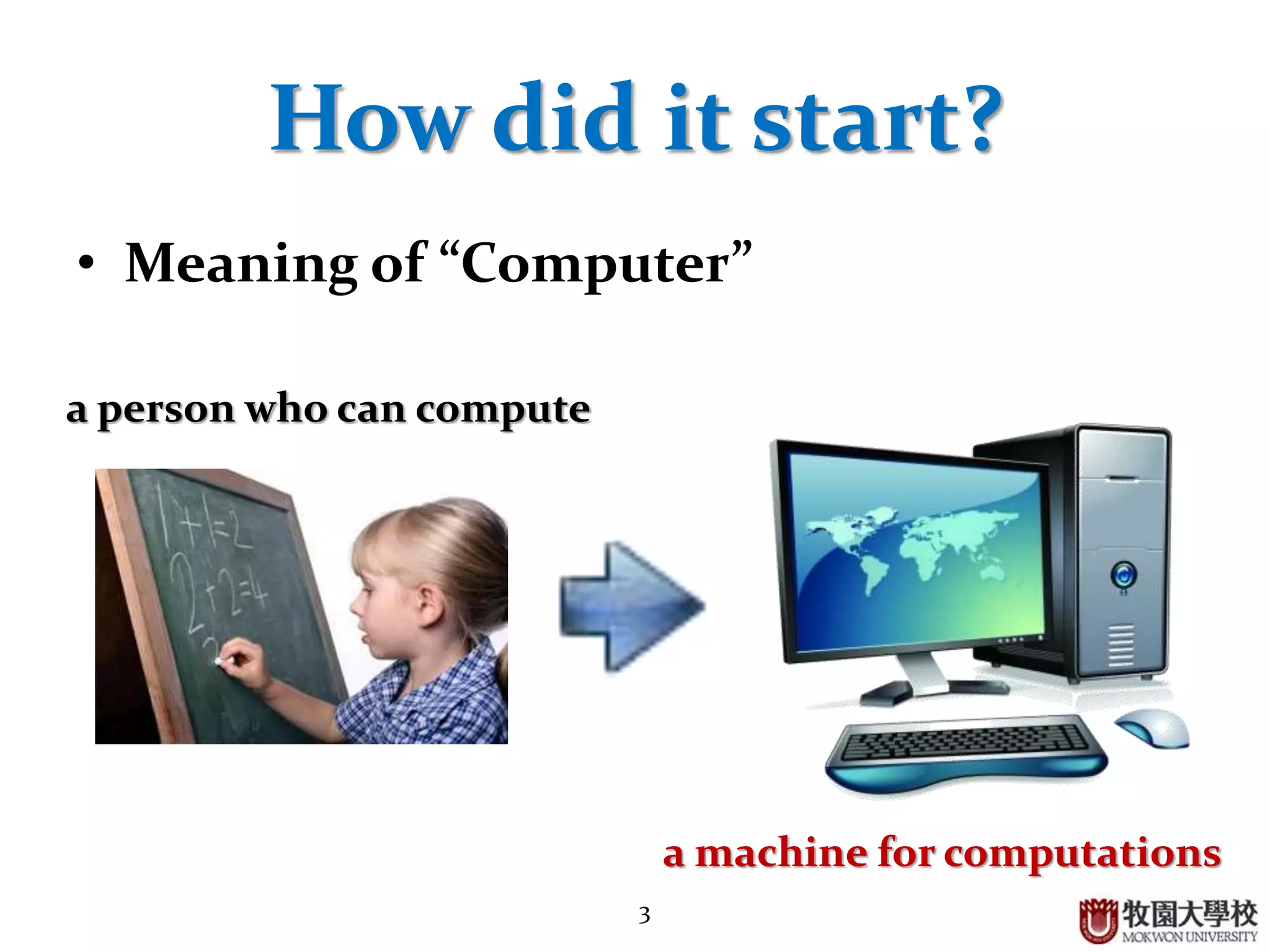
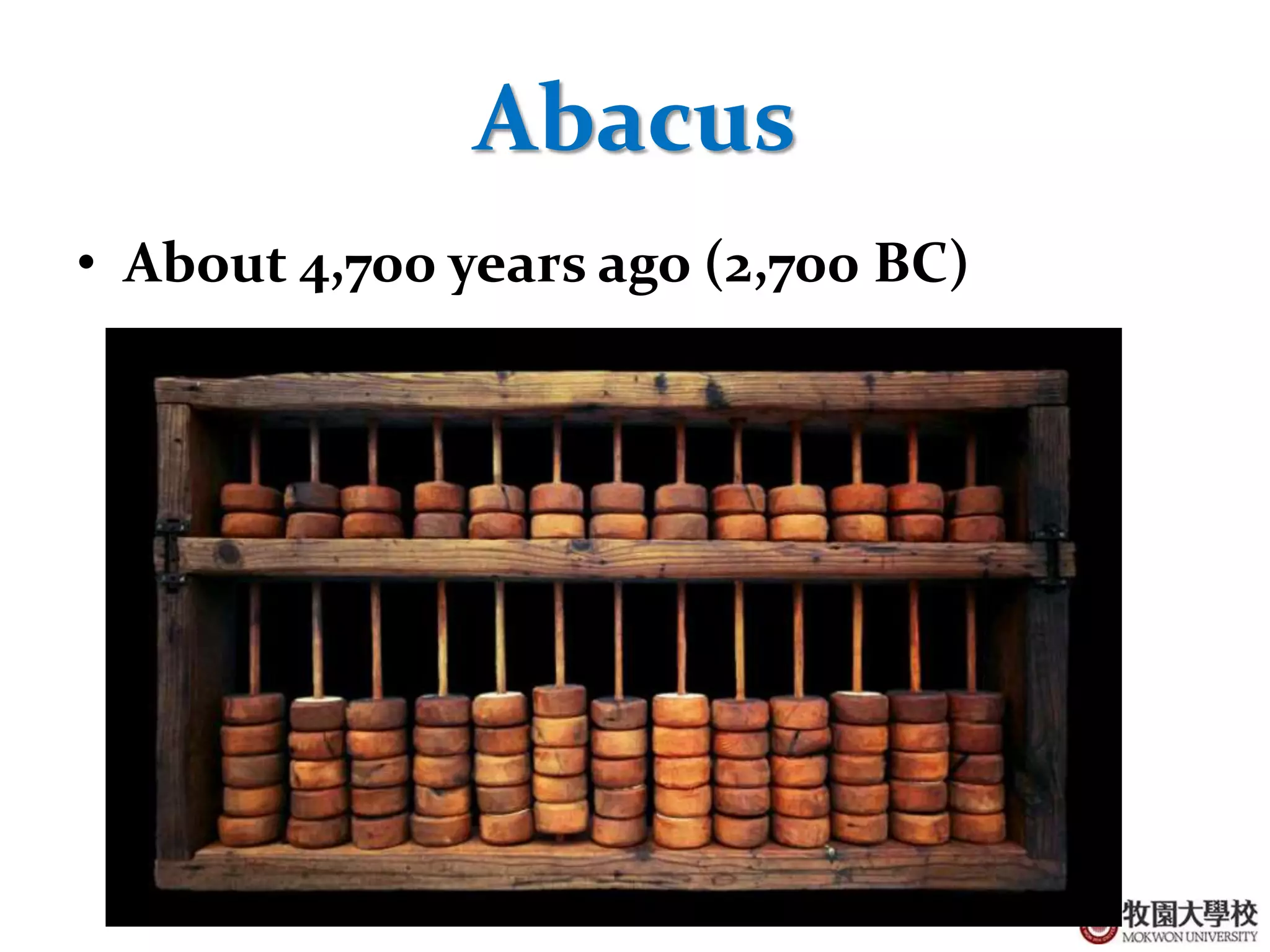
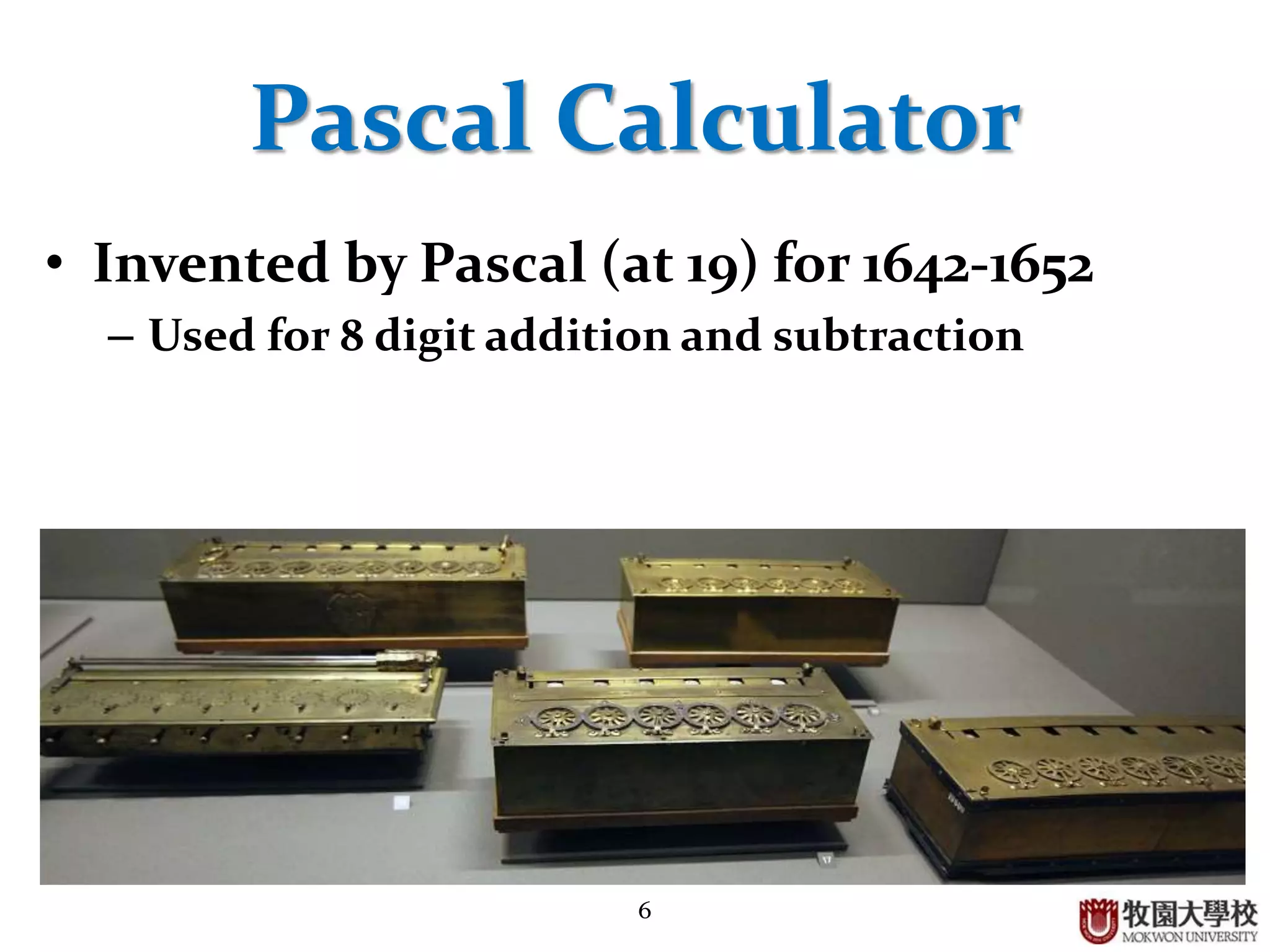
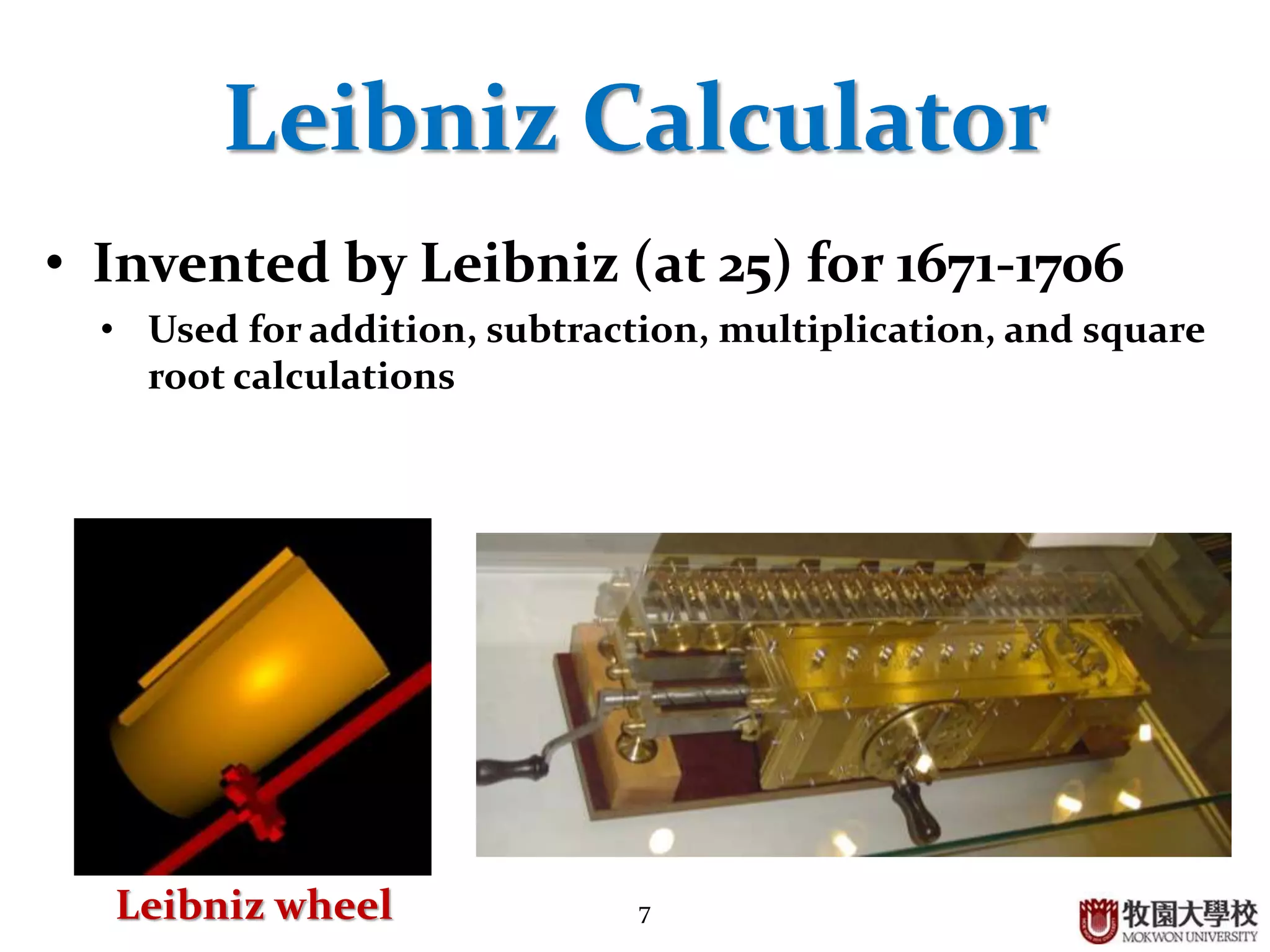
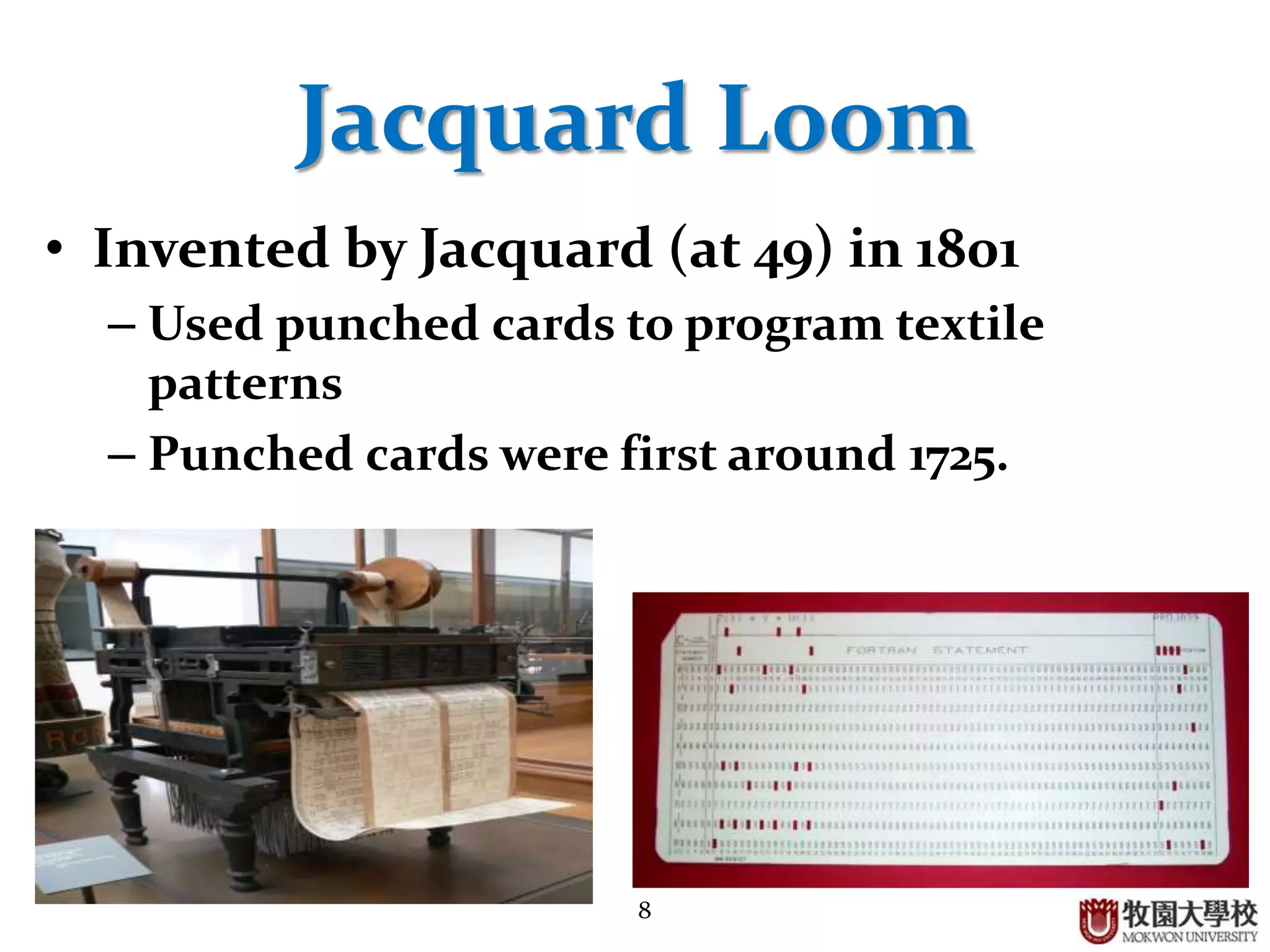
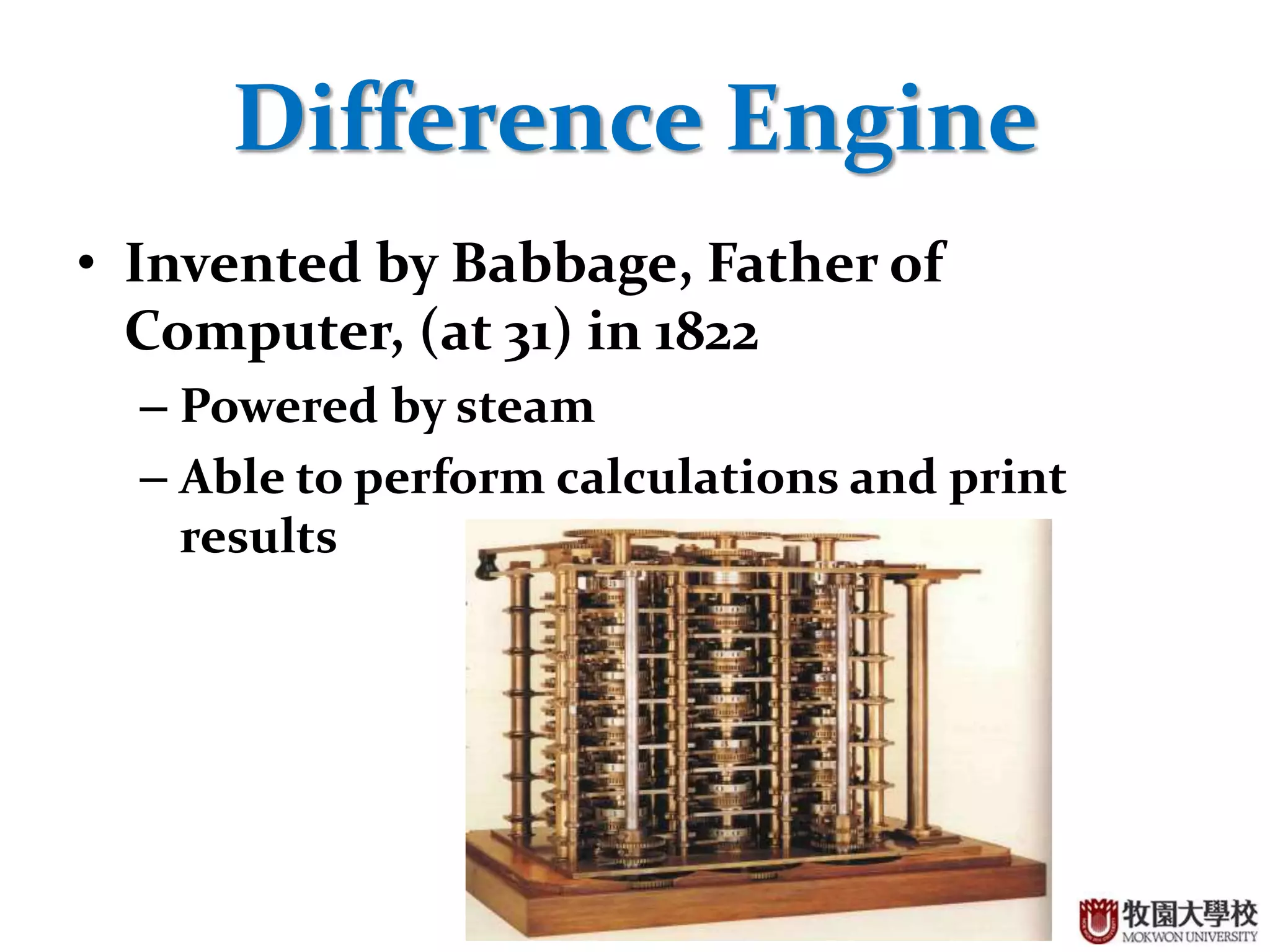
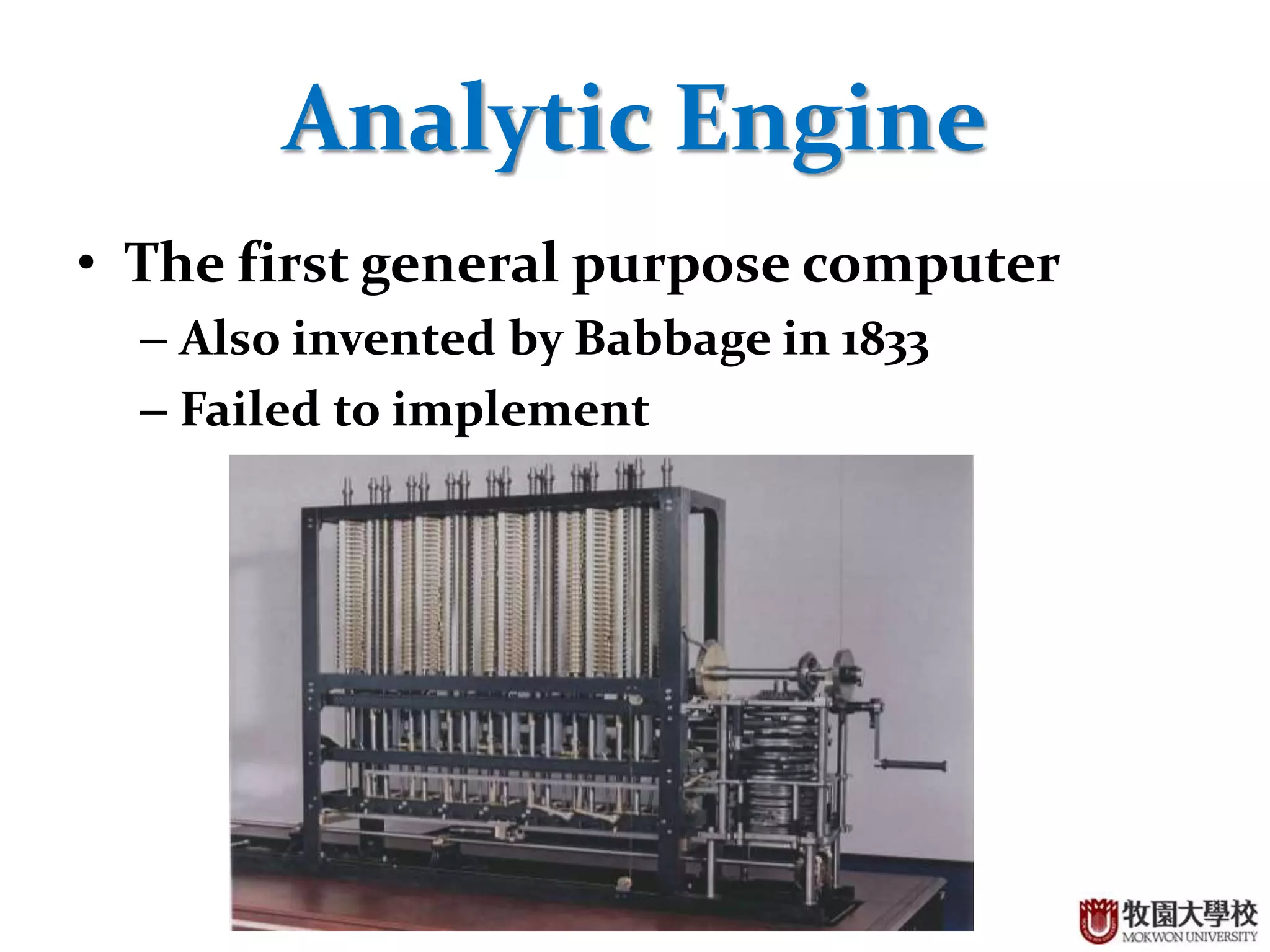
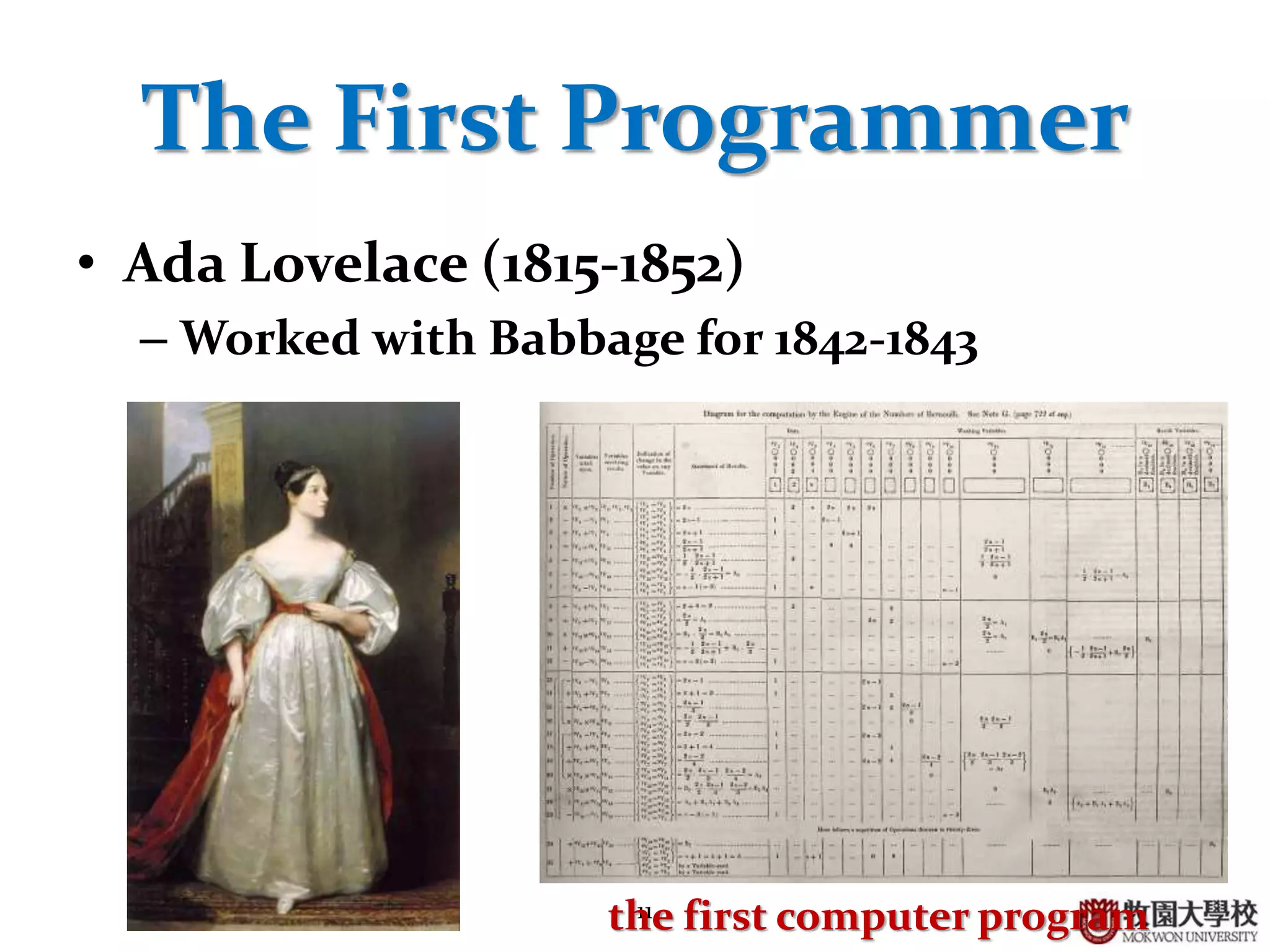
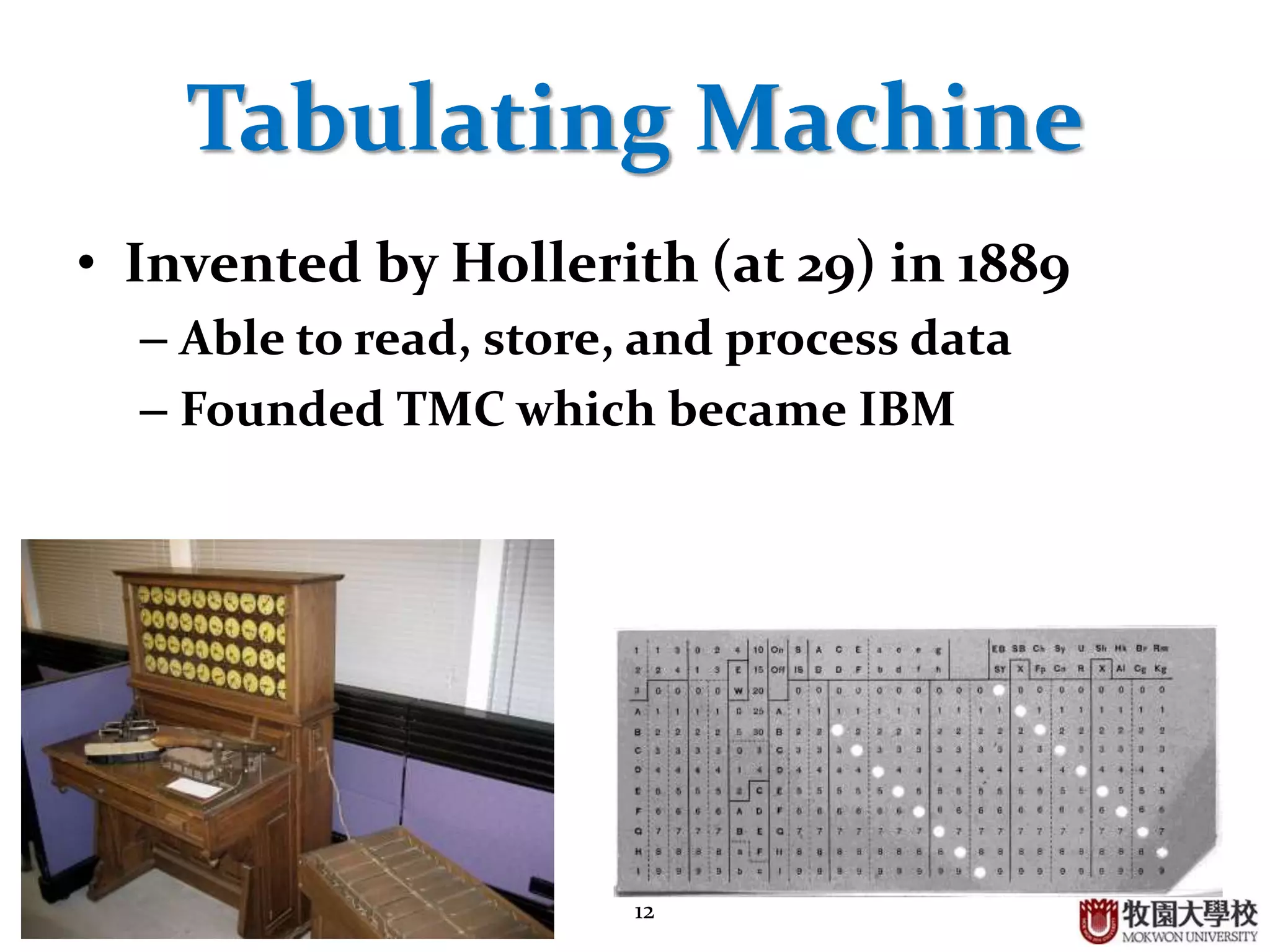
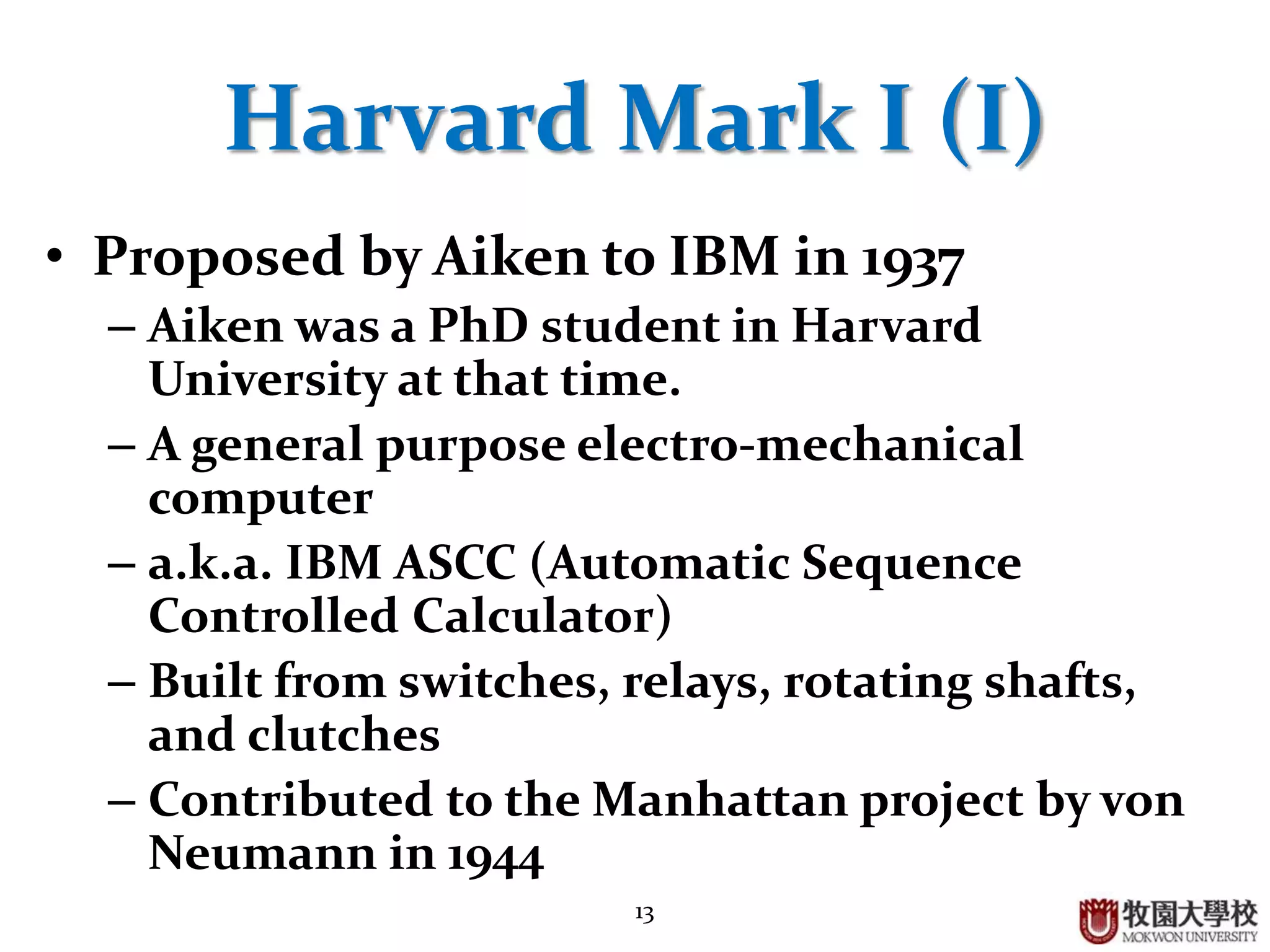
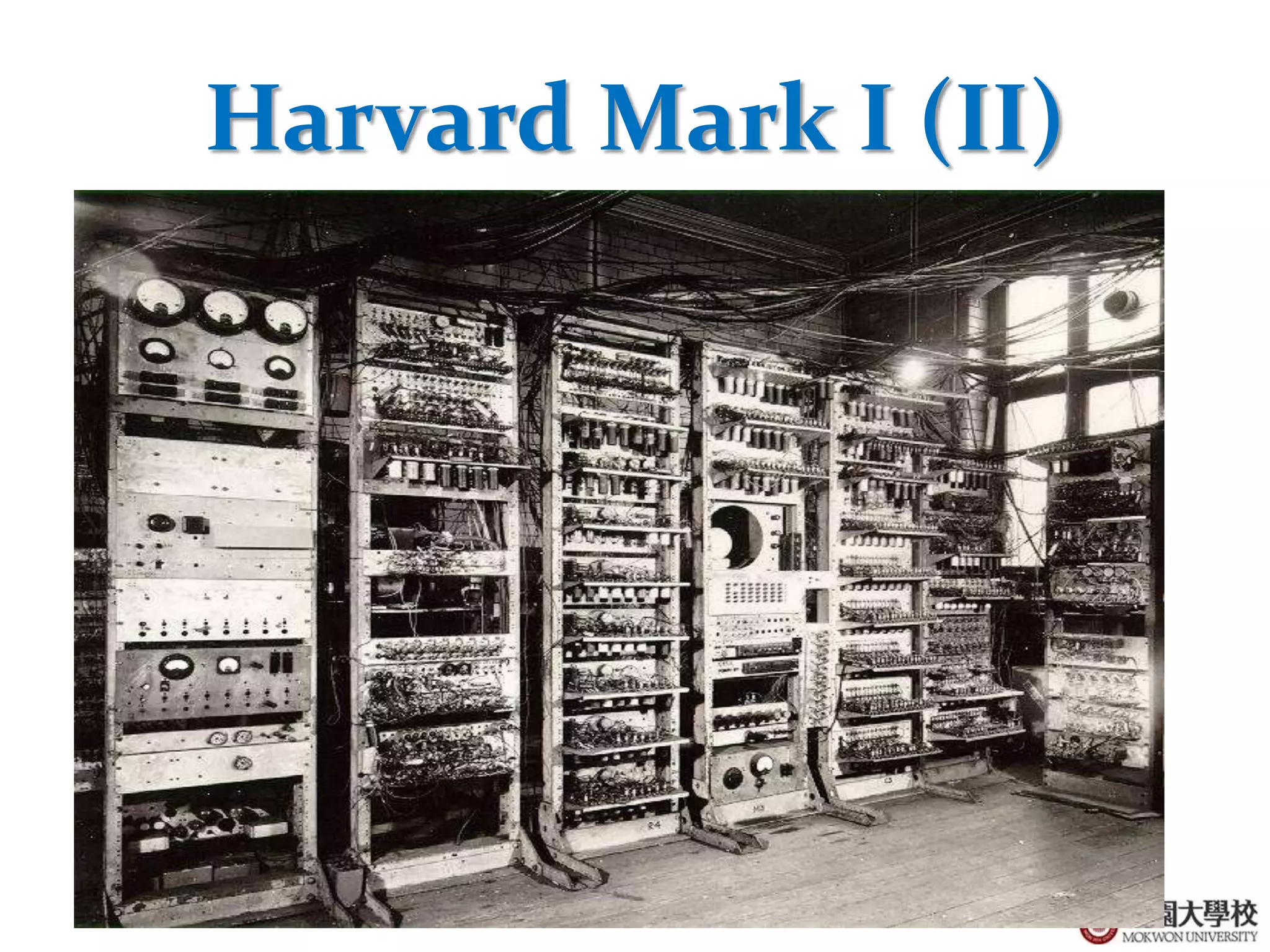
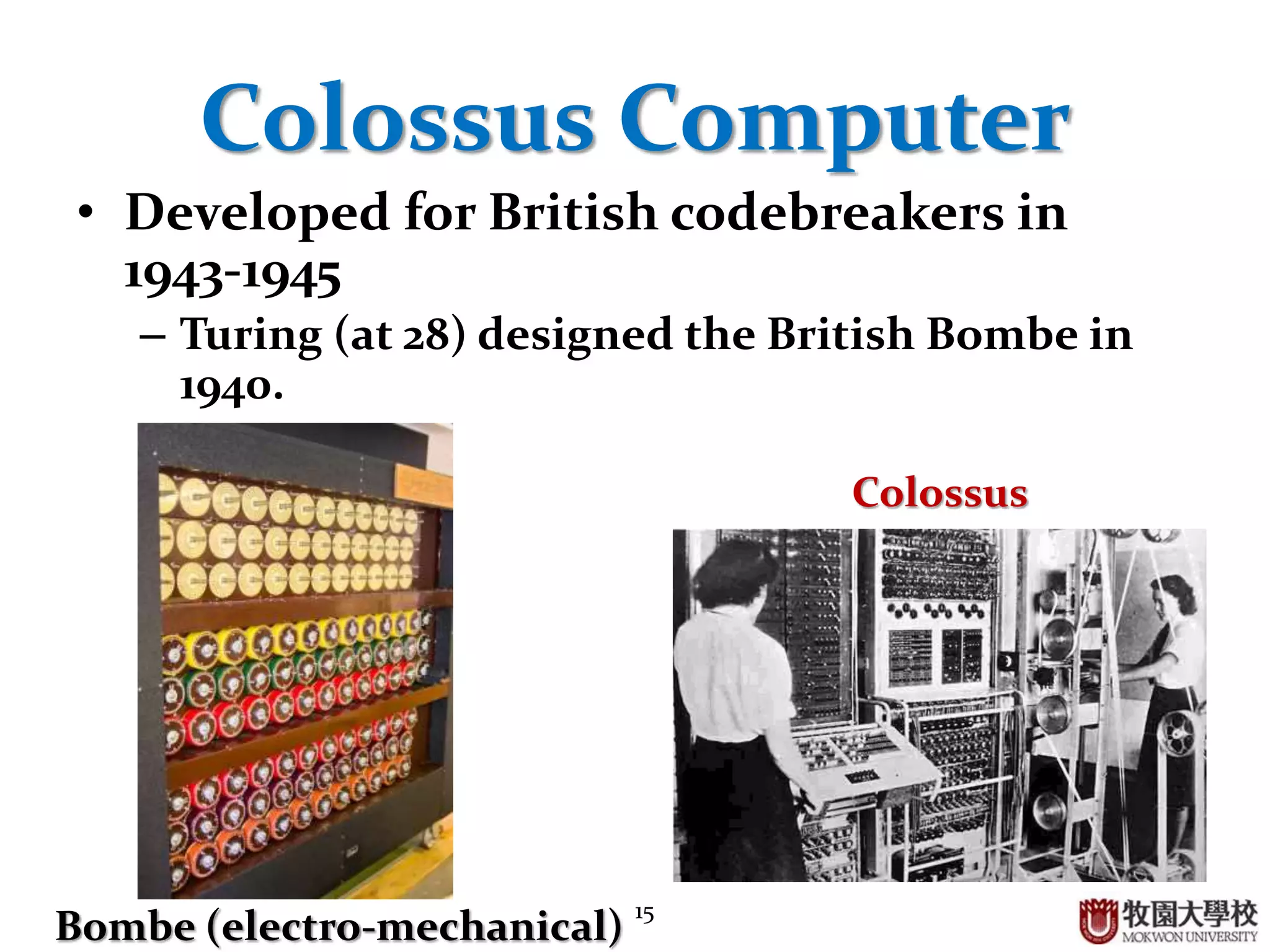
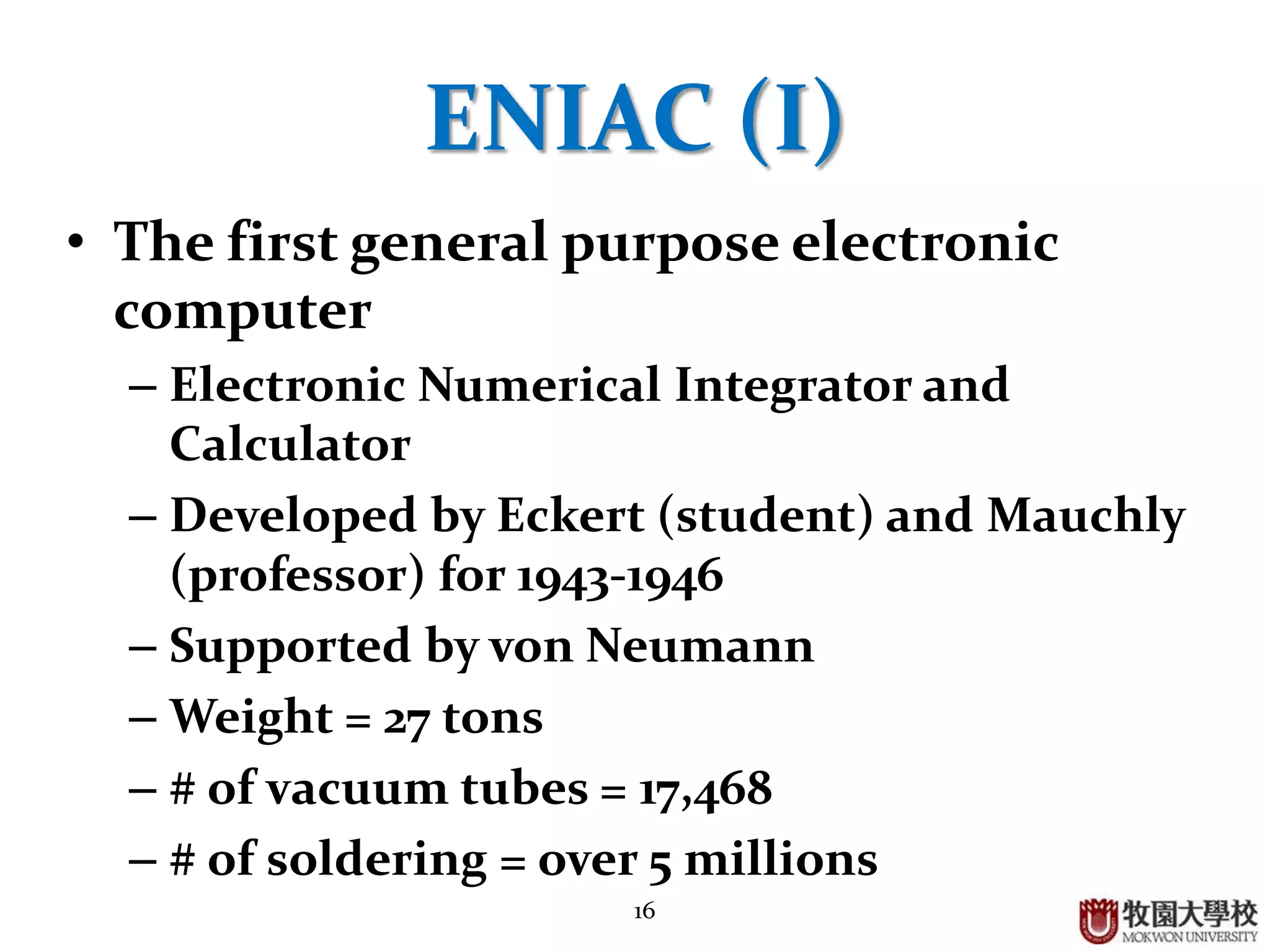
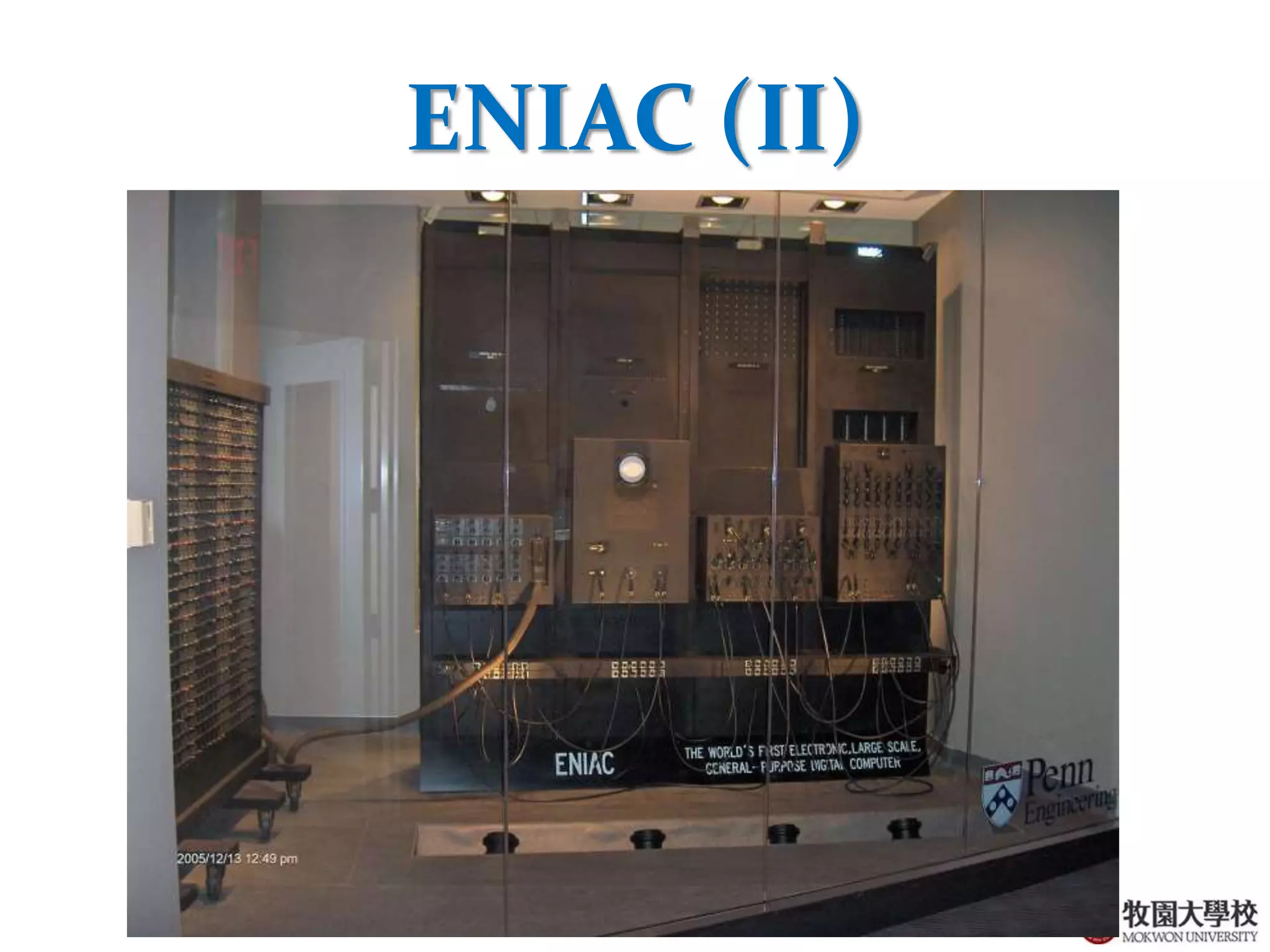
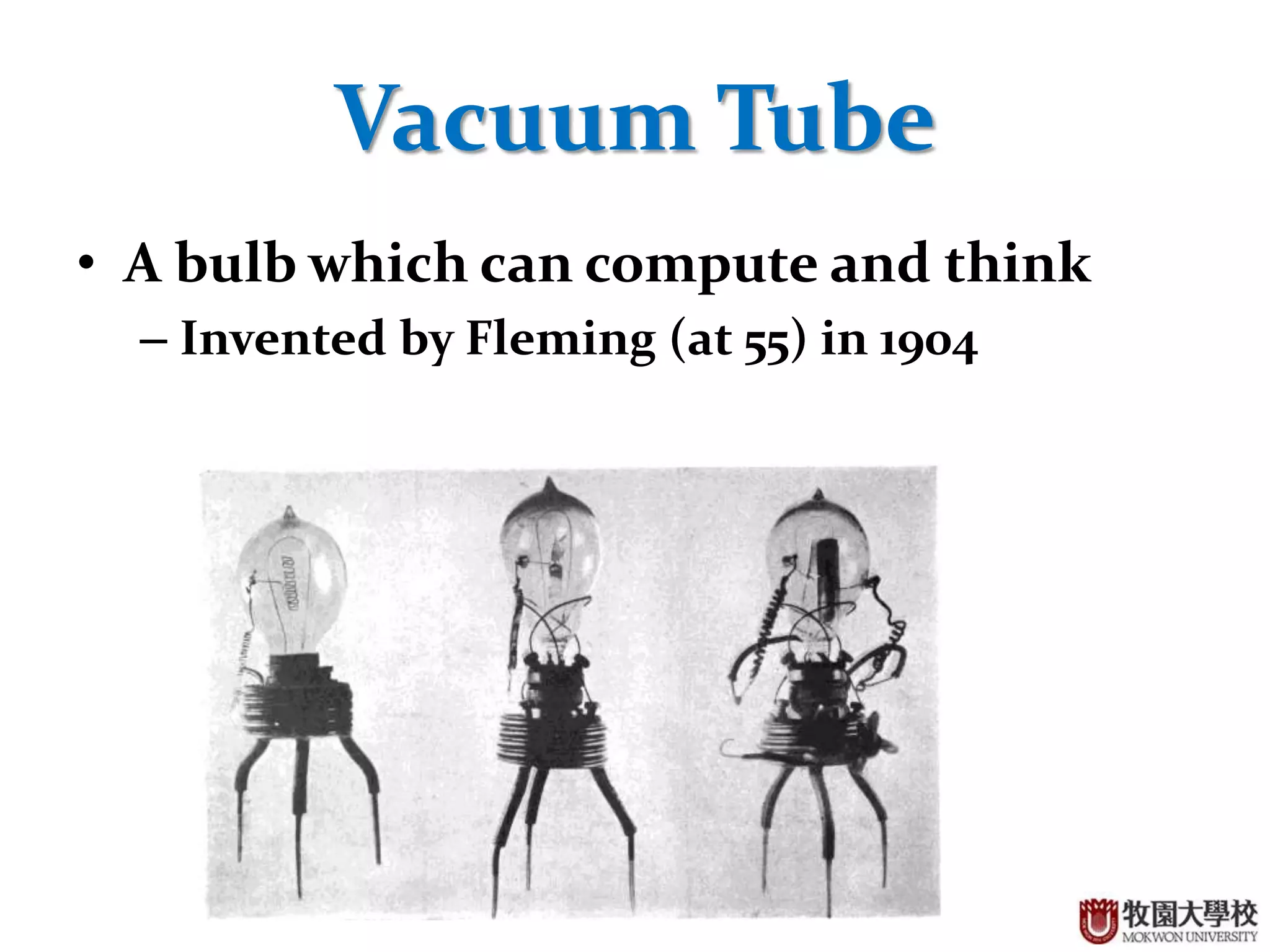
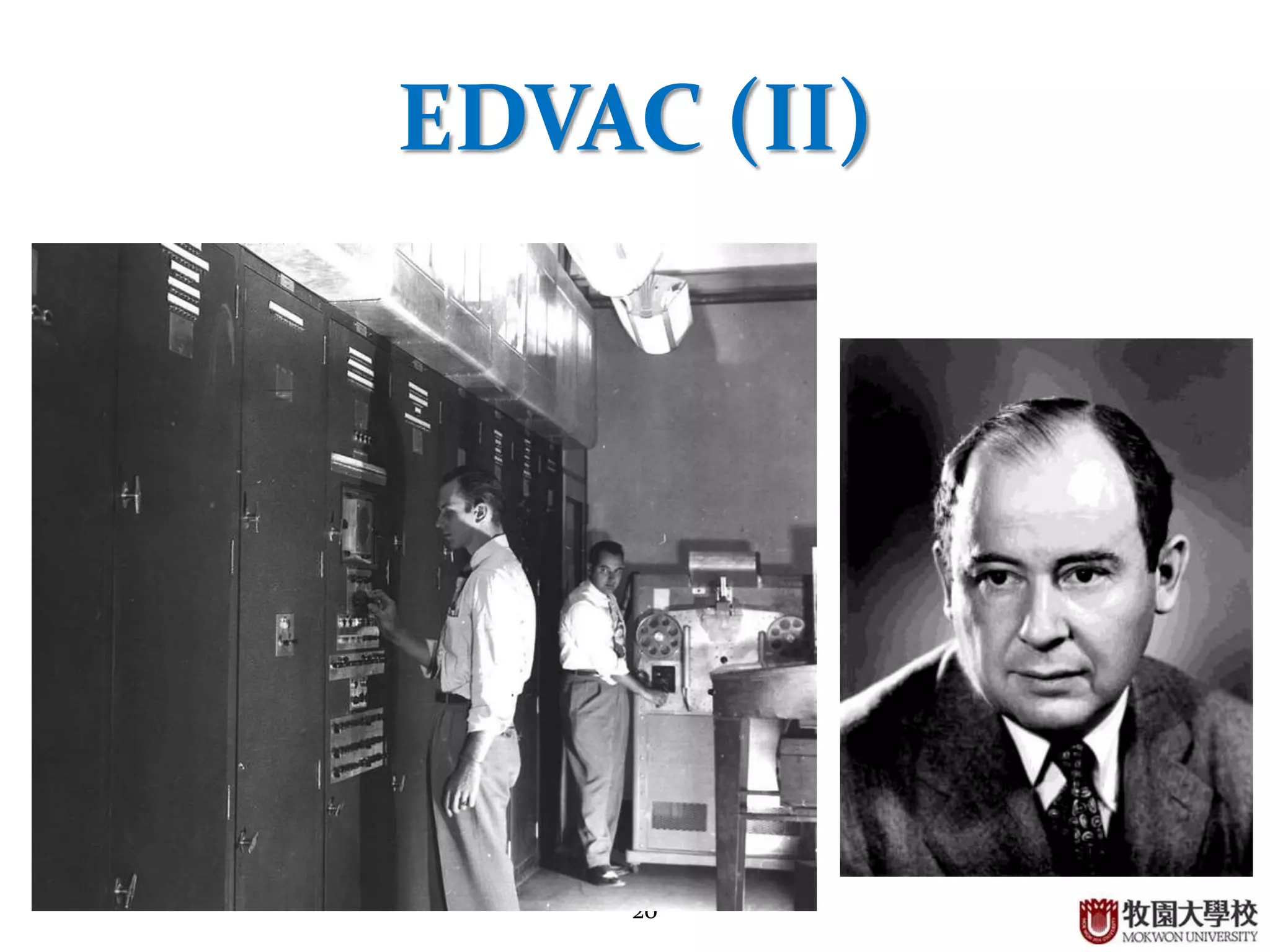
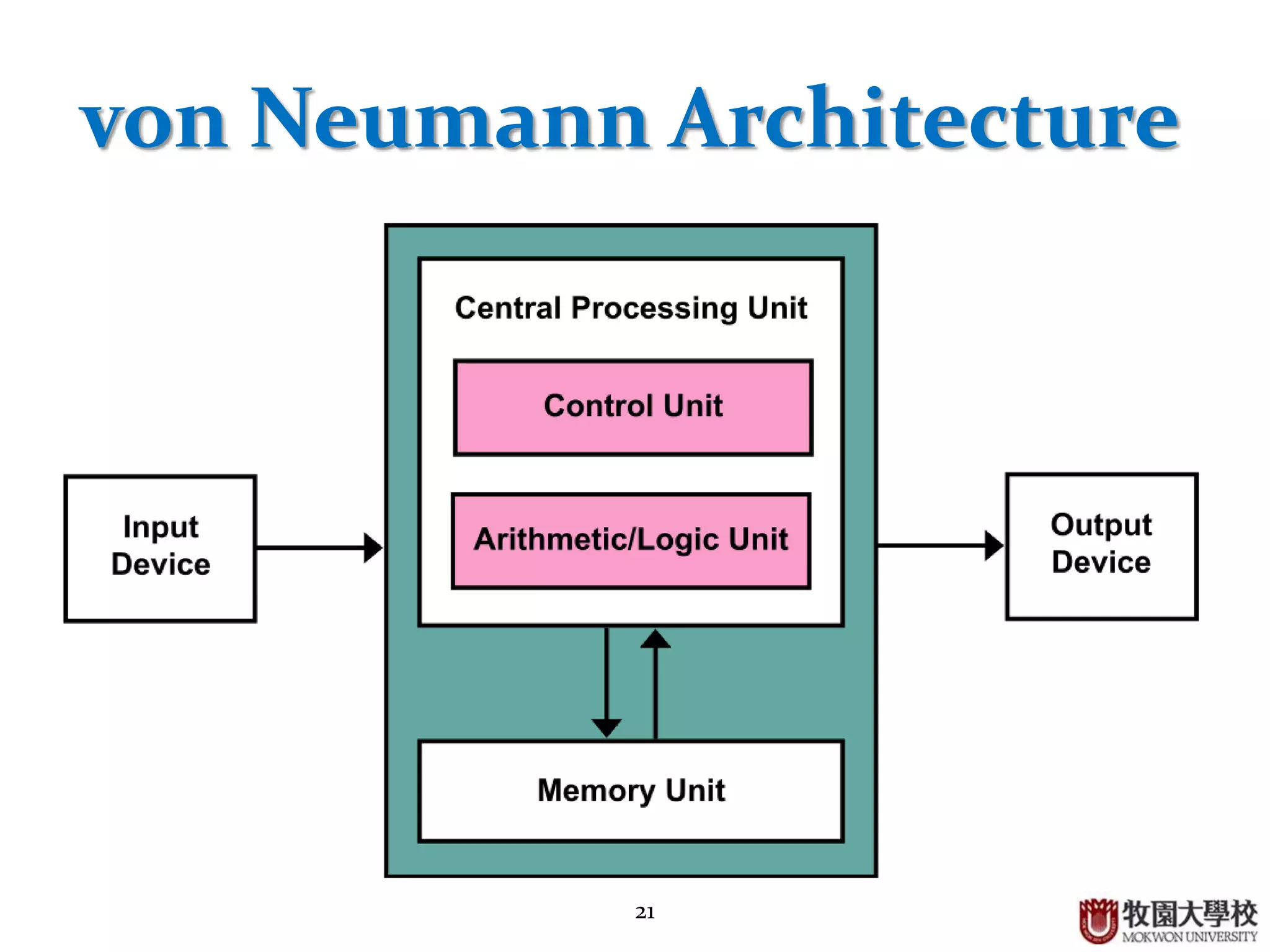
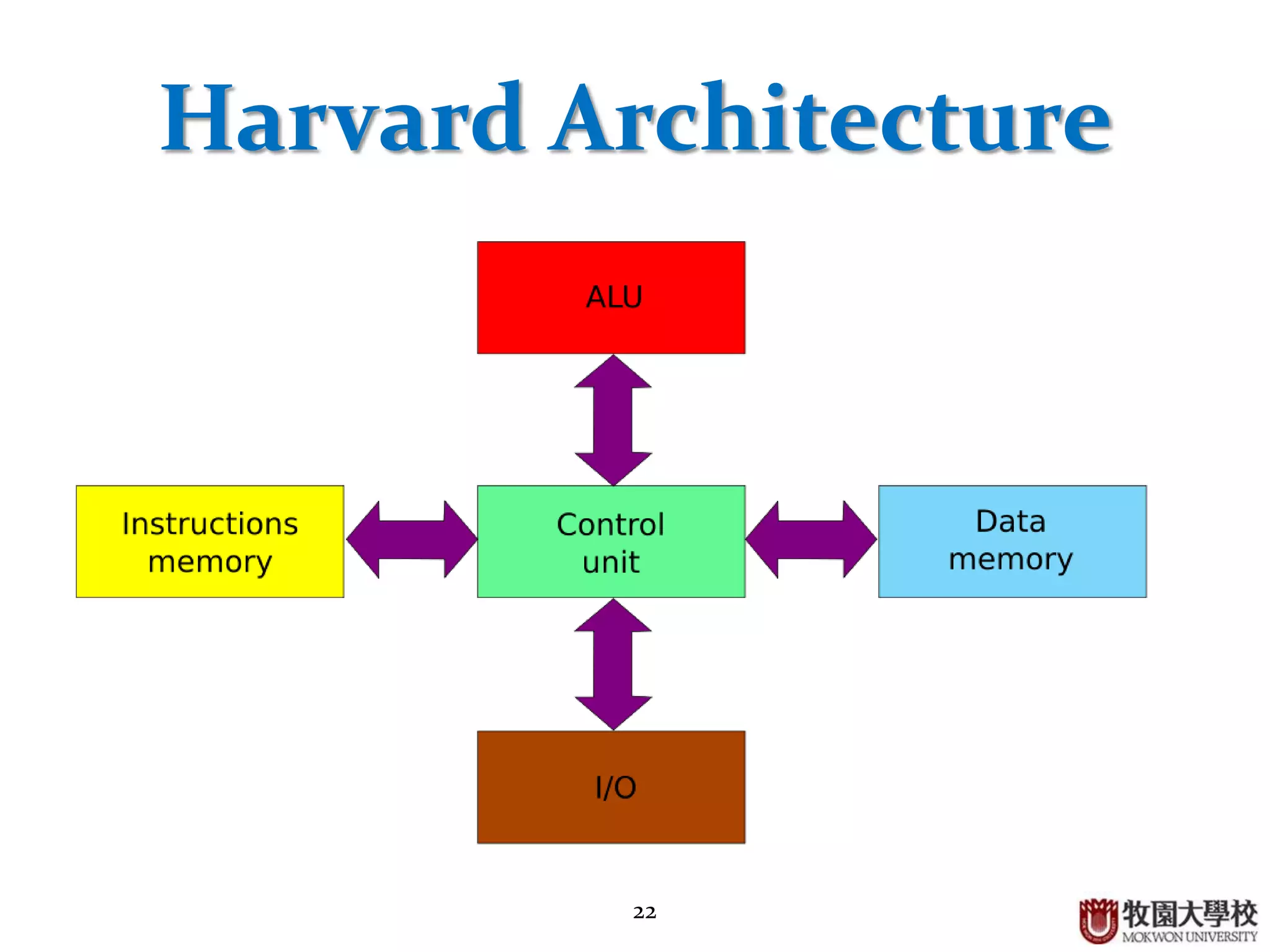
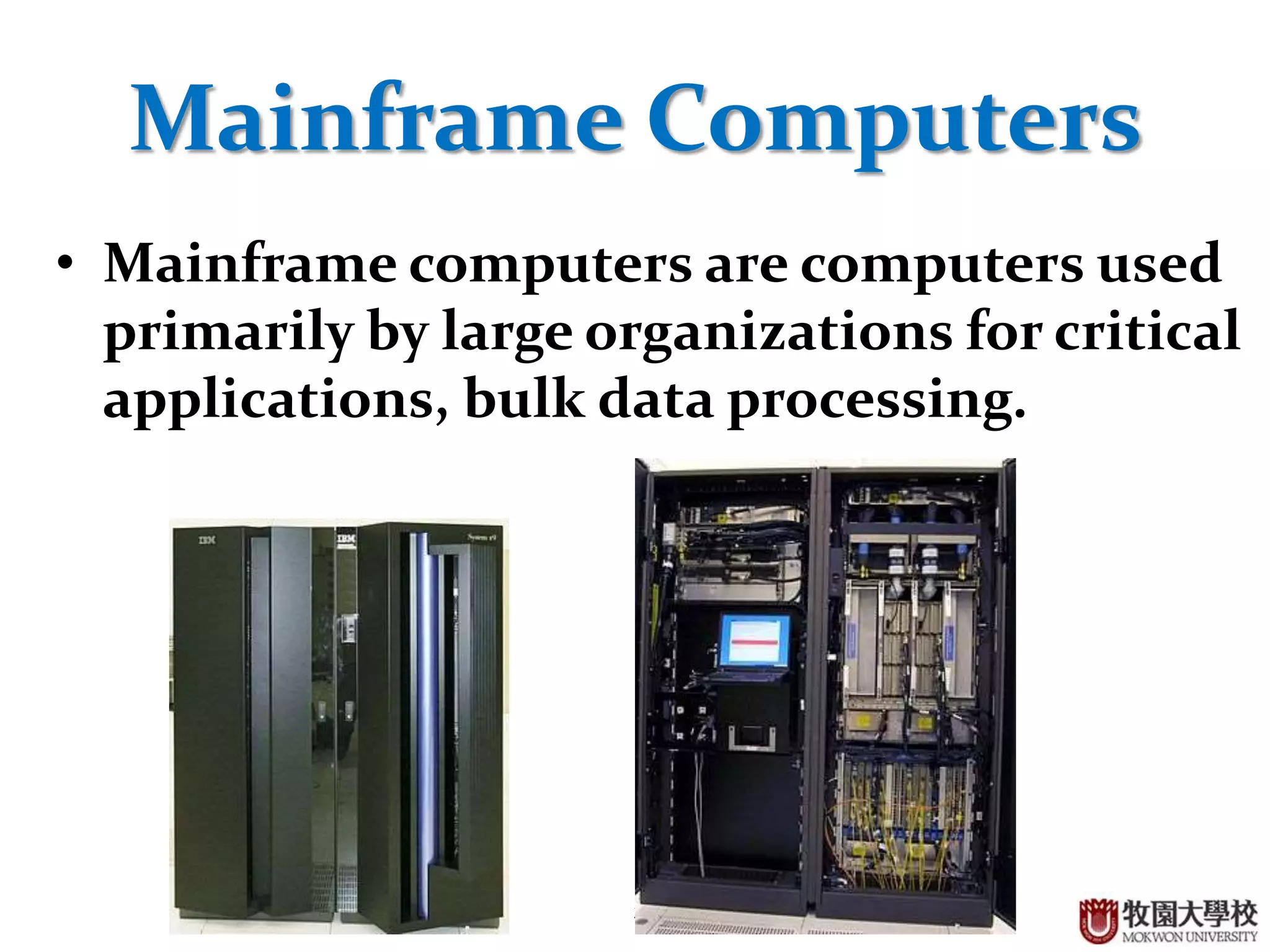
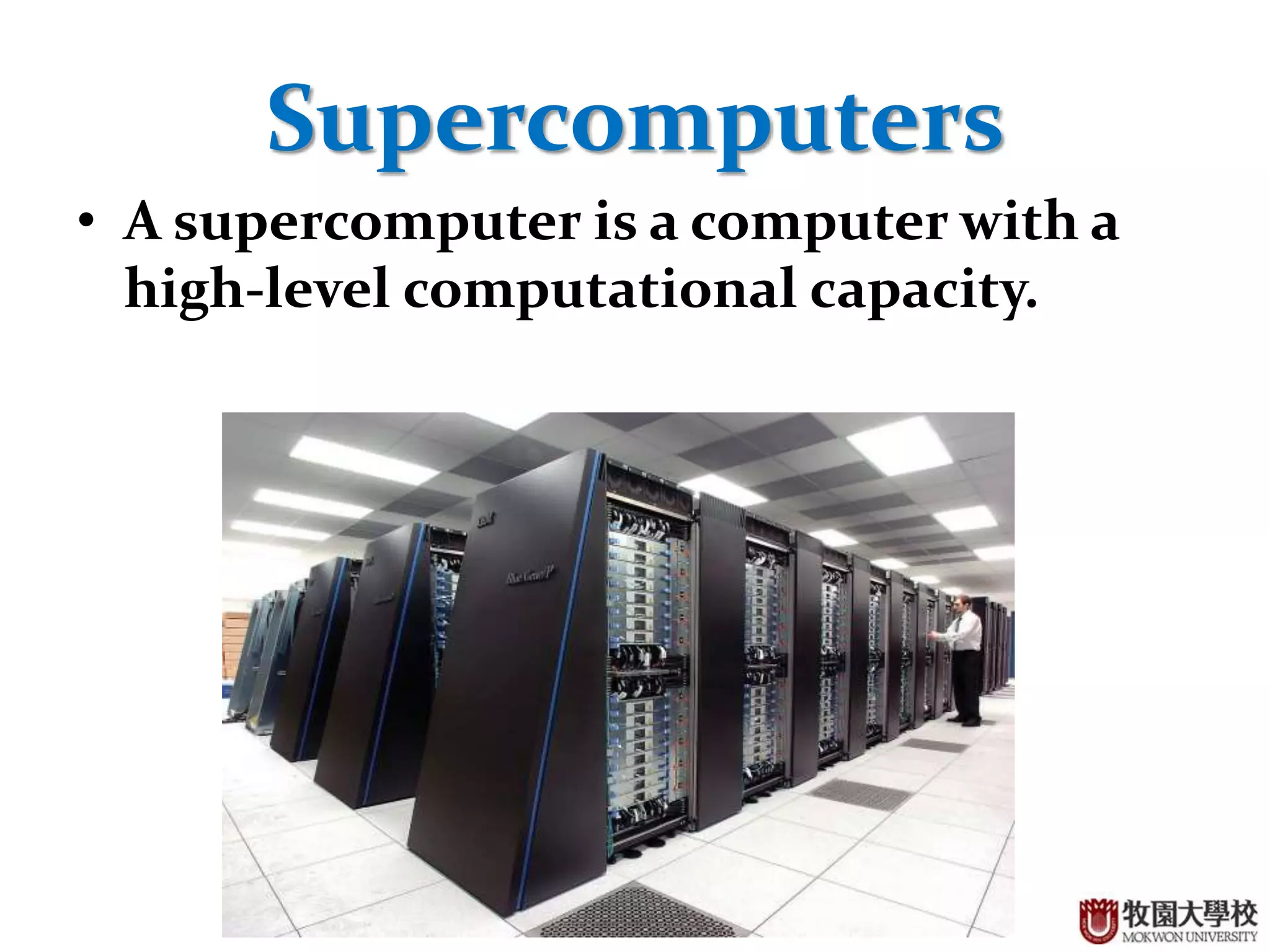
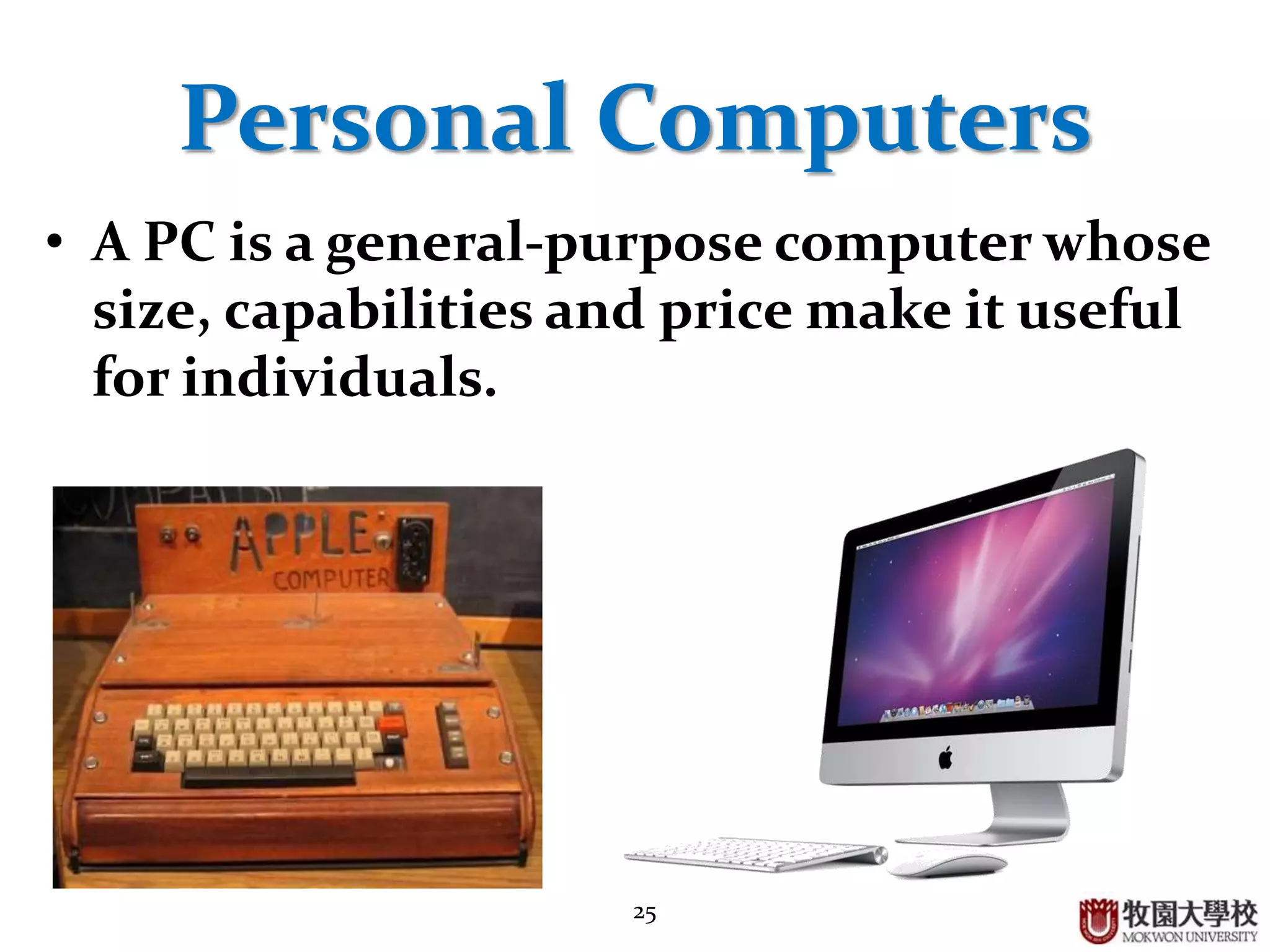
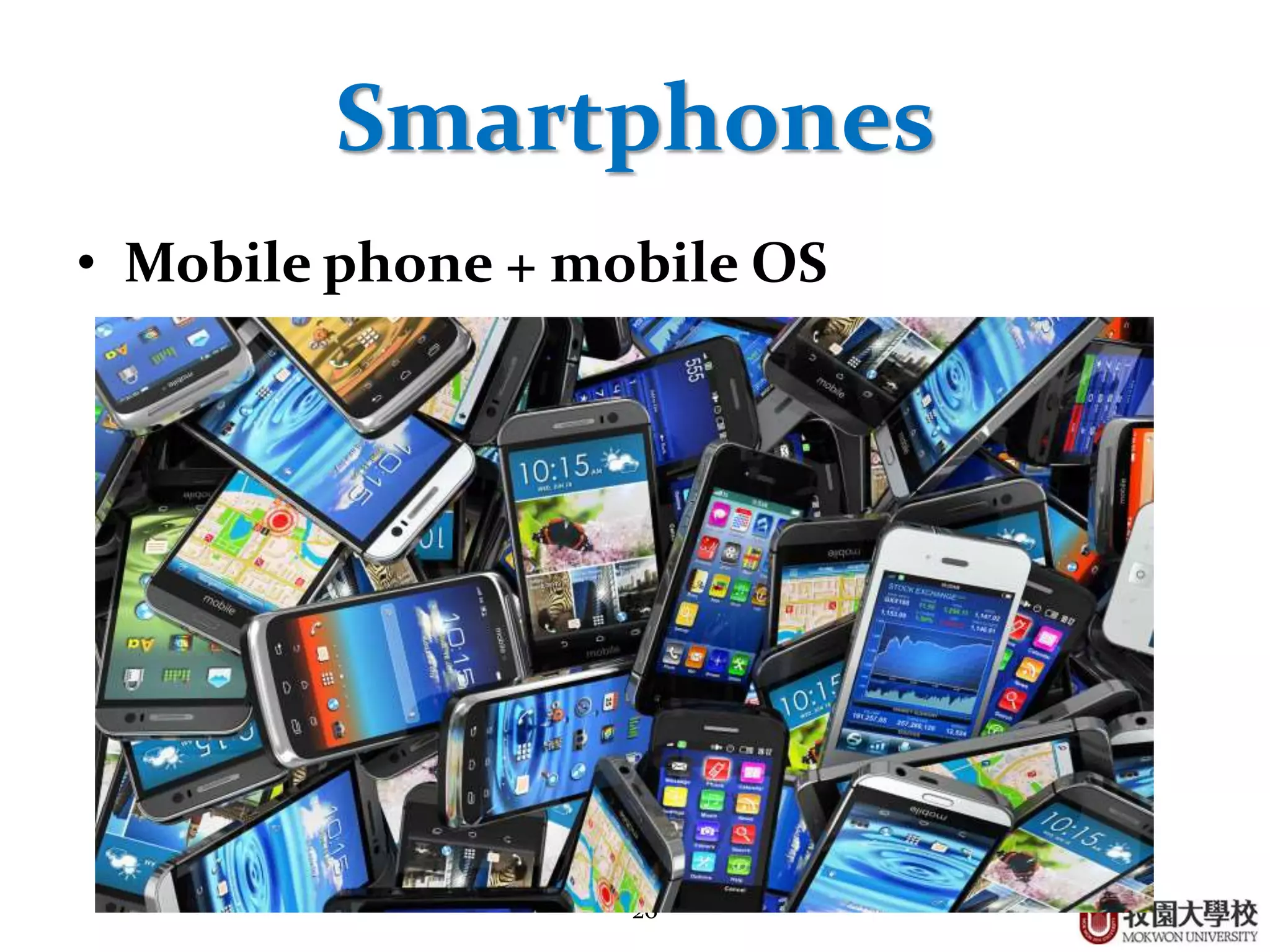
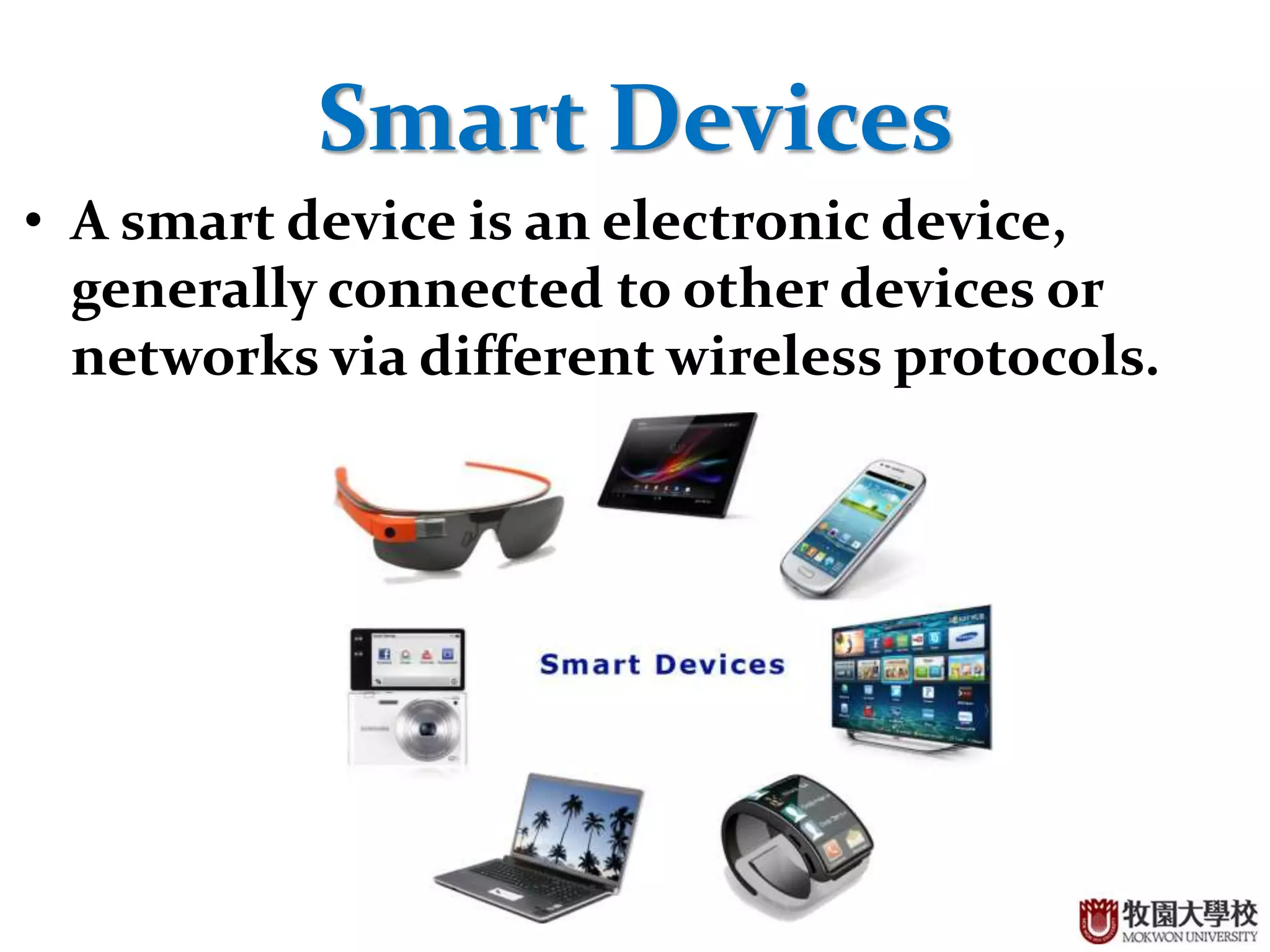

The document provides a brief history of computers from ancient counting devices like the abacus to modern computers. It describes early mechanical calculators invented by Pascal and Leibniz in the 1600s-1700s. Punched card systems were developed in the early 1800s to program textile looms, inspiring Charles Babbage's analytical engine, an early general-purpose computer. In the 1900s, electromechanical computers were developed including the Harvard Mark I and ENIAC, the first general-purpose electronic digital computer. The stored-program architecture was developed by John von Neumann, separating the processor and memory. This led to mainframe, supercomputer, personal computer, smartphone, and modern smart devices.
Overview of the presentation on the history of computers, including basic design concepts and an introduction to Arduino.
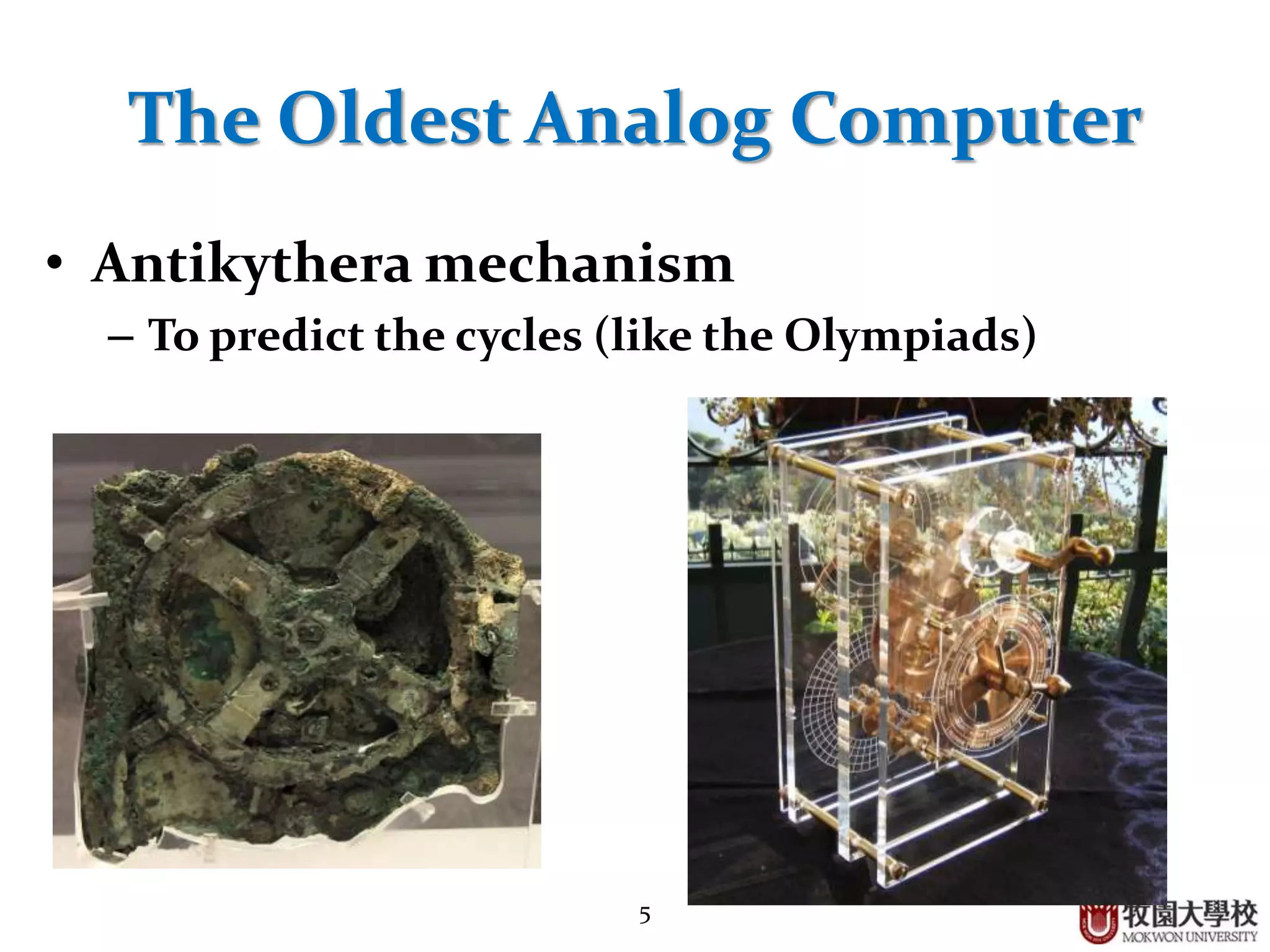
Discussion on early computing devices like the Abacus, Antikythera mechanism, and various calculators by Pascal and Leibniz.
Focus on Ada Lovelace as the first programmer and Hollerith's tabulating machine that led to IBM.
Development of significant computers such as Harvard Mark I, Colossus, ENIAC, and the architecture innovations by von Neumann.
Explanation of von Neumann architecture and Harvard architecture used in different computing systems.
Overview of various modern computer types including mainframes, supercomputers, personal computers, smartphones, and smart devices.


