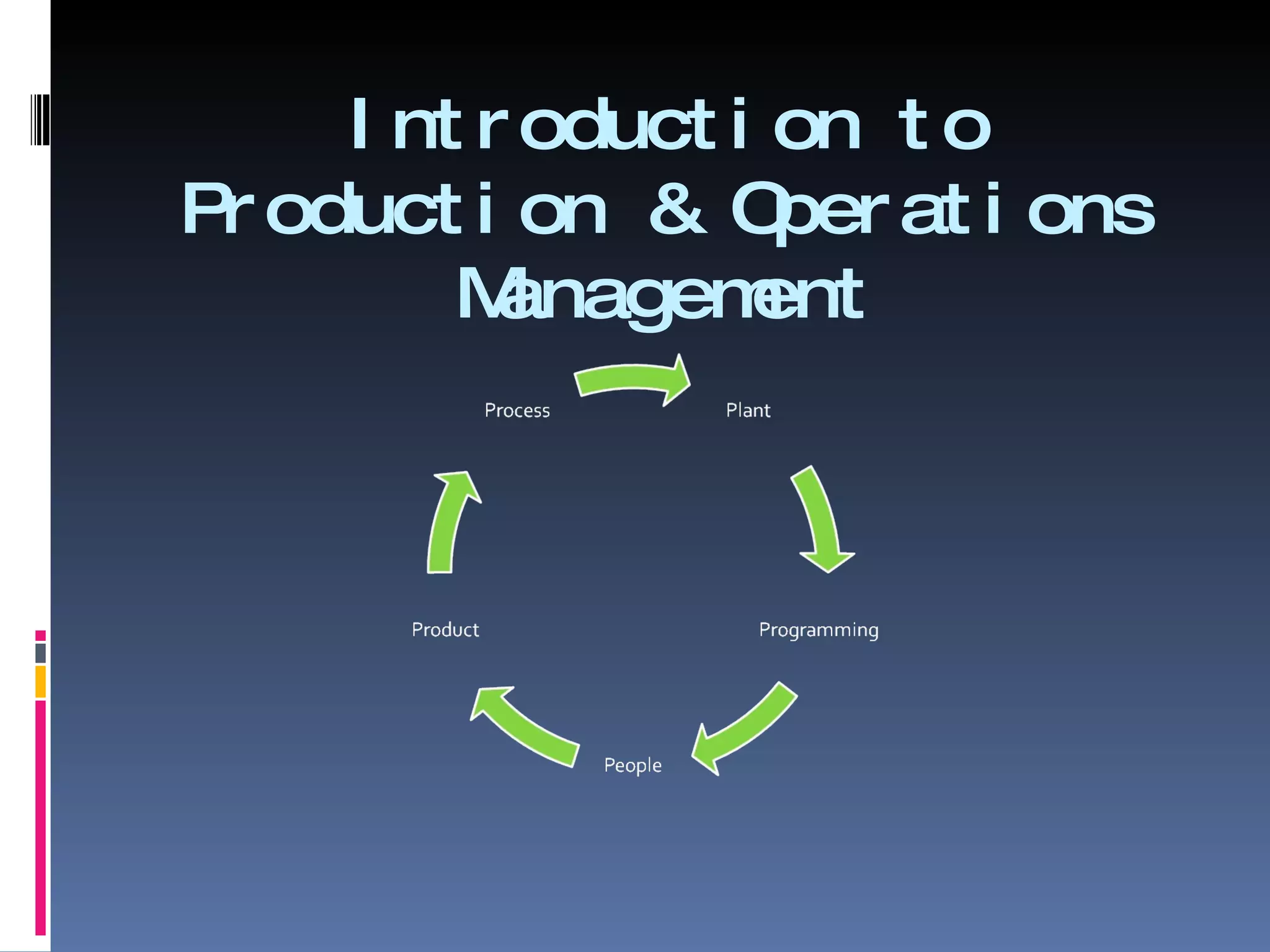
Introduction to Production & Operations Management
Introduction Production and operations management  (POM) is the management of an organization’s production system. A  production system  takes inputs and converts them into outputs. The  conversion process  is the predominant activity of a production system. The primary concern of an  operations manager  is the activities of the conversion process.
Today's Factors Affecting POM Global Competition U.S. Quality, Customer Service, and Cost Challenges Computers and Advanced Production Technology Growth of U.S. Service Sector Scarcity of Production Resources Issues of Social Responsibility
Different Ways to Study POM Production as a System Production as an Organization Function Decision Making in POM
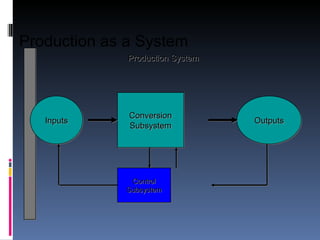
Production as a System Inputs Outputs Conversion Subsystem Production System Control Subsystem
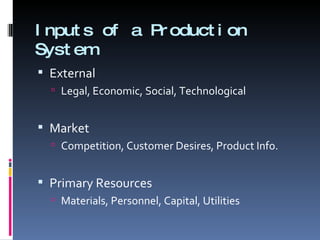
Inputs of a Production System External Legal, Economic, Social, Technological Market Competition, Customer Desires, Product Info. Primary Resources Materials, Personnel, Capital, Utilities
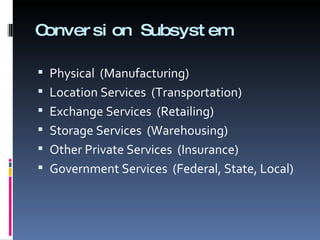
Conversion Subsystem Physical  (Manufacturing) Location Services  (Transportation) Exchange Services  (Retailing) Storage Services  (Warehousing) Other Private Services  (Insurance) Government Services  (Federal, State, Local)
Outputs of a Production System Direct Products Services Indirect Waste Pollution Technological Advances
Production as an Organization Function Companies cannot compete using marketing, finance, accounting, and engineering alone. They should on POM because that is where the vast majority of a firm’s workers, capital assets, and expenses reside. To succeed, a firm must have a strong operations function teaming with the other organization functions.
Decision Making in POM Strategic Decisions Operating Decisions Control Decisions
Strategic Decisions These decisions are of strategic importance and have long-term significance for the organization. Examples include deciding: the design for a new product’s production process where to locate a new factory whether to launch a new-product development plan
Operating Decisions These decisions are necessary if the ongoing production of goods and services is to satisfy market  demands and provide profits. Examples include deciding: how much finished-goods inventory to carry the amount of overtime to use next week the details for purchasing raw material next month
Control Decisions These decisions concern the day-to-day activities of workers, quality of products and services, production and overhead costs, and machine maintenance. Examples include deciding: labor cost standards for a new product frequency of preventive maintenance new quality control acceptance criteria
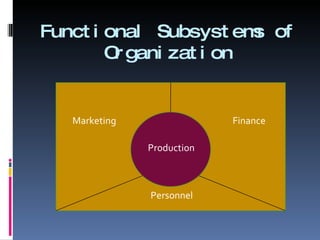
Functional Subsystems of Organization Production Marketing Finance Personnel
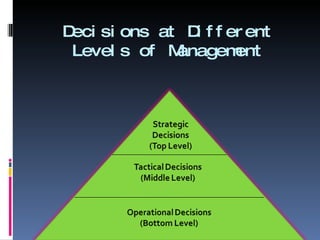
Decisions at Different Levels of Management


H:\Introduction To Production & Operations Management

  • 1.
    Introduction to Production& Operations Management
  • 2.
    Introduction Production andoperations management (POM) is the management of an organization’s production system. A production system takes inputs and converts them into outputs. The conversion process is the predominant activity of a production system. The primary concern of an operations manager is the activities of the conversion process.
  • 3.
    Today's Factors AffectingPOM Global Competition U.S. Quality, Customer Service, and Cost Challenges Computers and Advanced Production Technology Growth of U.S. Service Sector Scarcity of Production Resources Issues of Social Responsibility
  • 4.
    Different Ways toStudy POM Production as a System Production as an Organization Function Decision Making in POM
  • 5.
    Production as aSystem Inputs Outputs Conversion Subsystem Production System Control Subsystem
  • 6.
    Inputs of aProduction System External Legal, Economic, Social, Technological Market Competition, Customer Desires, Product Info. Primary Resources Materials, Personnel, Capital, Utilities
  • 7.
    Conversion Subsystem Physical (Manufacturing) Location Services (Transportation) Exchange Services (Retailing) Storage Services (Warehousing) Other Private Services (Insurance) Government Services (Federal, State, Local)
  • 8.
    Outputs of aProduction System Direct Products Services Indirect Waste Pollution Technological Advances
  • 9.
    Production as anOrganization Function Companies cannot compete using marketing, finance, accounting, and engineering alone. They should on POM because that is where the vast majority of a firm’s workers, capital assets, and expenses reside. To succeed, a firm must have a strong operations function teaming with the other organization functions.
  • 10.
    Decision Making inPOM Strategic Decisions Operating Decisions Control Decisions
  • 11.
    Strategic Decisions Thesedecisions are of strategic importance and have long-term significance for the organization. Examples include deciding: the design for a new product’s production process where to locate a new factory whether to launch a new-product development plan
  • 12.
    Operating Decisions Thesedecisions are necessary if the ongoing production of goods and services is to satisfy market demands and provide profits. Examples include deciding: how much finished-goods inventory to carry the amount of overtime to use next week the details for purchasing raw material next month
  • 13.
    Control Decisions Thesedecisions concern the day-to-day activities of workers, quality of products and services, production and overhead costs, and machine maintenance. Examples include deciding: labor cost standards for a new product frequency of preventive maintenance new quality control acceptance criteria
  • 14.
    Functional Subsystems ofOrganization Production Marketing Finance Personnel
  • 15.
    Decisions at DifferentLevels of Management
  • 16.
  • 17.