Course Title: Production & Operations Management
BBA 7th
Semester
Sessions Title: Introduction to Production & Operations Management
Gul e Faris Zaman
Learning Objectives
• Definition of Production & Operations Management
(POM)
• Organizational Functions
• Why Study POM?
• Goods Versus Services
• Career opportunities in Production/Operations
Management
What Is Production & Operations
Management?
Production is the creation of goods
and services
Production & Operations
management (POM) is the set of
activities that create value in the
form of goods and services by
transforming inputs into
outputs
Organizing to Produce Goods and
Services
• Essential functions:
1. Marketing – generates demand
2. Production/operations – creates the
product
3. Finance/accounting – tracks how well
the organization is doing, pays bills,
collects the money
4. Human Resources – provides labor, wage
and salary administration and job
evaluation
Organizational Charts
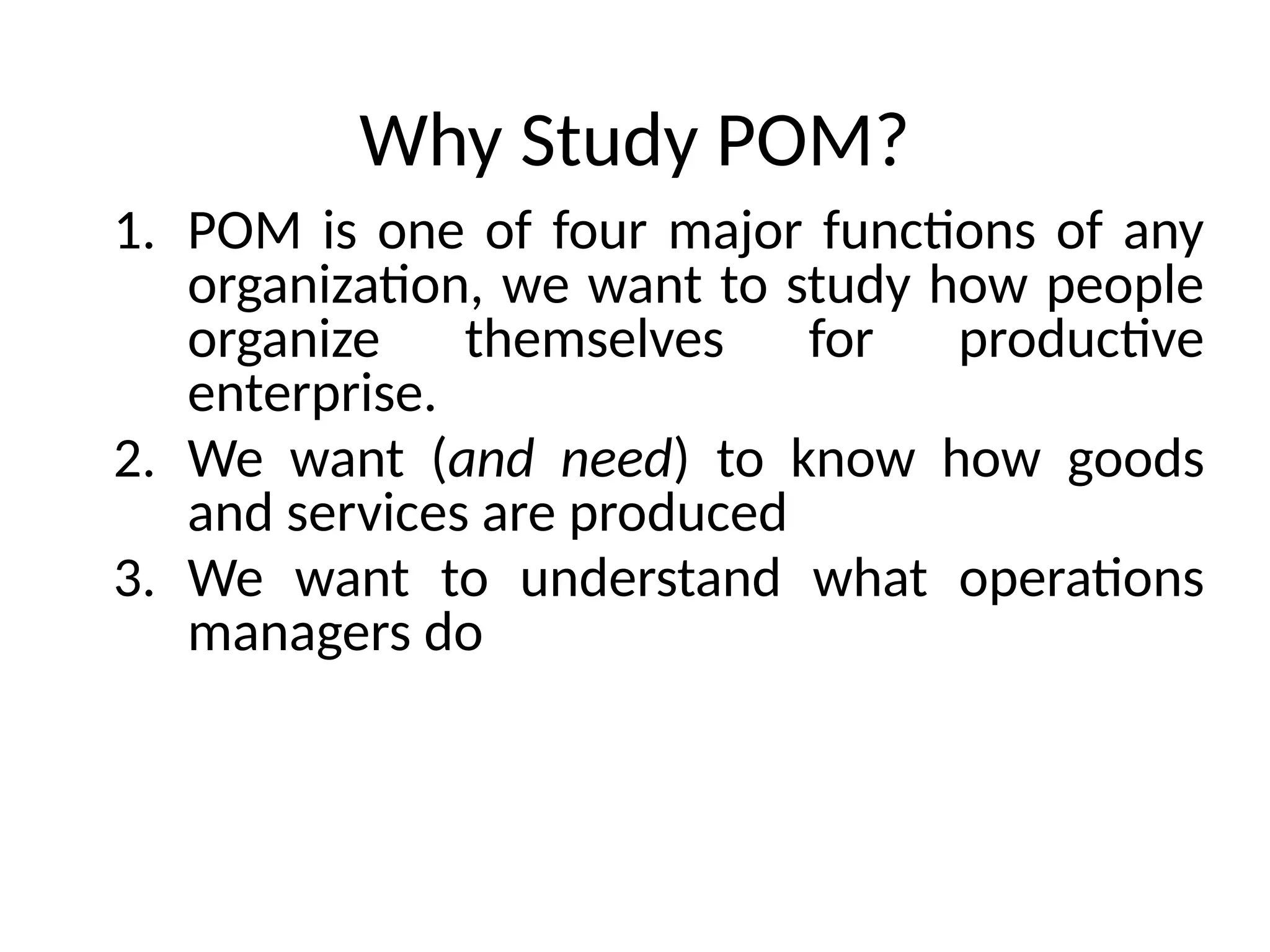
Why Study POM?
1. POM is one of four major functions of any
organization, we want to study how people
organize themselves for productive
enterprise.
2. We want (and need) to know how goods
and services are produced
3. We want to understand what operations
managers do
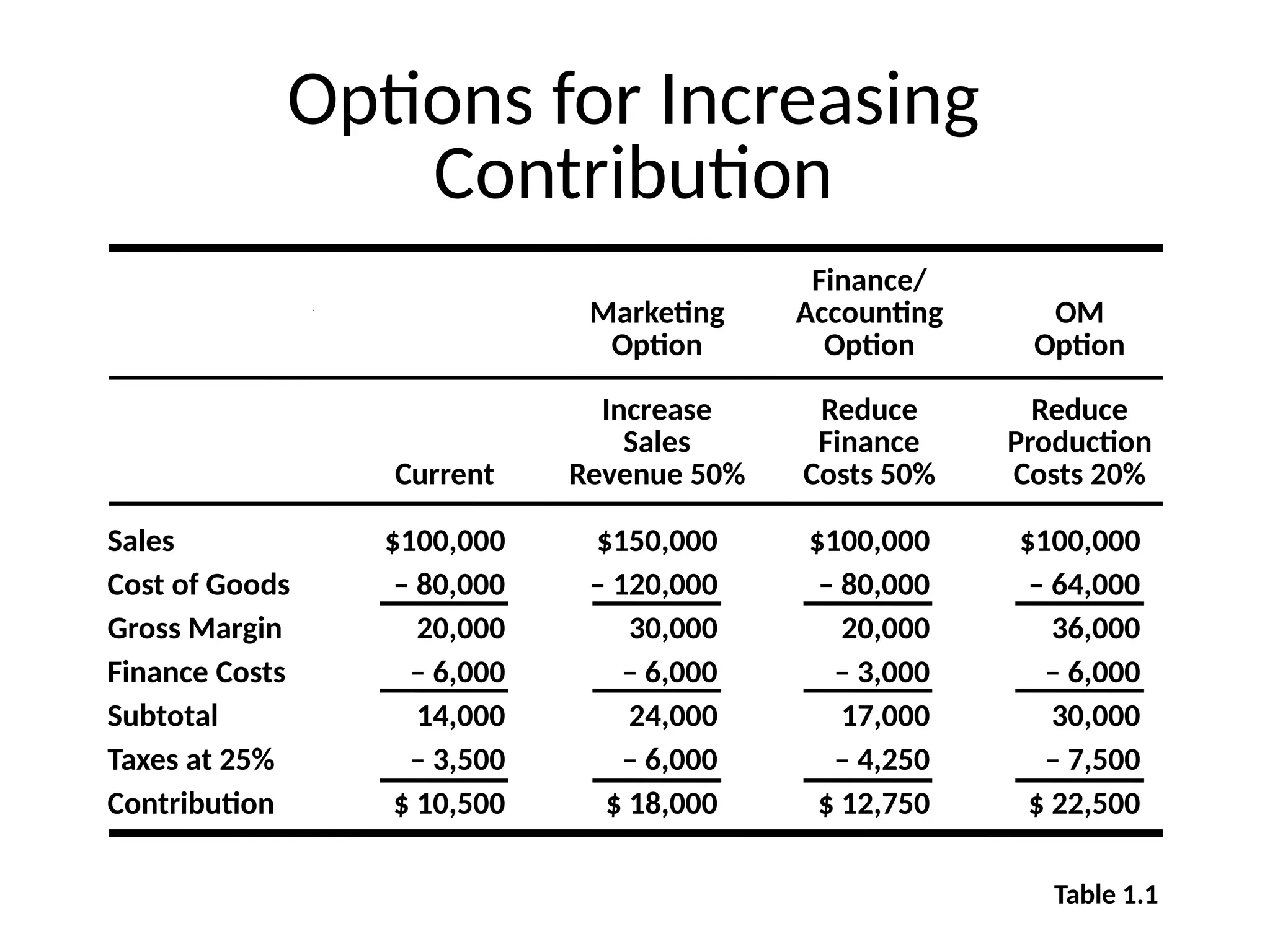
Options for Increasing
Contribution
Table 1.1
Sales $100,000 $150,000 $100,000 $100,000
Cost of Goods – 80,000 – 120,000 – 80,000 – 64,000
Gross Margin 20,000 30,000 20,000 36,000
Finance Costs – 6,000 – 6,000 – 3,000 – 6,000
Subtotal 14,000 24,000 17,000 30,000
Taxes at 25% – 3,500 – 6,000 – 4,250 – 7,500
Contribution $ 10,500 $ 18,000 $ 12,750 $ 22,500
Finance/
Marketing Accounting OM
Option Option Option
Increase Reduce Reduce
Sales Finance Production
Current Revenue 50% Costs 50% Costs 20%
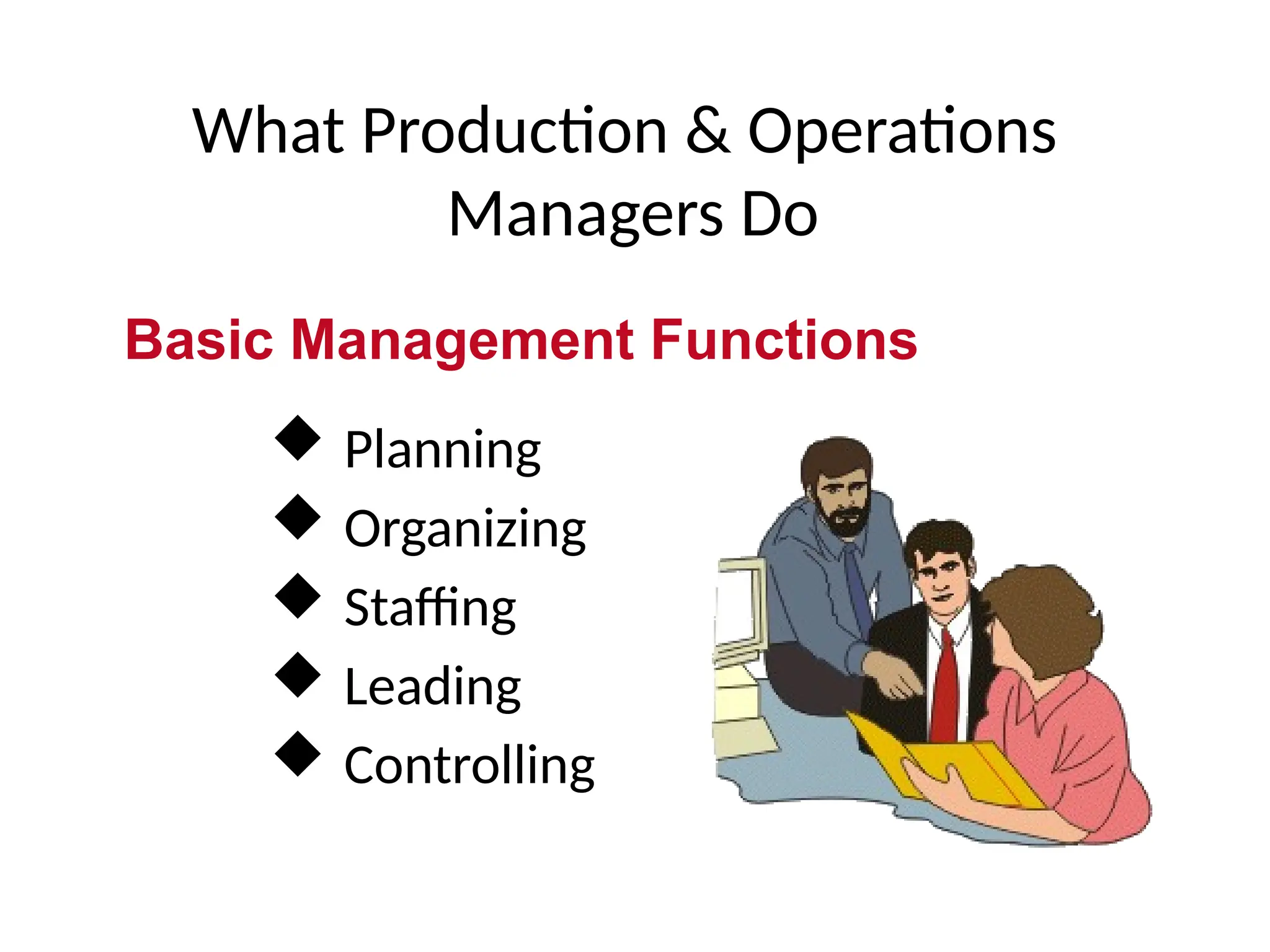
What Production & Operations
Managers Do
 Planning
 Organizing
 Staffing
 Leading
 Controlling
Basic Management Functions
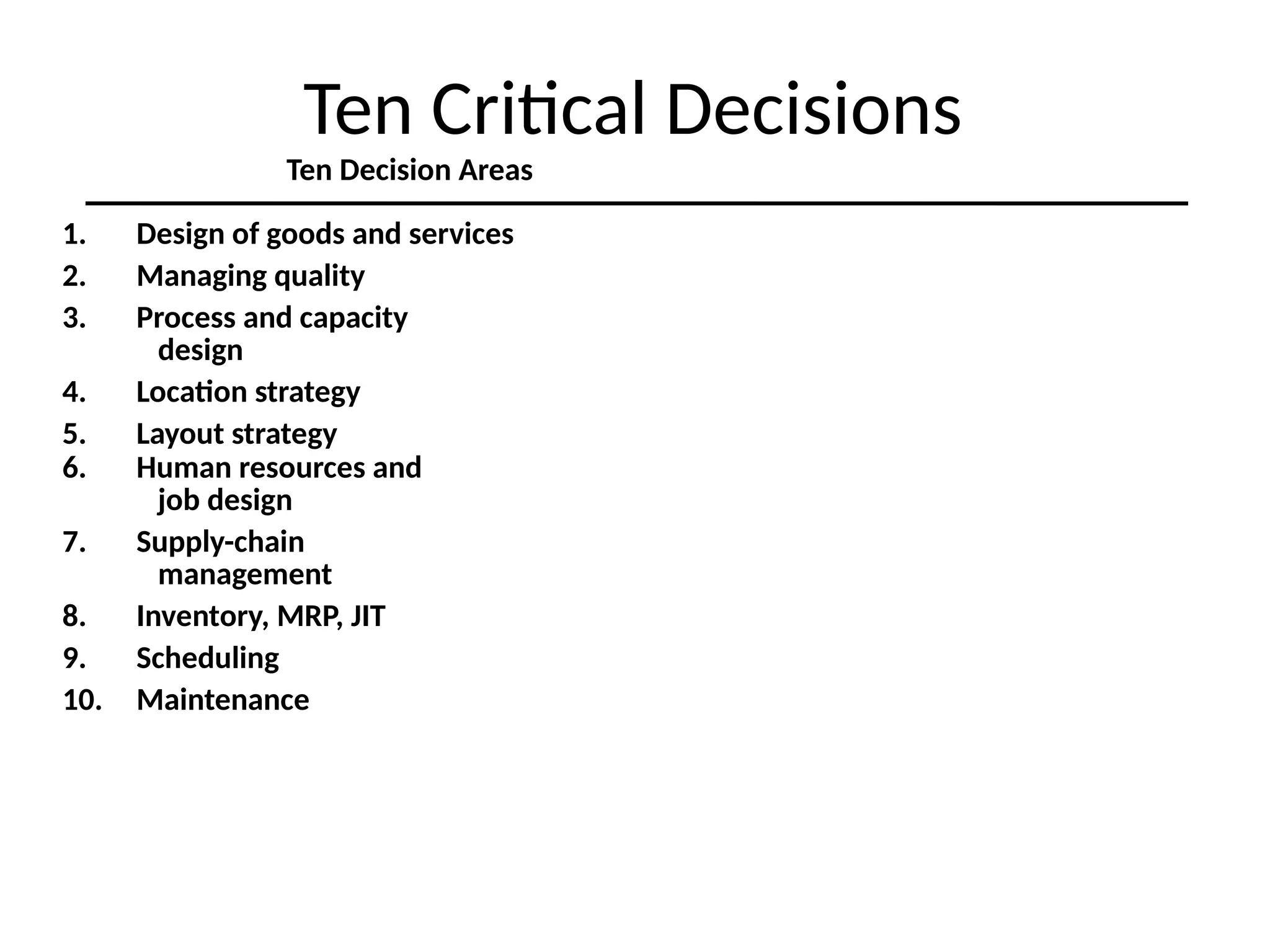
Ten Critical Decisions
Ten Decision Areas
1. Design of goods and services
2. Managing quality
3. Process and capacity
design
4. Location strategy
5. Layout strategy
6. Human resources and
job design
7. Supply-chain
management
8. Inventory, MRP, JIT
9. Scheduling
10. Maintenance
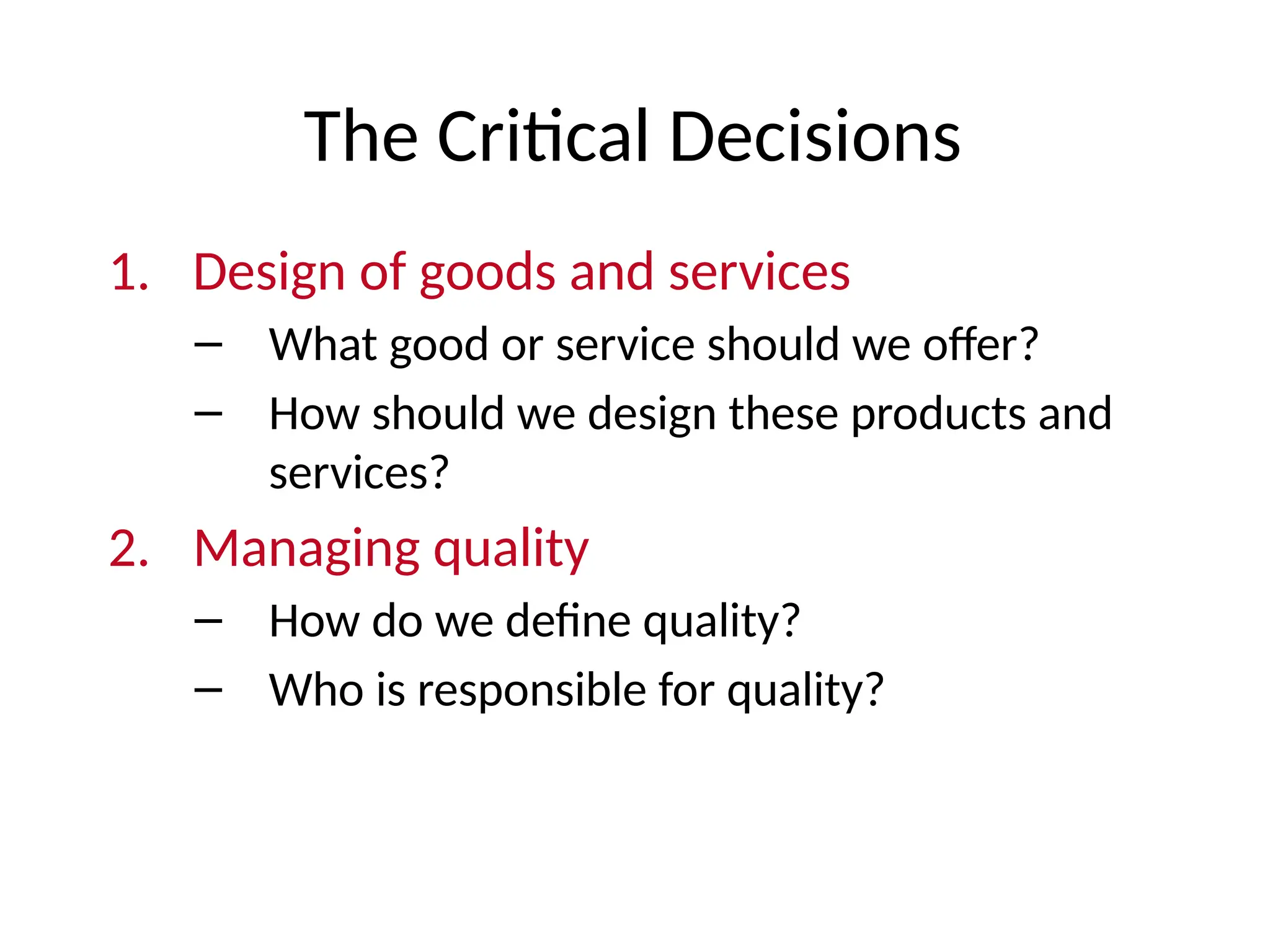
The Critical Decisions
1. Design of goods and services
– What good or service should we offer?
– How should we design these products and
services?
2. Managing quality
– How do we define quality?
– Who is responsible for quality?
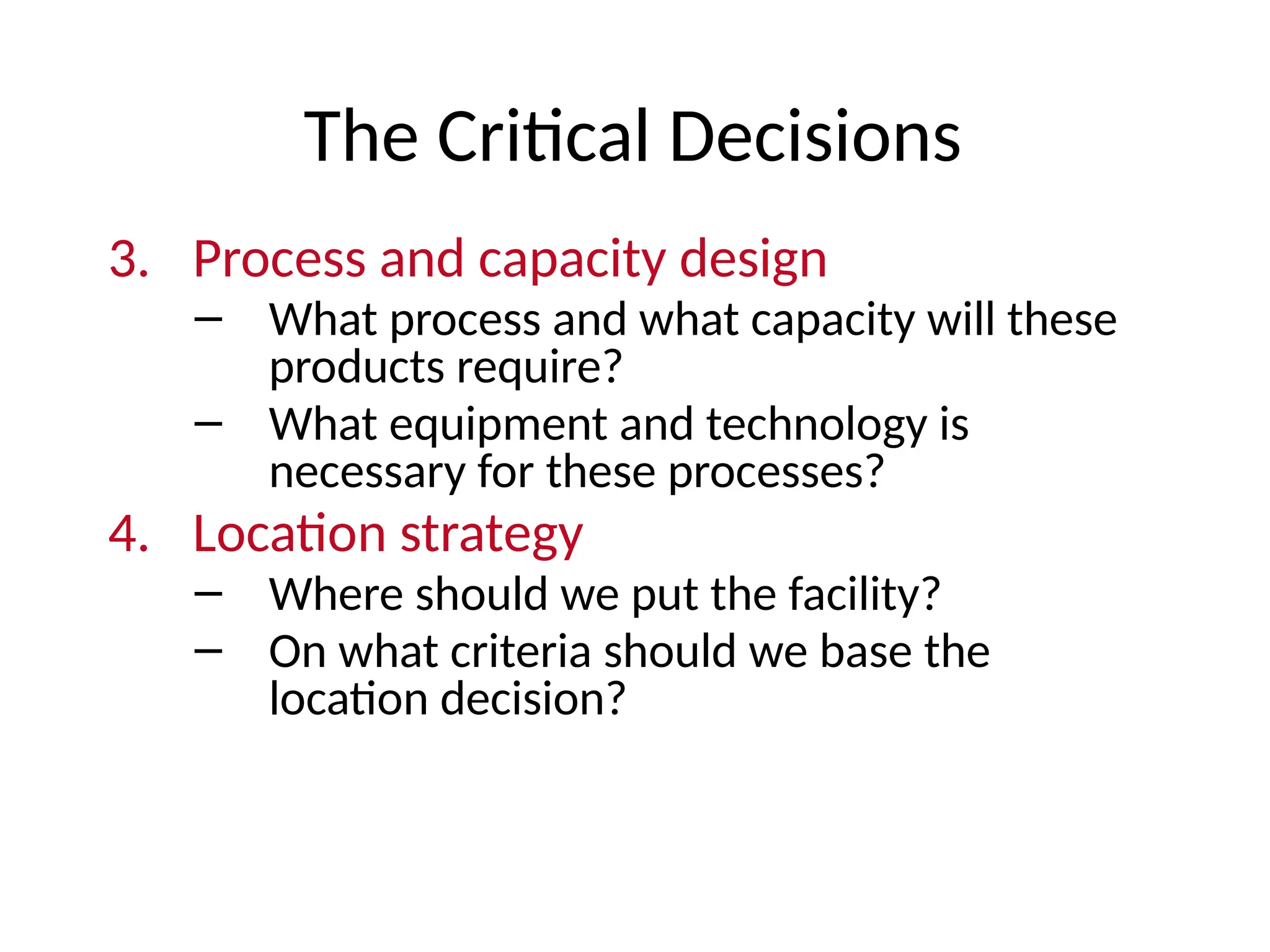
The Critical Decisions
3. Process and capacity design
– What process and what capacity will these
products require?
– What equipment and technology is
necessary for these processes?
4. Location strategy
– Where should we put the facility?
– On what criteria should we base the
location decision?
The Critical Decisions
5. Layout strategy
– How should we arrange the facility?
– How large must the facility be to meet our
plan?
6. Human resources and job design
– How do we provide a reasonable work
environment?
– How much can we expect our employees to
produce?
The Critical Decisions
7. Supply-chain management
– Should we make or buy this component?
– Who should be our suppliers and how can we
integrate them into our strategy?
8. Inventory, material requirements planning,
and JIT
– How much inventory of each item should we
have?
– When do we re-order?
The Critical Decisions
9. Intermediate and short–term scheduling
– Are we better off keeping people on the
payroll during slowdowns?
– Which jobs do we perform next?
10. Maintenance
– How do we build reliability into our
processes?
– Who is responsible for maintenance?
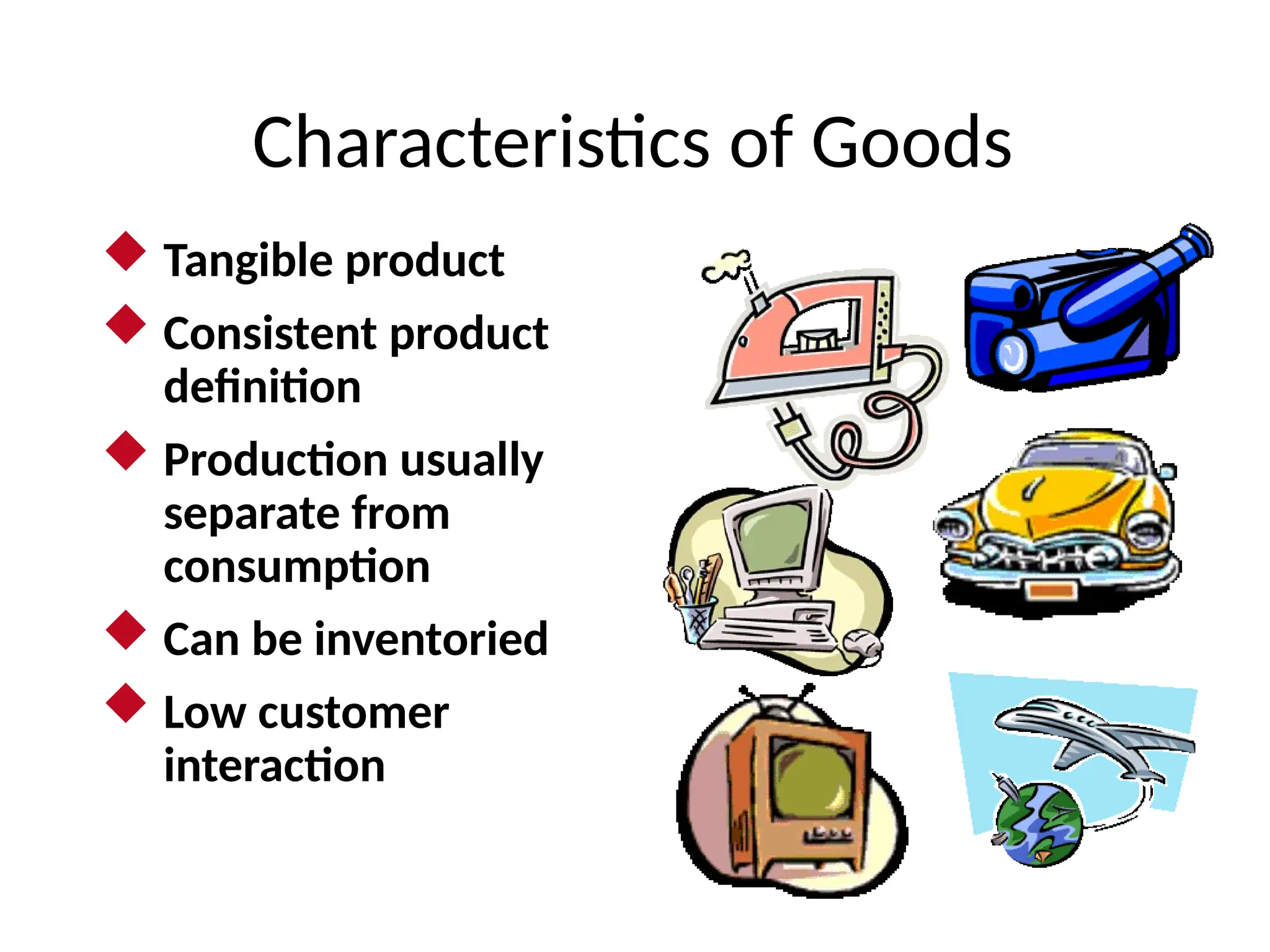
Characteristics of Goods
 Tangible product
 Consistent product
definition
 Production usually
separate from
consumption
 Can be inventoried
 Low customer
interaction
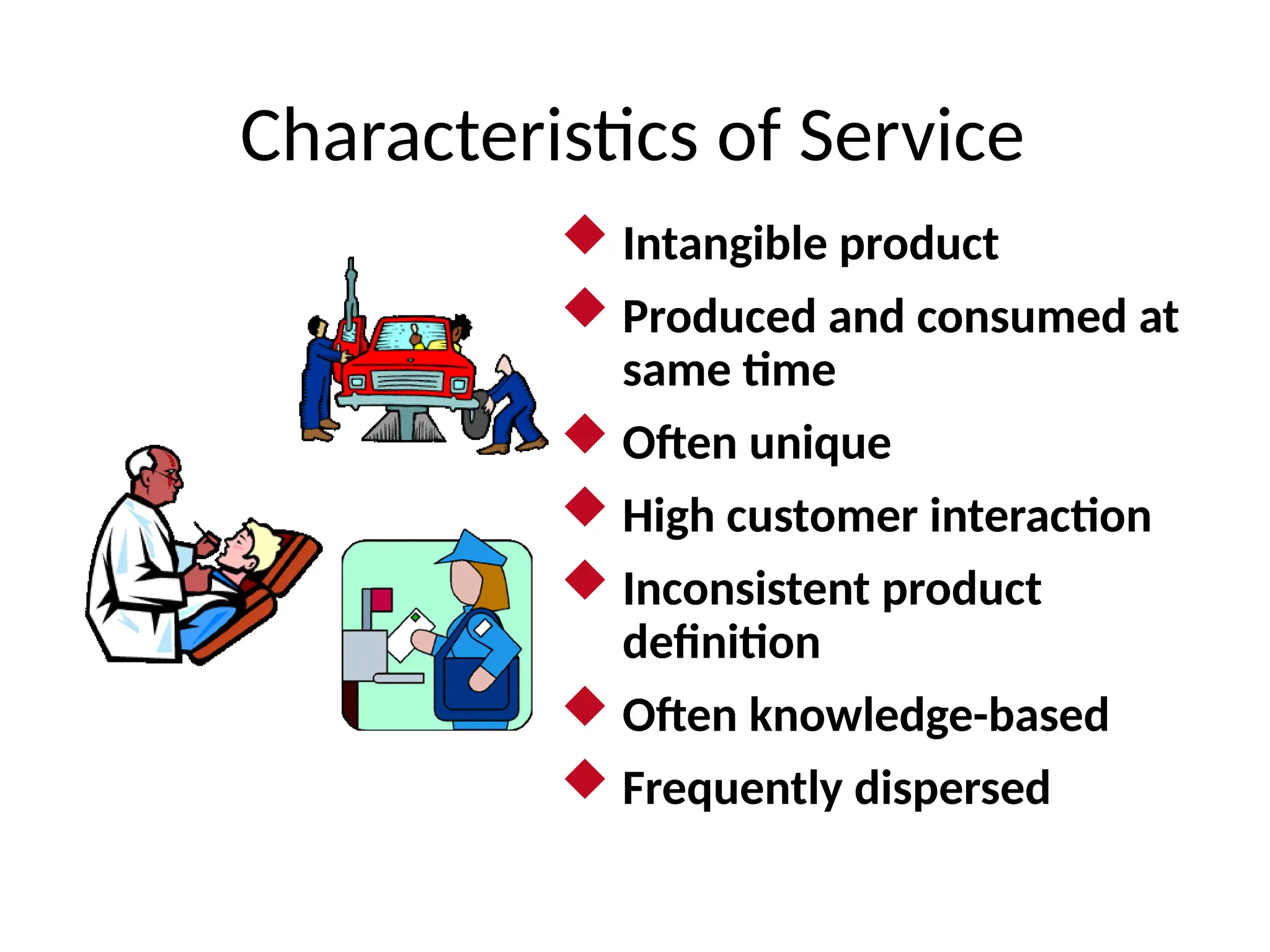
Characteristics of Service
 Intangible product
 Produced and consumed at
same time
 Often unique
 High customer interaction
 Inconsistent product
definition
 Often knowledge-based
 Frequently dispersed
New Trends in OM
• Global focus
• Environmentally sensitive production
• Rapid product development
• Empowered employees
• Supply-chain partnering
• Just-in-time performance
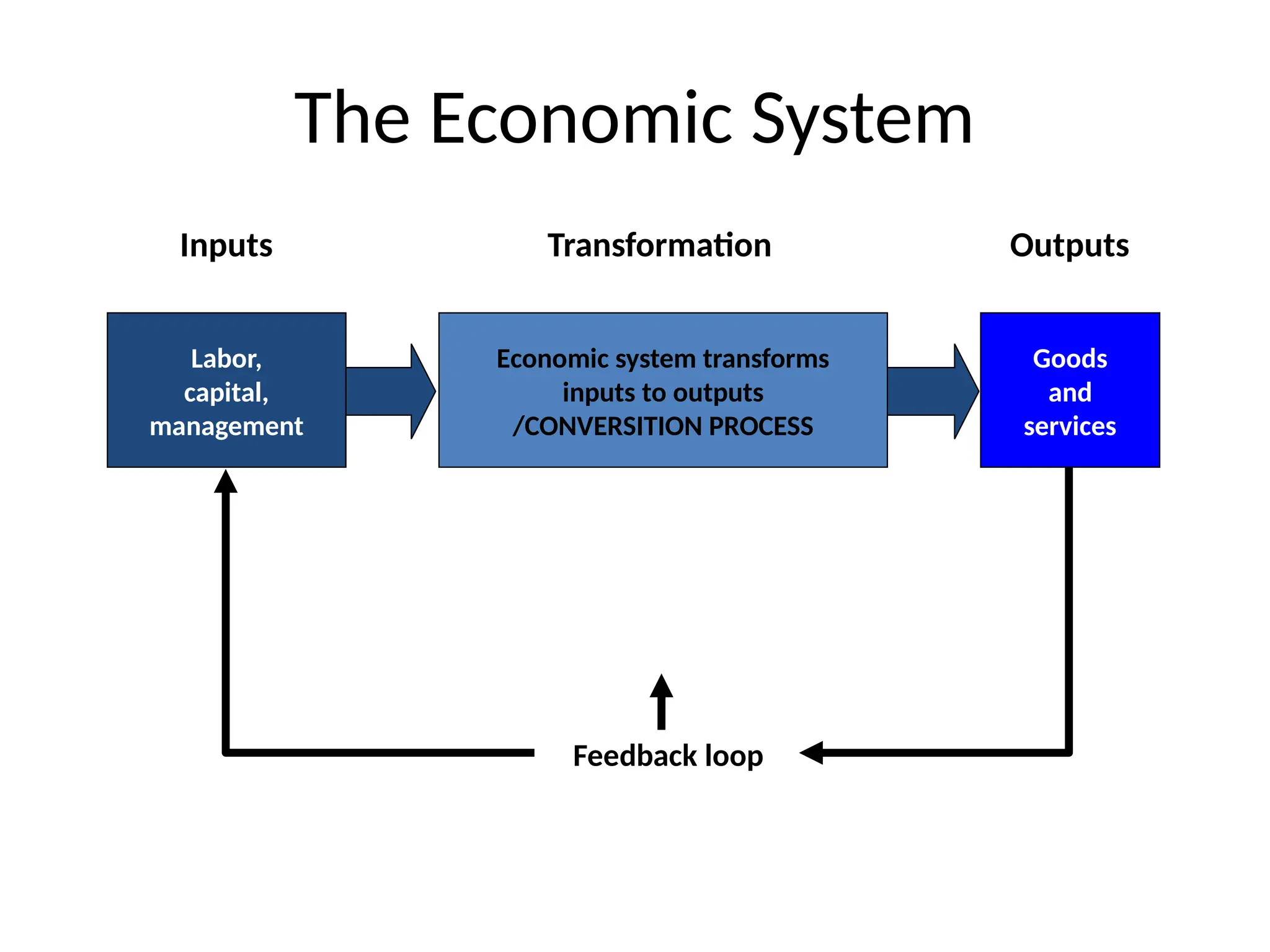
Feedback loop
Outputs
Goods
and
services
Transformation
Economic system transforms
inputs to outputs
/CONVERSITION PROCESS
The Economic System
Inputs
Labor,
capital,
management
Entry-Level Jobs in OM
– Purchasing planner/buyer
– Production (or operations) supervisor
– Production (or operations) scheduler/controller
– Production (or operations) analyst
– Inventory analyst
– Quality specialist
– Others …

CRITICAL DECISIONS OF PRODUCTION OR OPERATIONAL MANAGER

  • 1.
    Course Title: Production& Operations Management BBA 7th Semester Sessions Title: Introduction to Production & Operations Management Gul e Faris Zaman
  • 2.
    Learning Objectives • Definitionof Production & Operations Management (POM) • Organizational Functions • Why Study POM? • Goods Versus Services • Career opportunities in Production/Operations Management
  • 3.
    What Is Production& Operations Management? Production is the creation of goods and services Production & Operations management (POM) is the set of activities that create value in the form of goods and services by transforming inputs into outputs
  • 4.
    Organizing to ProduceGoods and Services • Essential functions: 1. Marketing – generates demand 2. Production/operations – creates the product 3. Finance/accounting – tracks how well the organization is doing, pays bills, collects the money 4. Human Resources – provides labor, wage and salary administration and job evaluation
  • 5.
  • 6.
  • 7.
    Why Study POM? 1.POM is one of four major functions of any organization, we want to study how people organize themselves for productive enterprise. 2. We want (and need) to know how goods and services are produced 3. We want to understand what operations managers do
  • 8.
    Options for Increasing Contribution Table1.1 Sales $100,000 $150,000 $100,000 $100,000 Cost of Goods – 80,000 – 120,000 – 80,000 – 64,000 Gross Margin 20,000 30,000 20,000 36,000 Finance Costs – 6,000 – 6,000 – 3,000 – 6,000 Subtotal 14,000 24,000 17,000 30,000 Taxes at 25% – 3,500 – 6,000 – 4,250 – 7,500 Contribution $ 10,500 $ 18,000 $ 12,750 $ 22,500 Finance/ Marketing Accounting OM Option Option Option Increase Reduce Reduce Sales Finance Production Current Revenue 50% Costs 50% Costs 20%
  • 9.
    What Production &Operations Managers Do  Planning  Organizing  Staffing  Leading  Controlling Basic Management Functions
  • 10.
    Ten Critical Decisions TenDecision Areas 1. Design of goods and services 2. Managing quality 3. Process and capacity design 4. Location strategy 5. Layout strategy 6. Human resources and job design 7. Supply-chain management 8. Inventory, MRP, JIT 9. Scheduling 10. Maintenance
  • 11.
    The Critical Decisions 1.Design of goods and services – What good or service should we offer? – How should we design these products and services? 2. Managing quality – How do we define quality? – Who is responsible for quality?
  • 12.
    The Critical Decisions 3.Process and capacity design – What process and what capacity will these products require? – What equipment and technology is necessary for these processes? 4. Location strategy – Where should we put the facility? – On what criteria should we base the location decision?
  • 13.
    The Critical Decisions 5.Layout strategy – How should we arrange the facility? – How large must the facility be to meet our plan? 6. Human resources and job design – How do we provide a reasonable work environment? – How much can we expect our employees to produce?
  • 14.
    The Critical Decisions 7.Supply-chain management – Should we make or buy this component? – Who should be our suppliers and how can we integrate them into our strategy? 8. Inventory, material requirements planning, and JIT – How much inventory of each item should we have? – When do we re-order?
  • 15.
    The Critical Decisions 9.Intermediate and short–term scheduling – Are we better off keeping people on the payroll during slowdowns? – Which jobs do we perform next? 10. Maintenance – How do we build reliability into our processes? – Who is responsible for maintenance?
  • 16.
    Characteristics of Goods Tangible product  Consistent product definition  Production usually separate from consumption  Can be inventoried  Low customer interaction
  • 17.
    Characteristics of Service Intangible product  Produced and consumed at same time  Often unique  High customer interaction  Inconsistent product definition  Often knowledge-based  Frequently dispersed
  • 18.
    New Trends inOM • Global focus • Environmentally sensitive production • Rapid product development • Empowered employees • Supply-chain partnering • Just-in-time performance
  • 19.
    Feedback loop Outputs Goods and services Transformation Economic systemtransforms inputs to outputs /CONVERSITION PROCESS The Economic System Inputs Labor, capital, management
  • 20.
    Entry-Level Jobs inOM – Purchasing planner/buyer – Production (or operations) supervisor – Production (or operations) scheduler/controller – Production (or operations) analyst – Inventory analyst – Quality specialist – Others …

Editor's Notes

  • #13 Using this and subsequent slides, you might go through in more detail the decisions of Operations Management. While greater detail is provided by these slides than the earlier one, you may still decide to have the students contribute examples from their own experience.