Downloaded 712 times






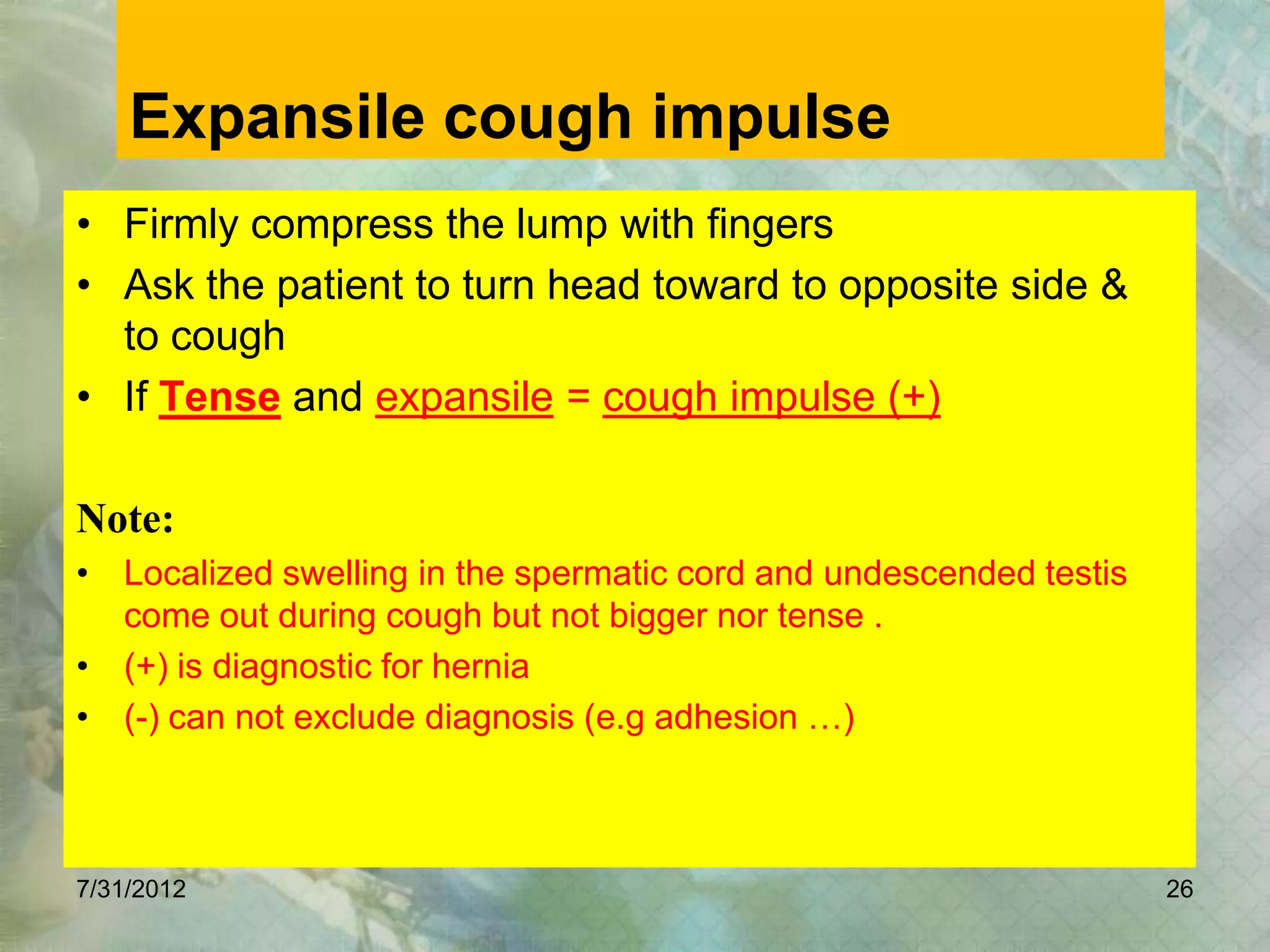


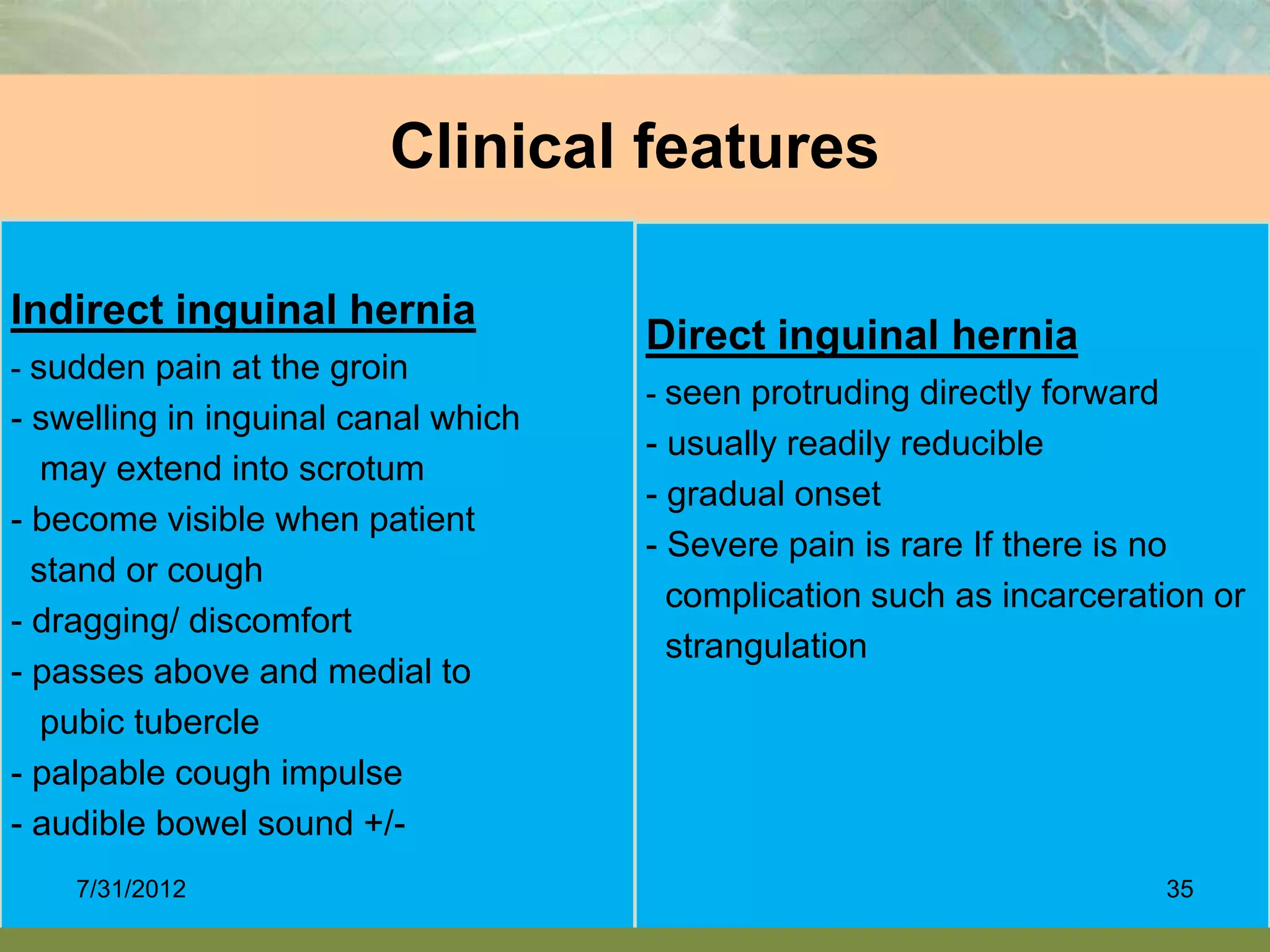
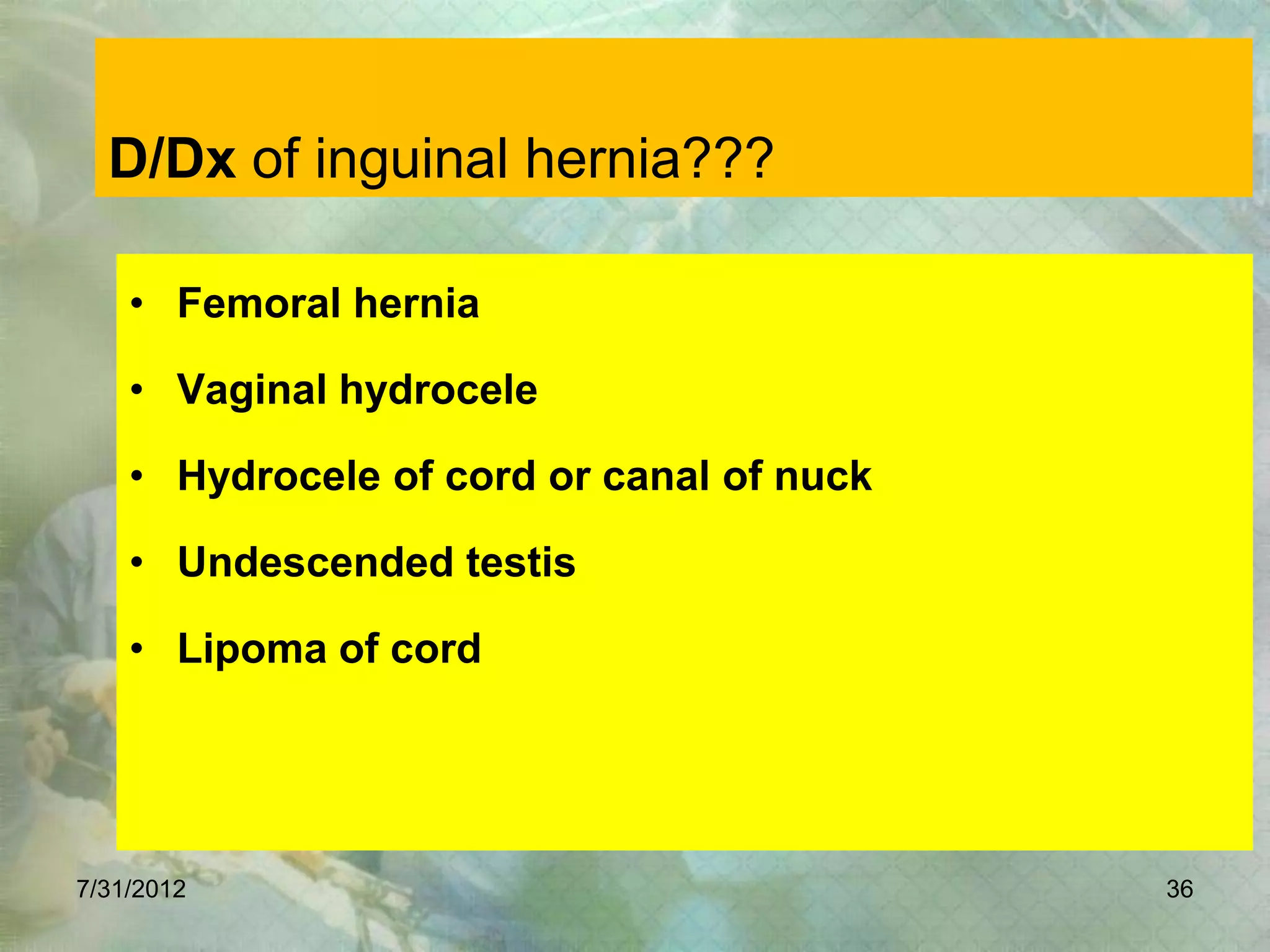


This document provides information on examining hernias. It defines hernias as protrusions of viscous or parts of viscous through abnormal openings. It describes the types of hernias including inguinal, umbilical, incisional, femoral, and epigastric. The document focuses on examining inguinal hernias, describing the applied anatomy, examination steps including looking, feeling, assessing reducibility and impulse. It distinguishes between direct and indirect inguinal hernias based on factors like age distribution, passage route, reducibility. The goals are to understand hernia examination principles, types, inguinal anatomy, and differences between direct and indirect inguinal hernias.


