

Shreya Yadav
RKDHS KANPUR
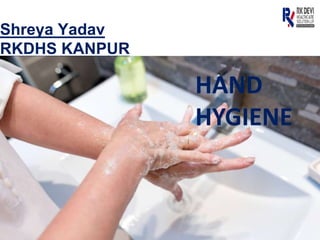
HAND
HYGIENE
Definition
• Health Care-associated Infection (HCAI)
– Alsoreferredto as“nosocomial” or“hospital” infection
• “An infection occurring in a patient during the process of care in
a hospital or other health-care facility which was not present or
incubating at the time of admission. This includes infections
acquired in the health-care facility but appearing after discharge,
and also occupational infections among health-care workers of
the facility”
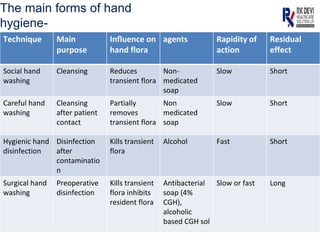
The main forms of hand
hygiene-
Technique Main
purpose
Influence on
hand flora
agents Rapidity of
action
Residual
effect
Social hand
washing
Cleansing Reduces
transient flora
Non-
medicated
soap
Slow Short
Careful hand
washing
Cleansing
after patient
contact
Partially
removes
transient flora
Non
medicated
soap
Slow Short
Hygienic hand
disinfection
Disinfection
after
contaminatio
n
Kills transient
flora
Alcohol Fast Short
Surgical hand
washing
Preoperative
disinfection
Kills transient
flora inhibits
resident flora
Antibacterial
soap (4%
CGH),
alcoholic
based CGH sol
Slow or fast Long
Prevention of
health care-associated infection
– Validated and standardized prevention strategies have been shown to
reduce HCAI
– At least 50% of HCAI could be prevented
– Most solutions are simple and not resource- demanding and can be
implemented in developed, as well as in transitional and developing
countries
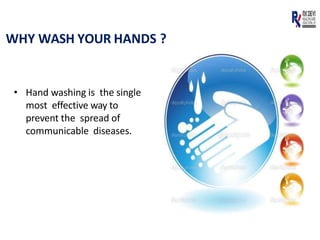
WHY WASH YOUR HANDS ?
• Hand washing is the single
most effective way to
prevent the spread of
communicable diseases.
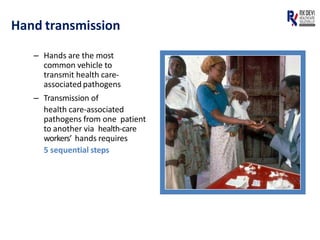
Hand transmission
– Hands are the most
common vehicle to
transmit health care-
associated pathogens
– Transmission of
health care-associated
pathogens from one patient
to another via health-care
workers’ hands requires
5 sequential steps
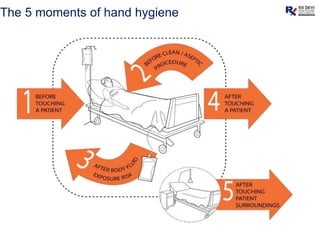
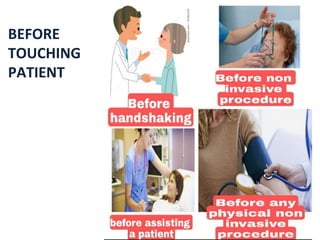
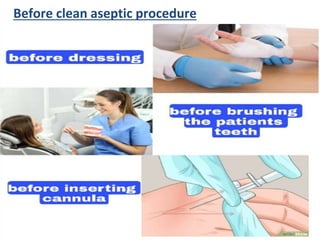
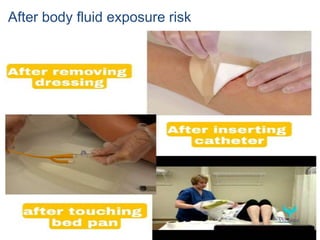
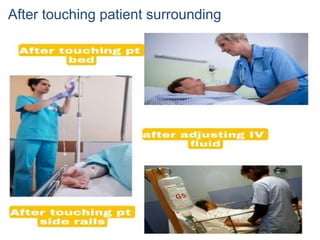
The 5 moments of hand hygiene
BEFORE
TOUCHING
PATIENT
Before clean aseptic procedure
After body fluid exposure risk
After touching a patient
After touching patient surrounding
Why should you clean your hands?
– Any health-care worker, caregiver or person involved in patient care
needs to be concerned about hand hygiene
– Therefore hand hygiene concerns you!
– Youmust perform hand hygiene to:
– protect the patient against harmful germs carried on your
hands or present on his/her own skin
– protect yourself and the health-care environment from
harmful germs
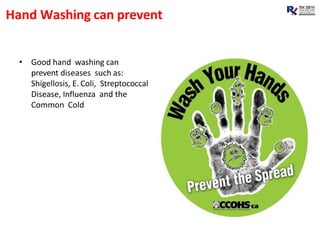
Hand Washing can prevent
• Good hand washing can
prevent diseases such as:
Shigellosis, E. Coli, Streptococcal
Disease, Influenza and the
Common Cold
Hand hygiene is the
single most
effective way to
prevent infection
Dr.T.V.Rao
MD
10
How to clean your hands
– Handrubbing with alcohol-based handrub is the preferred
routine method of hand hygiene if hands
are not visibly soiled
– Handwashing with soap and water –essential when
when hands are visibly dirty or visibly soiled (following
visible exposure to body fluids)1
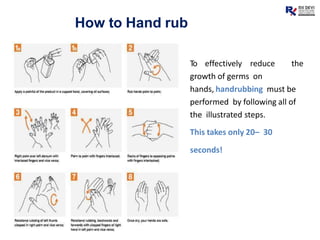
To effectively reduce the
growth of germs on
hands, handrubbing must be
performed by following all of
the illustrated steps.
This takes only 20– 30
seconds!
How to Hand rub
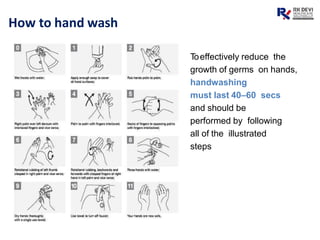
How to hand wash
Toeffectively reduce the
growth of germs on hands,
handwashing
must last 40–60 secs
and should be
performed by following
all of the illustrated
steps
Alcohol Hand Rubs
• Require less time
• Can be strategically placed
• Readily accessible
• Multiple sites
• All patient care areas
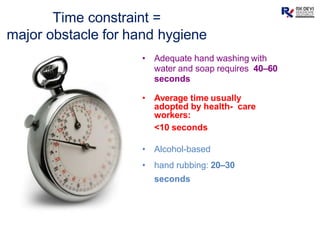
• Adequate hand washing with
water and soap requires 40–60
seconds
• Average time usually
adopted by health- care
workers:
<10 seconds
• Alcohol-based
• hand rubbing: 20–30
seconds
Time constraint =
major obstacle for hand hygiene
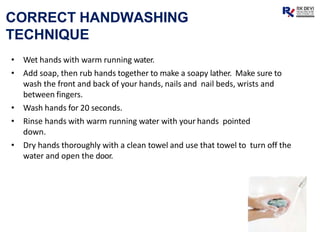
CORRECT HANDWASHING
TECHNIQUE
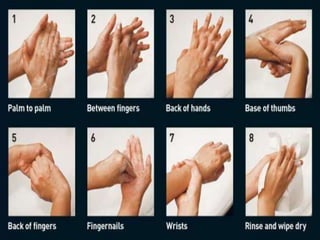
• Wet hands with warm running water.
• Add soap, then rub hands together to make a soapy lather. Make sure to
wash the front and back of your hands, nails and nail beds, wrists and
between fingers.
• Wash hands for 20 seconds.
• Rinse hands with warm running water with your hands pointed
down.
• Dry hands thoroughly with a clean towel and use that towel to turn off the
water and open the door.
Hand hygiene

Hand hygiene

  • 1.
  • 3.
    Definition • Health Care-associatedInfection (HCAI) – Alsoreferredto as“nosocomial” or“hospital” infection • “An infection occurring in a patient during the process of care in a hospital or other health-care facility which was not present or incubating at the time of admission. This includes infections acquired in the health-care facility but appearing after discharge, and also occupational infections among health-care workers of the facility”
  • 4.
    The main formsof hand hygiene- Technique Main purpose Influence on hand flora agents Rapidity of action Residual effect Social hand washing Cleansing Reduces transient flora Non- medicated soap Slow Short Careful hand washing Cleansing after patient contact Partially removes transient flora Non medicated soap Slow Short Hygienic hand disinfection Disinfection after contaminatio n Kills transient flora Alcohol Fast Short Surgical hand washing Preoperative disinfection Kills transient flora inhibits resident flora Antibacterial soap (4% CGH), alcoholic based CGH sol Slow or fast Long
  • 5.
    Prevention of health care-associatedinfection – Validated and standardized prevention strategies have been shown to reduce HCAI – At least 50% of HCAI could be prevented – Most solutions are simple and not resource- demanding and can be implemented in developed, as well as in transitional and developing countries
  • 6.
    WHY WASH YOURHANDS ? • Hand washing is the single most effective way to prevent the spread of communicable diseases.
  • 7.
    Hand transmission – Handsare the most common vehicle to transmit health care- associated pathogens – Transmission of health care-associated pathogens from one patient to another via health-care workers’ hands requires 5 sequential steps
  • 8.
    The 5 momentsof hand hygiene
  • 9.
  • 10.
  • 11.
    After body fluidexposure risk
  • 12.
  • 13.
  • 14.
    Why should youclean your hands? – Any health-care worker, caregiver or person involved in patient care needs to be concerned about hand hygiene – Therefore hand hygiene concerns you! – Youmust perform hand hygiene to: – protect the patient against harmful germs carried on your hands or present on his/her own skin – protect yourself and the health-care environment from harmful germs
  • 15.
    Hand Washing canprevent • Good hand washing can prevent diseases such as: Shigellosis, E. Coli, Streptococcal Disease, Influenza and the Common Cold
  • 16.
    Hand hygiene isthe single most effective way to prevent infection Dr.T.V.Rao MD 10
  • 17.
    How to cleanyour hands – Handrubbing with alcohol-based handrub is the preferred routine method of hand hygiene if hands are not visibly soiled – Handwashing with soap and water –essential when when hands are visibly dirty or visibly soiled (following visible exposure to body fluids)1
  • 19.
    To effectively reducethe growth of germs on hands, handrubbing must be performed by following all of the illustrated steps. This takes only 20– 30 seconds! How to Hand rub
  • 20.
    How to handwash Toeffectively reduce the growth of germs on hands, handwashing must last 40–60 secs and should be performed by following all of the illustrated steps
  • 21.
    Alcohol Hand Rubs •Require less time • Can be strategically placed • Readily accessible • Multiple sites • All patient care areas
  • 22.
    • Adequate handwashing with water and soap requires 40–60 seconds • Average time usually adopted by health- care workers: <10 seconds • Alcohol-based • hand rubbing: 20–30 seconds Time constraint = major obstacle for hand hygiene
  • 23.
    CORRECT HANDWASHING TECHNIQUE • Wethands with warm running water. • Add soap, then rub hands together to make a soapy lather. Make sure to wash the front and back of your hands, nails and nail beds, wrists and between fingers. • Wash hands for 20 seconds. • Rinse hands with warm running water with your hands pointed down. • Dry hands thoroughly with a clean towel and use that towel to turn off the water and open the door.