
HAND HYGIENE
Dr. Kanwal Deep Singh Lyall
Hand Hygiene
• Hand hygiene: A general term that applies to either
handwashing, antiseptic handwash, antiseptic hand
rub, or surgical hand antisepsis.
• Hand antisepsis: Refers to either antiseptic handwash
or antiseptic hand rub.
• Handwashing: Washing hands with plain (i.e., non-
antimicrobial) soap and water.
WHY DO WE NEED IT ?
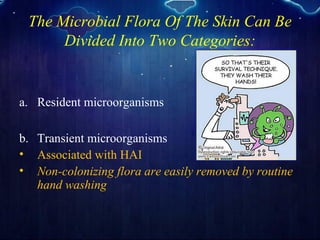
The Microbial Flora Of The Skin Can Be
Divided Into Two Categories:
a. Resident microorganisms
b. Transient microorganisms
• Associated with HAI
• Non-colonizing flora are easily removed by routine
hand washing
Transmission Of Pathogens By HandsTransmission Of Pathogens By Hands
Organisms present on patient skin orOrganisms present on patient skin or
the immediate environmentthe immediate environment
Organism transfer from patient toOrganism transfer from patient to
HCWs’ handsHCWs’ hands
Organism survival on HCWs’ handsOrganism survival on HCWs’ hands
Incorrect hand cleansingIncorrect hand cleansing
Failure to cleanse hands results inFailure to cleanse hands results in
between-patient cross-transmissionbetween-patient cross-transmission
Failure to cleanse hands results inFailure to cleanse hands results in
between-patient cross-transmissionbetween-patient cross-transmission
Failure to cleanse hands during patient careFailure to cleanse hands during patient care
results in within-patient cross-transmissionresults in within-patient cross-transmission
When do we require to wash hands ?
Indications
Wash hands with soap and water :
•Visibly dirty or contaminated with proteinaceous material
•Visibly soiled with blood or other body fluids
•After using the restroom.
•Preferably use an alcohol-based hand rub for routine hand
antisepsis if hands not visibly soiled.
Routine Hand Wash After…….Routine Hand Wash After…….
• Invasive procedures
• Taking care of particularly susceptible patients
• Dealing with wounds, whether surgical, traumatic, or by an
invasive device.
• Situations where contamination of hands is likely to occur
• Touching inanimate sources likely to be contaminated
• Using the toilet or latrine
• Removing gloves
• BEFORE and AFTER contact with patients
Types Of Hand HygieneTypes Of Hand Hygiene
Agents
Spectrum
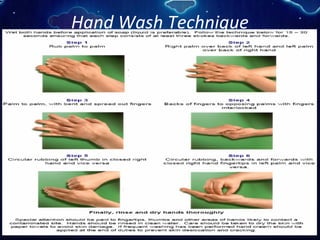
Hand Washing TechniquesHand Washing Techniques
Hand Wash Technique
Your 5 Moments for Hand HygieneYour 5 Moments for Hand Hygiene
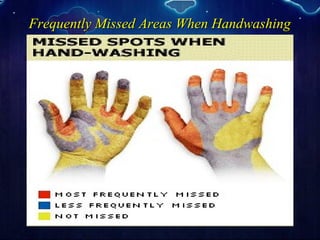
Frequently Missed Areas When HandwashingFrequently Missed Areas When Handwashing
Before And After HandwashBefore And After Handwash
Other Aspects Of Hand HygieneOther Aspects Of Hand Hygiene
• Do not wear artificial fingernails or extenders when
having direct contact with patients.
• Keep natural nails short (tips less than 0.5 cm long).
Thank You
Year HCV – RNA HBV - DNA
2008 302 183
2009 1277 493
2010 1267 567
2011 1139 603
2012 1228 597
2013 1219 649
TND <25 >25 - <3.9 x
108
>3.9 x
108
TND <6 ≥29 - ≤ 1.1
x 108
1.1 x
108
428 21 770 - 106 68 433 42
Hand hygiene   nurses

Hand hygiene nurses

  • 1.
    HAND HYGIENE Dr. KanwalDeep Singh Lyall
  • 3.
    Hand Hygiene • Handhygiene: A general term that applies to either handwashing, antiseptic handwash, antiseptic hand rub, or surgical hand antisepsis. • Hand antisepsis: Refers to either antiseptic handwash or antiseptic hand rub. • Handwashing: Washing hands with plain (i.e., non- antimicrobial) soap and water.
  • 4.
    WHY DO WENEED IT ?
  • 5.
    The Microbial FloraOf The Skin Can Be Divided Into Two Categories: a. Resident microorganisms b. Transient microorganisms • Associated with HAI • Non-colonizing flora are easily removed by routine hand washing
  • 6.
    Transmission Of PathogensBy HandsTransmission Of Pathogens By Hands
  • 7.
    Organisms present onpatient skin orOrganisms present on patient skin or the immediate environmentthe immediate environment
  • 8.
    Organism transfer frompatient toOrganism transfer from patient to HCWs’ handsHCWs’ hands
  • 9.
    Organism survival onHCWs’ handsOrganism survival on HCWs’ hands
  • 10.
  • 11.
    Failure to cleansehands results inFailure to cleanse hands results in between-patient cross-transmissionbetween-patient cross-transmission
  • 12.
    Failure to cleansehands results inFailure to cleanse hands results in between-patient cross-transmissionbetween-patient cross-transmission
  • 13.
    Failure to cleansehands during patient careFailure to cleanse hands during patient care results in within-patient cross-transmissionresults in within-patient cross-transmission
  • 14.
    When do werequire to wash hands ?
  • 15.
    Indications Wash hands withsoap and water : •Visibly dirty or contaminated with proteinaceous material •Visibly soiled with blood or other body fluids •After using the restroom. •Preferably use an alcohol-based hand rub for routine hand antisepsis if hands not visibly soiled.
  • 16.
    Routine Hand WashAfter…….Routine Hand Wash After……. • Invasive procedures • Taking care of particularly susceptible patients • Dealing with wounds, whether surgical, traumatic, or by an invasive device. • Situations where contamination of hands is likely to occur • Touching inanimate sources likely to be contaminated • Using the toilet or latrine • Removing gloves • BEFORE and AFTER contact with patients
  • 17.
    Types Of HandHygieneTypes Of Hand Hygiene
  • 18.
  • 19.
  • 21.
    Hand Washing TechniquesHandWashing Techniques
  • 22.
  • 23.
    Your 5 Momentsfor Hand HygieneYour 5 Moments for Hand Hygiene
  • 24.
    Frequently Missed AreasWhen HandwashingFrequently Missed Areas When Handwashing
  • 25.
    Before And AfterHandwashBefore And After Handwash
  • 26.
    Other Aspects OfHand HygieneOther Aspects Of Hand Hygiene • Do not wear artificial fingernails or extenders when having direct contact with patients. • Keep natural nails short (tips less than 0.5 cm long).
  • 28.
  • 30.
    Year HCV –RNA HBV - DNA 2008 302 183 2009 1277 493 2010 1267 567 2011 1139 603 2012 1228 597 2013 1219 649 TND <25 >25 - <3.9 x 10⁸ >3.9 x 10⁸ TND <6 ≥29 - ≤ 1.1 x 10⁸ 1.1 x 10⁸ 428 21 770 - 106 68 433 42