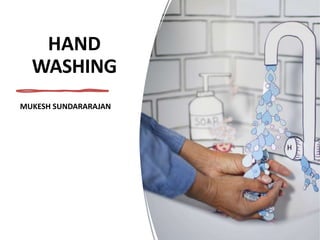
HAND
WASHING
MUKESH SUNDARARAJAN
Definition
• Health Care-associated Infection (HCAI)
• Also referred to as “nosocomial”
or “hospital” infection
• “An infection occurring in a patient
during the process of care in a hospital
or other health-care facility which was
not present or incubating at the time of
admission. This includes infections
acquired in the health-care facility but
appearing after discharge, and also
occupational infections among health-
care workers of the facility”
Prevention of
health care-associated infection
–Validated and standardized prevention
strategies have been shown to reduce HCAI
–At least 50% of HCAI could be prevented
–Most solutions are simple and not resource-
demanding and can be implemented in
developed, as well as in transitional and
developing countries
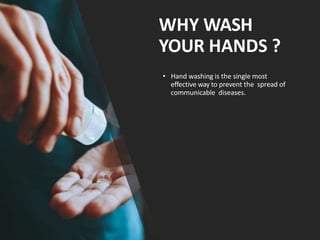
WHY WASH
YOUR HANDS ?
• Hand washing is the single most
effective way to prevent the spread of
communicable diseases.
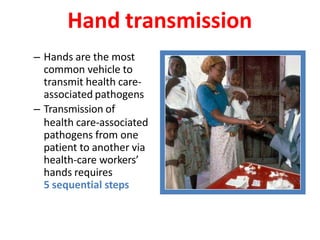
Hand transmission
– Hands are the most
common vehicle to
transmit health care-
associated pathogens
– Transmission of
health care-associated
pathogens from one
patient to another via
health-care workers’
hands requires
5 sequential steps
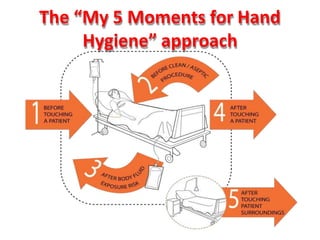
The “My 5 Moments for Hand
Hygiene” approach
Why should you clean your
hands?
–Any health-care worker, caregiver or person
involved in patient care needs to be
concerned about hand hygiene
–Therefore hand hygiene concerns you!
–You must perform hand hygiene to:
– protect the patient against harmful germs carried
on your hands or present on his/her own skin
– protect yourself and the health-care environment
from harmful germs
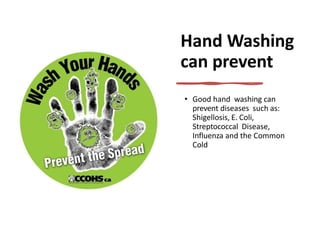
Hand Washing
can prevent
• Good hand washing can
prevent diseases such as:
Shigellosis, E. Coli,
Streptococcal Disease,
Influenza and the Common
Cold
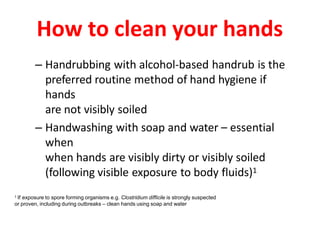
How to clean your hands
– Handrubbing with alcohol-based handrub is the
preferred routine method of hand hygiene if
hands
are not visibly soiled
– Handwashing with soap and water – essential
when
when hands are visibly dirty or visibly soiled
(following visible exposure to body fluids)1
1 If exposure to spore forming organisms e.g. Clostridium difficile is strongly suspected
or proven, including during outbreaks – clean hands using soap and water
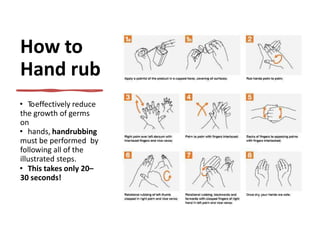
How to
Hand rub
• Toeffectively reduce
the growth of germs
on
• hands, handrubbing
must be performed by
following all of the
illustrated steps.
• This takes only 20–
30 seconds!
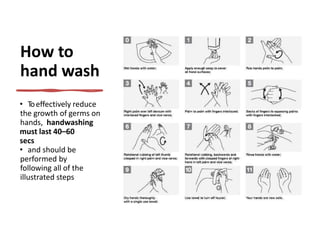
How to
hand wash
• Toeffectively reduce
the growth of germs on
hands, handwashing
must last 40–60
secs
• and should be
performed by
following all of the
illustrated steps
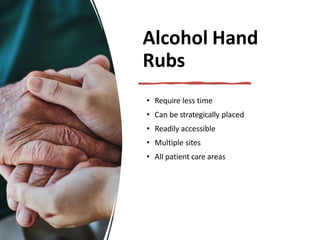
Alcohol Hand
Rubs
• Require less time
• Can be strategically placed
• Readily accessible
• Multiple sites
• All patient care areas
Alcohol
Hand Rubs
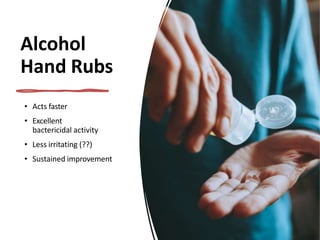
• Acts faster
• Excellent
bactericidal activity
• Less irritating (??)
• Sustained improvement
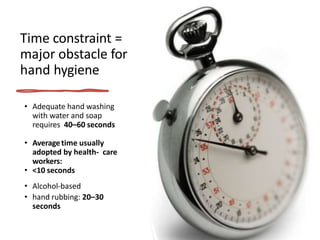
Time constraint =
major obstacle for
hand hygiene
• Adequate hand washing
with water and soap
requires 40–60 seconds
• Averagetime usually
adopted by health- care
workers:
• <10 seconds
• Alcohol-based
• hand rubbing: 20–30
seconds
WHEN SHOULD YOU WASH YOUR HANDS
?
BEFORE YOU:
Prepare or eat food
Treat a cut or wound
Tend to someone who’s sick
Put in or take out contact lenses
Do any kind of activity that involves putting your
fingers in or near your mouth, eyes, etc
WHEN SHOULD YOU WASH YOUR HANDS
?
AFTER YOU:
Go to the bathroom
Handle uncooked foods, especially raw meat
Eat
Blow your nose, cough or sneeze
Handle garbage
Tend to someone who is sick
Change a diaper
Play with or touch a pet
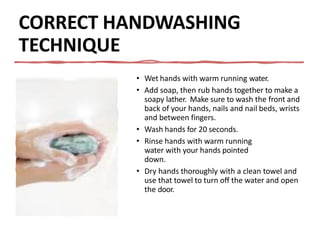
CORRECT HANDWASHING
TECHNIQUE
• Wet hands with warm running water.
• Add soap, then rub hands together to make a
soapy lather. Make sure to wash the front and
back of your hands, nails and nail beds, wrists
and between fingers.
• Wash hands for 20 seconds.
• Rinse hands with warm running
water with your hands pointed
down.
• Dry hands thoroughly with a clean towel and
use that towel to turn off the water and open
the door.
THANK YOU

Hand Washing.pptx

  • 1.
  • 2.
    Definition • Health Care-associatedInfection (HCAI) • Also referred to as “nosocomial” or “hospital” infection • “An infection occurring in a patient during the process of care in a hospital or other health-care facility which was not present or incubating at the time of admission. This includes infections acquired in the health-care facility but appearing after discharge, and also occupational infections among health- care workers of the facility”
  • 3.
    Prevention of health care-associatedinfection –Validated and standardized prevention strategies have been shown to reduce HCAI –At least 50% of HCAI could be prevented –Most solutions are simple and not resource- demanding and can be implemented in developed, as well as in transitional and developing countries
  • 4.
    WHY WASH YOUR HANDS? • Hand washing is the single most effective way to prevent the spread of communicable diseases.
  • 5.
    Hand transmission – Handsare the most common vehicle to transmit health care- associated pathogens – Transmission of health care-associated pathogens from one patient to another via health-care workers’ hands requires 5 sequential steps
  • 6.
    The “My 5Moments for Hand Hygiene” approach
  • 7.
    Why should youclean your hands? –Any health-care worker, caregiver or person involved in patient care needs to be concerned about hand hygiene –Therefore hand hygiene concerns you! –You must perform hand hygiene to: – protect the patient against harmful germs carried on your hands or present on his/her own skin – protect yourself and the health-care environment from harmful germs
  • 8.
    Hand Washing can prevent •Good hand washing can prevent diseases such as: Shigellosis, E. Coli, Streptococcal Disease, Influenza and the Common Cold
  • 9.
    How to cleanyour hands – Handrubbing with alcohol-based handrub is the preferred routine method of hand hygiene if hands are not visibly soiled – Handwashing with soap and water – essential when when hands are visibly dirty or visibly soiled (following visible exposure to body fluids)1 1 If exposure to spore forming organisms e.g. Clostridium difficile is strongly suspected or proven, including during outbreaks – clean hands using soap and water
  • 10.
    How to Hand rub •Toeffectively reduce the growth of germs on • hands, handrubbing must be performed by following all of the illustrated steps. • This takes only 20– 30 seconds!
  • 11.
    How to hand wash •Toeffectively reduce the growth of germs on hands, handwashing must last 40–60 secs • and should be performed by following all of the illustrated steps
  • 12.
    Alcohol Hand Rubs • Requireless time • Can be strategically placed • Readily accessible • Multiple sites • All patient care areas
  • 13.
    Alcohol Hand Rubs • Actsfaster • Excellent bactericidal activity • Less irritating (??) • Sustained improvement
  • 14.
    Time constraint = majorobstacle for hand hygiene • Adequate hand washing with water and soap requires 40–60 seconds • Averagetime usually adopted by health- care workers: • <10 seconds • Alcohol-based • hand rubbing: 20–30 seconds
  • 15.
    WHEN SHOULD YOUWASH YOUR HANDS ? BEFORE YOU: Prepare or eat food Treat a cut or wound Tend to someone who’s sick Put in or take out contact lenses Do any kind of activity that involves putting your fingers in or near your mouth, eyes, etc
  • 16.
    WHEN SHOULD YOUWASH YOUR HANDS ? AFTER YOU: Go to the bathroom Handle uncooked foods, especially raw meat Eat Blow your nose, cough or sneeze Handle garbage Tend to someone who is sick Change a diaper Play with or touch a pet
  • 17.
    CORRECT HANDWASHING TECHNIQUE • Wethands with warm running water. • Add soap, then rub hands together to make a soapy lather. Make sure to wash the front and back of your hands, nails and nail beds, wrists and between fingers. • Wash hands for 20 seconds. • Rinse hands with warm running water with your hands pointed down. • Dry hands thoroughly with a clean towel and use that towel to turn off the water and open the door.
  • 18.