REGENCY INSTITUTE OF NURSING
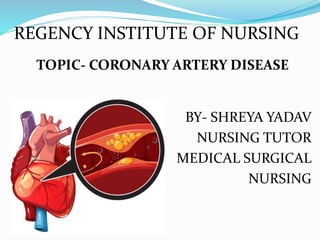
TOPIC- CORONARY ARTERY DISEASE
BY- SHREYA YADAV
NURSING TUTOR
MEDICAL SURGICAL
NURSING
DEFINITION
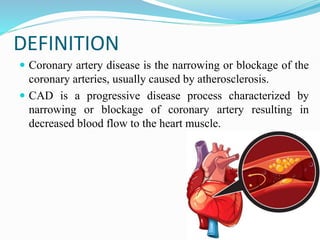
 Coronary artery disease is the narrowing or blockage of the
coronary arteries, usually caused by atherosclerosis.
 CAD is a progressive disease process characterized by
narrowing or blockage of coronary artery resulting in
decreased blood flow to the heart muscle.
RISK FACTOR
MODIFIABLE RISK FACTORS:
 Tobacco use
 High blood cholesterol or triglyceride levels
 Lack of exercise
 Obesity
 Stress
 Use of oral contraceptive
 Infection
 Hypertension
NONMODIFIABLE RISK FACTORS:
 Family history of heart disease
 Age (45-55)
 Gender
CLINICAL MANIFESTATION:
 Ischemia
 Low cardiac output
 Bradycardia (Decrease pulse rate)
 Hypertension
 Myocardial infarction
 Diaphoresis –excessive sweating
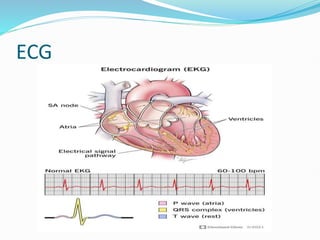
 ECG changes – ST segment and T wave changes, also show
tachycardia, bradcardia, or dysrhythimas.
 Dysarrithmias
 Decreased urine output.
 Nausea And Vomiting
 Skin- Cool, Clammy ,Diaphoretic , And Pale Appearance
On Skin.
DIAGNOSTIC EVALUATION:
History collection
Physical examination
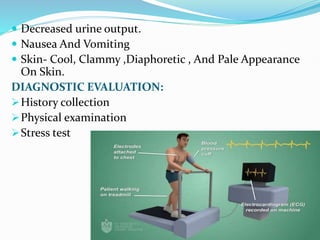
Stress test
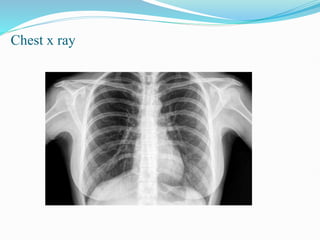
Chest x ray
ECG
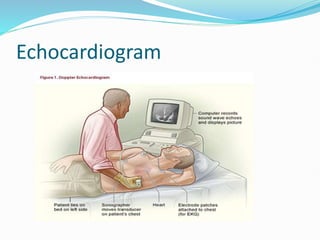
Echocardiogram
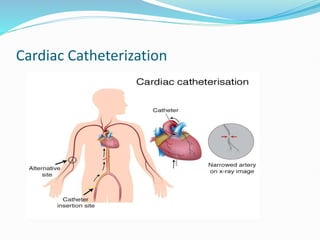
Cardiac Catheterization
MANAGEMENT
MEDICAL MANAGEMENT
Vasodilators (These drugs acts as blood vessel dilator):
Nitrates.
Beta-Blockers (Decrease work load in heart):
Propranolol 20-40 mg.
Calcium channel blocker They improve coronary blood
flow:
 Nifedipine
 Verapamil
Anti-hypertensive drugs
 Methyldopa, Sodium nitroprusside, Amlodipine.
ACE inhibitor
 Captopril, Enolapril
SURGICAL MANAGEMENT
• Percutaneous transluminal coronary angioplasty(PTCA).
• Coronary artery bypass graft surgery(DCA).
• Intra coronary stent.
NURSING MANAGEMENT
• Assess pain
• Assess vital sign
• Ensure bed rest
• Continuous cardiac monitoring
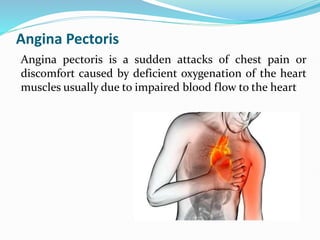
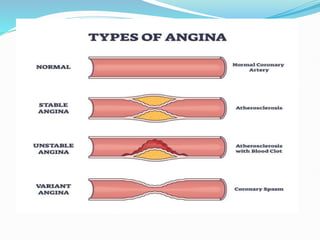
Angina Pectoris
Angina pectoris is a sudden attacks of chest pain or
discomfort caused by deficient oxygenation of the heart
muscles usually due to impaired blood flow to the heart
Modifiable risk factor:
 Tobacco use
 High blood cholesterol or triglyceride levels
 Lack of exercise
 Obesity
 Stress
NON MODIFIABLE RISK FACTORS:
 Family history of heart disease
 Age
 Gender
CLINICAL MANIFESTATION:
Sensation of chest pain.
Ischemia- Ischemia is a restriction in blood supply to
tissues, causing a shortage of oxygen that is needed for
cellular.
Low cardiac output
Decrease pulse rate.
BP may be elevated because of sympathetic stimulation or
decreased BP because of decreased contractility.
Myocardial infarction
Diaphoresis –excessive sweating
ECG changes – ST segment and T wave changes
 Pulmonary edema
 Chest heaviness
 Dyspnea- difficulity of breathing
 Fatigue
 Gastrointestinal- Nausea And Vomiting
 Skin- Cool, Clammy ,Diaphoretic , And Pale Appearance On
Skin
DIAGNOSTIC EVALUATION:
• History collection
• Stress test
• Electrocardiogram(ECG)
• Echocardiogram
• Angiogram
MANAGEMENT
Can be used to treat coronary artery disease,
including:
 Vasodilators (These drugs acts as blood vessel
dilator):
 Nitrates
 Beta-Blockers (Decrease work load in heart): •
Propranolol 20-40 mg
 Calcium channel blocker (They improve coronary
blood flow): Nifedipine , Verapamil
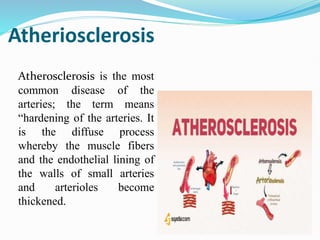
Atheriosclerosis
Atherosclerosis is the most
common disease of the
arteries; the term means
“hardening of the arteries. It
is the diffuse process
whereby the muscle fibers
and the endothelial lining of
the walls of small arteries
and arterioles become
thickened.
Risk Factor-
 High blood pressure
 High cholesterol
 High triglycerides, a type of fat (lipid) in your blood
 Smoking and other sources of tobacco
 Insulin resistance, obesity or diabetes
 A family history of early heart disease
 Lack of exercise
CLINICAL MANIFESTATION-
 Pain is the first symptom that occurs
 Pain generally occurs in the affected extremity in conjunction
w/sustained activity. This is due to the demand of the tissue
exceeding the available blood supply.
 Heart failure
 Increased cardiac enzyme level
 Sudden cardiac death
 Dyspnea
 Inadequate cardiac output
 Ischemia of heart muscles
 Difficulty in speaking
 Arrythmias
 Palpitation
 Diaphoresis
 Myocardial infraction
 Diagnostic Evaluation-
 History collection – The family history, nutritional
history and personal history should be collected from
the patient.
 Physical examination
 Blood studies
 Electrocardiogram (ECG)
 Angiogram
 CT-Scan
MANAGEMENT-
Pharmacological management-
 Anti-platelet medications. Such as aspirin(75-100mg,orally).
 Beta blocker medications Eg: propanolol (20-40 mg).
 Angiotensin-converting enzyme (ACE) inhibitors.. Eg:
captopril(25 mg orally) ramipril(20mg orally).
 Calcium channel blockers. Eg: verapamil amlodipin (5-20 mg
IV).
Surgical Management:
 Coronary Artery Bypass Surgery. (CABG)
 Thrombectomy
 Embolectomy
MYOCARDIAL INFRACTION
Myocardial Infarction is defined as a disease caused by
reduced blood flow in a coronary artery due to
atherosclerosis & occlusion of an artery an embolus or
thrombus.
Types of Myocardial infarction-
According to wall-
 Anterior wall MI- obstruction of left anterior descending
artery (LAD) results in anterior or septal wall MI
 Posterior wall MI – Obstruction of circumflex artery
results in posterior wall MI.
 Inferior wall MI- obstruction of the right coronary artery
results in inferior wall MI.
According to ECG
 ST-Elevated Myocardial infarction
 Non- ST Elevated Myocardial Infarction
RISK FACTORS
Non- Modifiable Risk Factors:
 Age(45-55)
 Gender
 Sex (Male)
 Genetics
Modifiable Risk Factors:
 Tobacco use
 High blood cholesterol or triglyceride levels
 Lack of exercise
 Obesity
 Stress
 Use of oral contraceptive
 Infection
 Hypertension
CLINICAL MANIFESTATION
 Chest pain characterized by
 heavy, vise like pain which radiates to shoulders and down the arms, usually the
left arms
 occur during rest and during exertion
 not relieved by rest long lasts longer than 30 min.
 No relief with nitrites
 Shortness of breath
 Pallor
 Cold clammy skin
 Diaphoresis
 Dizziness
 Light headedness
 Nausea
 Vomiting
 Fainting
 Shock
 Profuse sweating
 Fever after 48 hour of MI
 Pulse normal often rapid or irregular
 Anxiety
DIAGNOSTIC EVALUATION
 History collection
 Physical examination
 Electrocardiogram
 Echocardiogram
 Cardiac marker-
 Myoglobin-The myoglobin level starts to increase within 1 to 3 hours
and peaks within 12 hours after the onset of symptoms.
 Troponin- Troponin I and T are specific for cardiac muscle, an increase
in the level of troponin in the serum can be detected within a few hours
during acute MI.
 Creatine Kinase and Its Isoenzymes-There are three creatine kinase
(CK) isoenzymes: CK-MM (skeletal muscle), CK-MB (heart muscle),
and CK-BB (brain tissue).
MANAGEMENT-
MEDICAL MANAGEMENT-
Pharmacological management-
 Opiate Analgesic - Morphine (2.5-5.0mg, IV) - For sudden relief of
pain & anxiety.
 Aspirin (162-325mg,Orally)- for prevention of thrombus
extension, embolism, venous thrombosis
 Vasodilators- Nitrates (0.4 mg , sublingual)
 Anticoagulant- Heparin (5000 U,IV)
 Antihypertensive drugs-Methyldopa- (250 mg. orally), B- blocker-
Propanolol(20- 40 mg).
Non-pharmacological management-
 Avoiding tobacco smoking, eating a well-balanced diet that
is low in saturated fat and refined carbohydrates.
 Cessation of smoking should be given priority in risk-factor
reduction.
 Regular physical activity reduces the incidence of, and
fatality rate from, cardiovascular disease.
Surgical management-
 Coronary artery bypass graft surgery (CABG)
 (PTCA) percutaneous transluminal coronary angioplasty - a
small, flexible plastic tube, or catheter, with a "balloon" at the end
of it. When the tube is in place, it inflates to open the blood vessel.
 Atherectomy
NURSING MANAGEMENT:
- Assess vita sign of the patient.
- Assess for the chest pain where it radiates
- Advice to do not smoke and drink alcohol.
- Change the position to maintain blood circulation.
- Provide adequate bed rest.
NURSING DIAGNOSIS
 Acute Pain related to decreased/increased cardiac output as
evidenced by verbalization.
 Ineffective breathing pattern related to decreased blood
flow to pulmonary capillaries secondary to decreased
ventricular contractility as evidenced by vital sign.
 Impaired tissue perfusion related to decreased cardiac
output as evidence by vital sign.
 Fear and anxiety related to disease condition as evidence by
facial expression.
 Knowledge deficit related to prognosis and self care
management as evidence patient is asking more question.

CORONARY ARTERY DISEASE.pptx

  • 1.
    REGENCY INSTITUTE OFNURSING TOPIC- CORONARY ARTERY DISEASE BY- SHREYA YADAV NURSING TUTOR MEDICAL SURGICAL NURSING
  • 2.
    DEFINITION  Coronary arterydisease is the narrowing or blockage of the coronary arteries, usually caused by atherosclerosis.  CAD is a progressive disease process characterized by narrowing or blockage of coronary artery resulting in decreased blood flow to the heart muscle.
  • 3.
    RISK FACTOR MODIFIABLE RISKFACTORS:  Tobacco use  High blood cholesterol or triglyceride levels  Lack of exercise  Obesity  Stress  Use of oral contraceptive  Infection  Hypertension NONMODIFIABLE RISK FACTORS:  Family history of heart disease  Age (45-55)
  • 4.
     Gender CLINICAL MANIFESTATION: Ischemia  Low cardiac output  Bradycardia (Decrease pulse rate)  Hypertension  Myocardial infarction  Diaphoresis –excessive sweating  ECG changes – ST segment and T wave changes, also show tachycardia, bradcardia, or dysrhythimas.  Dysarrithmias
  • 5.
     Decreased urineoutput.  Nausea And Vomiting  Skin- Cool, Clammy ,Diaphoretic , And Pale Appearance On Skin. DIAGNOSTIC EVALUATION: History collection Physical examination Stress test
  • 6.
  • 7.
  • 8.
  • 9.
  • 10.
    MANAGEMENT MEDICAL MANAGEMENT Vasodilators (Thesedrugs acts as blood vessel dilator): Nitrates. Beta-Blockers (Decrease work load in heart): Propranolol 20-40 mg. Calcium channel blocker They improve coronary blood flow:  Nifedipine  Verapamil
  • 11.
    Anti-hypertensive drugs  Methyldopa,Sodium nitroprusside, Amlodipine. ACE inhibitor  Captopril, Enolapril SURGICAL MANAGEMENT • Percutaneous transluminal coronary angioplasty(PTCA). • Coronary artery bypass graft surgery(DCA). • Intra coronary stent. NURSING MANAGEMENT • Assess pain • Assess vital sign • Ensure bed rest • Continuous cardiac monitoring
  • 12.
    Angina Pectoris Angina pectorisis a sudden attacks of chest pain or discomfort caused by deficient oxygenation of the heart muscles usually due to impaired blood flow to the heart
  • 14.
    Modifiable risk factor: Tobacco use  High blood cholesterol or triglyceride levels  Lack of exercise  Obesity  Stress NON MODIFIABLE RISK FACTORS:  Family history of heart disease  Age  Gender
  • 15.
    CLINICAL MANIFESTATION: Sensation ofchest pain. Ischemia- Ischemia is a restriction in blood supply to tissues, causing a shortage of oxygen that is needed for cellular. Low cardiac output Decrease pulse rate. BP may be elevated because of sympathetic stimulation or decreased BP because of decreased contractility. Myocardial infarction Diaphoresis –excessive sweating ECG changes – ST segment and T wave changes
  • 16.
     Pulmonary edema Chest heaviness  Dyspnea- difficulity of breathing  Fatigue  Gastrointestinal- Nausea And Vomiting  Skin- Cool, Clammy ,Diaphoretic , And Pale Appearance On Skin DIAGNOSTIC EVALUATION: • History collection • Stress test • Electrocardiogram(ECG) • Echocardiogram • Angiogram
  • 17.
    MANAGEMENT Can be usedto treat coronary artery disease, including:  Vasodilators (These drugs acts as blood vessel dilator):  Nitrates  Beta-Blockers (Decrease work load in heart): • Propranolol 20-40 mg  Calcium channel blocker (They improve coronary blood flow): Nifedipine , Verapamil
  • 18.
    Atheriosclerosis Atherosclerosis is themost common disease of the arteries; the term means “hardening of the arteries. It is the diffuse process whereby the muscle fibers and the endothelial lining of the walls of small arteries and arterioles become thickened.
  • 19.
    Risk Factor-  Highblood pressure  High cholesterol  High triglycerides, a type of fat (lipid) in your blood  Smoking and other sources of tobacco  Insulin resistance, obesity or diabetes  A family history of early heart disease  Lack of exercise
  • 20.
    CLINICAL MANIFESTATION-  Painis the first symptom that occurs  Pain generally occurs in the affected extremity in conjunction w/sustained activity. This is due to the demand of the tissue exceeding the available blood supply.  Heart failure  Increased cardiac enzyme level  Sudden cardiac death  Dyspnea  Inadequate cardiac output  Ischemia of heart muscles  Difficulty in speaking  Arrythmias  Palpitation  Diaphoresis  Myocardial infraction
  • 21.
     Diagnostic Evaluation- History collection – The family history, nutritional history and personal history should be collected from the patient.  Physical examination  Blood studies  Electrocardiogram (ECG)  Angiogram  CT-Scan
  • 22.
    MANAGEMENT- Pharmacological management-  Anti-plateletmedications. Such as aspirin(75-100mg,orally).  Beta blocker medications Eg: propanolol (20-40 mg).  Angiotensin-converting enzyme (ACE) inhibitors.. Eg: captopril(25 mg orally) ramipril(20mg orally).  Calcium channel blockers. Eg: verapamil amlodipin (5-20 mg IV). Surgical Management:  Coronary Artery Bypass Surgery. (CABG)  Thrombectomy  Embolectomy
  • 23.
    MYOCARDIAL INFRACTION Myocardial Infarctionis defined as a disease caused by reduced blood flow in a coronary artery due to atherosclerosis & occlusion of an artery an embolus or thrombus.
  • 24.
    Types of Myocardialinfarction- According to wall-  Anterior wall MI- obstruction of left anterior descending artery (LAD) results in anterior or septal wall MI  Posterior wall MI – Obstruction of circumflex artery results in posterior wall MI.  Inferior wall MI- obstruction of the right coronary artery results in inferior wall MI. According to ECG  ST-Elevated Myocardial infarction  Non- ST Elevated Myocardial Infarction
  • 25.
    RISK FACTORS Non- ModifiableRisk Factors:  Age(45-55)  Gender  Sex (Male)  Genetics Modifiable Risk Factors:  Tobacco use  High blood cholesterol or triglyceride levels  Lack of exercise  Obesity  Stress  Use of oral contraceptive  Infection  Hypertension
  • 26.
    CLINICAL MANIFESTATION  Chestpain characterized by  heavy, vise like pain which radiates to shoulders and down the arms, usually the left arms  occur during rest and during exertion  not relieved by rest long lasts longer than 30 min.  No relief with nitrites  Shortness of breath  Pallor  Cold clammy skin  Diaphoresis  Dizziness  Light headedness  Nausea  Vomiting  Fainting  Shock  Profuse sweating  Fever after 48 hour of MI  Pulse normal often rapid or irregular  Anxiety
  • 27.
    DIAGNOSTIC EVALUATION  Historycollection  Physical examination  Electrocardiogram  Echocardiogram  Cardiac marker-  Myoglobin-The myoglobin level starts to increase within 1 to 3 hours and peaks within 12 hours after the onset of symptoms.  Troponin- Troponin I and T are specific for cardiac muscle, an increase in the level of troponin in the serum can be detected within a few hours during acute MI.  Creatine Kinase and Its Isoenzymes-There are three creatine kinase (CK) isoenzymes: CK-MM (skeletal muscle), CK-MB (heart muscle), and CK-BB (brain tissue).
  • 28.
    MANAGEMENT- MEDICAL MANAGEMENT- Pharmacological management- Opiate Analgesic - Morphine (2.5-5.0mg, IV) - For sudden relief of pain & anxiety.  Aspirin (162-325mg,Orally)- for prevention of thrombus extension, embolism, venous thrombosis  Vasodilators- Nitrates (0.4 mg , sublingual)  Anticoagulant- Heparin (5000 U,IV)  Antihypertensive drugs-Methyldopa- (250 mg. orally), B- blocker- Propanolol(20- 40 mg).
  • 29.
    Non-pharmacological management-  Avoidingtobacco smoking, eating a well-balanced diet that is low in saturated fat and refined carbohydrates.  Cessation of smoking should be given priority in risk-factor reduction.  Regular physical activity reduces the incidence of, and fatality rate from, cardiovascular disease. Surgical management-  Coronary artery bypass graft surgery (CABG)  (PTCA) percutaneous transluminal coronary angioplasty - a small, flexible plastic tube, or catheter, with a "balloon" at the end of it. When the tube is in place, it inflates to open the blood vessel.  Atherectomy
  • 30.
    NURSING MANAGEMENT: - Assessvita sign of the patient. - Assess for the chest pain where it radiates - Advice to do not smoke and drink alcohol. - Change the position to maintain blood circulation. - Provide adequate bed rest.
  • 31.
    NURSING DIAGNOSIS  AcutePain related to decreased/increased cardiac output as evidenced by verbalization.  Ineffective breathing pattern related to decreased blood flow to pulmonary capillaries secondary to decreased ventricular contractility as evidenced by vital sign.  Impaired tissue perfusion related to decreased cardiac output as evidence by vital sign.  Fear and anxiety related to disease condition as evidence by facial expression.  Knowledge deficit related to prognosis and self care management as evidence patient is asking more question.