HAND WASHING AND HYGIENE
 This presentation will take you through the
who, what, where, why, when and how of
hand hygiene. Some important points will be
reviewed to improve your hand hygiene
practice.
WE ARE FOLLOWING WHO GUIDELINES FOR
HAND HYGIENE.
 1. Clean care is safer care
 2. Save lives
 3. Clean your Hands
The organisation adheres to hand-hygiene
guidelines-NABH-HIC-2(c)
FATHER OF HAND HYGIENE
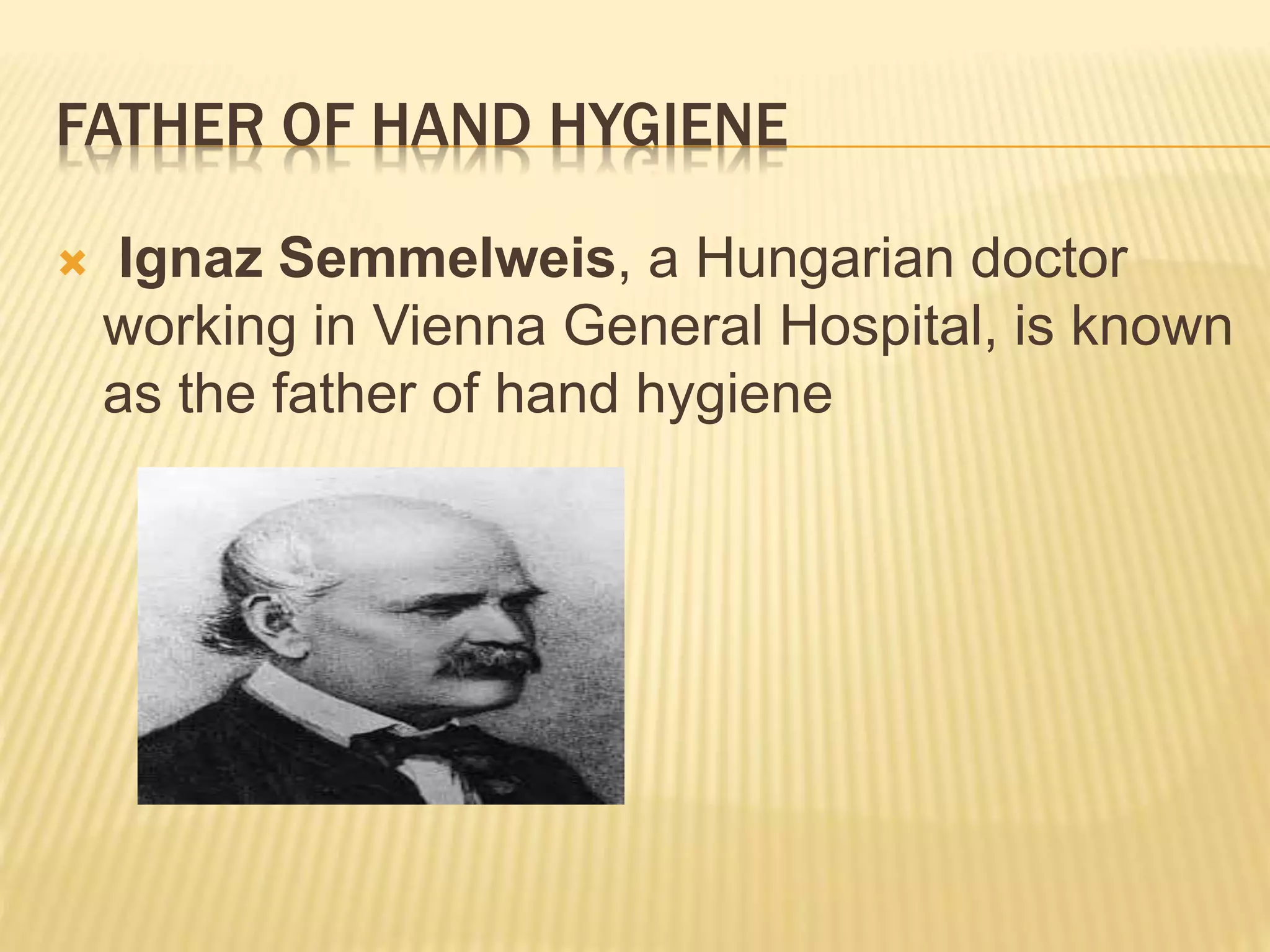
 Ignaz Semmelweis, a Hungarian doctor
working in Vienna General Hospital, is known
as the father of hand hygiene
BY THE END OF THIS PRESENTATION YOU WILL
BE ABLE TO:
 Identify who should practice hand hygiene
 Describe what hand hygiene is
 Identify where hand hygiene practice should
take place
 Explain why hand hygiene is important
 Describe when hand hygiene is to be performed
 Describe how to perform hand hygiene using
various methods
 Describe tips for success for effective of hand
hygiene
THE “WHO, WHAT, WHERE, WHEN, HOW AND
WHY” OF HAND HYGIENE
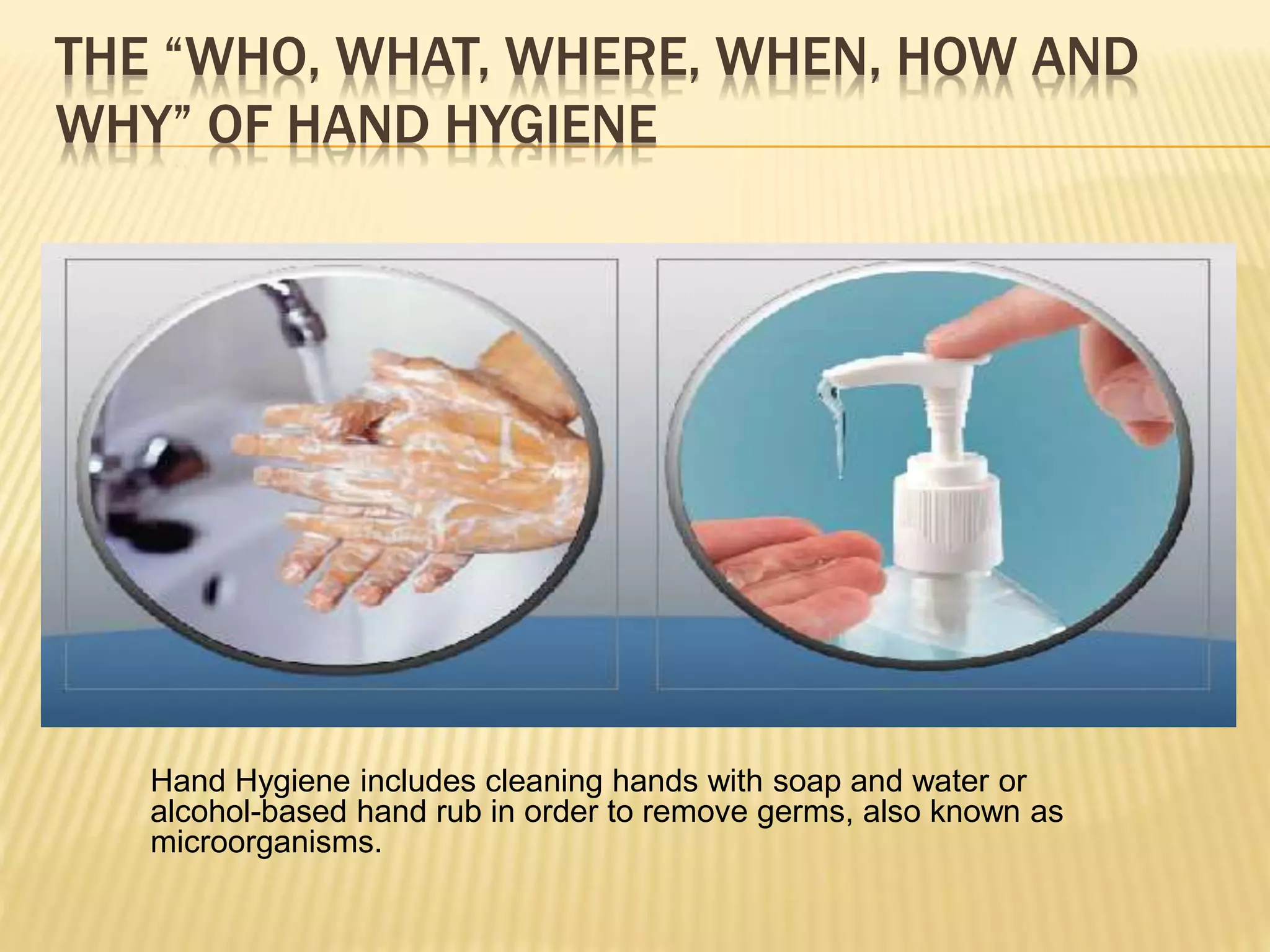
Hand Hygiene includes cleaning hands with soap and water or
alcohol-based hand rub in order to remove germs, also known as
microorganisms.
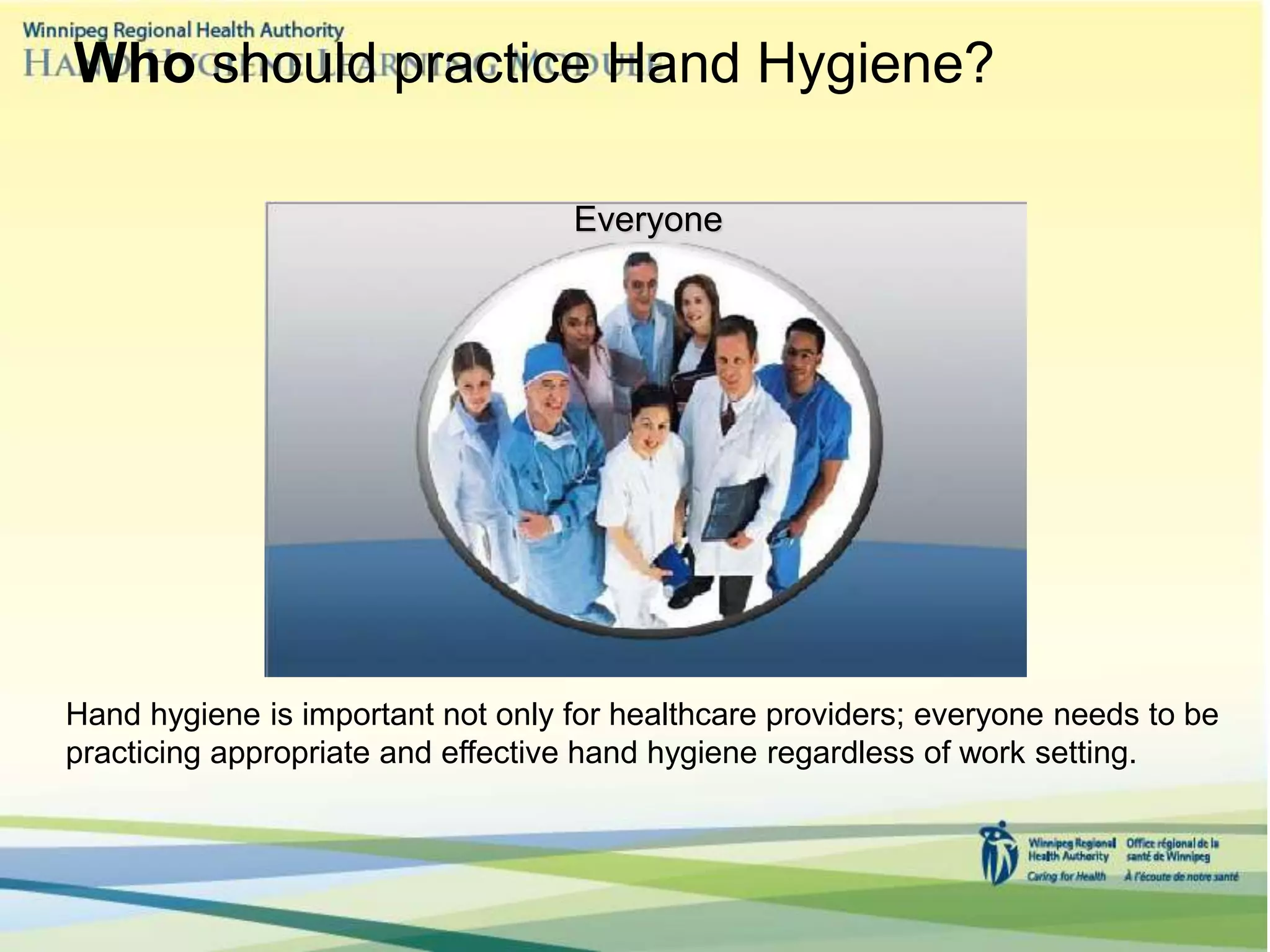
Who should practice Hand Hygiene?
Hand hygiene is important not only for healthcare providers; everyone needs to be
practicing appropriate and effective hand hygiene regardless of work setting.
Everyone
 Busy health care providers need access to hand hygiene
products where patient or patient environment contact is
taking place.
 Hand hygiene is important in all work settings, including
Acute Care, Long Term Care Facilities, Community and
Corporate sites.
 Providing alcohol-based hand rub at the point of care
(within arm’s reach) is an important system support to
improve hand hygiene.
 This enables health care providers to quickly and easily
fulfill the 4 Moments for Hand Hygiene.
WHERE SHOULD YOU PERFORM HAND
HYGIENE?
WHY DO WE NEED TO LEARN ABOUT HAND HYGIENE?
 Hand hygiene is the most important way to
prevent the spread of germs.
 Hand hygiene helps keep you healthy by
reducing the number of germs on your hands
and helps reduce the spread of germs to your
family, friends, coworkers, patients, residents or
clients.
 Using appropriate hand hygiene prevents
contamination of the patient’s, client’s, or
resident’s environment.
TYPES OF HAND HYGIENE
 1. Medical hand hygiene
 2. surgical hand hygiene
TYPES OF HAND HYGIENE
MEDICAL /SURGICAL
 Medical hand hygiene
 Duration is at least 20-30 with alcohol based
hand rub.
 Soap solation is at least 60 seconds
 Surgical hand hygiene
 Duration is 3-5 minutes (Surgical hand
asepsis)
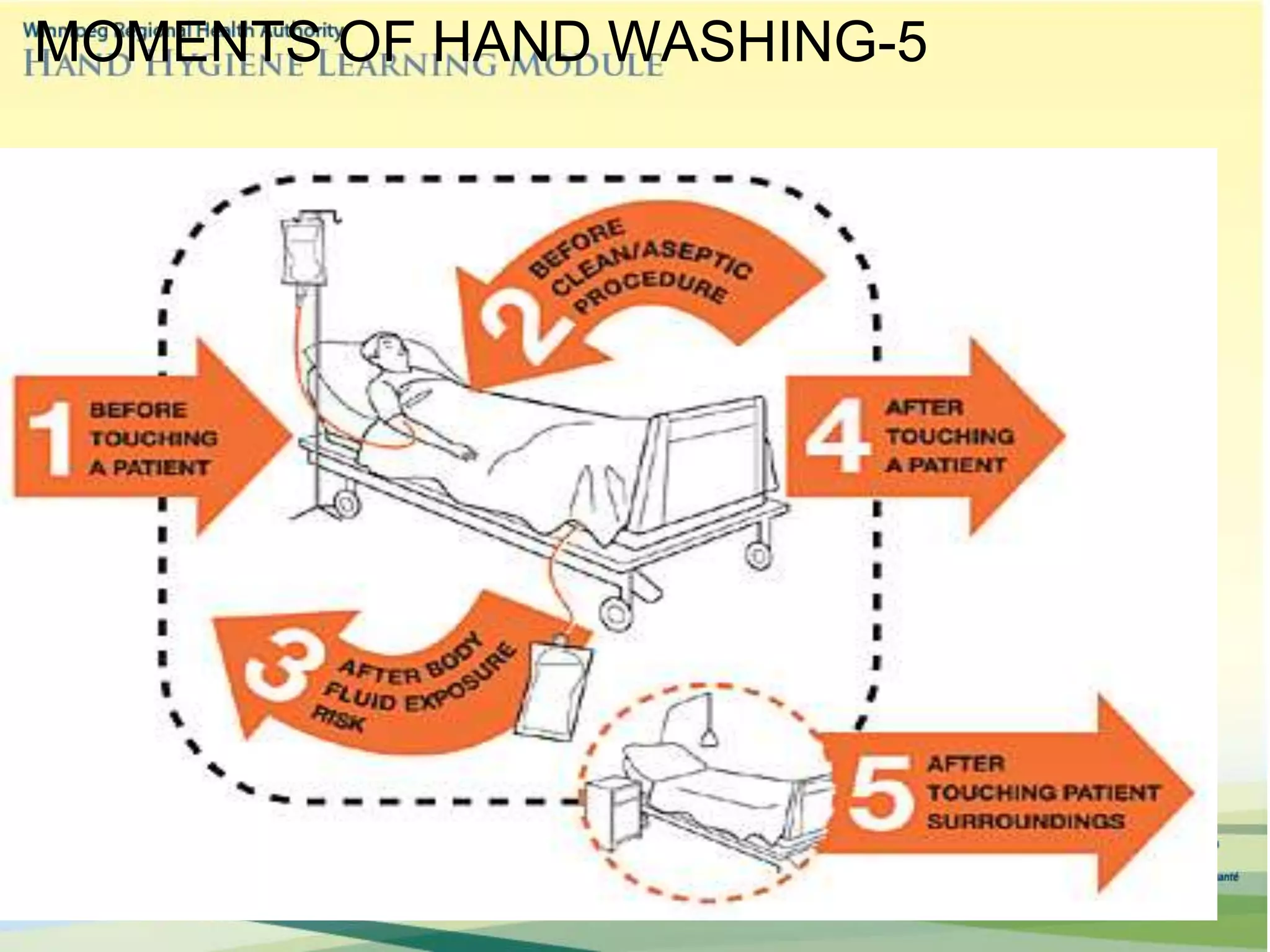
MOMENTS OF HAND WASHING-5
MOMENT 1. BEFORE CONTACT WITH A PATIENT
Clean your hands when entering or before
touching the patient.
 This will protect the patient from harmful
organisms carried on your hands.
Before shaking hands Before transferring
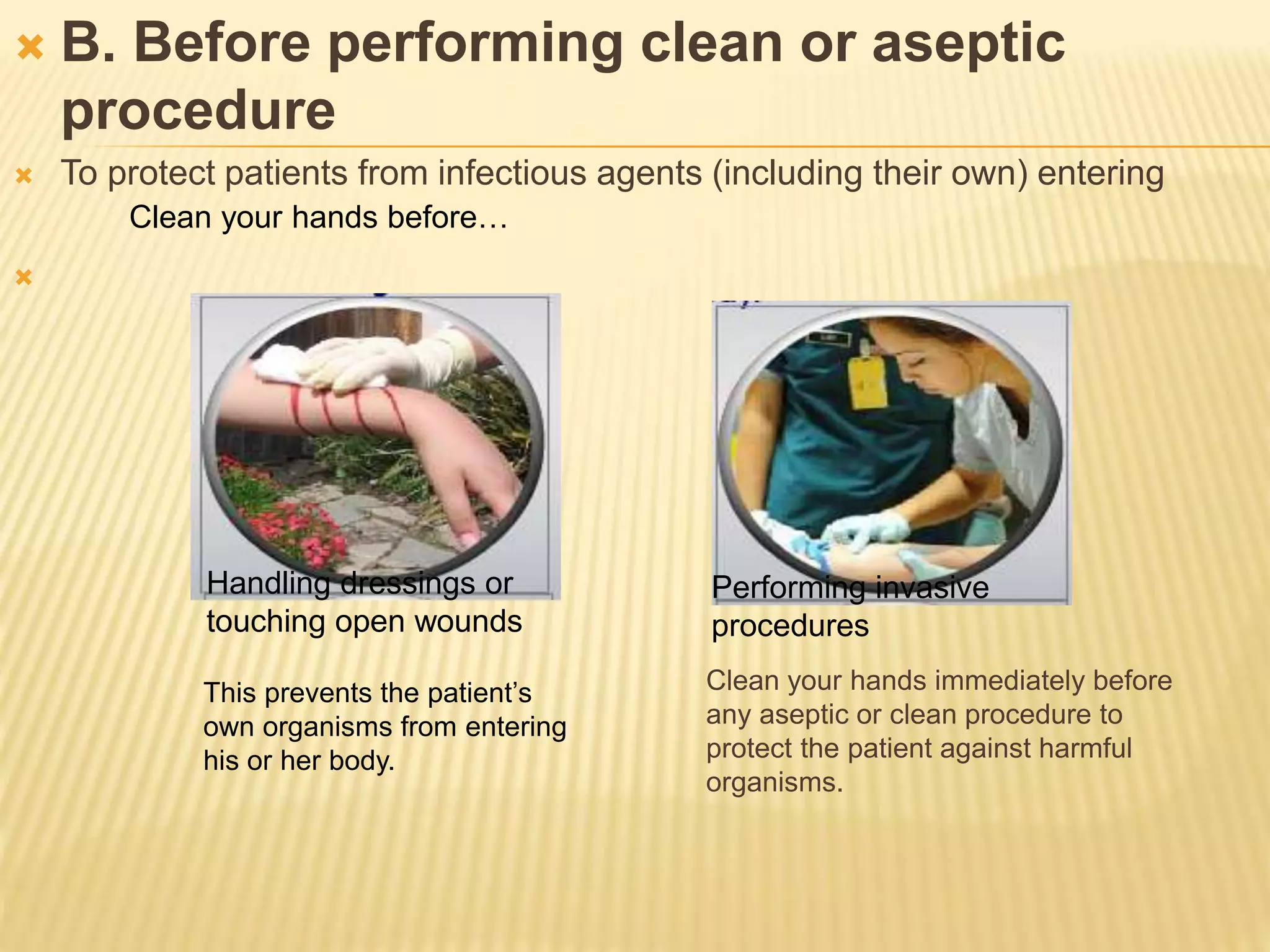
Clean your hands immediately before
any aseptic or clean procedure to
protect the patient against harmful
organisms.
Clean your hands before…
Handling dressings or
touching open wounds
Performing invasive
procedures
This prevents the patient’s
own organisms from entering
his or her body.
 B. Before performing clean or aseptic
procedure
 To protect patients from infectious agents (including their own) entering

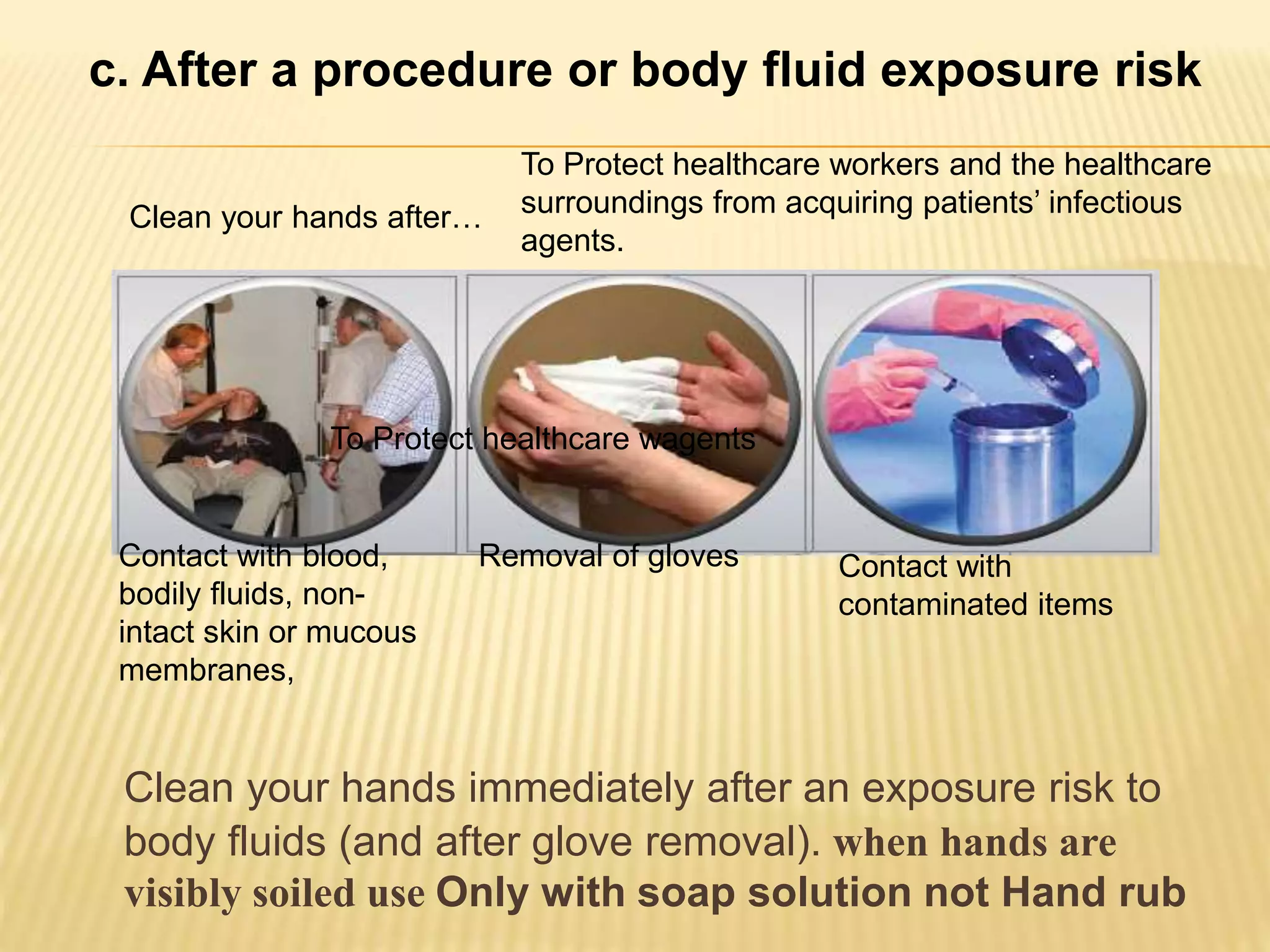
Clean your hands immediately after an exposure risk to
body fluids (and after glove removal). when hands are
visibly soiled use Only with soap solution not Hand rub
c. After a procedure or body fluid exposure risk
Clean your hands after…
Contact with blood,
bodily fluids, non-
intact skin or mucous
membranes,
Removal of gloves Contact with
contaminated items
To Protect healthcare wagents
To Protect healthcare workers and the healthcare
surroundings from acquiring patients’ infectious
agents.
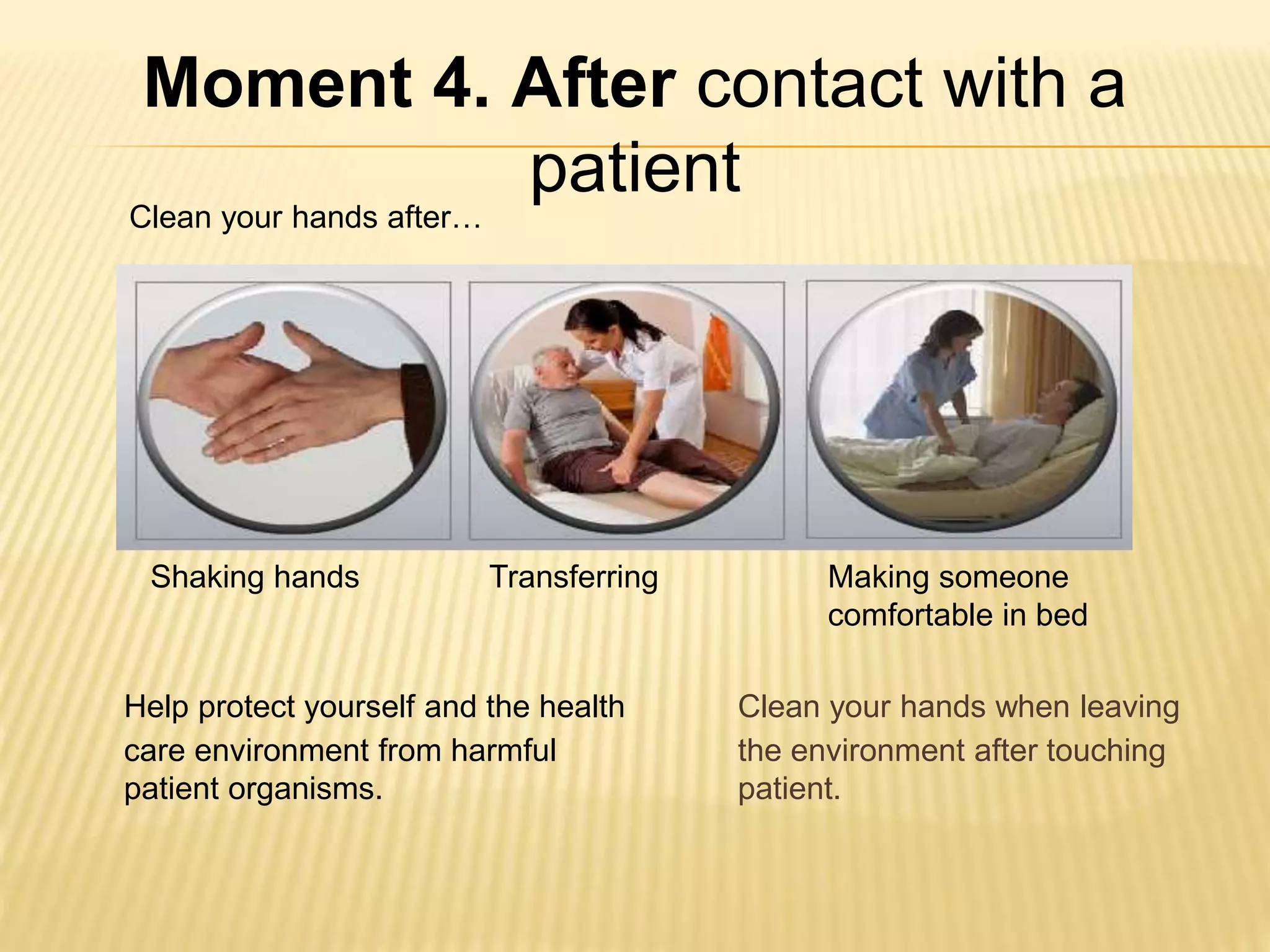
Clean your hands when leaving
the environment after touching
patient.
Moment 4. After contact with a
patient
Clean your hands after…
Shaking hands Transferring Making someone
comfortable in bed
Help protect yourself and the health
care environment from harmful
patient organisms.
Help protect yourself and the health care
environment from harmful patient organisms.
Clean your hands after…
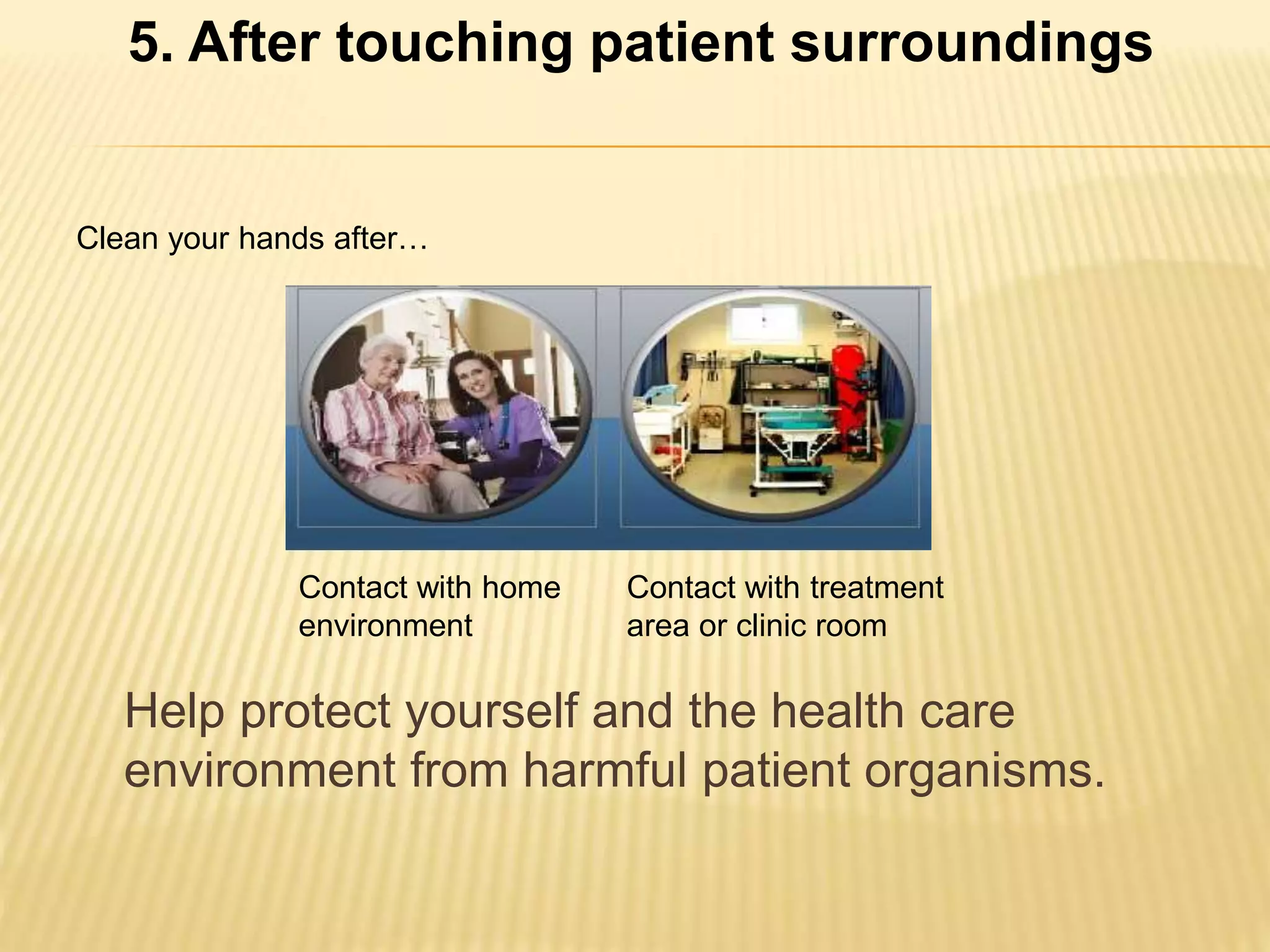
Contact with home
environment
Contact with treatment
area or clinic room
5. After touching patient surroundings
STEPS OF HAND HYGIENE USING
ALCOHOL BASED HAND-RUB
 - Apply a palm full of the product in a cupped hand, covering all
surfaces.
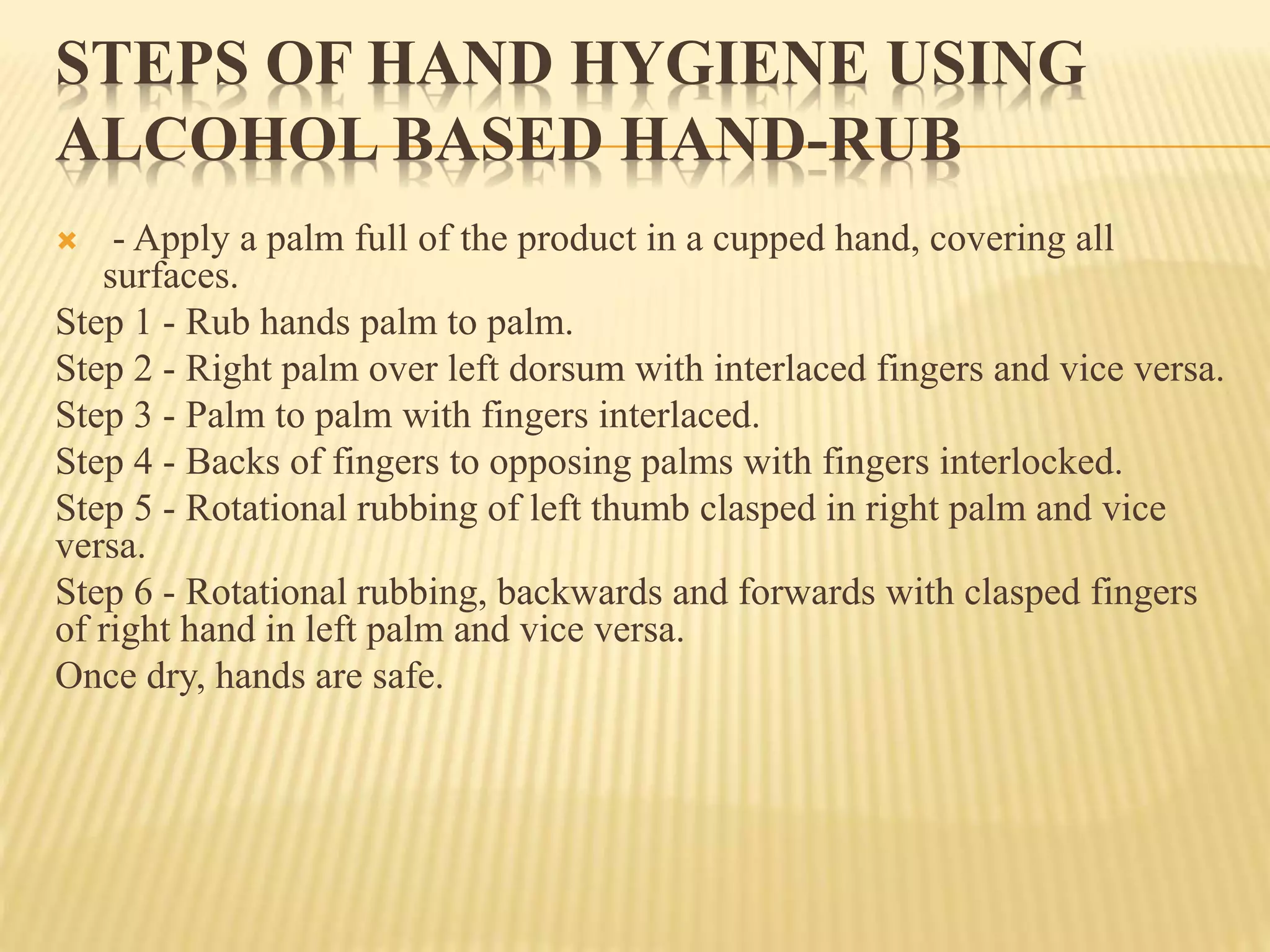
Step 1 - Rub hands palm to palm.
Step 2 - Right palm over left dorsum with interlaced fingers and vice versa.
Step 3 - Palm to palm with fingers interlaced.
Step 4 - Backs of fingers to opposing palms with fingers interlocked.
Step 5 - Rotational rubbing of left thumb clasped in right palm and vice
versa.
Step 6 - Rotational rubbing, backwards and forwards with clasped fingers
of right hand in left palm and vice versa.
Once dry, hands are safe.
OUR HOSPITAL
PRE-OPERATIVE HAND WASHING TECHNIQUE
(SURGICAL HAND ASEPSIS)
 A more thorough hand washing technique is
required pre-operatively and before
undertaking invasive procedures like lumbar
puncture, central lines, tracheostomy etc.
 • Remove watch and other jewellery
 • Stand well away from the sink,
 Turn on the tap using the elbow/foot,
 • Wet hands from fingertips to elbow, holding up to enable
water to run down from the finger to the elbow.
 • Remove dirt from underneath fingernails.
 • Apply soap solution and scrub each hand with the other,
using rotatory movements from the fingertips to the elbows, with
special attention to the nails and webs of fingers. The procedure
should last for at least 3-5 minutes.
 • Rinse thoroughly under running water ensuring that water
flows from the fingertips to the elbow.
 • Close tap with elbow/foot, taking care not to touch any spot
that has been scrubbed.
 • Pat hands dry using a single use towel beginning with the
hands and proceeding to the wrists and then to the forearms.
“HANDY” TIPS
1 Artificial nails, gel nails or extenders are not to be worn by
staff who have direct patient contact.
2 Contaminated surfaces or objects should not be touched
after performing hand hygiene.
3 Avoid touching your face, especially your eyes and nose.
4 Fingernails should be kept short - no longer than ¼” or
0.635cm long.
5 Nail polish may be worn, but should be removed when
chipped.

hand hygiene ppt-manjula.pptx

  • 1.
    HAND WASHING ANDHYGIENE  This presentation will take you through the who, what, where, why, when and how of hand hygiene. Some important points will be reviewed to improve your hand hygiene practice.
  • 2.
    WE ARE FOLLOWINGWHO GUIDELINES FOR HAND HYGIENE.  1. Clean care is safer care  2. Save lives  3. Clean your Hands The organisation adheres to hand-hygiene guidelines-NABH-HIC-2(c)
  • 3.
    FATHER OF HANDHYGIENE  Ignaz Semmelweis, a Hungarian doctor working in Vienna General Hospital, is known as the father of hand hygiene
  • 4.
    BY THE ENDOF THIS PRESENTATION YOU WILL BE ABLE TO:  Identify who should practice hand hygiene  Describe what hand hygiene is  Identify where hand hygiene practice should take place  Explain why hand hygiene is important  Describe when hand hygiene is to be performed  Describe how to perform hand hygiene using various methods  Describe tips for success for effective of hand hygiene
  • 5.
    THE “WHO, WHAT,WHERE, WHEN, HOW AND WHY” OF HAND HYGIENE Hand Hygiene includes cleaning hands with soap and water or alcohol-based hand rub in order to remove germs, also known as microorganisms.
  • 6.
    Who should practiceHand Hygiene? Hand hygiene is important not only for healthcare providers; everyone needs to be practicing appropriate and effective hand hygiene regardless of work setting. Everyone
  • 7.
     Busy healthcare providers need access to hand hygiene products where patient or patient environment contact is taking place.  Hand hygiene is important in all work settings, including Acute Care, Long Term Care Facilities, Community and Corporate sites.  Providing alcohol-based hand rub at the point of care (within arm’s reach) is an important system support to improve hand hygiene.  This enables health care providers to quickly and easily fulfill the 4 Moments for Hand Hygiene. WHERE SHOULD YOU PERFORM HAND HYGIENE?
  • 8.
    WHY DO WENEED TO LEARN ABOUT HAND HYGIENE?  Hand hygiene is the most important way to prevent the spread of germs.  Hand hygiene helps keep you healthy by reducing the number of germs on your hands and helps reduce the spread of germs to your family, friends, coworkers, patients, residents or clients.  Using appropriate hand hygiene prevents contamination of the patient’s, client’s, or resident’s environment.
  • 9.
    TYPES OF HANDHYGIENE  1. Medical hand hygiene  2. surgical hand hygiene
  • 10.
    TYPES OF HANDHYGIENE MEDICAL /SURGICAL  Medical hand hygiene  Duration is at least 20-30 with alcohol based hand rub.  Soap solation is at least 60 seconds  Surgical hand hygiene  Duration is 3-5 minutes (Surgical hand asepsis)
  • 11.
    MOMENTS OF HANDWASHING-5
  • 12.
    MOMENT 1. BEFORECONTACT WITH A PATIENT Clean your hands when entering or before touching the patient.  This will protect the patient from harmful organisms carried on your hands. Before shaking hands Before transferring
  • 13.
    Clean your handsimmediately before any aseptic or clean procedure to protect the patient against harmful organisms. Clean your hands before… Handling dressings or touching open wounds Performing invasive procedures This prevents the patient’s own organisms from entering his or her body.  B. Before performing clean or aseptic procedure  To protect patients from infectious agents (including their own) entering 
  • 14.
    Clean your handsimmediately after an exposure risk to body fluids (and after glove removal). when hands are visibly soiled use Only with soap solution not Hand rub c. After a procedure or body fluid exposure risk Clean your hands after… Contact with blood, bodily fluids, non- intact skin or mucous membranes, Removal of gloves Contact with contaminated items To Protect healthcare wagents To Protect healthcare workers and the healthcare surroundings from acquiring patients’ infectious agents.
  • 15.
    Clean your handswhen leaving the environment after touching patient. Moment 4. After contact with a patient Clean your hands after… Shaking hands Transferring Making someone comfortable in bed Help protect yourself and the health care environment from harmful patient organisms.
  • 16.
    Help protect yourselfand the health care environment from harmful patient organisms. Clean your hands after… Contact with home environment Contact with treatment area or clinic room 5. After touching patient surroundings
  • 17.
    STEPS OF HANDHYGIENE USING ALCOHOL BASED HAND-RUB  - Apply a palm full of the product in a cupped hand, covering all surfaces. Step 1 - Rub hands palm to palm. Step 2 - Right palm over left dorsum with interlaced fingers and vice versa. Step 3 - Palm to palm with fingers interlaced. Step 4 - Backs of fingers to opposing palms with fingers interlocked. Step 5 - Rotational rubbing of left thumb clasped in right palm and vice versa. Step 6 - Rotational rubbing, backwards and forwards with clasped fingers of right hand in left palm and vice versa. Once dry, hands are safe.
  • 18.
  • 19.
    PRE-OPERATIVE HAND WASHINGTECHNIQUE (SURGICAL HAND ASEPSIS)  A more thorough hand washing technique is required pre-operatively and before undertaking invasive procedures like lumbar puncture, central lines, tracheostomy etc.  • Remove watch and other jewellery  • Stand well away from the sink,
  • 20.
     Turn onthe tap using the elbow/foot,  • Wet hands from fingertips to elbow, holding up to enable water to run down from the finger to the elbow.  • Remove dirt from underneath fingernails.  • Apply soap solution and scrub each hand with the other, using rotatory movements from the fingertips to the elbows, with special attention to the nails and webs of fingers. The procedure should last for at least 3-5 minutes.  • Rinse thoroughly under running water ensuring that water flows from the fingertips to the elbow.  • Close tap with elbow/foot, taking care not to touch any spot that has been scrubbed.  • Pat hands dry using a single use towel beginning with the hands and proceeding to the wrists and then to the forearms.
  • 22.
    “HANDY” TIPS 1 Artificialnails, gel nails or extenders are not to be worn by staff who have direct patient contact. 2 Contaminated surfaces or objects should not be touched after performing hand hygiene. 3 Avoid touching your face, especially your eyes and nose. 4 Fingernails should be kept short - no longer than ¼” or 0.635cm long. 5 Nail polish may be worn, but should be removed when chipped.