EXAMPLES OF CLASSROOM USE


     USING
    GAMES IN
      THE
   CLASSROOM
Why using games in CLIL
             lessons?
There are some REASONS for using
    GAMES in our CLASSROOM
           G A M E S C A N…
•   OFFER FLEXIBILITY OF:
       Approach             Programme
        Aims 
• BE USED CONSTRUCTIVELY:
    Each game can have a different purpose.
    Also even “FUN” is purposeful.
• SORT OUT PROBLEMS:
    The kind of problems found in
• PROMOTE INTER-DEPENDENCY as well as an
  INDEPENDENCE OF PERSONAL IDENTITY.
• HELP BREAK DOWN ARTIFICIAL BARRIERS
  BETWEEN SUBJECTS:
  Simulation and improvisations provide an
  opportunity to extend links between subject or
  interest areas.
• GENERATE INTEREST:
  Games need enthusiasm and motivation students.
  CREATE active and participating classes.
• GENERATE INTEREST:
  Games need enthusiasm and motivation students.
  CREATE active and participating classes.
• ENCOURAGE LEARNING PROCESS
  Reviewing previous lesson and promote effective
  communication teaching and learning.
WHY NOT using games in CLIL lessons?
         DO NOT USE IT IF:
• OBJECTIVES ARE NOT WELL DEFINED
• YOU HAVEN’T DECIDED WHAT SORT OF
  GAME WILL BE APPROPRIATE IN EACH
  LESSON.
• NOT FUNNY FOR STUDENTS
• NOT EASY FOR STUDENTS TO PLAY.
• THE LEARNING PURPOSES AND OBJECTIVES
  AREN’T CLEAR.
• NOT CLEAR THE LENGTH OF THE GAMES.
• COMPETITIVE OR COOPERATIVE GAMES
What to consider when using games in the CLIL
lessons?
•The language : topic, vocabulary, structures.

•The age.
•Timing: what moment of the lesson.
•Grouping.
•Students’ background and experiences.
•Materials.
•Type of game.
ACTIVITIES
There can be activities for any stage or topic
  of the lesson starting from the warmer up
  to the end of the class and dealing with
  any topic you like.
With the new technologies there is a huge
  variety of game activities useful for any
  lesson and also for all ages
Click on the web sites for game activities for
  children aged 5-7 (first cycle)
• Phonics: http://www.starfall.com/
• Classroom activities:
  http://www.eslkidstuff.com/Classroomgame
ACTIVITIES
  Click on the web sites for game activities
  for children aged 8-11(second cycle)
• Vocabulary:
  http://learnenglishkids.britishcouncil.org/
  en/fun-games/wordshake
• Parts of the body:
  http://learnenglishkids.britishcouncil.org/
  en/language-games/balloon-burst/human-
  body
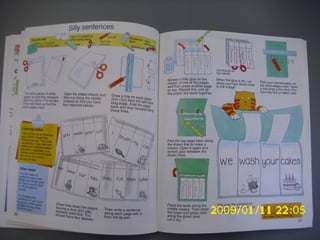
  There are also some activities the students
HOW TO FIND /MAKE THE RESOURCES

• Looking for websites in internet.
• Looking for books in the library.
• Asking other colleges what do they know or
  use.
• Looking for different kind of materials, places.
• Give the pupils some tips to prepare the
  games at home and bring them back to the
  classroom.
ACTIVITIES
BIBLIOGRAPHY
• Gamesters’ handbook “140 games for
  teachers and group leaders”
• Donna Brandes and Howard Phillips.
• Usborne Learning Games. “Reading and
  counting activities for young children.”
• Usborne Book of Puzzles. Picture Puzzles.
• 50 Activities for kids with ADHD (Magination
  Press) www.maginationpress.com
• Physical Education Key Stage 1. Blueprints
• Children’s Games. Jessica Davies
• The great games book. A&C Black Publishers.
• Primary Playground Games (ages 4 to 11)
Group 1 -_using_games

Group 1 -_using_games

  • 1.
    EXAMPLES OF CLASSROOMUSE USING GAMES IN THE CLASSROOM
  • 2.
    Why using gamesin CLIL lessons? There are some REASONS for using GAMES in our CLASSROOM G A M E S C A N… • OFFER FLEXIBILITY OF: Approach Programme Aims  • BE USED CONSTRUCTIVELY: Each game can have a different purpose. Also even “FUN” is purposeful. • SORT OUT PROBLEMS: The kind of problems found in
  • 3.
    • PROMOTE INTER-DEPENDENCYas well as an INDEPENDENCE OF PERSONAL IDENTITY. • HELP BREAK DOWN ARTIFICIAL BARRIERS BETWEEN SUBJECTS: Simulation and improvisations provide an opportunity to extend links between subject or interest areas. • GENERATE INTEREST: Games need enthusiasm and motivation students. CREATE active and participating classes. • GENERATE INTEREST: Games need enthusiasm and motivation students. CREATE active and participating classes. • ENCOURAGE LEARNING PROCESS Reviewing previous lesson and promote effective communication teaching and learning.
  • 4.
    WHY NOT usinggames in CLIL lessons? DO NOT USE IT IF: • OBJECTIVES ARE NOT WELL DEFINED • YOU HAVEN’T DECIDED WHAT SORT OF GAME WILL BE APPROPRIATE IN EACH LESSON. • NOT FUNNY FOR STUDENTS • NOT EASY FOR STUDENTS TO PLAY. • THE LEARNING PURPOSES AND OBJECTIVES AREN’T CLEAR. • NOT CLEAR THE LENGTH OF THE GAMES. • COMPETITIVE OR COOPERATIVE GAMES
  • 5.
    What to considerwhen using games in the CLIL lessons? •The language : topic, vocabulary, structures. •The age. •Timing: what moment of the lesson. •Grouping. •Students’ background and experiences. •Materials. •Type of game.
  • 6.
    ACTIVITIES There can beactivities for any stage or topic of the lesson starting from the warmer up to the end of the class and dealing with any topic you like. With the new technologies there is a huge variety of game activities useful for any lesson and also for all ages Click on the web sites for game activities for children aged 5-7 (first cycle) • Phonics: http://www.starfall.com/ • Classroom activities: http://www.eslkidstuff.com/Classroomgame
  • 7.
    ACTIVITIES Clickon the web sites for game activities for children aged 8-11(second cycle) • Vocabulary: http://learnenglishkids.britishcouncil.org/ en/fun-games/wordshake • Parts of the body: http://learnenglishkids.britishcouncil.org/ en/language-games/balloon-burst/human- body There are also some activities the students
  • 9.
    HOW TO FIND/MAKE THE RESOURCES • Looking for websites in internet. • Looking for books in the library. • Asking other colleges what do they know or use. • Looking for different kind of materials, places. • Give the pupils some tips to prepare the games at home and bring them back to the classroom.
  • 10.
  • 11.
    BIBLIOGRAPHY • Gamesters’ handbook“140 games for teachers and group leaders” • Donna Brandes and Howard Phillips. • Usborne Learning Games. “Reading and counting activities for young children.” • Usborne Book of Puzzles. Picture Puzzles. • 50 Activities for kids with ADHD (Magination Press) www.maginationpress.com • Physical Education Key Stage 1. Blueprints • Children’s Games. Jessica Davies • The great games book. A&C Black Publishers. • Primary Playground Games (ages 4 to 11)