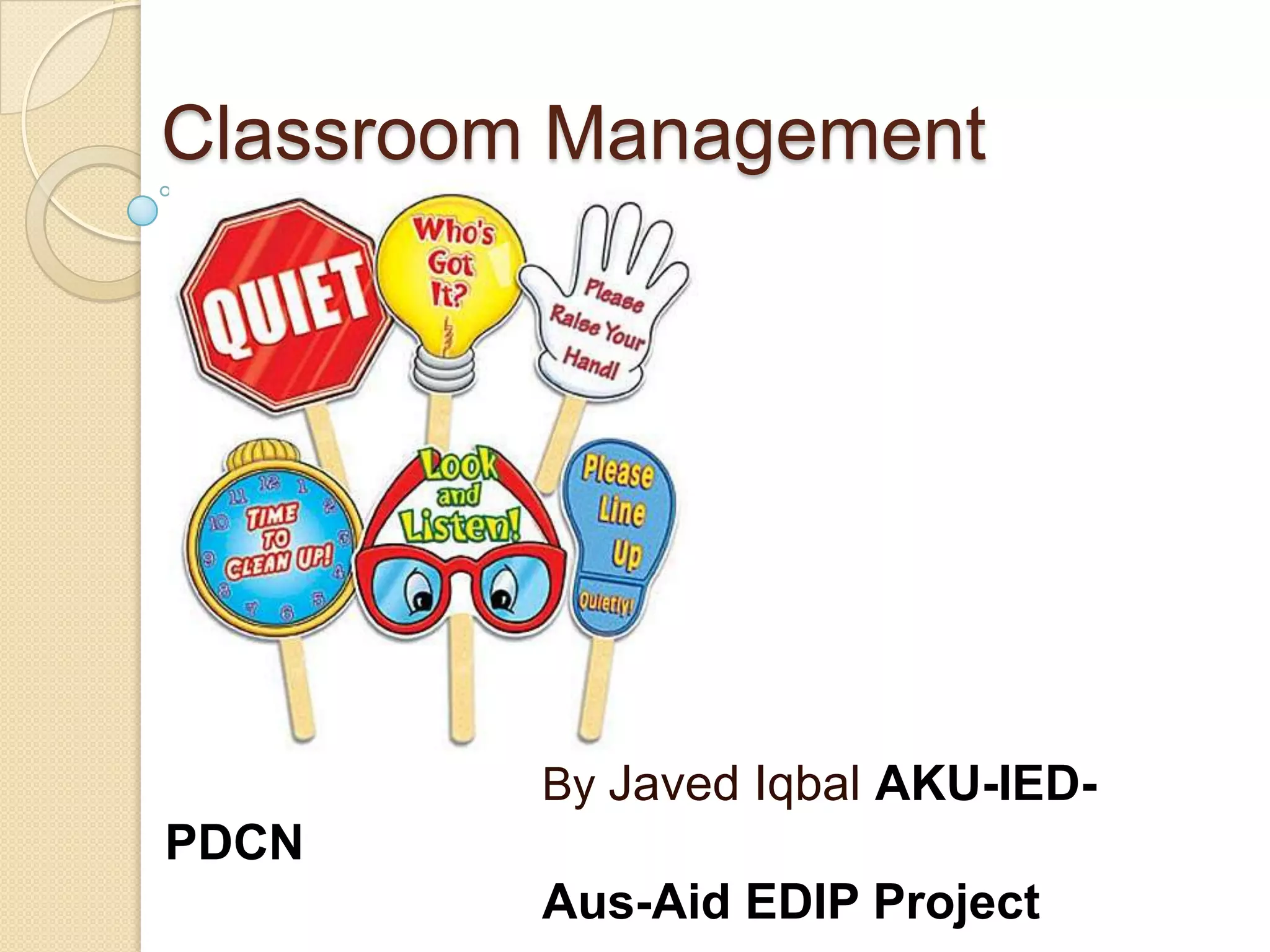
Classroom Management


         By Javed Iqbal AKU-IED-
PDCN
         Aus-Aid EDIP Project
Overview
   Objectives
   Group work
   What is Classroom
   Why Classroom Management
   Principles of Classroom Management
   Components of Classroom Management
   Strategies for Classroom Management
   Key dimensions of Classroom Management
   Classroom Norms
   Components of Classroom Norms
Objectives
 By the end of this session C.Ps could be able:
 Discuss definitions and Importance of
  Classroom management;
 Share the principles of Classroom
  Management;
 Discuss the components of classroom
  management;
Group Work
   Group No I Definition of classroom
    management
   Group No II Importance of classroom
    management
   Group No III Principles of classroom
    management
   Group No IV Components of classroom
    management
   Group No V Strategies for Classroom
    management.
What is Classroom Management?
Classroom management is creative: It creates both
  the
best situation in which the students can learn and
  the
teacher can teach.
Procedures and instructional techniques that are
  used
to establish the classroom environment so that
learning can occur. Management strategies are
  based
on understanding how the classroom environment
  can
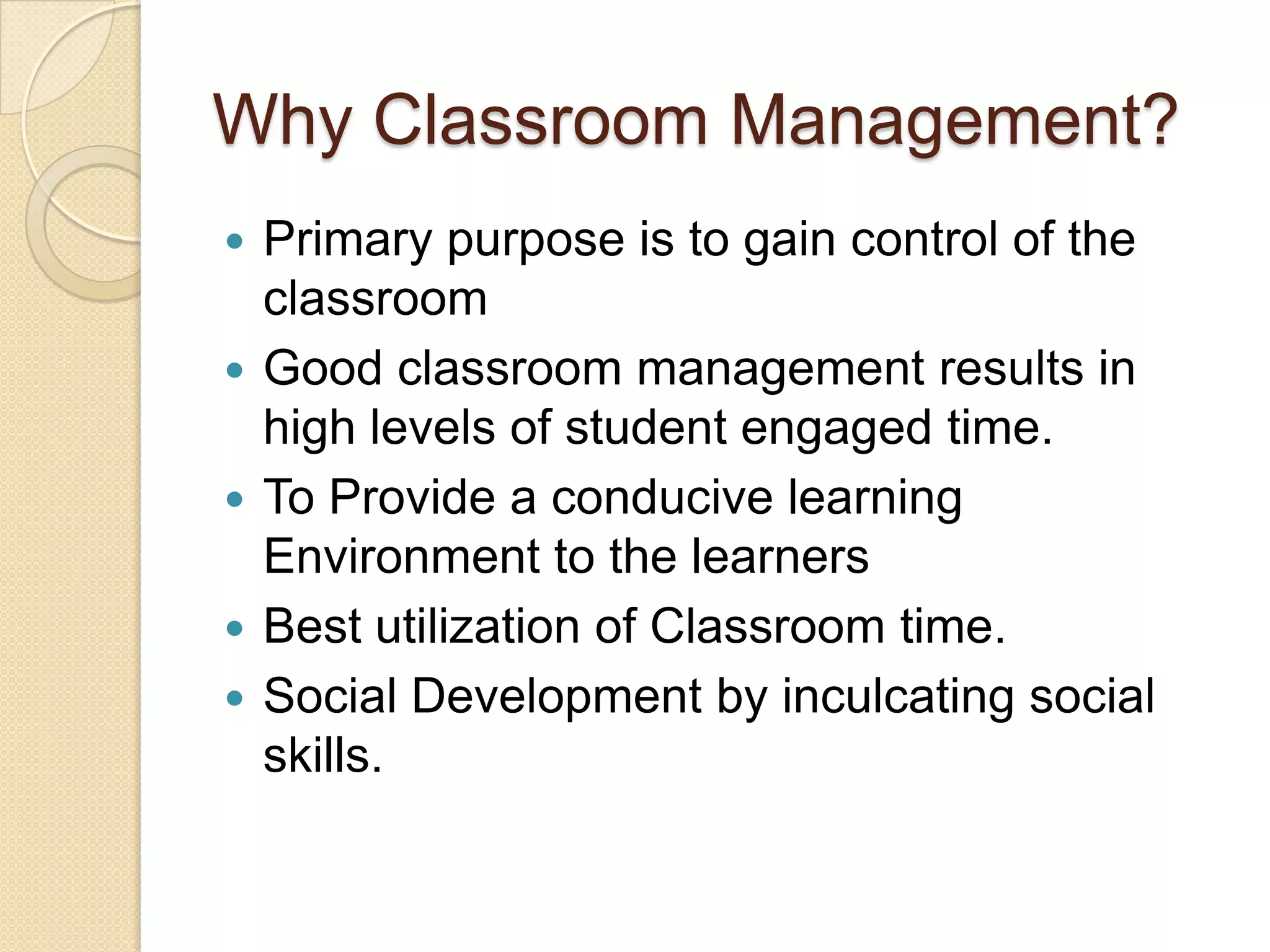
Why Classroom Management?
   Primary purpose is to gain control of the
    classroom
   Good classroom management results in
    high levels of student engaged time.
   To Provide a conducive learning
    Environment to the learners
   Best utilization of Classroom time.
   Social Development by inculcating social
    skills.
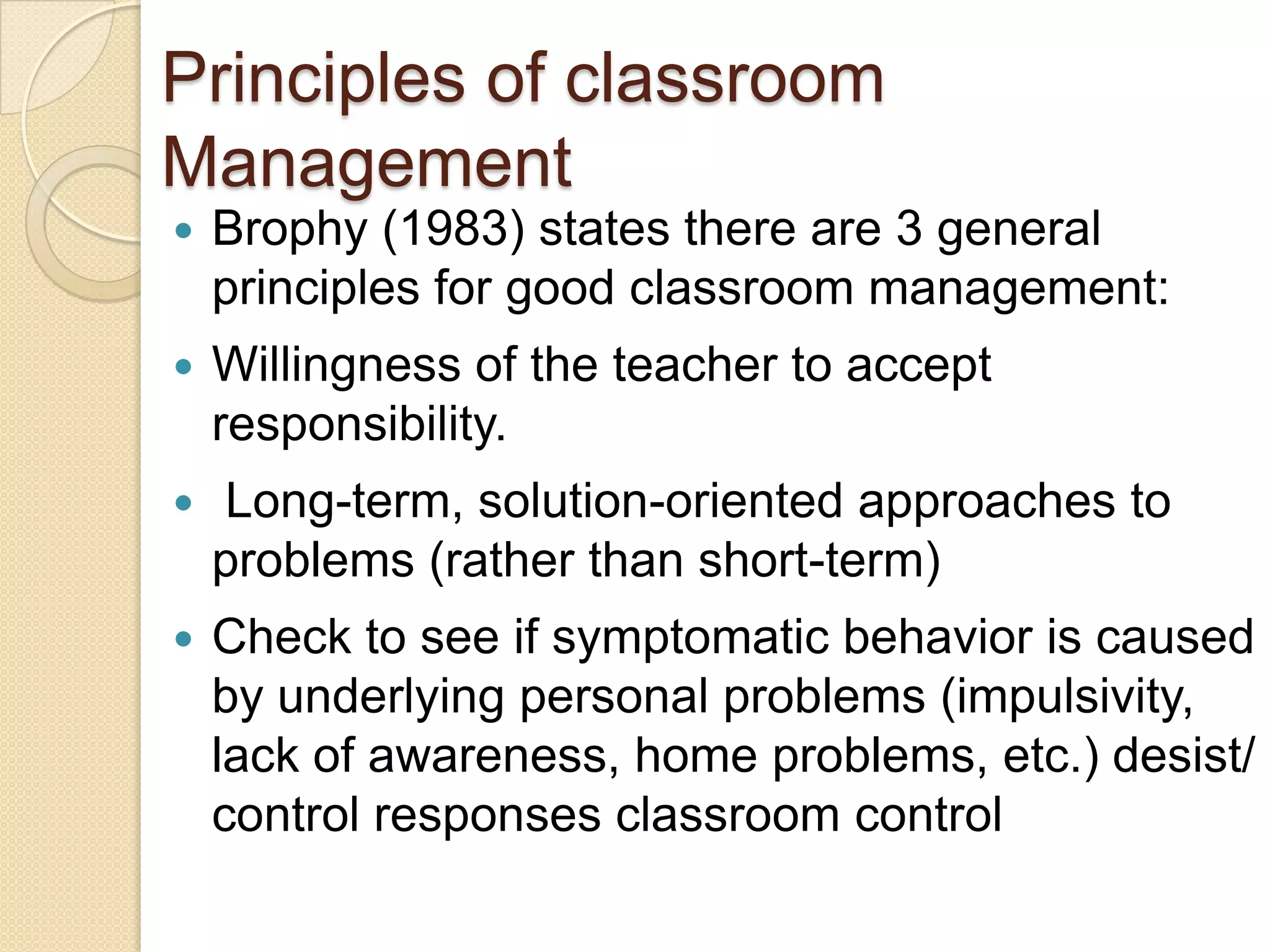
Principles of classroom
Management
   Brophy (1983) states there are 3 general
    principles for good classroom management:
   Willingness of the teacher to accept
    responsibility.
   Long-term, solution-oriented approaches to
    problems (rather than short-term)
   Check to see if symptomatic behavior is caused
    by underlying personal problems (impulsivity,
    lack of awareness, home problems, etc.) desist/
    control responses classroom control
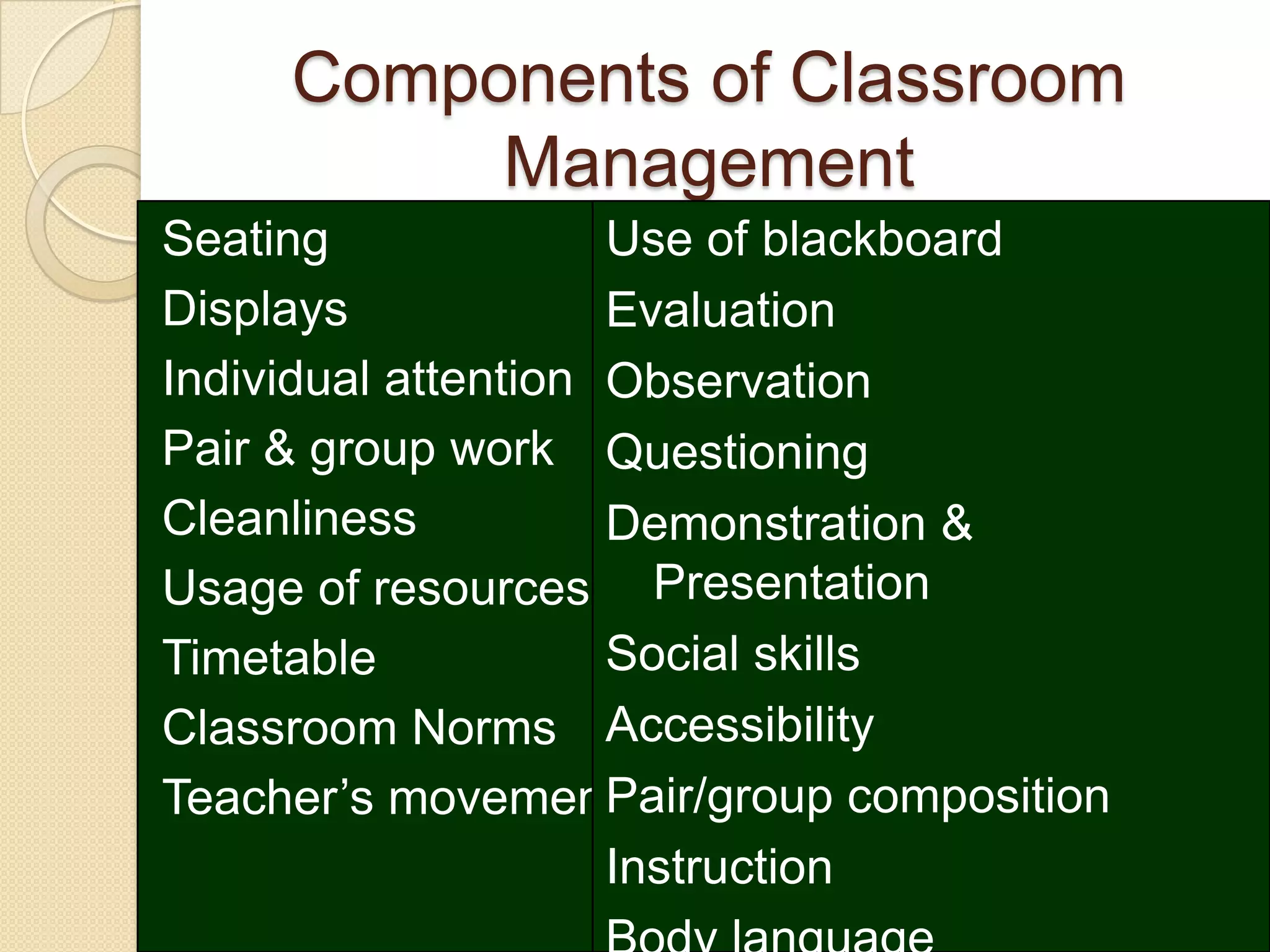
Components of Classroom
          Management
Seating              Use of blackboard
Displays             Evaluation
Individual attention Observation
Pair & group work Questioning
Cleanliness          Demonstration &
Usage of resources Presentation
Timetable            Social skills
Classroom Norms Accessibility
Teacher’s movement   Pair/group composition
                     Instruction
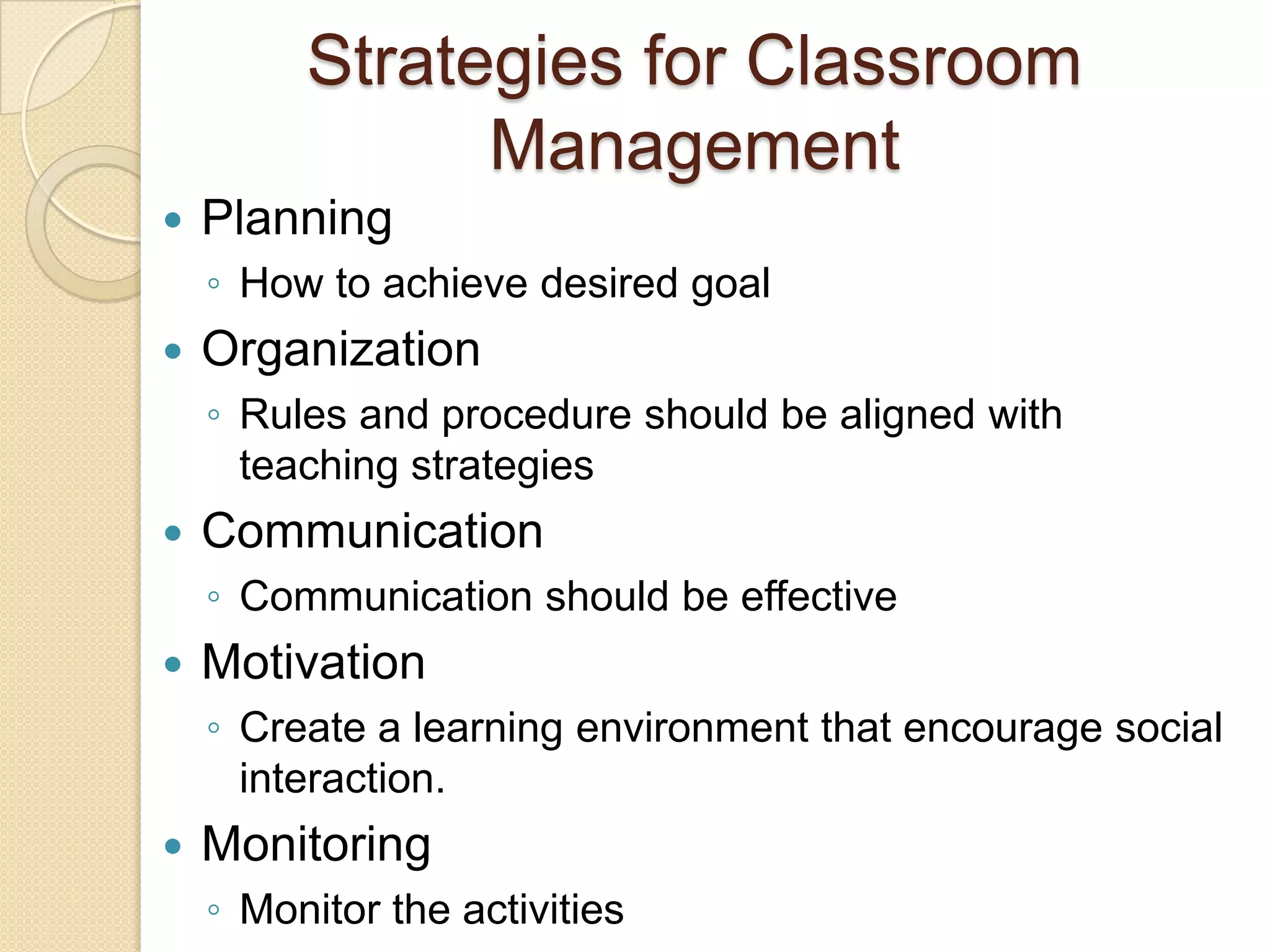
Strategies for Classroom
               Management
   Planning
    ◦ How to achieve desired goal
   Organization
    ◦ Rules and procedure should be aligned with
      teaching strategies
   Communication
    ◦ Communication should be effective
   Motivation
    ◦ Create a learning environment that encourage social
      interaction.
   Monitoring
    ◦ Monitor the activities
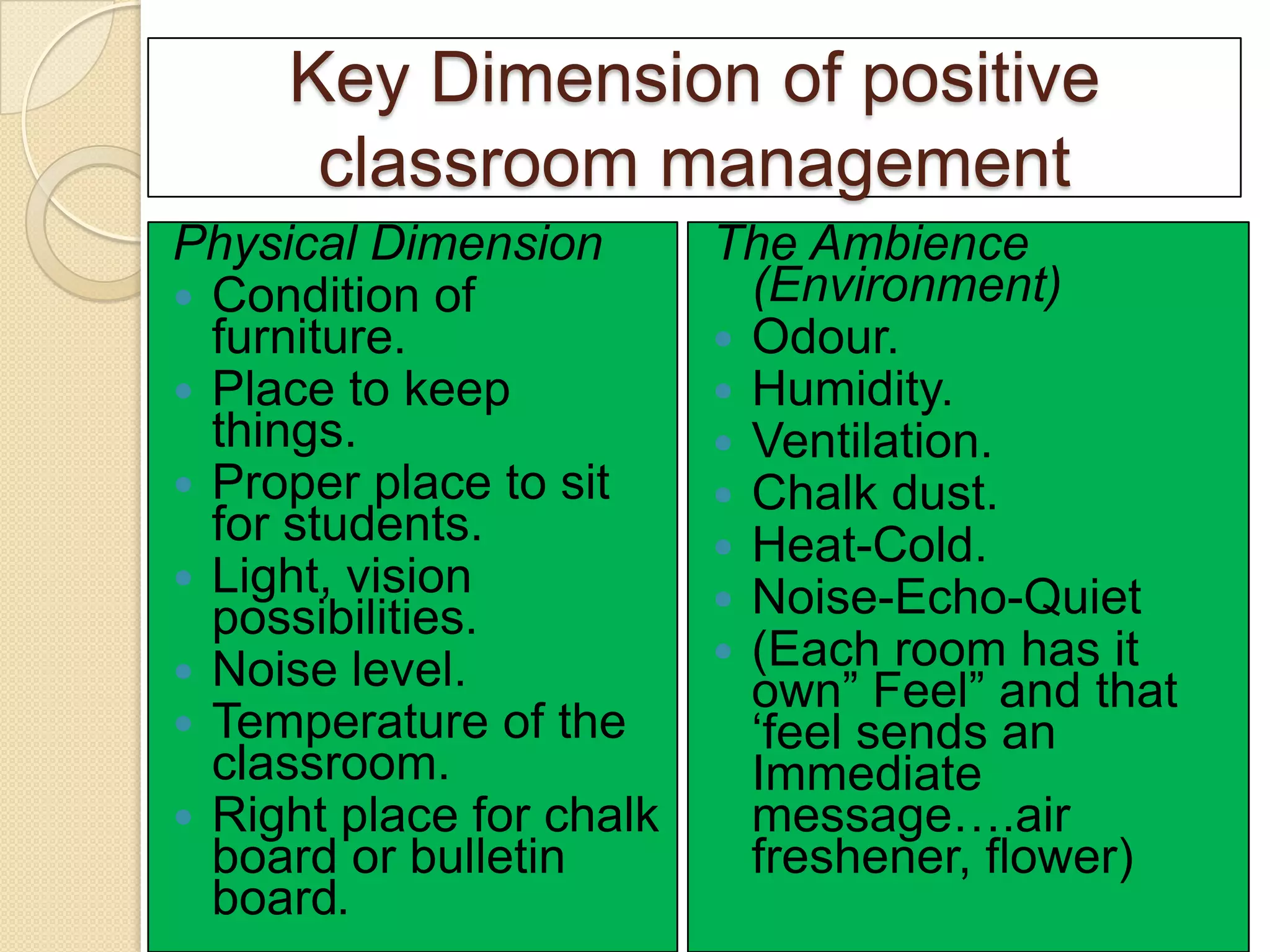
Key Dimension of positive
      classroom management
Physical Dimension        The Ambience
 Condition of              (Environment)
  furniture.               Odour.
 Place to keep            Humidity.
  things.                  Ventilation.
 Proper place to sit      Chalk dust.
  for students.            Heat-Cold.
 Light, vision
                           Noise-Echo-Quiet
  possibilities.
                           (Each room has it
 Noise level.
                            own” Feel” and that
 Temperature of the        ‘feel sends an
  classroom.                Immediate
 Right place for chalk     message….air
  board or bulletin         freshener, flower)
  board.
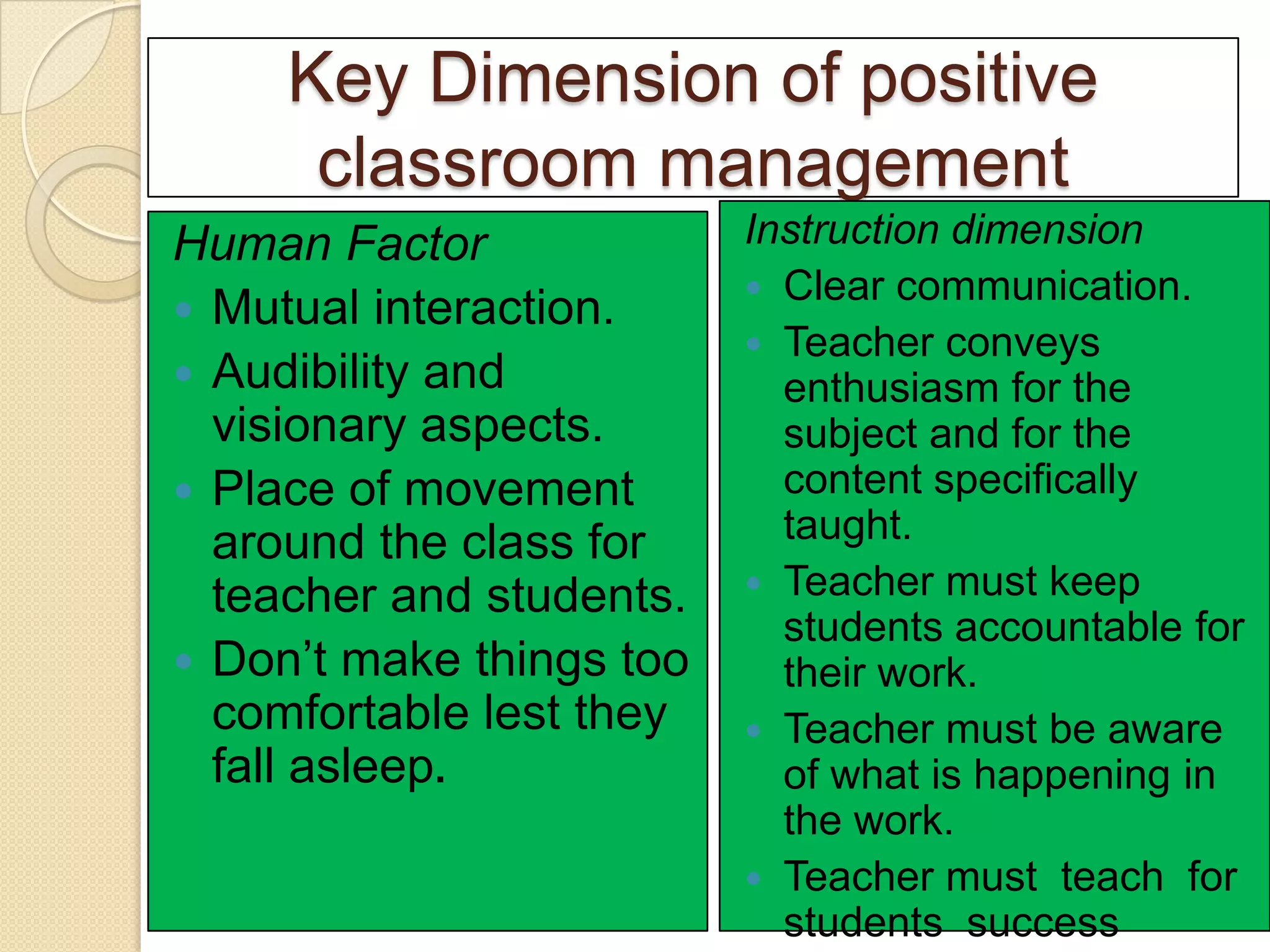
Key Dimension of positive
      classroom management
Human Factor              Instruction dimension
                           Clear communication.
 Mutual interaction.
                           Teacher conveys
 Audibility and            enthusiasm for the
  visionary aspects.        subject and for the
 Place of movement         content specifically
  around the class for      taught.
  teacher and students.    Teacher must keep
                            students accountable for
 Don’t make things too     their work.
  comfortable lest they    Teacher must be aware
  fall asleep.              of what is happening in
                            the work.
                           Teacher must teach for
                            students success
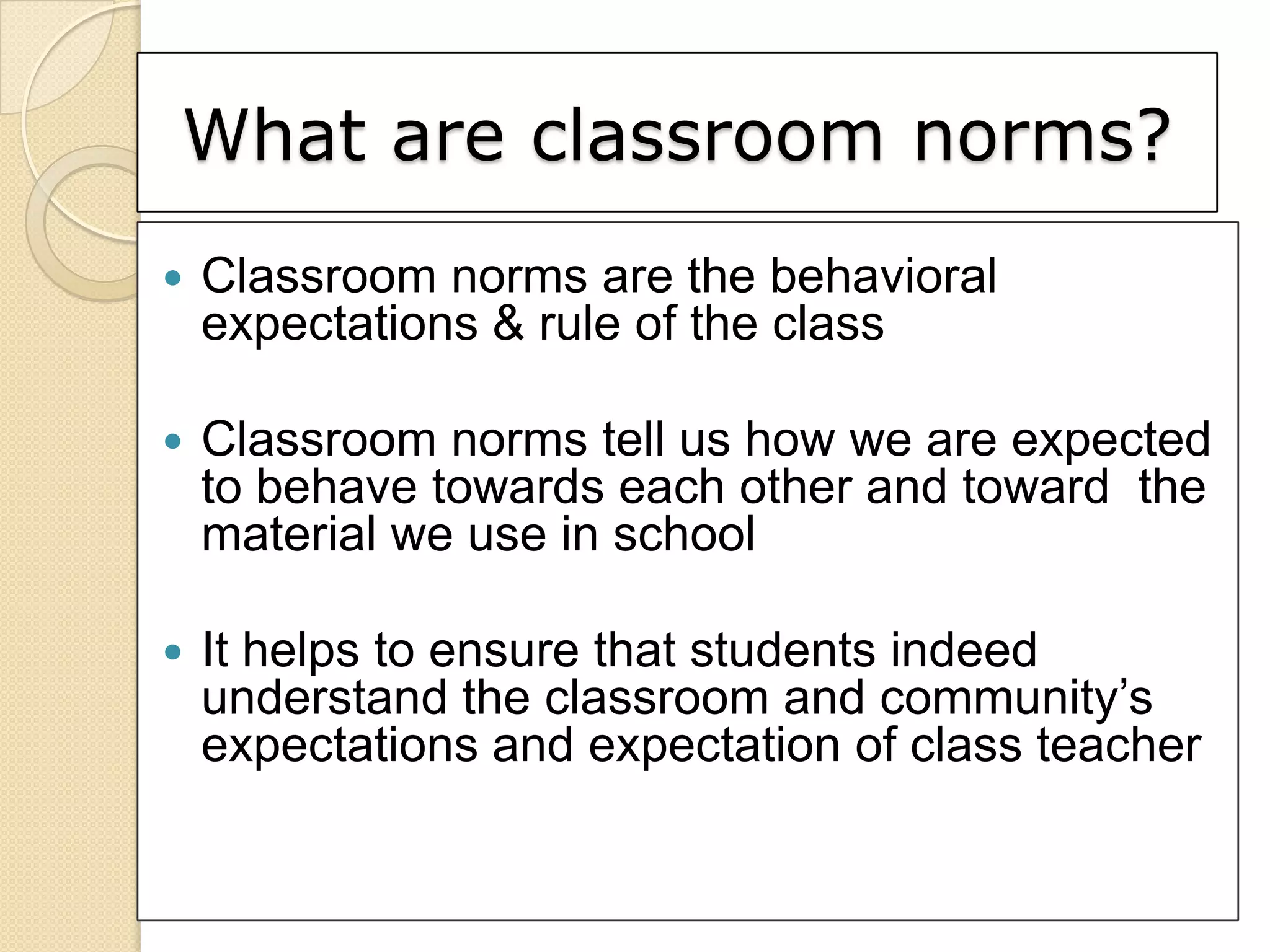
What are classroom norms?
   Classroom norms are the behavioral
    expectations & rule of the class

   Classroom norms tell us how we are expected
    to behave towards each other and toward the
    material we use in school

   It helps to ensure that students indeed
    understand the classroom and community’s
    expectations and expectation of class teacher
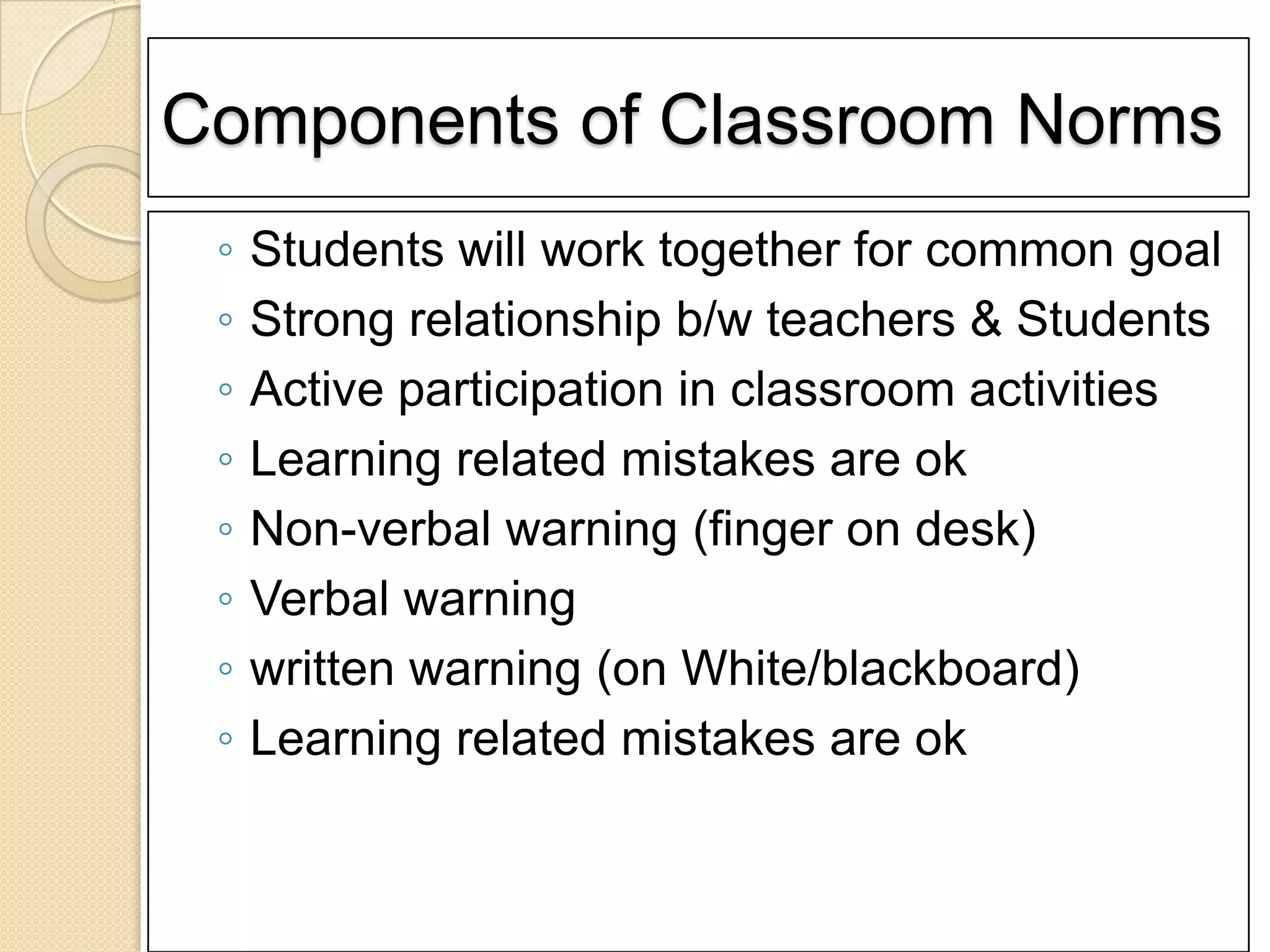
Components of Classroom Norms
 ◦   Students will work together for common goal
 ◦   Strong relationship b/w teachers & Students
 ◦   Active participation in classroom activities
 ◦   Learning related mistakes are ok
 ◦   Non-verbal warning (finger on desk)
 ◦   Verbal warning
 ◦   written warning (on White/blackboard)
 ◦   Learning related mistakes are ok
References
 (Obert DiGiulio: 1995).
 Ref: Association for supervision and
  curriculum Development (ASCD)
Thank You
Now it is your turn ?

Classroom management i

  • 1.
    Classroom Management By Javed Iqbal AKU-IED- PDCN Aus-Aid EDIP Project
  • 2.
    Overview  Objectives  Group work  What is Classroom  Why Classroom Management  Principles of Classroom Management  Components of Classroom Management  Strategies for Classroom Management  Key dimensions of Classroom Management  Classroom Norms  Components of Classroom Norms
  • 3.
    Objectives  By theend of this session C.Ps could be able:  Discuss definitions and Importance of Classroom management;  Share the principles of Classroom Management;  Discuss the components of classroom management;
  • 4.
    Group Work  Group No I Definition of classroom management  Group No II Importance of classroom management  Group No III Principles of classroom management  Group No IV Components of classroom management  Group No V Strategies for Classroom management.
  • 5.
    What is ClassroomManagement? Classroom management is creative: It creates both the best situation in which the students can learn and the teacher can teach. Procedures and instructional techniques that are used to establish the classroom environment so that learning can occur. Management strategies are based on understanding how the classroom environment can
  • 6.
    Why Classroom Management?  Primary purpose is to gain control of the classroom  Good classroom management results in high levels of student engaged time.  To Provide a conducive learning Environment to the learners  Best utilization of Classroom time.  Social Development by inculcating social skills.
  • 7.
    Principles of classroom Management  Brophy (1983) states there are 3 general principles for good classroom management:  Willingness of the teacher to accept responsibility.  Long-term, solution-oriented approaches to problems (rather than short-term)  Check to see if symptomatic behavior is caused by underlying personal problems (impulsivity, lack of awareness, home problems, etc.) desist/ control responses classroom control
  • 8.
    Components of Classroom Management Seating Use of blackboard Displays Evaluation Individual attention Observation Pair & group work Questioning Cleanliness Demonstration & Usage of resources Presentation Timetable Social skills Classroom Norms Accessibility Teacher’s movement Pair/group composition Instruction
  • 9.
    Strategies for Classroom Management  Planning ◦ How to achieve desired goal  Organization ◦ Rules and procedure should be aligned with teaching strategies  Communication ◦ Communication should be effective  Motivation ◦ Create a learning environment that encourage social interaction.  Monitoring ◦ Monitor the activities
  • 10.
    Key Dimension ofpositive classroom management Physical Dimension The Ambience  Condition of (Environment) furniture.  Odour.  Place to keep  Humidity. things.  Ventilation.  Proper place to sit  Chalk dust. for students.  Heat-Cold.  Light, vision  Noise-Echo-Quiet possibilities.  (Each room has it  Noise level. own” Feel” and that  Temperature of the ‘feel sends an classroom. Immediate  Right place for chalk message….air board or bulletin freshener, flower) board.
  • 11.
    Key Dimension ofpositive classroom management Human Factor Instruction dimension  Clear communication.  Mutual interaction.  Teacher conveys  Audibility and enthusiasm for the visionary aspects. subject and for the  Place of movement content specifically around the class for taught. teacher and students.  Teacher must keep students accountable for  Don’t make things too their work. comfortable lest they  Teacher must be aware fall asleep. of what is happening in the work.  Teacher must teach for students success
  • 12.
    What are classroomnorms?  Classroom norms are the behavioral expectations & rule of the class  Classroom norms tell us how we are expected to behave towards each other and toward the material we use in school  It helps to ensure that students indeed understand the classroom and community’s expectations and expectation of class teacher
  • 13.
    Components of ClassroomNorms ◦ Students will work together for common goal ◦ Strong relationship b/w teachers & Students ◦ Active participation in classroom activities ◦ Learning related mistakes are ok ◦ Non-verbal warning (finger on desk) ◦ Verbal warning ◦ written warning (on White/blackboard) ◦ Learning related mistakes are ok
  • 14.
    References  (Obert DiGiulio:1995).  Ref: Association for supervision and curriculum Development (ASCD)
  • 15.
    Thank You Now itis your turn ?