Jitin
Kollamkudy
Grapevine Communication1
Grapevine Communication???
 Unstructured and Informal network.
 Formed on social relationship rather than
organizational charts or job descriptions.
 Informal vehicle through which message flow
throughout the organization.
 Called so because it stretches throughout the
organization in all directions.
 Term originated in 1860’s during the American
Civil War.
2
Factors leading to Grapevine
 Feeling of uncertainty when the organization is
passing through a difficult period
 Lack of self-confidence on the part of the employee
 Formation of favored group by the manager
3
Grapevine Formula
Gordon Allport describes two conditions as
controlling of the grapevine; importance of the
subject to the speaker and listener, and the
ambiguousness of the facts.
R=IA
Where
R= Intensity of the rumor.
I= Importance of the rumor to the persons
communicating.
A= Ambiguity of the facts associated.
4
Types of Grapevine Chains
 Single Strand Chain
 Gossip Chain
 Probability Chain
 Cluster Chain
5
Single Strand Chain
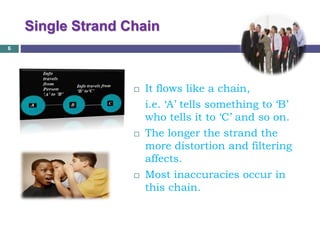
 It flows like a chain,
i.e. ‘A’ tells something to ‘B’
who tells it to ‘C’ and so on.
 The longer the strand the
more distortion and filtering
affects.
 Most inaccuracies occur in
this chain.
6
Gossip Chain
 One person tells to other people.
 This chain passes a message regarding a
‘not-on-job’ nature.
 Generally considered to be slow in passing
the information.
7
Probability Chain
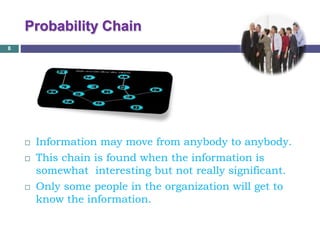
 Information may move from anybody to anybody.
 This chain is found when the information is
somewhat interesting but not really significant.
 Only some people in the organization will get to
know the information.
8
Cluster Chain
 Individual communicates with only those
individuals he/she trust.
 Cluster chain is the dominant grapevine pattern in
an organization.
9
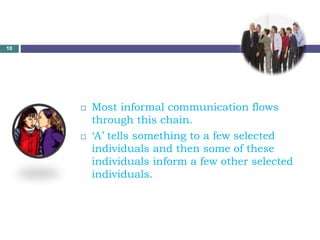
 Most informal communication flows
through this chain.
 ‘A’ tells something to a few selected
individuals and then some of these
individuals inform a few other selected
individuals.
10
Advantages of Grapevine
 Spreads Rapidly
 Feedback is Quick
 Group Cohesiveness & psychological
satisfaction
 Emotional Supportive
 Signals that Problems/Good news
exist
 Substitute for formal channel of
communication
11
Disadvantages of Grapevine
 Hostility against executives
 Untruth information most of the time
 Partial information only spreads
(rumours)
 Hampers the goodwill of the
organization or the people
12
Effective uses of Grapevine
 Keep the employees well informed
 Organize fruitful group activities
 Open door policy of managers
 Identification of leaders & winning their
confidence
 Employees’ participation in decision making
process
 Creation of healthy environment
13
 Enhancing feedback
 Discouraging rumours aimed at character
assassination or maligning somebody
 Be a good empathetic listener
14
Thank You...
15

Grapevine communication

  • 1.
  • 2.
    Grapevine Communication???  Unstructuredand Informal network.  Formed on social relationship rather than organizational charts or job descriptions.  Informal vehicle through which message flow throughout the organization.  Called so because it stretches throughout the organization in all directions.  Term originated in 1860’s during the American Civil War. 2
  • 3.
    Factors leading toGrapevine  Feeling of uncertainty when the organization is passing through a difficult period  Lack of self-confidence on the part of the employee  Formation of favored group by the manager 3
  • 4.
    Grapevine Formula Gordon Allportdescribes two conditions as controlling of the grapevine; importance of the subject to the speaker and listener, and the ambiguousness of the facts. R=IA Where R= Intensity of the rumor. I= Importance of the rumor to the persons communicating. A= Ambiguity of the facts associated. 4
  • 5.
    Types of GrapevineChains  Single Strand Chain  Gossip Chain  Probability Chain  Cluster Chain 5
  • 6.
    Single Strand Chain It flows like a chain, i.e. ‘A’ tells something to ‘B’ who tells it to ‘C’ and so on.  The longer the strand the more distortion and filtering affects.  Most inaccuracies occur in this chain. 6
  • 7.
    Gossip Chain  Oneperson tells to other people.  This chain passes a message regarding a ‘not-on-job’ nature.  Generally considered to be slow in passing the information. 7
  • 8.
    Probability Chain  Informationmay move from anybody to anybody.  This chain is found when the information is somewhat interesting but not really significant.  Only some people in the organization will get to know the information. 8
  • 9.
    Cluster Chain  Individualcommunicates with only those individuals he/she trust.  Cluster chain is the dominant grapevine pattern in an organization. 9
  • 10.
     Most informalcommunication flows through this chain.  ‘A’ tells something to a few selected individuals and then some of these individuals inform a few other selected individuals. 10
  • 11.
    Advantages of Grapevine Spreads Rapidly  Feedback is Quick  Group Cohesiveness & psychological satisfaction  Emotional Supportive  Signals that Problems/Good news exist  Substitute for formal channel of communication 11
  • 12.
    Disadvantages of Grapevine Hostility against executives  Untruth information most of the time  Partial information only spreads (rumours)  Hampers the goodwill of the organization or the people 12
  • 13.
    Effective uses ofGrapevine  Keep the employees well informed  Organize fruitful group activities  Open door policy of managers  Identification of leaders & winning their confidence  Employees’ participation in decision making process  Creation of healthy environment 13
  • 14.
     Enhancing feedback Discouraging rumours aimed at character assassination or maligning somebody  Be a good empathetic listener 14
  • 15.