Communication
Networks
 There are two types of
communication
networks:-
i. Formal Network
ii. Informal Network
Formal Network
Formal network is present mainly in
organizations. There five sub
networks in formal network.
• Chain Network:-
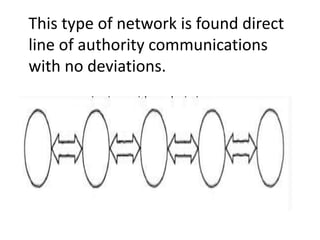
The chain network represents
hierarchy in which communication
can only flow upwards or
downwards.
This type of network is found direct
line of authority communications
with no deviations.
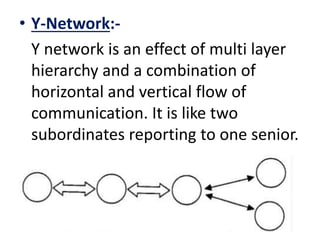
• Y-Network:-
Y network is an effect of multi layer
hierarchy and a combination of
horizontal and vertical flow of
communication. It is like two
subordinates reporting to one senior.
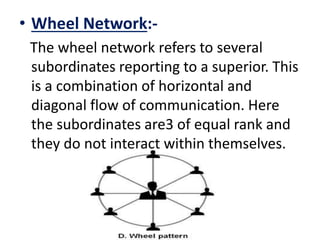
• Wheel Network:-
The wheel network refers to several
subordinates reporting to a superior. This
is a combination of horizontal and
diagonal flow of communication. Here
the subordinates are3 of equal rank and
they do not interact within themselves.
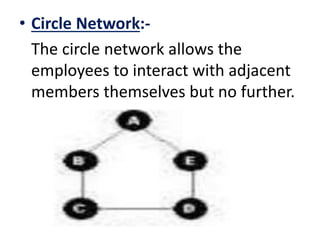
• Circle Network:-
The circle network allows the
employees to interact with adjacent
members themselves but no further.
• All Channel Network:-
The all channel network allows the
employees to interact with each
other. There are no restrictions on
who can communicate with whom.
All are equal.
Informal Network
Besides formal network informal
network is also present in an
organization. It is also called
“GRAPEVINE”.
There are 4 sub networks in informal
network:-
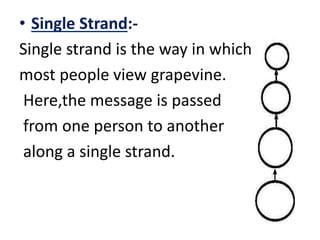
• Single Strand:-
Single strand is the way in which
most people view grapevine.
Here,the message is passed
from one person to another
along a single strand.
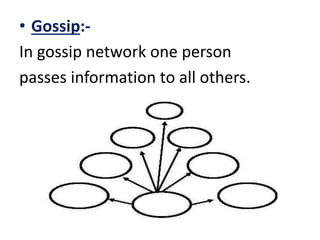
• Gossip:-
In gossip network one person
passes information to all others.
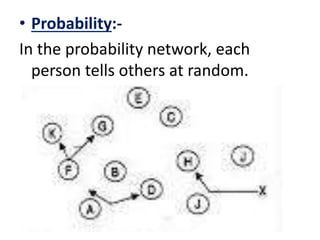
• Probability:-
In the probability network, each
person tells others at random.
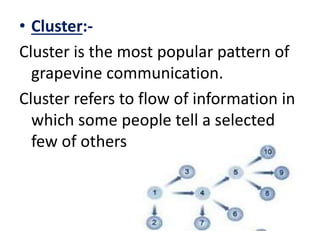
• Cluster:-
Cluster is the most popular pattern of
grapevine communication.
Cluster refers to flow of information in
which some people tell a selected
few of others

Communication networks final

  • 1.
  • 2.
     There aretwo types of communication networks:- i. Formal Network ii. Informal Network
  • 3.
    Formal Network Formal networkis present mainly in organizations. There five sub networks in formal network. • Chain Network:- The chain network represents hierarchy in which communication can only flow upwards or downwards.
  • 4.
    This type ofnetwork is found direct line of authority communications with no deviations.
  • 5.
    • Y-Network:- Y networkis an effect of multi layer hierarchy and a combination of horizontal and vertical flow of communication. It is like two subordinates reporting to one senior.
  • 6.
    • Wheel Network:- Thewheel network refers to several subordinates reporting to a superior. This is a combination of horizontal and diagonal flow of communication. Here the subordinates are3 of equal rank and they do not interact within themselves.
  • 7.
    • Circle Network:- Thecircle network allows the employees to interact with adjacent members themselves but no further.
  • 8.
    • All ChannelNetwork:- The all channel network allows the employees to interact with each other. There are no restrictions on who can communicate with whom. All are equal.
  • 9.
    Informal Network Besides formalnetwork informal network is also present in an organization. It is also called “GRAPEVINE”. There are 4 sub networks in informal network:-
  • 10.
    • Single Strand:- Singlestrand is the way in which most people view grapevine. Here,the message is passed from one person to another along a single strand.
  • 11.
    • Gossip:- In gossipnetwork one person passes information to all others.
  • 12.
    • Probability:- In theprobability network, each person tells others at random.
  • 13.
    • Cluster:- Cluster isthe most popular pattern of grapevine communication. Cluster refers to flow of information in which some people tell a selected few of others