BY:
DR. RENU
JAIN
 Meaning
 Organizational grapevine
 Characteristics
 Definition
 Examples
 Types
 References
 Advantages
 Disadvantages
 Prevention
 Conclusion
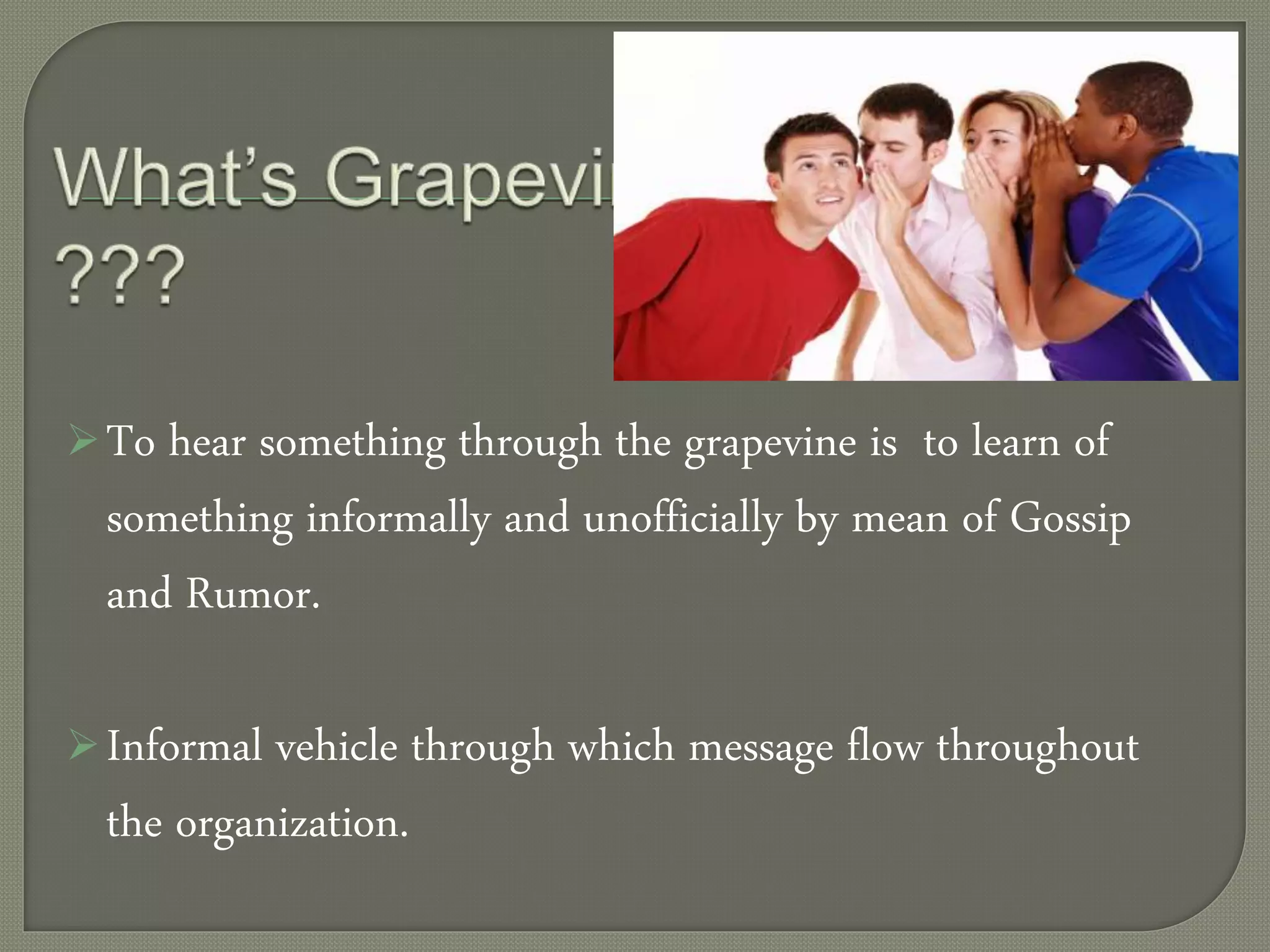
To hear something through the grapevine is to learn of
something informally and unofficially by mean of Gossip
and Rumor.
Informal vehicle through which message flow throughout
the organization.
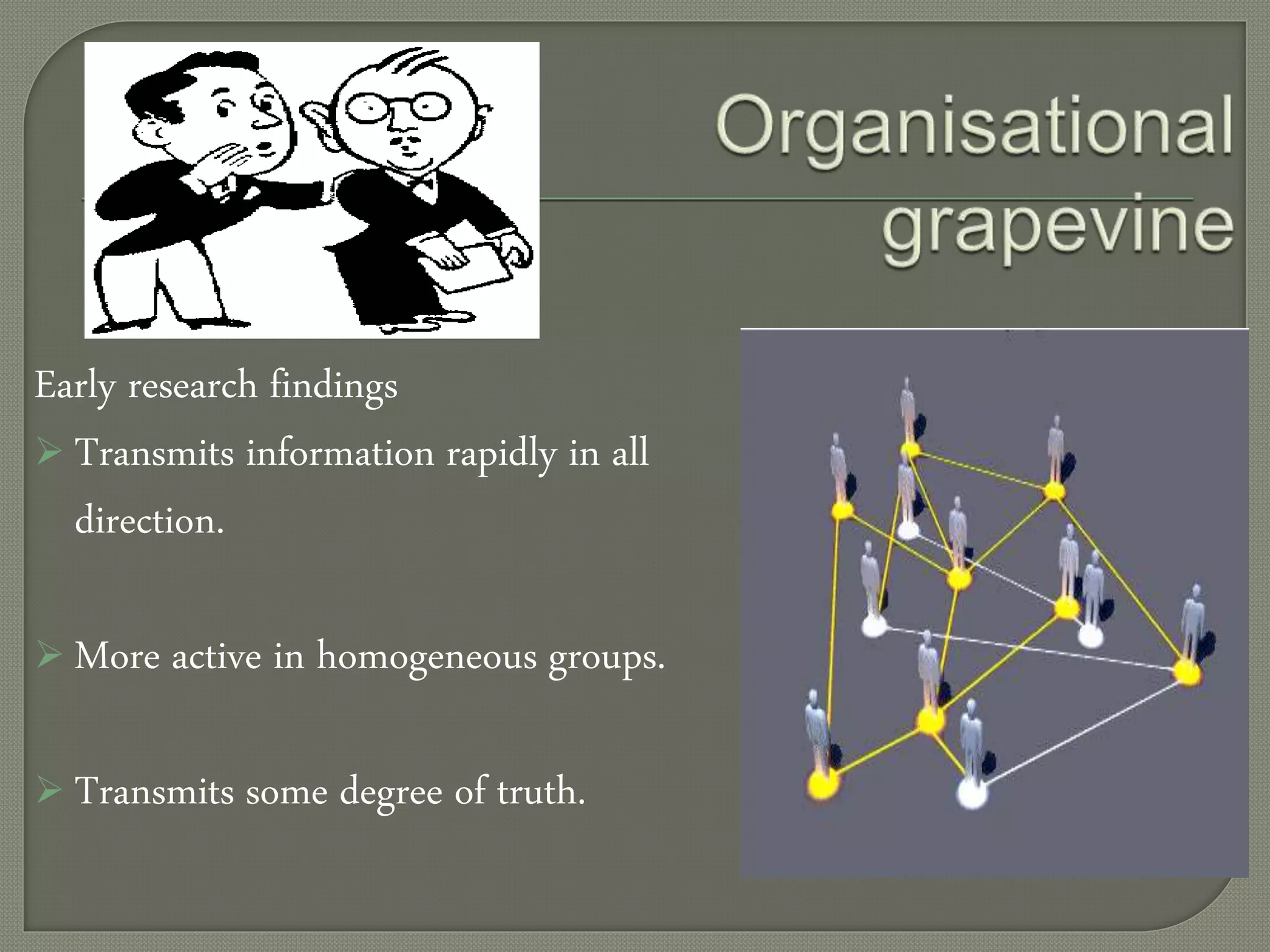
Early research findings
 Transmits information rapidly in all
direction.
 More active in homogeneous groups.
 Transmits some degree of truth.
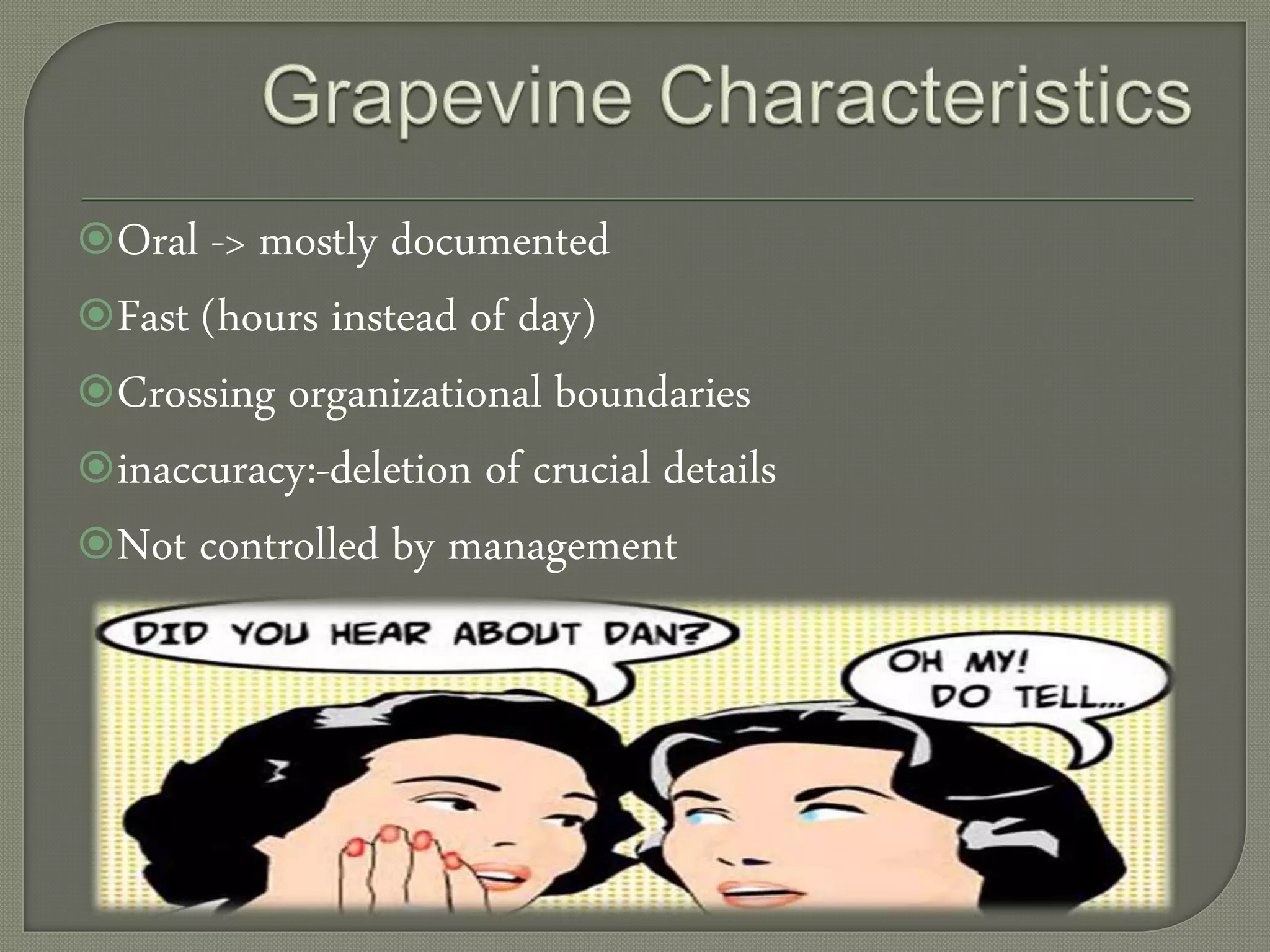
Oral -> mostly documented
Fast (hours instead of day)
Crossing organizational boundaries
inaccuracy:-deletion of crucial details
Not controlled by management
 Grapevine-> unstructured and informal network founded
on social relationship rather then organizational.
(By Nancy Borkowksi)
 An informal chat between people , seen as a network
through which the information is reliably spread.
(By Mc Shane)
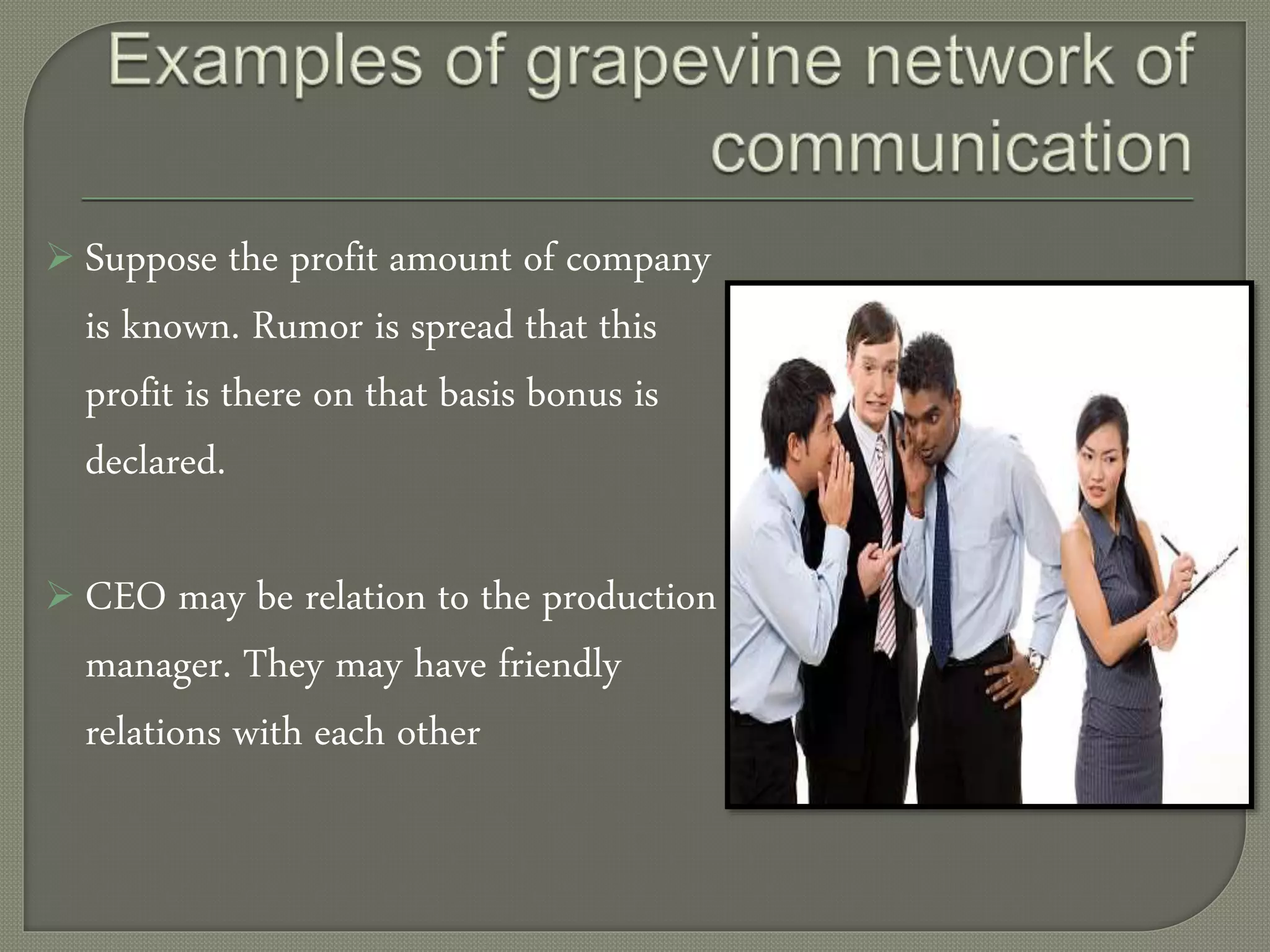
 Suppose the profit amount of company
is known. Rumor is spread that this
profit is there on that basis bonus is
declared.
 CEO may be relation to the production
manager. They may have friendly
relations with each other
Single strand chain
Gossip chain
Probability chain
Cluster chain
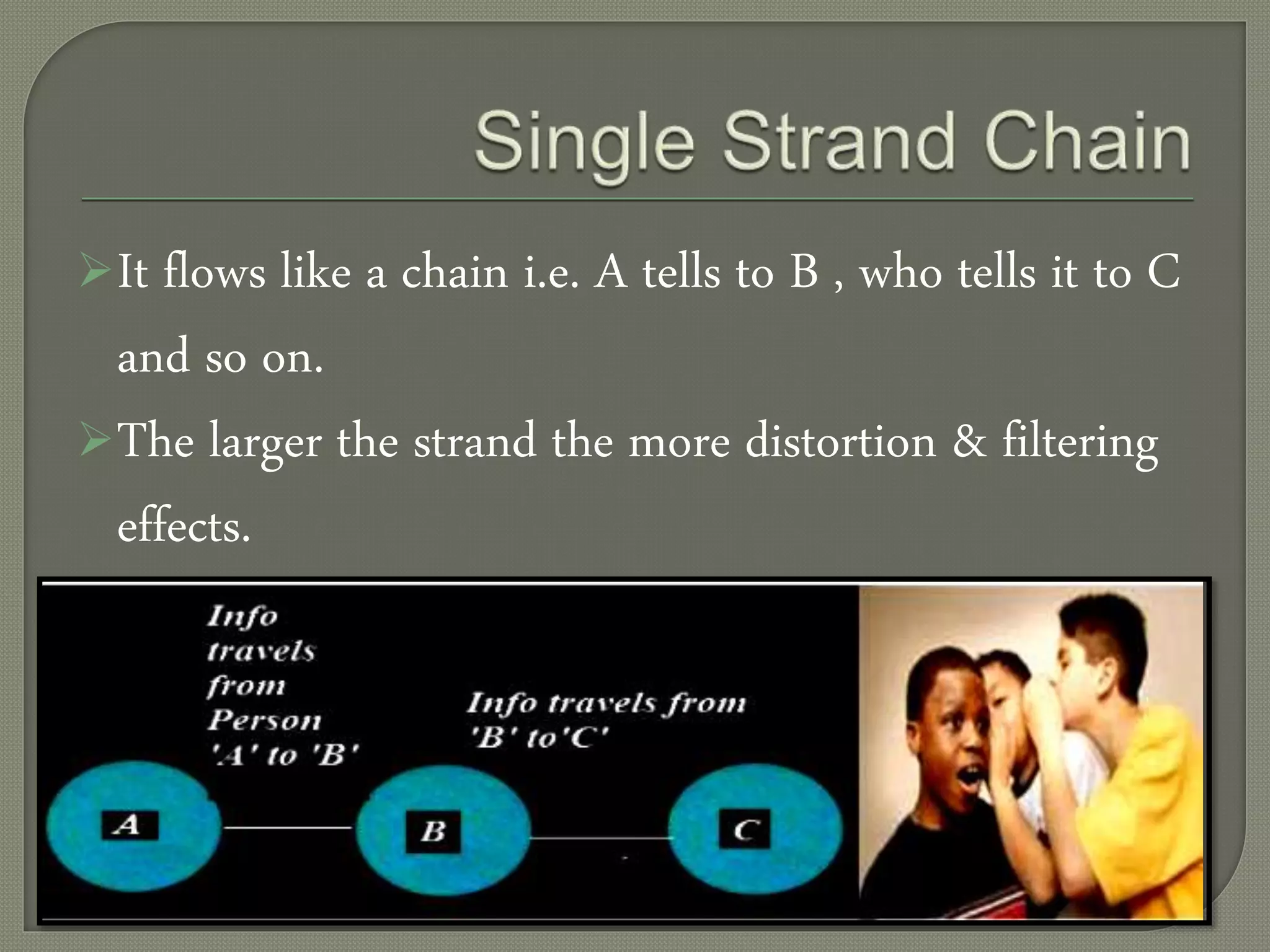
It flows like a chain i.e. A tells to B , who tells it to C
and so on.
The larger the strand the more distortion & filtering
effects.
Most inaccuracies occur in the chain.
One person tells to other people.
This chain passes a message regarding a `not-on-job’
nature.
Generally consider to be slowly passing the information.
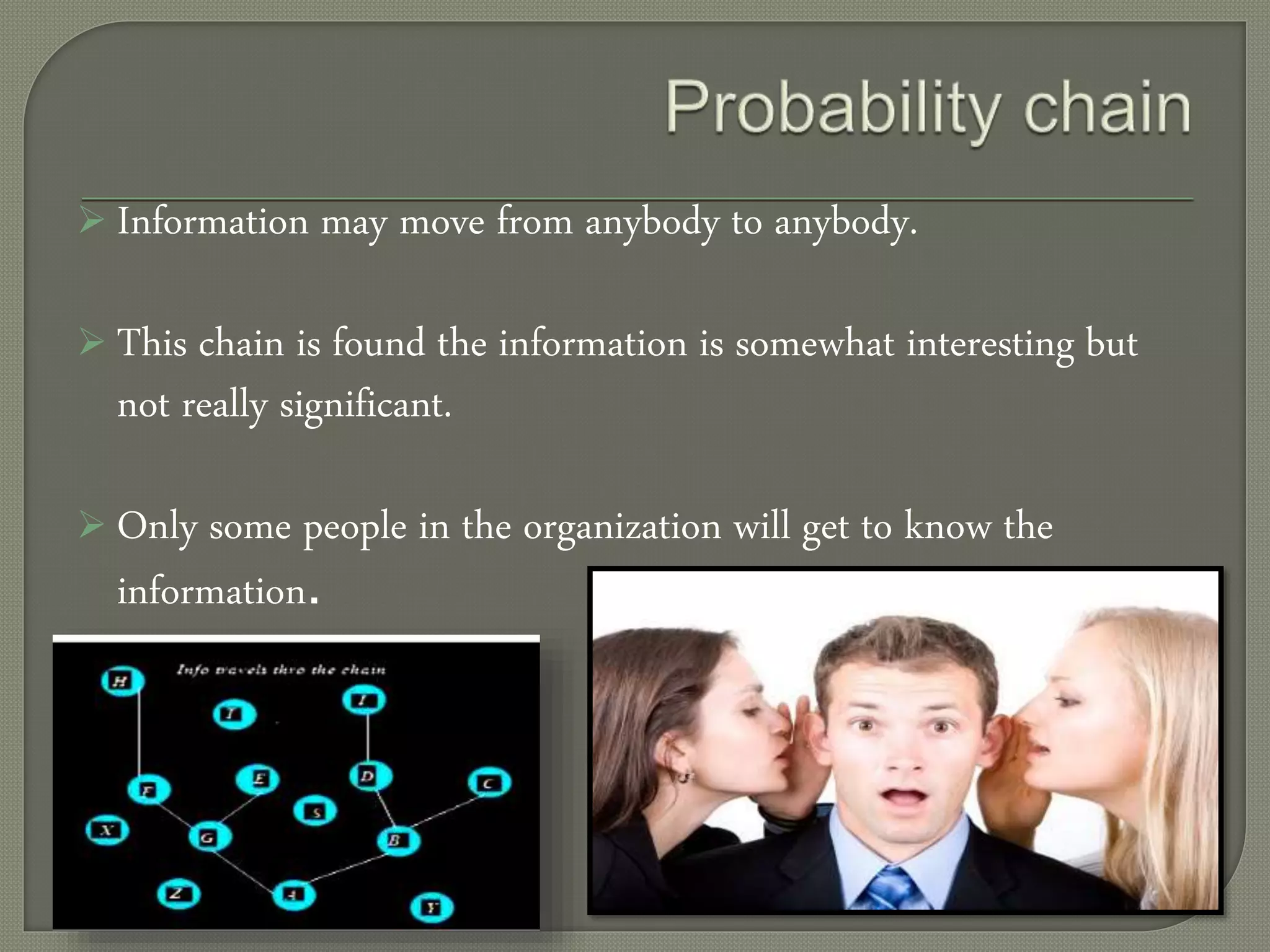
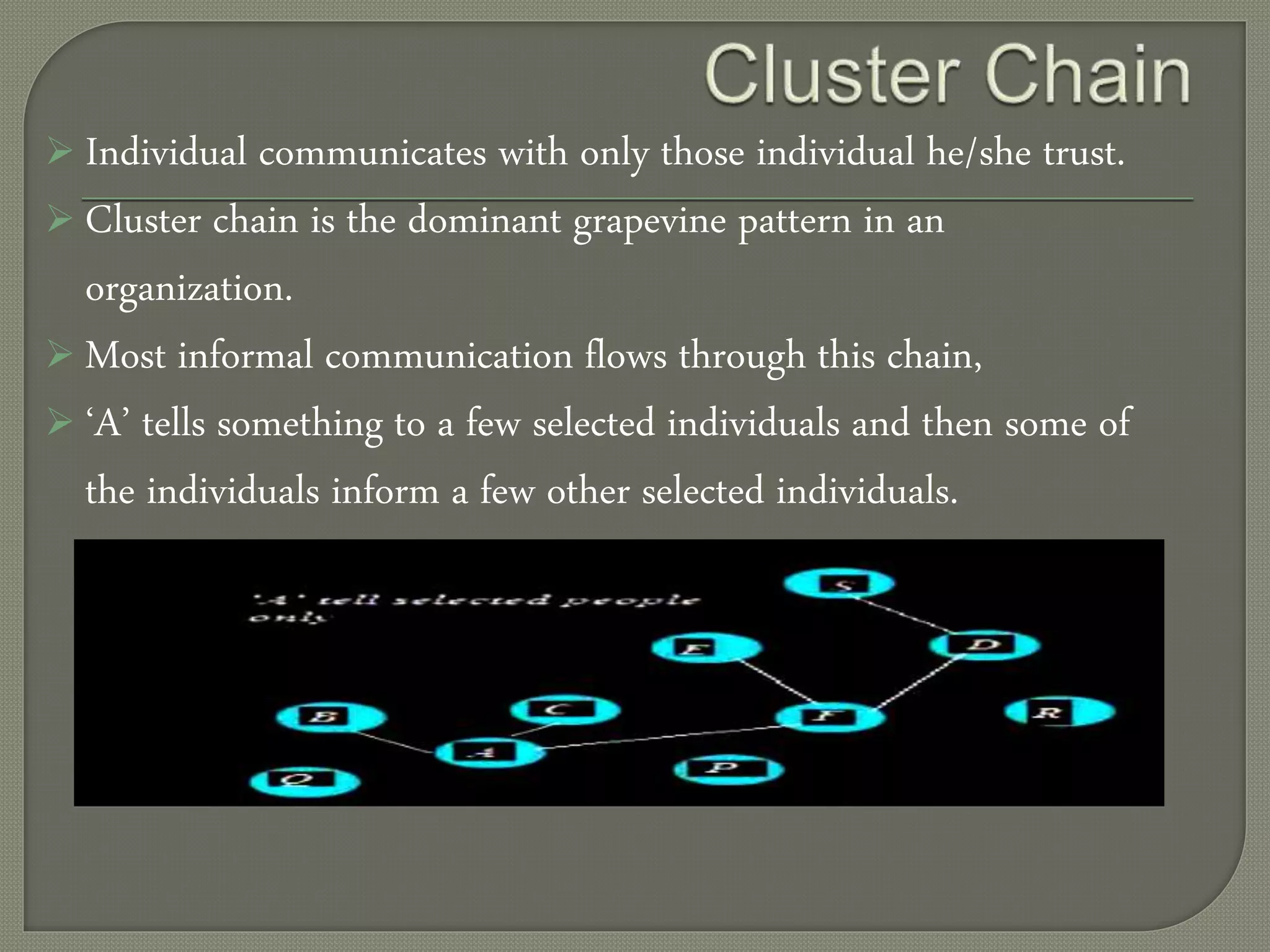
 Information may move from anybody to anybody.
 This chain is found the information is somewhat interesting but
not really significant.
 Only some people in the organization will get to know the
information.
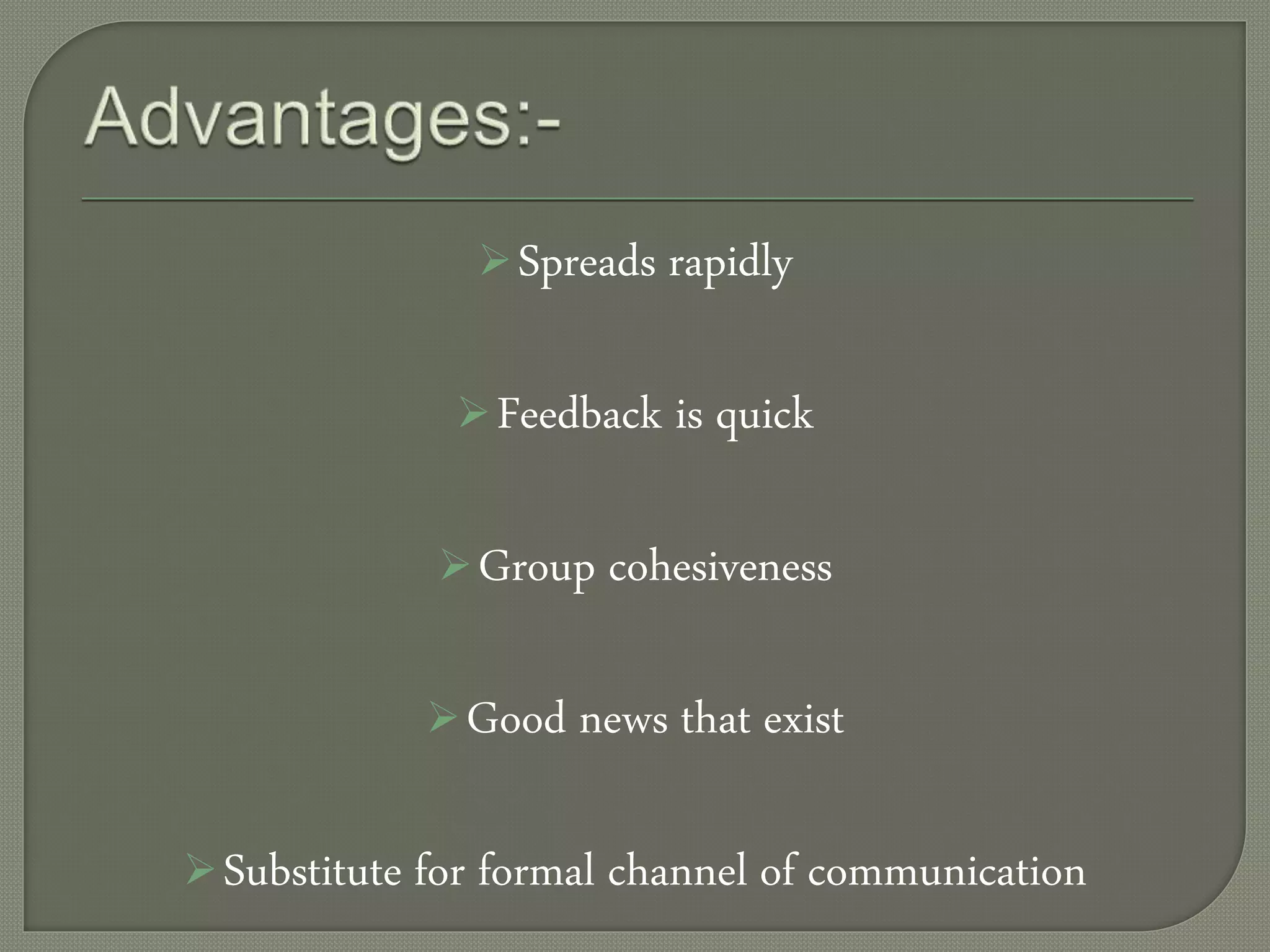
 Individual communicates with only those individual he/she trust.
 Cluster chain is the dominant grapevine pattern in an
organization.
 Most informal communication flows through this chain,
 ‘A’ tells something to a few selected individuals and then some of
the individuals inform a few other selected individuals.
Spreads rapidly
Feedback is quick
Group cohesiveness
Good news that exist
Substitute for formal channel of communication
The grapevine is not trust worthy always as it
doesn’t follow official path of communication & is
spread more by gossips and unconfirmed report
Untruth information most of the time
Partial information only spreads(rumors)
Hampers the goodwill of the organization or the
people.
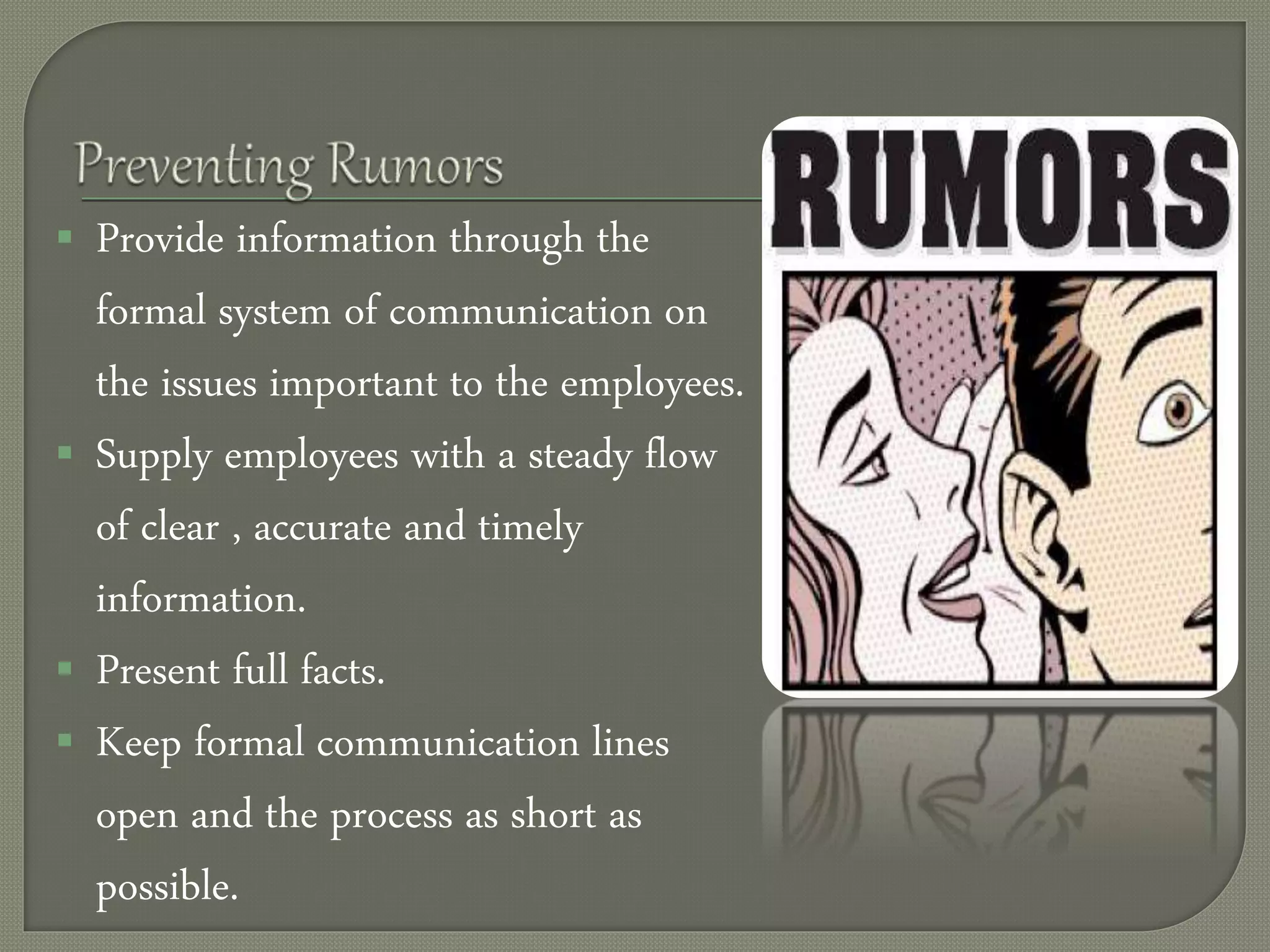
 Provide information through the
formal system of communication on
the issues important to the employees.
 Supply employees with a steady flow
of clear , accurate and timely
information.
 Present full facts.
 Keep formal communication lines
open and the process as short as
possible.
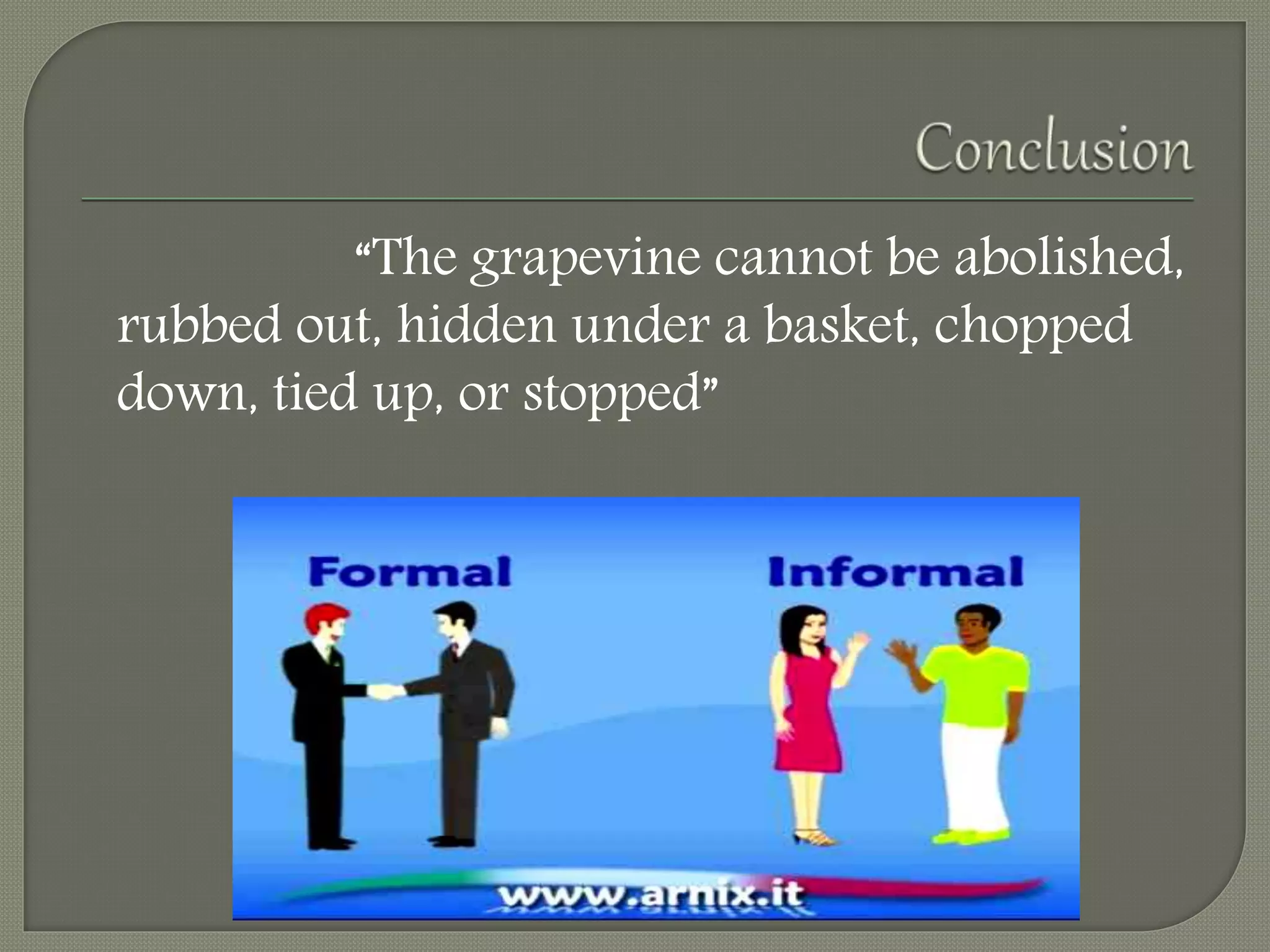
“The grapevine cannot be abolished,
rubbed out, hidden under a basket, chopped
down, tied up, or stopped”
THANK YOU

Grapevine communication

  • 1.
  • 2.
     Meaning  Organizationalgrapevine  Characteristics  Definition  Examples  Types  References  Advantages  Disadvantages  Prevention  Conclusion
  • 3.
    To hear somethingthrough the grapevine is to learn of something informally and unofficially by mean of Gossip and Rumor. Informal vehicle through which message flow throughout the organization.
  • 4.
    Early research findings Transmits information rapidly in all direction.  More active in homogeneous groups.  Transmits some degree of truth.
  • 5.
    Oral -> mostlydocumented Fast (hours instead of day) Crossing organizational boundaries inaccuracy:-deletion of crucial details Not controlled by management
  • 6.
     Grapevine-> unstructuredand informal network founded on social relationship rather then organizational. (By Nancy Borkowksi)  An informal chat between people , seen as a network through which the information is reliably spread. (By Mc Shane)
  • 7.
     Suppose theprofit amount of company is known. Rumor is spread that this profit is there on that basis bonus is declared.  CEO may be relation to the production manager. They may have friendly relations with each other
  • 8.
    Single strand chain Gossipchain Probability chain Cluster chain
  • 9.
    It flows likea chain i.e. A tells to B , who tells it to C and so on. The larger the strand the more distortion & filtering effects. Most inaccuracies occur in the chain.
  • 10.
    One person tellsto other people. This chain passes a message regarding a `not-on-job’ nature. Generally consider to be slowly passing the information.
  • 11.
     Information maymove from anybody to anybody.  This chain is found the information is somewhat interesting but not really significant.  Only some people in the organization will get to know the information.
  • 12.
     Individual communicateswith only those individual he/she trust.  Cluster chain is the dominant grapevine pattern in an organization.  Most informal communication flows through this chain,  ‘A’ tells something to a few selected individuals and then some of the individuals inform a few other selected individuals.
  • 13.
    Spreads rapidly Feedback isquick Group cohesiveness Good news that exist Substitute for formal channel of communication
  • 14.
    The grapevine isnot trust worthy always as it doesn’t follow official path of communication & is spread more by gossips and unconfirmed report Untruth information most of the time Partial information only spreads(rumors) Hampers the goodwill of the organization or the people.
  • 15.
     Provide informationthrough the formal system of communication on the issues important to the employees.  Supply employees with a steady flow of clear , accurate and timely information.  Present full facts.  Keep formal communication lines open and the process as short as possible.
  • 16.
    “The grapevine cannotbe abolished, rubbed out, hidden under a basket, chopped down, tied up, or stopped”
  • 17.