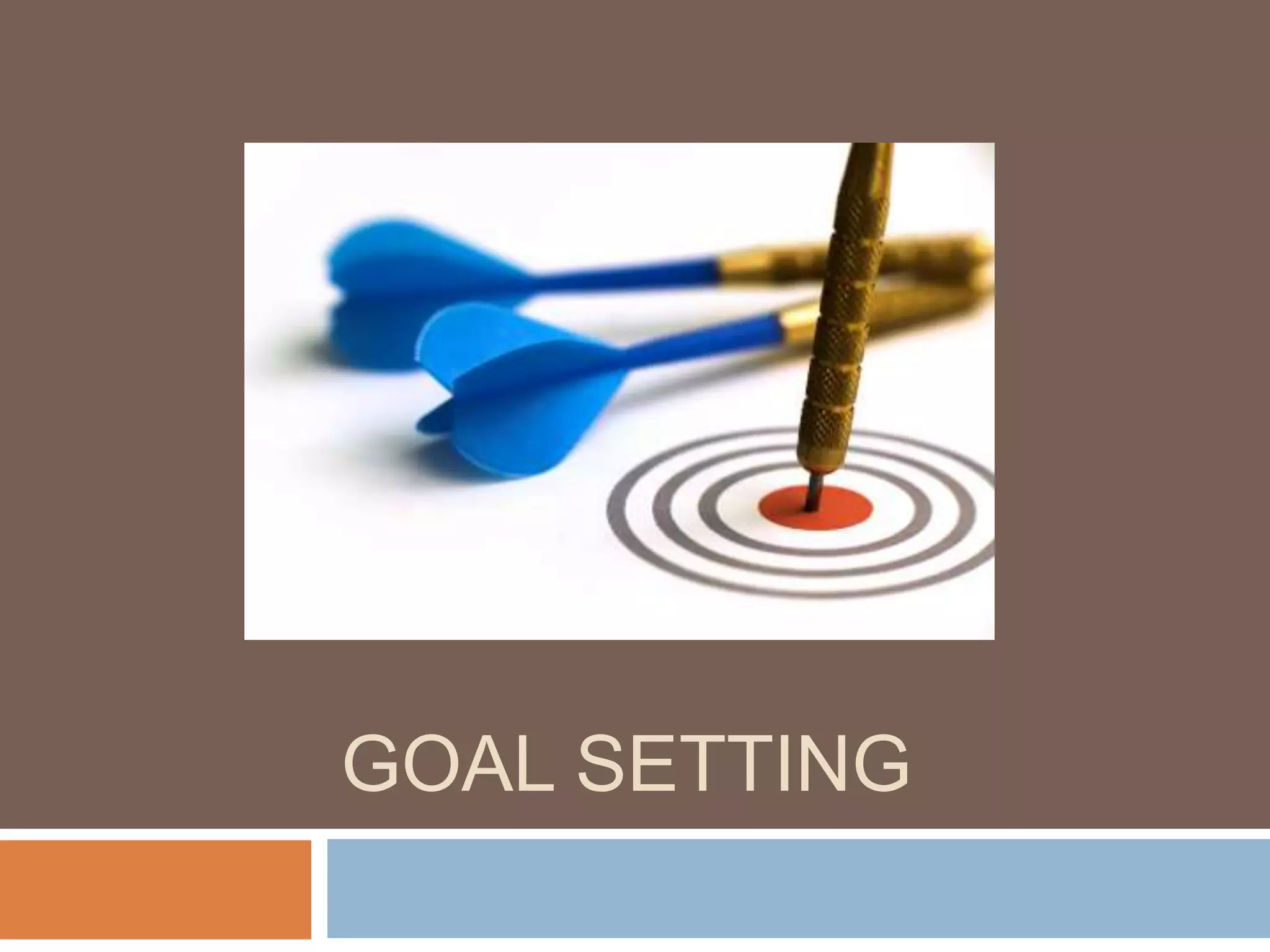
Goal Setting
GoalsWhat is a goal?Something you would like to achieve.What is the purpose of setting goals?Goals give you direction and keep you focused on where you want to end up.
In Your Notes…What are some things you hope to achieve in the next few weeks or months?What are some things you hope to achieve in the next few years?
Types of GoalsShort-Term:Goals that can be accomplished in the near future (within a few weeks or months)Long-Term:Goals that are more far-reaching and take longer to achieve (a year or more)
Types of GoalsFixed:Goals with an outcome that is based on a specific date/timeFlexible:Goals that have an outcome, but no time limit
In Your Notes…Identify an example of each of these types of goals:Short-TermLong-TermFixedFlexible
Realistic vs. Unrealistic GoalsSetting unrealistic goals can lead to feelings of failure, lowered self-image, and lowered self-esteemWhat makes goals unrealistic?UntimelyRequiring unavailable resourcesToo generally written
SMART GoalsS = SpecificM = MeasurableA = AchievableR = RelevantT = Time-Bound
Creating SMART GoalsSpecificGoals should have expected outcomes stated as simply and clearly as possible.
Creating SMART GoalsMeasurableInclude how you will know if you have met your goal.
Creating SMART GoalsAchievableGoals should have outcomes that are realistic given your current situation, resources, and available time.
Creating SMART GoalsRelevantGoals should help you on your journey toward meeting larger, ultimate life outcomes.
Creating SMART GoalsTime-boundGoals should include realistic timeframes for achievement.

Goal Setting PowerPoint