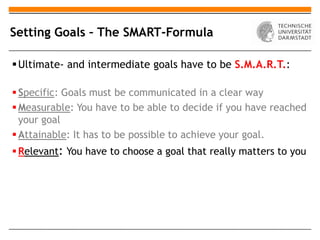
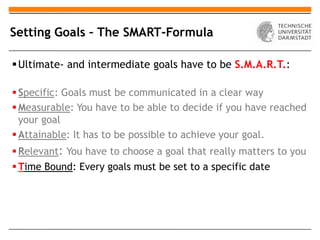
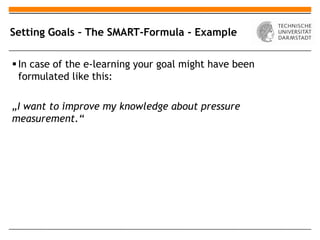
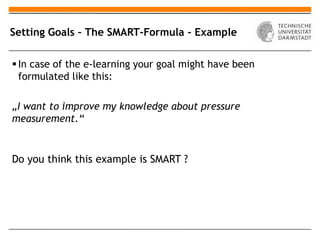
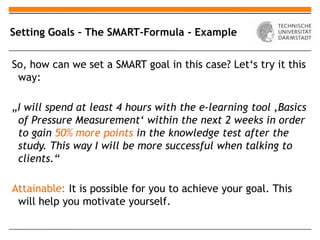
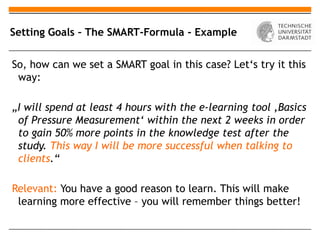
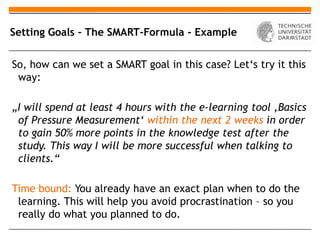
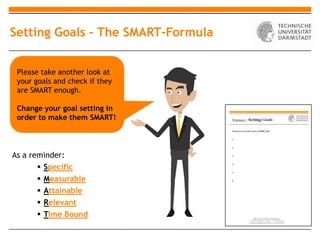
The document discusses the SMART formula for setting goals. It explains that goals should be specific, measurable, attainable, relevant, and time-bound (SMART) in order to effectively achieve them. Vague goals like "improve customer satisfaction" are less effective than clear, measurable goals. An example goal of improving knowledge about pressure measurement is analyzed and rewritten as a SMART goal involving spending 4 hours over 2 weeks on an e-learning course to increase test scores by 50% and be better able to discuss the topic with clients. The document stresses that checking goals adhere to the SMART criteria helps with goal achievement.