Do You Hear
     What I Hear?
How to be a good listener
“Take a tip from nature-
your ears aren’t made to be shut, but
           your mouth is.”
                       Unknown
“Nature gave us one tongue and two
ears so we could hear twice as much
           as we speak”
                         Epictetus
We listen at 125-250 words
        per minute

We think at 1000-3000 words
         per minute
Payoffs of good listening
• Gain knowledge
• Receive better work and cooperation from
  others
• Can help win and keep friends
• Solve problems and resolve conflict
• Reduce tension
• Increase enjoyment in life
• Strengthen family relationships
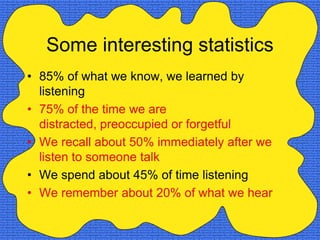
Some interesting statistics
• 85% of what we know, we learned by
  listening
• 75% of the time we are
  distracted, preoccupied or forgetful
• We recall about 50% immediately after we
  listen to someone talk
• We spend about 45% of time listening
• We remember about 20% of what we hear
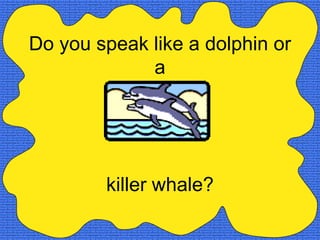
Do you speak like a dolphin or
             a


        killer whale?
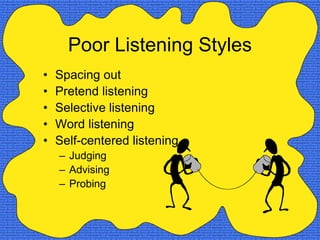
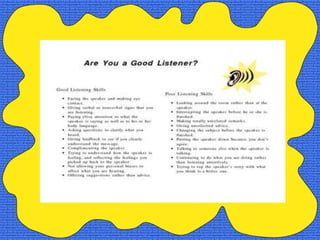
Poor Listening Styles
•   Spacing out
•   Pretend listening
•   Selective listening
•   Word listening
•   Self-centered listening
    – Judging
    – Advising
    – Probing
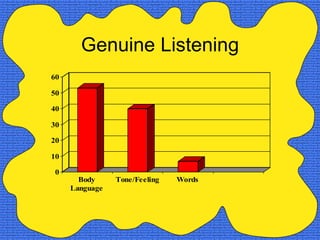
Genuine Listening
1. Listen with your eyes, heart and
   ears
2. Stand in their shoes
3. Practice mirroring
Genuine Listening
60

50

40

30

20

10

 0
       Body     Tone/Feeling   Words
     Language
History repeats itself because
no one listened the first time.
                anonymous
A good listener is a silent flatterer.
                   -Anonymous

A good listener is not someone with nothing to say.
        Listen twice before you speak once.
                   - Scottish Proverb

           To appear wise, one must talk;
            To be wise, one must listen.
                    -Anonymous

    Examine what is said, not him who speaks.
                 - Arab proverb
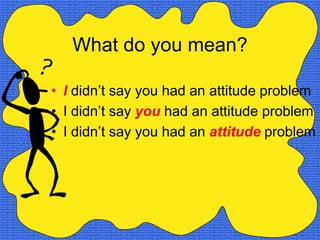
What do you mean?

• I didn’t say you had an attitude problem
Genuine Listening
1. Listen with your eyes, heart and
   ears
2. Stand in their shoes
3. Practice mirroring
Genuine Listening
1. Listen with your eyes, heart and
   ears
2. Stand in their shoes
3. Practice mirroring
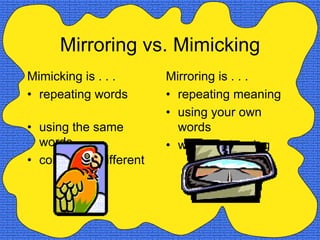
Mirroring vs. Mimicking
Mimicking is . . .       Mirroring is . . .
• repeating words        • repeating meaning
                         • using your own
• using the same           words
  words                  • warm and caring
• cold and indifferent
Mirroring Phrases
•   As I get it, you felt
•   So, as I see it
•   I can see that you’re feeling
•   You feel that
•   So, what you are saying is
Avoid phrases like:

1. Are you sure?
2. It's not that bad
3. Sleep on it. You'll feel better
tomorrow
4.Do not be judgemental
Reactive             vs.       Reflective
• Allow own                  • Concentrate on the
  thoughts, feelings or        feelings, opinions and
  opinions to take over        concerns that are being
  conversation                 expressed by the other
• More concerned with          person.
  what they want to say      • Avoid interrupting the
  that what the other          other person to
  person is telling them.      comment on what he or
• Focus on their own           she is saying
  reactions rather than      • Focus on what the
  the feeling and needs of     speaker is saying in
  speaker.                     order to understand it.
See First to Understand, and
    then be Understood
• Practicing listening is only the first half.
• Share your feelings.
• If you take the time to listen,
  chances of being listened to are very
  good.
A good listener is a good
talker with a sore throat!
          Katharine Whitehorn
Resources
• The 7 Habits of Highly Effective Teens, Sean
  Covey, Fireside, 1998.
• Teaching Resources for Youth Educators
  Communications Source Book:. 4-H Youth
  Development Building Bridges
  Curriculum, University of Wisconsin
  Extension, 877-947-7827
• Life Lists for Teens, Pamela Espeland, Free
  Spirit Publishing, 2003.
• The Communications Toolkit, Michigan State
  University Extension, 310 Ag. Hall, East
  Lansing, MI, 48824, 517-432-1555, $25.00

A Good listener

  • 1.
    Do You Hear What I Hear? How to be a good listener
  • 2.
    “Take a tipfrom nature- your ears aren’t made to be shut, but your mouth is.” Unknown “Nature gave us one tongue and two ears so we could hear twice as much as we speak” Epictetus
  • 3.
    We listen at125-250 words per minute We think at 1000-3000 words per minute
  • 4.
    Payoffs of goodlistening • Gain knowledge • Receive better work and cooperation from others • Can help win and keep friends • Solve problems and resolve conflict • Reduce tension • Increase enjoyment in life • Strengthen family relationships
  • 5.
    Some interesting statistics •85% of what we know, we learned by listening • 75% of the time we are distracted, preoccupied or forgetful • We recall about 50% immediately after we listen to someone talk • We spend about 45% of time listening • We remember about 20% of what we hear
  • 6.
    Do you speaklike a dolphin or a killer whale?
  • 7.
    Poor Listening Styles • Spacing out • Pretend listening • Selective listening • Word listening • Self-centered listening – Judging – Advising – Probing
  • 8.
    Genuine Listening 1. Listenwith your eyes, heart and ears 2. Stand in their shoes 3. Practice mirroring
  • 9.
    Genuine Listening 60 50 40 30 20 10 0 Body Tone/Feeling Words Language
  • 11.
    History repeats itselfbecause no one listened the first time. anonymous
  • 12.
    A good listeneris a silent flatterer. -Anonymous A good listener is not someone with nothing to say. Listen twice before you speak once. - Scottish Proverb To appear wise, one must talk; To be wise, one must listen. -Anonymous Examine what is said, not him who speaks. - Arab proverb
  • 14.
    What do youmean? • I didn’t say you had an attitude problem • I didn’t say you had an attitude problem • I didn’t say you had an attitude problem
  • 15.
    Genuine Listening 1. Listenwith your eyes, heart and ears 2. Stand in their shoes 3. Practice mirroring
  • 16.
    Genuine Listening 1. Listenwith your eyes, heart and ears 2. Stand in their shoes 3. Practice mirroring
  • 17.
    Mirroring vs. Mimicking Mimickingis . . . Mirroring is . . . • repeating words • repeating meaning • using your own • using the same words words • warm and caring • cold and indifferent
  • 18.
    Mirroring Phrases • As I get it, you felt • So, as I see it • I can see that you’re feeling • You feel that • So, what you are saying is
  • 19.
    Avoid phrases like: 1.Are you sure? 2. It's not that bad 3. Sleep on it. You'll feel better tomorrow 4.Do not be judgemental
  • 20.
    Reactive vs. Reflective • Allow own • Concentrate on the thoughts, feelings or feelings, opinions and opinions to take over concerns that are being conversation expressed by the other • More concerned with person. what they want to say • Avoid interrupting the that what the other other person to person is telling them. comment on what he or • Focus on their own she is saying reactions rather than • Focus on what the the feeling and needs of speaker is saying in speaker. order to understand it.
  • 21.
    See First toUnderstand, and then be Understood • Practicing listening is only the first half. • Share your feelings. • If you take the time to listen, chances of being listened to are very good.
  • 22.
    A good listeneris a good talker with a sore throat! Katharine Whitehorn
  • 24.
    Resources • The 7Habits of Highly Effective Teens, Sean Covey, Fireside, 1998. • Teaching Resources for Youth Educators Communications Source Book:. 4-H Youth Development Building Bridges Curriculum, University of Wisconsin Extension, 877-947-7827 • Life Lists for Teens, Pamela Espeland, Free Spirit Publishing, 2003. • The Communications Toolkit, Michigan State University Extension, 310 Ag. Hall, East Lansing, MI, 48824, 517-432-1555, $25.00