Meat &
Poultry
Creative Foods
Nutrition
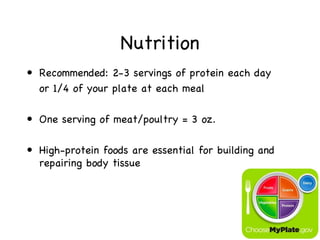
• Recommended: 2-3 servings of protein each day
  or 1/4 of your plate at each meal

• One serving of meat/poultry = 3 oz.

• High-protein foods are essential for building and
  repairing body tissue
Healthy Preparation
• Dark meat is higher in fat than light meat (poultry)

• Turkey & chicken are lower in fat and calories than most
  cuts of red meat

• Remove poultry’s skin to reduce fat content

• Broiling & Grilling = Allow fat to drip away during cooking

• Nonstick pans & Cooking spray = No need for added fat
  when cooking
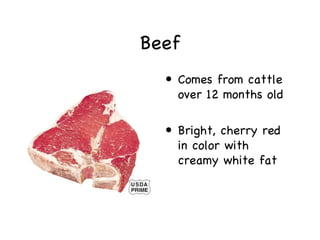
Beef
  • Comes from cattle
    over 12 months old

  • Bright, cherry red
    in color with
    creamy white fat
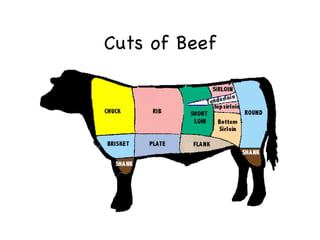
Cuts of Beef
Veal
• Very young beef
  which comes from
  cattle that are less
  than 3 months old
• Most veal is lean
  and tender
• Light pink color and
  a delicate flavor
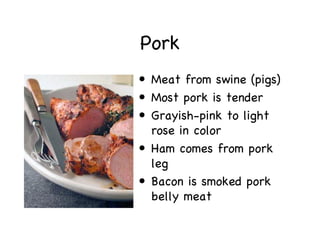
Pork
• Meat from swine (pigs)
• Most pork is tender
• Grayish-pink to light
  rose in color
• Ham comes from pork
  leg
• Bacon is smoked pork
  belly meat
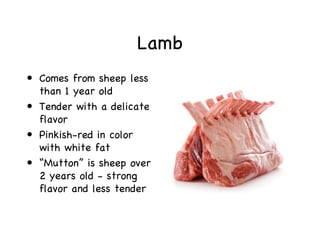
Lamb
• Comes from sheep less
  than 1 year old
• Tender with a delicate
  flavor
• Pinkish-red in color
  with white fat
• “Mutton” is sheep over
  2 years old - strong
  flavor and less tender
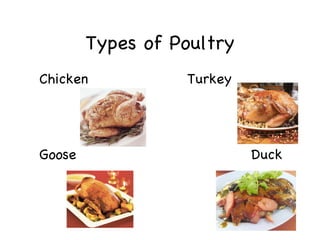
Types of Poultry
Chicken           Turkey


Goose                      Duck
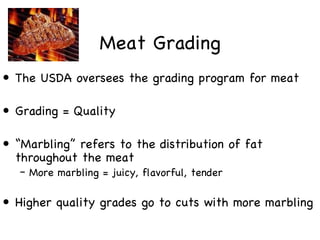
Meat Grading
• The USDA oversees the grading program for meat

• Grading = Quality

• “Marbling” refers to the distribution of fat
  throughout the meat
  – More marbling = juicy, flavorful, tender

• Higher quality grades go to cuts with more marbling
Grades of Beef
Select meats are leaner than choice and
  usually cost less
Choice meats are high quality with good
  marbling
  – Choice & Select meats are the most commonly
    sold meats at grocery stores
Prime meats have received the highest grade
  and are often on restaurant menus
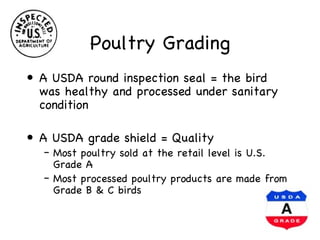
Poultry Grading
• A USDA round inspection seal = the bird
  was healthy and processed under sanitary
  condition

• A USDA grade shield = Quality
  – Most poultry sold at the retail level is U.S.
    Grade A
  – Most processed poultry products are made from
    Grade B & C birds
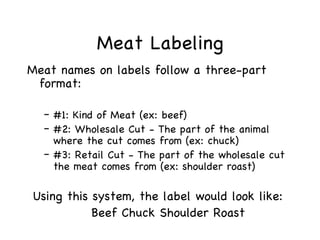
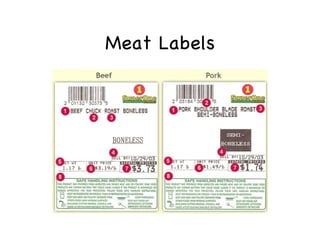
Meat Labeling
Meat names on labels follow a three-part
 format:

  – #1: Kind of Meat (ex: beef)
  – #2: Wholesale Cut - The part of the animal
    where the cut comes from (ex: chuck)
  – #3: Retail Cut - The part of the wholesale cut
    the meat comes from (ex: shoulder roast)

Using this system, the label would look like:
           Beef Chuck Shoulder Roast
Meat Labels
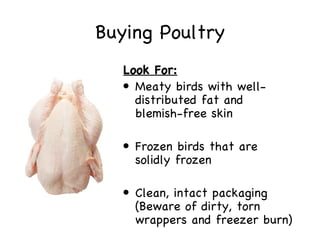
Buying Poultry
   Look For:
   • Meaty birds with well-
     distributed fat and
     blemish-free skin

   • Frozen birds that are
     solidly frozen

   • Clean, intact packaging
     (Beware of dirty, torn
     wrappers and freezer burn)
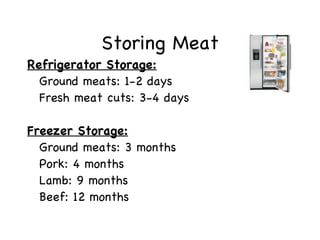
Storing Meat
Refrigerator Storage:
  Ground meats: 1-2 days
  Fresh meat cuts: 3-4 days

Freezer Storage:
  Ground meats: 3 months
  Pork: 4 months
  Lamb: 9 months
  Beef: 12 months
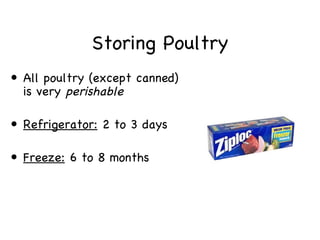
Storing Poultry
• All poultry (except canned)
  is very perishable

• Refrigerator: 2 to 3 days

• Freeze: 6 to 8 months
Cooking Meat & Poultry
• Cooking meat/poultry to a safe
  temperature destroys harmful bacteria

      Internal Temperatures for Meat:
                Rare = 140ºF
               Medium = 160ºF
             Well Done = 170ºF
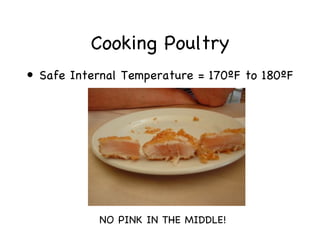
Cooking Poultry
• Safe Internal Temperature = 170ºF to 180ºF


           NO PINK IN THE MIDDLE!
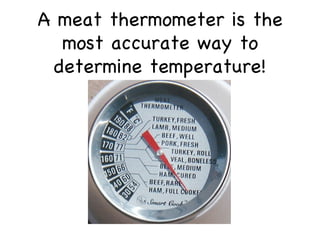
A meat thermometer is the
   most accurate way to
  determine temperature!
Cooking Methods
Dry Cooking Methods   Moist Cooking Methods
• Roasting            • Braising
• Broiling            • Boiling
• Grilling            • Stewing
• Frying

                          *Use these for
   *Use these for
    tender cuts of      less tender cuts of
        meat                    meat
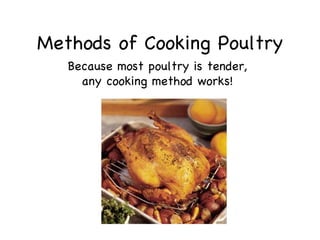
Methods of Cooking Poultry
   Because most poultry is tender,
     any cooking method works!

Meat & Poultry PowerPoint

  • 1.
  • 2.
    Nutrition • Recommended: 2-3servings of protein each day or 1/4 of your plate at each meal • One serving of meat/poultry = 3 oz. • High-protein foods are essential for building and repairing body tissue
  • 3.
    Healthy Preparation • Darkmeat is higher in fat than light meat (poultry) • Turkey & chicken are lower in fat and calories than most cuts of red meat • Remove poultry’s skin to reduce fat content • Broiling & Grilling = Allow fat to drip away during cooking • Nonstick pans & Cooking spray = No need for added fat when cooking
  • 4.
    Beef •Comes from cattle over 12 months old • Bright, cherry red in color with creamy white fat
  • 5.
  • 6.
    Veal • Very youngbeef which comes from cattle that are less than 3 months old • Most veal is lean and tender • Light pink color and a delicate flavor
  • 7.
    Pork • Meat fromswine (pigs) • Most pork is tender • Grayish-pink to light rose in color • Ham comes from pork leg • Bacon is smoked pork belly meat
  • 8.
    Lamb • Comes fromsheep less than 1 year old • Tender with a delicate flavor • Pinkish-red in color with white fat • “Mutton” is sheep over 2 years old - strong flavor and less tender
  • 9.
    Types of Poultry Chicken Turkey Goose Duck
  • 10.
    Meat Grading • TheUSDA oversees the grading program for meat • Grading = Quality • “Marbling” refers to the distribution of fat throughout the meat – More marbling = juicy, flavorful, tender • Higher quality grades go to cuts with more marbling
  • 11.
    Grades of Beef Selectmeats are leaner than choice and usually cost less Choice meats are high quality with good marbling – Choice & Select meats are the most commonly sold meats at grocery stores Prime meats have received the highest grade and are often on restaurant menus
  • 12.
    Poultry Grading • AUSDA round inspection seal = the bird was healthy and processed under sanitary condition • A USDA grade shield = Quality – Most poultry sold at the retail level is U.S. Grade A – Most processed poultry products are made from Grade B & C birds
  • 13.
    Meat Labeling Meat nameson labels follow a three-part format: – #1: Kind of Meat (ex: beef) – #2: Wholesale Cut - The part of the animal where the cut comes from (ex: chuck) – #3: Retail Cut - The part of the wholesale cut the meat comes from (ex: shoulder roast) Using this system, the label would look like: Beef Chuck Shoulder Roast
  • 14.
  • 15.
    Buying Poultry Look For: • Meaty birds with well- distributed fat and blemish-free skin • Frozen birds that are solidly frozen • Clean, intact packaging (Beware of dirty, torn wrappers and freezer burn)
  • 16.
    Storing Meat Refrigerator Storage: Ground meats: 1-2 days Fresh meat cuts: 3-4 days Freezer Storage: Ground meats: 3 months Pork: 4 months Lamb: 9 months Beef: 12 months
  • 17.
    Storing Poultry • Allpoultry (except canned) is very perishable • Refrigerator: 2 to 3 days • Freeze: 6 to 8 months
  • 18.
    Cooking Meat &Poultry • Cooking meat/poultry to a safe temperature destroys harmful bacteria Internal Temperatures for Meat: Rare = 140ºF Medium = 160ºF Well Done = 170ºF
  • 19.
    Cooking Poultry • SafeInternal Temperature = 170ºF to 180ºF NO PINK IN THE MIDDLE!
  • 20.
    A meat thermometeris the most accurate way to determine temperature!
  • 21.
    Cooking Methods Dry CookingMethods Moist Cooking Methods • Roasting • Braising • Broiling • Boiling • Grilling • Stewing • Frying *Use these for *Use these for tender cuts of less tender cuts of meat meat
  • 22.
    Methods of CookingPoultry Because most poultry is tender, any cooking method works!