How to Set
Achievable Goals
using the
The biggest problem with small business is not setting goals
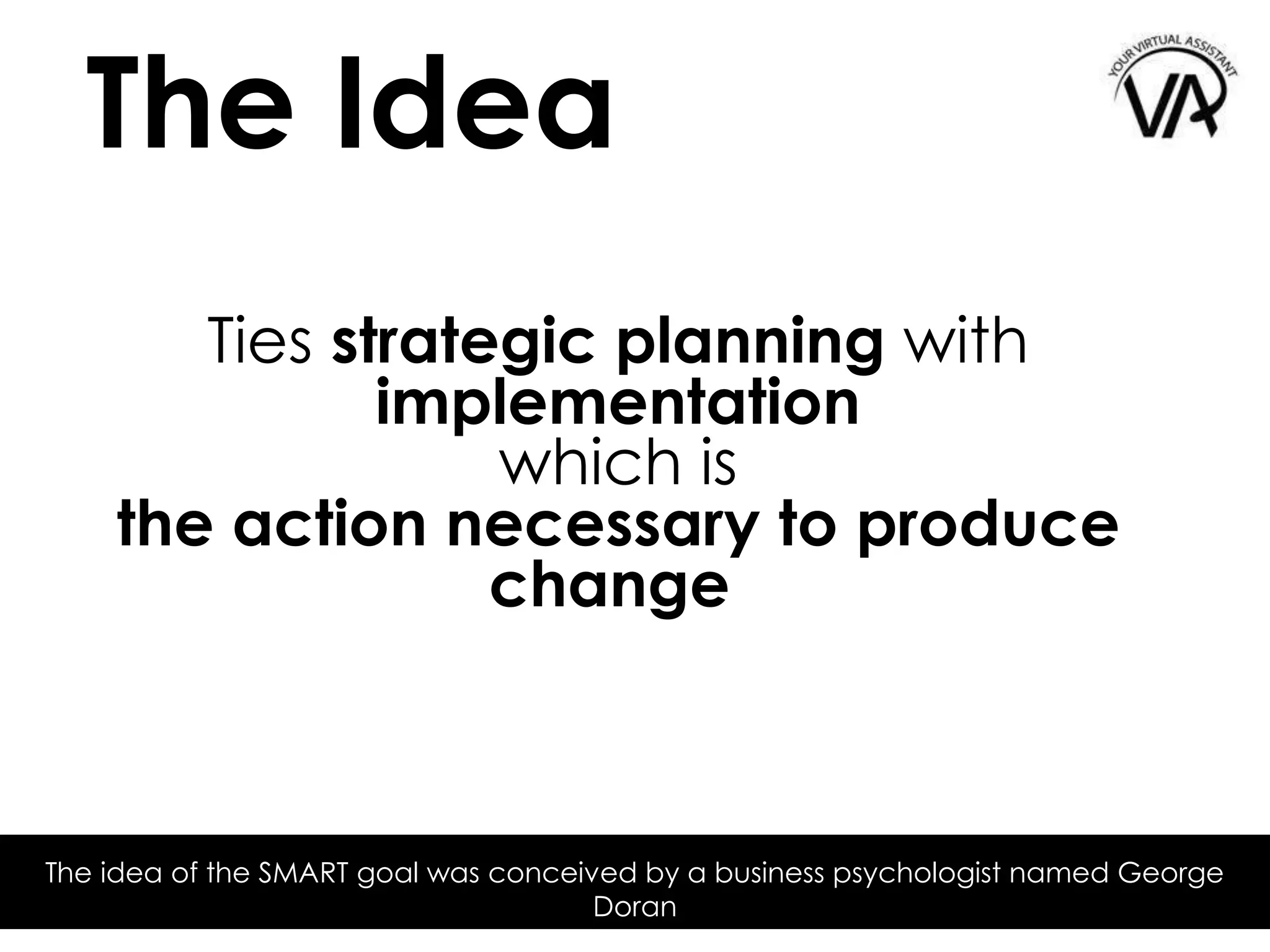
SMART
Goal
System
Ties strategic planning with
implementation
which is
the action necessary to produce
change
The Idea
The idea of the SMART goal was conceived by a business psychologist named George
Doran
Let me break that down for you and explain further…
According to the SMART criteria, goals need to be
S specific
M measurable
A attainable
R relevant to the overall vision and mission of the business
T include a timeframe for completion
Get SMART
Specific
To set a specific goal, you must answer the following 5 “W” questions
1. What: What do I want to accomplish?
2. Why: Specific reasons, purpose or benefits of accomplishing the goal
3. Who: Who is involved?
4. Where: Identify a location
5. Which: Identify requirements and constraints
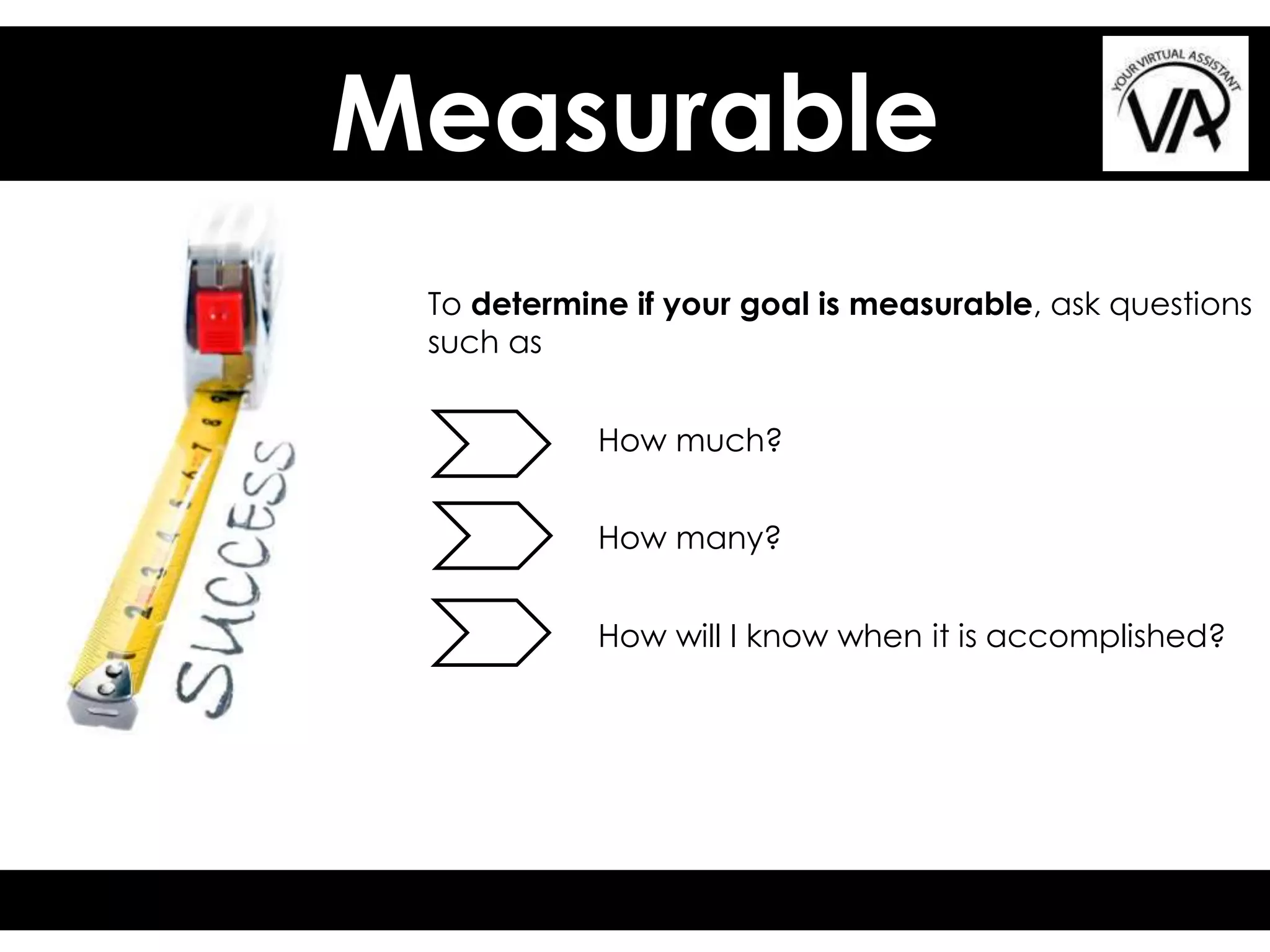
Measurable
To determine if your goal is measurable, ask questions
such as
How much?
How many?
How will I know when it is accomplished?
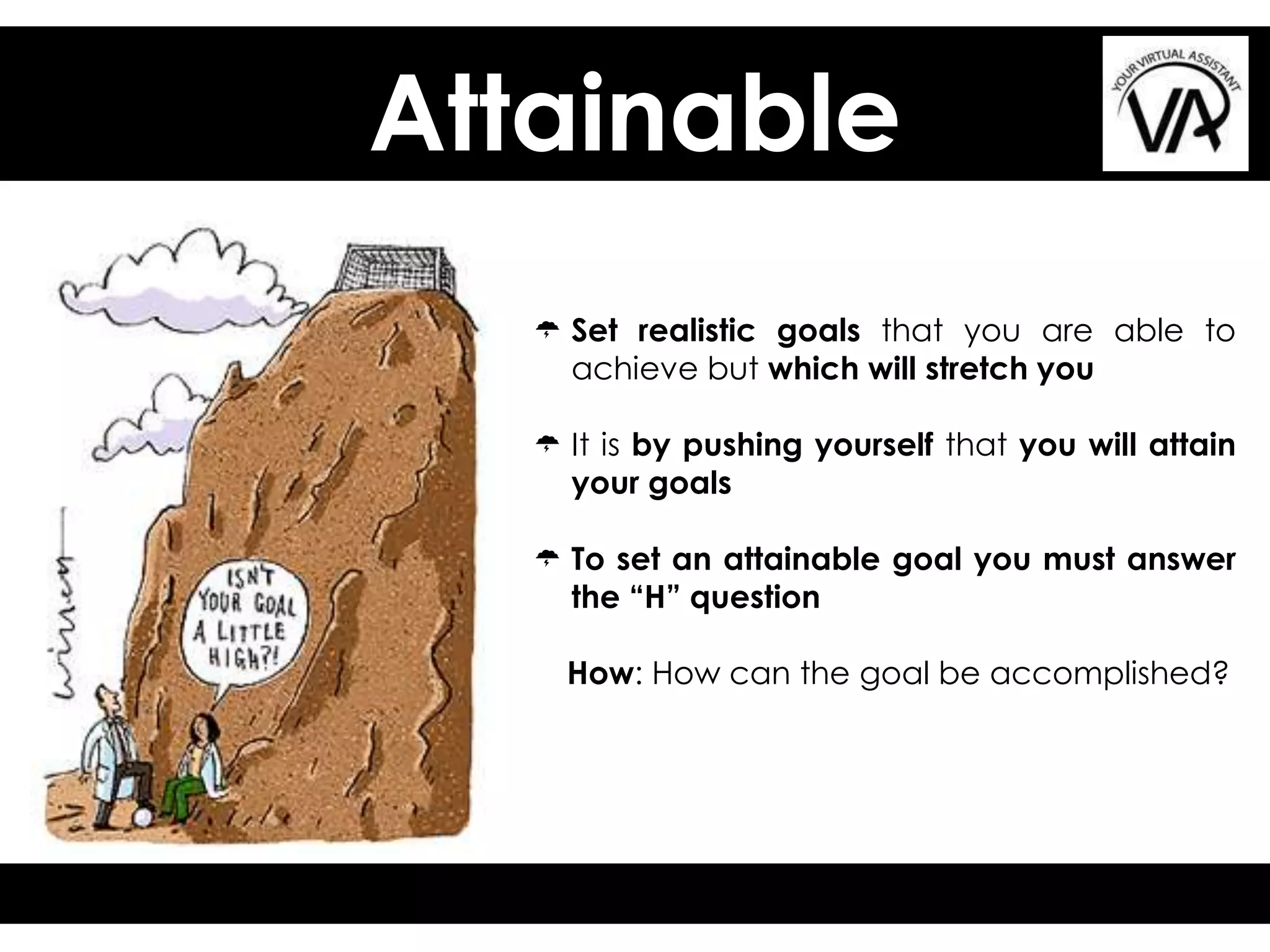
Attainable
 Set realistic goals that you are able to
achieve but which will stretch you
 It is by pushing yourself that you will attain
your goals
 To set an attainable goal you must answer
the “H” question
How: How can the goal be accomplished?
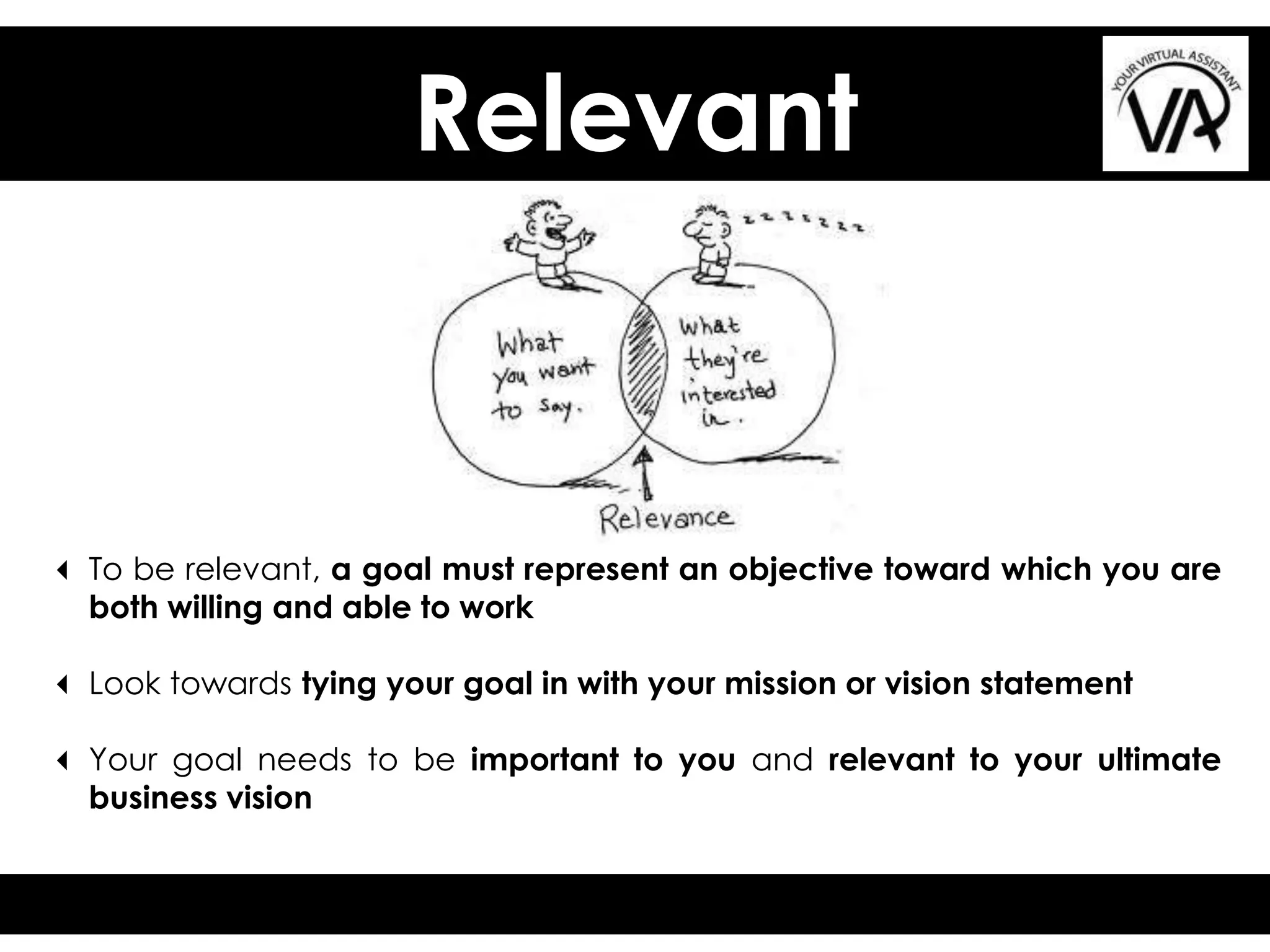
Relevant
3 To be relevant, a goal must represent an objective toward which you are
both willing and able to work
3 Look towards tying your goal in with your mission or vision statement
3 Your goal needs to be important to you and relevant to your ultimate
business vision
Timeframe
With no time frame tied to it there’s no sense of urgency
A goal
• should be grounded within a time frame
• must have a target date
To set a timely goal you must answer the sixth “W” question
When: Establish a time frame
Commitment to deadlines helps
teams to focus efforts on
completion of the goal on or
before the due date
Goals without deadlines or
schedules for completion tend to
be overtaken by the day-to-day
crises that invariably arise in an
organisation
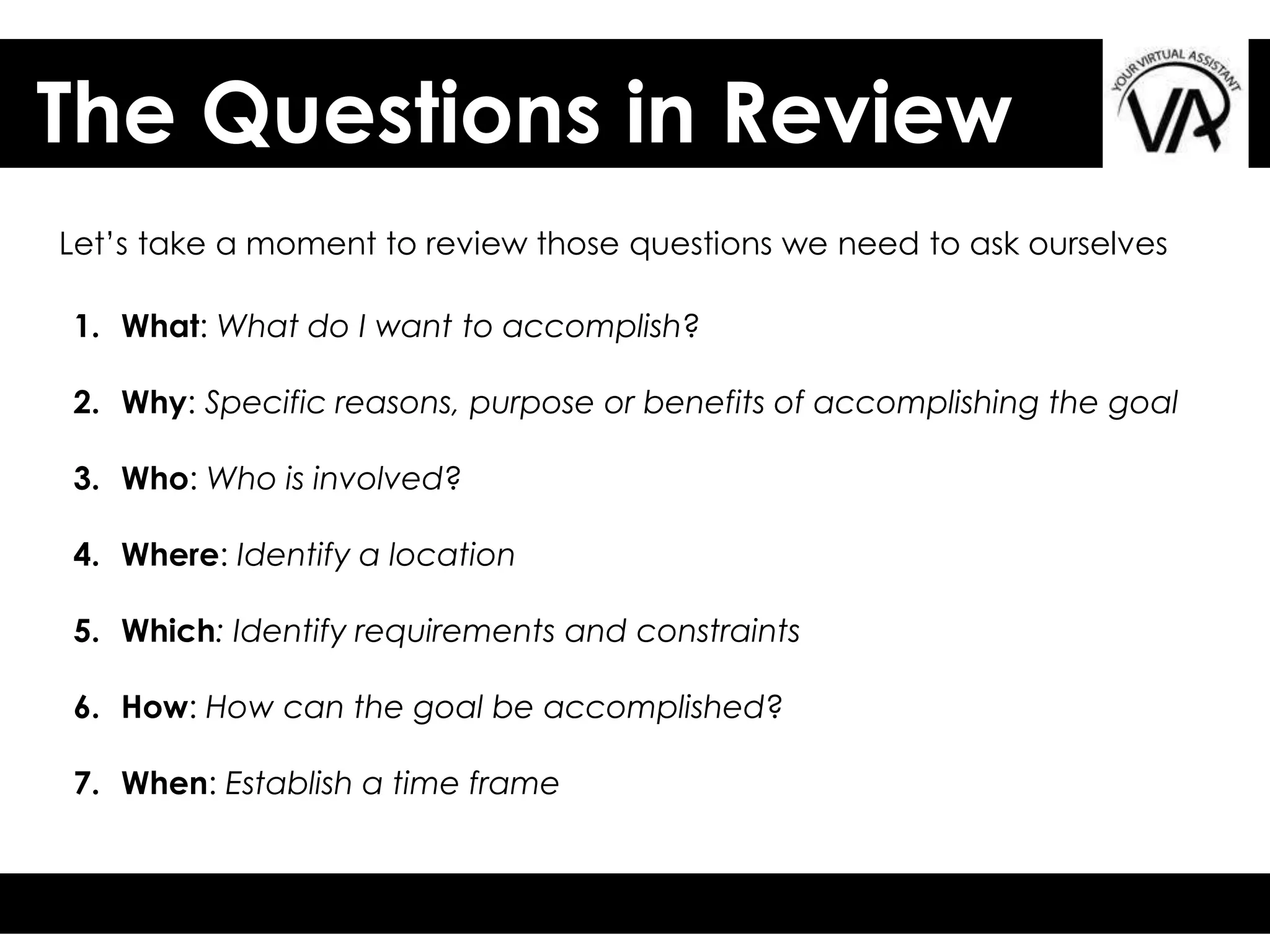
The Questions in Review
Let’s take a moment to review those questions we need to ask ourselves
1. What: What do I want to accomplish?
2. Why: Specific reasons, purpose or benefits of accomplishing the goal
3. Who: Who is involved?
4. Where: Identify a location
5. Which: Identify requirements and constraints
6. How: How can the goal be accomplished?
7. When: Establish a time frame
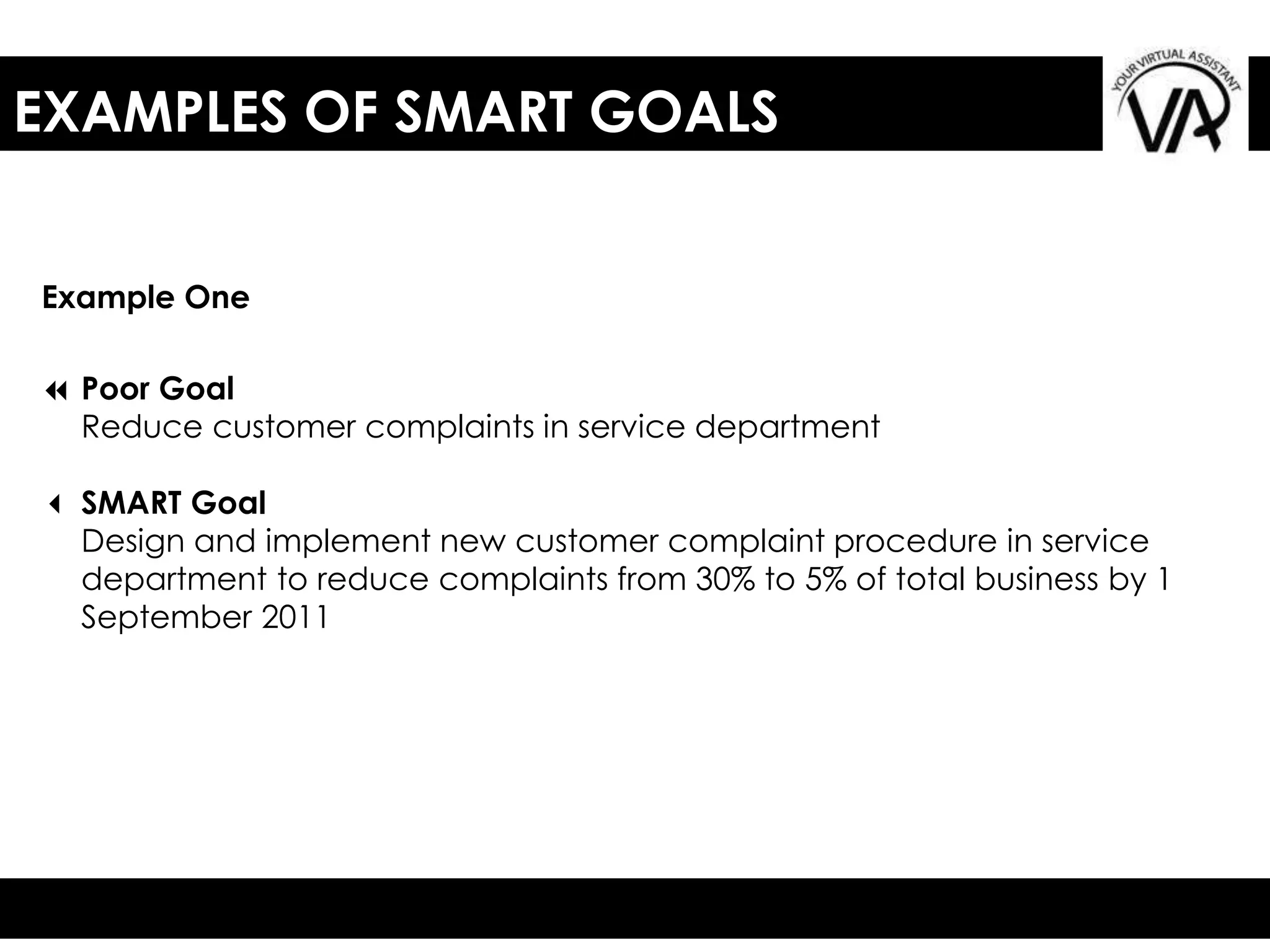
EXAMPLES OF SMART GOALS
7 Poor Goal
Reduce customer complaints in service department
3 SMART Goal
Design and implement new customer complaint procedure in service
department to reduce complaints from 30% to 5% of total business by 1
September 2011
Example One
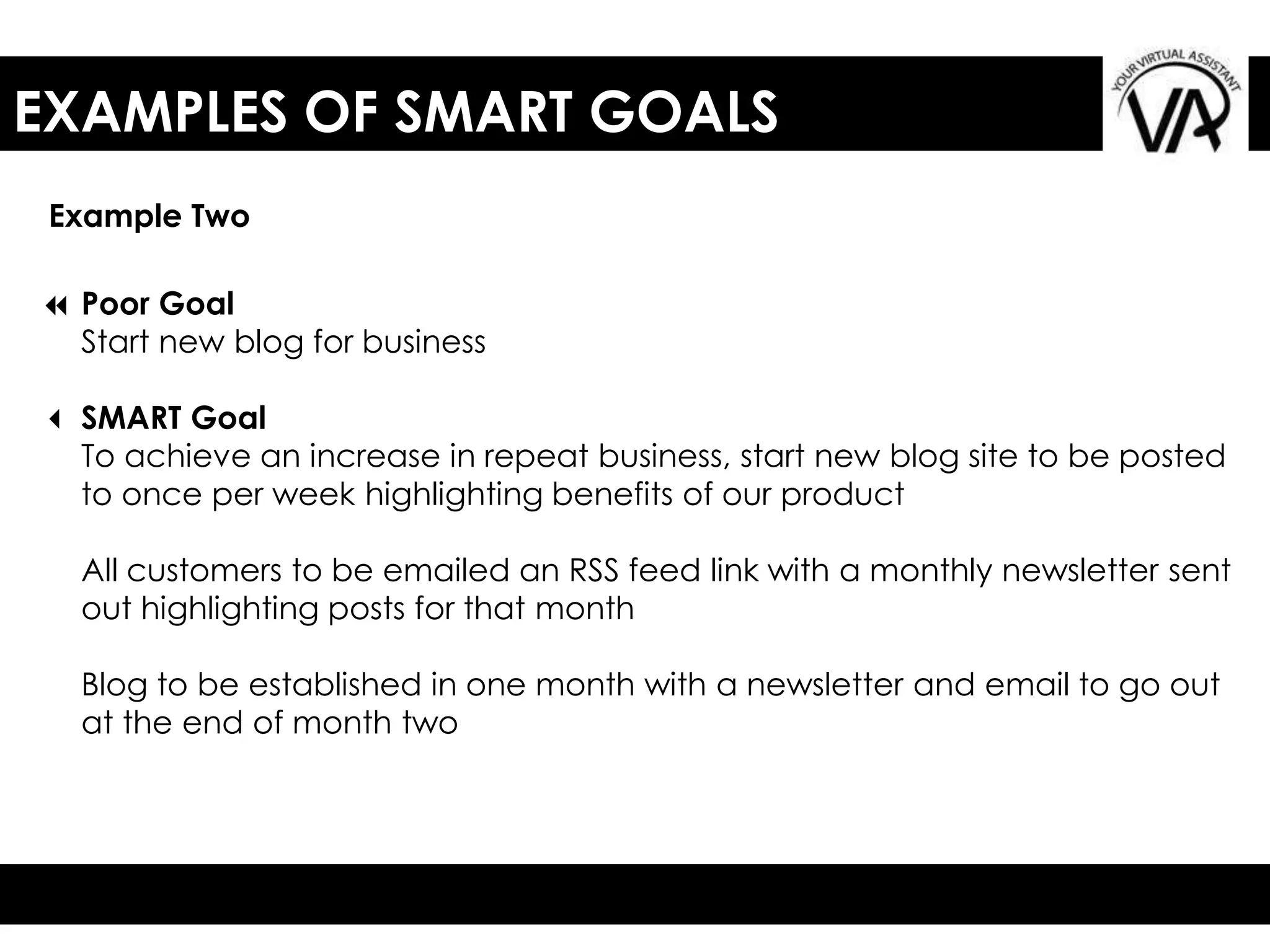
EXAMPLES OF SMART GOALS
Example Two
7 Poor Goal
Start new blog for business
3 SMART Goal
To achieve an increase in repeat business, start new blog site to be posted
to once per week highlighting benefits of our product
All customers to be emailed an RSS feed link with a monthly newsletter sent
out highlighting posts for that month
Blog to be established in one month with a newsletter and email to go out
at the end of month two
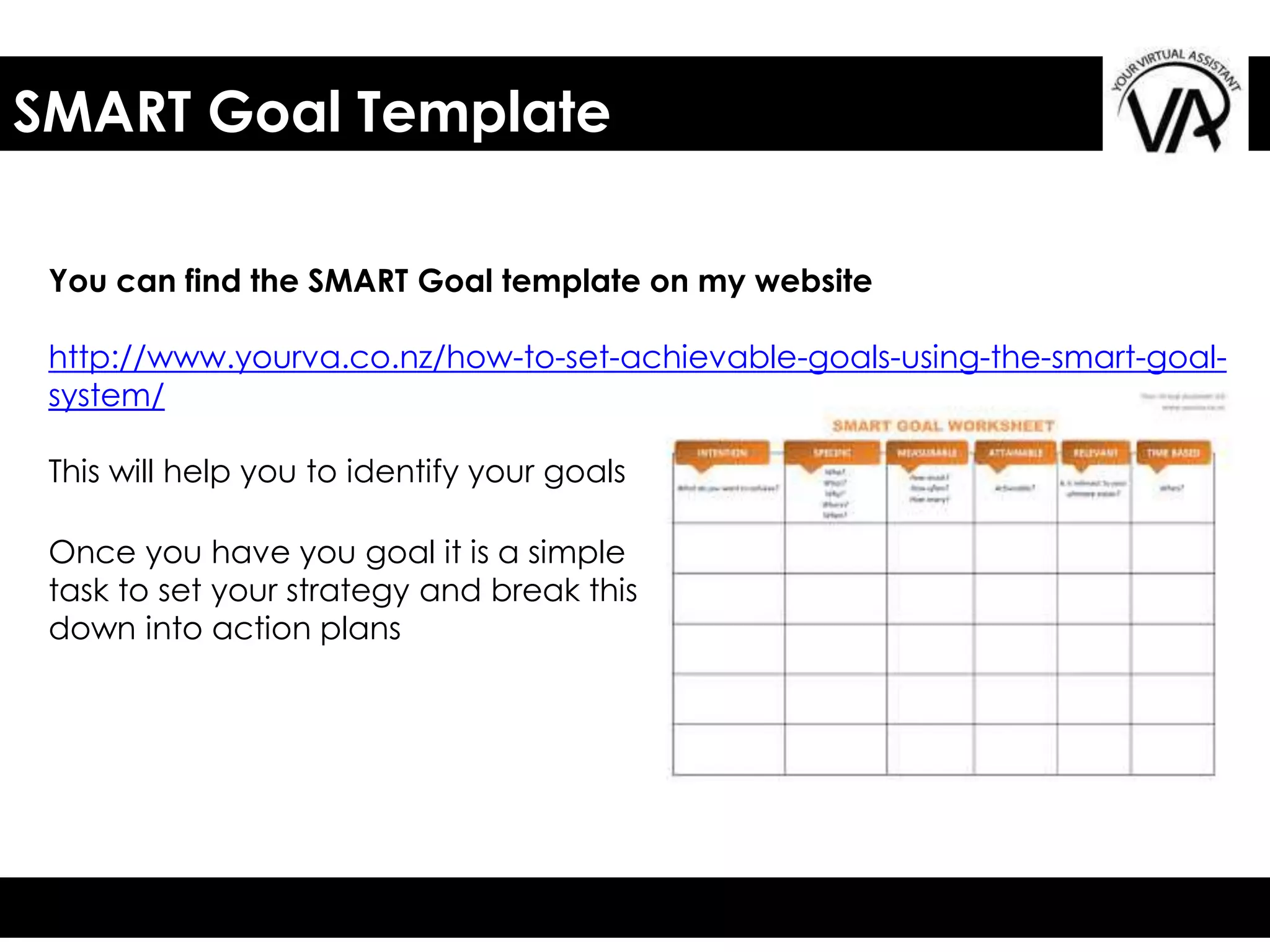
SMART Goal Template
You can find the SMART Goal template on my website
http://www.yourva.co.nz/how-to-set-achievable-goals-using-the-smart-goal-
system/
This will help you to identify your goals
Once you have you goal it is a simple
task to set your strategy and break this
down into action plans
For the full
article…
http://www.yourva.co.nz/how-to-set-achievable-goals-using-the-smart-
goal-system/

How to Set Achievable Goals Using the SMART Goal System

  • 1.
    How to Set AchievableGoals using the The biggest problem with small business is not setting goals SMART Goal System
  • 2.
    Ties strategic planningwith implementation which is the action necessary to produce change The Idea The idea of the SMART goal was conceived by a business psychologist named George Doran
  • 3.
    Let me breakthat down for you and explain further… According to the SMART criteria, goals need to be S specific M measurable A attainable R relevant to the overall vision and mission of the business T include a timeframe for completion Get SMART
  • 4.
    Specific To set aspecific goal, you must answer the following 5 “W” questions 1. What: What do I want to accomplish? 2. Why: Specific reasons, purpose or benefits of accomplishing the goal 3. Who: Who is involved? 4. Where: Identify a location 5. Which: Identify requirements and constraints
  • 5.
    Measurable To determine ifyour goal is measurable, ask questions such as How much? How many? How will I know when it is accomplished?
  • 6.
    Attainable  Set realisticgoals that you are able to achieve but which will stretch you  It is by pushing yourself that you will attain your goals  To set an attainable goal you must answer the “H” question How: How can the goal be accomplished?
  • 7.
    Relevant 3 To berelevant, a goal must represent an objective toward which you are both willing and able to work 3 Look towards tying your goal in with your mission or vision statement 3 Your goal needs to be important to you and relevant to your ultimate business vision
  • 8.
    Timeframe With no timeframe tied to it there’s no sense of urgency A goal • should be grounded within a time frame • must have a target date To set a timely goal you must answer the sixth “W” question When: Establish a time frame Commitment to deadlines helps teams to focus efforts on completion of the goal on or before the due date Goals without deadlines or schedules for completion tend to be overtaken by the day-to-day crises that invariably arise in an organisation
  • 9.
    The Questions inReview Let’s take a moment to review those questions we need to ask ourselves 1. What: What do I want to accomplish? 2. Why: Specific reasons, purpose or benefits of accomplishing the goal 3. Who: Who is involved? 4. Where: Identify a location 5. Which: Identify requirements and constraints 6. How: How can the goal be accomplished? 7. When: Establish a time frame
  • 10.
    EXAMPLES OF SMARTGOALS 7 Poor Goal Reduce customer complaints in service department 3 SMART Goal Design and implement new customer complaint procedure in service department to reduce complaints from 30% to 5% of total business by 1 September 2011 Example One
  • 11.
    EXAMPLES OF SMARTGOALS Example Two 7 Poor Goal Start new blog for business 3 SMART Goal To achieve an increase in repeat business, start new blog site to be posted to once per week highlighting benefits of our product All customers to be emailed an RSS feed link with a monthly newsletter sent out highlighting posts for that month Blog to be established in one month with a newsletter and email to go out at the end of month two
  • 12.
    SMART Goal Template Youcan find the SMART Goal template on my website http://www.yourva.co.nz/how-to-set-achievable-goals-using-the-smart-goal- system/ This will help you to identify your goals Once you have you goal it is a simple task to set your strategy and break this down into action plans
  • 13.