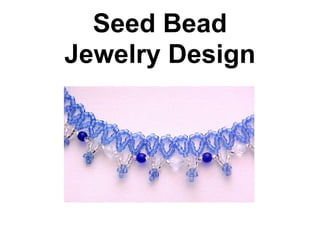
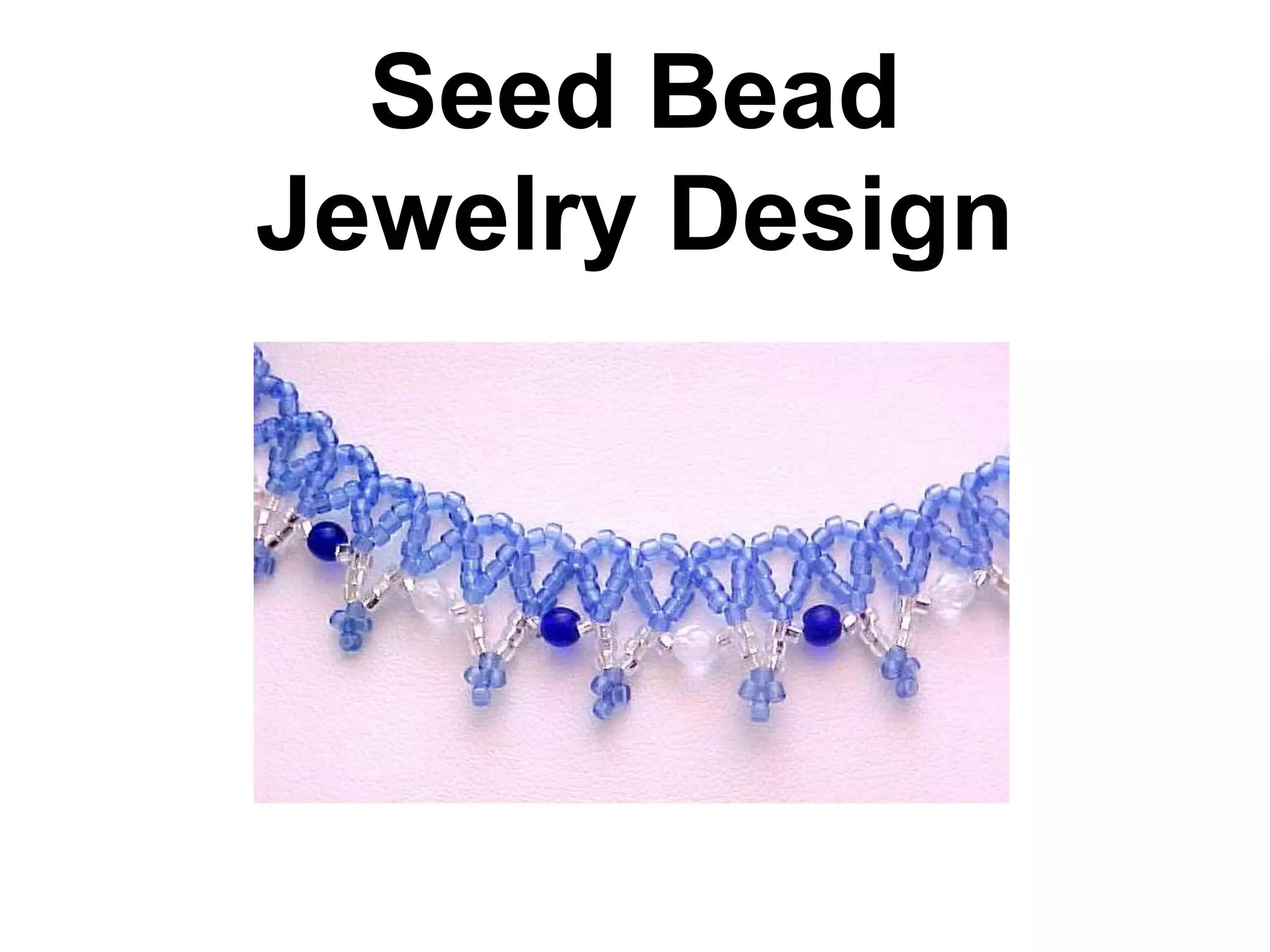
Seed Bead
Jewelry Design
History
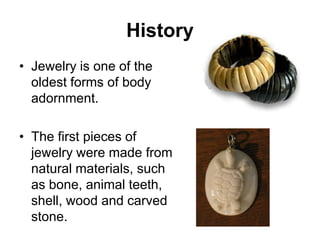
• Jewelry is one of the
  oldest forms of body
  adornment.

• The first pieces of
  jewelry were made from
  natural materials, such
  as bone, animal teeth,
  shell, wood and carved
  stone.
Jewelry Uses
• Currency: wealth display & storage

• Function: clasps, pins & buckles

• Symbolism: to show membership or status
   – Examples: Christian crucifix, Jewish Star of David,
     wedding rings

• Protection: amulets & magical wards

• Artistic Display: just for looks or showing one’s style
   – Jewelry has always been artistic, but this use took primacy
     over wealth and function starting in the late 19th century
Types of Jewelry
• High-Quality Jewelry: made with
  gemstones and precious metals, such as
  silver or gold

• Art Jewelry: design and creativity are
  prized above material value

• Costume Jewelry: less costly due to being
  mass-produced from lower value materials
Seed Bead Jewelry
• Smallest type of beads used to create
  jewelry

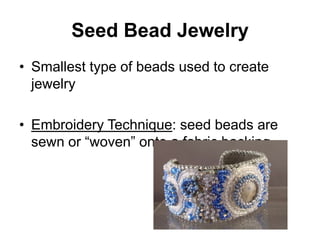
• Embroidery Technique: seed beads are
  sewn or “woven” onto a fabric backing
Materials & Tools
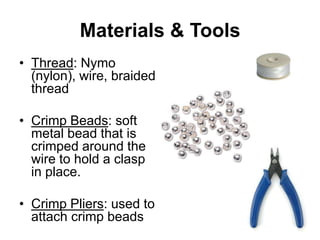
• Thread: Nymo
  (nylon), wire, braided
  thread

• Crimp Beads: soft
  metal bead that is
  crimped around the
  wire to hold a clasp
  in place.

• Crimp Pliers: used to
  attach crimp beads
Materials & Tools
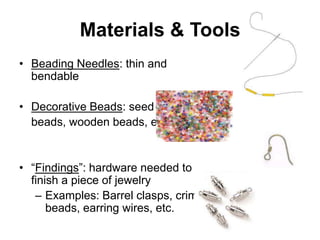
• Beading Needles: thin and
  bendable

• Decorative Beads: seed
  beads, wooden beads, etc.


• “Findings”: hardware needed to
  finish a piece of jewelry
   – Examples: Barrel clasps, crimp
      beads, earring wires, etc.
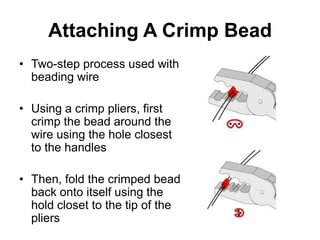
Attaching A Crimp Bead
• Two-step process used with
  beading wire

• Using a crimp pliers, first
  crimp the bead around the
  wire using the hole closest
  to the handles

• Then, fold the crimped bead
  back onto itself using the
  hold closet to the tip of the
  pliers
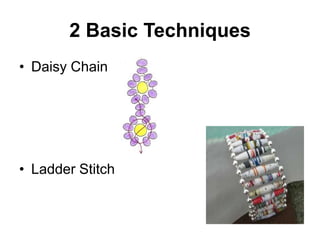
2 Basic Techniques
• Daisy Chain


• Ladder Stitch

Seed Bead Jewelry Design PowerPoint

  • 1.
  • 2.
    History • Jewelry isone of the oldest forms of body adornment. • The first pieces of jewelry were made from natural materials, such as bone, animal teeth, shell, wood and carved stone.
  • 3.
    Jewelry Uses • Currency:wealth display & storage • Function: clasps, pins & buckles • Symbolism: to show membership or status – Examples: Christian crucifix, Jewish Star of David, wedding rings • Protection: amulets & magical wards • Artistic Display: just for looks or showing one’s style – Jewelry has always been artistic, but this use took primacy over wealth and function starting in the late 19th century
  • 4.
    Types of Jewelry •High-Quality Jewelry: made with gemstones and precious metals, such as silver or gold • Art Jewelry: design and creativity are prized above material value • Costume Jewelry: less costly due to being mass-produced from lower value materials
  • 5.
    Seed Bead Jewelry •Smallest type of beads used to create jewelry • Embroidery Technique: seed beads are sewn or “woven” onto a fabric backing
  • 6.
    Materials & Tools •Thread: Nymo (nylon), wire, braided thread • Crimp Beads: soft metal bead that is crimped around the wire to hold a clasp in place. • Crimp Pliers: used to attach crimp beads
  • 7.
    Materials & Tools •Beading Needles: thin and bendable • Decorative Beads: seed beads, wooden beads, etc. • “Findings”: hardware needed to finish a piece of jewelry – Examples: Barrel clasps, crimp beads, earring wires, etc.
  • 8.
    Attaching A CrimpBead • Two-step process used with beading wire • Using a crimp pliers, first crimp the bead around the wire using the hole closest to the handles • Then, fold the crimped bead back onto itself using the hold closet to the tip of the pliers
  • 9.
    2 Basic Techniques •Daisy Chain • Ladder Stitch