Yeast Breads
Examples of Yeast Breads

•   Sandwich bread
•   Dinner rolls
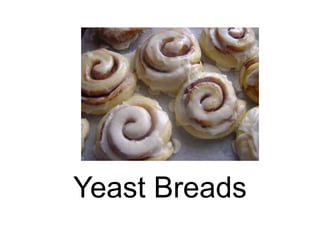
•   Cinnamon rolls
•   Pizza dough
•   Baguettes
•   Ciabatta
•   Bagels
•   Doughnuts
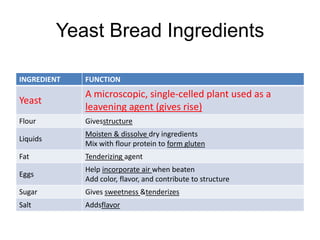
Yeast Bread Ingredients

INGREDIENT   FUNCTION
             A microscopic, single-celled plant used as a
Yeast
             leavening agent (gives rise)
Flour        Givesstructure
             Moisten & dissolve dry ingredients
Liquids
             Mix with flour protein to form gluten
Fat          Tenderizing agent
             Help incorporate air when beaten
Eggs
             Add color, flavor, and contribute to structure
Sugar        Gives sweetness &tenderizes
Salt         Addsflavor
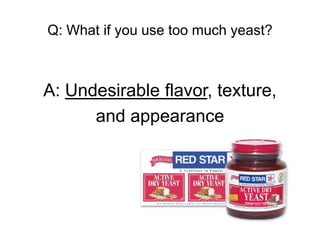
Q: What if you use too much yeast?


A: Undesirable flavor, texture,
      and appearance
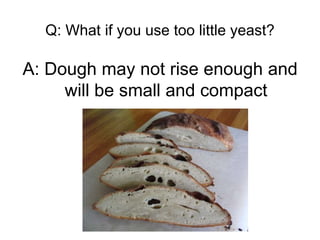
Q: What if you use too little yeast?

A: Dough may not rise enough and
     will be small and compact
Q: What if water is too hot?

A: Water that is too hot will kill the
           living yeast.
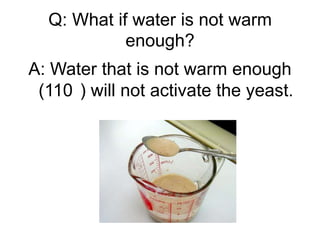
Q: What if water is not warm
            enough?
A: Water that is not warm enough
 (110 ) will not activate the yeast.
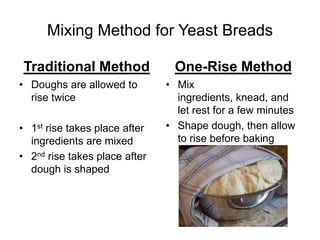
Mixing Method for Yeast Breads

Traditional Method              One-Rise Method
• Doughs are allowed to        • Mix
  rise twice                     ingredients, knead, and
                                 let rest for a few minutes
• 1st rise takes place after   • Shape dough, then allow
  ingredients are mixed          to rise before baking
• 2nd rise takes place after
  dough is shaped
Kneading Yeast Dough
• Kneading is done to develop gluten

• Gluten: gives dough elasticity,
and a chewy texture

• To knead dough, press the dough with the
  heels of the hands, fold it, and turn it.
  Repeat until dough is smooth and elastic.
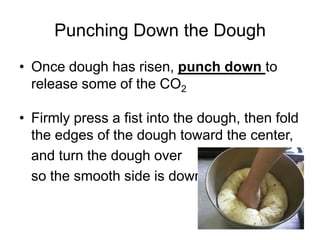
Punching Down the Dough
• Once dough has risen, punch down to
  release some of the CO2

• Firmly press a fist into the dough, then fold
  the edges of the dough toward the center,
  and turn the dough over
  so the smooth side is down.

Yeast Breads PowerPoint

  • 1.
  • 2.
    Examples of YeastBreads • Sandwich bread • Dinner rolls • Cinnamon rolls • Pizza dough • Baguettes • Ciabatta • Bagels • Doughnuts
  • 3.
    Yeast Bread Ingredients INGREDIENT FUNCTION A microscopic, single-celled plant used as a Yeast leavening agent (gives rise) Flour Givesstructure Moisten & dissolve dry ingredients Liquids Mix with flour protein to form gluten Fat Tenderizing agent Help incorporate air when beaten Eggs Add color, flavor, and contribute to structure Sugar Gives sweetness &tenderizes Salt Addsflavor
  • 4.
    Q: What ifyou use too much yeast? A: Undesirable flavor, texture, and appearance
  • 5.
    Q: What ifyou use too little yeast? A: Dough may not rise enough and will be small and compact
  • 6.
    Q: What ifwater is too hot? A: Water that is too hot will kill the living yeast.
  • 7.
    Q: What ifwater is not warm enough? A: Water that is not warm enough (110 ) will not activate the yeast.
  • 8.
    Mixing Method forYeast Breads Traditional Method One-Rise Method • Doughs are allowed to • Mix rise twice ingredients, knead, and let rest for a few minutes • 1st rise takes place after • Shape dough, then allow ingredients are mixed to rise before baking • 2nd rise takes place after dough is shaped
  • 9.
    Kneading Yeast Dough •Kneading is done to develop gluten • Gluten: gives dough elasticity, and a chewy texture • To knead dough, press the dough with the heels of the hands, fold it, and turn it. Repeat until dough is smooth and elastic.
  • 10.
    Punching Down theDough • Once dough has risen, punch down to release some of the CO2 • Firmly press a fist into the dough, then fold the edges of the dough toward the center, and turn the dough over so the smooth side is down.