GIVING AND
RECEIVING FEEDBACK.
One of the most valuable
contributions anyone can make to
another person’s learning is
constructive comment.
To bother to offer another person
feedback about their work indicates
both that you care enough about them
to spend your time considering their
situation and that their work is.
If you wish to give helpful feedback, you
should:
*Be realistic.
*Be specific.
*Be sensitive to the goals of the person.
*Be timely.
*Be descriptive.
*Be consciously non-judgemental.
*Don’t compare.
*Be diligent.
*Be direct.
*Be positive.
*Be aware.
The tone, the style and the content should be consistent
and provide the constant message.
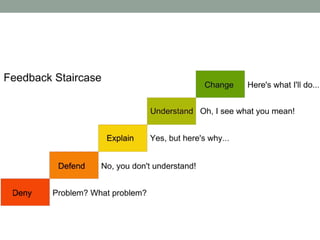
Receiving Feedback
There is no point in asking others to give you feedback
unless you are prepared to be open to it and to consider
comments which differ from your own perceptions.As
receiver:
Be explicit.
Be attentive.
Be aware.
Be silent.
Don’t use the excuse of correcting factual errors to avoid hearing and resonating with the
substance of what has been said. Don’t be distracted by the need to explain: if you continue
to feel that you need to give an explanation do it later after the feedback session once you are
sure you have attended to all that has been said.
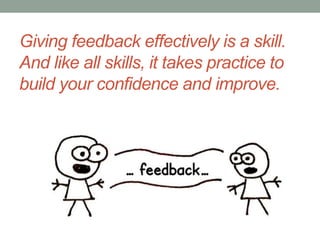
Giving feedback effectively is a skill.
And like all skills, it takes practice to
build your confidence and improve.

Giving and receiving feedback

  • 1.
  • 3.
    One of themost valuable contributions anyone can make to another person’s learning is constructive comment. To bother to offer another person feedback about their work indicates both that you care enough about them to spend your time considering their situation and that their work is.
  • 4.
    If you wishto give helpful feedback, you should: *Be realistic. *Be specific. *Be sensitive to the goals of the person. *Be timely. *Be descriptive. *Be consciously non-judgemental. *Don’t compare. *Be diligent. *Be direct. *Be positive. *Be aware. The tone, the style and the content should be consistent and provide the constant message.
  • 6.
    Receiving Feedback There isno point in asking others to give you feedback unless you are prepared to be open to it and to consider comments which differ from your own perceptions.As receiver: Be explicit. Be attentive. Be aware. Be silent. Don’t use the excuse of correcting factual errors to avoid hearing and resonating with the substance of what has been said. Don’t be distracted by the need to explain: if you continue to feel that you need to give an explanation do it later after the feedback session once you are sure you have attended to all that has been said.
  • 8.
    Giving feedback effectivelyis a skill. And like all skills, it takes practice to build your confidence and improve.