,,Giving and receiving feedback”,,Giving and receiving feedback”
By: Valeria Surlaru
Teacher: Ra a Nataliaț
Personal feedback helps to make us more aware of what we do and how we
should do it , thus increasing our ability to modify and change our behaviour
and become more effective in our interaction with others.
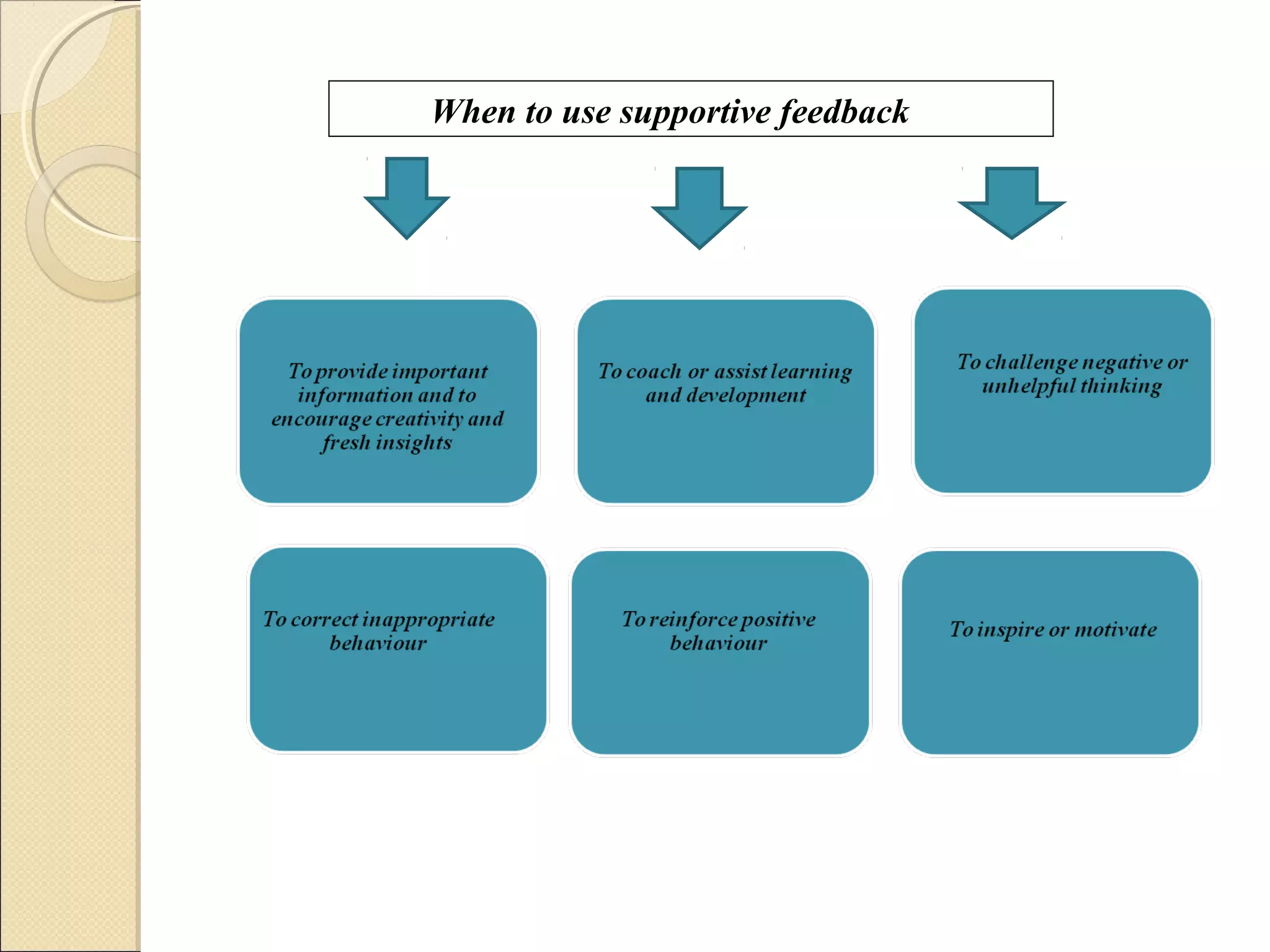
When to use supportive feedback
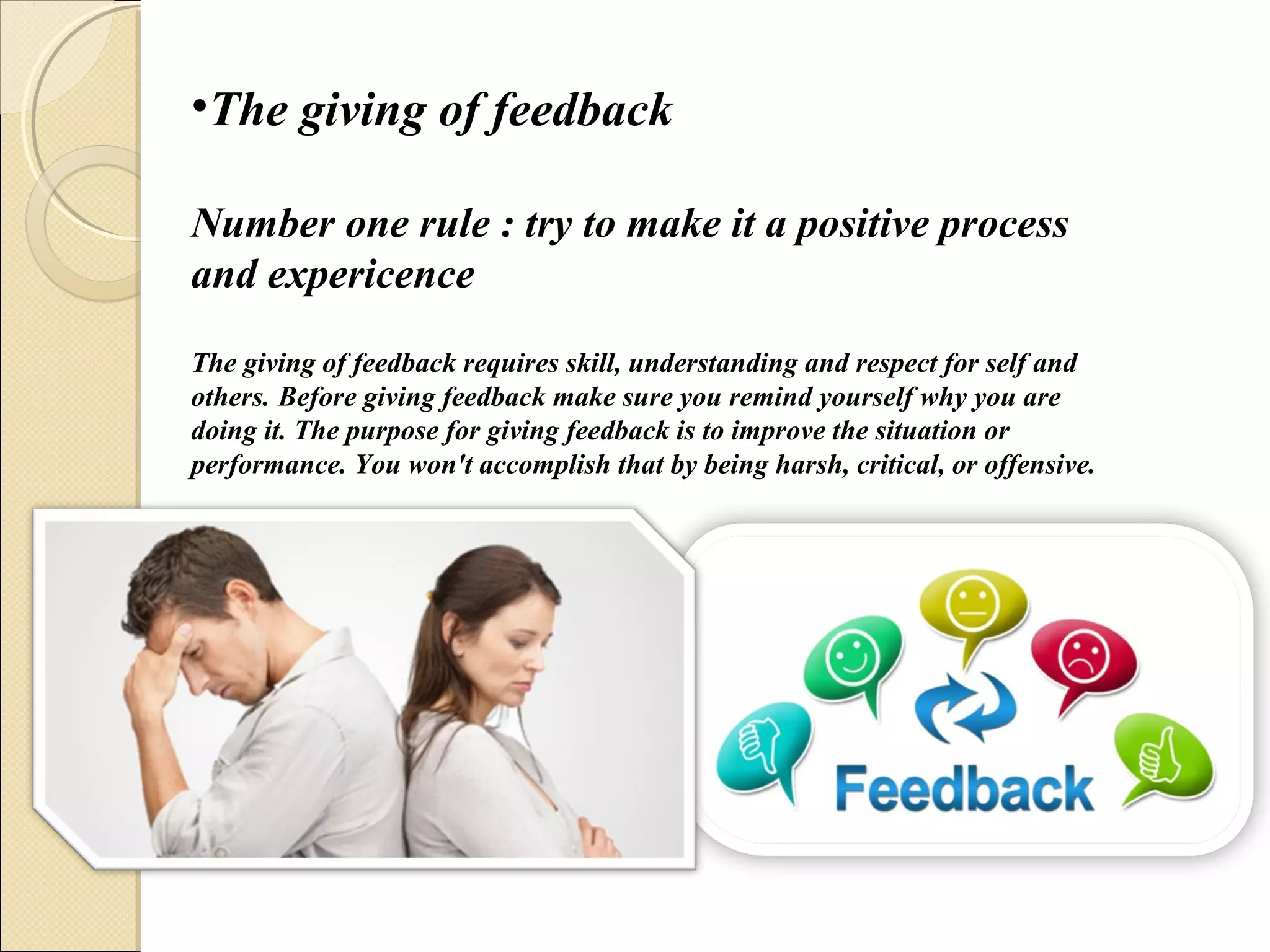
The giving of feedback requires skill, understanding and respect for self and
others. Before giving feedback make sure you remind yourself why you are
doing it. The purpose for giving feedback is to improve the situation or
performance. You won't accomplish that by being harsh, critical, or offensive.
•The giving of feedback
Number one rule : try to make it a positive process
and expericence
• Be Timely
The closer to the event you
address the issue, the better.
Feedback isn't about surprising
someone so the sooner you do it,
the more the person will be
expecting it. Think of it this way:
It's much easier to feed back
about a single one-hour job that
hasn't been done properly than it
is to feed back about a whole
year of failed one-hour jobs.
• Talk About Positives Too
A good rule is start off with
something positive. This helps put
the person at ease. It also lets them
"see" what success looks like and
this helps them to take the right
steps next time.
As long as it's not forced, it can
also help to give positive feedback
at the end of a feedback session too.
Otherwise, people can finish feeling
despondent and worthless.
The Receiving of feedback.
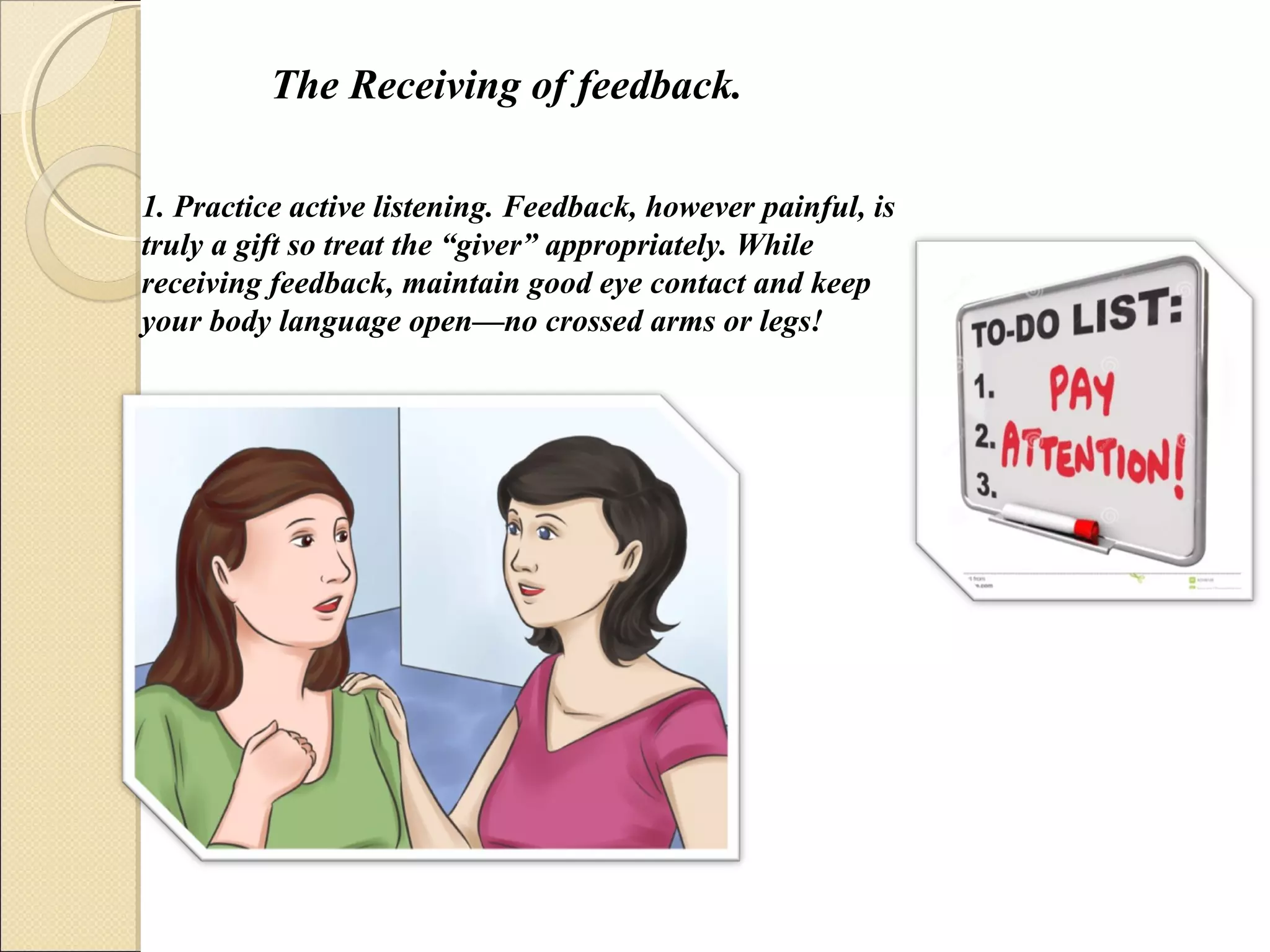
1. Practice active listening. Feedback, however painful, is
truly a gift so treat the “giver” appropriately. While
receiving feedback, maintain good eye contact and keep
your body language open—no crossed arms or legs!
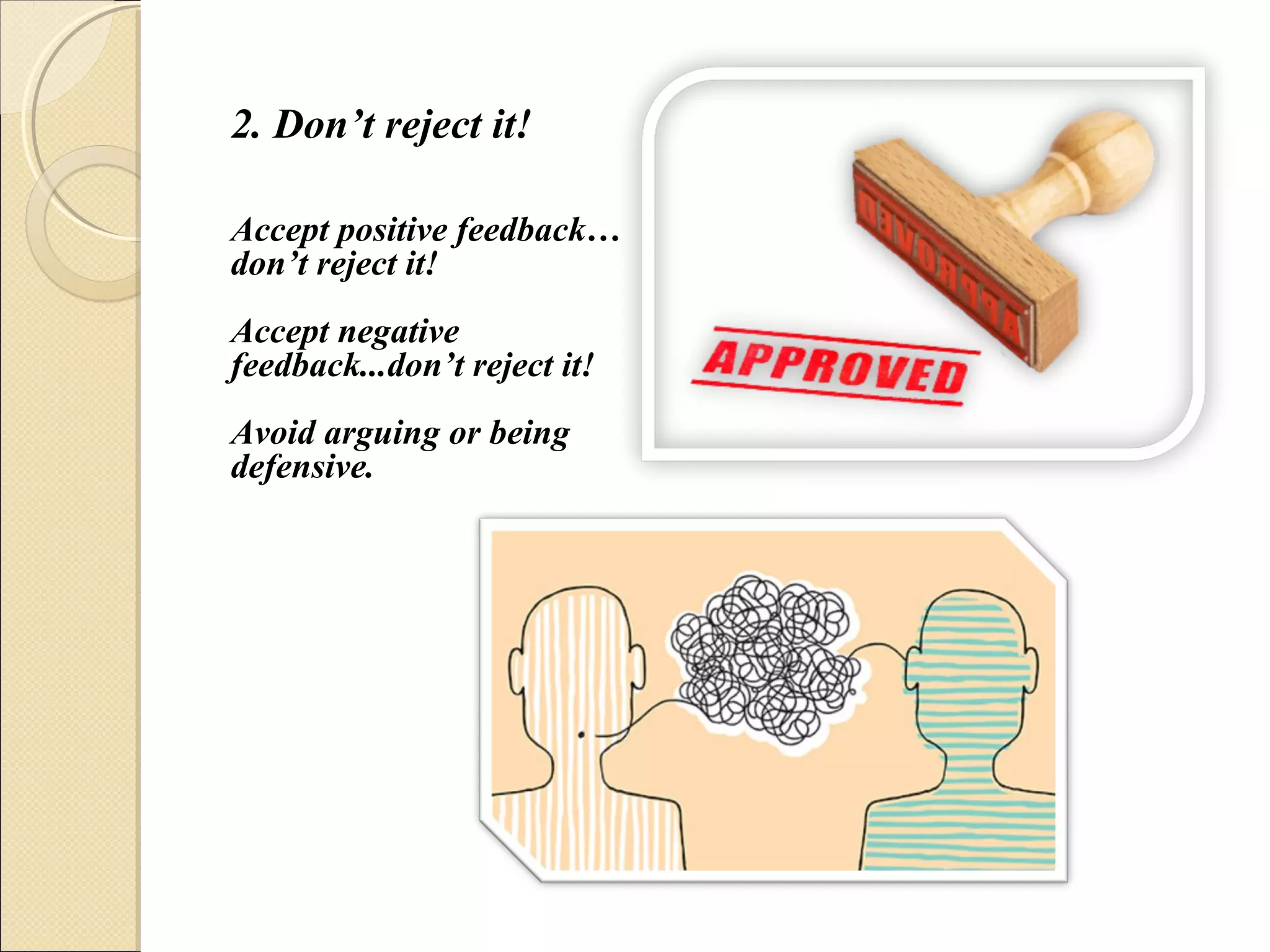
2. Don’t reject it!
Accept positive feedback…
don’t reject it!
Accept negative
feedback...don’t reject it!
Avoid arguing or being
defensive.
3. Ask for clarification.
If you don't understand a point being made, or if it is too generic to
offer any real help, ask for additional information or possible solutions
to help you better understand what the person is trying to say.
3. Ask for clarification.
If you don't understand a point being made, or if it is too generic to
offer any real help, ask for additional information or possible solutions
to help you better understand what the person is trying to say.

Giving and receiving feedback

  • 1.
    ,,Giving and receivingfeedback”,,Giving and receiving feedback” By: Valeria Surlaru Teacher: Ra a Nataliaț
  • 2.
    Personal feedback helpsto make us more aware of what we do and how we should do it , thus increasing our ability to modify and change our behaviour and become more effective in our interaction with others.
  • 3.
    When to usesupportive feedback
  • 4.
    The giving offeedback requires skill, understanding and respect for self and others. Before giving feedback make sure you remind yourself why you are doing it. The purpose for giving feedback is to improve the situation or performance. You won't accomplish that by being harsh, critical, or offensive. •The giving of feedback Number one rule : try to make it a positive process and expericence
  • 5.
    • Be Timely Thecloser to the event you address the issue, the better. Feedback isn't about surprising someone so the sooner you do it, the more the person will be expecting it. Think of it this way: It's much easier to feed back about a single one-hour job that hasn't been done properly than it is to feed back about a whole year of failed one-hour jobs.
  • 6.
    • Talk AboutPositives Too A good rule is start off with something positive. This helps put the person at ease. It also lets them "see" what success looks like and this helps them to take the right steps next time. As long as it's not forced, it can also help to give positive feedback at the end of a feedback session too. Otherwise, people can finish feeling despondent and worthless.
  • 7.
    The Receiving offeedback. 1. Practice active listening. Feedback, however painful, is truly a gift so treat the “giver” appropriately. While receiving feedback, maintain good eye contact and keep your body language open—no crossed arms or legs!
  • 8.
    2. Don’t rejectit! Accept positive feedback… don’t reject it! Accept negative feedback...don’t reject it! Avoid arguing or being defensive.
  • 9.
    3. Ask forclarification. If you don't understand a point being made, or if it is too generic to offer any real help, ask for additional information or possible solutions to help you better understand what the person is trying to say.
  • 10.
    3. Ask forclarification. If you don't understand a point being made, or if it is too generic to offer any real help, ask for additional information or possible solutions to help you better understand what the person is trying to say.