Effective Communication Skills
Course Objectives
• Define and understand communication
• Process of Communication
• Overcome barriers in a communication process
• Practice active listening
• Tools for Effective Communication
What is Communication?
Communication is the art of transmitting information, ideas and attitudes from one
person to another. It is a process of meaningful interaction among human beings.
Today, it is more then “Talk the Talk” you have to “Walk the Talk”
•How to ensure you are not interrupted
•How to create trust and rapport
•How to deal with rude and aggressive people in a manner that is professional
•How to trigger positive responses in others
What is communication?
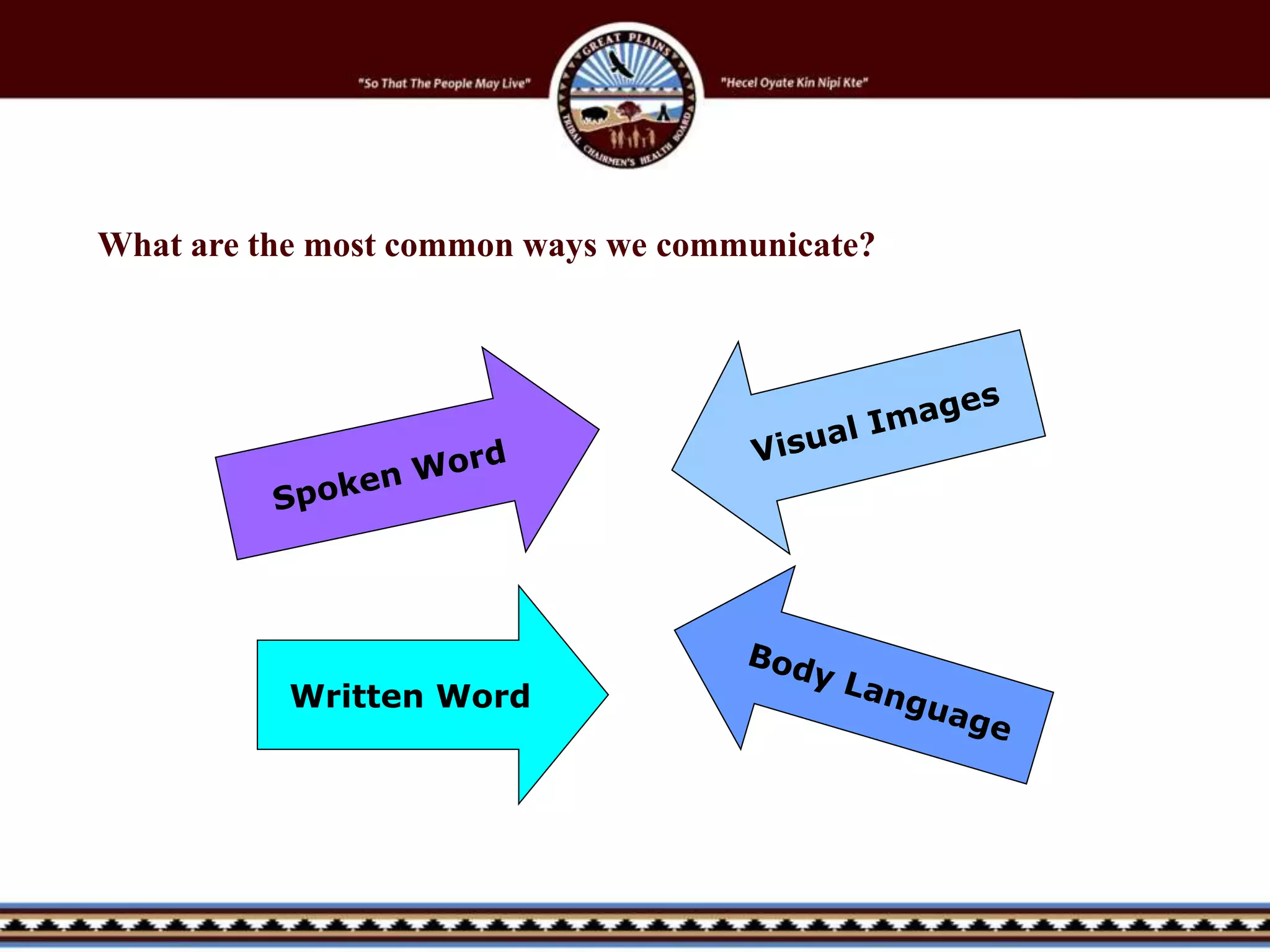
What are the most common ways we communicate?
Written Word
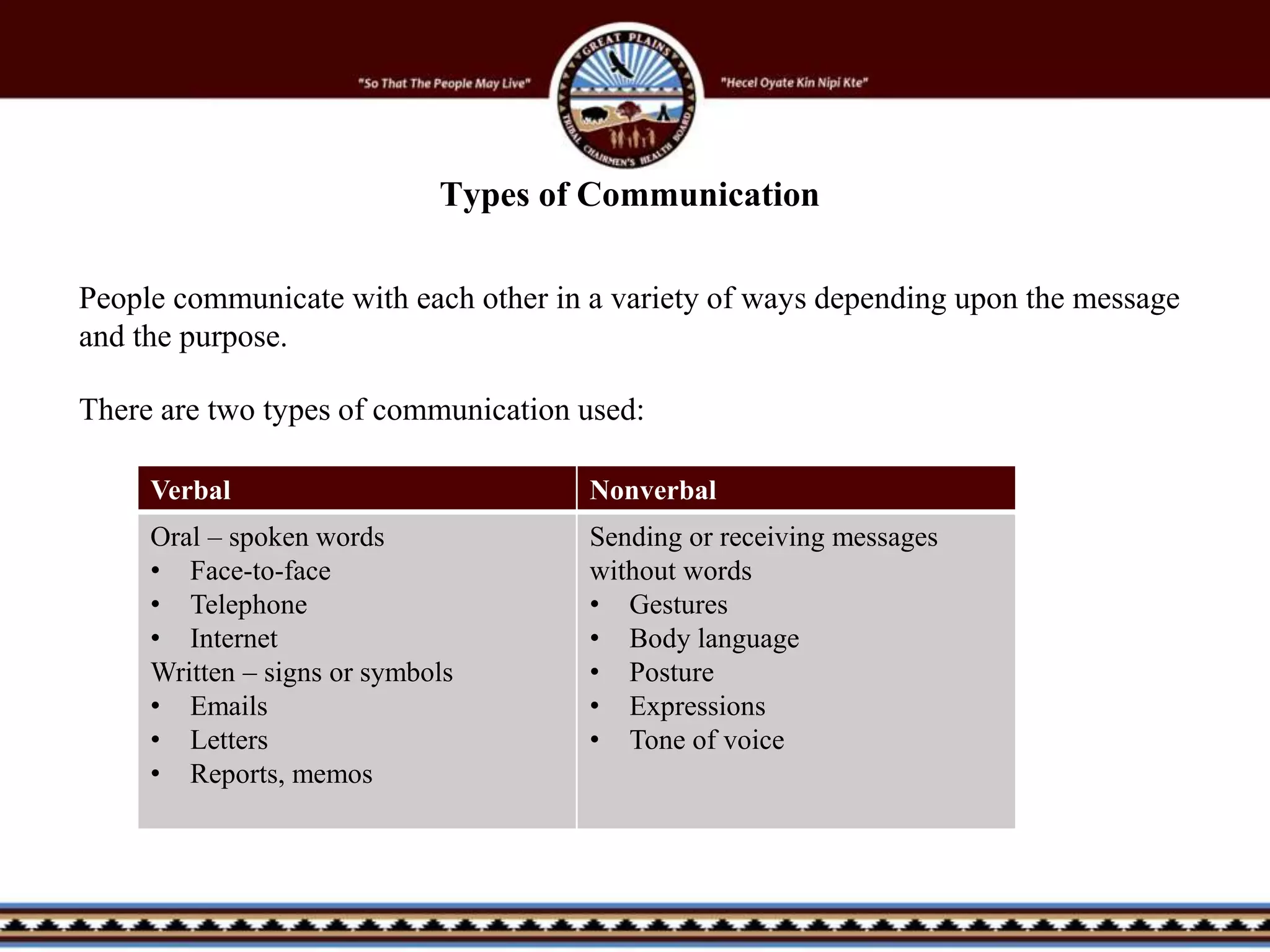
Types of Communication
People communicate with each other in a variety of ways depending upon the message
and the purpose.
There are two types of communication used:
Verbal Nonverbal
Oral – spoken words
• Face-to-face
• Telephone
• Internet
Written – signs or symbols
• Emails
• Letters
• Reports, memos
Sending or receiving messages
without words
• Gestures
• Body language
• Posture
• Expressions
• Tone of voice
The Communication Process
SENDER
(encodes)
RECEIVER
(decodes)
Barrier
Barrier
Medium
Feedback/Response
Barriers to Communication
• Physical
• Perception
• Emotional
• Cultural
• Language
• Gender, Age
• Interpersonal
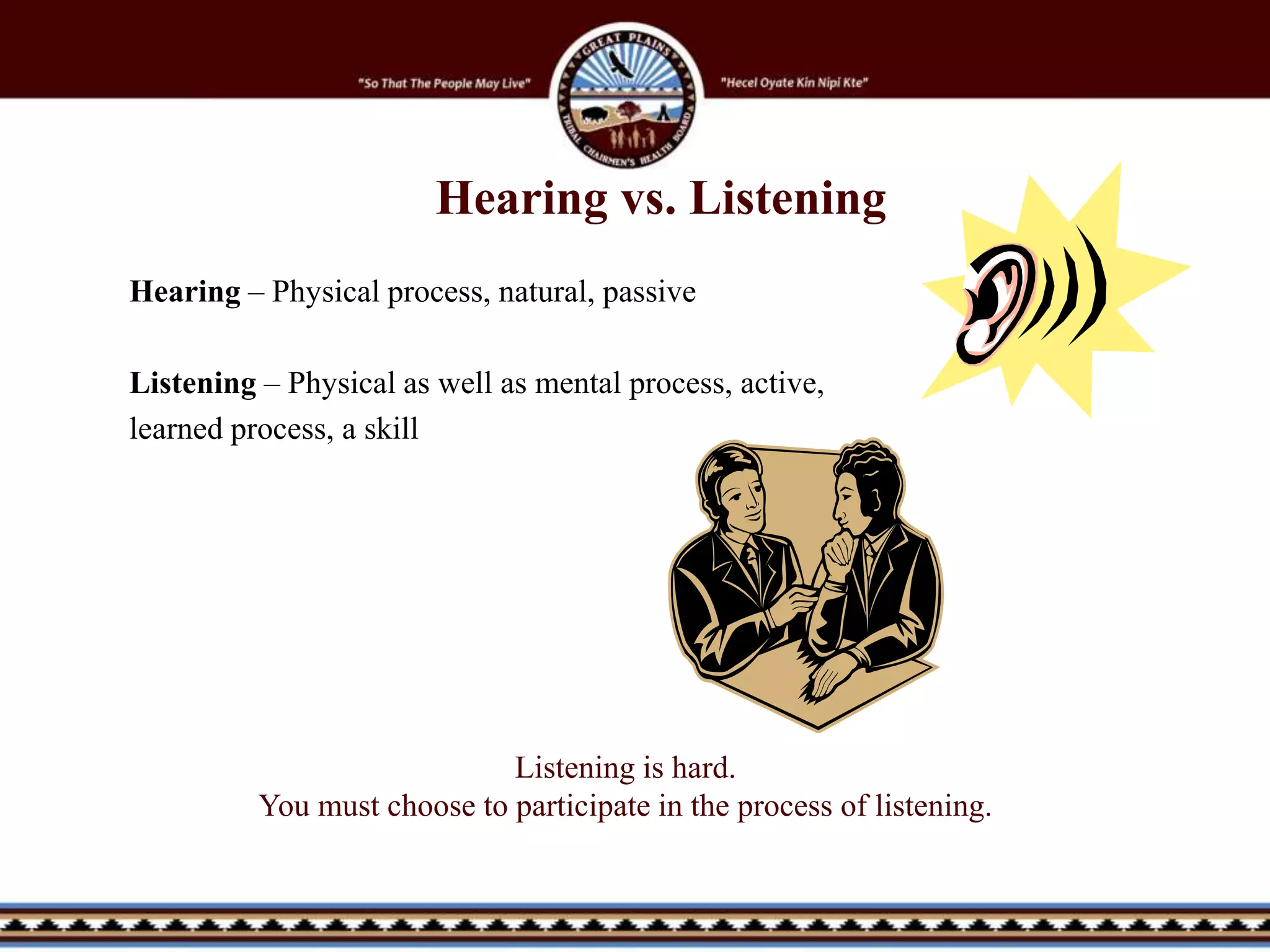
Hearing vs. Listening
Hearing – Physical process, natural, passive
Listening – Physical as well as mental process, active,
learned process, a skill
Listening is hard.
You must choose to participate in the process of listening.
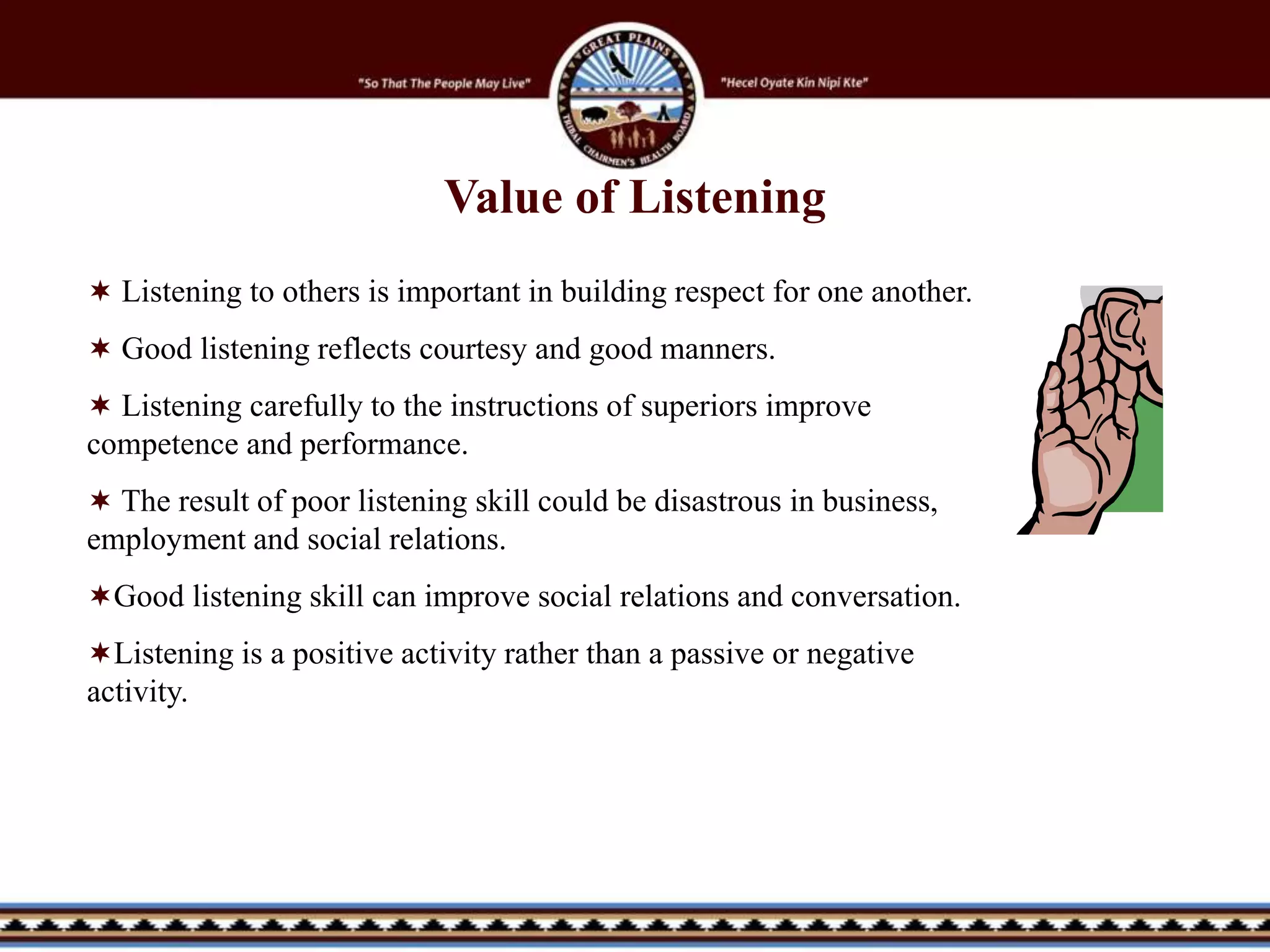
Value of Listening
 Listening to others is important in building respect for one another.
 Good listening reflects courtesy and good manners.
 Listening carefully to the instructions of superiors improve
competence and performance.
 The result of poor listening skill could be disastrous in business,
employment and social relations.
Good listening skill can improve social relations and conversation.
Listening is a positive activity rather than a passive or negative
activity.
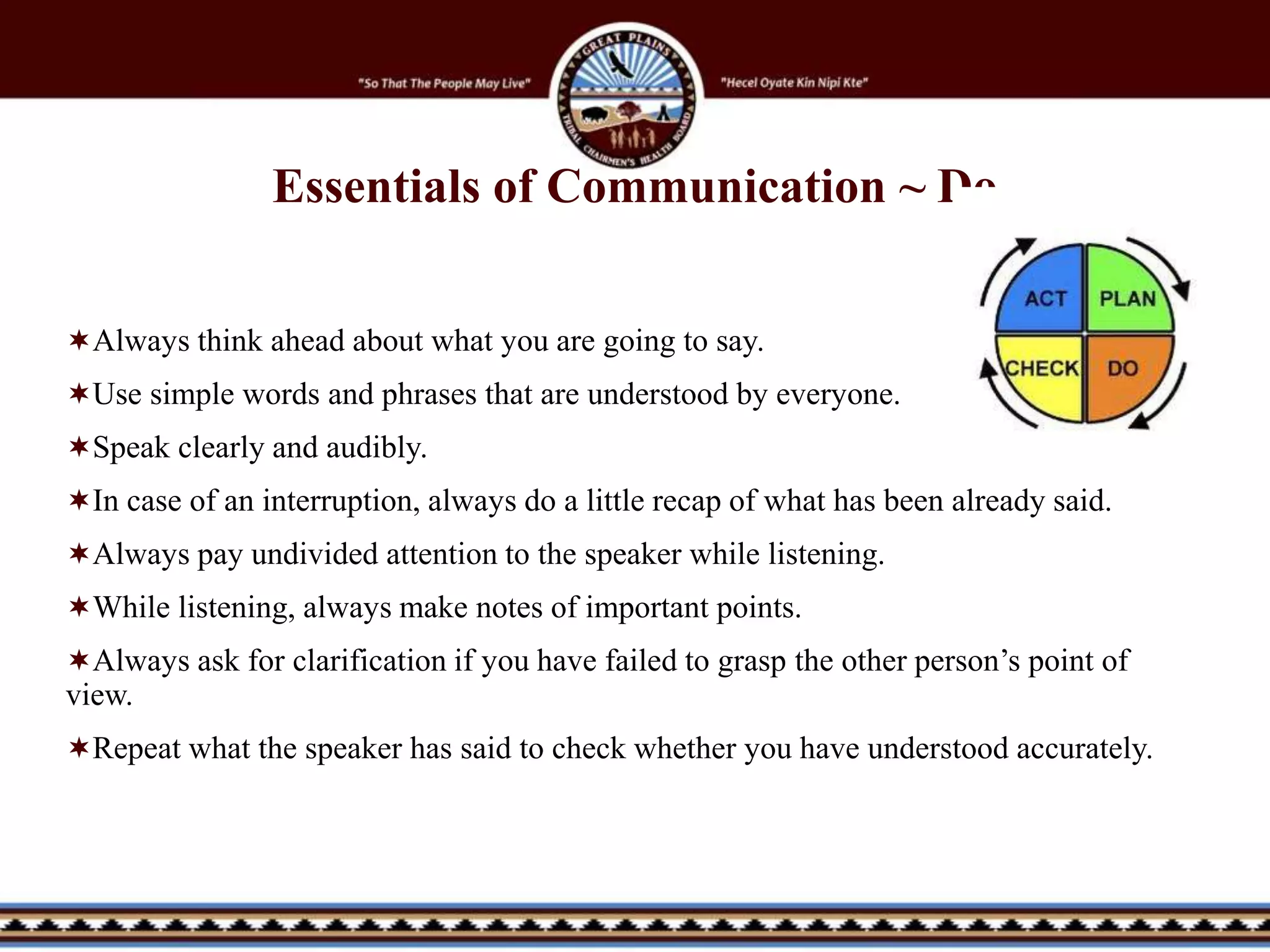
Always think ahead about what you are going to say.
Use simple words and phrases that are understood by everyone.
Speak clearly and audibly.
In case of an interruption, always do a little recap of what has been already said.
Always pay undivided attention to the speaker while listening.
While listening, always make notes of important points.
Always ask for clarification if you have failed to grasp the other person’s point of
view.
Repeat what the speaker has said to check whether you have understood accurately.
Essentials of Communication ~ Do
Essentials of Communication ~ Don’ts
Do not instantly react and say something out of anger.
Do not use technical terms or acronyms that are not understood
by the individuals you are speaking to.
Do not speak too fast or too slow.
Do not speak in an environment that is noisy and you won’t be
heard.
Do not assume that everyone understands you.
While listening do not glance here and there as it might distract
the speaker.
Do not interrupt the speaker.
Do not jump to the conclusion that you have understood every
thing.
How to Improve Communication?
Improve Language
Improve Pronunciation
Work on voice volume
Be aware of body language
Read more
Listen more
Think and speak
Do not speak too fast or too slow
Use simple vocabulary
Look presentable and confident
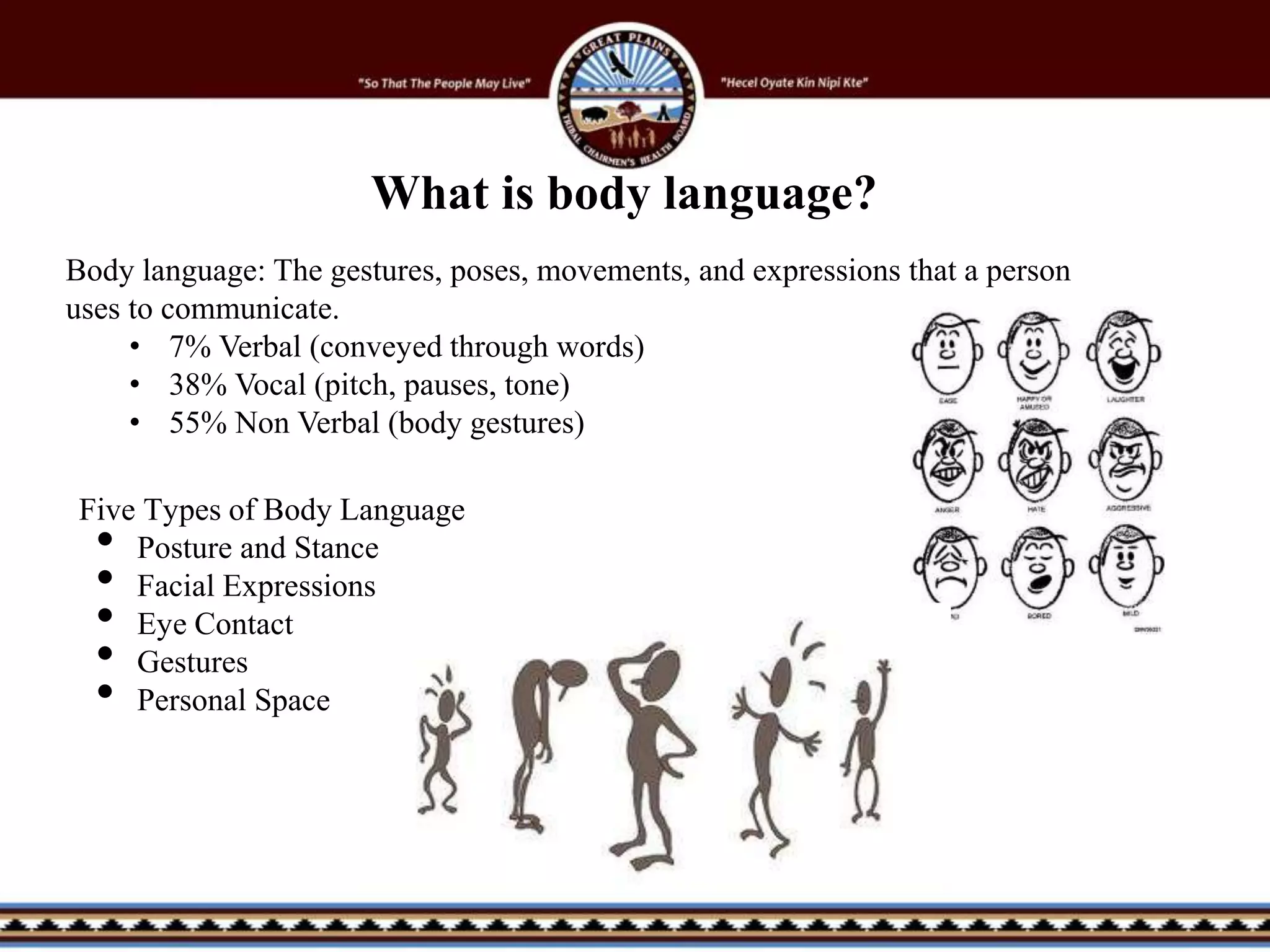
What is body language?
Five Types of Body Language
• Posture and Stance
• Facial Expressions
• Eye Contact
• Gestures
• Personal Space
Body language: The gestures, poses, movements, and expressions that a person
uses to communicate.
• 7% Verbal (conveyed through words)
• 38% Vocal (pitch, pauses, tone)
• 55% Non Verbal (body gestures)
Importance of Eye Contact
• No or limited eye contact – shows lack of interest, insincere
• Starring or intense eye contact – threatening or insulting
• Withdrawing eye contact – signals submission
• Stare or fixed gaze – suggests involvement
• Raised look – shows dominance
• Direct eye contact – honesty, transparency or neutral
Facial Expression
ANGER
HAPPINESSFEAR
INTEREST
ANNOYED
Gestures – Good or Bad
• Finger crossing – hopeful
• Shoulder shrug – unconcerned or don’t know
• Puffed chest – pride or power
• Thumbs up – good luck, good job
• Rubbing hands together – stress, anxiety
• Hair twirling – stressed, daydreaming
• Hands clenched together – confident
• Hands on hips – aggressive, authoritative
• Chin stroking – making a decision
• Clenched teeth – angry, upset, lying
• Chin on hand – boredom
• Finger on chin/lip - uncertain
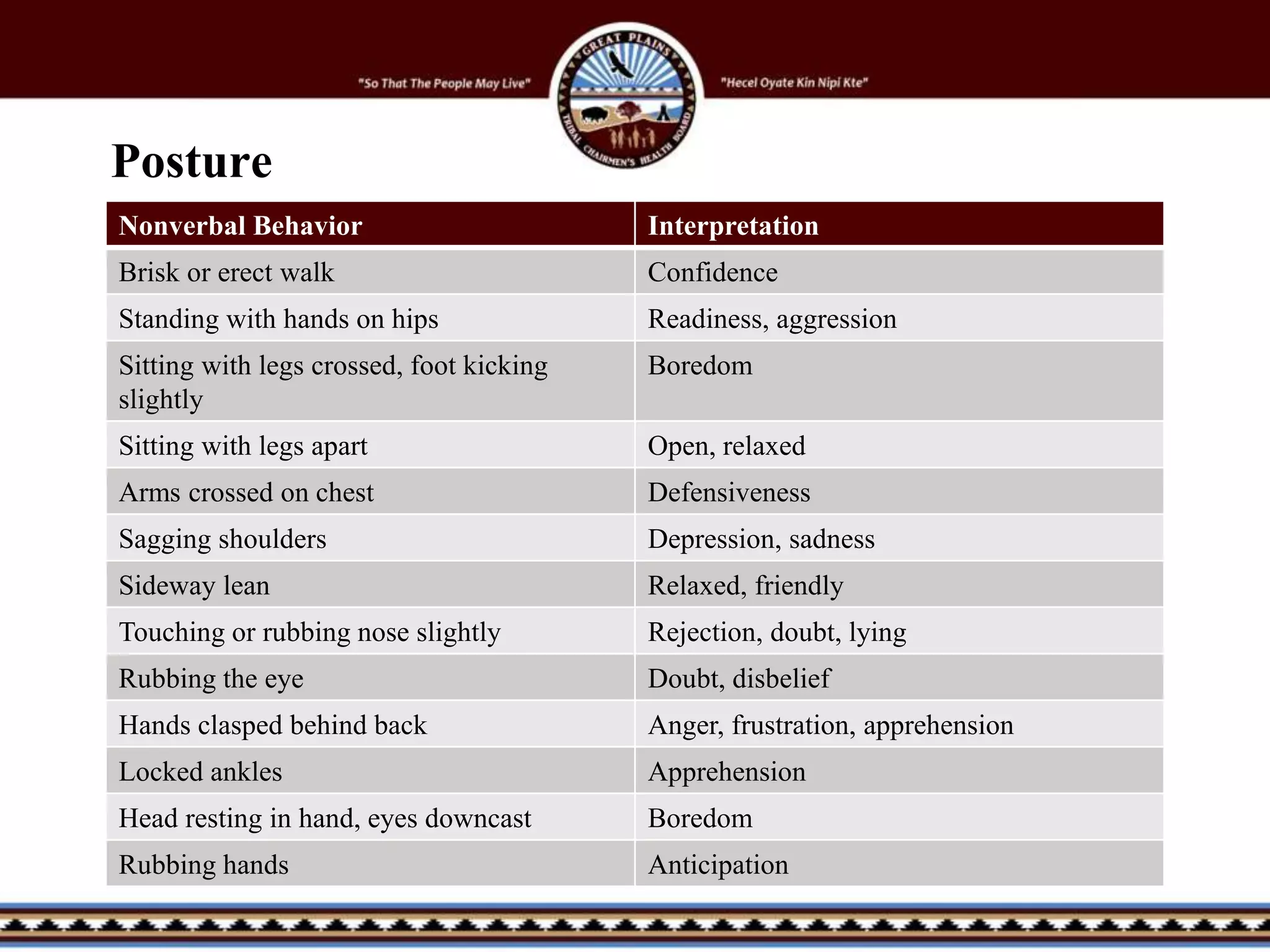
Posture
Nonverbal Behavior Interpretation
Brisk or erect walk Confidence
Standing with hands on hips Readiness, aggression
Sitting with legs crossed, foot kicking
slightly
Boredom
Sitting with legs apart Open, relaxed
Arms crossed on chest Defensiveness
Sagging shoulders Depression, sadness
Sideway lean Relaxed, friendly
Touching or rubbing nose slightly Rejection, doubt, lying
Rubbing the eye Doubt, disbelief
Hands clasped behind back Anger, frustration, apprehension
Locked ankles Apprehension
Head resting in hand, eyes downcast Boredom
Rubbing hands Anticipation
Importance of Space
Personal
• Close – 1 ½ - 2 ½ feet
• Far – 2 ½ - 4 ½ feet
Social
• Close – 4 – 7 feet
• Far – 7-12 feet
Public
• Close – 12-25 feet
• Far – 25 feet ore more
Have you ever heard someone say “you are in my space”? This is usually an
indication that you are within a distance that is making the person feel
uncomfortable. This can create discomfort, aggression and retaliation.
Tools for Effective Communication
• Be Positive
• Good Listener
• Clarify
• Clear Pronunciation
• Respectful
• Be Brief
Listening
What is listening?
• Listening is the absorption of the meanings of words and
sentences by the brain. Listening leads to understanding
ideas or facts being presented.
Stages of listening
• Hearing
• Focusing on the message not the person
• Comprehending and interpreting
• Analyzing and evaluating
• Responding
• Remembering
Techniques of active listening
• Paraphrase – restate what was said in your own words
• Summarize – pull together the main points of the speaker
• Question – challenge the speaker to think further or clarify
your understanding
Online Communication
Why do we love email or social media?
• Because it is easy to use
• Everyone has access to it
• We love to get mail
• It keeps us connected
Why do we dislike email or social media?
• Spam!
• No escape, email is always there
• Messages are misunderstood
• Inbox can become overloaded creating stress
• Not everything should be shared
Conclusion
• Give people the impression that you are enthusiastic about talking to them.
• Ask open-ended questions about their interests.
• Adapt to their body language and feelings. Be mindful of the space.
• Show approval: Engage in the conversation.
• Listen attentively to everything they say.
• Give them the right amount of eye contact.
• Express your thoughts in a positive tone that is clear and concise.
Effective Communication Skills

Effective Communication Skills

  • 1.
  • 2.
    Course Objectives • Defineand understand communication • Process of Communication • Overcome barriers in a communication process • Practice active listening • Tools for Effective Communication
  • 3.
    What is Communication? Communicationis the art of transmitting information, ideas and attitudes from one person to another. It is a process of meaningful interaction among human beings. Today, it is more then “Talk the Talk” you have to “Walk the Talk” •How to ensure you are not interrupted •How to create trust and rapport •How to deal with rude and aggressive people in a manner that is professional •How to trigger positive responses in others What is communication?
  • 4.
    What are themost common ways we communicate? Written Word
  • 5.
    Types of Communication Peoplecommunicate with each other in a variety of ways depending upon the message and the purpose. There are two types of communication used: Verbal Nonverbal Oral – spoken words • Face-to-face • Telephone • Internet Written – signs or symbols • Emails • Letters • Reports, memos Sending or receiving messages without words • Gestures • Body language • Posture • Expressions • Tone of voice
  • 6.
  • 7.
    Barriers to Communication •Physical • Perception • Emotional • Cultural • Language • Gender, Age • Interpersonal
  • 8.
    Hearing vs. Listening Hearing– Physical process, natural, passive Listening – Physical as well as mental process, active, learned process, a skill Listening is hard. You must choose to participate in the process of listening.
  • 9.
    Value of Listening Listening to others is important in building respect for one another.  Good listening reflects courtesy and good manners.  Listening carefully to the instructions of superiors improve competence and performance.  The result of poor listening skill could be disastrous in business, employment and social relations. Good listening skill can improve social relations and conversation. Listening is a positive activity rather than a passive or negative activity.
  • 10.
    Always think aheadabout what you are going to say. Use simple words and phrases that are understood by everyone. Speak clearly and audibly. In case of an interruption, always do a little recap of what has been already said. Always pay undivided attention to the speaker while listening. While listening, always make notes of important points. Always ask for clarification if you have failed to grasp the other person’s point of view. Repeat what the speaker has said to check whether you have understood accurately. Essentials of Communication ~ Do
  • 11.
    Essentials of Communication~ Don’ts Do not instantly react and say something out of anger. Do not use technical terms or acronyms that are not understood by the individuals you are speaking to. Do not speak too fast or too slow. Do not speak in an environment that is noisy and you won’t be heard. Do not assume that everyone understands you. While listening do not glance here and there as it might distract the speaker. Do not interrupt the speaker. Do not jump to the conclusion that you have understood every thing.
  • 12.
    How to ImproveCommunication? Improve Language Improve Pronunciation Work on voice volume Be aware of body language Read more Listen more Think and speak Do not speak too fast or too slow Use simple vocabulary Look presentable and confident
  • 13.
    What is bodylanguage? Five Types of Body Language • Posture and Stance • Facial Expressions • Eye Contact • Gestures • Personal Space Body language: The gestures, poses, movements, and expressions that a person uses to communicate. • 7% Verbal (conveyed through words) • 38% Vocal (pitch, pauses, tone) • 55% Non Verbal (body gestures)
  • 14.
    Importance of EyeContact • No or limited eye contact – shows lack of interest, insincere • Starring or intense eye contact – threatening or insulting • Withdrawing eye contact – signals submission • Stare or fixed gaze – suggests involvement • Raised look – shows dominance • Direct eye contact – honesty, transparency or neutral Facial Expression ANGER HAPPINESSFEAR INTEREST ANNOYED
  • 15.
    Gestures – Goodor Bad • Finger crossing – hopeful • Shoulder shrug – unconcerned or don’t know • Puffed chest – pride or power • Thumbs up – good luck, good job • Rubbing hands together – stress, anxiety • Hair twirling – stressed, daydreaming • Hands clenched together – confident • Hands on hips – aggressive, authoritative • Chin stroking – making a decision • Clenched teeth – angry, upset, lying • Chin on hand – boredom • Finger on chin/lip - uncertain
  • 16.
    Posture Nonverbal Behavior Interpretation Briskor erect walk Confidence Standing with hands on hips Readiness, aggression Sitting with legs crossed, foot kicking slightly Boredom Sitting with legs apart Open, relaxed Arms crossed on chest Defensiveness Sagging shoulders Depression, sadness Sideway lean Relaxed, friendly Touching or rubbing nose slightly Rejection, doubt, lying Rubbing the eye Doubt, disbelief Hands clasped behind back Anger, frustration, apprehension Locked ankles Apprehension Head resting in hand, eyes downcast Boredom Rubbing hands Anticipation
  • 17.
    Importance of Space Personal •Close – 1 ½ - 2 ½ feet • Far – 2 ½ - 4 ½ feet Social • Close – 4 – 7 feet • Far – 7-12 feet Public • Close – 12-25 feet • Far – 25 feet ore more Have you ever heard someone say “you are in my space”? This is usually an indication that you are within a distance that is making the person feel uncomfortable. This can create discomfort, aggression and retaliation.
  • 18.
    Tools for EffectiveCommunication • Be Positive • Good Listener • Clarify • Clear Pronunciation • Respectful • Be Brief
  • 19.
    Listening What is listening? •Listening is the absorption of the meanings of words and sentences by the brain. Listening leads to understanding ideas or facts being presented. Stages of listening • Hearing • Focusing on the message not the person • Comprehending and interpreting • Analyzing and evaluating • Responding • Remembering Techniques of active listening • Paraphrase – restate what was said in your own words • Summarize – pull together the main points of the speaker • Question – challenge the speaker to think further or clarify your understanding
  • 20.
    Online Communication Why dowe love email or social media? • Because it is easy to use • Everyone has access to it • We love to get mail • It keeps us connected Why do we dislike email or social media? • Spam! • No escape, email is always there • Messages are misunderstood • Inbox can become overloaded creating stress • Not everything should be shared
  • 21.
    Conclusion • Give peoplethe impression that you are enthusiastic about talking to them. • Ask open-ended questions about their interests. • Adapt to their body language and feelings. Be mindful of the space. • Show approval: Engage in the conversation. • Listen attentively to everything they say. • Give them the right amount of eye contact. • Express your thoughts in a positive tone that is clear and concise.