By Jack Garrity
 Chapter 8
 Pages 131-135
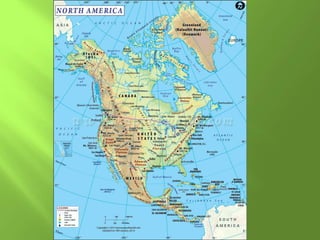
 The United States and Canada form a
geographic region of enormous physical
variety and natural wealth
 This wealth includes breathtaking landforms
shaped by the forces of water, wind and
geology over millions of years.
 These landforms, such as the rugged,
mountainous areas near Yellowstone National
Park, have attracted adventurers and inspired
writers for decades.
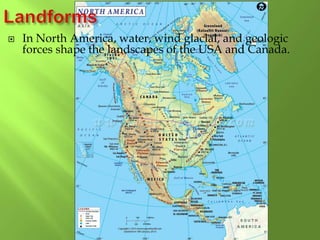
 In North America, water, wind glacial, and geologic
forces shape the landscapes of the USA and Canada.
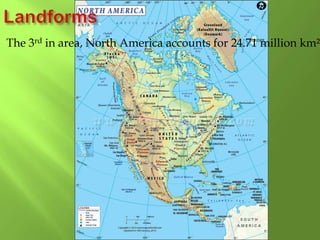
The 3rd in area, North America accounts for 24.71 million km².
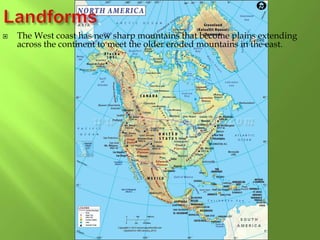
 The West coast has new sharp mountains that become plains extending
across the continent to meet the older eroded mountains in the east.
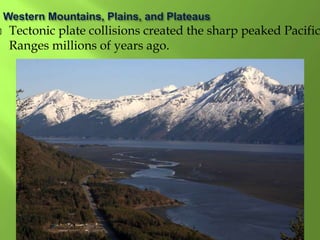
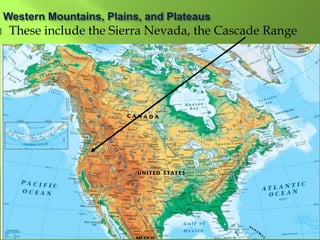
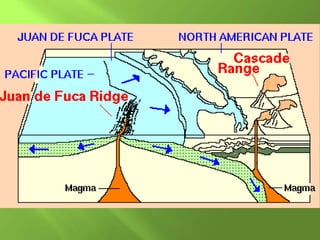
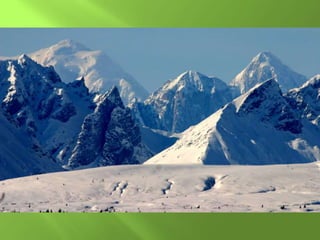
 Tectonic plate collisions created the sharp peaked Pacific
Ranges millions of years ago.
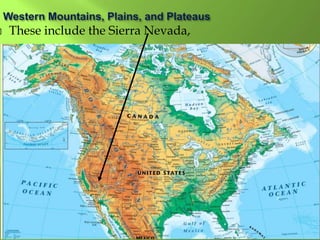
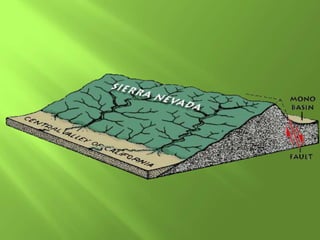
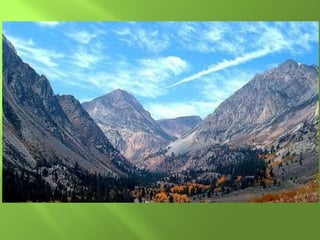
 These include the Sierra Nevada,
 These include the Sierra Nevada, the Cascade Range
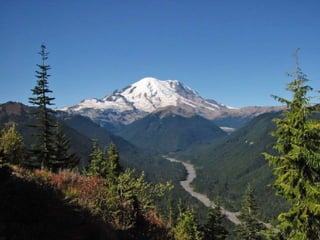
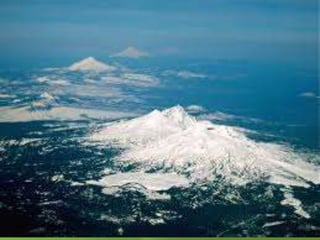
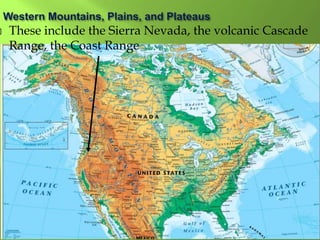
 These include the Sierra Nevada, the volcanic Cascade
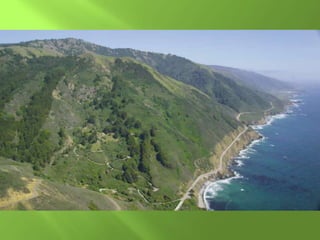
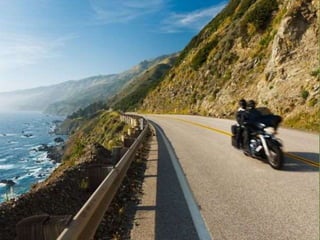
Range, the Coast Range
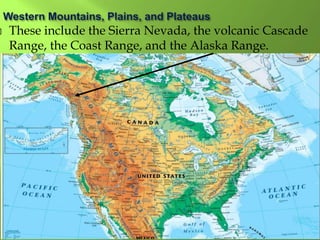
 These include the Sierra Nevada, the volcanic Cascade
Range, the Coast Range, and the Alaska Range.
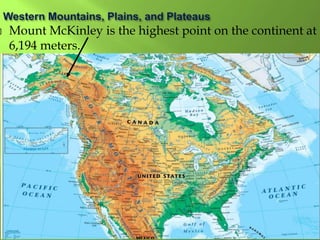
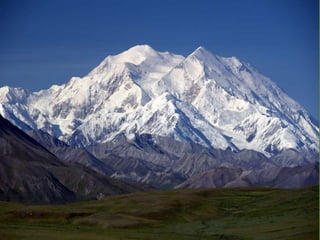
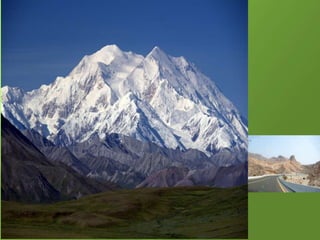
 Mount McKinley is the highest point on the continent at
6,194 meters.
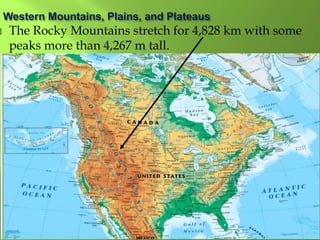
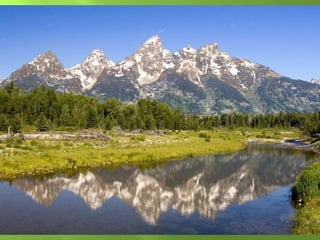
 The Rocky Mountains stretch for 4,828 km with some
peaks more than 4,267 m tall.
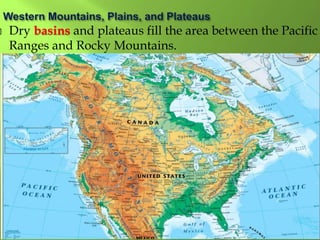
 Dry basins and plateaus fill the area between the Pacific
Ranges and Rocky Mountains.
 Basin
a hollow or depression in the earth's surface, wholly
or partly surrounded by higher land:
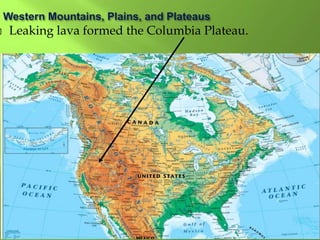
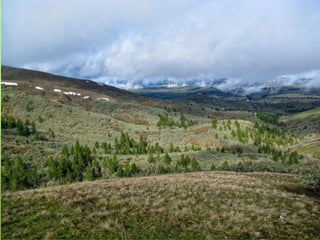
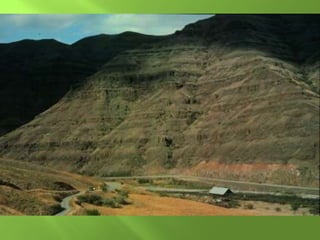
 Leaking lava formed the Columbia Plateau.
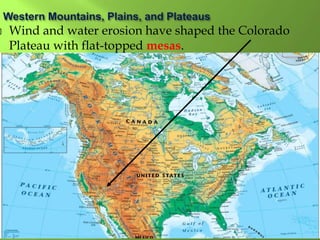
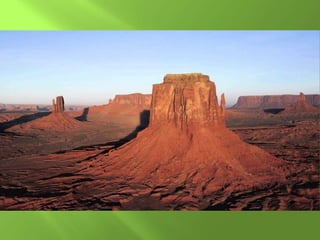
 Wind and water erosion have shaped the Colorado
Plateau with flat-topped mesas.
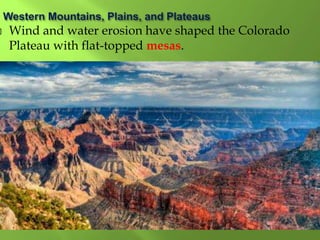
 Wind and water erosion have shaped the Colorado
Plateau with flat-topped mesas.
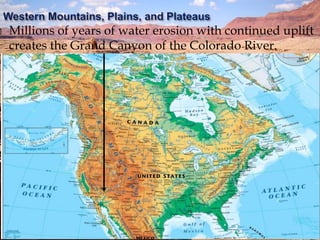
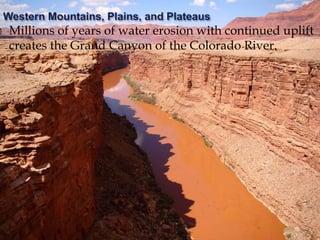
 Millions of years of water erosion with continued uplift
creates the Grand Canyon of the Colorado River.
 Millions of years of water erosion with continued uplift
creates the Grand Canyon of the Colorado River.
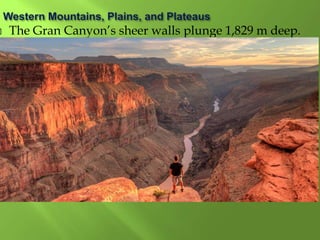
 The Gran Canyon’s sheer walls plunge 1,829 m deep.
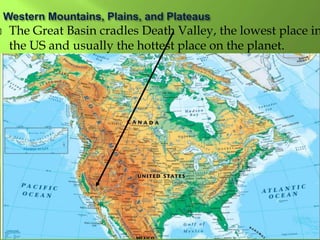
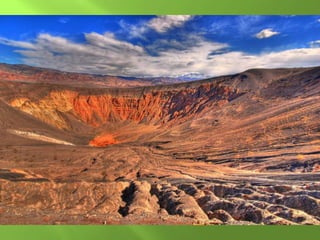
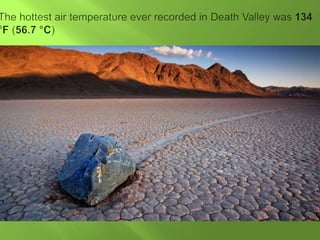
 The Great Basin cradles Death Valley, the lowest place in
the US and usually the hottest place on the planet.
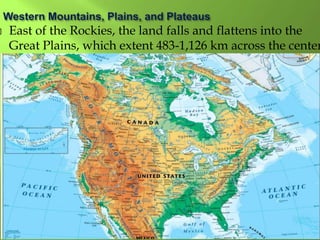
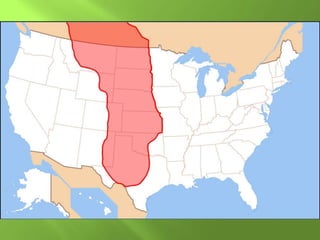
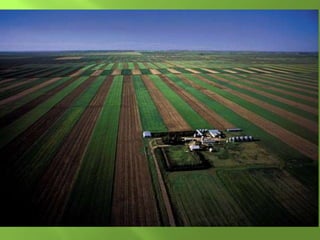
 East of the Rockies, the land falls and flattens into the
Great Plains, which extent 483-1,126 km across the center
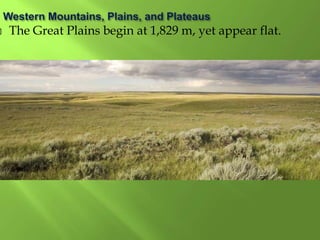
 The Great Plains begin at 1,829 m, yet appear flat.
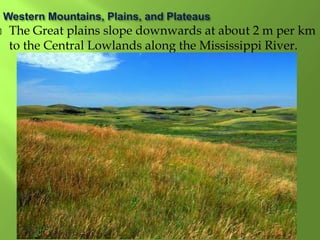
 The Great plains slope downwards at about 2 m per km
to the Central Lowlands along the Mississippi River.
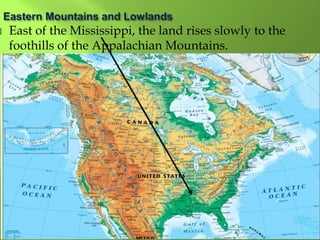
 East of the Mississippi, the land rises slowly to the
foothills of the Appalachian Mountains.
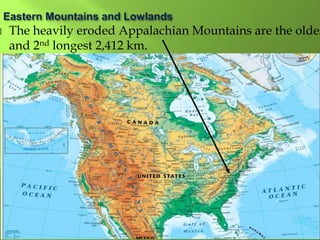
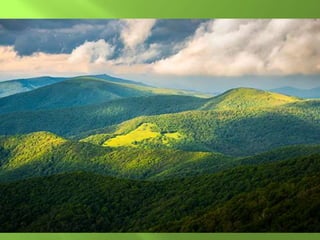
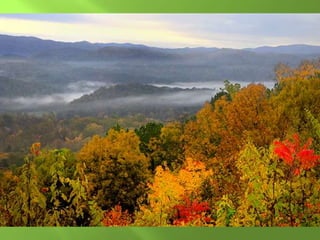
 The heavily eroded Appalachian Mountains are the oldes
and 2nd longest 2,412 km.
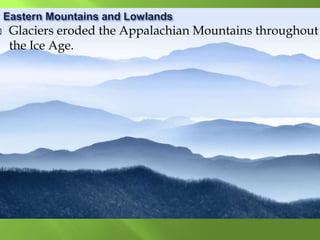
 Glaciers eroded the Appalachian Mountains throughout
the Ice Age.
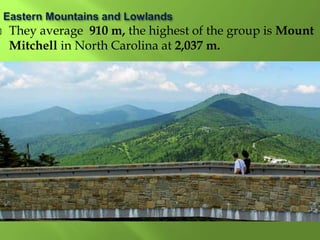
 They average 910 m, the highest of the group is Mount
Mitchell in North Carolina at 2,037 m.
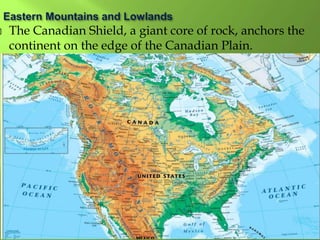
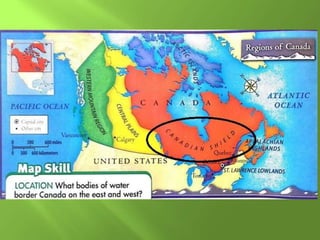
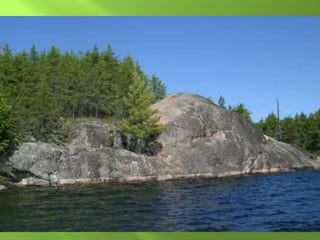
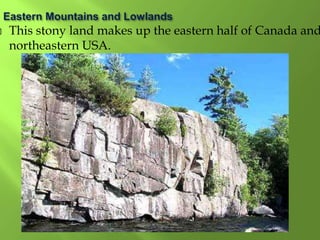
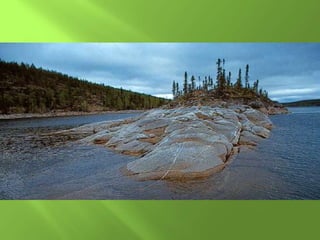
 The Canadian Shield, a giant core of rock, anchors the
continent on the edge of the Canadian Plain.
 This stony land makes up the eastern half of Canada and
northeastern USA.
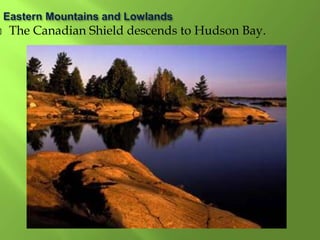
 The Canadian Shield descends to Hudson Bay.
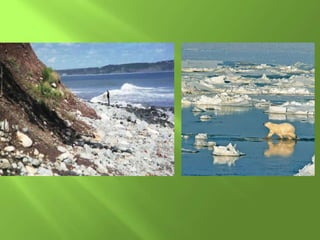
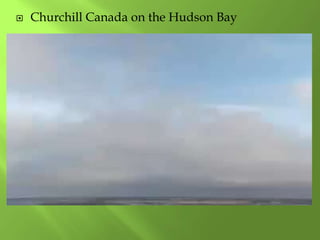
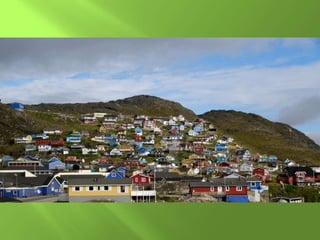
 Churchill Canada on the Hudson Bay
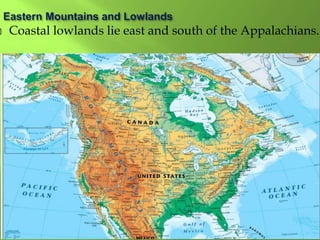
 Coastal lowlands lie east and south of the Appalachians.
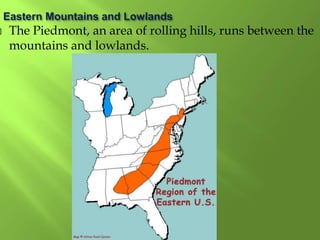
 The Piedmont, an area of rolling hills, runs between the
mountains and lowlands.
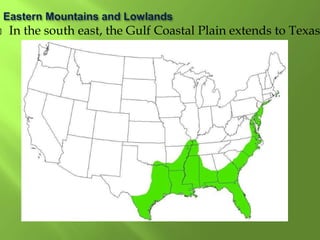
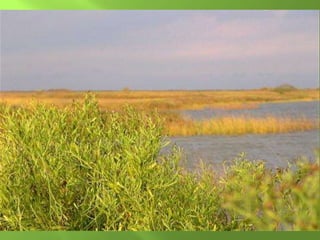
 In the south east, the Gulf Coastal Plain extends to Texas
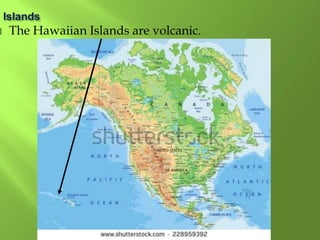
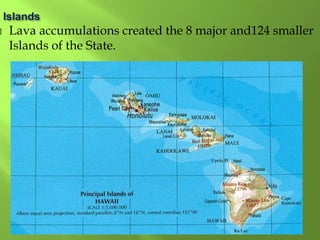
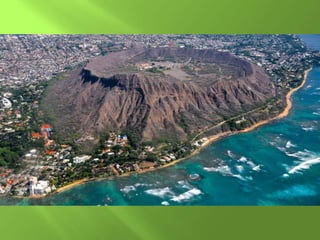
 The Hawaiian Islands are volcanic.
 Lava accumulations created the 8 major and124 smaller
Islands of the State.
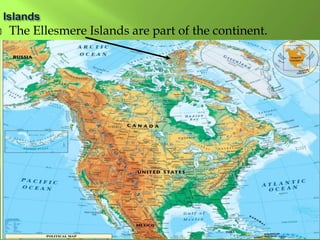
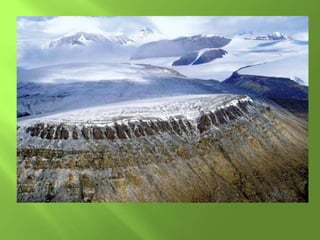
 The Ellesmere Islands are part of the continent.
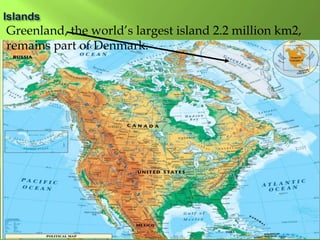
Greenland, the world’s largest island 2.2 million km2,
remains part of Denmark.
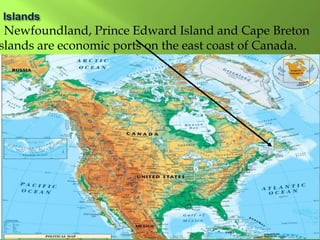
Newfoundland, Prince Edward Island and Cape Breton
slands are economic ports on the east coast of Canada.
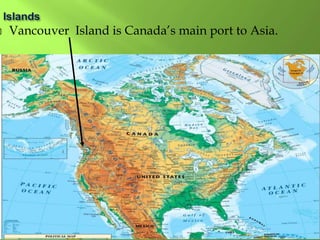
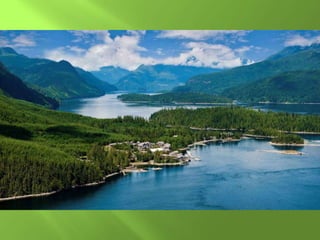
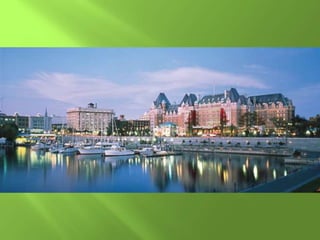
 Vancouver Island is Canada’s main port to Asia.
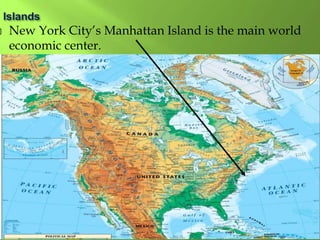
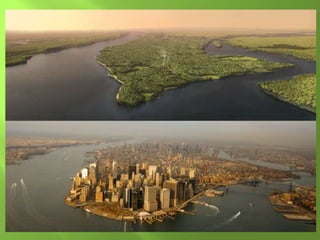
 New York City’s Manhattan Island is the main world
economic center.
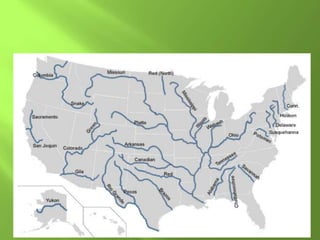
 Lakes and rivers in North America continue to be
important to economic development. Major rivers, the
super highways of the past, connected the cities of the
continent.
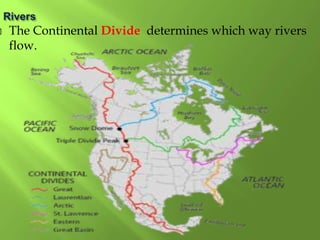
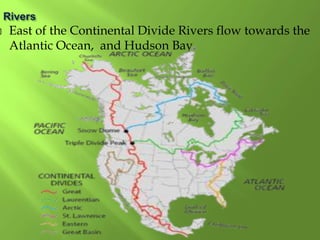
 The Continental Divide determines which way rivers
flow.
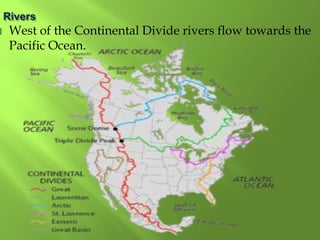
 West of the Continental Divide rivers flow towards the
Pacific Ocean.
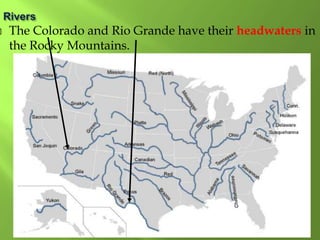
 The Colorado and Rio Grande have their headwaters in
the Rocky Mountains.
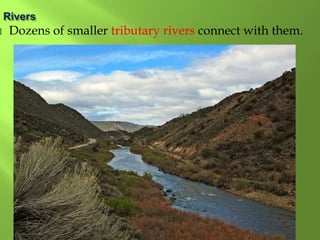
 Dozens of smaller tributary rivers connect with them.
 A tributary is a stream or river that flows into a
larger stream or main stem (or parent) river or
a lake. A tributary does not flow directly into a
sea or ocean
 East of the Continental Divide Rivers flow towards the
Atlantic Ocean, and Hudson Bay.
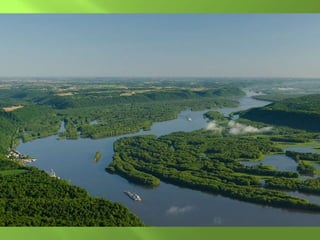
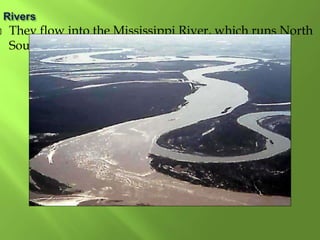
 They flow into the Mississippi River, which runs North
South.
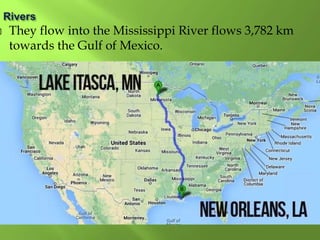
 They flow into the Mississippi River flows 3,782 km
towards the Gulf of Mexico.
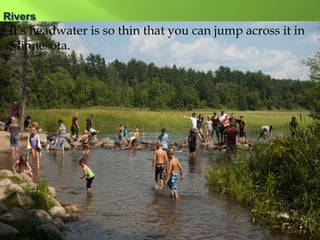
 It’s headwater is so thin that you can jump across it in
Minnesota.
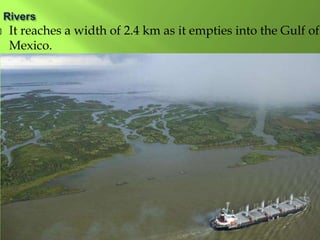
 It reaches a width of 2.4 km as it empties into the Gulf of
Mexico.
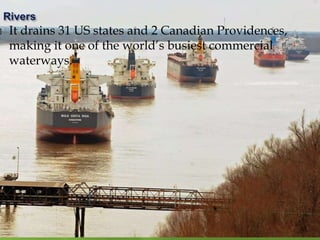
 It drains 31 US states and 2 Canadian Providences,
making it one of the world’s busiest commercial
waterways.
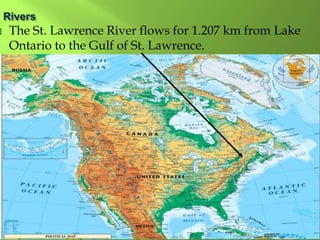
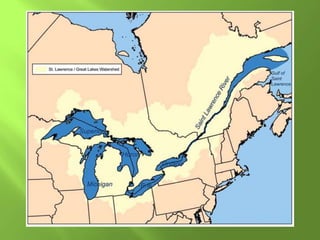
 The St. Lawrence River flows for 1.207 km from Lake
Ontario to the Gulf of St. Lawrence.
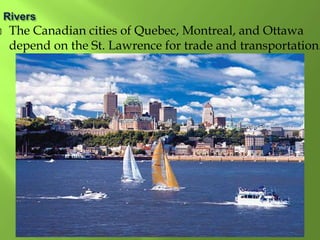
 The Canadian cities of Quebec, Montreal, and Ottawa
depend on the St. Lawrence for trade and transportation.
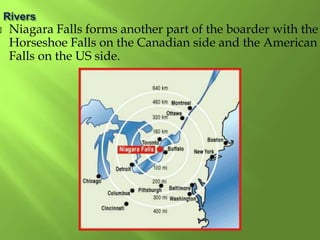
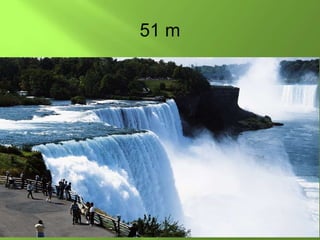
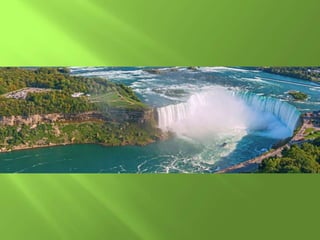
 Niagara Falls forms another part of the boarder with the
Horseshoe Falls on the Canadian side and the American
Falls on the US side.
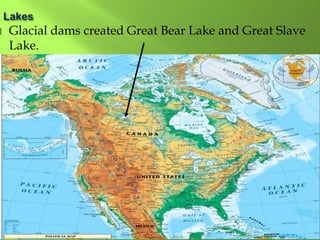
 Glacial dams created Great Bear Lake and Great Slave
Lake.
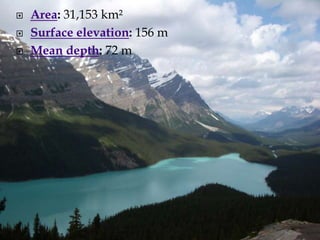
 Area: 31,153 km²
 Surface elevation: 156 m
 Mean depth: 72 m
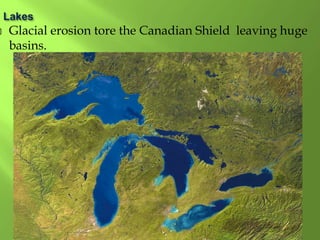
 Glacial erosion tore the Canadian Shield leaving huge
basins.
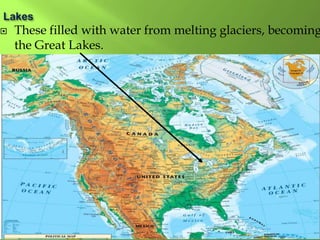
 These filled with water from melting glaciers, becoming
the Great Lakes.
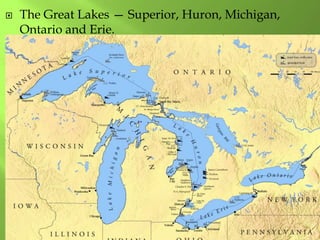
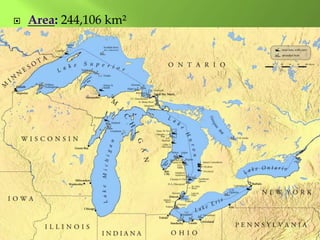
 The Great Lakes — Superior, Huron, Michigan,
Ontario and Erie.
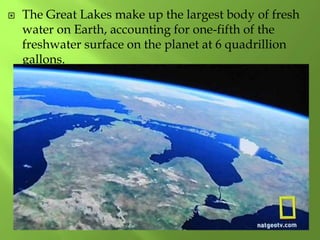
 The Great Lakes make up the largest body of fresh
water on Earth, accounting for one-fifth of the
freshwater surface on the planet at 6 quadrillion
gallons.
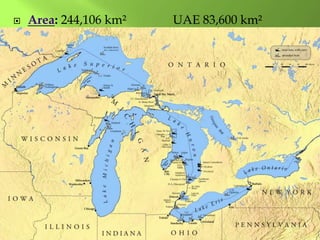
 Area: 244,106 km²
 Area: 244,106 km² UAE 83,600 km²
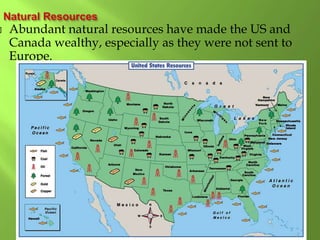
 Abundant natural resources have made the US and
Canada wealthy, especially as they were not sent to
Europe.
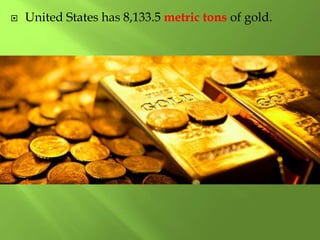
 United States has 8,133.5 metric tons of gold.
 metric ton
 noun
 a unit of weight equal to 1,000 kilograms (2,205
lb).
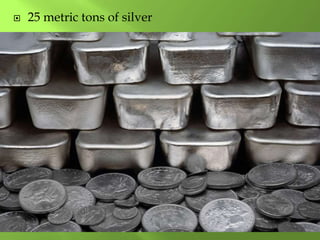
 25 metric tons of silver
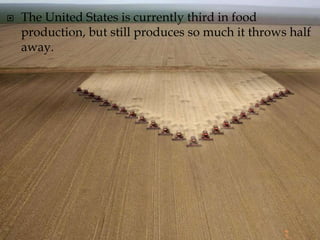
 The United States is currently third in food
production, but still produces so much it throws half
away.
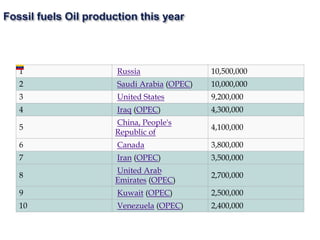
1 Russia 10,500,000
2 Saudi Arabia (OPEC) 10,000,000
3 United States 9,200,000
4 Iraq (OPEC) 4,300,000
5
China, People's
Republic of
4,100,000
6 Canada 3,800,000
7 Iran (OPEC) 3,500,000
8
United Arab
Emirates (OPEC)
2,700,000
9 Kuwait (OPEC) 2,500,000
10 Venezuela (OPEC) 2,400,000
World[8] 75,212,696
1 United States 18,561,930
— European Union[n 1][8] 16,518,723
2 China[n 2] 11,391,619
3 Japan 4,730,300
4 Germany 3,494,900
5 United Kingdom 2,649,890
6 France 2,488,280
7 India 2,250,990
8 Italy 1,852,500
9 Brazil 1,769,600
10 Canada 1,532,340
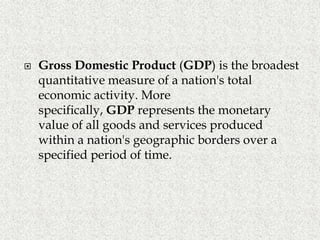
 Gross Domestic Product (GDP) is the broadest
quantitative measure of a nation's total
economic activity. More
specifically, GDP represents the monetary
value of all goods and services produced
within a nation's geographic borders over a
specified period of time.
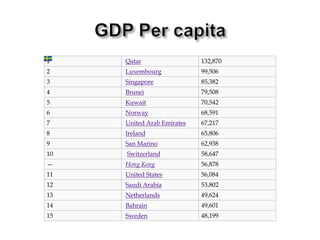
1 Qatar 132,870
2 Luxembourg 99,506
3 Singapore 85,382
4 Brunei 79,508
5 Kuwait 70,542
6 Norway 68,591
7 United Arab Emirates 67,217
8 Ireland 65,806
9 San Marino 62,938
10 Switzerland 58,647
— Hong Kong 56,878
11 United States 56,084
12 Saudi Arabia 53,802
13 Netherlands 49,624
14 Bahrain 49,601
15 Sweden 48,199
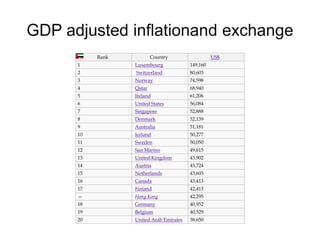
Rank Country US$
1 Luxembourg 149,160
2 Switzerland 80,603
3 Norway 74,598
4 Qatar 68,940
5 Ireland 61,206
6 United States 56,084
7 Singapore 52,888
8 Denmark 52,139
9 Australia 51,181
10 Iceland 50,277
11 Sweden 50,050
12 San Marino 49,615
13 United Kingdom 43,902
14 Austria 43,724
15 Netherlands 43,603
16 Canada 43,413
17 Finland 42,413
— Hong Kong 42,295
18 Germany 40,952
19 Belgium 40,529
20 United Arab Emirates 38,650
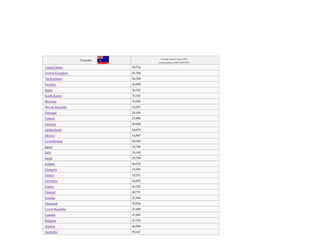
Country Average annual wages, 2015
constant prices at 2015 USD PPPs
United States 58,714
United Kingdom 41,384
Switzerland 58,389
Sweden 40,909
Spain 36,325
South Korea 33,110
Slovenia 33,085
Slovak Republic 22,031
Portugal 24,105
Poland 23,998
Norway 50,908
Netherlands 50,670
Mexico 14,867
Luxembourg 60,369
Japan 35,780
Italy 34,140
Israel 29,794
Ireland 46,074
Hungary 19,999
Greece 25,211
Germany 44,925
France 41,252
Finland 40,731
Estonia 21,564
Denmark 50,024
Czech Republic 21,689
Canada 47,843
Belgium 47,702
Austria 46,084
Australia 50,167
 Next time, Cultural Latin America
 end

Geography North America

  • 1.
  • 4.
     Chapter 8 Pages 131-135
  • 5.
     The UnitedStates and Canada form a geographic region of enormous physical variety and natural wealth  This wealth includes breathtaking landforms shaped by the forces of water, wind and geology over millions of years.  These landforms, such as the rugged, mountainous areas near Yellowstone National Park, have attracted adventurers and inspired writers for decades.
  • 6.
     In NorthAmerica, water, wind glacial, and geologic forces shape the landscapes of the USA and Canada.
  • 7.
    The 3rd inarea, North America accounts for 24.71 million km².
  • 8.
     The Westcoast has new sharp mountains that become plains extending across the continent to meet the older eroded mountains in the east.
  • 9.
     Tectonic platecollisions created the sharp peaked Pacific Ranges millions of years ago.
  • 10.
     These includethe Sierra Nevada,
  • 13.
     These includethe Sierra Nevada, the Cascade Range
  • 18.
     These includethe Sierra Nevada, the volcanic Cascade Range, the Coast Range
  • 21.
     These includethe Sierra Nevada, the volcanic Cascade Range, the Coast Range, and the Alaska Range.
  • 23.
     Mount McKinleyis the highest point on the continent at 6,194 meters.
  • 26.
     The RockyMountains stretch for 4,828 km with some peaks more than 4,267 m tall.
  • 30.
     Dry basinsand plateaus fill the area between the Pacific Ranges and Rocky Mountains.
  • 31.
     Basin a hollowor depression in the earth's surface, wholly or partly surrounded by higher land:
  • 32.
     Leaking lavaformed the Columbia Plateau.
  • 36.
     Wind andwater erosion have shaped the Colorado Plateau with flat-topped mesas.
  • 37.
     Wind andwater erosion have shaped the Colorado Plateau with flat-topped mesas.
  • 39.
     Millions ofyears of water erosion with continued uplift creates the Grand Canyon of the Colorado River.
  • 40.
     Millions ofyears of water erosion with continued uplift creates the Grand Canyon of the Colorado River.
  • 41.
     The GranCanyon’s sheer walls plunge 1,829 m deep.
  • 43.
     The GreatBasin cradles Death Valley, the lowest place in the US and usually the hottest place on the planet.
  • 46.
     East ofthe Rockies, the land falls and flattens into the Great Plains, which extent 483-1,126 km across the center
  • 48.
     The GreatPlains begin at 1,829 m, yet appear flat.
  • 51.
     The Greatplains slope downwards at about 2 m per km to the Central Lowlands along the Mississippi River.
  • 53.
     East ofthe Mississippi, the land rises slowly to the foothills of the Appalachian Mountains.
  • 54.
     The heavilyeroded Appalachian Mountains are the oldes and 2nd longest 2,412 km.
  • 56.
     Glaciers erodedthe Appalachian Mountains throughout the Ice Age.
  • 57.
     They average910 m, the highest of the group is Mount Mitchell in North Carolina at 2,037 m.
  • 59.
     The CanadianShield, a giant core of rock, anchors the continent on the edge of the Canadian Plain.
  • 62.
     This stonyland makes up the eastern half of Canada and northeastern USA.
  • 64.
     The CanadianShield descends to Hudson Bay.
  • 66.
     Churchill Canadaon the Hudson Bay
  • 67.
     Coastal lowlandslie east and south of the Appalachians.
  • 72.
     The Piedmont,an area of rolling hills, runs between the mountains and lowlands.
  • 74.
     In thesouth east, the Gulf Coastal Plain extends to Texas
  • 77.
     The HawaiianIslands are volcanic.
  • 78.
     Lava accumulationscreated the 8 major and124 smaller Islands of the State.
  • 80.
     The EllesmereIslands are part of the continent.
  • 83.
    Greenland, the world’slargest island 2.2 million km2, remains part of Denmark.
  • 89.
    Newfoundland, Prince EdwardIsland and Cape Breton slands are economic ports on the east coast of Canada.
  • 90.
     Vancouver Islandis Canada’s main port to Asia.
  • 93.
     New YorkCity’s Manhattan Island is the main world economic center.
  • 95.
     Lakes andrivers in North America continue to be important to economic development. Major rivers, the super highways of the past, connected the cities of the continent.
  • 96.
     The ContinentalDivide determines which way rivers flow.
  • 97.
     West ofthe Continental Divide rivers flow towards the Pacific Ocean.
  • 98.
     The Coloradoand Rio Grande have their headwaters in the Rocky Mountains.
  • 99.
     Dozens ofsmaller tributary rivers connect with them.
  • 100.
     A tributaryis a stream or river that flows into a larger stream or main stem (or parent) river or a lake. A tributary does not flow directly into a sea or ocean
  • 101.
     East ofthe Continental Divide Rivers flow towards the Atlantic Ocean, and Hudson Bay.
  • 103.
     They flowinto the Mississippi River, which runs North South.
  • 104.
     They flowinto the Mississippi River flows 3,782 km towards the Gulf of Mexico.
  • 105.
     It’s headwateris so thin that you can jump across it in Minnesota.
  • 106.
     It reachesa width of 2.4 km as it empties into the Gulf of Mexico.
  • 107.
     It drains31 US states and 2 Canadian Providences, making it one of the world’s busiest commercial waterways.
  • 108.
     The St.Lawrence River flows for 1.207 km from Lake Ontario to the Gulf of St. Lawrence.
  • 111.
     The Canadiancities of Quebec, Montreal, and Ottawa depend on the St. Lawrence for trade and transportation.
  • 112.
     Niagara Fallsforms another part of the boarder with the Horseshoe Falls on the Canadian side and the American Falls on the US side.
  • 116.
     Glacial damscreated Great Bear Lake and Great Slave Lake.
  • 117.
     Area: 31,153km²  Surface elevation: 156 m  Mean depth: 72 m
  • 119.
     Glacial erosiontore the Canadian Shield leaving huge basins.
  • 120.
     These filledwith water from melting glaciers, becoming the Great Lakes.
  • 121.
     The GreatLakes — Superior, Huron, Michigan, Ontario and Erie.
  • 122.
     The GreatLakes make up the largest body of fresh water on Earth, accounting for one-fifth of the freshwater surface on the planet at 6 quadrillion gallons.
  • 123.
  • 124.
     Area: 244,106km² UAE 83,600 km²
  • 126.
     Abundant naturalresources have made the US and Canada wealthy, especially as they were not sent to Europe.
  • 127.
     United Stateshas 8,133.5 metric tons of gold.
  • 128.
     metric ton noun  a unit of weight equal to 1,000 kilograms (2,205 lb).
  • 129.
     25 metrictons of silver
  • 130.
     The UnitedStates is currently third in food production, but still produces so much it throws half away.
  • 131.
    1 Russia 10,500,000 2Saudi Arabia (OPEC) 10,000,000 3 United States 9,200,000 4 Iraq (OPEC) 4,300,000 5 China, People's Republic of 4,100,000 6 Canada 3,800,000 7 Iran (OPEC) 3,500,000 8 United Arab Emirates (OPEC) 2,700,000 9 Kuwait (OPEC) 2,500,000 10 Venezuela (OPEC) 2,400,000
  • 132.
    World[8] 75,212,696 1 UnitedStates 18,561,930 — European Union[n 1][8] 16,518,723 2 China[n 2] 11,391,619 3 Japan 4,730,300 4 Germany 3,494,900 5 United Kingdom 2,649,890 6 France 2,488,280 7 India 2,250,990 8 Italy 1,852,500 9 Brazil 1,769,600 10 Canada 1,532,340
  • 133.
     Gross DomesticProduct (GDP) is the broadest quantitative measure of a nation's total economic activity. More specifically, GDP represents the monetary value of all goods and services produced within a nation's geographic borders over a specified period of time.
  • 134.
    1 Qatar 132,870 2Luxembourg 99,506 3 Singapore 85,382 4 Brunei 79,508 5 Kuwait 70,542 6 Norway 68,591 7 United Arab Emirates 67,217 8 Ireland 65,806 9 San Marino 62,938 10 Switzerland 58,647 — Hong Kong 56,878 11 United States 56,084 12 Saudi Arabia 53,802 13 Netherlands 49,624 14 Bahrain 49,601 15 Sweden 48,199
  • 135.
    Rank Country US$ 1Luxembourg 149,160 2 Switzerland 80,603 3 Norway 74,598 4 Qatar 68,940 5 Ireland 61,206 6 United States 56,084 7 Singapore 52,888 8 Denmark 52,139 9 Australia 51,181 10 Iceland 50,277 11 Sweden 50,050 12 San Marino 49,615 13 United Kingdom 43,902 14 Austria 43,724 15 Netherlands 43,603 16 Canada 43,413 17 Finland 42,413 — Hong Kong 42,295 18 Germany 40,952 19 Belgium 40,529 20 United Arab Emirates 38,650
  • 136.
    Country Average annualwages, 2015 constant prices at 2015 USD PPPs United States 58,714 United Kingdom 41,384 Switzerland 58,389 Sweden 40,909 Spain 36,325 South Korea 33,110 Slovenia 33,085 Slovak Republic 22,031 Portugal 24,105 Poland 23,998 Norway 50,908 Netherlands 50,670 Mexico 14,867 Luxembourg 60,369 Japan 35,780 Italy 34,140 Israel 29,794 Ireland 46,074 Hungary 19,999 Greece 25,211 Germany 44,925 France 41,252 Finland 40,731 Estonia 21,564 Denmark 50,024 Czech Republic 21,689 Canada 47,843 Belgium 47,702 Austria 46,084 Australia 50,167
  • 137.
     Next time,Cultural Latin America
  • 138.