South American Geography Supplement to National Geographic video
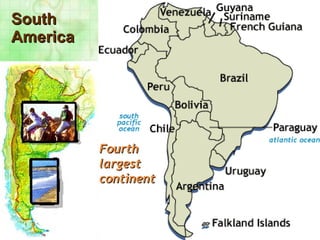
South America Fourth largest continent
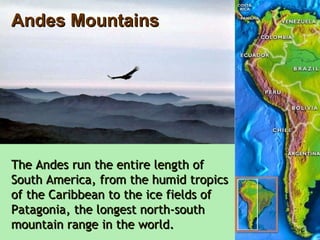
Andes Mountains The Andes run the entire length of South America, from the humid tropics of the Caribbean to the ice fields of Patagonia, the longest north-south mountain range in the world.
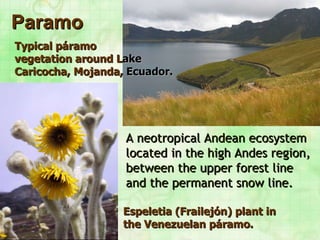
Paramo A neotropical Andean ecosystem located in the high Andes region, between the upper forest line and the permanent snow line.   Typical páramo   vegetation around   L ake   Caricocha, Mojanda,   Ecuador.   Espeletia (Frailejón) plant in the Venezuelan páramo.
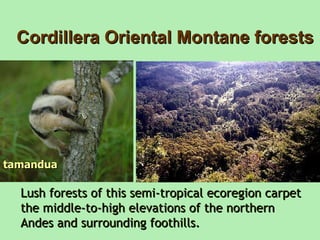
Cordillera Oriental Montane forests tamandua Lush forests of this semi-tropical ecoregion carpet the middle-to-high elevations of the northern Andes and surrounding foothills.
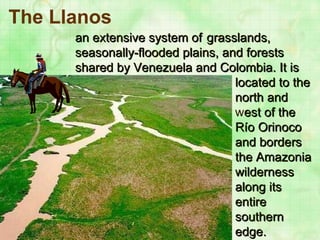
The Llanos   an extensive system of  grasslands,  seasonally-flooded plains, and forests  shared by   Venezuela and Colombia. It is  located to   the   north   and   w est of the  Río Orinoco  and borders  the Amazonia   wilderness    along its    entire  southern  edge.
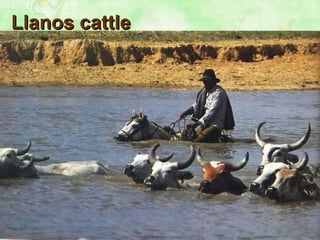
Llanos cattle
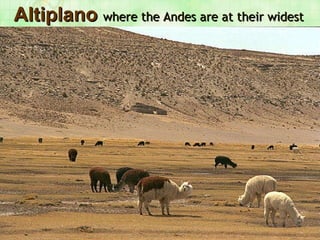
Altiplano  where the Andes are at their widest
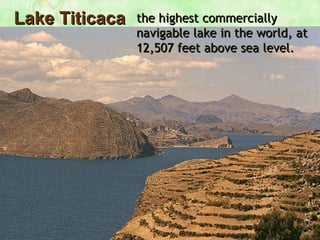
Lake Titicaca the highest commercially navigable lake in the world, at 12,507 feet above sea level.
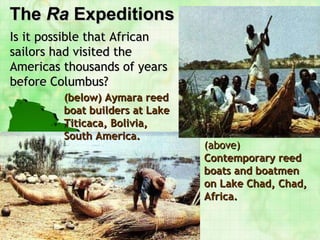
The  Ra  Expeditions (above)  Contemporary reed boats and boatmen on Lake Chad, Chad, Africa. (below) Aymara reed boat builders at Lake Titicaca, Bolivia, South America. Is it possible that African sailors had visited the Americas thousands of years before Columbus?
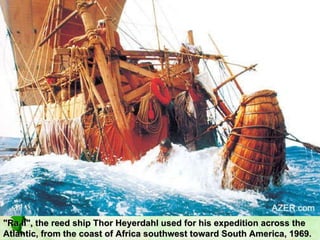
"Ra II", the reed ship Thor Heyerdahl used for his expedition across the Atlantic, from the coast of Africa southwest toward South America, 1969.
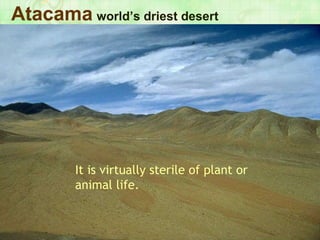
Atacama   world’s driest desert It is virtually sterile of plant or animal life.
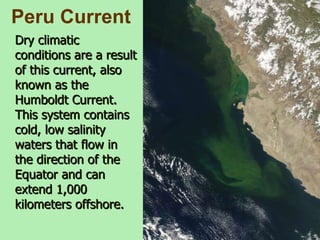
Peru Current Dry climatic conditions are a result of this current, also known as the Humboldt Current. This system contains cold, low salinity waters that flow in the direction of the Equator and can extend 1,000 kilometers offshore.
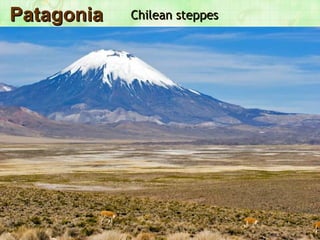
Patagonia   Chilean steppes
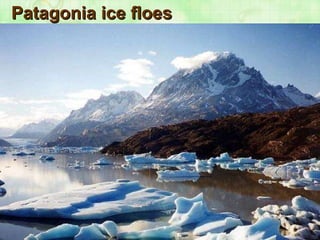
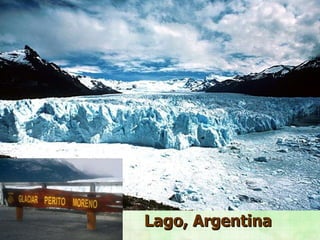
Patagonia ice floes
Lago, Argentina
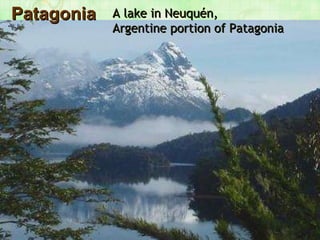
Patagonia A lake in Neuquén,  Argentine portion of Patagonia
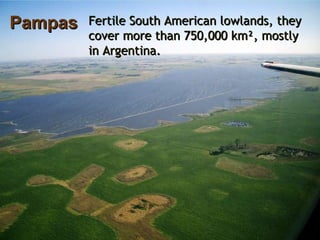
Pampas Fertile South American lowlands, they cover more than 750,000 km², mostly in Argentina.
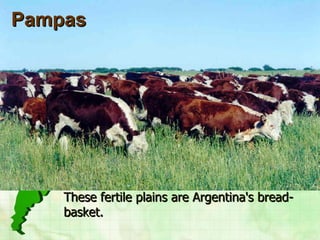
Pampas These fertile plains are Argentina's bread-basket.
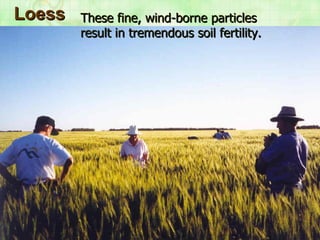
Loess These fine, wind-borne particles result in tremendous soil fertility.
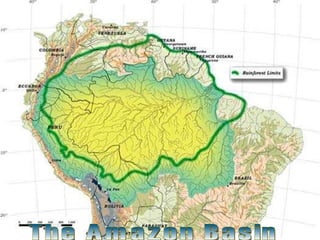
The Amazon Basin
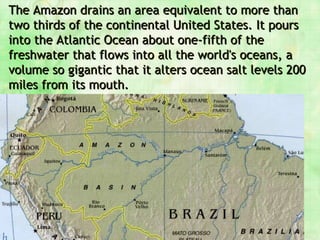
North Brazil The Amazon drains an area equivalent to more than two thirds of the continental United States. It pours into the Atlantic Ocean about one-fifth of the freshwater that flows into all the world's oceans, a volume so gigantic that it alters ocean salt levels 200 miles from its mouth.
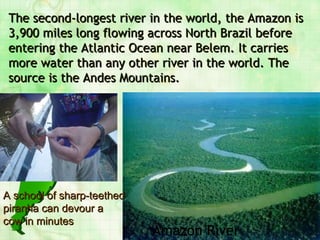
Amazon River The second-longest river in the world, the Amazon is 3,900 miles long flowing across North Brazil before entering the Atlantic Ocean near Belem. It carries more water than any other river in the world. The source is the Andes Mountains.   A school of sharp-teethed piranha can devour a cow in minutes
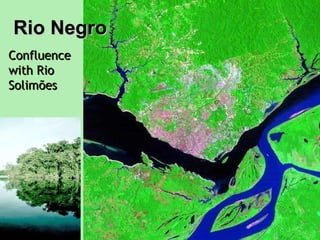
Rio Negro Confluence with Rio Solimões
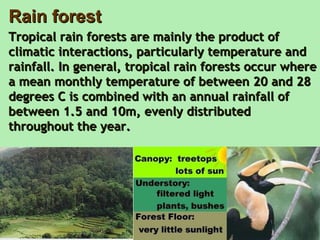
Rain forest Tropical rain forests are mainly the product of climatic interactions, particularly temperature and rainfall. In general, tropical rain forests occur where a mean monthly temperature of between 20 and 28 degrees C is combined with an annual rainfall of between 1.5 and 10m, evenly distributed throughout the year.
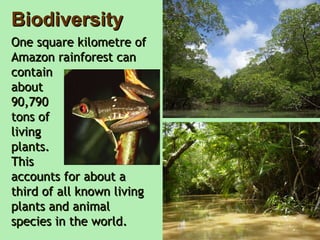
Biodiversity One square kilometre of Amazon rainforest can contain  about  90,790  tons of  living  plants.  This  accounts for about a third of all known living plants and animal species in the world.
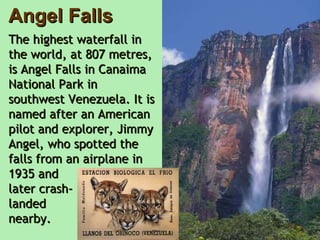
Angel Falls The highest waterfall in the world, at 807 metres, is Angel Falls in Canaima National Park in southwest Venezuela. It is named after an American pilot and explorer, Jimmy Angel, who spotted the falls from an airplane in 1935 and  later crash- landed  nearby.  
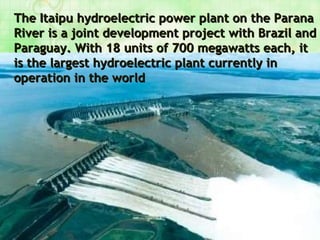
The Itaipu hydroelectric power plant on the Parana River is a joint development project with Brazil and Paraguay. With 18 units of 700 megawatts each, it is the largest hydroelectric plant currently in operation in the world
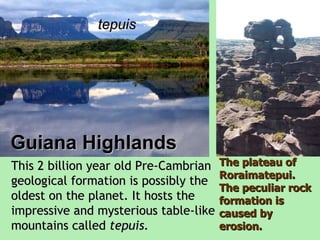
tepuis The plateau of Roraimatepui. The peculiar rock formation is caused by erosion.   This 2 billion year old Pre-Cambrian geological formation is possibly the oldest on the planet. It hosts the impressive and mysterious table-like mountains called  tepuis.   Guiana Highlands
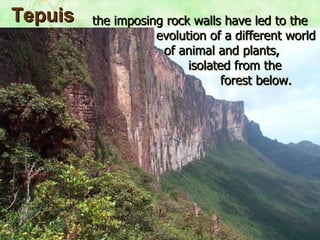
Tepuis the imposing rock walls have led to the  evolution of a different world    of animal and plants,  isolated from the  forest below.
Links http://www.htwm.de/abora/csslv/kontakt-h/thumbnails/heyerdahl-port.jpg http://www.southamericanexperience.co.uk/guyana/guyana_rainforestandfalls.html http://www.blueplanetbiomes.org/pampas.htm http://news.yahoo.com/photo/061211/photos_lf/2006_12_11t111655_450x300_us_cities_brazil http://www.srl.caltech.edu/personnel/krubal/rainforest/Edit560s6/www/where.html   http://www.rain-tree.com/facts.htm

South america physical

  • 1.
    South American GeographySupplement to National Geographic video
  • 2.
    South America Fourthlargest continent
  • 3.
    Andes Mountains TheAndes run the entire length of South America, from the humid tropics of the Caribbean to the ice fields of Patagonia, the longest north-south mountain range in the world.
  • 4.
    Paramo A neotropicalAndean ecosystem located in the high Andes region, between the upper forest line and the permanent snow line. Typical páramo vegetation around L ake Caricocha, Mojanda, Ecuador. Espeletia (Frailejón) plant in the Venezuelan páramo.
  • 5.
    Cordillera Oriental Montaneforests tamandua Lush forests of this semi-tropical ecoregion carpet the middle-to-high elevations of the northern Andes and surrounding foothills.
  • 6.
    The Llanos an extensive system of grasslands, seasonally-flooded plains, and forests shared by Venezuela and Colombia. It is located to the north and w est of the Río Orinoco and borders the Amazonia wilderness along its entire southern edge.
  • 7.
  • 8.
    Altiplano wherethe Andes are at their widest
  • 9.
    Lake Titicaca thehighest commercially navigable lake in the world, at 12,507 feet above sea level.
  • 10.
    The Ra Expeditions (above) Contemporary reed boats and boatmen on Lake Chad, Chad, Africa. (below) Aymara reed boat builders at Lake Titicaca, Bolivia, South America. Is it possible that African sailors had visited the Americas thousands of years before Columbus?
  • 11.
    "Ra II", thereed ship Thor Heyerdahl used for his expedition across the Atlantic, from the coast of Africa southwest toward South America, 1969.
  • 12.
    Atacama world’s driest desert It is virtually sterile of plant or animal life.
  • 13.
    Peru Current Dryclimatic conditions are a result of this current, also known as the Humboldt Current. This system contains cold, low salinity waters that flow in the direction of the Equator and can extend 1,000 kilometers offshore.
  • 14.
    Patagonia Chilean steppes
  • 15.
  • 16.
  • 17.
    Patagonia A lakein Neuquén, Argentine portion of Patagonia
  • 18.
    Pampas Fertile SouthAmerican lowlands, they cover more than 750,000 km², mostly in Argentina.
  • 19.
    Pampas These fertileplains are Argentina's bread-basket.
  • 20.
    Loess These fine,wind-borne particles result in tremendous soil fertility.
  • 21.
  • 22.
    North Brazil TheAmazon drains an area equivalent to more than two thirds of the continental United States. It pours into the Atlantic Ocean about one-fifth of the freshwater that flows into all the world's oceans, a volume so gigantic that it alters ocean salt levels 200 miles from its mouth.
  • 23.
    Amazon River Thesecond-longest river in the world, the Amazon is 3,900 miles long flowing across North Brazil before entering the Atlantic Ocean near Belem. It carries more water than any other river in the world. The source is the Andes Mountains. A school of sharp-teethed piranha can devour a cow in minutes
  • 24.
    Rio Negro Confluencewith Rio Solimões
  • 25.
    Rain forest Tropicalrain forests are mainly the product of climatic interactions, particularly temperature and rainfall. In general, tropical rain forests occur where a mean monthly temperature of between 20 and 28 degrees C is combined with an annual rainfall of between 1.5 and 10m, evenly distributed throughout the year.
  • 26.
    Biodiversity One squarekilometre of Amazon rainforest can contain about 90,790 tons of living plants. This accounts for about a third of all known living plants and animal species in the world.
  • 27.
    Angel Falls Thehighest waterfall in the world, at 807 metres, is Angel Falls in Canaima National Park in southwest Venezuela. It is named after an American pilot and explorer, Jimmy Angel, who spotted the falls from an airplane in 1935 and later crash- landed nearby.  
  • 28.
    The Itaipu hydroelectricpower plant on the Parana River is a joint development project with Brazil and Paraguay. With 18 units of 700 megawatts each, it is the largest hydroelectric plant currently in operation in the world
  • 29.
    tepuis The plateauof Roraimatepui. The peculiar rock formation is caused by erosion. This 2 billion year old Pre-Cambrian geological formation is possibly the oldest on the planet. It hosts the impressive and mysterious table-like mountains called tepuis. Guiana Highlands
  • 30.
    Tepuis the imposingrock walls have led to the evolution of a different world of animal and plants, isolated from the forest below.
  • 31.
    Links http://www.htwm.de/abora/csslv/kontakt-h/thumbnails/heyerdahl-port.jpg http://www.southamericanexperience.co.uk/guyana/guyana_rainforestandfalls.htmlhttp://www.blueplanetbiomes.org/pampas.htm http://news.yahoo.com/photo/061211/photos_lf/2006_12_11t111655_450x300_us_cities_brazil http://www.srl.caltech.edu/personnel/krubal/rainforest/Edit560s6/www/where.html http://www.rain-tree.com/facts.htm

Editor's Notes

  • #4 The Andes run the entire length of South America, from the humid tropics of the Caribbean to the ice fields of Patagonia. The longest north-south mountain range in the world, the Andes encompass a tremendous range of ecosystems and are home to a rich variety of plant and animal species and human communities.
  • #23 The Amazon drains an area equivalent to more than two thirds of the continental United States. It pours into the Atlantic Ocean about one-fifth of the freshwater that flows into all the world's oceans, a volume so gigantic that it alters ocean salt levels 200 miles from its mouth.
  • #24 The second-longest river in the world, the Amazon is 3,900 miles long flowing across North Brazil before entering the Atlantic Ocean near Belem. It carries more water than any other river in the world. The source is the Andes Mountains.
  • #26 Tropical rain forests are mainly the product of climatic interactions, particularly temperature and rainfall. In general, tropical rain forests occur where a mean monthly temperature of between 20 and 28 degrees C is combined with an annual rainfall of between 1.5 and 10m, evenly distributed throughout the year. This last proviso is very important because it is only to those tropical forests which experience little seasonal variation in terms of rainfall that the term rain forest can legitimately be applied.