Download as PDF, PPTX

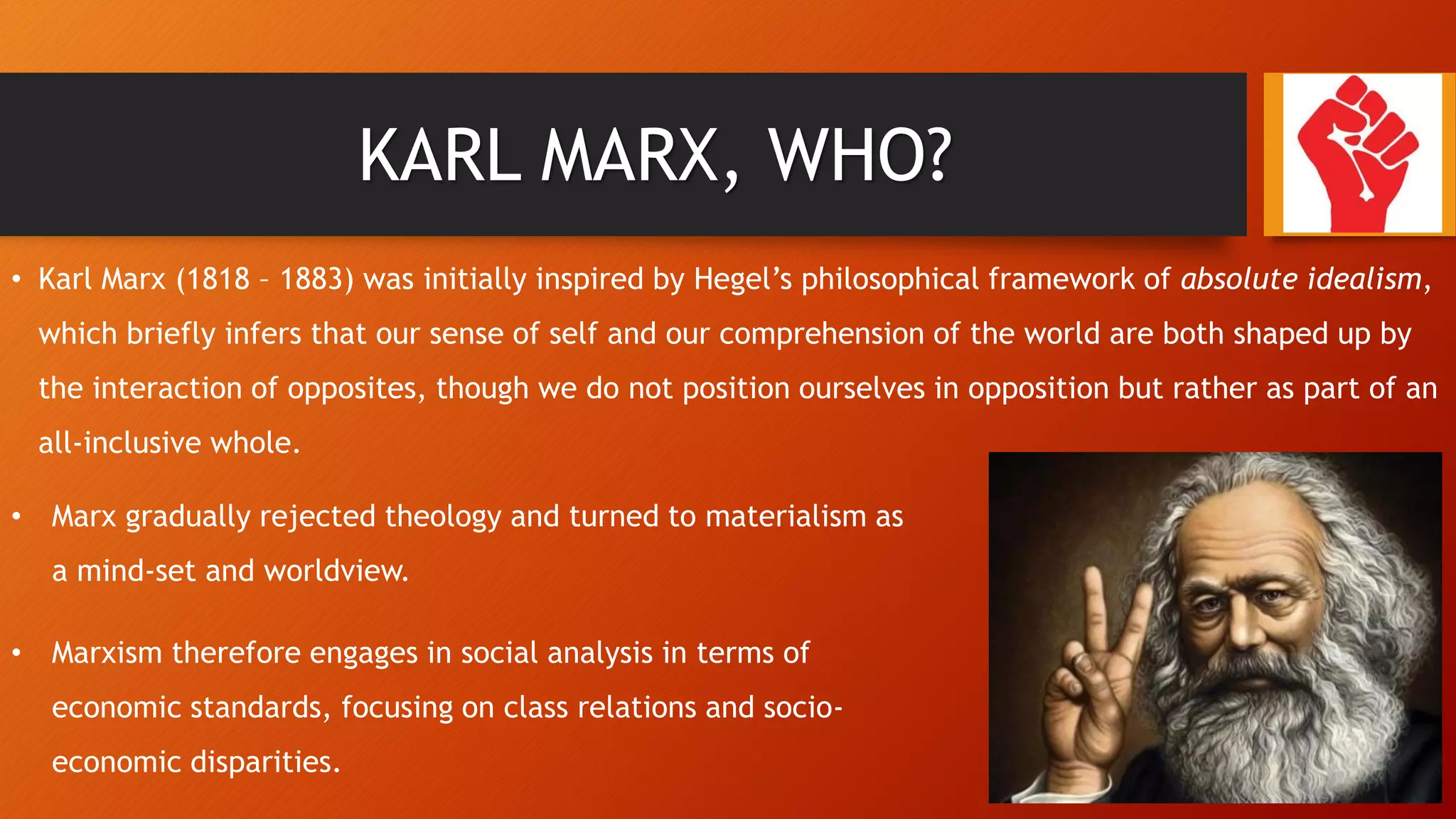

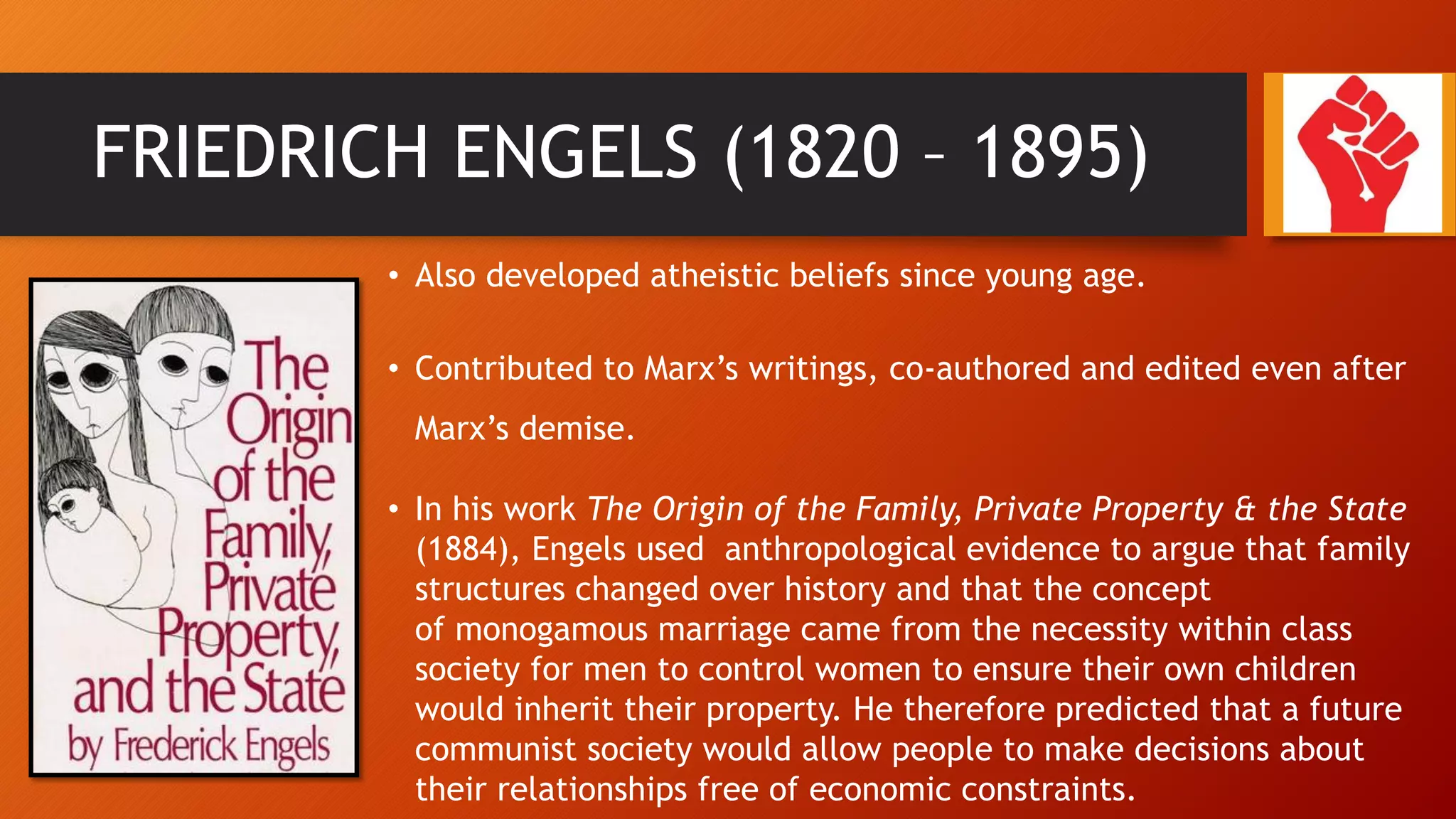


Karl Marx was initially inspired by Hegel's philosophy but later rejected theology in favor of materialism. Marxism views society and history through the lens of economic classes and their conflicts. Marx and Engels believed capitalism would inevitably give way to socialism and then communism, with a stateless, classless society. George Orwell's novel Nineteen Eighty-Four depicts a dystopian future that shows the negative outcomes Marx predicted could result from unchecked capitalism, such as a society divided into distinct social classes and total control by the ruling class. The novel is an example of how Marxism can be applied to literary analysis by viewing the work through the lens of class struggles and conflicts between the proletariat and bourgeoisie.


