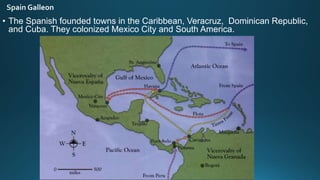
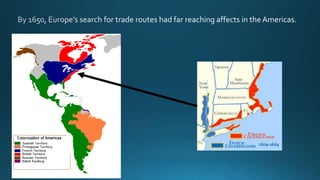
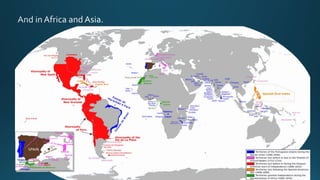
• The Spanish founded towns in the Caribbean, Veracruz, Dominican Republic,
and Cuba. They colonized Mexico City and South America.
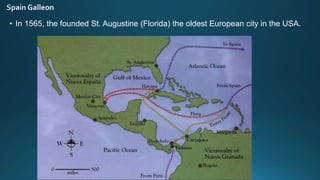
• In 1565, the founded St. Augustine (Florida) the oldest European city in the USA.
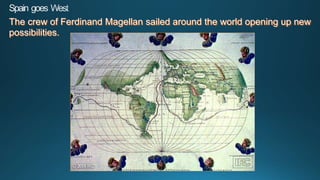
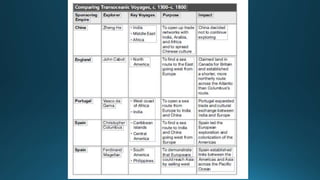
The crew of Ferdinand Magellan sailed around the world opening up new
possibilities.
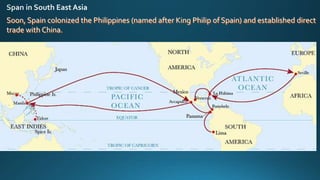
Soon, Spain colonized the Philippines (named after King Philip of Spain) and established direct
trade with China.
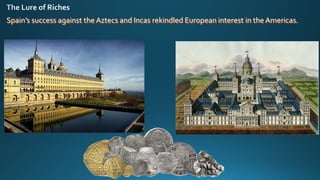
Spain’s success against the Aztecs and Incas rekindled European interest in the Americas.
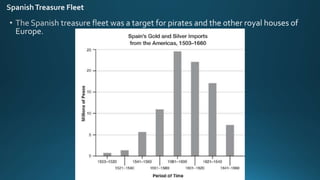
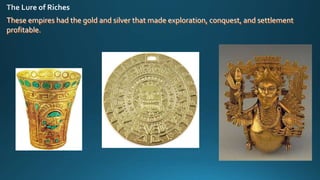
These empires had the gold and silver that made exploration, conquest, and settlement
profitable.
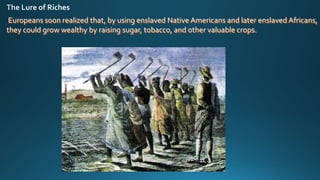
Europeans soon realized that, by using enslaved Native Americans and later enslaved Africans,
they could grow wealthy by raising sugar, tobacco, and other valuable crops.
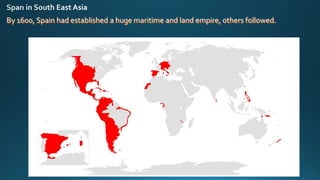
By 1600, Spain had established a huge maritime and land empire, others followed.
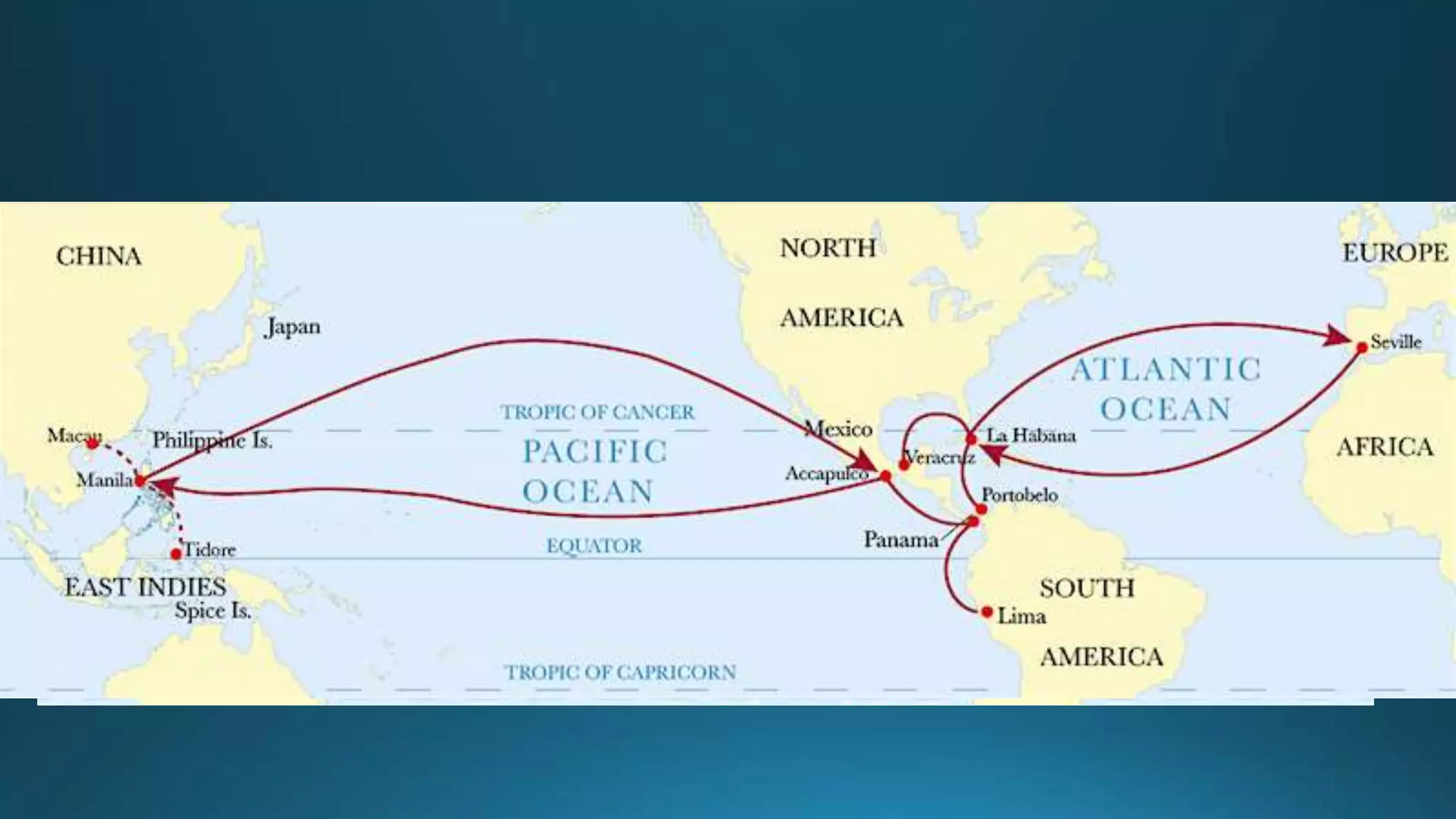
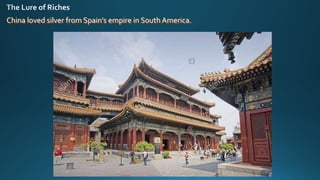
China loved silver from Spain’s empire in South America.
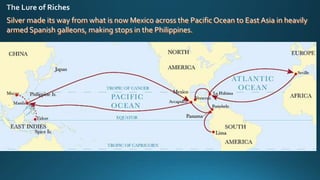
Silver made its way from what is now Mexico across the Pacific Ocean to East Asia in heavily
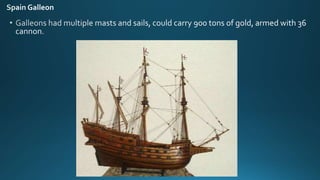
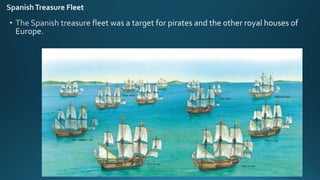
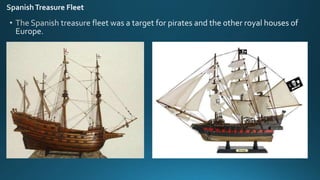
armed Spanish galleons, making stops in the Philippines.
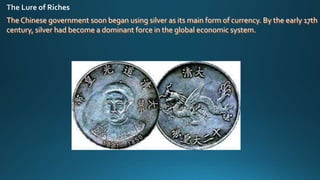
The Chinese government soon began using silver as its main form of currency. By the early 17th
century, silver had become a dominant force in the global economic system.
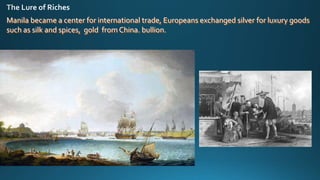
Manila became a center for international trade, Europeans exchanged silver for luxury goods
such as silk and spices, gold from China. bullion.
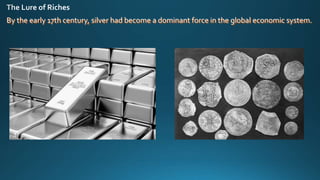
By the early 17th century, silver had become a dominant force in the global economic system.
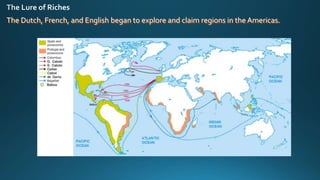
The Dutch, French, and English began to explore and claim regions in the Americas.
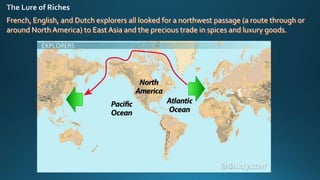
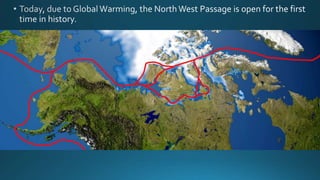
French, English, and Dutch explorers all looked for a northwest passage (a route through or
around North America) to East Asia and the precious trade in spices and luxury goods.
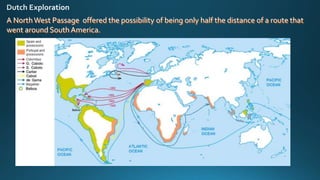
A NorthWest Passage offered the possibility of being only half the distance of a route that
went around South America.
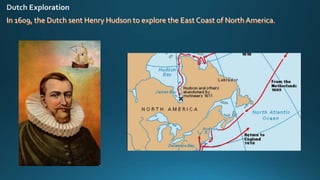
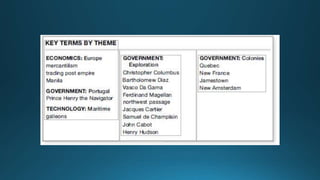
In 1609, the Dutch sent Henry Hudson to explore the East Coast of North America.
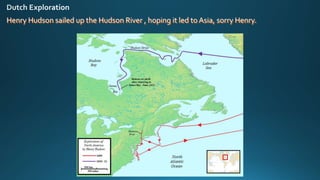
Henry Hudson sailed up the Hudson River , hoping it led to Asia, sorry Henry.
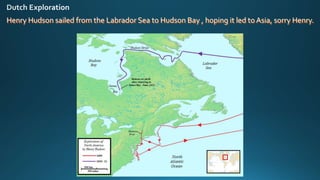
Henry Hudson sailed from the Labrador Sea to Hudson Bay , hoping it led to Asia, sorry Henry.
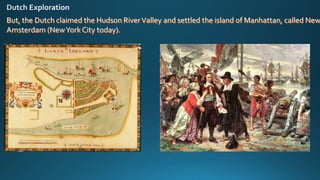
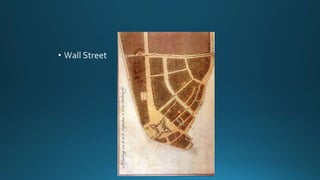
But, the Dutch claimed the Hudson RiverValley and settled the island of Manhattan, called New
Amsterdam (NewYork City today).
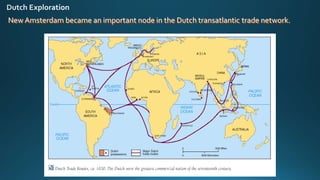
New Amsterdam became an important node in the Dutch transatlantic trade network.
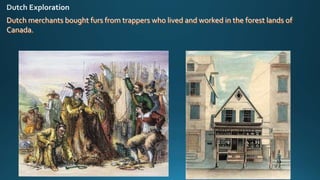
Dutch merchants bought furs from trappers who lived and worked in the forest lands of
Canada.
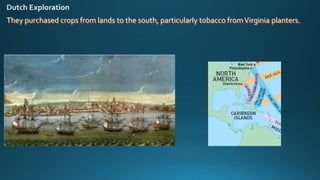
They purchased crops from lands to the south, particularly tobacco fromVirginia planters.
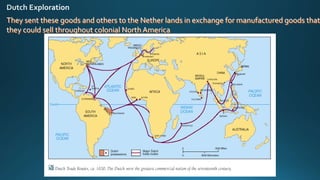
They sent these goods and others to the Nether lands in exchange for manufactured goods that
they could sell throughout colonial North America
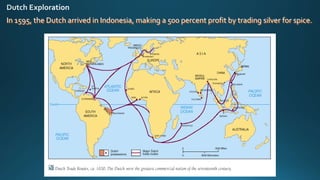
In 1595, the Dutch arrived in Indonesia, making a 500 percent profit by trading silver for spice.
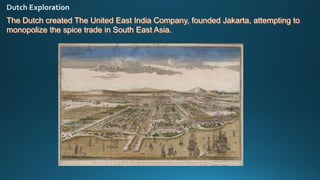
The Dutch created The United East India Company, founded Jakarta, attempting to
monopolize the spice trade in South East Asia.
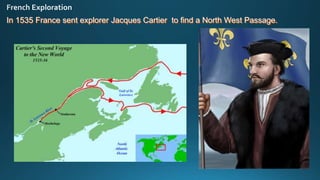
In 1535 France sent explorer Jacques Cartier to find a North West Passage.
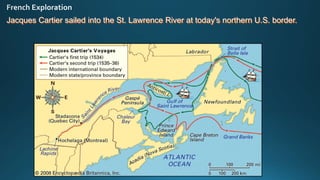
Jacques Cartier sailed into the St. Lawrence River at today's northern U.S. border.
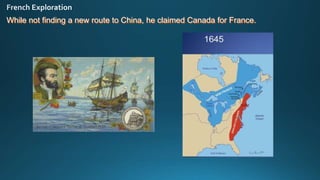
While not finding a new route to China, he claimed Canada for France.
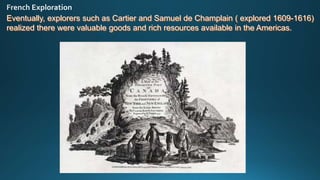
Eventually, explorers such as Cartier and Samuel de Champlain ( explored 1609-1616)
realized there were valuable goods and rich resources available in the Americas.
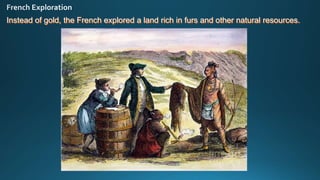
Instead of gold, the French explored a land rich in furs and other natural resources.
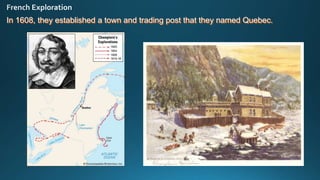
In 1608, they established a town and trading post that they named Quebec.
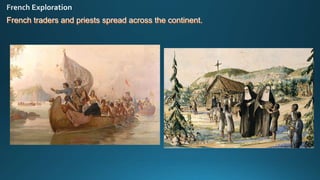
French traders and priests spread across the continent.
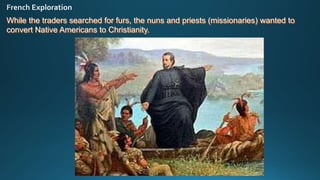
While the traders searched for furs, the nuns and priests (missionaries) wanted to
convert Native Americans to Christianity.
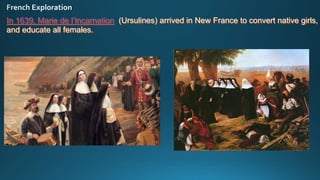
In 1639, Marie de l’Incarnation (Ursulines) arrived in New France to convert native girls,
and educate all females.
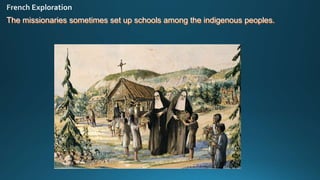
The missionaries sometimes set up schools among the indigenous peoples.
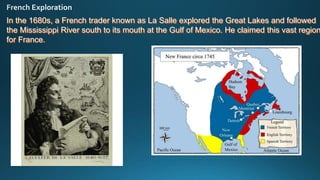
In the 1680s, a French trader known as La Salle explored the Great Lakes and followed
the Mississippi River south to its mouth at the Gulf of Mexico. He claimed this vast region
for France.
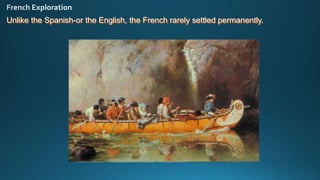
Unlike the Spanish-or the English, the French rarely settled permanently.
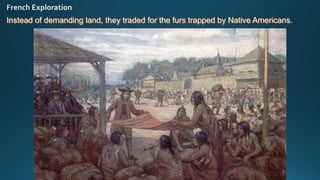
Instead of demanding land, they traded for the furs trapped by Native Americans.
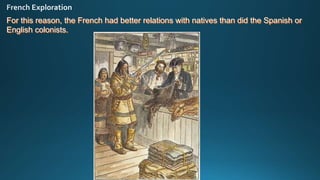
For this reason, the French had better relations with natives than did the Spanish or
English colonists.
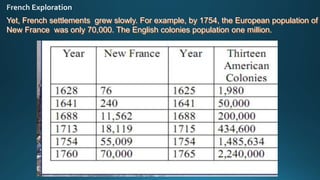
Yet, French settlements grew slowly. For example, by 1754, the European population of
New France was only 70,000. The English colonies population one million.
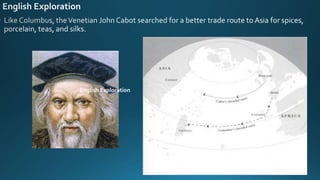
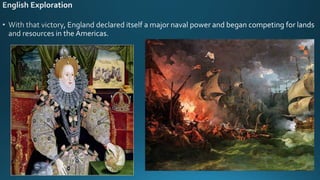
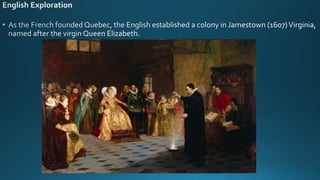
English Exploration
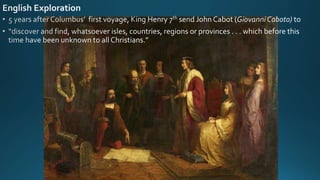
EnglandTakes Interest in America
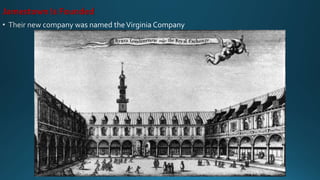
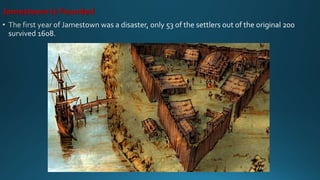
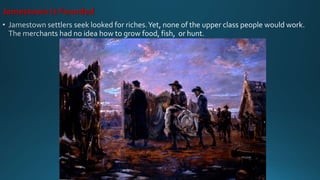
Jamestown Is Founded
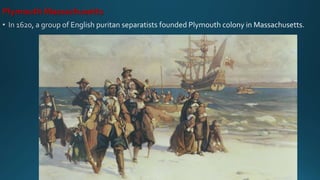
Plymouth Massachusetts
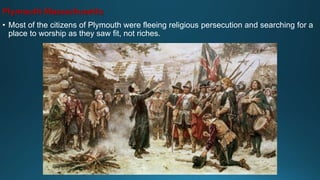
• Most of the citizens of Plymouth were fleeing religious persecution and searching for a
place to worship as they saw fit, not riches.
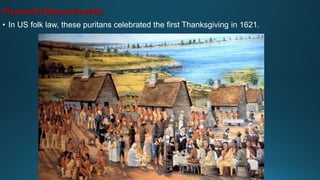
Plymouth Massachusetts
• In US folk law, these puritans celebrated the first Thanksgiving in 1621.
4.2.exploration causation and events a3

4.2.exploration causation and events a3

  • 2.
    • The Spanishfounded towns in the Caribbean, Veracruz, Dominican Republic, and Cuba. They colonized Mexico City and South America.
  • 3.
    • In 1565,the founded St. Augustine (Florida) the oldest European city in the USA.
  • 9.
    The crew ofFerdinand Magellan sailed around the world opening up new possibilities.
  • 10.
    Soon, Spain colonizedthe Philippines (named after King Philip of Spain) and established direct trade with China.
  • 11.
    Spain’s success againstthe Aztecs and Incas rekindled European interest in the Americas.
  • 12.
    These empires hadthe gold and silver that made exploration, conquest, and settlement profitable.
  • 13.
    Europeans soon realizedthat, by using enslaved Native Americans and later enslaved Africans, they could grow wealthy by raising sugar, tobacco, and other valuable crops.
  • 14.
    By 1600, Spainhad established a huge maritime and land empire, others followed.
  • 15.
    China loved silverfrom Spain’s empire in South America.
  • 16.
    Silver made itsway from what is now Mexico across the Pacific Ocean to East Asia in heavily armed Spanish galleons, making stops in the Philippines.
  • 17.
    The Chinese governmentsoon began using silver as its main form of currency. By the early 17th century, silver had become a dominant force in the global economic system.
  • 18.
    Manila became acenter for international trade, Europeans exchanged silver for luxury goods such as silk and spices, gold from China. bullion.
  • 19.
    By the early17th century, silver had become a dominant force in the global economic system.
  • 20.
    The Dutch, French,and English began to explore and claim regions in the Americas.
  • 21.
    French, English, andDutch explorers all looked for a northwest passage (a route through or around North America) to East Asia and the precious trade in spices and luxury goods.
  • 22.
    A NorthWest Passageoffered the possibility of being only half the distance of a route that went around South America.
  • 23.
    In 1609, theDutch sent Henry Hudson to explore the East Coast of North America.
  • 24.
    Henry Hudson sailedup the Hudson River , hoping it led to Asia, sorry Henry.
  • 25.
    Henry Hudson sailedfrom the Labrador Sea to Hudson Bay , hoping it led to Asia, sorry Henry.
  • 28.
    But, the Dutchclaimed the Hudson RiverValley and settled the island of Manhattan, called New Amsterdam (NewYork City today).
  • 30.
    New Amsterdam becamean important node in the Dutch transatlantic trade network.
  • 31.
    Dutch merchants boughtfurs from trappers who lived and worked in the forest lands of Canada.
  • 32.
    They purchased cropsfrom lands to the south, particularly tobacco fromVirginia planters.
  • 33.
    They sent thesegoods and others to the Nether lands in exchange for manufactured goods that they could sell throughout colonial North America
  • 34.
    In 1595, theDutch arrived in Indonesia, making a 500 percent profit by trading silver for spice.
  • 35.
    The Dutch createdThe United East India Company, founded Jakarta, attempting to monopolize the spice trade in South East Asia.
  • 36.
    In 1535 Francesent explorer Jacques Cartier to find a North West Passage.
  • 37.
    Jacques Cartier sailedinto the St. Lawrence River at today's northern U.S. border.
  • 38.
    While not findinga new route to China, he claimed Canada for France.
  • 39.
    Eventually, explorers suchas Cartier and Samuel de Champlain ( explored 1609-1616) realized there were valuable goods and rich resources available in the Americas.
  • 40.
    Instead of gold,the French explored a land rich in furs and other natural resources.
  • 41.
    In 1608, theyestablished a town and trading post that they named Quebec.
  • 42.
    French traders andpriests spread across the continent.
  • 43.
    While the traderssearched for furs, the nuns and priests (missionaries) wanted to convert Native Americans to Christianity.
  • 44.
    In 1639, Mariede l’Incarnation (Ursulines) arrived in New France to convert native girls, and educate all females.
  • 45.
    The missionaries sometimesset up schools among the indigenous peoples.
  • 46.
    In the 1680s,a French trader known as La Salle explored the Great Lakes and followed the Mississippi River south to its mouth at the Gulf of Mexico. He claimed this vast region for France.
  • 47.
    Unlike the Spanish-orthe English, the French rarely settled permanently.
  • 48.
    Instead of demandingland, they traded for the furs trapped by Native Americans.
  • 49.
    For this reason,the French had better relations with natives than did the Spanish or English colonists.
  • 50.
    Yet, French settlementsgrew slowly. For example, by 1754, the European population of New France was only 70,000. The English colonies population one million.
  • 52.
  • 55.
  • 61.
  • 66.
  • 67.
  • 68.
  • 69.
  • 70.
  • 71.
    Plymouth Massachusetts • Mostof the citizens of Plymouth were fleeing religious persecution and searching for a place to worship as they saw fit, not riches.
  • 72.
    Plymouth Massachusetts • InUS folk law, these puritans celebrated the first Thanksgiving in 1621.