


By Jack Garrity
By Mr. Jack
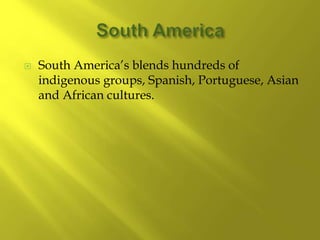
 South America’s blends hundreds of
indigenous groups, Spanish, Portuguese, Asian
and African cultures.
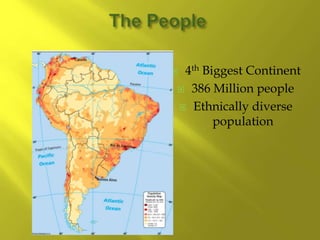
 4th Biggest Continent
 386 Million people
 Ethnically diverse
population
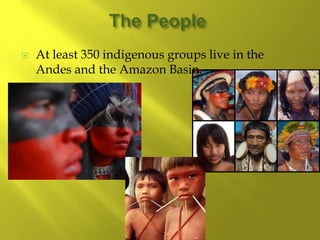
 At least 350 indigenous groups live in the
Andes and the Amazon Basin.
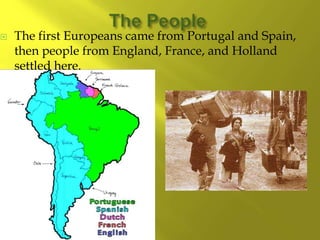
 The first Europeans came from Portugal and Spain,
then people from England, France, and Holland
settled here.
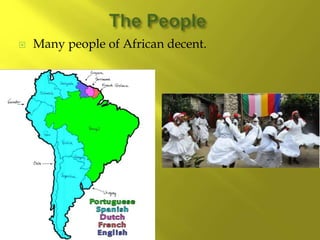
 Many people of African decent.
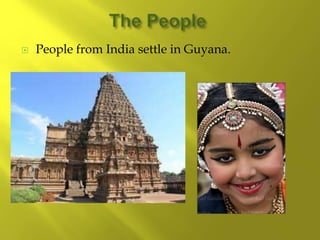
 People from India settle in Guyana.
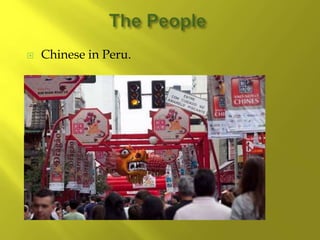
 Chinese in Peru.
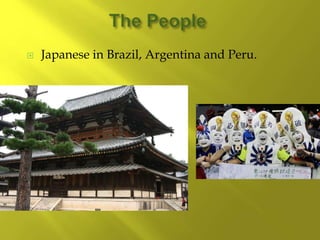
 Japanese in Brazil, Argentina and Peru.
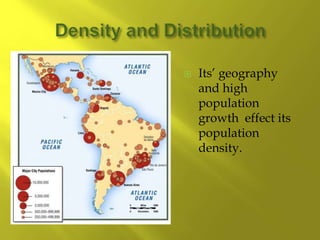
 Its’ geography
and high
population
growth effect its
population
density.
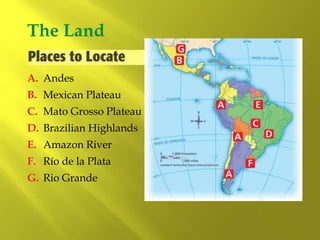
A. Andes
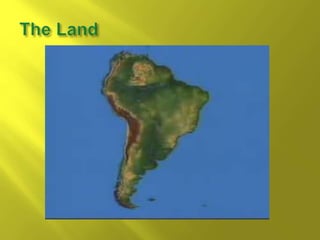
The Land
B. Mexican Plateau
C. Mato Grosso Plateau
D. Brazilian Highlands
E. Amazon River
F. Río de la Plata
G. Rio Grande
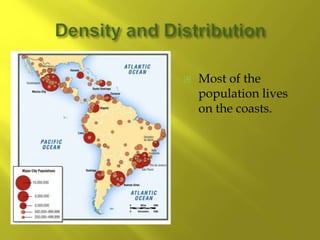
 Most of the
population lives
on the coasts.
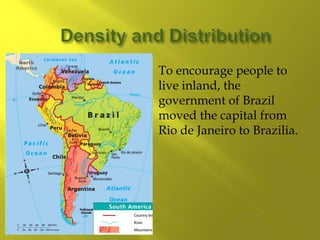
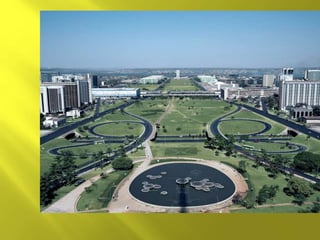
 To encourage people to
live inland, the
government of Brazil
moved the capital from
Rio de Janeiro to Brazilia.
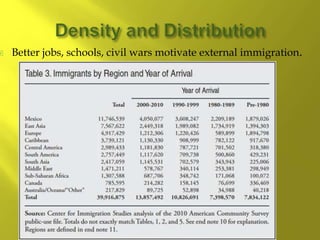
 Better jobs, schools, civil wars motivate external immigration.
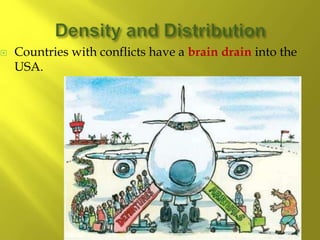
 Countries with conflicts have a brain drain into the
USA.
 brain drain
 the emigration of college graduates or
intelligent people from a particular country.
 fuga de cerebros
 fuga de talentos o migración altamente
calificada (MAC) es la emigracion de
profesionales y científicos formados
universitariamente
 80 percent of the population is urban, due to both
internal immigration and migration from Europe
and Asia.
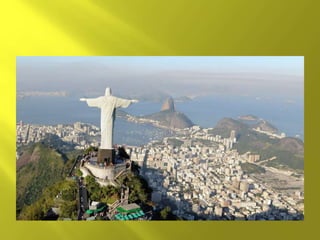
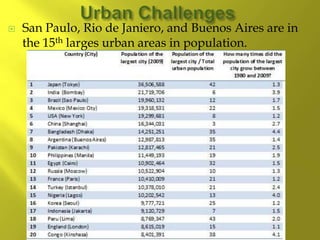
 San Paulo, Rio de Janiero, and Buenos Aires are in
the 15th larges urban areas in population.
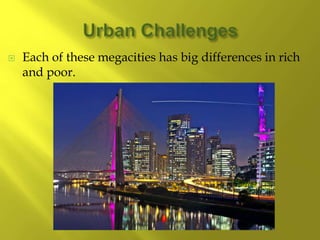
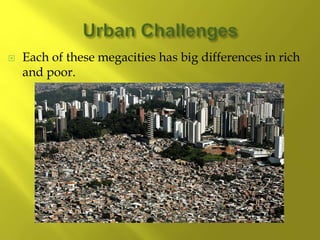
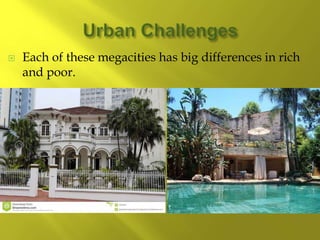
 Each of these megacities has big differences in rich
and poor.
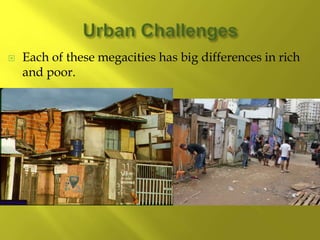
 Each of these megacities has big differences in rich
and poor.
 Each of these megacities has big differences in rich
and poor.
 Each of these megacities has big differences in rich
and poor.
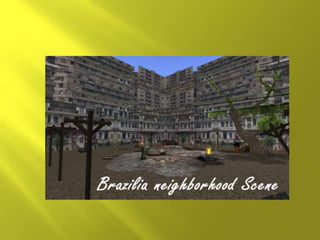
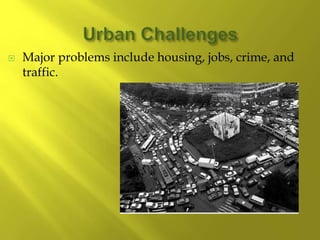
 Major problems include housing, jobs, crime, and
traffic.
 Why do most South Americans live in the coastal
areas?
 Locate on the maps
 Brazil Andes
 Argentina Amazon River
 Columbia Uruguay
 Bolivia Paraguay
 Peru Rio de Janerio
 Chile Buenos Aires
 Equator Brazillia
 San Paulo
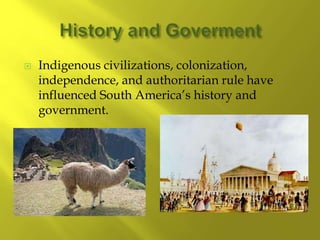
 Indigenous civilizations, colonization,
independence, and authoritarian rule have
influenced South America’s history and
government.
 1. Indigenous civilizations Incas
 2. Conquistadors and colonies Spain 1500’s
 3. Wars of Independence 1800’s
 4. Dictators and authoritarian rule—some
countries have democratic governments now

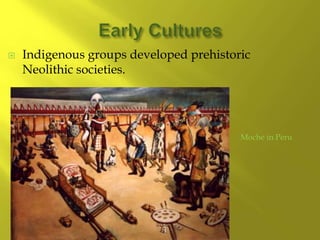
 Indigenous groups developed prehistoric
Neolithic societies.
Moche in Peru
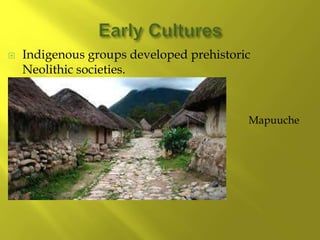
 Indigenous groups developed prehistoric
Neolithic societies.
Mapuuche
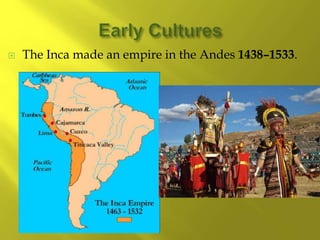
 The Inca made an empire in the Andes 1438–1533.
 ssss
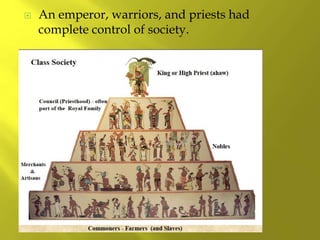
 An emperor, warriors, and priests had
complete control of society.
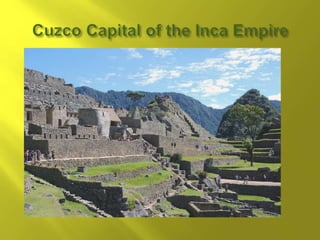
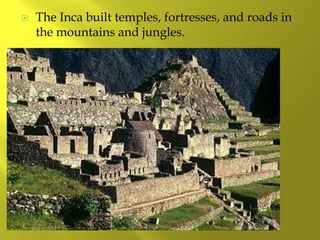
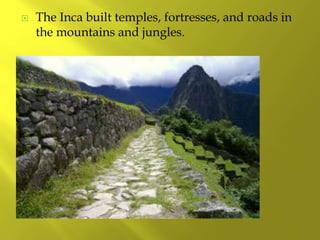
 The Inca built temples, fortresses, and roads in
the mountains and jungles.
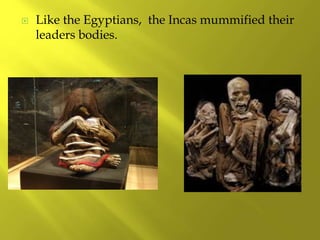
 Like the Egyptians, the Incas mummified their
leaders bodies.
 The Inca built temples, fortresses, and roads in
the mountains and jungles.
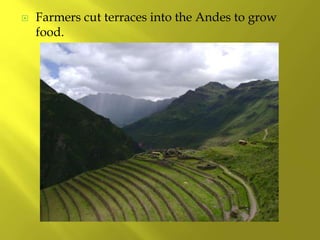
 Farmers cut terraces into the Andes to grow
food.
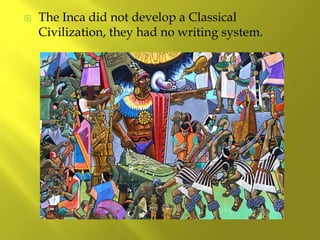
 The Inca did not develop a Classical
Civilization, they had no writing system.
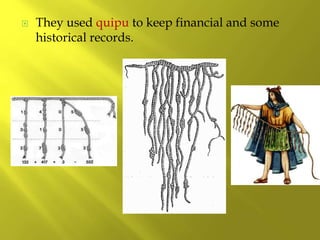
 They used quipu to keep financial and some
historical records.
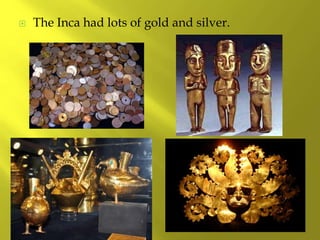
 The Inca had lots of gold and silver.
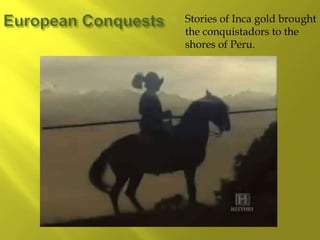
 Stories of Inca gold brought
the conquistadors to the
shores of Peru.
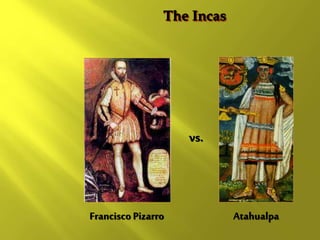
FranciscoPizarro
The Incas
Atahualpa
vs.
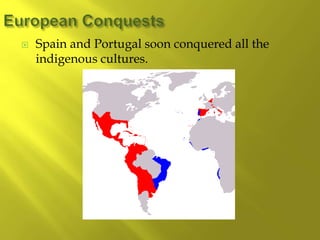
 Spain and Portugal soon conquered all the
indigenous cultures.
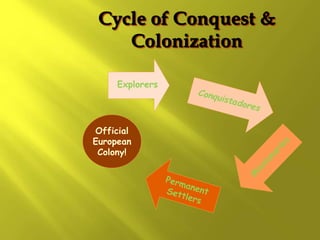
Cycle of Conquest &
Colonization
Explorers
Official
European
Colony!
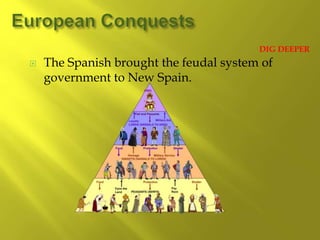
 The Spanish brought the feudal system of
government to New Spain.
DIG DEEPER
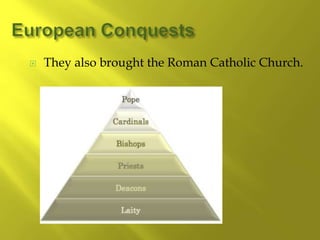
 They also brought the Roman Catholic Church.
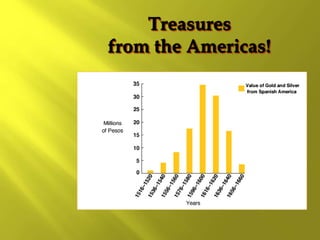
Treasures
from the Americas!
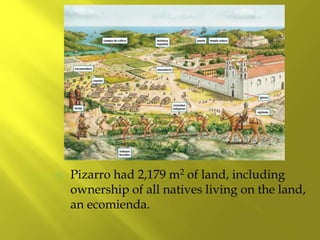
 Pizarro had 2,179 m2 of land, including
ownership of all natives living on the land,
an ecomienda.
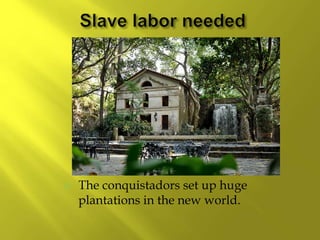
 The conquistadors set up huge
plantations in the new world.
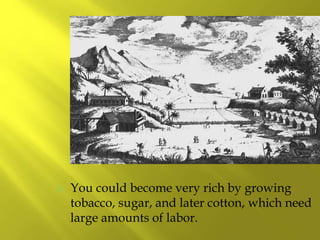
 You could become very rich by growing
tobacco, sugar, and later cotton, which need
large amounts of labor.
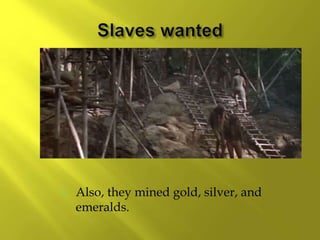
 Also, they mined gold, silver, and
emeralds.
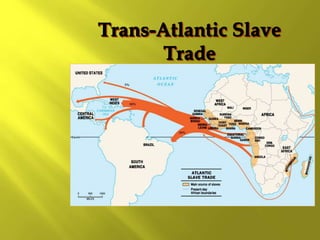
Trans-Atlantic Slave
Trade
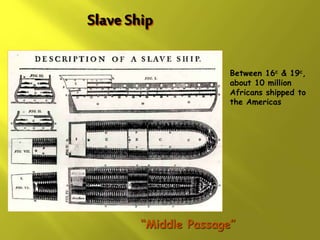
Slave Ship
“Middle Passage”
Between 16c & 19c,
about 10 million
Africans shipped to
the Americas
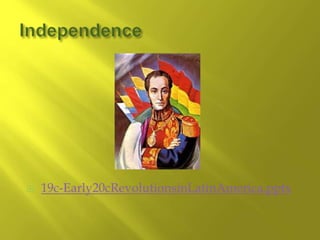
 19c-Early20cRevolutionsinLatinAmerica.pptx
 End
 ssss
17.south america
17.south america

17.south america