Recent Advance Presentation on
Geographic Information
System in Public Health
Presentation By:
Bikram Adhikari (136)
MPH-2018
School of Public Health and Community Medicine
Overview
• Introduction
• History of GIS in relation to Health
• Applications of GIS in public health
• Challenges
• GIS in Nepal
• Conclusion
4/26/2019 2
Basic terminologies
• GIS data:
• Spatial data:
• It is information about a physical object that can be represented by numerical
values in a geographic coordinate system.
• It exist in 2 forms:
• Vector—Point, line, Polyline, Polygon
• Raster--- Grid, Image
• Non-spatial:
• Attribute
4/26/2019 3
Introduction
4/26/2019 4
Introduction
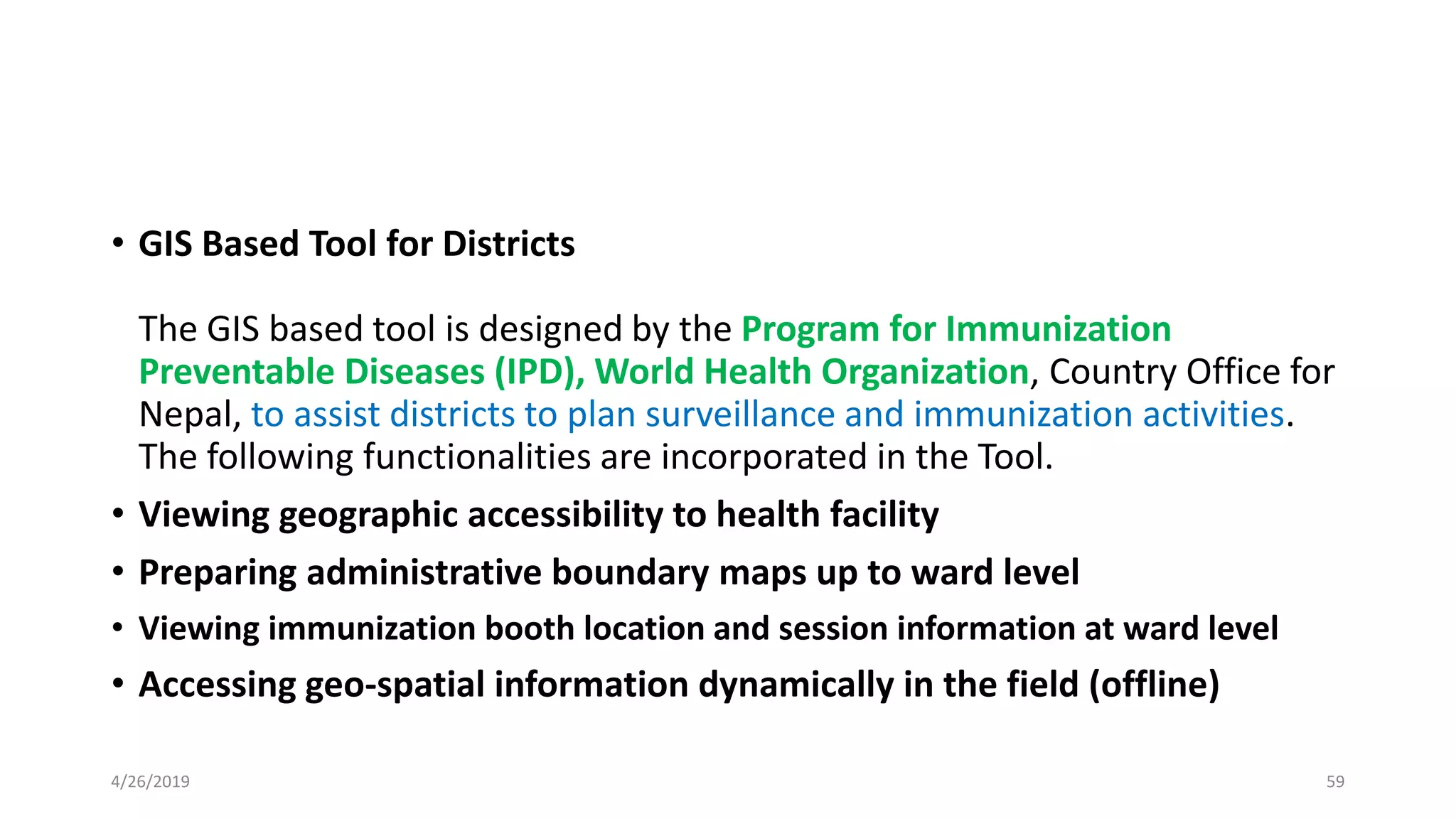
• A geographical information system (GIS) is a computer system for
capturing, storing, checking, integrating, manipulating, analyzing and
displaying data related to positions on the Earth's surface.
• It is thus a way of linking databases with maps, to display information,
perform spatial analyses or develop and apply spatial models.
• The phrase "geographic information systems" was first used in the
1960s to refer to a computerized system for asking questions of maps
showing current and potential land use in Canada
4/26/2019 5
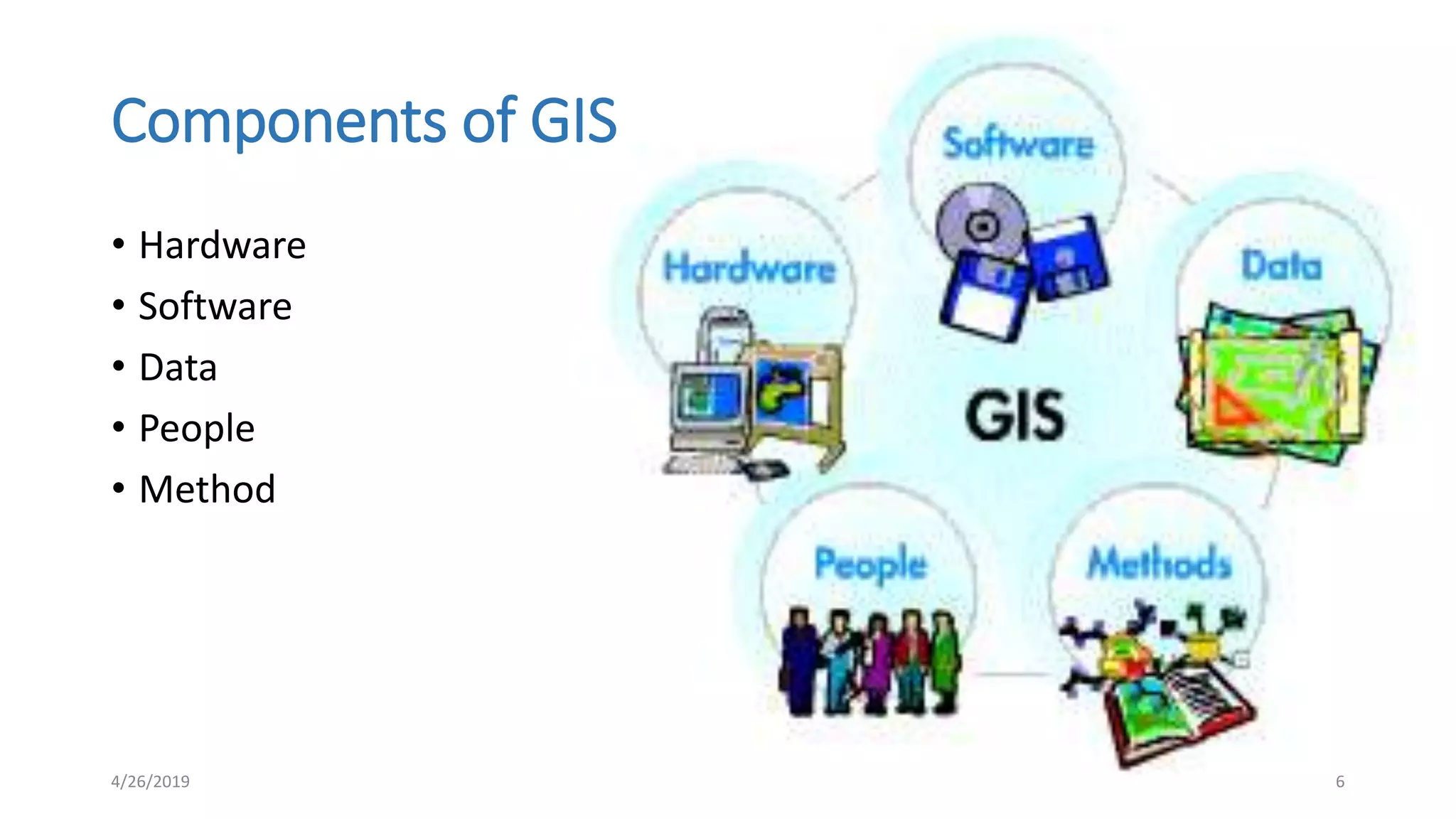
Components of GIS
• Hardware
• Software
• Data
• People
• Method
4/26/2019 6
GIS Mapping Software
4/26/2019 7
GIS Mapping Software
4/26/2019 8
GIS Function
• Capture data
• Data storage
• Data manipulation
• Query and data analysis
• Data visualization
4/26/2019 9
What can we do with GIS
• Mapping where things are
• Mapping quantities
• Mapping densities
• Finding what is inside.
• Finding what is nearby
• Mapping change
4/26/2019 10
History
4/26/2019 11
History
• In 1848, Dr. Thomas Shapter published a dot density map of 1,100
deaths from cholera in Exeter that occurred between 1832 and 1834,
using different symbols for deaths occurring in different years.
4/26/2019 12
History
• Public health efforts have been based on analysis and use of spatial
data for many years. Dr. John Snow (physician), often credited as the
father of epidemiology, is arguably the most famous of those
examples
4/26/2019 13
History
• The year 1960 saw the development of the world's first true
operational GIS in Ottawa, Ontario, Canada by the federal
Department of Forestry and Rural Development.
• Developed by Dr. Roger Tomlinson, it was called the Canada
Geographic Information System (CGIS)
• It was used to store, analyze, and manipulate data collected for the
Canada Land Inventory
4/26/2019 14
Father of GIS and World GIS day
• Father of GIS: Dr. Roger Tomlinson (1933-2014)
• World GIS day: 13th November
4/26/2019 15
GIS and Public Health
• Geographic Information Systems (GIS) play a major role in health care,
surveillance of infectious diseases, and mapping and monitoring of
the spatial and temporal distributions of vectors of infection.
• GIS combine sophisticated algorithms, spatial analysis, geo-statistics
and modelling, making GIS technology a powerful tool for the
prediction of disease patterns and parasite ecology associations
4/26/2019 16
Application of GIS in Public Heath
• Human Health Decision-Making
• Disease surveillance and early warning systems
• Use of GIS in vaccine efficacy trial
• GIS In The Epidemiology And Control Of Helminthiase
• Cluster random sampling and data collection
• Pandemic Planning And Prediction
• GIS and Mental health
• Geographic information systems and health services
• The application of GIS in environmental health management
4/26/2019 17
Application of GIS in Public Health
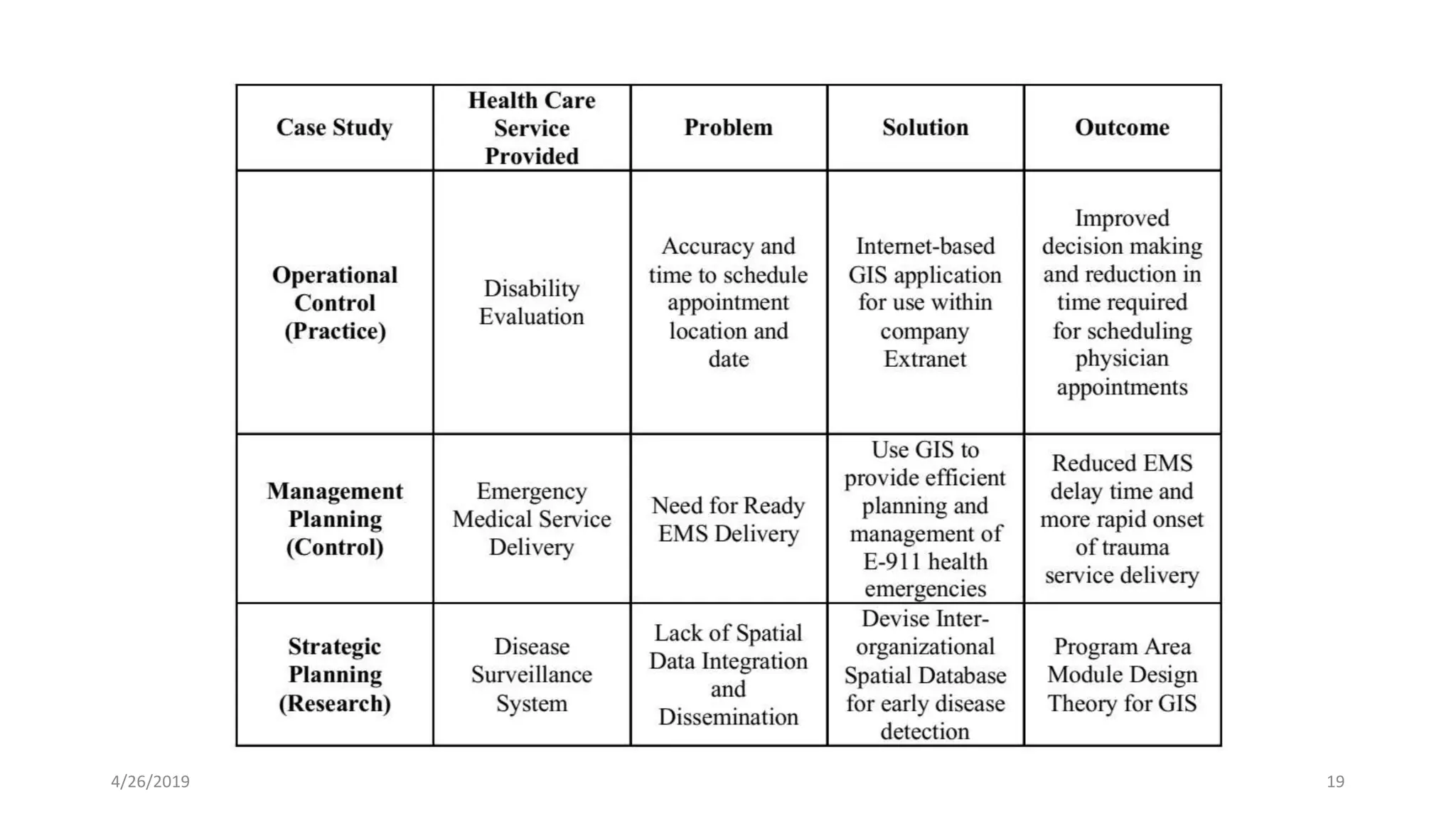
1. Human Health Decision-Making
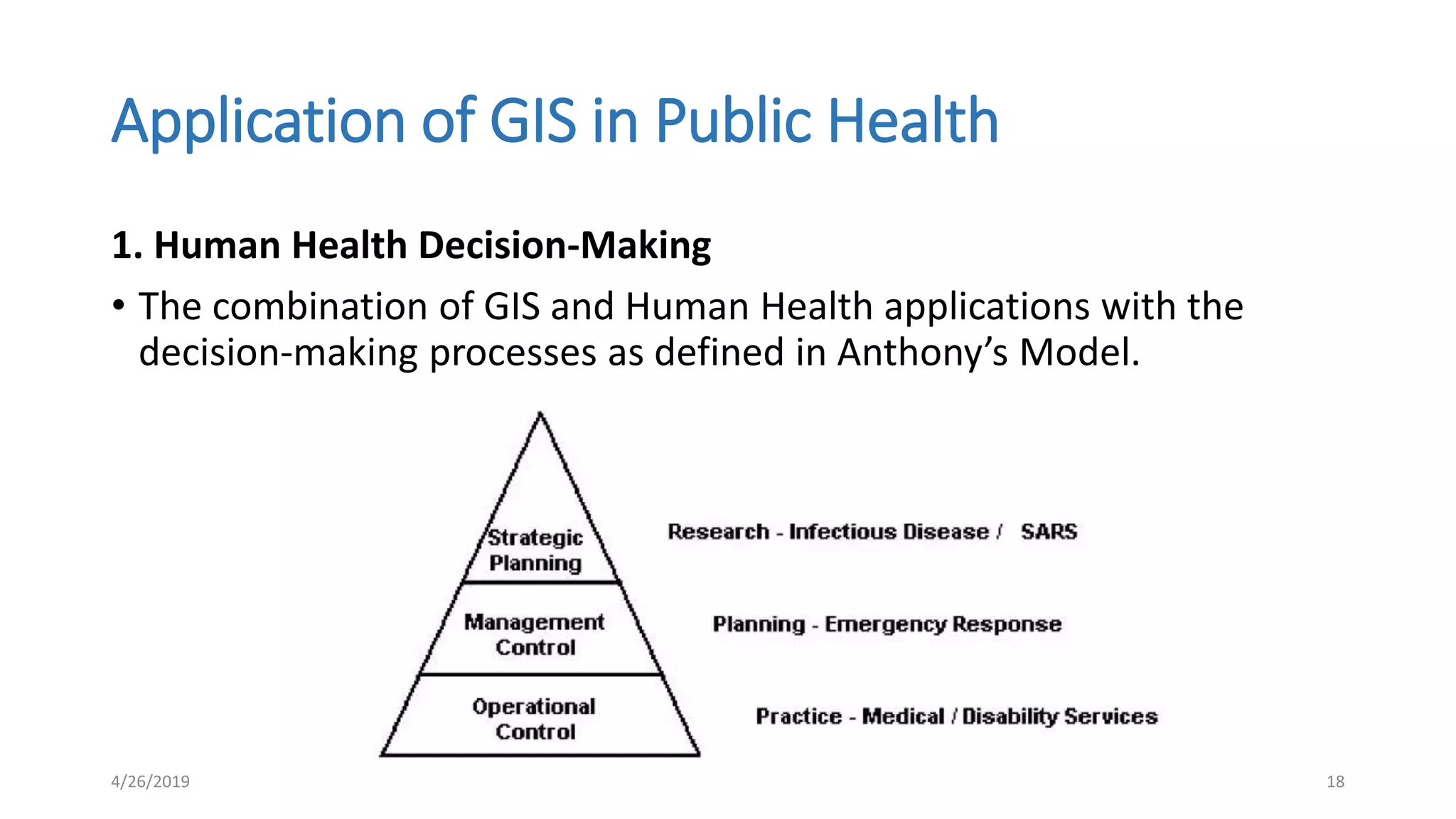
• The combination of GIS and Human Health applications with the
decision-making processes as defined in Anthony’s Model.
4/26/2019 18
4/26/2019 19
Application of GIS in Public Heath
2. Disease surveillance and early warning systems
• Spatial observations of environmental factors such as rainfall, land
use, surface temperatures, oceans and land cover have a direct
epidemiological impact on the transmission of diseases.
• Consequently, the ability to apply GIS techniques to disease
surveillance has opened up a world of possibilities in creating early-
warning systems for emerging and re-emerging diseases
4/26/2019 20
Application of GIS in Public Heath
• The incorporation of a GIS-based spatial decision support system (SDSS)
into the surveillance response system in the South Pacific is a major
achievement for Vanuatu and Solomon Islands.
• The SDSS is designed to automatically locate and map confirmed malaria
cases, to classify active foci of infection, and to guide targeted
interventions.
• With technical assistance provided by the Pacific Malaria Initiative Support
Centre (PacMISC) and WHO, local authorities were able to build custom
applications into the existing provincial SDSS used in previously identified
elimination provinces, to support general topographic mapping, geographic
reconnaissance and vector control intervention management.
4/26/2019 21
Application of GIS in Public Health
• One noteworthy example of how GIS has been applied to other
infectious diseases is the World Health Organization (WHO)’s
DengueNet,
• It is a centralized data management system that includes a database
and GIS for the global epidemiological and virological surveillance of
dengue fever (DF) and dengue haemorrhagic fever (DHF).
• This web-based system makes available to users a standard platform
where current surveillance data on the incidence and trends of
dengue and DHF are shared.
4/26/2019 22
Application of GIS in Public Heath
3. Use of GIS in vaccine efficacy trial
1. Planning and logistic support for trial
• Vaccine trial requires- area with high disease burden, adequate healthcare
centers to detect the target disease, and a system for the transportation of
the vaccines
• In cluster randomized trials, it is necessary to :
• to define appropriate geographical clusters
• understand the population size
• the disease burden at the cluster level.
(Between-cluster heterogeneity in disease burden may lead to bias in the estimate of
protection offered by the vaccine)
4/26/2019 23
• GIS helps in
• investigating the spatial pattern of the disease burden
• Finding any significant heterogeneity in this indicator can be addressed during
data analysis.
• Defining cluster for vaccination
• If vaccines are administered in the community, the daily vaccine
requirement has to be predicted accurately, to allow shipping of
the correct number of vaccine doses within cold chain GIS
• GIS was used to estimate the distance between specimen-collection
centers and the center for specimen storage (Vietnam)
4/26/2019 24
Application of GIS in Public Heath
3. Use of GIS in vaccine efficacy trial
2. Trial management
• Refusals and absentees are a common concern in vaccine trials.
• The identification of areas with relative high frequencies of non-compliance,
during a vaccine campaign, can help investigators to target such areas for
sensitization prior to the next day / round of vaccination and/or increased
volunteer deployment during the next vaccinations.
• GIS can be used
• To find geography wise prevalence of non-compliance
• Example: In Vietnam,GIS helped identification and targeting of the areas that
were worst affected by non-compliance.
4/26/2019 25
4. GIS In The Epidemiology And Control Of Helminthiase
• The effective control of helminth infections in humans requires
reliable estimates of the geographical distributions of such infections
and the sizes of populations requiring an intervention.
• The relationship and associated uncertainty between infection
outcomes and covariates are estimated and the model is used to
predict the outcome at unsampled locations
4/26/2019 26
• In West Africa, a regional multinomial model was built to identify
areas with high prevalence of high-intensity S. haematobium infection
• Predicted prevalence maps, including those derived from MBG, can
be multiplied by electronic population-density maps to determine the
numbers of individuals infected in each location.
4/26/2019 27
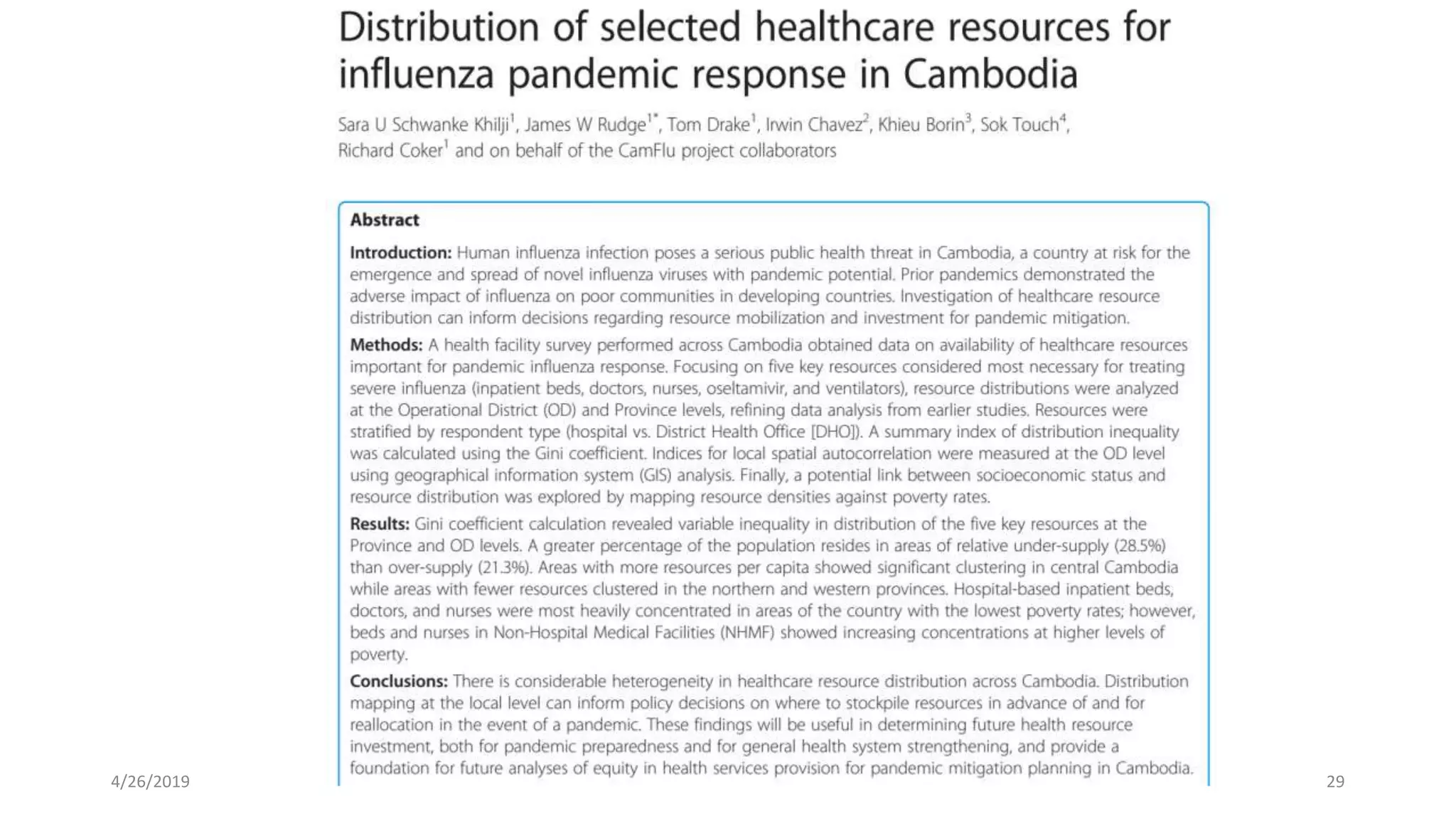
5. Pandemic Planning And Prediction
• Pandemics are intrinsically geographical, with infection often moving
rapidly from one place to another and spanning large distances in
doing so.
• The planning required to prepare for, or intervene in, pandemics
involves an understanding of the spatial patterns of the transmission
and spread of the pathogen involved.
4/26/2019 28
4/26/2019 29
4/26/2019 30
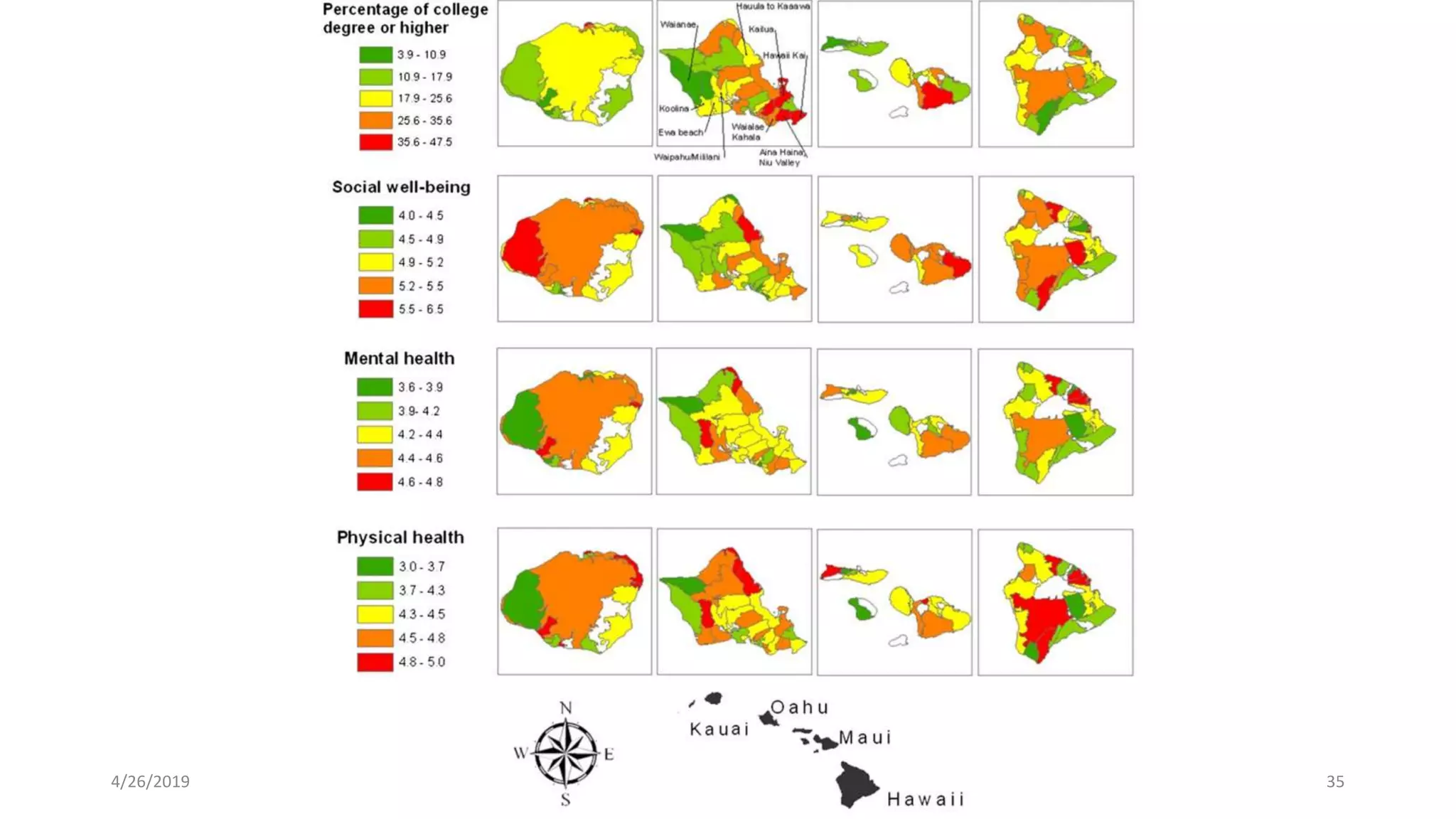
• 6. GIS and Mental health
• Mental disorders appear to spread in all countries, societies and
nations, regardless of socioeconomic level of the population.
• Mental illness is typically associated with age.
• Mental illnesses are quite intertwined with environmental changes or
disasters and changes in land use such as urbanization
4/26/2019 32
• It is expected that the geographical representation of this data will
serve as a valuable tool for health professionals both in treating and
preventing mental illness.
• GIS is used to assess accessibility to mental health services and
general health services.
• GIS can analyze and portray accurately the distribution of mental
health services and they could explain the reasons why the
accessibility in healthcare services is affected.
4/26/2019 33
4/26/2019 34
4/26/2019 35
7. Geographic information systems and health services
• In general, the fields of application of GIS could be applied to strategic
planning, research, evaluation, preparedness for emergency
situations and the availability and location of health care services
• Geographic Information Systems provide us with the exact location of
specific medical equipment and how somebody may gain the fastest
access to it. It is important an insurance institution, when it is
requested by the insured, know the nearby location where the
insured could gain access to a CT scanner.
4/26/2019 36
8. The application of GIS in environmental health management
• The environmental impacts on human health are significant.
• GIS could be used in studying cardiovascular health problems,
including deaths due to heart disease and stroke. These deaths can be
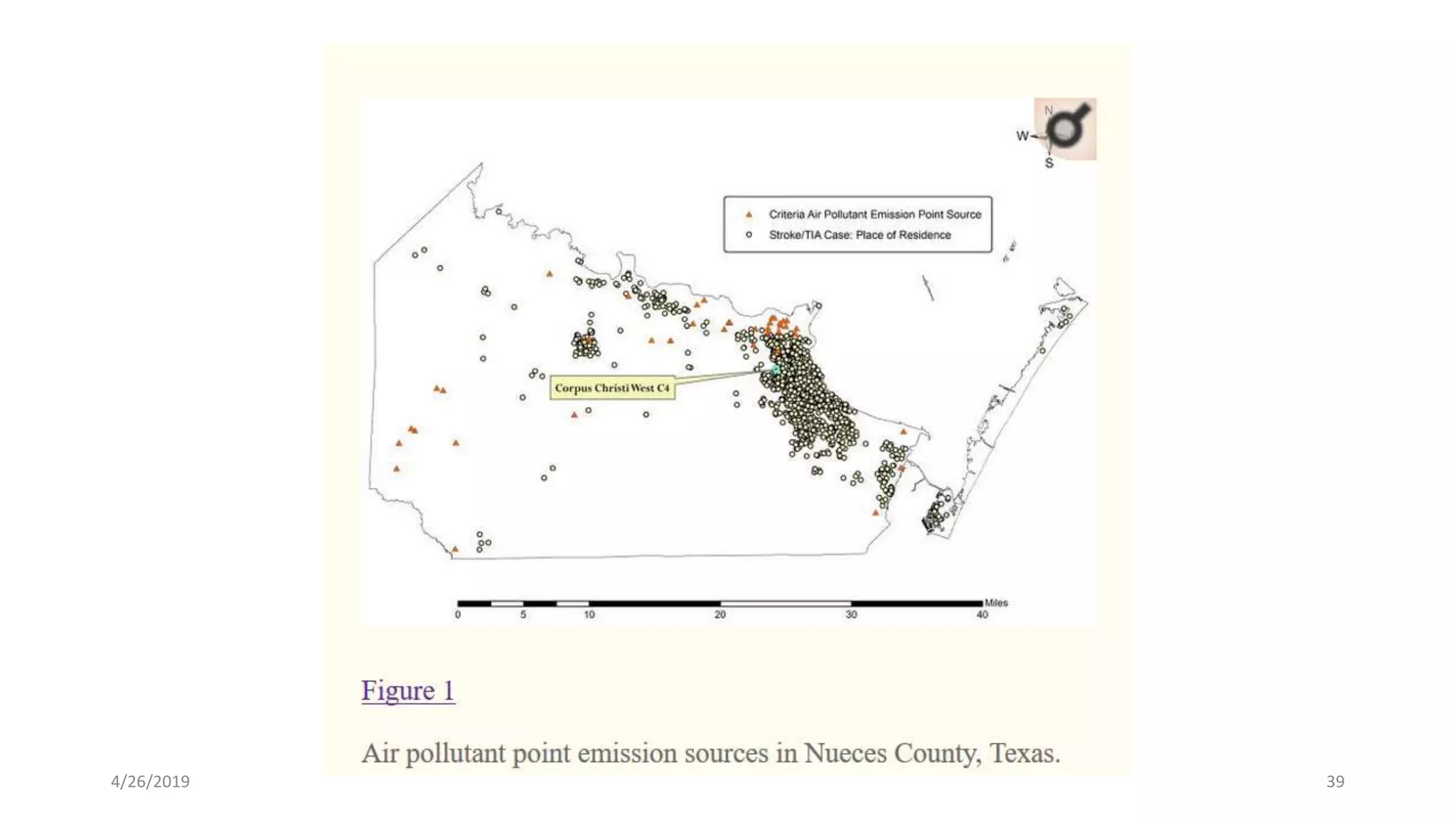
linked to gaseous pollutants, particularly air pollution. GIS can display
these gaseous and particulate matter types and their uniform
dispersion and transmission
4/26/2019 37
4/26/2019 38
4/26/2019 39
Application of GIS in Public Heath
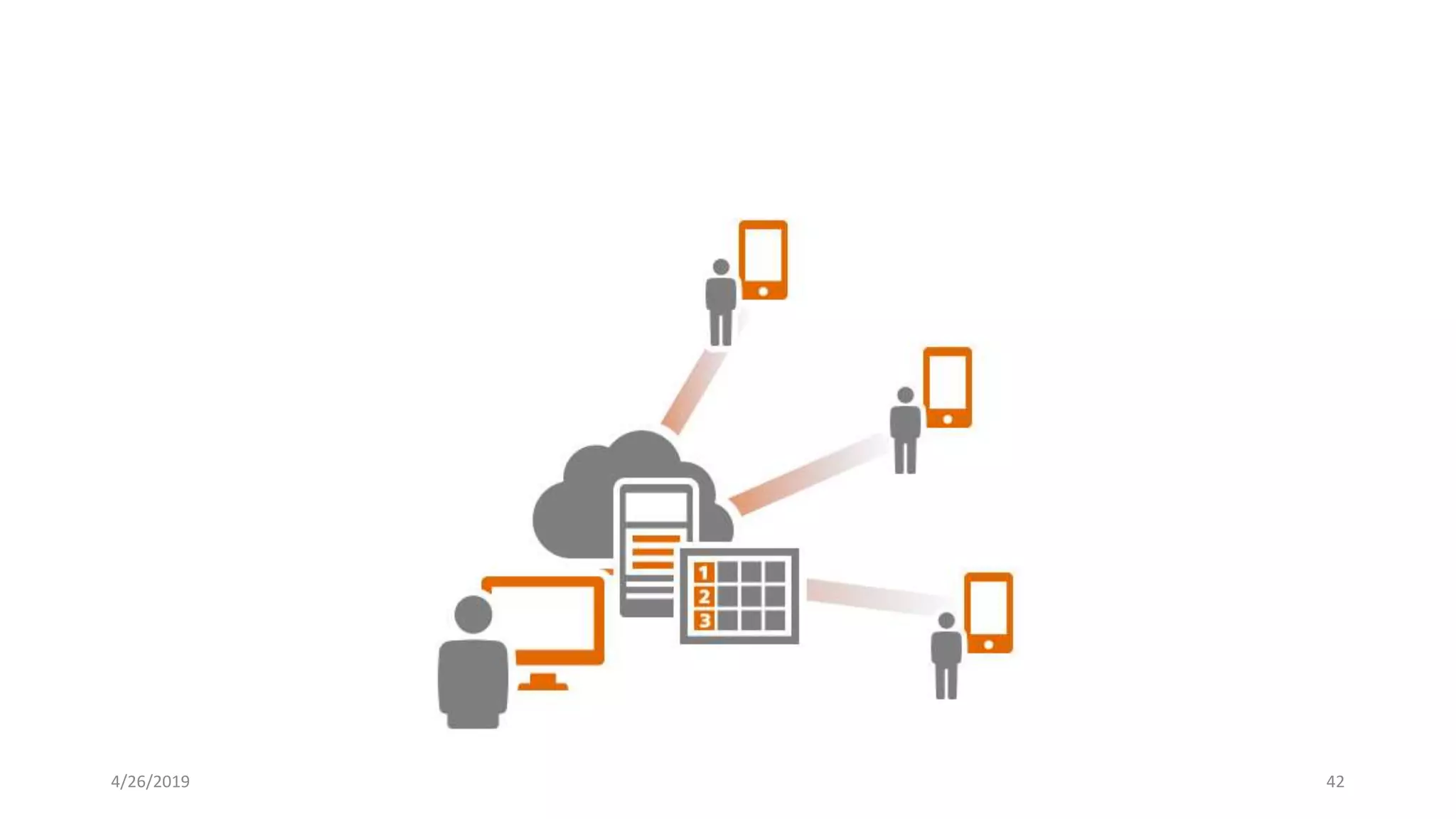
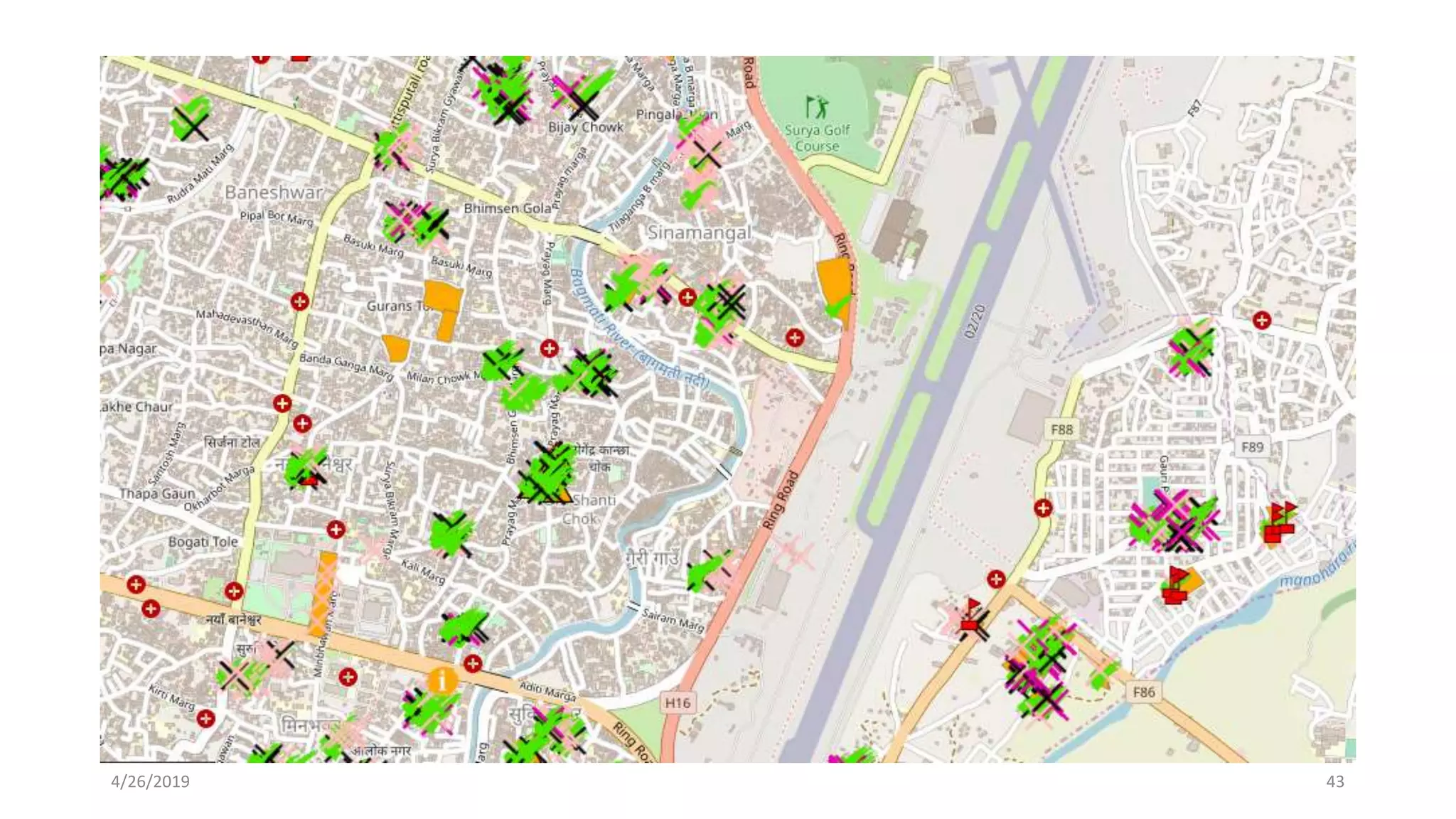
9. Useful in Cluster random sampling and data collection
4/26/2019 40
4/26/2019 41
4/26/2019 42
4/26/2019 43
4/26/2019 44
4/26/2019 45
Application of GIS in public health and
medicine
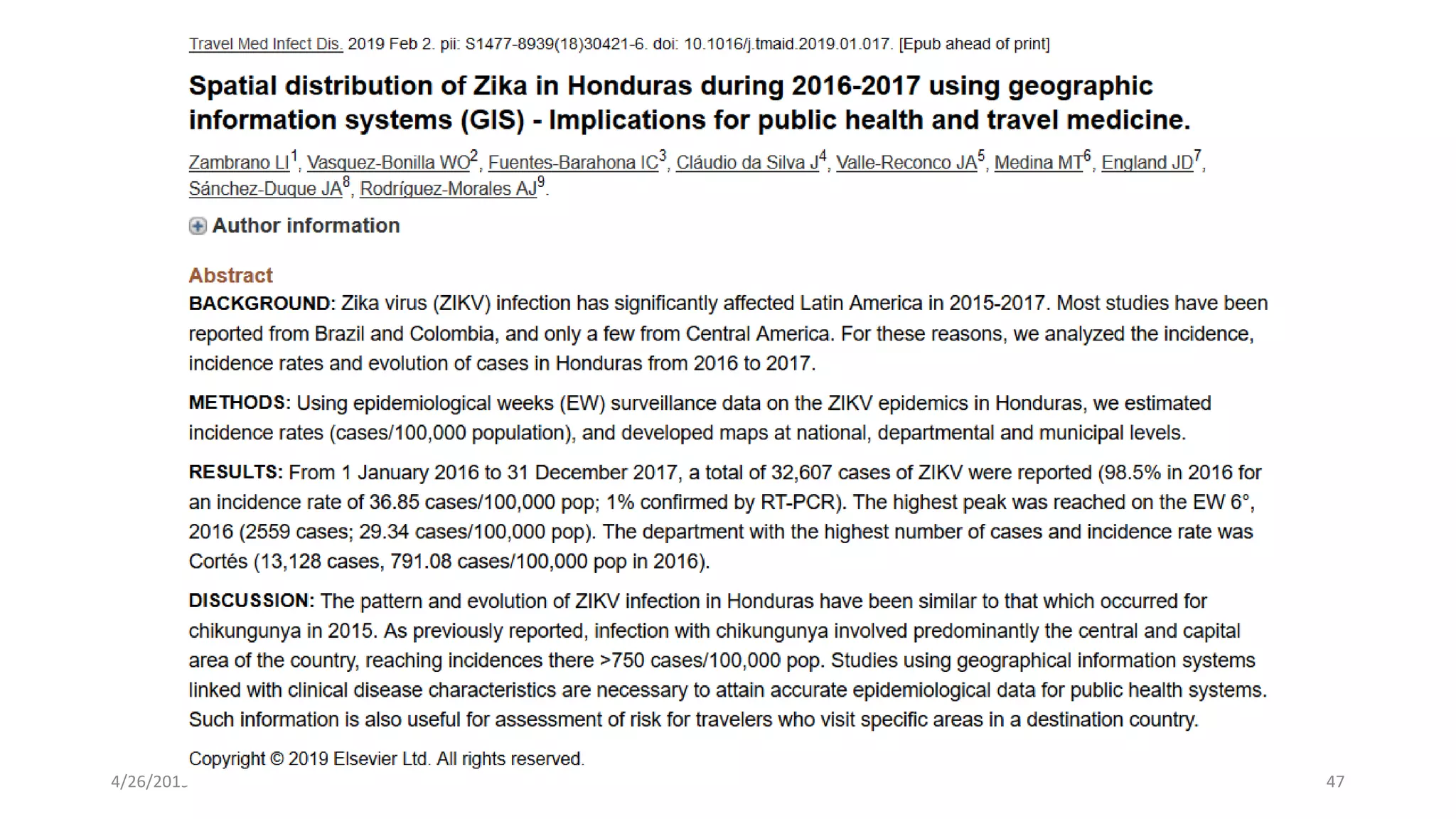
• Travel Medicine
• Environmental Health decision
• Mapping of Health services Providers
• Population growth
• Geographic access to Health Services
• Geographic Epidemiology
4/26/2019 46
4/26/2019 47
4/26/2019 48
Application of GIS in public health and
medicine
• Disaster management and mitigation
• Environment Impact analysis
• Accident analysis and hot spot analysis
4/26/2019 49
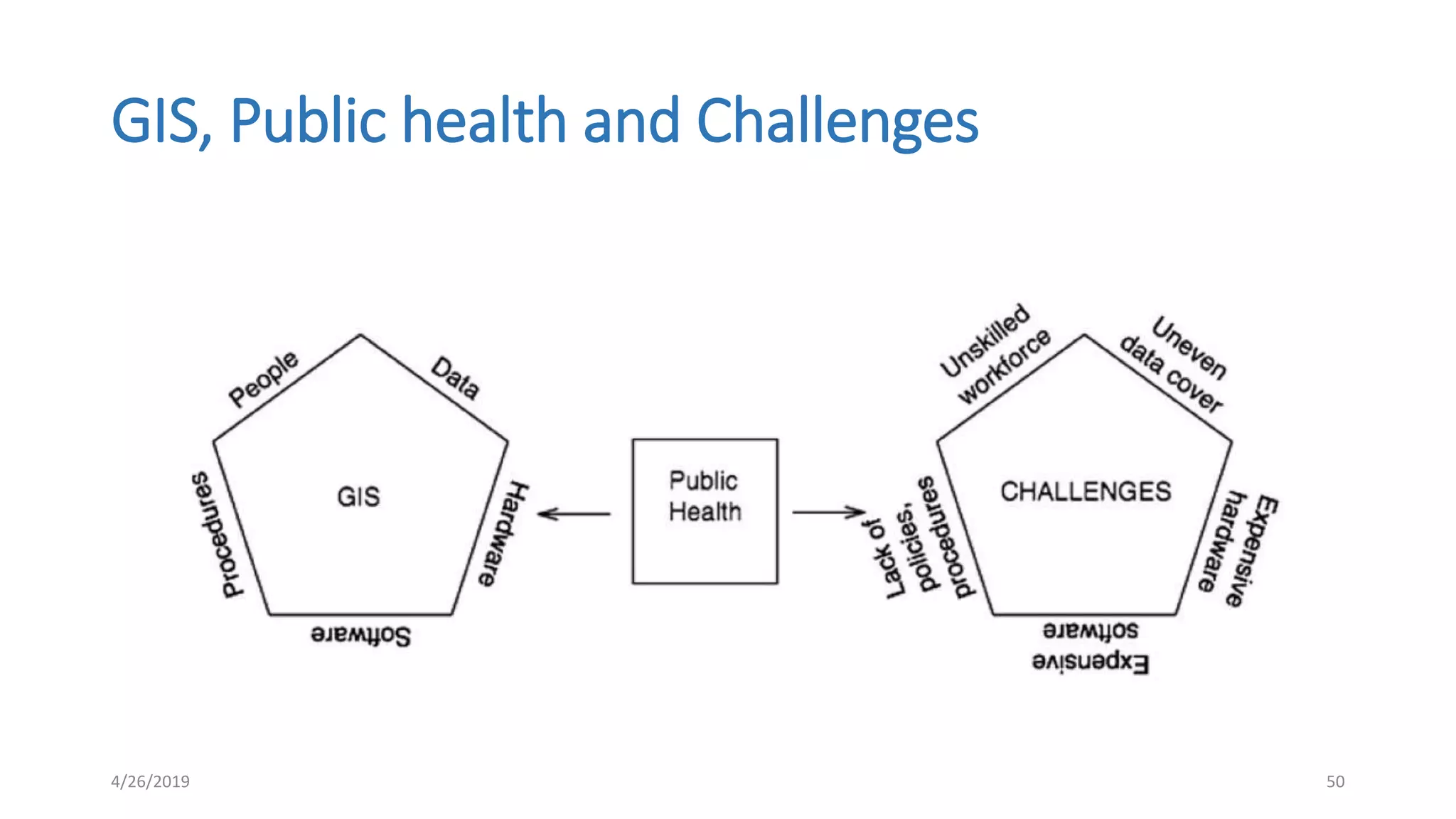
GIS, Public health and Challenges
4/26/2019 50
Challenges
• Limited access to GIS infrastructure
• Limited technical capacity and experience
• Limited data availability and analysis capacity
• Privacy issues
4/26/2019 51
History-GIS in Nepal
• The National Remote Sensing Center was the pioneer organization
to establish the history of digital spatial database of Nepal which was
established with the financial and technical support of USAID in
1979.
• After the Ninth Five Year Plan (1995-2002) the Government of Nepal
has been incorporating the use of GIS and RS technology for the
preparation of land use map of the country as a key planning aid.
4/26/2019 52
• Nepal GIS society is dedicated since 1995 for
• Applied and empirical research
• GIS and GPS training
• Introduction of GIS to strengthen immunization coverage
• Urban Area clinic/ Immunization clinic mapping
• Identification of hard to reach area.
4/26/2019 53
GIS in Nepal
• GIS has been incepted and in the process of institutionalize in the
health system.
• This is guided by NHSP, periodic Development Plans, Health Sector
Information System-National Strategy(HSIS-NS) and information,
Communication and Technology Policy of the Government of Nepal.
• This adoption is also reinforced by e-health, Health GIS and need for
integration of information systems.
4/26/2019 54
GIS in Nepal
• Health Facility Mapping Survey(HFMS) has been carried out in 57
districts with technical and financial support from WHO and further
processing for remaining 18 districts is going on.
• The completion of this survey is expected to result in geographic
feature embedded planning, monitoring and evaluation in the health
system.
4/26/2019 55
WHO--Developing GIS-based tools and system
to promote “the use of data”
• Program for Immunization Preventable Disease (IPD) has recently
invested in developing GIS-based tools and system to
 Promote “the use of data” i.e. collection, analysis, interpretation,
and review of data as part of a decision-making processes,
 Strengthen capacity of government and IPD field network in
analysis/management of VPDs and routine immunization data,
 Strengthen VPD surveillance and
 Support in achieving goals of immunization program of DoHS/MoHP.
4/26/2019 56
• Vaccine Preventable Disease Mapping System (VPDMS)
Vaccine Preventable Disease Mapping System (VPDMS) is a web GIS
based system that allows the users effectively and efficiently to
manage and analyze epidemiological data related to some key vaccine
preventable diseases.
• VPDMS is accessible via a normal web browser without requiring any
installation in the client side.
4/26/2019 57
• The existing system has four major functionalities which are data
input, visualization, report generation and access control, elaborated
as follows
• Use of existing IPD data reporting mechanism as data input for case-
based surveillance data on weekly basis, district level immunization
coverage and population data in yearly basis.
• Diseases data visualization
• Generating standardized reports
• Access to IPD network and government counterparts
4/26/2019 58
• GIS Based Tool for Districts
The GIS based tool is designed by the Program for Immunization
Preventable Diseases (IPD), World Health Organization, Country Office for
Nepal, to assist districts to plan surveillance and immunization activities.
The following functionalities are incorporated in the Tool.
• Viewing geographic accessibility to health facility
• Preparing administrative boundary maps up to ward level
• Viewing immunization booth location and session information at ward level
• Accessing geo-spatial information dynamically in the field (offline)
4/26/2019 59
• Excel-based mapping Tool
The tool is designed in such a way that a non-GIS person can easily
prepare a map of immunization coverage by antigen, just by typing in
the data values to generate map in MS Excel.
• The tool can be further modified to create VDC level mapping
template. The functionalities are
• Create district level map of immunization coverage of all antigen.
• Modify the template to create a VDC level map of immunization
coverage
4/26/2019 60
GIS is being used in the field of public health
4/26/2019 61
Conclusion
• Public health is an application area where GIS has proven to be
reliable method for better future planning towards one of the most
important objective: Better Public health
• Despite the challenges, GIS use in the public health is increasing
world wide and in Nepal.
• As a public health students and professionals, its time to integrate GIS
in public health research or project. Result obtained may be help to
develop relevant policies
4/26/2019 62
References
• https://www.gislounge.com/overview-public-health-gis/
• Zhang W, Chen Q, McCubbin H, McCubbin L, Foley S. Predictors of
mental and physical health: Individual and neighborhood levels of
education, social well-being, and ethnicity. Health & Place.
2011;17:238–247.
• Fradelos EC, Papathanasiou IV, Mitsi D, Tsaras K, Kleisiaris CF,
Kourkouta L. Health Based Geographic Information Systems (GIS) and
their Applications. Acta Inform Med. 2014;22(6):402–405.
doi:10.5455/aim.2014.22.402-405
• http://oneclout.com/basic-concepts-of-gis-an-introduction/
4/26/2019 63
• Lisabeth LD, Escobar JD, Dvonch JT, et al. Ambient air pollution and
risk for ischemic stroke and transient ischemic attack. Ann Neurol.
2008;64(1):53–59. doi:10.1002/ana.21403
• https://www.negiss.org.np/
4/26/2019 64
4/26/2019 65

Geographic information system in public health

  • 1.
    Recent Advance Presentationon Geographic Information System in Public Health Presentation By: Bikram Adhikari (136) MPH-2018 School of Public Health and Community Medicine
  • 2.
    Overview • Introduction • Historyof GIS in relation to Health • Applications of GIS in public health • Challenges • GIS in Nepal • Conclusion 4/26/2019 2
  • 3.
    Basic terminologies • GISdata: • Spatial data: • It is information about a physical object that can be represented by numerical values in a geographic coordinate system. • It exist in 2 forms: • Vector—Point, line, Polyline, Polygon • Raster--- Grid, Image • Non-spatial: • Attribute 4/26/2019 3
  • 4.
  • 5.
    Introduction • A geographicalinformation system (GIS) is a computer system for capturing, storing, checking, integrating, manipulating, analyzing and displaying data related to positions on the Earth's surface. • It is thus a way of linking databases with maps, to display information, perform spatial analyses or develop and apply spatial models. • The phrase "geographic information systems" was first used in the 1960s to refer to a computerized system for asking questions of maps showing current and potential land use in Canada 4/26/2019 5
  • 6.
    Components of GIS •Hardware • Software • Data • People • Method 4/26/2019 6
  • 7.
  • 8.
  • 9.
    GIS Function • Capturedata • Data storage • Data manipulation • Query and data analysis • Data visualization 4/26/2019 9
  • 10.
    What can wedo with GIS • Mapping where things are • Mapping quantities • Mapping densities • Finding what is inside. • Finding what is nearby • Mapping change 4/26/2019 10
  • 11.
  • 12.
    History • In 1848,Dr. Thomas Shapter published a dot density map of 1,100 deaths from cholera in Exeter that occurred between 1832 and 1834, using different symbols for deaths occurring in different years. 4/26/2019 12
  • 13.
    History • Public healthefforts have been based on analysis and use of spatial data for many years. Dr. John Snow (physician), often credited as the father of epidemiology, is arguably the most famous of those examples 4/26/2019 13
  • 14.
    History • The year1960 saw the development of the world's first true operational GIS in Ottawa, Ontario, Canada by the federal Department of Forestry and Rural Development. • Developed by Dr. Roger Tomlinson, it was called the Canada Geographic Information System (CGIS) • It was used to store, analyze, and manipulate data collected for the Canada Land Inventory 4/26/2019 14
  • 15.
    Father of GISand World GIS day • Father of GIS: Dr. Roger Tomlinson (1933-2014) • World GIS day: 13th November 4/26/2019 15
  • 16.
    GIS and PublicHealth • Geographic Information Systems (GIS) play a major role in health care, surveillance of infectious diseases, and mapping and monitoring of the spatial and temporal distributions of vectors of infection. • GIS combine sophisticated algorithms, spatial analysis, geo-statistics and modelling, making GIS technology a powerful tool for the prediction of disease patterns and parasite ecology associations 4/26/2019 16
  • 17.
    Application of GISin Public Heath • Human Health Decision-Making • Disease surveillance and early warning systems • Use of GIS in vaccine efficacy trial • GIS In The Epidemiology And Control Of Helminthiase • Cluster random sampling and data collection • Pandemic Planning And Prediction • GIS and Mental health • Geographic information systems and health services • The application of GIS in environmental health management 4/26/2019 17
  • 18.
    Application of GISin Public Health 1. Human Health Decision-Making • The combination of GIS and Human Health applications with the decision-making processes as defined in Anthony’s Model. 4/26/2019 18
  • 19.
  • 20.
    Application of GISin Public Heath 2. Disease surveillance and early warning systems • Spatial observations of environmental factors such as rainfall, land use, surface temperatures, oceans and land cover have a direct epidemiological impact on the transmission of diseases. • Consequently, the ability to apply GIS techniques to disease surveillance has opened up a world of possibilities in creating early- warning systems for emerging and re-emerging diseases 4/26/2019 20
  • 21.
    Application of GISin Public Heath • The incorporation of a GIS-based spatial decision support system (SDSS) into the surveillance response system in the South Pacific is a major achievement for Vanuatu and Solomon Islands. • The SDSS is designed to automatically locate and map confirmed malaria cases, to classify active foci of infection, and to guide targeted interventions. • With technical assistance provided by the Pacific Malaria Initiative Support Centre (PacMISC) and WHO, local authorities were able to build custom applications into the existing provincial SDSS used in previously identified elimination provinces, to support general topographic mapping, geographic reconnaissance and vector control intervention management. 4/26/2019 21
  • 22.
    Application of GISin Public Health • One noteworthy example of how GIS has been applied to other infectious diseases is the World Health Organization (WHO)’s DengueNet, • It is a centralized data management system that includes a database and GIS for the global epidemiological and virological surveillance of dengue fever (DF) and dengue haemorrhagic fever (DHF). • This web-based system makes available to users a standard platform where current surveillance data on the incidence and trends of dengue and DHF are shared. 4/26/2019 22
  • 23.
    Application of GISin Public Heath 3. Use of GIS in vaccine efficacy trial 1. Planning and logistic support for trial • Vaccine trial requires- area with high disease burden, adequate healthcare centers to detect the target disease, and a system for the transportation of the vaccines • In cluster randomized trials, it is necessary to : • to define appropriate geographical clusters • understand the population size • the disease burden at the cluster level. (Between-cluster heterogeneity in disease burden may lead to bias in the estimate of protection offered by the vaccine) 4/26/2019 23
  • 24.
    • GIS helpsin • investigating the spatial pattern of the disease burden • Finding any significant heterogeneity in this indicator can be addressed during data analysis. • Defining cluster for vaccination • If vaccines are administered in the community, the daily vaccine requirement has to be predicted accurately, to allow shipping of the correct number of vaccine doses within cold chain GIS • GIS was used to estimate the distance between specimen-collection centers and the center for specimen storage (Vietnam) 4/26/2019 24
  • 25.
    Application of GISin Public Heath 3. Use of GIS in vaccine efficacy trial 2. Trial management • Refusals and absentees are a common concern in vaccine trials. • The identification of areas with relative high frequencies of non-compliance, during a vaccine campaign, can help investigators to target such areas for sensitization prior to the next day / round of vaccination and/or increased volunteer deployment during the next vaccinations. • GIS can be used • To find geography wise prevalence of non-compliance • Example: In Vietnam,GIS helped identification and targeting of the areas that were worst affected by non-compliance. 4/26/2019 25
  • 26.
    4. GIS InThe Epidemiology And Control Of Helminthiase • The effective control of helminth infections in humans requires reliable estimates of the geographical distributions of such infections and the sizes of populations requiring an intervention. • The relationship and associated uncertainty between infection outcomes and covariates are estimated and the model is used to predict the outcome at unsampled locations 4/26/2019 26
  • 27.
    • In WestAfrica, a regional multinomial model was built to identify areas with high prevalence of high-intensity S. haematobium infection • Predicted prevalence maps, including those derived from MBG, can be multiplied by electronic population-density maps to determine the numbers of individuals infected in each location. 4/26/2019 27
  • 28.
    5. Pandemic PlanningAnd Prediction • Pandemics are intrinsically geographical, with infection often moving rapidly from one place to another and spanning large distances in doing so. • The planning required to prepare for, or intervene in, pandemics involves an understanding of the spatial patterns of the transmission and spread of the pathogen involved. 4/26/2019 28
  • 29.
  • 30.
  • 31.
    • 6. GISand Mental health • Mental disorders appear to spread in all countries, societies and nations, regardless of socioeconomic level of the population. • Mental illness is typically associated with age. • Mental illnesses are quite intertwined with environmental changes or disasters and changes in land use such as urbanization 4/26/2019 32
  • 32.
    • It isexpected that the geographical representation of this data will serve as a valuable tool for health professionals both in treating and preventing mental illness. • GIS is used to assess accessibility to mental health services and general health services. • GIS can analyze and portray accurately the distribution of mental health services and they could explain the reasons why the accessibility in healthcare services is affected. 4/26/2019 33
  • 33.
  • 34.
  • 35.
    7. Geographic informationsystems and health services • In general, the fields of application of GIS could be applied to strategic planning, research, evaluation, preparedness for emergency situations and the availability and location of health care services • Geographic Information Systems provide us with the exact location of specific medical equipment and how somebody may gain the fastest access to it. It is important an insurance institution, when it is requested by the insured, know the nearby location where the insured could gain access to a CT scanner. 4/26/2019 36
  • 36.
    8. The applicationof GIS in environmental health management • The environmental impacts on human health are significant. • GIS could be used in studying cardiovascular health problems, including deaths due to heart disease and stroke. These deaths can be linked to gaseous pollutants, particularly air pollution. GIS can display these gaseous and particulate matter types and their uniform dispersion and transmission 4/26/2019 37
  • 37.
  • 38.
  • 39.
    Application of GISin Public Heath 9. Useful in Cluster random sampling and data collection 4/26/2019 40
  • 40.
  • 41.
  • 42.
  • 43.
  • 44.
  • 45.
    Application of GISin public health and medicine • Travel Medicine • Environmental Health decision • Mapping of Health services Providers • Population growth • Geographic access to Health Services • Geographic Epidemiology 4/26/2019 46
  • 46.
  • 47.
  • 48.
    Application of GISin public health and medicine • Disaster management and mitigation • Environment Impact analysis • Accident analysis and hot spot analysis 4/26/2019 49
  • 49.
    GIS, Public healthand Challenges 4/26/2019 50
  • 50.
    Challenges • Limited accessto GIS infrastructure • Limited technical capacity and experience • Limited data availability and analysis capacity • Privacy issues 4/26/2019 51
  • 51.
    History-GIS in Nepal •The National Remote Sensing Center was the pioneer organization to establish the history of digital spatial database of Nepal which was established with the financial and technical support of USAID in 1979. • After the Ninth Five Year Plan (1995-2002) the Government of Nepal has been incorporating the use of GIS and RS technology for the preparation of land use map of the country as a key planning aid. 4/26/2019 52
  • 52.
    • Nepal GISsociety is dedicated since 1995 for • Applied and empirical research • GIS and GPS training • Introduction of GIS to strengthen immunization coverage • Urban Area clinic/ Immunization clinic mapping • Identification of hard to reach area. 4/26/2019 53
  • 53.
    GIS in Nepal •GIS has been incepted and in the process of institutionalize in the health system. • This is guided by NHSP, periodic Development Plans, Health Sector Information System-National Strategy(HSIS-NS) and information, Communication and Technology Policy of the Government of Nepal. • This adoption is also reinforced by e-health, Health GIS and need for integration of information systems. 4/26/2019 54
  • 54.
    GIS in Nepal •Health Facility Mapping Survey(HFMS) has been carried out in 57 districts with technical and financial support from WHO and further processing for remaining 18 districts is going on. • The completion of this survey is expected to result in geographic feature embedded planning, monitoring and evaluation in the health system. 4/26/2019 55
  • 55.
    WHO--Developing GIS-based toolsand system to promote “the use of data” • Program for Immunization Preventable Disease (IPD) has recently invested in developing GIS-based tools and system to  Promote “the use of data” i.e. collection, analysis, interpretation, and review of data as part of a decision-making processes,  Strengthen capacity of government and IPD field network in analysis/management of VPDs and routine immunization data,  Strengthen VPD surveillance and  Support in achieving goals of immunization program of DoHS/MoHP. 4/26/2019 56
  • 56.
    • Vaccine PreventableDisease Mapping System (VPDMS) Vaccine Preventable Disease Mapping System (VPDMS) is a web GIS based system that allows the users effectively and efficiently to manage and analyze epidemiological data related to some key vaccine preventable diseases. • VPDMS is accessible via a normal web browser without requiring any installation in the client side. 4/26/2019 57
  • 57.
    • The existingsystem has four major functionalities which are data input, visualization, report generation and access control, elaborated as follows • Use of existing IPD data reporting mechanism as data input for case- based surveillance data on weekly basis, district level immunization coverage and population data in yearly basis. • Diseases data visualization • Generating standardized reports • Access to IPD network and government counterparts 4/26/2019 58
  • 58.
    • GIS BasedTool for Districts The GIS based tool is designed by the Program for Immunization Preventable Diseases (IPD), World Health Organization, Country Office for Nepal, to assist districts to plan surveillance and immunization activities. The following functionalities are incorporated in the Tool. • Viewing geographic accessibility to health facility • Preparing administrative boundary maps up to ward level • Viewing immunization booth location and session information at ward level • Accessing geo-spatial information dynamically in the field (offline) 4/26/2019 59
  • 59.
    • Excel-based mappingTool The tool is designed in such a way that a non-GIS person can easily prepare a map of immunization coverage by antigen, just by typing in the data values to generate map in MS Excel. • The tool can be further modified to create VDC level mapping template. The functionalities are • Create district level map of immunization coverage of all antigen. • Modify the template to create a VDC level map of immunization coverage 4/26/2019 60
  • 60.
    GIS is beingused in the field of public health 4/26/2019 61
  • 61.
    Conclusion • Public healthis an application area where GIS has proven to be reliable method for better future planning towards one of the most important objective: Better Public health • Despite the challenges, GIS use in the public health is increasing world wide and in Nepal. • As a public health students and professionals, its time to integrate GIS in public health research or project. Result obtained may be help to develop relevant policies 4/26/2019 62
  • 62.
    References • https://www.gislounge.com/overview-public-health-gis/ • ZhangW, Chen Q, McCubbin H, McCubbin L, Foley S. Predictors of mental and physical health: Individual and neighborhood levels of education, social well-being, and ethnicity. Health & Place. 2011;17:238–247. • Fradelos EC, Papathanasiou IV, Mitsi D, Tsaras K, Kleisiaris CF, Kourkouta L. Health Based Geographic Information Systems (GIS) and their Applications. Acta Inform Med. 2014;22(6):402–405. doi:10.5455/aim.2014.22.402-405 • http://oneclout.com/basic-concepts-of-gis-an-introduction/ 4/26/2019 63
  • 63.
    • Lisabeth LD,Escobar JD, Dvonch JT, et al. Ambient air pollution and risk for ischemic stroke and transient ischemic attack. Ann Neurol. 2008;64(1):53–59. doi:10.1002/ana.21403 • https://www.negiss.org.np/ 4/26/2019 64
  • 64.

Editor's Notes

  • #4 Spatial: that defines the location, shape, size and orientation Non-spatial: data that is related to defined location
  • #5 Geographic: related to geography, It implies the location of data items in terms of geographic coordinates Information: set of datas that is to be linked with geography to yield the useful knowledge System: a several components working together as parts of a mechanism It is simply the computer based tool used for analyzing data in reference to geography to yield valuable information
  • #6 A geographical information system (GIS) is a computer system may be hardware and software for capturing, storing, checking, integrating, manipulating, analyzing and displaying data related to positions on the Earth's surface.
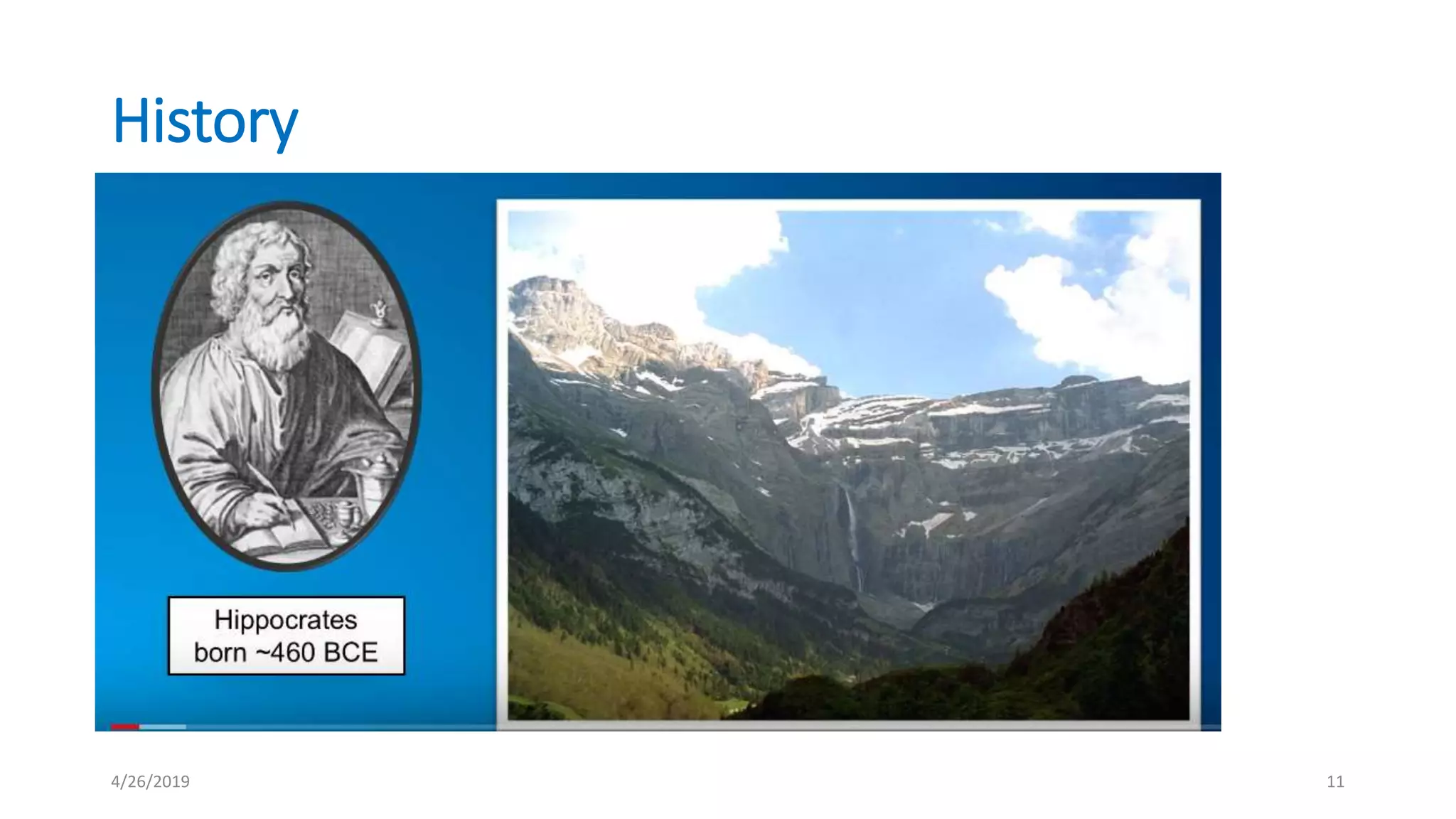
  • #12 Earliest mention I found was the association between health and place, given by the father of medicine himself. With the difference in geographic location, there is difference in climate, environement which is directly associated with health.
  • #13 History of GIS and public health is
  • #14 Dr. John Snow demonstrated the water-borne origin of cholera by plotting cholera-related deaths in London during the most severe 1854 epidemic on maps. In addition to disease cases, he also plotted the city’s water pumps, and drew concentric circles to determine that the area with the highest concentration of cases were within close proximity to the Broad Street pump. Removing the pump led to the almost immediate end to new cases in the area, proving that drinking water from this pump was an important causative agent in the epidemic.
  • #16 Dr. Roger Tomlinson (1933-2014) is generally recognized as the "father of GIS.” He is the visionary geographer who conceived and developed the first GIS for use by the Canada Land Inventory in the early 1960s.
  • #17 1-6 Area of GIS ApplicationsMajor areas of GIS application can be grouped into five categories as follows. Facilities Management Large scale and precise maps and network analysis are used mainly for utility management. AM/FM is frequently used in this area. Environment and Natural Resourrces Management Medium or small scale maps and overlay techniques in combination with aerial photographs and satellite images are used for management of natural resources and environmental impact analysis. Street Network Large or medium scale maps and spatial analysis are used for vehicle routing, locating house and streets etc. Planning and Engineering Large or medium scale maps and engineering models are used mainly in civil enginerring. Land Information System Large scale cadastre maps or land parcel maps and spatial analysis are used for cadastre administration, tax
  • #19 Management Control encompasses the management surrounding the health delivery system as a whole, and is specifically related to the needs and provisioning of health services, health promotion, disease prevention, and health inequalities while assuring that resources are obtained and used effectively and efficiently in the accomplishment of the organization’s objectives.
  • #21 The incorporation of GIS technology into routine disease surveillance has been achieved in some resource limited settings based on increased recognition of the value of GIS technology in the understanding and control of infectious diseases, which has led to increased political, financial and technical support for such program.
  • #22 The incorporation of a GIS-based spatial decision support system (SDSS) into the surveillance response system in the South Pacific is a major achievement for Vanuatu and Solomon Islands. The SDSS is designed to automatically locate and map confirmed malaria cases, to classify active foci of infection, and to guide targeted interventions. With technical assistance provided by the Pacific Malaria Initiative Support Centre (PacMISC) and WHO, local authorities were able to build custom applications into the existing provincial SDSS used in previously identified elimination provinces, to support general topographic mapping, geographic reconnaissance and vector control intervention management. This enabled teams to automatically classify and map transmission foci based on the spatiotemporal distribution of cases, and to identify priority areas of interest for the implementation of foci-specific targeted response . Several developing countries now have to access GIS technology as a result of their participation in the Global Fund for Tuberculosis, Malaria and AIDS programmes (Chang et al. 2009). The Global Fund for Tuberculosis, Malaria and AIDS programmes is a partnership between governments, civil society, the private sector and people affected by these diseases to accelerate the end of AIDS, TB and malaria as epidemics
  • #23 Data are standardized and reported at the country level resulting in greater comparability of the reported cases of dengue fever across different geographical areas. This translates into useful early warning information for public health professionals who can then be better prepared for the management of individual cases and epidemics, thus reducing fatality rates.
  • #24 2. Knowledge about the population, the physical characteristics of the area and the local barriers to vaccine delivery and healthcare access are essential prerequisites for selecting a trial site.
  • #26 2. Knowledge about the population, the physical characteristics of the area and the local barriers to vaccine delivery and healthcare access are essential prerequisites for selecting a trial site. The use of GIS in vaccine trials may help investigators improve their study design, management, analysis, and interpretation of data, enhancing the value and scientific quality of the trials.
  • #27 Helminthiases are some of the most common infections of humans. In sub-Saharan Africa, 740 million individuals are estimated to be infected with soil-transmitted helminths (Ascaris lumbricoides, Trichuris trichiura, and the hookworms Necator americanus and Ancylostoma duodenale; De Silva et al., 2003), 207 million have schistosomiasis (Schistosoma haematobium and S. mansoni; Steinmann et al., 2006), 50 million have lymphatic filariasis caused by Wuchereria bancrofti (Michael and Bundy, 1997), and 37 million have onchocerciasis as the result of Onchocerca volvulus infection (Basa´n˜ez et al., 2006). these predictive approaches have employed Bayesian modelbased geostatistics (MBG), in which classical geostatistics are embedded in the framework of a generalised linear model.
  • #35 areas where the percentage of college degree or higher is at higher level (26.6–47.5) and the levels of social wellbeing and health are also at the middle to higher levels. Similarly, Koolina and Ewa beach are areas where the percentage of college degree or higher is in the middle level (17.9–25.6) and the levels of social well-being and health are also at the middle to higher levels. The Waianae Coast shows the lowest percentage of college degree or higher (3.9–10.9) and has the second to the lowest levels of social well-being (4.5–4.9), mental health (3.9–4.2), and physical health (3.7–4.3).
  • #37 Geographic information systems provide a tremendous convenience to health care providers as far asorganization and management of health services is concerned. Therefore, the organization and coordination of the various services will be easier and more effective. The health care provider can quickly and efficiently direct the patient to appropriate health care services [43]. Geographic information systems are able to provide the exact location of specific medical devices and how someone can arrive faster. It is important that an insurance agency be able to know the nearest location for accessing a scan, when requested by the insured [42]
  • #38 The use of GIS in environmental issues is widespread. These systems can be used as small and simple applications such as a map analysis as well as decision-making tools to more complex issues. The environmental impact on human health is important. According to WHO, environmental hazards are responsible for about 25% of the total burden of disease worldwide and nearly 35% applies for Africa. What’s more, according to WHO 13 million deaths would have been avoided if our environment had been healthier.
  • #47  During the past decade, GIS applications tended to focus on the following areas: In Agricultural sector The effect of Climate Medicine and Parasitology Pesticides and Pollution Management of waste and Wildlife management
  • #49 GIS-based maps provide relevant information to assess the risk to individuals travelling to specific destinations in endemo-epidemic areas allowing detailed prevention advice [37]. Such maps allow integration of prevention and control strategies, as well as public health policies, for joint control of this vector-borne disease in this and other countries of the region [60]. Simultaneous or sequential arboviral infections occur and should be assessed and mapped as a subject of surveillance [57-59]. Preparedness in this setting should also consider the potential arrival of Mayaro [13, 41], Oropouche and yellow fever viruses in Aedes infested areas [61