Dr. Moustapha Ramadan
Fellow of Community Medicine Department
Faculty of Medcine
Alexandria University
 Definitions of ( cluster/outbreak/pseudo
outbreak/ epidemic)
 Healthcare settings infections
 Reasons to investigate
 How to recognize outbreak/epidemic
 Goals of investigations
 Steps of investigations
 Cluster : refers to a group of cases in a specific
time and place
 Outbreak: An increase in the incidence of a
disease above what is normally expected in
localized area over a specific period of time
 Pseudo outbreak:
Increase in detection of true cases that does not
represent an outbreak eg: Change in local
reporting practices, increased interest in certain
diseases because of local or national awareness,
changes in diagnostic methods
or increase in incidence not related to true
increase in cases eg: misdiagnosis, laboratory
contamination
 Epidemic :
The occurrence in a defined community or
region of cases of illness with a frequency
clearly in excess of normal expectancy…
endemo epidemic
A single case of a communicable disease long
absent from a population or the first invasion
by a disease not previously recognized…exotic
epidemic
 Significant increase in the rate of HAIs above
the facility’s background rate.
 5% of HAIs occur in outbreaks
 Most outbreaks go unrecognized
 Localized or systemic condition that results
from adverse reaction due to the presence of an
infectious agent(s) or its toxin(s) that was not
present or incubating at the time of admission
to the health facility.
 Examples : UTI, VAP ,SSI, BSI, Clostridium
difficile etc…
 Because every report by itself is very much
influenced by the local situation. Thus, only a
systematic evaluation of a large number of
outbreak reports will provide a less biased
assessment of data.
 May represent breakdowns in public health
measures.
 Evaluate existing prevention strategies, e.g.,
vaccines
 Describe new diseases
 Teach (and learn) epidemiology of infectious
diseases
 Address public concern about the outbreak
 Recently WHO recommends global alert and
response system (GAR).
 Early warning which is timely surveillance
systems that collect information on epidemic-
prone diseases in order to trigger prompt public
health interventions.
 Relies on an in-depth review done by
epidemiologists of the data coming in.
 Surveillance system
 Reporting : Healthcare settings, laboratories,
pharmacies
 Surveillance is the collection, analysis,
interpretation and dissemination of information
about a selected health event. This information is
important to plan, implement and evaluate a health
program.
Uses of Surveillance
I) Identify the disease trend so that planning of
preventive and control programs can be adjusted to
meet the new situation.
2) Identify, investigate and help the control of
outbreaks or epidemics.
3) Identify the population at risk for certain disease or
death.
4) Identify new emerging disease.
5) Evaluation of preventive and control measures of
the disease under study.
 Identify the etiologic agents
 Identify the reservoir(s)
 Identify the mode of transmission
 Apply control and prevention measures
 Eliminate the reservoir(s) and transmission
 Prevent future outbreaks
 Prepare for field work
 Establish the existence of an epidemic
 Verify the diagnosis
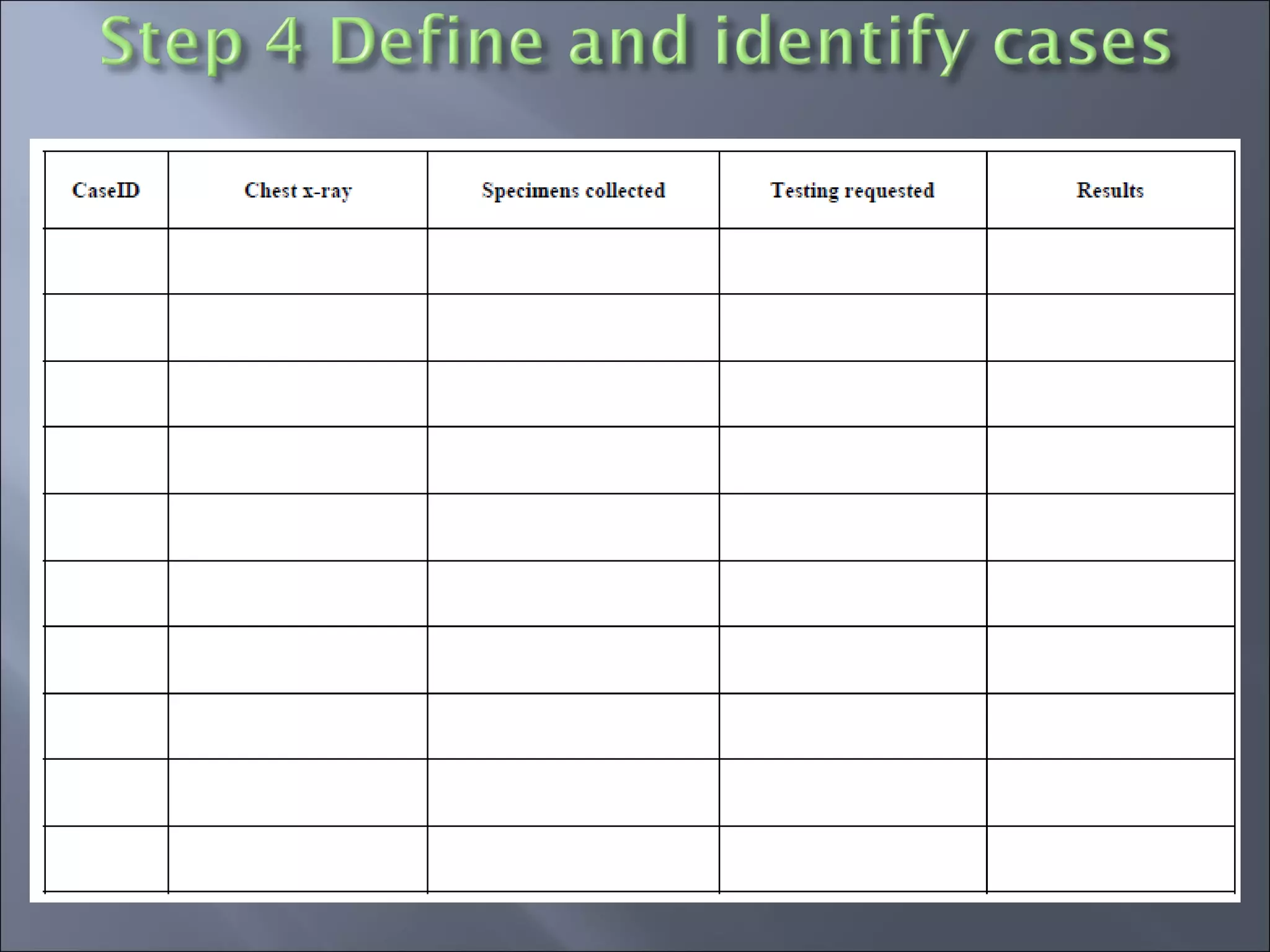
 Define and identify cases
 Descriptive epidemiology and epidemic
curves.
 Develop hypotheses
 Evaluate hypotheses
 Refine hypotheses and carry out additional
studies
 Implement control and prevention measures
 Communicate findings
 Develop an outbreak team.
 Determine the role of each member in the
investigation
 Research the disease and gather the supplies and
equipment you will need
 Make necessary administrative and personal
arrangements for such things
Review existing information to determine the number of
potential cases, location, and severity of the problem
surveillance records
laboratory records
patient medical records
radiology
Pharmacy
Compare rates of infection for both the background period
and the outbreak period
 Goal is to rule out pseudo-outbreaks.
 Requires to :
 Review the clinical findings
 Laboratory findings
 Examination a sample of affected persons
A. Define cases ( Establish case definition):
 Case definition should be broad enough to
include most, if not all, of the actual cases.
(sensitive not specific)
 Case definition must not include an exposure
or risk factor you want to test
 Case definition must be equally applied and
without bias to all persons under the
investigation
A. Define cases ( Establish case definition):
Usually includes four components:
 clinical information about the disease, 
 characteristics about the people who are
affected, 
 information about the location or place, and 
 a specification of time during which the
outbreak occurred
A. Define cases ( Establish case definition):
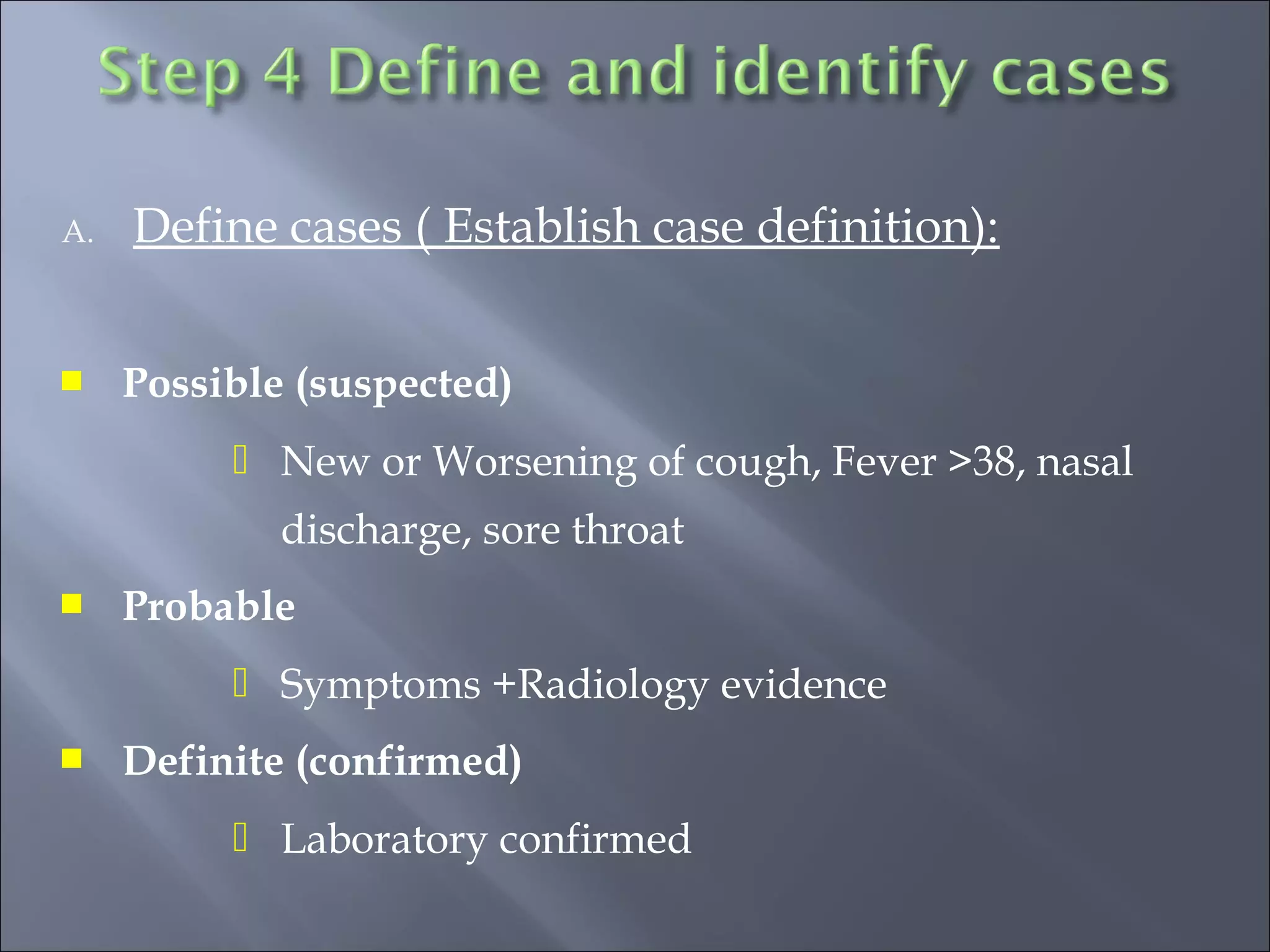
 Possible (suspected)
 New or Worsening of cough, Fever >38, nasal
discharge, sore throat
 Probable
 Symptoms +Radiology evidence
 Definite (confirmed)
 Laboratory confirmed
A. Define cases ( Establish case definition):
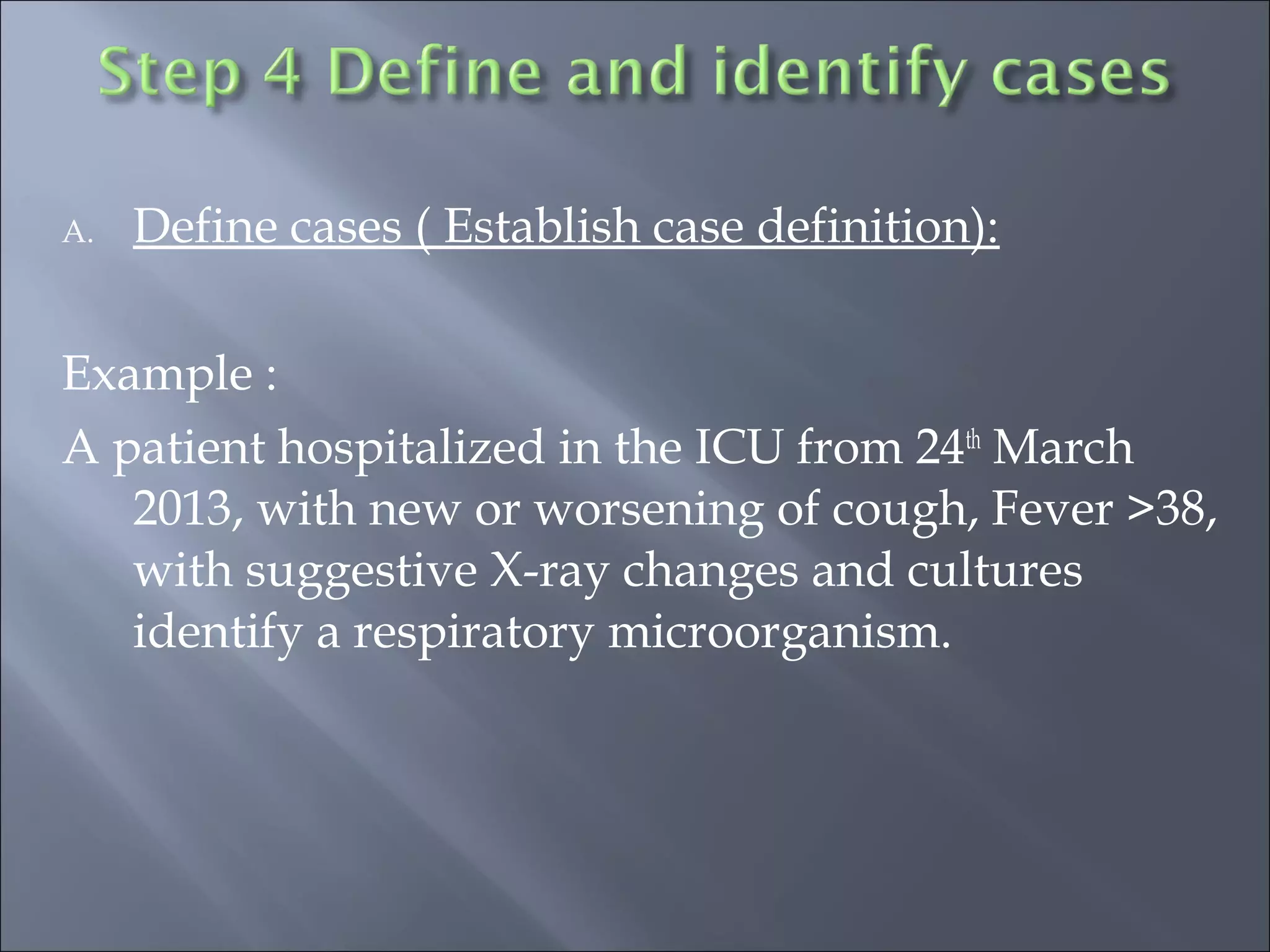
Example :
A patient hospitalized in the ICU from 24th
March
2013, with new or worsening of cough, Fever >38,
with suggestive X-ray changes and cultures
identify a respiratory microorganism.
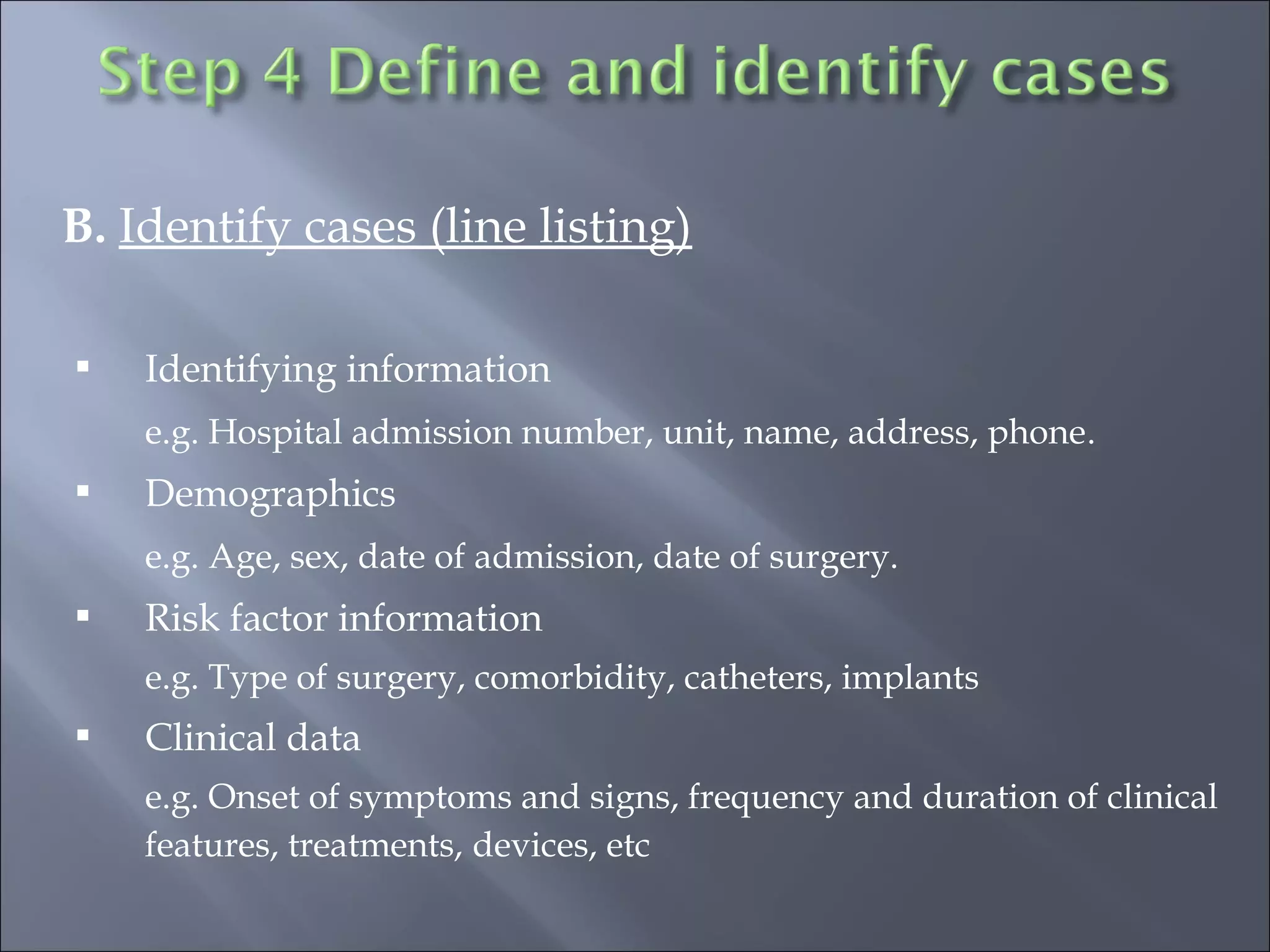
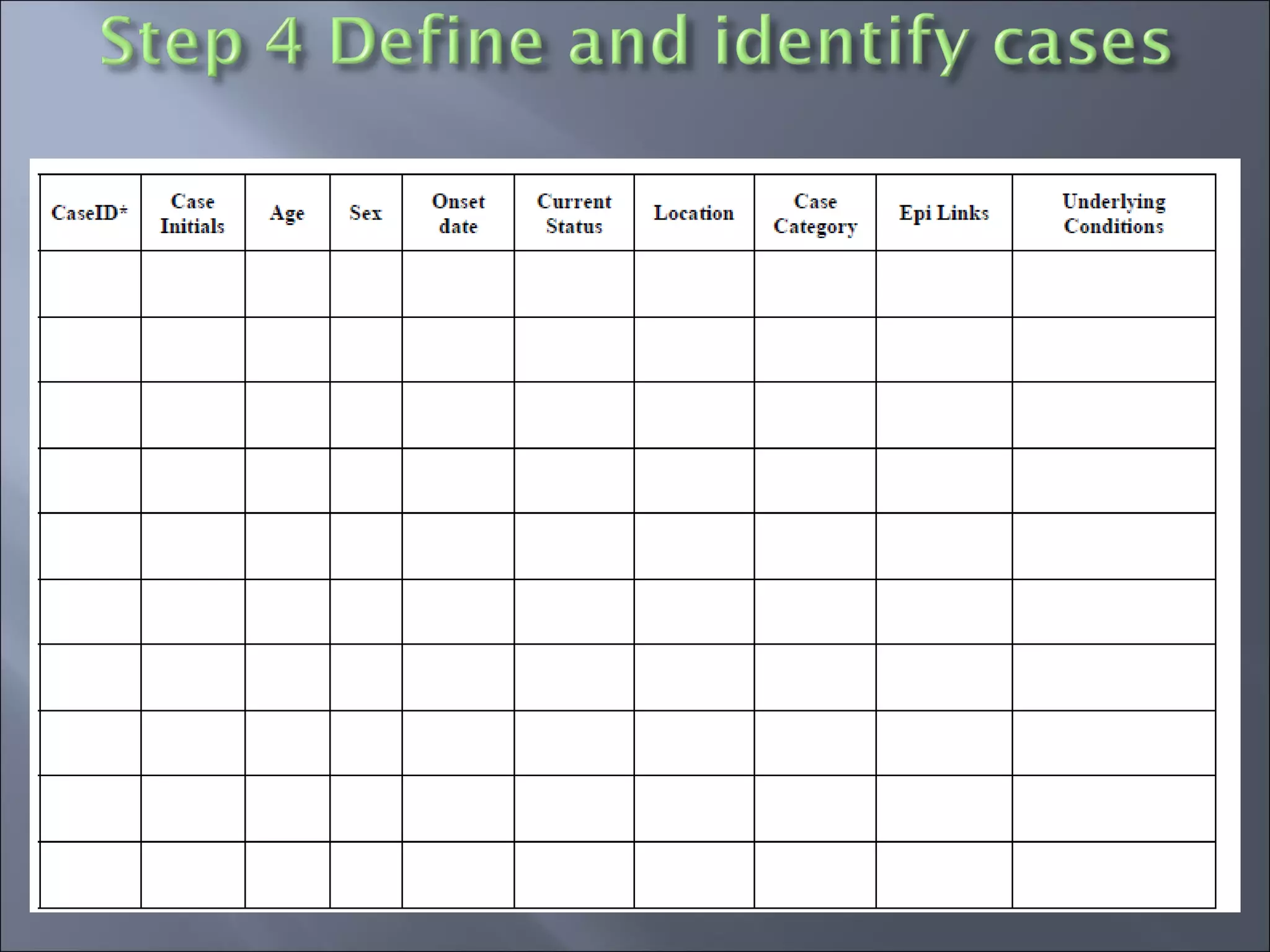
B. Identify cases (line listing)
 Identifying information
e.g. Hospital admission number, unit, name, address, phone.
 Demographics
e.g. Age, sex, date of admission, date of surgery.
 Risk factor information
e.g. Type of surgery, comorbidity, catheters, implants
 Clinical data
e.g. Onset of symptoms and signs, frequency and duration of clinical
features, treatments, devices, etc
A. Person:
 Determine what population at risk
 Define population by host characteristics or exposure
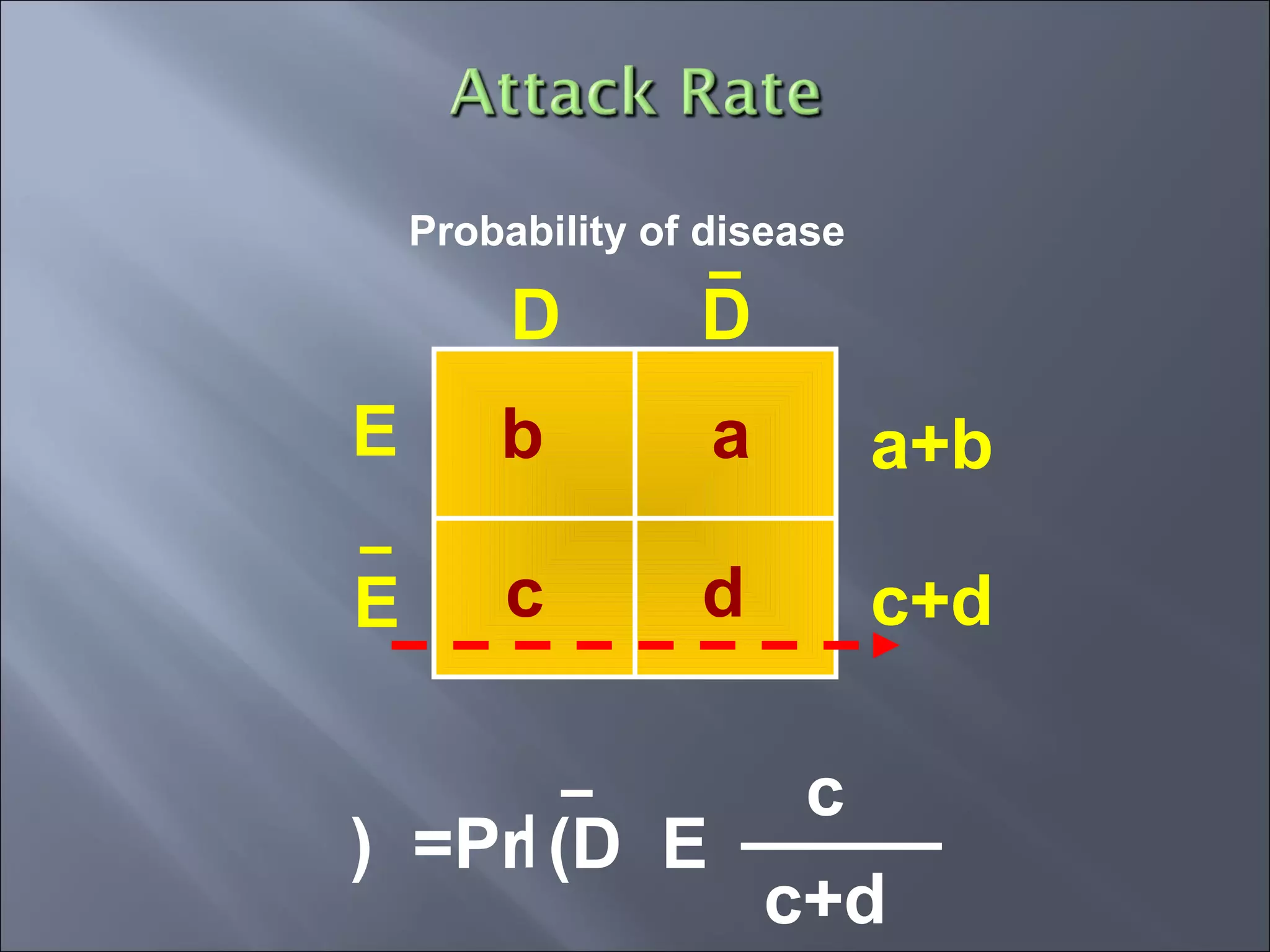
 Use attack rate to identify high-risk groups
 Numerator = number of cases
 Denominator = number of people at risk
 Number of patients affected divided by the total
number of population at risk
 Number of infections divided by the total number
of population at risk
 Number of adverse outcomes divided by the total
number of population at risk
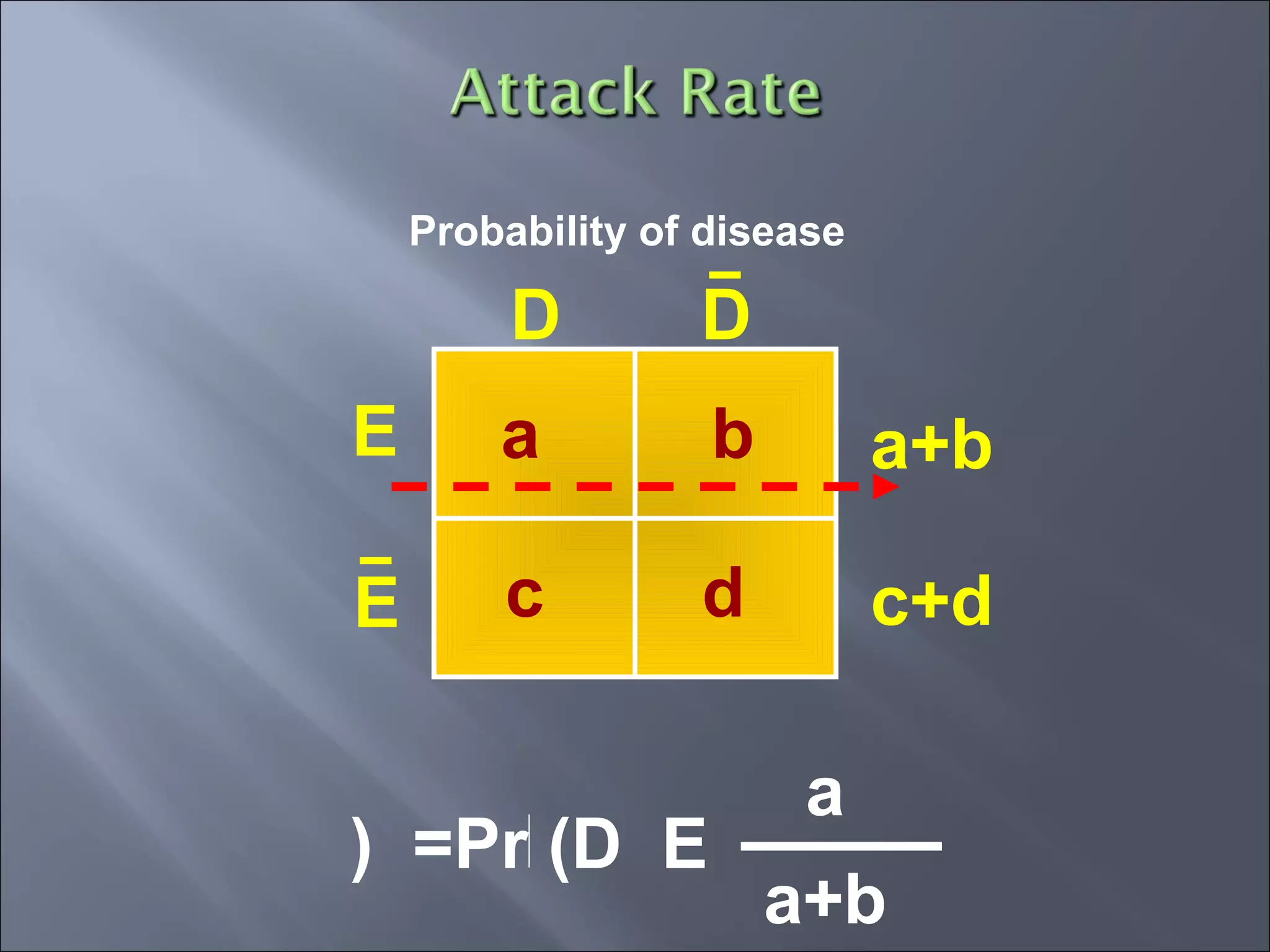
Probability of disease
ba
c d
a+b
c+d
D D
E
E
Pr (D E( =
a
a+b
Probability of disease
ab
c d
a+b
c+d
D D
E
E
Pr (D E( =
c
c+d
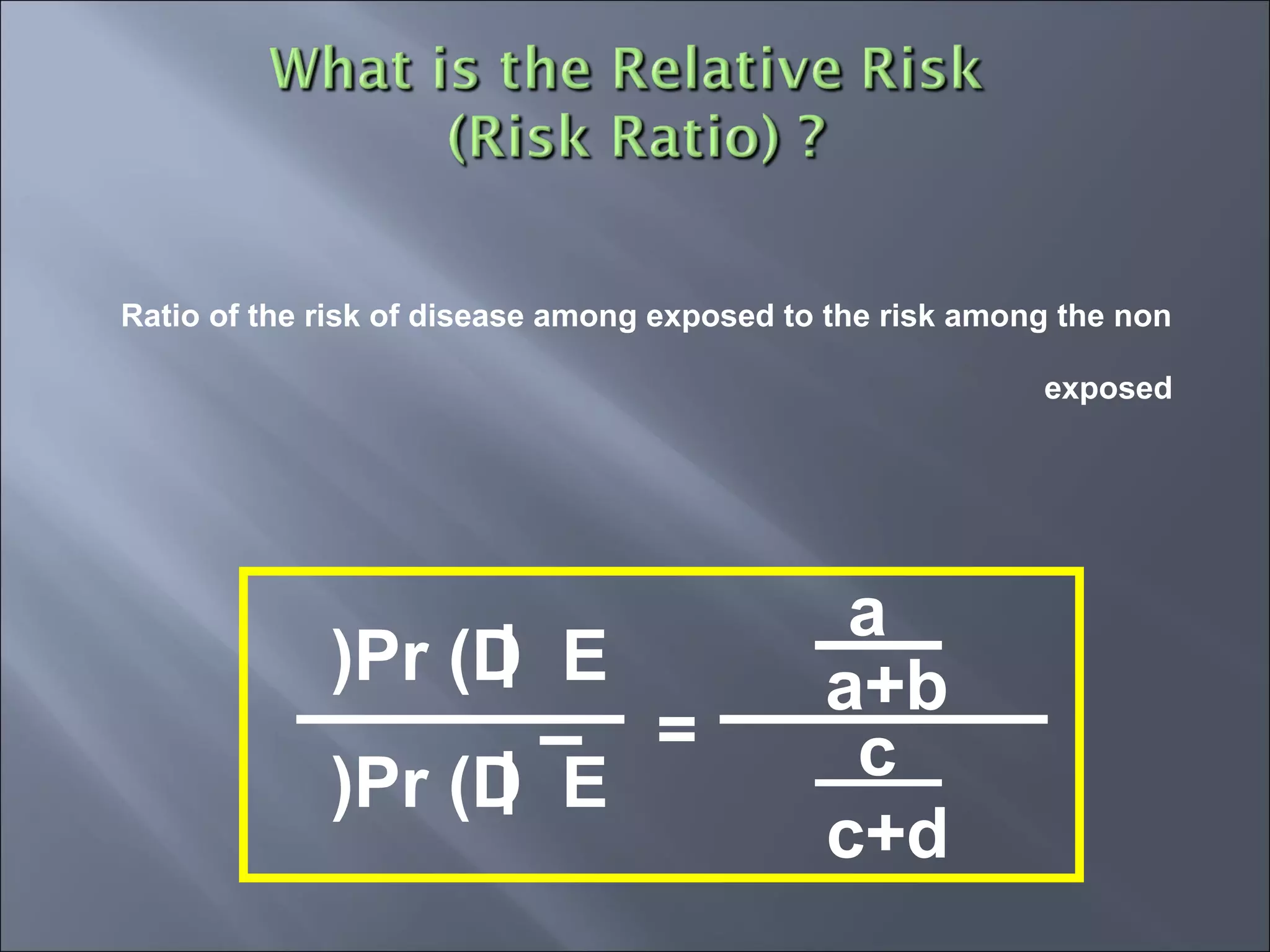
Ratio of the risk of disease among exposed to the risk among the non
exposed
Pr (D E(
Pr (D E(
=
a
a+b
c
c+d
B. Place:
 Geographic extent of problem
 Clusters or patterns providing important etiologic
clues
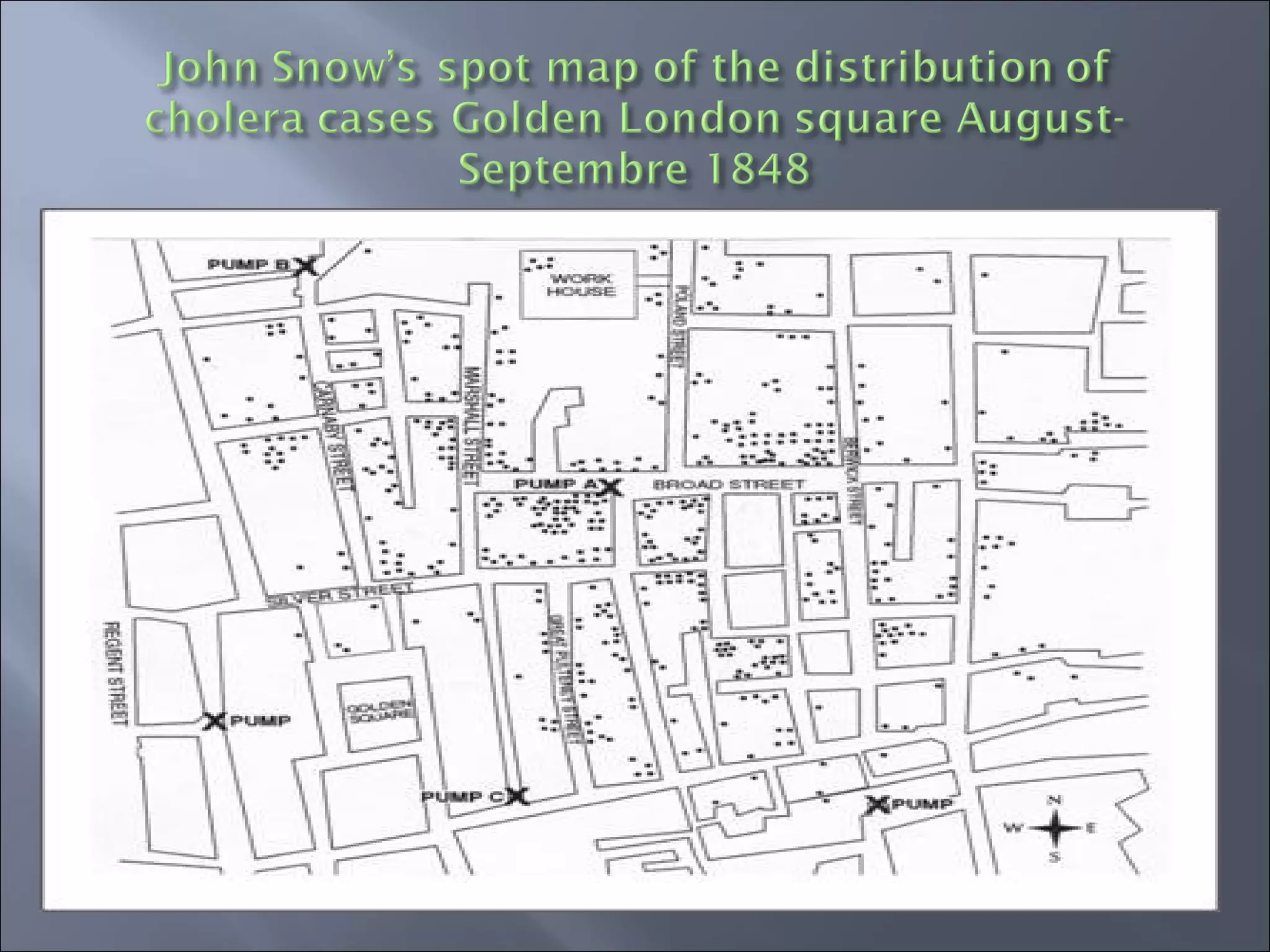
 Spot maps
 Where cases live, work or may have been exposed
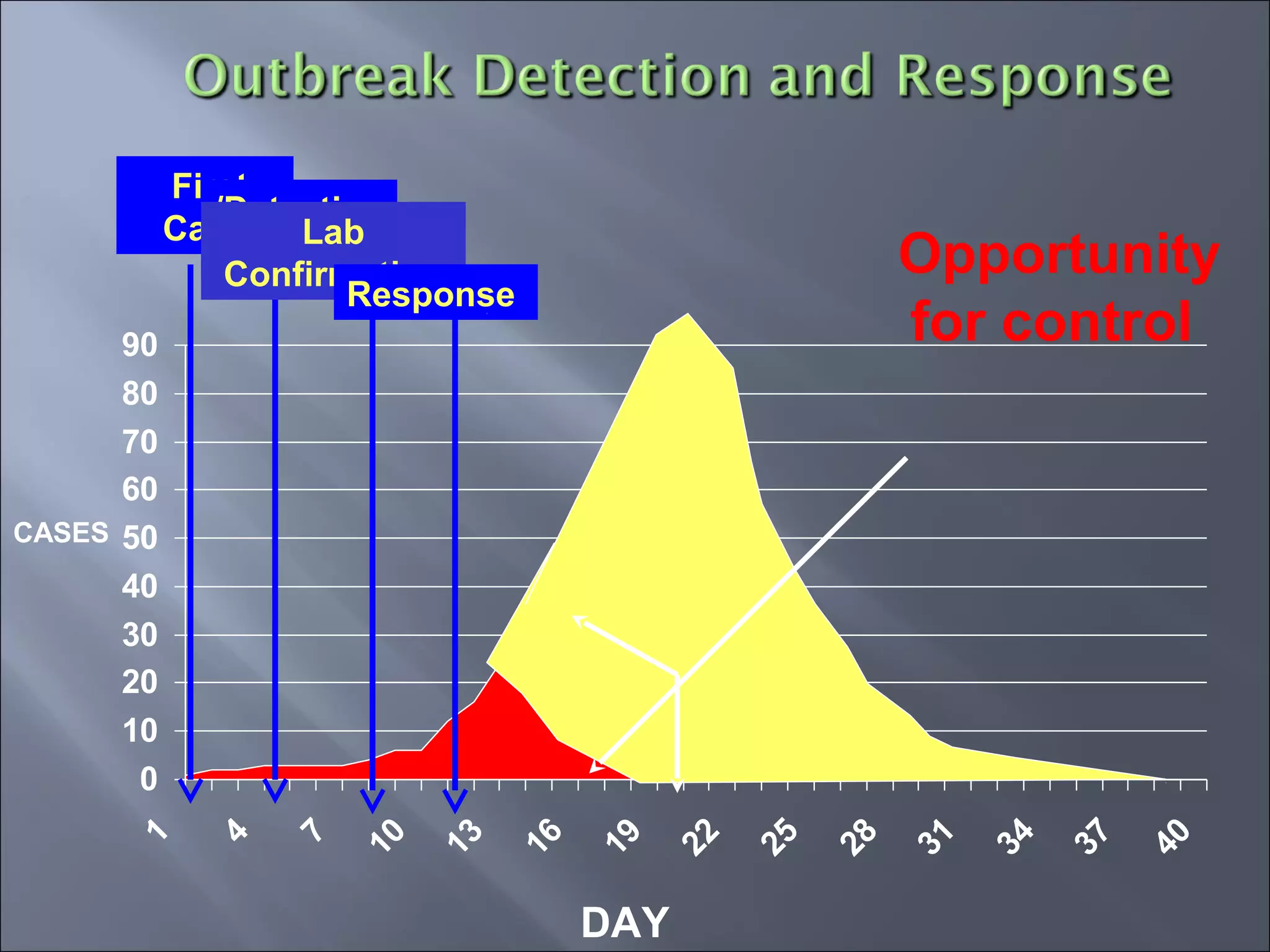
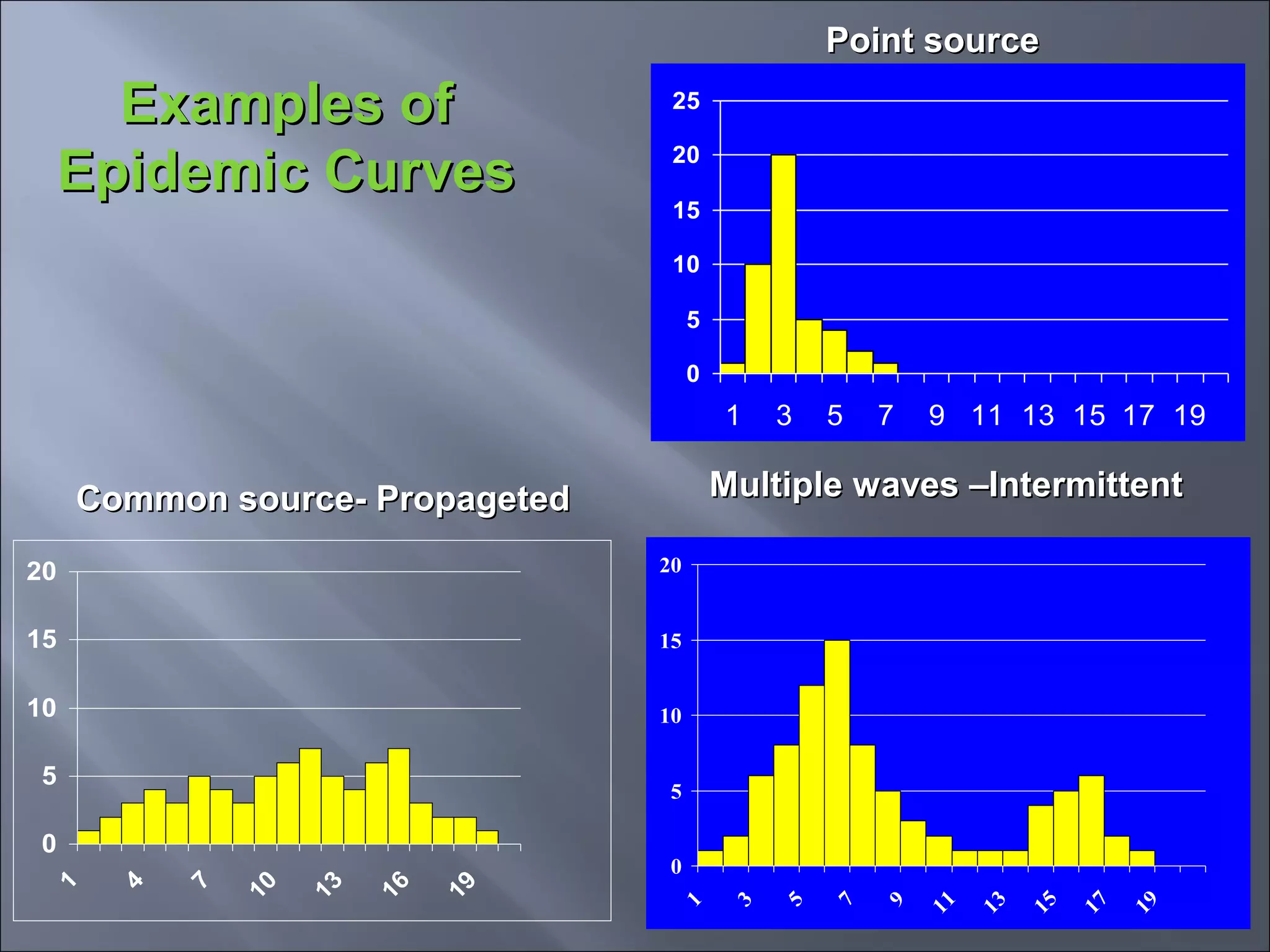
C. Time: (Epidemic curve)
 Histogram of the number of cases by their date of onset
 Magnitude of the outbreak and time trend
 Where are we in the time course of the outbreak?
 Future course?
 Probable time period of exposure
Examples ofExamples of
Epidemic CurvesEpidemic Curves
0
5
10
15
20
25
1 3 5 7 9 11 13 15 17 19
Point sourcePoint source
0
5
10
15
20
1
4
7
10
13
16
19
Common source- PropagetedCommon source- Propageted
0
5
10
15
20
1
3
5
7
9
11
13
15
17
19
Multiple waves –IntermittentMultiple waves –Intermittent
Hypotheses should address
 Type of exposure
 The agent and its reservoir
 Mode of transmission
 Risk factors that caused disease
 Evaluate the credibility of your hypotheses
 Use analytic epidemiology to quantify
relationships and explore the role of chance
 Case control studies
 Cohort studies
 Compares patients with HAI’s to a group of controls
(individuals without the infection).
 Two or three controls/case
 Are the cases more likely to have been exposed to a certain risk
factor than the controls?
 Case-control studies start with a disease (infected patients)
and go back to exposures.
 Strength of the association between the infection and the risk
factor is measured by the Odds Ratio
 Compares the rate of infection among those with a certain risk
factor to the rate among those without the risk factor
 Asks: of those exposed to the risk factor under study, how many
will go on to develop the infection? (compared to those not
exposed to the risk factor)
 Cohort studies start with an exposure and go forward to
diseases (infected patients)
 Quantifies the extent to which exposure increases the risk of the
disease
 Relative risk
Factors that should also be considered when evaluating
possible causality:
 Testing statistical significance
 Consistency with other studies
 Temporality. Exposure to the factor precedes onset
of disease.
 Biologic plausibility. Does the association make
sense biologically?
 When analytic epidemiological studies do not
confirm hypotheses, we need to reconsider
hypotheses and look for new vehicles or modes
of transmission.
 Sometimes you will need to refine your
hypotheses to obtain more specific exposure
histories or a more specific control group.
 Laboratory and environmental studies
 It should start as soon as possible
 May be aimed at agent, source, or reservoir
 Short or long term (reducing susceptibility)
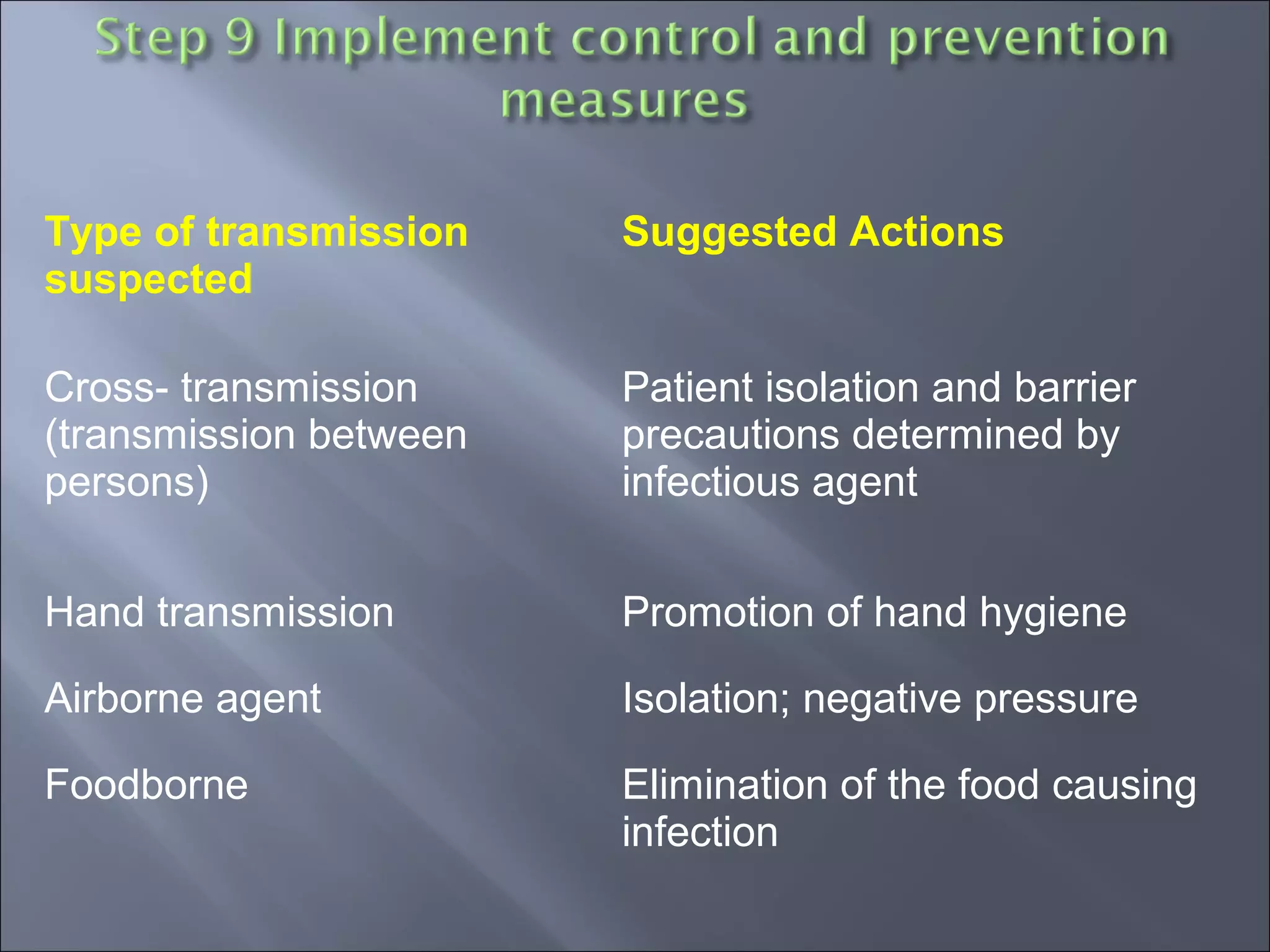
Type of transmission
suspected
Suggested Actions
Cross- transmission
(transmission between
persons)
Patient isolation and barrier
precautions determined by
infectious agent
Hand transmission Promotion of hand hygiene
Airborne agent Isolation; negative pressure
Foodborne Elimination of the food causing
infection
0
10
20
30
40
50
60
70
80
90
1
4
7
10
13
16
19
22
25
28
31
34
37
40
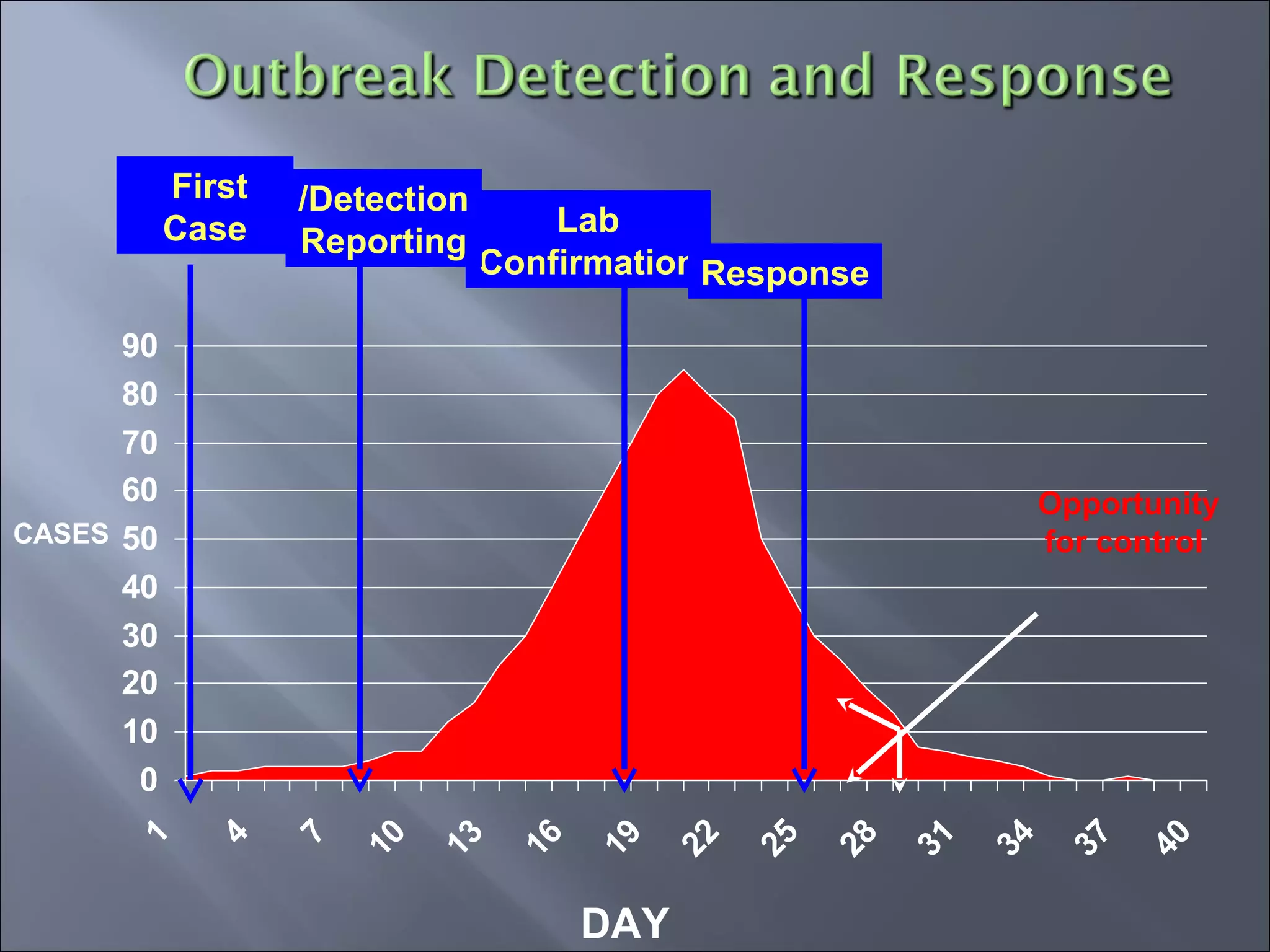
DAY
CASES
Lab
ConfirmationResponse
Opportunity
for control
Detection/
Reporting
First
Case
0
10
20
30
40
50
60
70
80
90
1
4
7
10
13
16
19
22
25
28
31
34
37
40
DAY
CASES
First
Case
Detection/
Reporting
Lab
Confirmation
Response
Opportunity
for control
 Orally (Feedback/Debriefing)
Local health authorities and persons responsible for
implementation of control and prevention measures
 Written reports follows the usual scientific format of
introduction, background, methods, results, discussion,
and recommendations.
Also it is a record of performance, legal issues, reference,
adding to knowledge base.
Investigation of epidemic presentation

Investigation of epidemic presentation

  • 1.
    Dr. Moustapha Ramadan Fellowof Community Medicine Department Faculty of Medcine Alexandria University
  • 2.
     Definitions of( cluster/outbreak/pseudo outbreak/ epidemic)  Healthcare settings infections  Reasons to investigate  How to recognize outbreak/epidemic  Goals of investigations  Steps of investigations
  • 3.
     Cluster :refers to a group of cases in a specific time and place  Outbreak: An increase in the incidence of a disease above what is normally expected in localized area over a specific period of time
  • 4.
     Pseudo outbreak: Increasein detection of true cases that does not represent an outbreak eg: Change in local reporting practices, increased interest in certain diseases because of local or national awareness, changes in diagnostic methods or increase in incidence not related to true increase in cases eg: misdiagnosis, laboratory contamination
  • 5.
     Epidemic : Theoccurrence in a defined community or region of cases of illness with a frequency clearly in excess of normal expectancy… endemo epidemic A single case of a communicable disease long absent from a population or the first invasion by a disease not previously recognized…exotic epidemic
  • 6.
     Significant increasein the rate of HAIs above the facility’s background rate.  5% of HAIs occur in outbreaks  Most outbreaks go unrecognized
  • 7.
     Localized orsystemic condition that results from adverse reaction due to the presence of an infectious agent(s) or its toxin(s) that was not present or incubating at the time of admission to the health facility.  Examples : UTI, VAP ,SSI, BSI, Clostridium difficile etc…
  • 8.
     Because everyreport by itself is very much influenced by the local situation. Thus, only a systematic evaluation of a large number of outbreak reports will provide a less biased assessment of data.
  • 9.
     May representbreakdowns in public health measures.  Evaluate existing prevention strategies, e.g., vaccines  Describe new diseases  Teach (and learn) epidemiology of infectious diseases  Address public concern about the outbreak
  • 10.
     Recently WHOrecommends global alert and response system (GAR).  Early warning which is timely surveillance systems that collect information on epidemic- prone diseases in order to trigger prompt public health interventions.  Relies on an in-depth review done by epidemiologists of the data coming in.
  • 11.
     Surveillance system Reporting : Healthcare settings, laboratories, pharmacies
  • 12.
     Surveillance isthe collection, analysis, interpretation and dissemination of information about a selected health event. This information is important to plan, implement and evaluate a health program.
  • 13.
    Uses of Surveillance I)Identify the disease trend so that planning of preventive and control programs can be adjusted to meet the new situation. 2) Identify, investigate and help the control of outbreaks or epidemics. 3) Identify the population at risk for certain disease or death. 4) Identify new emerging disease. 5) Evaluation of preventive and control measures of the disease under study.
  • 14.
     Identify theetiologic agents  Identify the reservoir(s)  Identify the mode of transmission  Apply control and prevention measures  Eliminate the reservoir(s) and transmission  Prevent future outbreaks
  • 15.
     Prepare forfield work  Establish the existence of an epidemic  Verify the diagnosis  Define and identify cases  Descriptive epidemiology and epidemic curves.
  • 16.
     Develop hypotheses Evaluate hypotheses  Refine hypotheses and carry out additional studies  Implement control and prevention measures  Communicate findings
  • 17.
     Develop anoutbreak team.  Determine the role of each member in the investigation  Research the disease and gather the supplies and equipment you will need  Make necessary administrative and personal arrangements for such things
  • 18.
    Review existing informationto determine the number of potential cases, location, and severity of the problem surveillance records laboratory records patient medical records radiology Pharmacy Compare rates of infection for both the background period and the outbreak period
  • 19.
     Goal isto rule out pseudo-outbreaks.  Requires to :  Review the clinical findings  Laboratory findings  Examination a sample of affected persons
  • 20.
    A. Define cases( Establish case definition):  Case definition should be broad enough to include most, if not all, of the actual cases. (sensitive not specific)  Case definition must not include an exposure or risk factor you want to test  Case definition must be equally applied and without bias to all persons under the investigation
  • 21.
    A. Define cases( Establish case definition): Usually includes four components:  clinical information about the disease,   characteristics about the people who are affected,   information about the location or place, and   a specification of time during which the outbreak occurred
  • 22.
    A. Define cases( Establish case definition):  Possible (suspected)  New or Worsening of cough, Fever >38, nasal discharge, sore throat  Probable  Symptoms +Radiology evidence  Definite (confirmed)  Laboratory confirmed
  • 23.
    A. Define cases( Establish case definition): Example : A patient hospitalized in the ICU from 24th March 2013, with new or worsening of cough, Fever >38, with suggestive X-ray changes and cultures identify a respiratory microorganism.
  • 24.
    B. Identify cases(line listing)  Identifying information e.g. Hospital admission number, unit, name, address, phone.  Demographics e.g. Age, sex, date of admission, date of surgery.  Risk factor information e.g. Type of surgery, comorbidity, catheters, implants  Clinical data e.g. Onset of symptoms and signs, frequency and duration of clinical features, treatments, devices, etc
  • 27.
    A. Person:  Determinewhat population at risk  Define population by host characteristics or exposure  Use attack rate to identify high-risk groups  Numerator = number of cases  Denominator = number of people at risk
  • 28.
     Number ofpatients affected divided by the total number of population at risk  Number of infections divided by the total number of population at risk  Number of adverse outcomes divided by the total number of population at risk
  • 29.
    Probability of disease ba cd a+b c+d D D E E Pr (D E( = a a+b
  • 30.
    Probability of disease ab cd a+b c+d D D E E Pr (D E( = c c+d
  • 31.
    Ratio of therisk of disease among exposed to the risk among the non exposed Pr (D E( Pr (D E( = a a+b c c+d
  • 32.
    B. Place:  Geographicextent of problem  Clusters or patterns providing important etiologic clues  Spot maps  Where cases live, work or may have been exposed
  • 34.
    C. Time: (Epidemiccurve)  Histogram of the number of cases by their date of onset  Magnitude of the outbreak and time trend  Where are we in the time course of the outbreak?  Future course?  Probable time period of exposure
  • 35.
    Examples ofExamples of EpidemicCurvesEpidemic Curves 0 5 10 15 20 25 1 3 5 7 9 11 13 15 17 19 Point sourcePoint source 0 5 10 15 20 1 4 7 10 13 16 19 Common source- PropagetedCommon source- Propageted 0 5 10 15 20 1 3 5 7 9 11 13 15 17 19 Multiple waves –IntermittentMultiple waves –Intermittent
  • 36.
    Hypotheses should address Type of exposure  The agent and its reservoir  Mode of transmission  Risk factors that caused disease
  • 37.
     Evaluate thecredibility of your hypotheses  Use analytic epidemiology to quantify relationships and explore the role of chance  Case control studies  Cohort studies
  • 38.
     Compares patientswith HAI’s to a group of controls (individuals without the infection).  Two or three controls/case  Are the cases more likely to have been exposed to a certain risk factor than the controls?  Case-control studies start with a disease (infected patients) and go back to exposures.  Strength of the association between the infection and the risk factor is measured by the Odds Ratio
  • 39.
     Compares therate of infection among those with a certain risk factor to the rate among those without the risk factor  Asks: of those exposed to the risk factor under study, how many will go on to develop the infection? (compared to those not exposed to the risk factor)  Cohort studies start with an exposure and go forward to diseases (infected patients)  Quantifies the extent to which exposure increases the risk of the disease  Relative risk
  • 40.
    Factors that shouldalso be considered when evaluating possible causality:  Testing statistical significance  Consistency with other studies  Temporality. Exposure to the factor precedes onset of disease.  Biologic plausibility. Does the association make sense biologically?
  • 41.
     When analyticepidemiological studies do not confirm hypotheses, we need to reconsider hypotheses and look for new vehicles or modes of transmission.  Sometimes you will need to refine your hypotheses to obtain more specific exposure histories or a more specific control group.  Laboratory and environmental studies
  • 42.
     It shouldstart as soon as possible  May be aimed at agent, source, or reservoir  Short or long term (reducing susceptibility)
  • 43.
    Type of transmission suspected SuggestedActions Cross- transmission (transmission between persons) Patient isolation and barrier precautions determined by infectious agent Hand transmission Promotion of hand hygiene Airborne agent Isolation; negative pressure Foodborne Elimination of the food causing infection
  • 45.
  • 46.
  • 47.
     Orally (Feedback/Debriefing) Localhealth authorities and persons responsible for implementation of control and prevention measures  Written reports follows the usual scientific format of introduction, background, methods, results, discussion, and recommendations. Also it is a record of performance, legal issues, reference, adding to knowledge base.

Editor's Notes

  • #3 care
  • #11 Ex of diseases : Avian influenza, influenza, SARS, Anthrax, yellow fever, plague, smallpox, hepatitis This process should be guided by statistical tests that will allow the epidemiologist to focus on data cells (defined by time, place and disease) where a significant change has occurred, and forget cells where nothing significant has happened.
  • #13 Surveillance of polio, surveillance of accident, surveillance of malnutrition and surveillance of adverse events following immunization. Surveillance is a dynamic process and its components are depending on each other.
  • #30 What is the Attack Rate? It is the probability of disease, So the attack rate in exposed = a /a+b Next
  • #31 Also the attack rate in non exposed=c /c+d Next
  • #32 To measure association between certain exposure and certain disease in cohort study, we use a certain measure called the Relative Risk, which means the ratio of the risk of disease among exposed to the risk among the non exposed
  • #39 Advantages requires relatively small numbers of patients can be performed quickly can examine more than one risk factor Disadvantages selection and recall bias cannot quantify the extent to which a risk factor increases risk
  • #40 Advantages Quantifies extent to which exposure increases risk Better suited to study of rare exposures Can study multiple effects of a single exposure Disadvantages Inefficient for outbreaks with low attack rates
  • #41 The first step in testing for statistical significance is to assume that the exposure is not related to disease. This assumption is known as the null hypothesis. Next, you compute a measure of association, such as a relative risk or an odds ratio. These measures are then used in calculating a chi-square test (the statistical test most commonly used in studying an outbreak) or other statistical test. Once you have a value for chi-square, you look up its corresponding p-value (or probability value) in a table of chi-squares. In interpreting p-values, you set in advance a cutoff point beyond which you will consider that chance is a factor. A common cutoff point is .05. When a p-value is below the predetermined cutoff point, the finding is considered "statistically significant," and you may reject the null hypothesis in favor of the alternative hypothesis, that is you may conclude that the exposure is associated with disease. The smaller the p-value, the stronger the evidence that your finding is statistically significant.
  • #42 laboratory evidence can clinch the findings. And Environmental studies often help explain why an outbreak occurred and may be very important in some settings
  • #43 Reducing susceptibility by immunizations in measles or chemoprophylaxis in malaria)
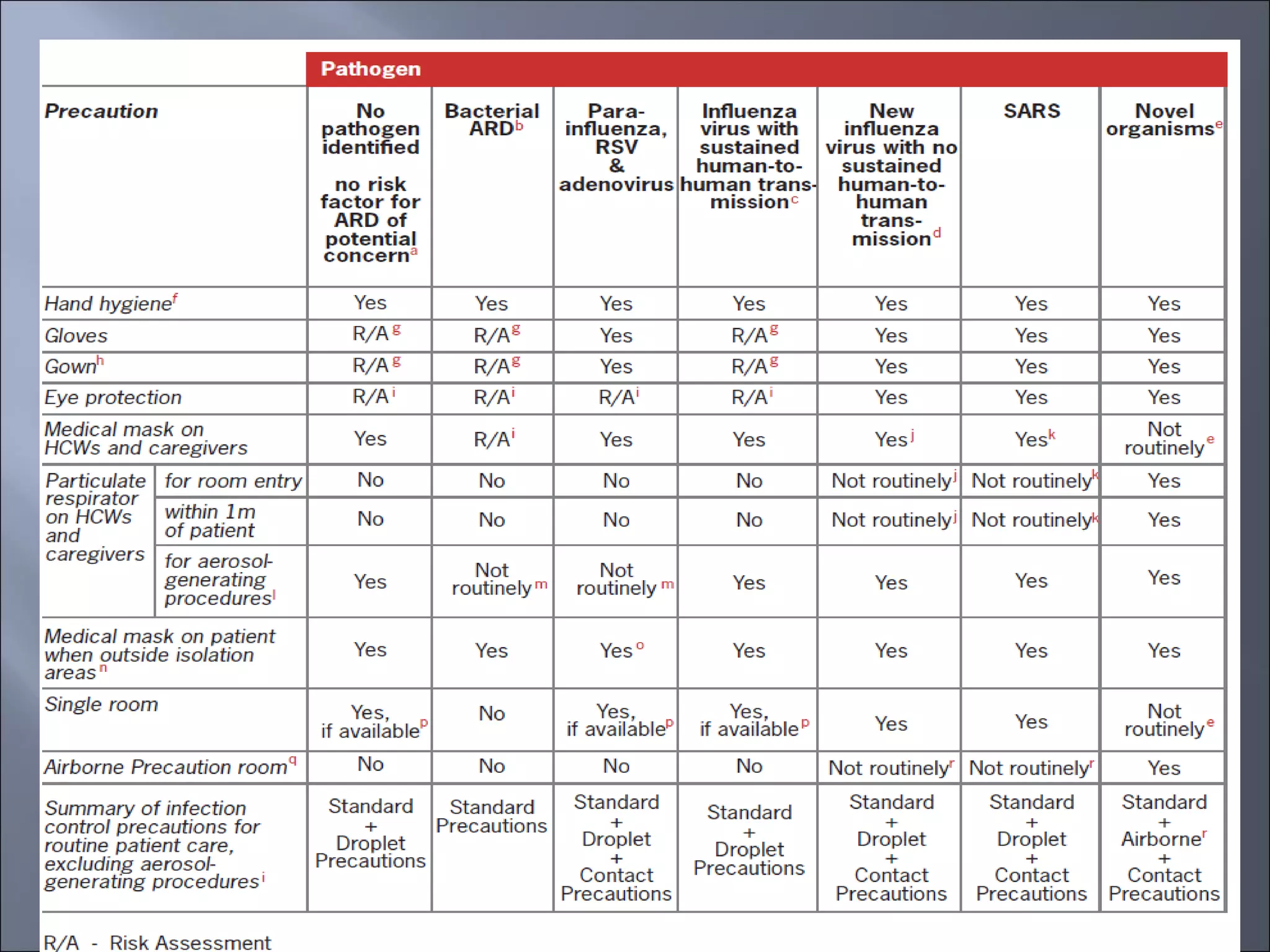
  • #45 a. E.g., influenza-like illness without risk factor for ARD of potential concern. b. Bacterial ARD refers to common bacterial respiratory infections caused by organisms such as Streptococcus pneumoniae, Haemophilus infl uenzae, Chlamydia spp., and Mycoplasma pneumoniae. c. E.g., seasonal influenza, pandemic influenza. d. E.g. avian influenza. e. When a novel ARD is newly identified, the mode of transmission is usually unknown. Implement the highest available level of infection control precautions, until the situation and mode of transmission is clarified.