History
of
Epidemiology
BY
DR MUHAMMAD TAUSEEF JAVED
CONSULTANT MINISTRY OF
HEALTH MAKKAH
&
IPH LAHORE
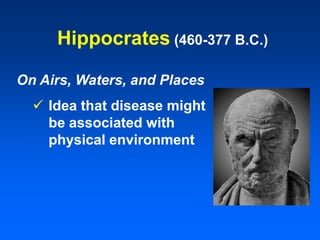
Hippocrates (460-377 B.C.)
On Airs, Waters, and Places
 Idea that disease might
be associated with
physical environment
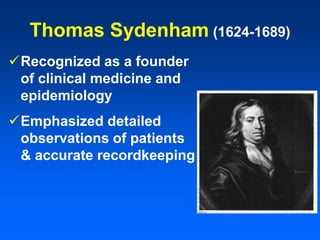
Thomas Sydenham (1624-1689)
Recognized as a founder
of clinical medicine and
epidemiology
Emphasized detailed
observations of patients
& accurate recordkeeping
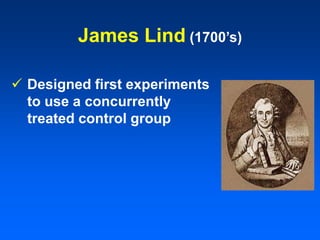
James Lind (1700’s)
 Designed first experiments
to use a concurrently
treated control group
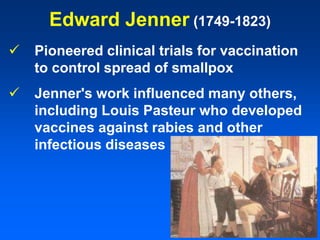
Edward Jenner (1749-1823)
 Pioneered clinical trials for vaccination
to control spread of smallpox
 Jenner's work influenced many others,
including Louis Pasteur who developed
vaccines against rabies and other
infectious diseases
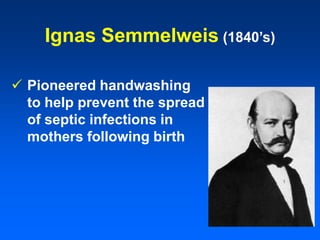
Ignas Semmelweis (1840’s)
 Pioneered handwashing
to help prevent the spread
of septic infections in
mothers following birth
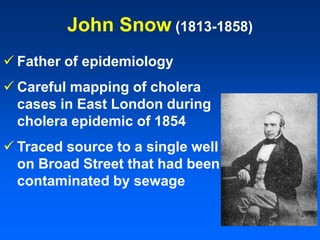
John Snow (1813-1858)
 Father of epidemiology
 Careful mapping of cholera
cases in East London during
cholera epidemic of 1854
 Traced source to a single well
on Broad Street that had been
contaminated by sewage
History of Epidemiology (Cont’d)
• Vital Statistics
 John Graunt (1620-1674)
 William Farr (1807-1883)
• Occupational medicine
& Industrial Hygiene
 Bernardino Ramazzini (1633-1714)
• Role of carriers in transmission
 Typhoid Mary & George Soper
Typhoid Mary & George Soper
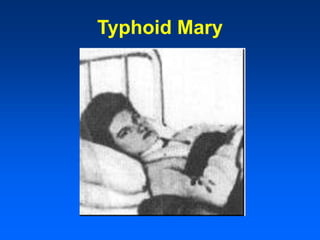
 Mary Mallon, a cook responsible for most famous outbreaks of
carrier-borne disease in medical history
 Recognized as carrier during 1904 N.Y. typhoid fever epidemic
 When source of disease was traced, Mary had disappeared
only to resurface in 1907 when more cases occurred
 Again Mary fled, but authorities led by George Soper, caught
her and had her quarantined on an island
 In 1910 the health department released her on condition that
she never accept employment involving the handling of food
 Four years later, Soper began looking for Mary again when two
new epidemics broke out; Mary had worked as a cook at both
places
 She was found and returned to North Brother Island, where she
remained the rest of her life until a paralytic stroke in 1932 led
to her slow death, six years later
Typhoid Mary
U.S. History of Epidemiology
• Lemuel Shattuck (1850)
 Proposed creation of a permanent statewide public
health infrastructure
 Recommended establishing state & local health
offices to gather statistical information on public
health conditions
• Quarantine Commissions (1857)
• 1st Public Health Book (1879)
• U.S. Public Health Service founded (1902)
• Pure Food and Drug Act (1906)
• Pasteurization of milk (1913)
• 1st School of Public Health (1913)
Historic Aspects of the
Development of Morbidity
Statistics in the U.S.
• Edgar Sydenstricker (Early 1900’s)
 Pioneer public health statistician
• Three notable studies:
Tuskegee syphilis study (1932-1970)
Framingham heart study (1948-present)
Epidemiology of cigarette smoking
(1950’s - present)
Modern History of
Epidemiology in the U.S.
• Mortality stats in first half of century
Unstable because of outbreaks of
infection
• Stats reversed by 1950’s because of
childhood immunizations, medical
interventions and public health
measures
• Economic growth reduced squalor
• Introduction of antibiotics in 50’s
Wake-up Calls
• Over-optimism in 60’s and 70’s
• AIDS recognized
• Cholera in the southern hemisphere
• Legionnaire’s disease
• New forms of hepatitis
• Chlamydia and heart disease
• Hospital acquired infections
• Antibiotic resistance
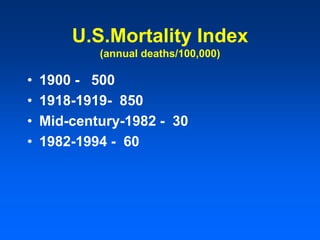
U.S.Mortality Index
(annual deaths/100,000)
• 1900 - 500
• 1918-1919- 850
• Mid-century-1982 - 30
• 1982-1994 - 60
Future Challenges
• Instant global transmission of
pathogens
Population overcrowding
Ease of travel
Importation of foods
Avoid the “We Good-They
Bad” Metaphor

History Of Epidemiology for Graduate and Postgraduate students

  • 1.
    History of Epidemiology BY DR MUHAMMAD TAUSEEFJAVED CONSULTANT MINISTRY OF HEALTH MAKKAH & IPH LAHORE
  • 2.
    Hippocrates (460-377 B.C.) OnAirs, Waters, and Places  Idea that disease might be associated with physical environment
  • 3.
    Thomas Sydenham (1624-1689) Recognizedas a founder of clinical medicine and epidemiology Emphasized detailed observations of patients & accurate recordkeeping
  • 4.
    James Lind (1700’s) Designed first experiments to use a concurrently treated control group
  • 5.
    Edward Jenner (1749-1823) Pioneered clinical trials for vaccination to control spread of smallpox  Jenner's work influenced many others, including Louis Pasteur who developed vaccines against rabies and other infectious diseases
  • 6.
    Ignas Semmelweis (1840’s) Pioneered handwashing to help prevent the spread of septic infections in mothers following birth
  • 7.
    John Snow (1813-1858) Father of epidemiology  Careful mapping of cholera cases in East London during cholera epidemic of 1854  Traced source to a single well on Broad Street that had been contaminated by sewage
  • 8.
    History of Epidemiology(Cont’d) • Vital Statistics  John Graunt (1620-1674)  William Farr (1807-1883) • Occupational medicine & Industrial Hygiene  Bernardino Ramazzini (1633-1714) • Role of carriers in transmission  Typhoid Mary & George Soper
  • 9.
    Typhoid Mary &George Soper  Mary Mallon, a cook responsible for most famous outbreaks of carrier-borne disease in medical history  Recognized as carrier during 1904 N.Y. typhoid fever epidemic  When source of disease was traced, Mary had disappeared only to resurface in 1907 when more cases occurred  Again Mary fled, but authorities led by George Soper, caught her and had her quarantined on an island  In 1910 the health department released her on condition that she never accept employment involving the handling of food  Four years later, Soper began looking for Mary again when two new epidemics broke out; Mary had worked as a cook at both places  She was found and returned to North Brother Island, where she remained the rest of her life until a paralytic stroke in 1932 led to her slow death, six years later
  • 10.
  • 11.
    U.S. History ofEpidemiology • Lemuel Shattuck (1850)  Proposed creation of a permanent statewide public health infrastructure  Recommended establishing state & local health offices to gather statistical information on public health conditions • Quarantine Commissions (1857) • 1st Public Health Book (1879) • U.S. Public Health Service founded (1902) • Pure Food and Drug Act (1906) • Pasteurization of milk (1913) • 1st School of Public Health (1913)
  • 12.
    Historic Aspects ofthe Development of Morbidity Statistics in the U.S. • Edgar Sydenstricker (Early 1900’s)  Pioneer public health statistician • Three notable studies: Tuskegee syphilis study (1932-1970) Framingham heart study (1948-present) Epidemiology of cigarette smoking (1950’s - present)
  • 13.
    Modern History of Epidemiologyin the U.S. • Mortality stats in first half of century Unstable because of outbreaks of infection • Stats reversed by 1950’s because of childhood immunizations, medical interventions and public health measures • Economic growth reduced squalor • Introduction of antibiotics in 50’s
  • 14.
    Wake-up Calls • Over-optimismin 60’s and 70’s • AIDS recognized • Cholera in the southern hemisphere • Legionnaire’s disease • New forms of hepatitis • Chlamydia and heart disease • Hospital acquired infections • Antibiotic resistance
  • 15.
    U.S.Mortality Index (annual deaths/100,000) •1900 - 500 • 1918-1919- 850 • Mid-century-1982 - 30 • 1982-1994 - 60
  • 16.
    Future Challenges • Instantglobal transmission of pathogens Population overcrowding Ease of travel Importation of foods
  • 17.
    Avoid the “WeGood-They Bad” Metaphor