BIOCHEMICAL TESTS
FOR INFERTILITY IN
MALE
Prepared By:
Bikram Adhikari
Roll no.: 3
Human Biology 7th
Batch
Infertility
• It is defined as not being able
to get pregnant despite having
frequent unprotected sex for at
least a year
• World wide 8-10% couples are
infertile
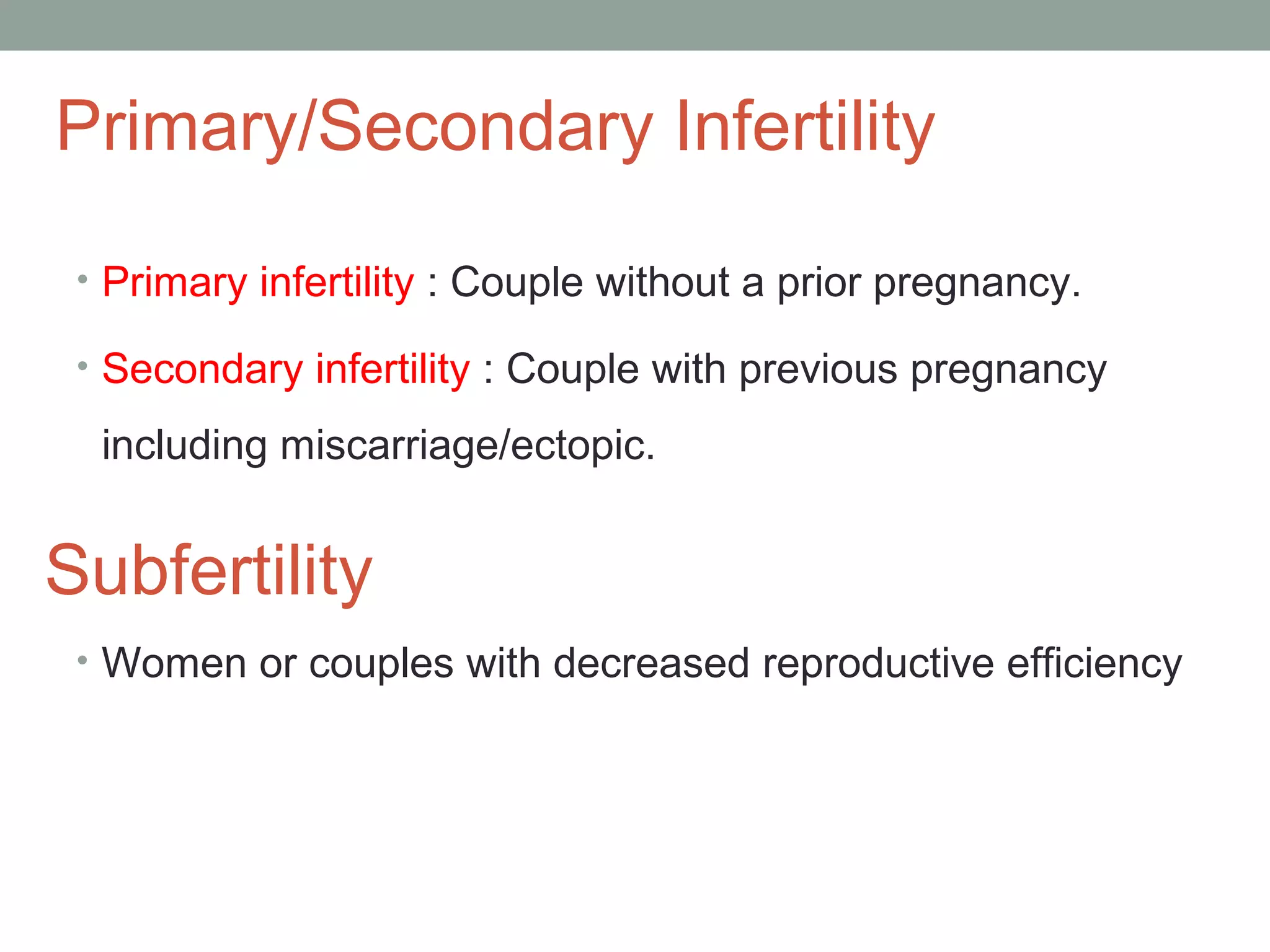
Primary/Secondary Infertility
• Primary infertility : Couple without a prior pregnancy.
• Secondary infertility : Couple with previous pregnancy
including miscarriage/ectopic.
Subfertility
• Women or couples with decreased reproductive efficiency
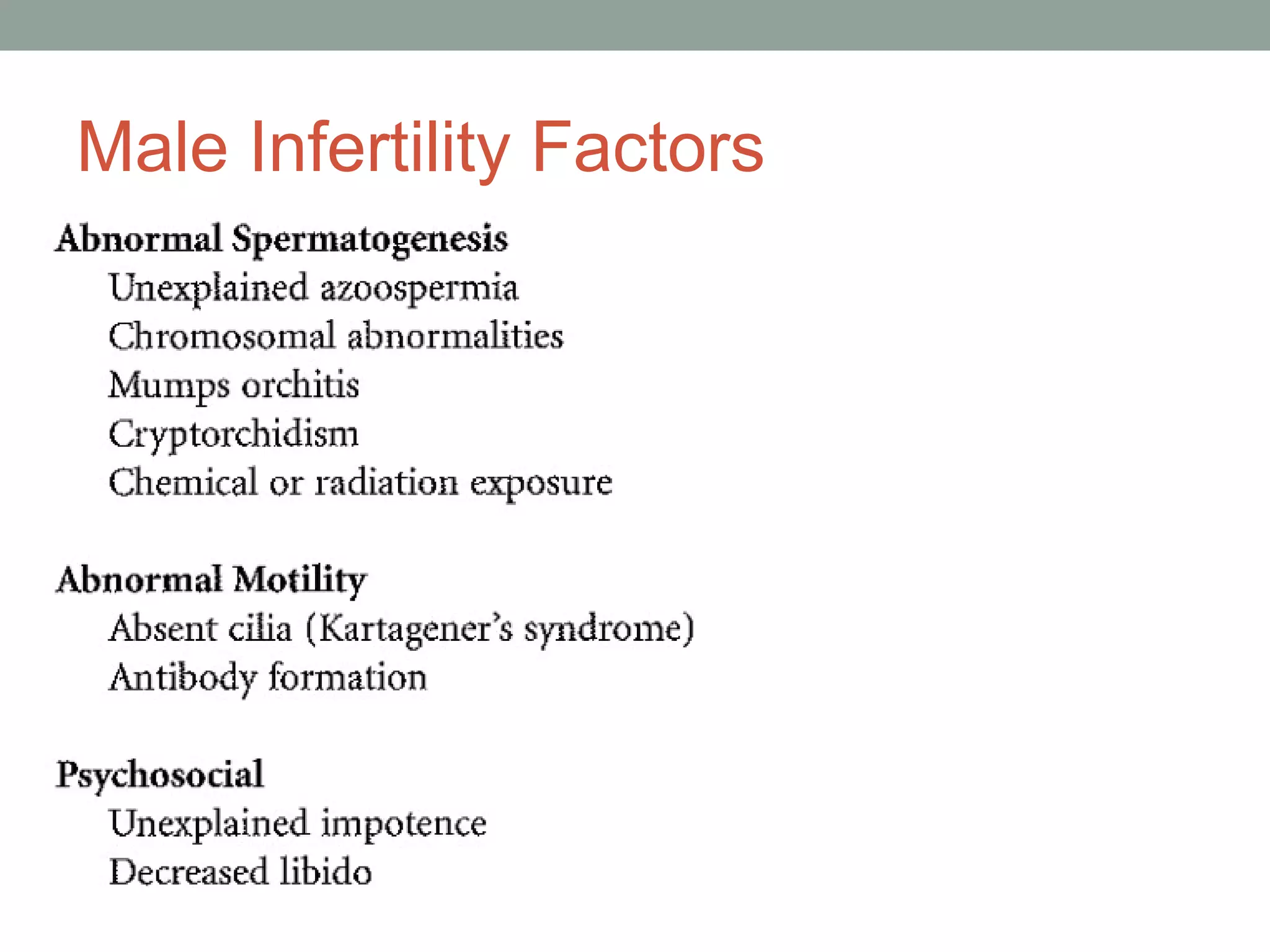
Male Infertility Factors
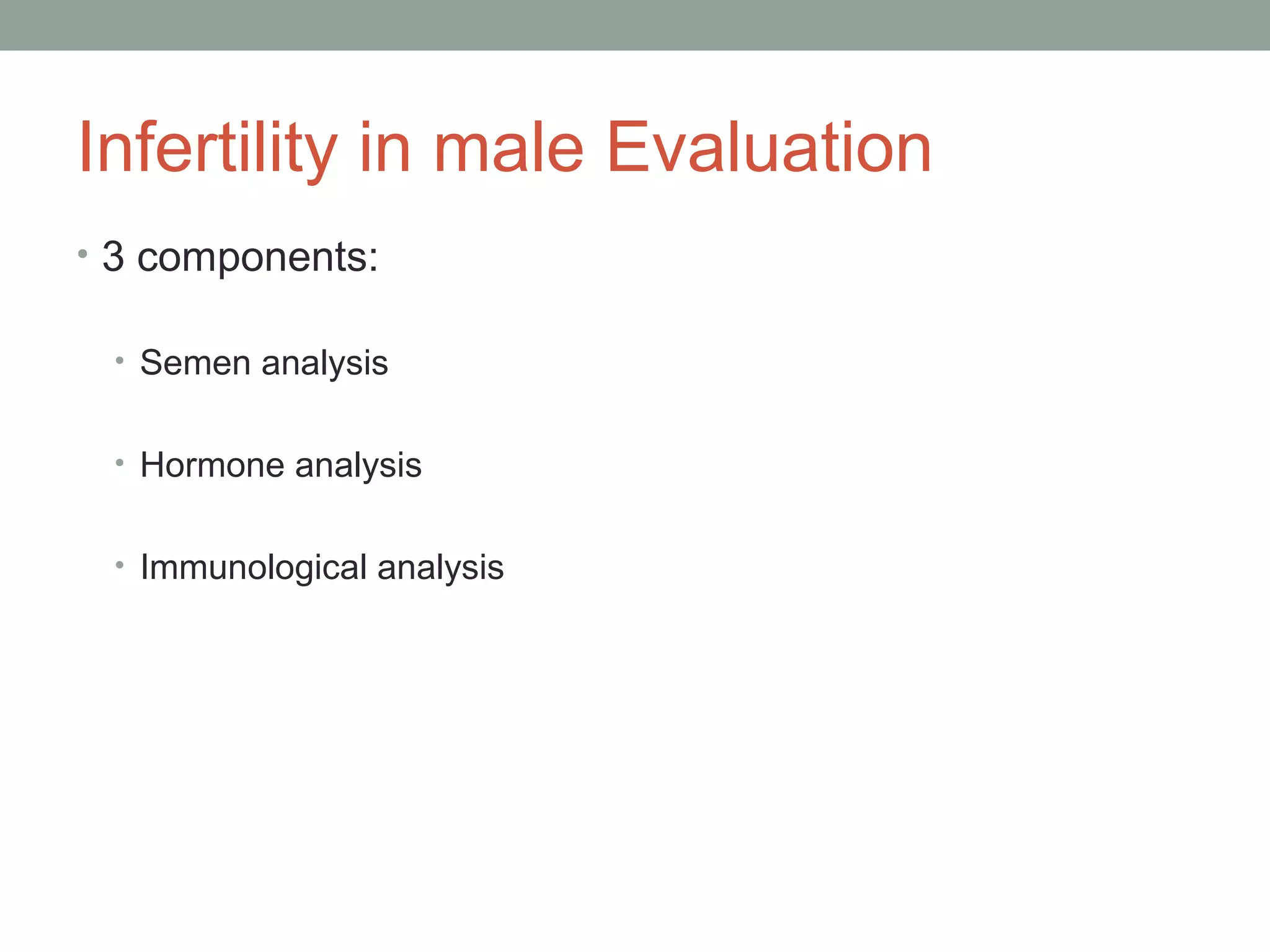
Infertility in male Evaluation
• 3 components:
• Semen analysis
• Hormone analysis
• Immunological analysis
Semen Analysis
• It consist of:
• Microscopic component
• Sperm concentration, motility and sperm morphology
• Macroscopic component
• Measurement of physical(volume) and chemical properties (pH)
Semen Analysis
Hormone Analysis
• It is performed if any abnormalities observed in sperm
analysis
• Serum Testosterone level, FSH and LH is analyzed
• Patients with supressed or boderline Testosterone are
evaluated with hCG stimulation test
Hypogonadism in male
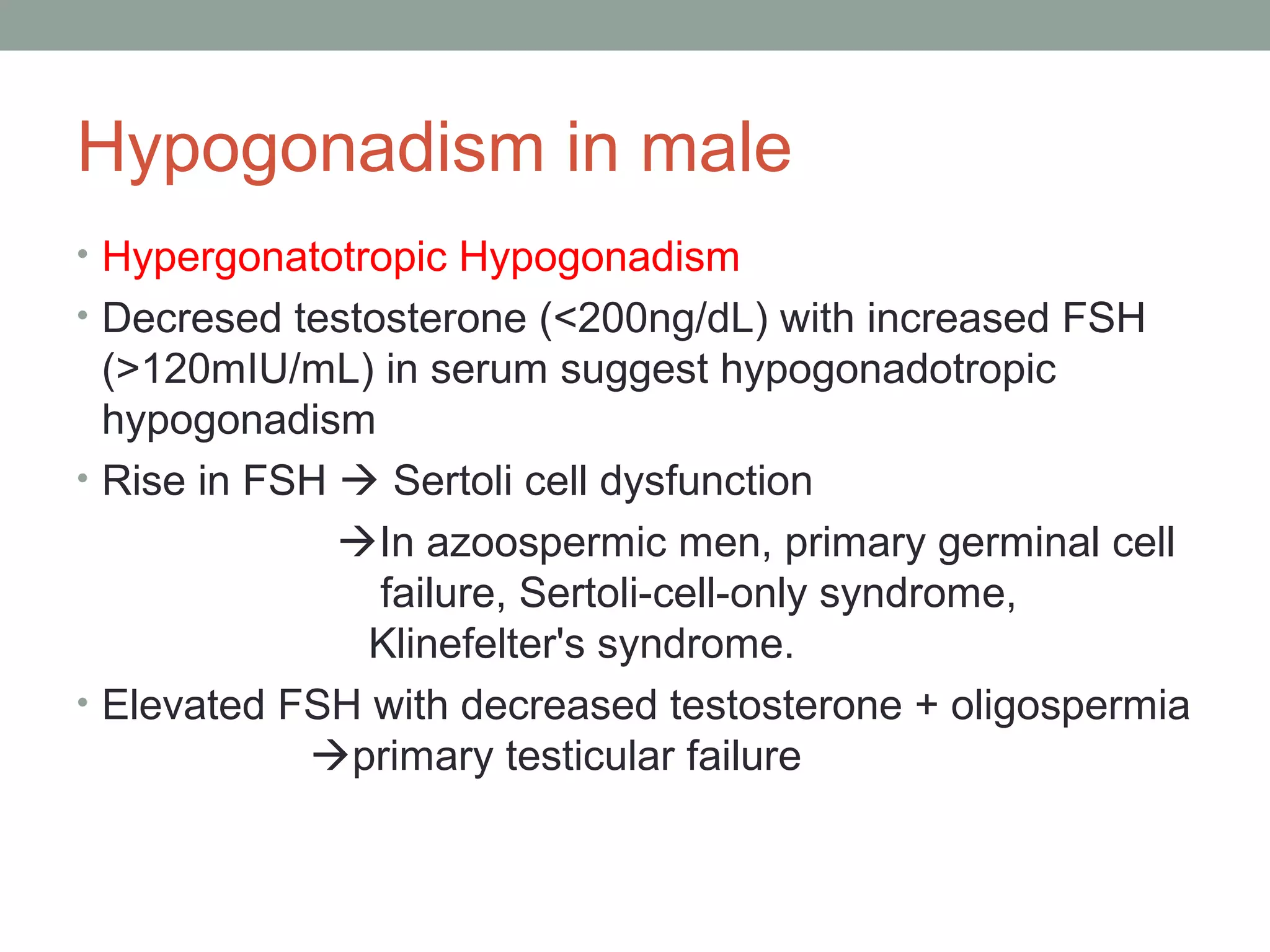
• Hypergonatotropic Hypogonadism
• Decresed testosterone (<200ng/dL) with increased FSH
(>120mIU/mL) in serum suggest hypogonadotropic
hypogonadism
• Rise in FSH  Sertoli cell dysfunction
In azoospermic men, primary germinal cell
failure, Sertoli-cell-only syndrome,
Klinefelter's syndrome.
• Elevated FSH with decreased testosterone + oligospermia
primary testicular failure
Hypogonadism in male
• Hypogonatotropic Hypogonadism
• Decresed testosterone (<200ng/dL) and decreased FSH
<10mIU/mL) in serum  hypogonadotropic hypogonadism
• GnRH stimulation test distinguish pituitary versus
hypothalamic failure
i.v. injection of 100ug of GnRH
measurement of FSH and LH at 0,30, 60,
120, and 180 minutes after injection.
Results of the GnRH test
•Little to no increase in gonadotropins pituitary disease
•Delayed but significant increase >=7 mIU/mL within 180 minhypothalamic
disease
Evaluation of Immunological
Parameters• Sperm antibody(IgA or IgG) binding to head or tail antigens is
considered specific for immunologic infertility.
• Agglutination, ELISA, RIA, and immunofluorescent assays are
available
• Immunobead technique is the most widely used.
• In this technique, a polyacrylamide bead is coated with a rabbit
antihuman antibody. This binds to antibodies that are either
already present on human sperm, or present after incubation of
sperm with the appropriate fluid (cervical mucus or serum).
Beads that bind sperm are microscopically detected.
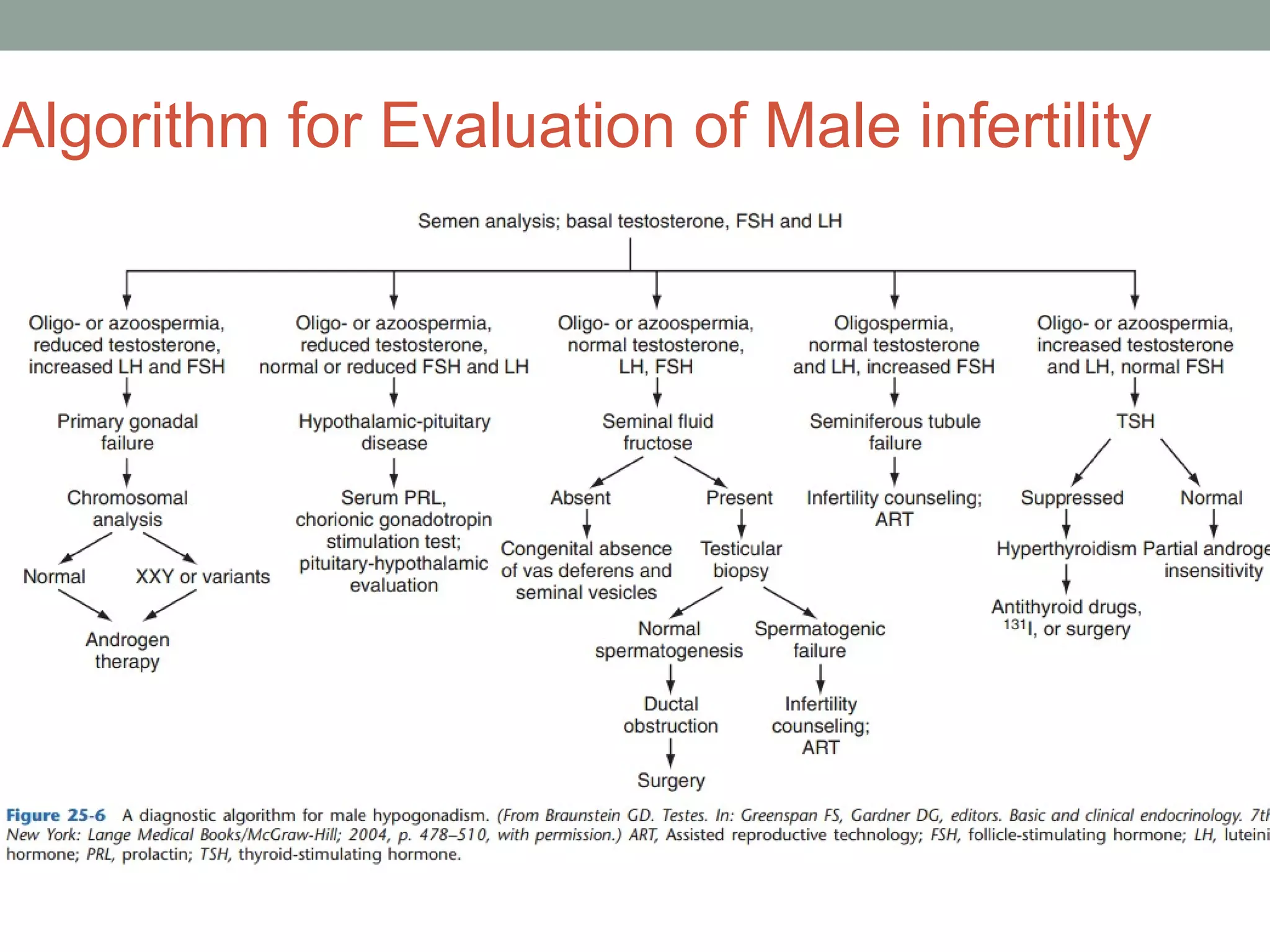
Algorithm for Evaluation of Male infertility
References
• McPherson RA. Pincus MR. Henry’s clinical Diagnosis
and Management by Laboratory Methods,22nd
Edition,Elsevier saunders.page:418-427
• Deep JP. Assisted Reproductive Technology:review
article.Journal of chitwan Medical College 2014;4(7):1-10.
• Carl A. Brutis. Tietz Textbook of Clinical chemistry and
Molecular Diagnostics.4th
edition. Infertility,pages:211-
2120, 1999
Thank You!
Any Questions????????????
• Type of Hypogonadism??? Which part is not functioning well in
Hypothalamus pituitary testicular axis???
Type of Hypogonadism???
Is the man fertile??

Biochemical tests for reproductive function in male

  • 1.
    BIOCHEMICAL TESTS FOR INFERTILITYIN MALE Prepared By: Bikram Adhikari Roll no.: 3 Human Biology 7th Batch
  • 2.
    Infertility • It isdefined as not being able to get pregnant despite having frequent unprotected sex for at least a year • World wide 8-10% couples are infertile
  • 3.
    Primary/Secondary Infertility • Primaryinfertility : Couple without a prior pregnancy. • Secondary infertility : Couple with previous pregnancy including miscarriage/ectopic. Subfertility • Women or couples with decreased reproductive efficiency
  • 4.
  • 5.
  • 6.
    Infertility in maleEvaluation • 3 components: • Semen analysis • Hormone analysis • Immunological analysis
  • 7.
    Semen Analysis • Itconsist of: • Microscopic component • Sperm concentration, motility and sperm morphology • Macroscopic component • Measurement of physical(volume) and chemical properties (pH)
  • 8.
  • 9.
    Hormone Analysis • Itis performed if any abnormalities observed in sperm analysis • Serum Testosterone level, FSH and LH is analyzed • Patients with supressed or boderline Testosterone are evaluated with hCG stimulation test
  • 10.
    Hypogonadism in male •Hypergonatotropic Hypogonadism • Decresed testosterone (<200ng/dL) with increased FSH (>120mIU/mL) in serum suggest hypogonadotropic hypogonadism • Rise in FSH  Sertoli cell dysfunction In azoospermic men, primary germinal cell failure, Sertoli-cell-only syndrome, Klinefelter's syndrome. • Elevated FSH with decreased testosterone + oligospermia primary testicular failure
  • 11.
    Hypogonadism in male •Hypogonatotropic Hypogonadism • Decresed testosterone (<200ng/dL) and decreased FSH <10mIU/mL) in serum  hypogonadotropic hypogonadism • GnRH stimulation test distinguish pituitary versus hypothalamic failure i.v. injection of 100ug of GnRH measurement of FSH and LH at 0,30, 60, 120, and 180 minutes after injection. Results of the GnRH test •Little to no increase in gonadotropins pituitary disease •Delayed but significant increase >=7 mIU/mL within 180 minhypothalamic disease
  • 12.
    Evaluation of Immunological Parameters•Sperm antibody(IgA or IgG) binding to head or tail antigens is considered specific for immunologic infertility. • Agglutination, ELISA, RIA, and immunofluorescent assays are available • Immunobead technique is the most widely used. • In this technique, a polyacrylamide bead is coated with a rabbit antihuman antibody. This binds to antibodies that are either already present on human sperm, or present after incubation of sperm with the appropriate fluid (cervical mucus or serum). Beads that bind sperm are microscopically detected.
  • 13.
    Algorithm for Evaluationof Male infertility
  • 14.
    References • McPherson RA.Pincus MR. Henry’s clinical Diagnosis and Management by Laboratory Methods,22nd Edition,Elsevier saunders.page:418-427 • Deep JP. Assisted Reproductive Technology:review article.Journal of chitwan Medical College 2014;4(7):1-10. • Carl A. Brutis. Tietz Textbook of Clinical chemistry and Molecular Diagnostics.4th edition. Infertility,pages:211- 2120, 1999
  • 15.
  • 16.
    • Type ofHypogonadism??? Which part is not functioning well in Hypothalamus pituitary testicular axis??? Type of Hypogonadism??? Is the man fertile??