Corynebacterial Toxins
Dr Ravi Kant Agrawal, MVSc, PhD
Principal Scientist (Veterinary Microbiology)
Food Microbiology Laboratory
Division of Livestock Products Technology
ICAR-Indian Veterinary Research Institute
Izatnagar 243122 (UP) India
Corynebacteria - Overview
• Gram positive, non-motile bacilli with irregularly stained
segments
• Frequently show club shaped swellings – corynebacteria
(coryne = club)
 Found as free-living saprophytes in fresh and salt water, in soil
and in the air
 C. diphtheriae: most important/ significant pathogen of this
genus, causes diphtheria
 Members of the usual flora of humans and animals
(often dismissed as contaminants)
 Often called “diphtheroids”
• Diphtheroids: commensals of nose, throat, nasopharynx, skin,
urinary tract & conjunctiva.
 Other species may cause infections in the
immunocompromized hosts
 Diphtherais Greek word for prepared hide or leather
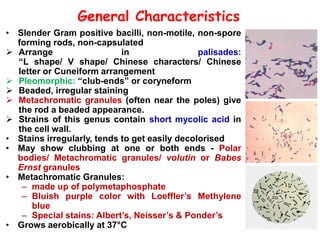
General Characteristics
• Slender Gram positive bacilli, non-motile, non-spore
forming rods, non-capsulated
 Arrange in palisades:
“L shape/ V shape/ Chinese characters/ Chinese
letter or Cuneiform arrangement
 Pleomorphic: “club-ends” or coryneform
 Beaded, irregular staining
 Metachromatic granules (often near the poles) give
the rod a beaded appearance.
 Strains of this genus contain short mycolic acid in
the cell wall.
• Stains irregularly, tends to get easily decolorised
• May show clubbing at one or both ends - Polar
bodies/ Metachromatic granules/ volutin or Babes
Ernst granules
• Metachromatic Granules:
– made up of polymetaphosphate
– Bluish purple color with Loeffler’s Methylene
blue
– Special stains: Albert’s, Neisser’s & Ponder’s
• Grows aerobically at 37°C
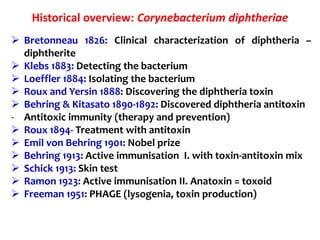
Historical overview: Corynebacterium diphtheriae
 Bretonneau 1826: Clinical characterization of diphtheria –
diphtherite
 Klebs 1883: Detecting the bacterium
 Loeffler 1884: Isolating the bacterium
 Roux and Yersin 1888: Discovering the diphtheria toxin
 Behring & Kitasato 1890-1892: Discovered diphtheria antitoxin
- Antitoxic immunity (therapy and prevention)
 Roux 1894- Treatment with antitoxin
 Emil von Behring 1901: Nobel prize
 Behring 1913: Active immunisation I. with toxin-antitoxin mix
 Schick 1913: Skin test
 Ramon 1923: Active immunisation II. Anatoxin = toxoid
 Freeman 1951: PHAGE (lysogenia, toxin production)
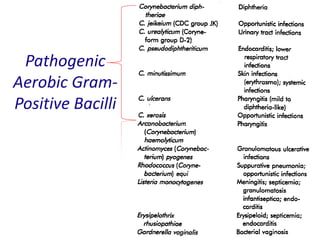
Pathogenic
Aerobic Gram-
Positive Bacilli
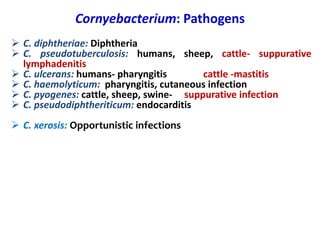
Cornyebacterium: Pathogens
 C. diphtheriae: Diphtheria
 C. pseudotuberculosis: humans, sheep, cattle- suppurative
lymphadenitis
 C. ulcerans: humans- pharyngitis cattle -mastitis
 C. haemolyticum: pharyngitis, cutaneous infection
 C. pyogenes: cattle, sheep, swine- suppurative infection
 C. pseudodiphtheriticum: endocarditis
 C. xerosis: Opportunistic infections
Virulence Factors in Corynebacterium Species
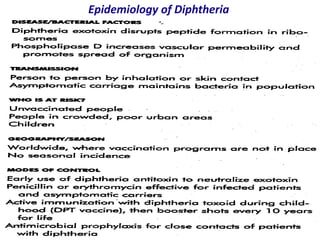
Epidemiology of Diphtheria
C. diphtheriae
Pathogenesis and Immunity
 C. diphtheriae occurs in the respiratory tract, in wounds, or on
the skin of infected persons or normal carriers.
 It is spread by droplets or skin contact.
 Portal of entry: respiratory tract or skin abrasions.
 Diphtheria bacilli colonize and grow on mucous membranes,
and start to produce toxin, which is then absorbed into the
mucous membranes, and even spread by the bloodstream.
 Local toxigenic effects: elicit inflammatory response and
necrosis of the faucial mucosa cells-- formation of “PSEUDO-
MEMBRANE” (composed of bacteria, lymphocytes, plasma
cells, fibrin, and dead cells), causing respiratory obstruction.
 Systemic toxigenic effects: necrosis in heart muscle, liver,
kidneys and adrenals. Also produces neural damage.
Virulence Factors
 Diphtheria toxin !!!
blocks protein synthesis
 Dermonecrotic toxin
sphingomyelinase
increases vascular permeability
 Hemolysin
 Cord factor -Toxic trehalose
corynemycolic acid, corynemyolenic acid
6,6’-di-O-mycoloyl- a,a’-D-trehalose
C. diphtheriae: Agent of Diphtheria
 Toxigenic Corynebacterium diphtheriae
 Worldwide distribution but rare in places where vaccination
programs exist
 Exotoxin, Diphtheria toxin, as the virulence factor
 Not all C. diphtheriae strains produce toxin
 Toxin is produced by certain strains
 Toxin is antigenic
Diphtheria Toxin
• Blocks protein synthesis
• Protein 63Kd
• controlled by Tox gene
• lysogenic phage Beta-corynephage
• Expressed if [iron] low
• 2 components A-B
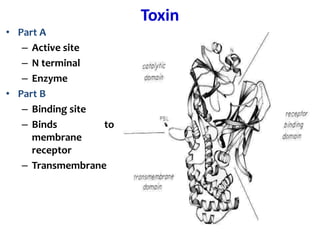
Toxin
• Part A
– Active site
– N terminal
– Enzyme
• Part B
– Binding site
– Binds to
membrane
receptor
– Transmembrane
Diphtheria toxin: Part A
• Active site
• Enzyme
• Blocks protein synthesis
– ADP-ribosyl transferase
– elongation factor 2 (EF2)
• Specific for mammalian cells
– Prokaryotes have different EF2
Diphtheria Toxin: Part B
• Binding Site
• Binds to cell receptor
• Bound receptor internalized
• Endosome
– Hydrolysed by protease
– Disulfide broken
– Part A released
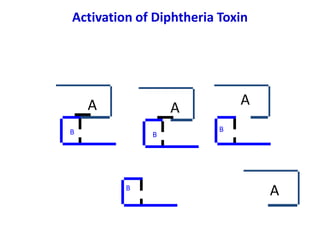
Activation of Diphtheria Toxin
A
A
B
B
A
B
A
B
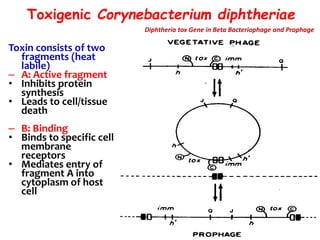
Toxigenic Corynebacterium diphtheriae
Toxin consists of two
fragments (heat
labile)
– A: Active fragment
• Inhibits protein
synthesis
• Leads to cell/tissue
death
– B: Binding
• Binds to specific cell
membrane
receptors
• Mediates entry of
fragment A into
cytoplasm of host
cell
Diphtheria tox Gene in Beta Bacteriophage and Prophage
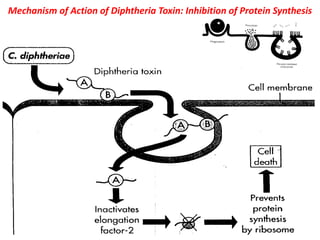
Mechanism of Action of Diphtheria Toxin: Inhibition of Protein Synthesis
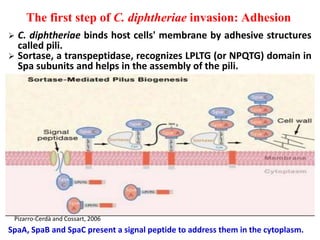
The first step of C. diphtheriae invasion: Adhesion
 C. diphtheriae binds host cells' membrane by adhesive structures
called pili.
 Sortase, a transpeptidase, recognizes LPLTG (or NPQTG) domain in
Spa subunits and helps in the assembly of the pili.
SpaA, SpaB and SpaC present a signal peptide to address them in the cytoplasm.
Pizarro-Cerdà and Cossart, 2006
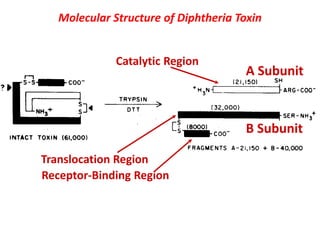
Molecular Structure of Diphtheria Toxin
Catalytic Region
Receptor-Binding Region
Translocation Region
A Subunit
B Subunit
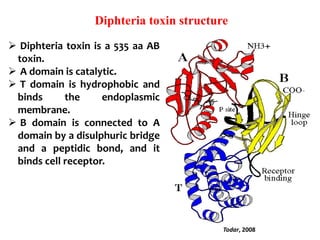
Diphteria toxin structure
 Diphteria toxin is a 535 aa AB
toxin.
 A domain is catalytic.
 T domain is hydrophobic and
binds the endoplasmic
membrane.
 B domain is connected to A
domain by a disulphuric bridge
and a peptidic bond, and it
binds cell receptor.
Todar, 2008
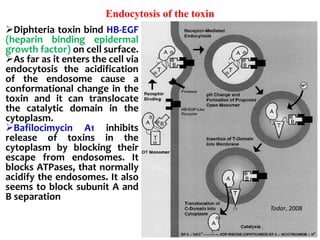
Endocytosis of the toxin
Diphteria toxin bind HB-EGF
(heparin binding epidermal
growth factor) on cell surface.
As far as it enters the cell via
endocytosis the acidification
of the endosome cause a
conformational change in the
toxin and it can translocate
the catalytic domain in the
cytoplasm.
Bafilocimycin A1 inhibits
release of toxins in the
cytoplasm by blocking their
escape from endosomes. It
blocks ATPases, that normally
acidify the endosomes. It also
seems to block subunit A and
B separation
Todar, 2008
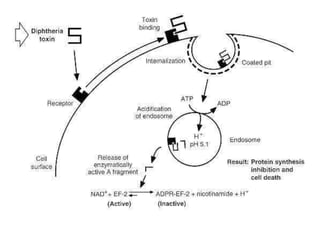
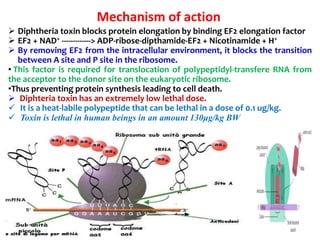
Mechanism of action
 Diphtheria toxin blocks protein elongation by binding EF2 elongation factor
 EF2 + NAD+ -------------> ADP-ribose-dipthamide-EF2 + Nicotinamide + H+
 By removing EF2 from the intracellular environment, it blocks the transition
between A site and P site in the ribosome.
• This factor is required for translocation of polypeptidyl-transfere RNA from
the acceptor to the donor site on the eukaryotic ribosome.
•Thus preventing protein synthesis leading to cell death.
 Diphteria toxin has an extremely low lethal dose.
 It is a heat-labile polypeptide that can be lethal in a dose of 0.1 ug/kg.
 Toxin is lethal in human beings in an amount 130μg/kg BW
Regulation of Diphtheria Toxin High [Fe 2+]
dtxR
Fe 2+ + apo DtxR
[Fe 2+
*DtxR]
p
C diphtheriae
dtxR= repressor protein
NO Toxin Produced
tox
Corynebacteriophage beta
o
P
Regulation of Diphtheria Toxin Low [Fe 2+]
Fe 2+ + apo DtxR
[Fe 2+
*DtxR]
Toxin Produced!!!
tox
Corynebacteriophage beta
o
P
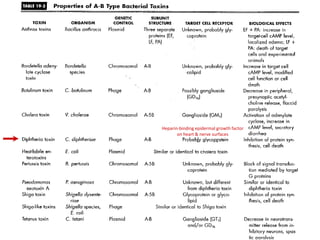
Heparin-binding epidermal growth factor
on heart & nerve surfaces
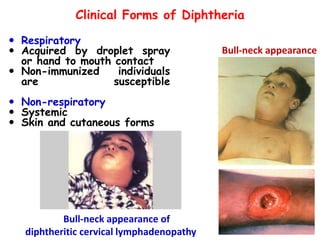
Clinical Forms of Diphtheria
 Respiratory
 Acquired by droplet spray
or hand to mouth contact
 Non-immunized individuals
are susceptible
 Non-respiratory
 Systemic
 Skin and cutaneous forms
Bull-neck appearance
Bull-neck appearance of
diphtheritic cervical lymphadenopathy
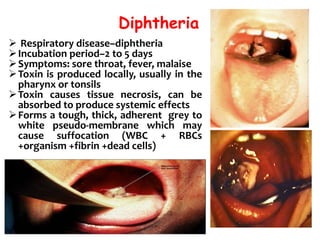
Diphtheria
 Respiratory disease–diphtheria
Incubation period–2 to 5 days
Symptoms: sore throat, fever, malaise
Toxin is produced locally, usually in the
pharynx or tonsils
Toxin causes tissue necrosis, can be
absorbed to produce systemic effects
Forms a tough, thick, adherent grey to
white pseudo-membrane which may
cause suffocation (WBC + RBCs
+organism +fibrin +dead cells)
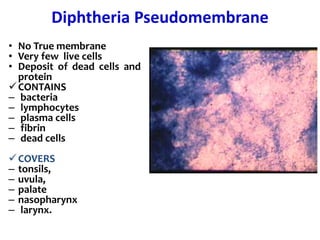
Diphtheria Pseudomembrane
• No True membrane
• Very few live cells
• Deposit of dead cells and
protein
CONTAINS
– bacteria
– lymphocytes
– plasma cells
– fibrin
– dead cells
COVERS
– tonsils,
– uvula,
– palate
– nasopharynx
– larynx.
Diphtheria: Systemic complications
• Nerves
– toxic peripheral neuropathy
– paralysis of short nerves
– mouth, eye, facial extremities
• Cardiac
– Congestive heart failure
– high amount of toxin 48-72 hours
– Low amount of toxin 2-6 weeks
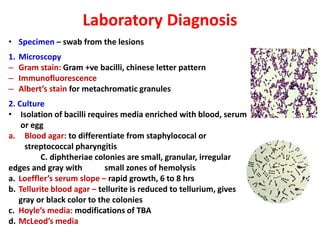
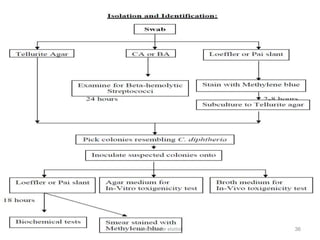
Laboratory Diagnosis
• Specimen – swab from the lesions
1. Microscopy
– Gram stain: Gram +ve bacilli, chinese letter pattern
– Immunofluorescence
– Albert’s stain for metachromatic granules
2. Culture
• Isolation of bacilli requires media enriched with blood, serum
or egg
a. Blood agar: to differentiate from staphylococal or
streptococcal pharyngitis
C. diphtheriae colonies are small, granular, irregular
edges and gray with small zones of hemolysis
a. Loeffler’s serum slope – rapid growth, 6 to 8 hrs
b. Tellurite blood agar – tellurite is reduced to tellurium, gives
gray or black color to the colonies
c. Hoyle’s media: modifications of TBA
d. McLeod’s media
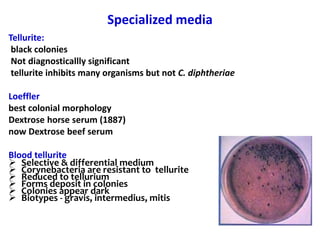
Specialized media
Tellurite:
black colonies
Not diagnosticallly significant
tellurite inhibits many organisms but not C. diphtheriae
Loeffler
best colonial morphology
Dextrose horse serum (1887)
now Dextrose beef serum
Blood tellurite
 Selective & differential medium
 Corynebacteria are resistant to tellurite
 Reduced to tellurium
 Forms deposit in colonies
 Colonies appear dark
 Biotypes - gravis, intermedius, mitis
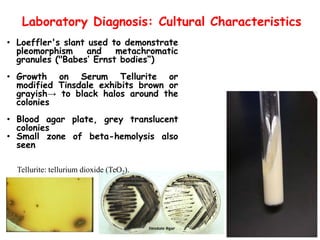
Laboratory Diagnosis: Cultural Characteristics
• Loeffler's slant used to demonstrate
pleomorphism and metachromatic
granules ("Babes’ Ernst bodies“)
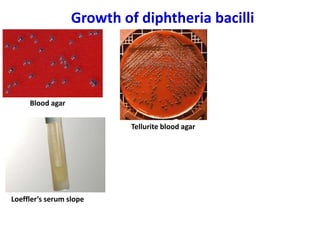
• Growth on Serum Tellurite or
modified Tinsdale exhibits brown or
grayish→ to black halos around the
colonies
• Blood agar plate, grey translucent
colonies
• Small zone of beta-hemolysis also
seen
Tellurite: tellurium dioxide (TeO2).
Growth of diphtheria bacilli
Blood agar
Loeffler’s serum slope
Tellurite blood agar
36
abed elkader elottol
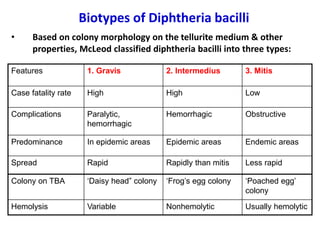
Biotypes of Diphtheria bacilli
• Based on colony morphology on the tellurite medium & other
properties, McLeod classified diphtheria bacilli into three types:
Features 1. Gravis 2. Intermedius 3. Mitis
Case fatality rate High High Low
Complications Paralytic,
hemorrhagic
Hemorrhagic Obstructive
Predominance In epidemic areas Epidemic areas Endemic areas
Spread Rapid Rapidly than mitis Less rapid
Colony on TBA ‘Daisy head” colony ‘Frog’s egg colony ‘Poached egg’
colony
Hemolysis Variable Nonhemolytic Usually hemolytic
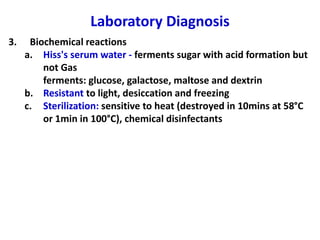
Laboratory Diagnosis
3. Biochemical reactions
a. Hiss's serum water - ferments sugar with acid formation but
not Gas
ferments: glucose, galactose, maltose and dextrin
b. Resistant to light, desiccation and freezing
c. Sterilization: sensitive to heat (destroyed in 10mins at 58°C
or 1min in 100°C), chemical disinfectants
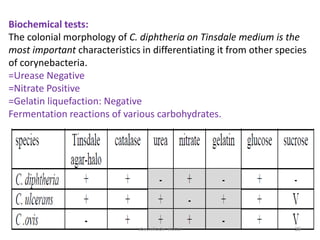
Biochemical tests:
The colonial morphology of C. diphtheria on Tinsdale medium is the
most important characteristics in differentiating it from other species
of corynebacteria.
=Urease Negative
=Nitrate Positive
=Gelatin liquefaction: Negative
Fermentation reactions of various carbohydrates.
39
abed elkader elottol
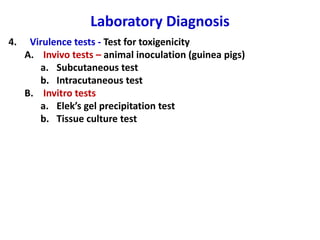
Laboratory Diagnosis
4. Virulence tests - Test for toxigenicity
A. Invivo tests – animal inoculation (guinea pigs)
a. Subcutaneous test
b. Intracutaneous test
B. Invitro tests
a. Elek’s gel precipitation test
b. Tissue culture test
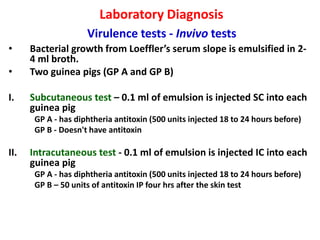
Laboratory Diagnosis
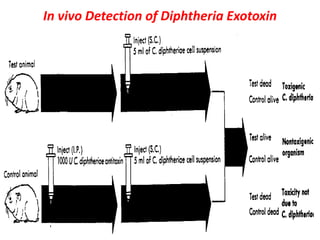
Virulence tests - Invivo tests
• Bacterial growth from Loeffler’s serum slope is emulsified in 2-
4 ml broth.
• Two guinea pigs (GP A and GP B)
I. Subcutaneous test – 0.1 ml of emulsion is injected SC into each
guinea pig
GP A - has diphtheria antitoxin (500 units injected 18 to 24 hours before)
GP B - Doesn't have antitoxin
II. Intracutaneous test - 0.1 ml of emulsion is injected IC into each
guinea pig
GP A - has diphtheria antitoxin (500 units injected 18 to 24 hours before)
GP B – 50 units of antitoxin IP four hrs after the skin test
In vivo Detection of Diphtheria Exotoxin
Laboratory Diagnosis
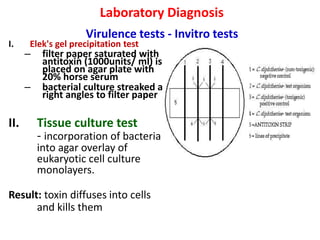
Virulence tests - Invitro tests
I. Elek's gel precipitation test
– filter paper saturated with
antitoxin (1000units/ ml) is
placed on agar plate with
20% horse serum
– bacterial culture streaked at
right angles to filter paper
II. Tissue culture test
- incorporation of bacteria
into agar overlay of
eukaryotic cell culture
monolayers.
Result: toxin diffuses into cells
and kills them
Treatment
• Infected patients treated with anti-toxin and antibiotics
– Anti-toxin produced in horses
– Antibiotics have no effect on circulating toxin, but prevent
spread of the toxin by bacteial killing
• Penicillin drug of choice, erythromycin
• Specific treatment must not be delayed if clinical picture
suggests of diphtheria
• Rapid suppression of toxin-producing bacteria with
antimicrobial drugs (penicillin or erythromycin)
• Early administration of antitoxin: 20,000 to 1,00,000 units for
serious cases, half the dose being given IV
Prophylaxis
1) Active Immunization (Vaccination)
i. Formol toxoid (fluid toxoid)
• incubation of toxin with 0.3% formalin at pH 7.4 - 7.6 at 37°C for 3 to 4 weeks
• fluid toxoid is purified and standardized in flocculating units (Lf doses)
ii. Adsorbed toxoid (more immunogenic than fluid toxoid)
• purified toxoid adsorbed onto insoluble aluminium phosphate or aluminium
hydroxide
• given IM (DTP or TD)
Adsorbed Toxoid
a. DPT - triple vaccine given to children; contains diphtheria toxoid, Tetanus toxoid
and pertussis vaccine
b. DaT - contains absorbed tetanus and ten-fold smaller dose of diphtheria toxoid.
(smaller dose used to diminish likelihood of adverse reactions)
• Schedule
i) Primary immunization - infants and children
- 3 doses, 4-6 weeks interval
- 4th dose after a year
- booster at school entry
ii) Booster immunization - adults
-Td toxoids used (travelling adults may need more)
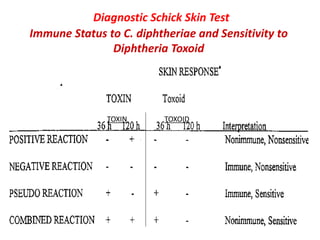
• SHICK test - to test susceptibility to vaccine, not done now-a-days
Diagnostic Schick Skin Test
TOXIN TOXOID
Immune Status to C. diphtheriae and Sensitivity to
Diphtheria Toxoid
Prophylaxis
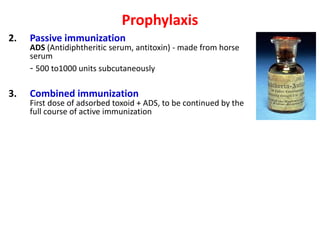
2. Passive immunization
ADS (Antidiphtheritic serum, antitoxin) - made from horse
serum
- 500 to1000 units subcutaneously
3. Combined immunization
First dose of adsorbed toxoid + ADS, to be continued by the
full course of active immunization
CONTROL
1. Isolate patients
2. Treat with antibiotics actively
3. Complete vaccination schedule should be used with
booster every 5 years
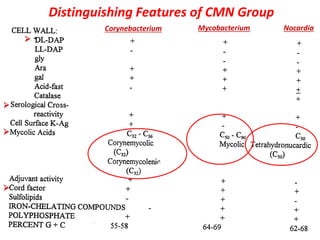
Distinguishing Features of CMN Group
Corynebacterium Mycobacterium Nocardia




Urinary tract infections (UTI’s); rare but important
Urease hydrolyzes urea; release of NH4
+, increase in pH,
alkaline urine, renal stones
Corynebacterium urealyticum
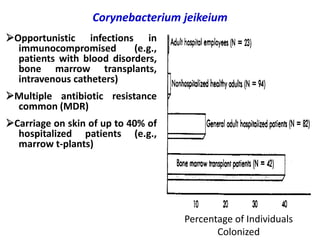
Opportunistic infections in
immunocompromised (e.g.,
patients with blood disorders,
bone marrow transplants,
intravenous catheters)
Multiple antibiotic resistance
common (MDR)
Carriage on skin of up to 40% of
hospitalized patients (e.g.,
marrow t-plants)
Corynebacterium jeikeium
Percentage of Individuals
Colonized
Thanks
Acknowledgement: All the presentations available online on the subject
are duly acknowledged.
Disclaimer: The author bear no responsibility with regard to the source
and authenticity of the content.

Corynebacterial toxins

  • 1.
    Corynebacterial Toxins Dr RaviKant Agrawal, MVSc, PhD Principal Scientist (Veterinary Microbiology) Food Microbiology Laboratory Division of Livestock Products Technology ICAR-Indian Veterinary Research Institute Izatnagar 243122 (UP) India
  • 2.
    Corynebacteria - Overview •Gram positive, non-motile bacilli with irregularly stained segments • Frequently show club shaped swellings – corynebacteria (coryne = club)  Found as free-living saprophytes in fresh and salt water, in soil and in the air  C. diphtheriae: most important/ significant pathogen of this genus, causes diphtheria  Members of the usual flora of humans and animals (often dismissed as contaminants)  Often called “diphtheroids” • Diphtheroids: commensals of nose, throat, nasopharynx, skin, urinary tract & conjunctiva.  Other species may cause infections in the immunocompromized hosts  Diphtherais Greek word for prepared hide or leather
  • 3.
    General Characteristics • SlenderGram positive bacilli, non-motile, non-spore forming rods, non-capsulated  Arrange in palisades: “L shape/ V shape/ Chinese characters/ Chinese letter or Cuneiform arrangement  Pleomorphic: “club-ends” or coryneform  Beaded, irregular staining  Metachromatic granules (often near the poles) give the rod a beaded appearance.  Strains of this genus contain short mycolic acid in the cell wall. • Stains irregularly, tends to get easily decolorised • May show clubbing at one or both ends - Polar bodies/ Metachromatic granules/ volutin or Babes Ernst granules • Metachromatic Granules: – made up of polymetaphosphate – Bluish purple color with Loeffler’s Methylene blue – Special stains: Albert’s, Neisser’s & Ponder’s • Grows aerobically at 37°C
  • 4.
    Historical overview: Corynebacteriumdiphtheriae  Bretonneau 1826: Clinical characterization of diphtheria – diphtherite  Klebs 1883: Detecting the bacterium  Loeffler 1884: Isolating the bacterium  Roux and Yersin 1888: Discovering the diphtheria toxin  Behring & Kitasato 1890-1892: Discovered diphtheria antitoxin - Antitoxic immunity (therapy and prevention)  Roux 1894- Treatment with antitoxin  Emil von Behring 1901: Nobel prize  Behring 1913: Active immunisation I. with toxin-antitoxin mix  Schick 1913: Skin test  Ramon 1923: Active immunisation II. Anatoxin = toxoid  Freeman 1951: PHAGE (lysogenia, toxin production)
  • 5.
  • 6.
    Cornyebacterium: Pathogens  C.diphtheriae: Diphtheria  C. pseudotuberculosis: humans, sheep, cattle- suppurative lymphadenitis  C. ulcerans: humans- pharyngitis cattle -mastitis  C. haemolyticum: pharyngitis, cutaneous infection  C. pyogenes: cattle, sheep, swine- suppurative infection  C. pseudodiphtheriticum: endocarditis  C. xerosis: Opportunistic infections
  • 7.
    Virulence Factors inCorynebacterium Species
  • 8.
  • 9.
    C. diphtheriae Pathogenesis andImmunity  C. diphtheriae occurs in the respiratory tract, in wounds, or on the skin of infected persons or normal carriers.  It is spread by droplets or skin contact.  Portal of entry: respiratory tract or skin abrasions.  Diphtheria bacilli colonize and grow on mucous membranes, and start to produce toxin, which is then absorbed into the mucous membranes, and even spread by the bloodstream.  Local toxigenic effects: elicit inflammatory response and necrosis of the faucial mucosa cells-- formation of “PSEUDO- MEMBRANE” (composed of bacteria, lymphocytes, plasma cells, fibrin, and dead cells), causing respiratory obstruction.  Systemic toxigenic effects: necrosis in heart muscle, liver, kidneys and adrenals. Also produces neural damage.
  • 10.
    Virulence Factors  Diphtheriatoxin !!! blocks protein synthesis  Dermonecrotic toxin sphingomyelinase increases vascular permeability  Hemolysin  Cord factor -Toxic trehalose corynemycolic acid, corynemyolenic acid 6,6’-di-O-mycoloyl- a,a’-D-trehalose
  • 11.
    C. diphtheriae: Agentof Diphtheria  Toxigenic Corynebacterium diphtheriae  Worldwide distribution but rare in places where vaccination programs exist  Exotoxin, Diphtheria toxin, as the virulence factor  Not all C. diphtheriae strains produce toxin  Toxin is produced by certain strains  Toxin is antigenic
  • 12.
    Diphtheria Toxin • Blocksprotein synthesis • Protein 63Kd • controlled by Tox gene • lysogenic phage Beta-corynephage • Expressed if [iron] low • 2 components A-B
  • 13.
    Toxin • Part A –Active site – N terminal – Enzyme • Part B – Binding site – Binds to membrane receptor – Transmembrane
  • 14.
    Diphtheria toxin: PartA • Active site • Enzyme • Blocks protein synthesis – ADP-ribosyl transferase – elongation factor 2 (EF2) • Specific for mammalian cells – Prokaryotes have different EF2
  • 15.
    Diphtheria Toxin: PartB • Binding Site • Binds to cell receptor • Bound receptor internalized • Endosome – Hydrolysed by protease – Disulfide broken – Part A released
  • 16.
    Activation of DiphtheriaToxin A A B B A B A B
  • 18.
    Toxigenic Corynebacterium diphtheriae Toxinconsists of two fragments (heat labile) – A: Active fragment • Inhibits protein synthesis • Leads to cell/tissue death – B: Binding • Binds to specific cell membrane receptors • Mediates entry of fragment A into cytoplasm of host cell Diphtheria tox Gene in Beta Bacteriophage and Prophage
  • 19.
    Mechanism of Actionof Diphtheria Toxin: Inhibition of Protein Synthesis
  • 20.
    The first stepof C. diphtheriae invasion: Adhesion  C. diphtheriae binds host cells' membrane by adhesive structures called pili.  Sortase, a transpeptidase, recognizes LPLTG (or NPQTG) domain in Spa subunits and helps in the assembly of the pili. SpaA, SpaB and SpaC present a signal peptide to address them in the cytoplasm. Pizarro-Cerdà and Cossart, 2006
  • 21.
    Molecular Structure ofDiphtheria Toxin Catalytic Region Receptor-Binding Region Translocation Region A Subunit B Subunit
  • 22.
    Diphteria toxin structure Diphteria toxin is a 535 aa AB toxin.  A domain is catalytic.  T domain is hydrophobic and binds the endoplasmic membrane.  B domain is connected to A domain by a disulphuric bridge and a peptidic bond, and it binds cell receptor. Todar, 2008
  • 23.
    Endocytosis of thetoxin Diphteria toxin bind HB-EGF (heparin binding epidermal growth factor) on cell surface. As far as it enters the cell via endocytosis the acidification of the endosome cause a conformational change in the toxin and it can translocate the catalytic domain in the cytoplasm. Bafilocimycin A1 inhibits release of toxins in the cytoplasm by blocking their escape from endosomes. It blocks ATPases, that normally acidify the endosomes. It also seems to block subunit A and B separation Todar, 2008
  • 24.
    Mechanism of action Diphtheria toxin blocks protein elongation by binding EF2 elongation factor  EF2 + NAD+ -------------> ADP-ribose-dipthamide-EF2 + Nicotinamide + H+  By removing EF2 from the intracellular environment, it blocks the transition between A site and P site in the ribosome. • This factor is required for translocation of polypeptidyl-transfere RNA from the acceptor to the donor site on the eukaryotic ribosome. •Thus preventing protein synthesis leading to cell death.  Diphteria toxin has an extremely low lethal dose.  It is a heat-labile polypeptide that can be lethal in a dose of 0.1 ug/kg.  Toxin is lethal in human beings in an amount 130μg/kg BW
  • 25.
    Regulation of DiphtheriaToxin High [Fe 2+] dtxR Fe 2+ + apo DtxR [Fe 2+ *DtxR] p C diphtheriae dtxR= repressor protein NO Toxin Produced tox Corynebacteriophage beta o P
  • 26.
    Regulation of DiphtheriaToxin Low [Fe 2+] Fe 2+ + apo DtxR [Fe 2+ *DtxR] Toxin Produced!!! tox Corynebacteriophage beta o P
  • 27.
    Heparin-binding epidermal growthfactor on heart & nerve surfaces
  • 28.
    Clinical Forms ofDiphtheria  Respiratory  Acquired by droplet spray or hand to mouth contact  Non-immunized individuals are susceptible  Non-respiratory  Systemic  Skin and cutaneous forms Bull-neck appearance Bull-neck appearance of diphtheritic cervical lymphadenopathy
  • 29.
    Diphtheria  Respiratory disease–diphtheria Incubationperiod–2 to 5 days Symptoms: sore throat, fever, malaise Toxin is produced locally, usually in the pharynx or tonsils Toxin causes tissue necrosis, can be absorbed to produce systemic effects Forms a tough, thick, adherent grey to white pseudo-membrane which may cause suffocation (WBC + RBCs +organism +fibrin +dead cells)
  • 30.
    Diphtheria Pseudomembrane • NoTrue membrane • Very few live cells • Deposit of dead cells and protein CONTAINS – bacteria – lymphocytes – plasma cells – fibrin – dead cells COVERS – tonsils, – uvula, – palate – nasopharynx – larynx.
  • 31.
    Diphtheria: Systemic complications •Nerves – toxic peripheral neuropathy – paralysis of short nerves – mouth, eye, facial extremities • Cardiac – Congestive heart failure – high amount of toxin 48-72 hours – Low amount of toxin 2-6 weeks
  • 32.
    Laboratory Diagnosis • Specimen– swab from the lesions 1. Microscopy – Gram stain: Gram +ve bacilli, chinese letter pattern – Immunofluorescence – Albert’s stain for metachromatic granules 2. Culture • Isolation of bacilli requires media enriched with blood, serum or egg a. Blood agar: to differentiate from staphylococal or streptococcal pharyngitis C. diphtheriae colonies are small, granular, irregular edges and gray with small zones of hemolysis a. Loeffler’s serum slope – rapid growth, 6 to 8 hrs b. Tellurite blood agar – tellurite is reduced to tellurium, gives gray or black color to the colonies c. Hoyle’s media: modifications of TBA d. McLeod’s media
  • 33.
    Specialized media Tellurite: black colonies Notdiagnosticallly significant tellurite inhibits many organisms but not C. diphtheriae Loeffler best colonial morphology Dextrose horse serum (1887) now Dextrose beef serum Blood tellurite  Selective & differential medium  Corynebacteria are resistant to tellurite  Reduced to tellurium  Forms deposit in colonies  Colonies appear dark  Biotypes - gravis, intermedius, mitis
  • 34.
    Laboratory Diagnosis: CulturalCharacteristics • Loeffler's slant used to demonstrate pleomorphism and metachromatic granules ("Babes’ Ernst bodies“) • Growth on Serum Tellurite or modified Tinsdale exhibits brown or grayish→ to black halos around the colonies • Blood agar plate, grey translucent colonies • Small zone of beta-hemolysis also seen Tellurite: tellurium dioxide (TeO2).
  • 35.
    Growth of diphtheriabacilli Blood agar Loeffler’s serum slope Tellurite blood agar
  • 36.
  • 37.
    Biotypes of Diphtheriabacilli • Based on colony morphology on the tellurite medium & other properties, McLeod classified diphtheria bacilli into three types: Features 1. Gravis 2. Intermedius 3. Mitis Case fatality rate High High Low Complications Paralytic, hemorrhagic Hemorrhagic Obstructive Predominance In epidemic areas Epidemic areas Endemic areas Spread Rapid Rapidly than mitis Less rapid Colony on TBA ‘Daisy head” colony ‘Frog’s egg colony ‘Poached egg’ colony Hemolysis Variable Nonhemolytic Usually hemolytic
  • 38.
    Laboratory Diagnosis 3. Biochemicalreactions a. Hiss's serum water - ferments sugar with acid formation but not Gas ferments: glucose, galactose, maltose and dextrin b. Resistant to light, desiccation and freezing c. Sterilization: sensitive to heat (destroyed in 10mins at 58°C or 1min in 100°C), chemical disinfectants
  • 39.
    Biochemical tests: The colonialmorphology of C. diphtheria on Tinsdale medium is the most important characteristics in differentiating it from other species of corynebacteria. =Urease Negative =Nitrate Positive =Gelatin liquefaction: Negative Fermentation reactions of various carbohydrates. 39 abed elkader elottol
  • 40.
    Laboratory Diagnosis 4. Virulencetests - Test for toxigenicity A. Invivo tests – animal inoculation (guinea pigs) a. Subcutaneous test b. Intracutaneous test B. Invitro tests a. Elek’s gel precipitation test b. Tissue culture test
  • 41.
    Laboratory Diagnosis Virulence tests- Invivo tests • Bacterial growth from Loeffler’s serum slope is emulsified in 2- 4 ml broth. • Two guinea pigs (GP A and GP B) I. Subcutaneous test – 0.1 ml of emulsion is injected SC into each guinea pig GP A - has diphtheria antitoxin (500 units injected 18 to 24 hours before) GP B - Doesn't have antitoxin II. Intracutaneous test - 0.1 ml of emulsion is injected IC into each guinea pig GP A - has diphtheria antitoxin (500 units injected 18 to 24 hours before) GP B – 50 units of antitoxin IP four hrs after the skin test
  • 42.
    In vivo Detectionof Diphtheria Exotoxin
  • 43.
    Laboratory Diagnosis Virulence tests- Invitro tests I. Elek's gel precipitation test – filter paper saturated with antitoxin (1000units/ ml) is placed on agar plate with 20% horse serum – bacterial culture streaked at right angles to filter paper II. Tissue culture test - incorporation of bacteria into agar overlay of eukaryotic cell culture monolayers. Result: toxin diffuses into cells and kills them
  • 44.
    Treatment • Infected patientstreated with anti-toxin and antibiotics – Anti-toxin produced in horses – Antibiotics have no effect on circulating toxin, but prevent spread of the toxin by bacteial killing • Penicillin drug of choice, erythromycin • Specific treatment must not be delayed if clinical picture suggests of diphtheria • Rapid suppression of toxin-producing bacteria with antimicrobial drugs (penicillin or erythromycin) • Early administration of antitoxin: 20,000 to 1,00,000 units for serious cases, half the dose being given IV
  • 45.
    Prophylaxis 1) Active Immunization(Vaccination) i. Formol toxoid (fluid toxoid) • incubation of toxin with 0.3% formalin at pH 7.4 - 7.6 at 37°C for 3 to 4 weeks • fluid toxoid is purified and standardized in flocculating units (Lf doses) ii. Adsorbed toxoid (more immunogenic than fluid toxoid) • purified toxoid adsorbed onto insoluble aluminium phosphate or aluminium hydroxide • given IM (DTP or TD) Adsorbed Toxoid a. DPT - triple vaccine given to children; contains diphtheria toxoid, Tetanus toxoid and pertussis vaccine b. DaT - contains absorbed tetanus and ten-fold smaller dose of diphtheria toxoid. (smaller dose used to diminish likelihood of adverse reactions) • Schedule i) Primary immunization - infants and children - 3 doses, 4-6 weeks interval - 4th dose after a year - booster at school entry ii) Booster immunization - adults -Td toxoids used (travelling adults may need more) • SHICK test - to test susceptibility to vaccine, not done now-a-days
  • 46.
    Diagnostic Schick SkinTest TOXIN TOXOID Immune Status to C. diphtheriae and Sensitivity to Diphtheria Toxoid
  • 47.
    Prophylaxis 2. Passive immunization ADS(Antidiphtheritic serum, antitoxin) - made from horse serum - 500 to1000 units subcutaneously 3. Combined immunization First dose of adsorbed toxoid + ADS, to be continued by the full course of active immunization
  • 48.
    CONTROL 1. Isolate patients 2.Treat with antibiotics actively 3. Complete vaccination schedule should be used with booster every 5 years
  • 49.
    Distinguishing Features ofCMN Group Corynebacterium Mycobacterium Nocardia    
  • 50.
    Urinary tract infections(UTI’s); rare but important Urease hydrolyzes urea; release of NH4 +, increase in pH, alkaline urine, renal stones Corynebacterium urealyticum
  • 51.
    Opportunistic infections in immunocompromised(e.g., patients with blood disorders, bone marrow transplants, intravenous catheters) Multiple antibiotic resistance common (MDR) Carriage on skin of up to 40% of hospitalized patients (e.g., marrow t-plants) Corynebacterium jeikeium Percentage of Individuals Colonized
  • 52.
    Thanks Acknowledgement: All thepresentations available online on the subject are duly acknowledged. Disclaimer: The author bear no responsibility with regard to the source and authenticity of the content.