FAMILY ENTEROBACTERIACEAE
Tsegaye Alemayehu
(Assistant Professor)
1
Outlines
Family Enterobacteriaceae
• Genus Escherichia
• Genus Salmonella
• Genus Shigella
• Genus Klebsiella
• Genus Citrobacter
• Genus Serratia
• Genus Enterobacter
• Genus Yersinia
• Genus Proteus
Family Vibrionaceae
• Genus Vibrio
2
Enterobacteriaceae
General Characteristics
• Gram negative rods, found as normal flora in
intestinal tract of human & animals.
• It is named as well coliforms or enterobacilli
• Non-spore forming, aerobic & facultative anaerobic
bacteria
• Most are motile
3
 All ferment glucose with acid production.
 These bacteria grow well on most simple media
such as nutrient agar.
 Release endotoxin from their cell wall.
 They are catalase positive (with one exception)
(Shigella dysentery type 1),
 Oxidase negative & reduce nitrates to nitrites.
Cont’d…
4
Cont’d…
 Antigens: possess a wide variety of antigens which are used in
serotyping, particularly Salmonellae, Shigellae & E. coli.
 Cross-reactions however, can occur due to a sharing of antigens.
 Most of them have possessed three type of antigens
H-antigen - Flagellar protein
Found in flagella
Possessed by motile enterobacteriaceae
Heat labile
K-antigen - Capsular polysaccharides
Surrounds the cell wall
Heat labile
O-antigen - Outer membrane lipopolysaccharide (Somatic Antigen)
It is found in the cell wall of enterobacteriaceae
 Heat stable
5
Cont’d…
Note
• K-antigens can interfere with the testing of
underlying O-antigens
• K- antigens can be heat-inactivated, enabling O-
antigens to be detected.
• The K-antigens of some Salmonellae, e.g. S. Typhi,
are called Vi-antigens.
6
Reading assignment
• About source of naming for O - antigen, H –
antigen, K- antigen, and Vi-antigen which language
they were derived?
7
1. Antiphagocytic surface properties
 Capsules
 K-antigens &
 LPS
2. Adhesins
 Fimbriae / pili
 Intimin (non-fimbrial adhesin)
 Invasins: haemolysin, siderophores &
 Shigella-like "invasins" for intracellular invasion & spread
3. Toxins
 Heat labile(LT) toxin
 Heat stable (ST) toxin
 Shiga -like toxin
 Cytotoxins &
 Endotoxin (LPS)
Virulence factors
8
Members of Enterobacteriaceae
1. Lactose fermenting
 Escherichia 1
 Enterobacter1,2
 Klebsiella1
 Citrobacter1,2
2. Non-lactose fermenting
 Salmonella
 Providencia2
 Shigella
 Serratia2
 Proteus
 Yersinia
 Morganella 2
 Edwardsiella
 Hafnia2
1 Often referred to as coliforms.
2 Less common human pathogen, often opportunistic or hospital-acquired. 9
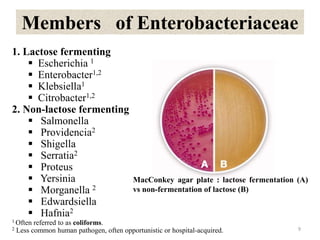
MacConkey agar plate : lactose fermentation (A)
vs non-fermentation of lactose (B)
Lactose Fermenter’s (LF)
Enterobacteriaceae
10
Genus Escherichia
General characteristics
 Gram negative bacilli consisting of five species,
 E. albetii, E. coli, E. fergusonii, E. hermanii & E. vulneris
 E. coli is the most common & clinically important.
 It is the most abundantly found bacteria in colon & faeces.
 Found in soil, water & vegetation.
 Most are motile; some are capsulated.
Virulence factors:
• Toxin, Pilli
11
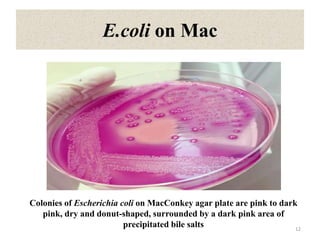
E.coli on Mac
12
Colonies of Escherichia coli on MacConkey agar plate are pink to dark
pink, dry and donut-shaped, surrounded by a dark pink area of
precipitated bile salts
E. coli causes:
 Urinary tract infections
 It is the commonest pathogen isolated from patients
with cystitis.
 Recurring infections are common in women.
 Infections of wounds, peritonitis, sepsis & endotoxin
induced shock.
Meningitis & bacteraemia in neonates.
E. coli capsular type K1 is associated with neonatal
meningitis.
Pathogenesis & clinical
manifestations
13
Cont’d…
Diarrhoeal disease:
• Infantile gastroenteritis
• Traveller’s diarrhoea
• Dysentery, &
• Haemorrhagic diarrhoea leads to haemolytic uraemic
syndrome.
14
E. coli strains associated with
diarrhoeal disease
1. Enterotoxigenic E. coli (ETEC)
• Causes watery (secretory) diarrhoea with vomiting,
cramps, nausea, & low-grade fever
• Due to the production of plasmid mediated toxins (LT,
ST) in infants & adults.
• The diarrhea is also called “Traveller's diarrhea”.
• Pathogenic serogroups includes O6, O8, O15, O25, O27
15
2. Enteropathogenic E. coli (EPEC)
• Causes vomiting, fever & prolonged diarrhoea
mainly in infants (less than 2 year).
• Due to bacteria adhering to epithelial cells,
multiplying & causing lesions.
• Pathogenic serogroups includes O26, O55, O86,
O111, O114, O125-O128 & O142.
16
• Causes dysentery (similar to shigellosis), fever and
colitis, with blood, mucus, and many pus cells in
faecal specimens.
• Due to bacteria invading and multiplying in epithelial
cells.
• Pathogenic serogroups includes O78, O115, O148,
O153, O159 & O167.
3. Entero-invasive E. Coli (EIEC)
17
4. Enterohaemorrhagic E. coli
(EHEC)
• Causes life-threatening haemorrhagic diarrhoea (colitis) in all
ages, without pus cells, & often without fever.
• It can progress to haemolytic uraemic syndrome with renal
failure.
• EHEC is due to cytotoxins damaging vascular endothelial cells,
& is mainly associated with the serogroup 0157:H7.
• It is sometimes referred to as VTEC (vero cytotoxin-producing
E. coli, because it is toxic to vero monkey cells in culture).
• Infection occurs by ingesting contaminated meat products, un
pasteurized milk & dairy products.
18
• Causes chronic watery diarrhoea & vomiting,
mainly in children.
• There are more than 50 pathogenic
serogroups responsible for the infection.
5. Enteroaggregative E. coli (Eagg EC)
19
Laboratory diagnosis
Specimen: Urine, pus, blood, stool, body fluid
Smear: Gram-negative rods
Culture: Lactose-fermenting mucoid colonies on macConkey agar &
some strains are haemolytic on blood agar .
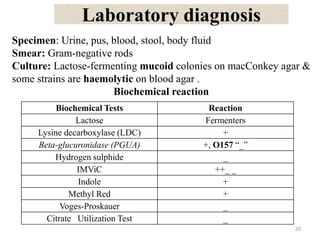
Biochemical reaction
20
Biochemical Tests Reaction
Lactose Fermenters
Lysine decarboxylase (LDC) +
Beta-glucuronidase (PGUA) +, O157 “_”
Hydrogen sulphide _
IMViC ++_ _
Indole +
Methyl Red +
Voges-Proskauer _
Citrate Utilization Test _
Treatment
Trimethoprim-sulphamethoxazole, ampicillin,
cephalosporins, aminoglycosides & cefotaxime.
Prevention & control
 Reducing rise of nosocomial infections such as
restricting use of antibiotics &
 avoiding use of urinary catheters
Maintenance of hygienic standards to reduce
gastroenteritis.
Proper cooking of beef reduces risk of EHEC
infections.
Cont’d…
21
Genus Klebsiella
General Characteristics
 Gram-negative rods
 Non-motile
 Lactose-fermenting
 Capsulated
 Main species of medical importance:
• K. pneumoniae
• K. rhinoscleromatis
• K. ozenae
• K. oxytoca
• Klebsiella aerogenes
Virulence factors
 Pili - adherence to respiratory & urinary epithelium.
 Capsule - prevent phagocytosis.
 About 80 capsular (K) antigens are presently recognized.
 Type K1, K2, K3 & K21 are of particular significance in human disease.22
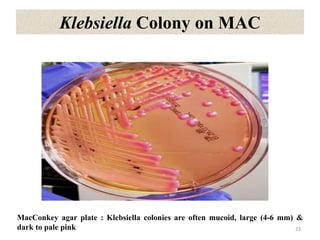
Klebsiella Colony on MAC
23
MacConkey agar plate : Klebsiella colonies are often mucoid, large (4-6 mm) &
dark to pale pink
Pathogenesis & clinical
manifestations
Klebsiella pneumoniae
• Causes chest infections & occasionally severe
bronchopneumonia with lung abscesses.
• Infections are often opportunistic, occurring in those with
existing chest disease or D. mellitus, or in malnourished
persons.
• It also causes UTI, septicaemia, meningitis (especially
in neonates), wound infection & peritonitis.
24
Klebsiella aerogenes
• Is associated with HAI of wounds & UTI.
• It is also found in the respiratory tract where it may
cause infection, particularly in immunocompromised
patients.
Klebsiella rhinoscleromatis
• Causes rhinoscleromatis (granulomatous disease) of the
nose & pharynx.
• Chronic inflammatory growths can lead to deformity of
the nose or distortion of the respiratory passages.
Klebsiella ozaenae
• It causes ozenae manifesting with foul smelling nasal
discharge leading to chronic atrophic rhinitis.
Cont’d…
25
Laboratory diagnosis
 Specimen: Sputum, urine, pus, CSF, body fluid
 Smear: Gram-negative rods
 Culture:
 Large mucoid
 Lactose-fermenting colonies on macConkey agar
 Shows stringy type growth when cultured in broth
medium.
Serology:
• Capsular polysaccharide serotyping.
• More than 80 serotypes of K. pneumoniae recognized
26
Biochemical tests
Key: VP = Voges-Proskauer, Lact = Lactose fermentation,
Ure = Urease, Cit = Citrate, Mal = Malonate utilization,
LDC = Lysine decarboxylase
• Klebsiella are indole negative (K. oxytoca is indole positive),
• Ornithine decarboxylase negative &
• do not produce H2S
Klebsiella Species Biochemicals
Vp Lact Ure Cit Mal LDC
K. pneumoniae - + + + + +
K. aerogenes + + + + + +
K. ozaenae - ± - ± - ±
K.
rhinoscleromatis
- - - - + -
27
Cont’d….
28
Cont’d…
Treatment
• Since isolates from HAI are frequently resistant to
multiple antibiotics.
• The choice of drugs depends on results of sensitivity
testing.
• However, gentamycin & cefotaxime can be used.
Prevention & control
• Removing of urinary catheters when they are no longer
needed.
• Taking proper care of respiratory therapy devices.
29
Genus Enterobacter
• It is gram-negative
• Lactose fermenting
• Motile rods, &
• Found as a commensal in the intestinal tract of humans &
animals
• Also found in moist environments.
 Medical important species
 Enterobacter aerogenes
 Enterobacter agglomerrans
 Enterobacter cloacae
 It produces mucoid colony resembling Klebsiella on
MacConkey agar.
30
Enterobacter on MAC
31
Enterobacter spp., On the left, are often late lactose fermenters, & so colonies may
appear colourless to light pink
Enterobacter aerogenes
Can cause
• Urinary tract infection
• Wound infection &
• Septicaemia in immuno-compromised & chronically
debilitated patients.
32
Genus Citrobacter
• It is gram-negative
• Lactose fermenting
• Motile rods &
• Opportunistic pathogen
 Medical important species is
 Citrobacter freundii
 Citrobacter diversus
 Citrobacter koseri
33
Citrobacter freundii
Is associated with
• Urinary tract infections
• Wound infection &
• Septicaemia in immuno-compromised & chronically
debilitated patients.
• It is H2S positive while C. diversus is negative
34
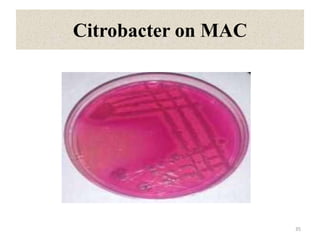
Citrobacter on MAC
35
Non-Lactose Enterobacteriaceae
36
Genus Salmonellae
General characteristics
 Gram-negative, facultative rod-shaped bacteria
 Motile, non-spore forming
 Live in the intestinal tracts of warm and cold
blooded animals.
 Some species are ubiquitous.
 Other species are specifically adapted to a
particular host.
37
 Classifies in different O groups, or O sero groups
which contain a number of sero - types possessing a
common O antigen.
 The O groups first defined were designated by
capital letters A to Z and those discovered later by
the number.
 Group A , for example, is characterized by O antigen
2, group B by O antigen 4 and group D by O antigen
9 (Refer Mackie and McCartney).
Kauffmann- White Classification
38
Group, Serogroup, Serotype O Antigens H antigens:
Phase 1 Phase 2
Group A, serogroup 2
S. Paratyphi A 1,2,12
a -
Group B, serogroup 4
S. Paratyphi B
S. Derby S. Typhimurium
S. Heidelberg
1,4,5,12
1,4,5,12
1,4,5,12
(1)*,4,5,(12)*
f,9 (1,2) *
i 1,2
r 1,2
c 1,5
Group C, serogroup 7
S. Cholerae-suis
S. Paratyphi C
S. Oranienburg
S. Garoli
S. Thompson
S. Bareilly
6,7
6,7,(Vi)*
6,7
6,7
6,7
6,7
c 1,5
m,t -
i 1, 6
k 1, 5
y 1,5
d -
Group D, serogroup 9
S. Typhi
S. Enteritidis
S. Pullorum
Gallinarum
9,12,(Vi)*
1,9,12
1,9,12
g,m -
(Non motile) -
r z6
Group E1, serogroup 3,10
S. Weltevreden
S. Anatum
Group G, serogroup 13,22
S. Poona
S. Worthington
S. Cubana
3,10
3,10
13,22
1,13,23
1,13,23
e,h 1,6
z 1,6
z 1,w
z29 -
Table: Antigenic structure and grouping of some salmonellae according to the Kauffmann-
White classification system.
39
Antigenic Structure
1. Somatic (O) or cell wall antigens
 are heat stable & alcohol resistant
 Are lipopolysaccharide layer on surface of bacterial cell
wall.
 Used for serological tests
 Not always antigenically identical & over 60 different O
antigens are recognized
40
2. Surface (Envelope) Antigens
 Includes the capsular ( K) antigens including
the Vi antigen ; the slime (mucus) or M
antigen ; and the fimbrial, or F antigen.
 Such antigens may mask O antigens, and the
bacteria will not be agglutinated with O
antisera.
 One specific surface antigen is well known: the
Vi antigen which occurs in only three
Salmonella Serovars (out of about 2,200);
S.Typhi, S. Paratyphi C, & S. Dublin.
41
3. Flagellar (H) Antigens
Are located on flagella & are denatured or
removed by heat or alcohol.
In many but not all salmonellae, the production of
flagellar antigen is diphasic ( phase I and phase II).
Anti flagellar antibodies can immobilize bacteria
with corresponding H antigens.
42
Medically important serovar
 Salmonella typhi
 Salmonella paratyphi
 Salmonella choleriasis
 Salmonella typhimurium and
 Salmonella enteritidis
 Salmonella strain produce a thermo labile
enterotoxin that bears a limited relatedness to
cholera toxin both structurally & antigenically
43
Classification of Salmonella
44
Virulence factors
1. Lipopolysaccharide (endotoxin) - released into the
bloodstream resulting in septicemia.
2. Invasins - proteins that mediate adherence to &
penetration of intestinal epithelial cells.
3. Factors involved in resistance to phagocytosis
A. Catalase & super oxide dismutase - protect the
bacteria from intracellular killing by neutralizing
oxygen radicals.
B. Defensins - small cationic proteins that facilitate
killing of bacteria by phagolysosomes.
45
Cont’d…
4. Factors involved in resistance to acid pH
Salmonellae are protected from stomach acid &
acid pH
Phagosome by acid tolerance response (ATR)
genes of chromosome.
5. Vi (virulence ) antigen - this surface antigen of
Salmonella typhi has anti-phagocytic properties.
However, its exact role as a virulent factor is not
clear.
46
Pathogenesis & clinical
manifestations
 The bacteria enter the human digestive tract,
penetrate the intestinal mucosa (causing no
lesion), and are stopped in the mesenteric lymph
nodes.
 Bacterial multiplication occurs and part of the
bacterial population lyses.
 From the mesenteric lymph nodes, viable bacteria
and LPS (endotoxin) may be released into the
bloodstream resulting in septicemia.
 Release of endotoxin is responsible for
cardiovascular problems. 47
Diseases are caused by
Salmonella
1. Salmonellosis (enteric fever) (typhoid) -
resulting from bacterial invasion of the
bloodstream.
2. Acute gastroenteritis
 Resulting from a food borne
infection/intoxication.
 Produce a thermo labile enterotoxin that bears a
limited relatedness to cholera toxin.
3. Septicemia -is feature of enteric fever caused by
Salmonella typhi & Salmonella paratyphi
48
Laboratory diagnosis
Specimen: Blood, Bone marrow, stool, urine , serum,
left over food , & duodenal aspirates.
 Blood - 80% positive in the first week.
 Stool (gastroenteritis) - 70-80% positive in the
second & third week.
 Urine - 20% positive in the third & fourth week.
 Serum - for widal test- positive after the second
week of illness.
 Gram reaction - Gram-negative rods
49
Culture
1. Differential medium-for rapid isolation of
lactose fermenter from non-fermenter.
• Eg: EMB agar, MacConkey agar & Deoxycholate
Citrate agar.
2. Selective medium-favour growth of salmonella & shigella
over other enterobacteriaceae.
• Eg: Salmonella-Shigella (SS) agar, Hekton Enteric agar,
XLD agar, Deoxycholate-Citrate agar.
3. Enrichment cultures: Inhibit replication of normal
intestinal flora and permit replication of salmonella.
• Eg: Selenite F broth and Tetrathionate broth Salmonellae
are non-lactose fermenting & some produce H2S.
50
Cont’d…
51
Biochemical reaction
Generally Salmonealeae produce gas & acid from
carbohydrate; except Salmonella typhi which does not
produce gas.
52
Biochemical Test
53
LDC test results – negative (left) & positive
(right)
Triple sugar agar
54
Serotyping
 Based on their O and H antigen composition, more than 2300
Salmonella serovars are described in the Kauffmann-White
scheme.
 Salmonellae are placed in groups by their O antigens (A, B, C,
etc) and subdivided by their H (phase 1 and 2) antigens.
 Polyclonal anti-sera containing antibodies to the major groups
can be used to identify an isolate bio-chemically suspected of
being Salmonella.
 Full sero-typing (for epidemiological purposes) requires the use
of polyvalent and monovalent O and H anti-sera and is usually
carried out in a specialist Public Health Laboratory.
55
Widal test
The diagnostic value of the Widal test remains
controversial.
 Most agree that the test is not sufficiently sensitive or
specific to be clinically useful when only a single
acute-phase serum sample is tested (common
practice).
It measures agglutinating antibody levels against
O(somatic) and H (flagellar) antibodies.
In acute typhoid fever, O agglutinins can usually be
detected 6-8 days after the onset of fever & H
agglutinins after 10-12 days.
56
Interpretation of results
1. Higher or rising titer of O ( > 1: 60) suggests active infection.
2. Higher titer of H ( > 1: 60) suggests past immunization or past
infection.
3. Higher titer of antibody to Vi antigen occur in some carriers.
Treatment
 Ampicillin, Cephalosporin, Chloramphenicol
 Plasmids mediated drug resistance is a problem of concern
currently.
57
RDT
• The Salmonella Rapid Detection is a qualitative test
for a broad spectrum of Salmonella serotypes.
• Results can be recorded in 20-25 minutes
58
Prevention & Control
 Personal hygiene
 Proper storage of food
 Use of pasteurized milk and milk products.
 Proper cooking of Vegetables and fruits
 Health education
59
Genus Shigella
General characteristics
 Shigellosis is an infectious disease caused by various
species of Shigella.
 Natural habitat: Intestinal tracts of humans & other
primates.
 are slender gram-negative rods; coco bacillary forms
occur in young cultures.
 Non-motile, non-spore forming
• Based on antigenic structure and biochemical
reactions, Shigella organisms are divided into four
subgroups corresponding to the following species:
60
Shigella on different Agars
61
SS agar
Cont’d…
Subgroup A: Shigella dysenteriae
• Contains 13 distinct serotypes
• Serotype 1 was formerly called S. shiga
• Serotype 2 was formerly called S. schmitzii
Subgroup B: Shigella flexneri
• Contains 6 related serotypes and 4 serotypes
• Divided into subsero-types
Subgroup C: Shigella boydii:
• Contains 18 distinct serotypes
Subgroup D: Shigella sonnei:
• Contains one serotype 62
Virulence factors
1. Endotoxin: irritate the bowel wall
2. Exotoxin: Enterotoxin and neurotoxin
3. S. dysenritiae type 1 (shiga bacillus) produce heat
labile exotoxin mediated diarrhea.
4. Long chain LPS - preventing the effect of serum
complement.
63
Pathogenesis & clinical
manifestations
 It is almost always limited to the gastrointestinal tract,
bloodstream invasion is quite rare.
 It is highly communicable.
 It invade the mucosal epithelial cells (eg, M cells) by
induced phagocytosis, escape from the phagocytic
vacuole, multiplication and spread within the epithelial
cell cytoplasm, and passage to adjacent cells.
64
Cont’d…
 Micro-abscesses in the wall of the large intestine &
terminal ileum lead to necrosis of the mucous membrane,
superficial ulceration, bleeding, and formation of a
"pseudo membrane" on the ulcerated area.
 This consists of fibrin, leukocytes, cell debris, a necrotic
mucous membrane, & bacteria.
 As the process subsides, granulation tissue fills the
ulcers and scar tissue forms.
65
Contd’…
 Plasmid encoded proteins are required for shigella
to break free from cellular endo-somes and for the
migration between epithelial cells.
 Long chain LPS plays a role in virulence by
preventing the effect of serum complement.
66
Laboratory diagnosis
 Specimen: Fresh stool or rectal swabs
 Gram reaction: Gram-negative non-motile rods.
 Culture
The following media can be used:
 MacConkey
 Eosin - methylene Blue agar
 Hekton enteric agar or Salmonella Shigella agar
67
68
Species Man Cat Ind LDC ODC
S.dysenteriae
1 (Sd 1)
2
3–12
-
-
-
-
+
+
-
+
d
-
-
-
-
-
-
S. flexneri
1–5 d
6
+
+
+
+
d
-
-
-
-
-
S. sonnei + + - - +
S. boydii
1–18 + + d - -
Man = Mannitol, Cat = Catalase, Ind = Indole, LDC = Lysine
decarboxylase, ODC = Ornithine decarboxylase.
Notes *Most strains positive. d Different strains give different
reactions.
Biochemical reactions which help to differentiate shigellae
Sero grouping
 Are sero-grouped by their O-antigens using
polyvalent group anti-sera & when indicated,
 mono-specific (monovalent) antiserum.
 e.g. monovalent S. dysenteriae 1 antiserum is required
to identify S. dysenteriae 1.
Non-agglutinating Shigella
 Some Shigella strains (mostly S. dysenteriae & S.
sonnei) possess surface (K) antigens that can ‘hide’
the O-antigens being tested & so prevent
agglutination.
69
Treatment
• Ciprofloxacin
• Ampicillin
• Tetracycline
• Trimethoprim – sulphamethoxazole &
chloramphenicol
Prevention & control
 Sanitary control of water, food, & milk.
 Proper sewage disposal.
 Disinfection of excreta.
 Early detection & treatment of carriers.
e.g : Food handlers
70
Genus Proteus
General characteristics
• Gram negative rods & it differ from other members of
Enterobacteriaceae by :
1.Their ability to produce the enzyme urease &
phenylalanine diaminase.
2. Certain species are very motile & produce a striking
swarming colonies on blood agar plate
3. Cell wall (O antigens) of certain strains of Proteus
(such as OX-2, OX-19 & OX-K) cross react with
antigens of several species of rickettsia.
71
Cont’d…
4. The Proteus antigens can be used in tests ( Weil Felix test)
to detect the presence of antibodies against certain rickettsia
in patient sera.
 Proteus species are found in the intestinal tract of
humans, animals, soil, sewage & water.
 They are motile, non-capsulated & pleomorphic rods.
Species of medical importance are:
 P. mirabilis
 P. Vulgaris
Other species
 P. penneri
 P. myxofaciens &
 P. hauseri 72
Swarming on BAP but not MAC
73
Virulence factors
74
1. These bacteria are characteristically highly motile &
chemotaxis may play a part in pathogenesis.
2. Strains of Proteus species may also express calcium -
dependent & calcium- independent haemolysins in
addition to a range of proteases such as an IgAase.
3. Proteus species & others urease producing organisms
tested alkaline conditions in the urine & may provoke
the formation of calculi (stones) in the urinary tract.
Pathogenesis & clinical
manifestations
75
Proteus mirabilis causes:
1. Urinary Tract infections
• Proteus infected urine has an alkaline reaction.
• It is a common cause of UTI in the elderly & young males often
following catheterization or cystoscopy.
• Infections are also associated with the presence of renal stones.
2. Abdominal & wound infections
• It is often a secondary invader of ulcers, pressure sores, burns
& damaged tissues.
3. Septicaemia, occasionally meningitis & chest infections.
4. Secondary invader of ulcer, burn, pressure sores & chronic
discharging ear.
Proteus vulgaris
76
• Important nosocomial pathogen.
• Isolated from wound infection & urinary tract
infection.
• Proteus mirabilis infections usually respond
better to antimicrobial therapy than those
caused by P. vulgaris & other related organisms.
Laboratory diagnosis
77
 Specimen: Urine, pus, blood, ear discharge
 Smear: Gram-negative rods
 Culture: Produce characteristic swarming colonies
over the surface of blood agar.
 Are non-lactose fermenting colonies on MacConkey
agar.
 Proteus species have a characteristic smell, rotten
egg/pungent smell.
Ether shaking technique to kill Proteus for
isolation of other bacteria
78
• When a mixed culture (Proteus & other
bacteria) observed on blood agar plate, take a
loop-full of mixed culture & mix it in ether
solution.
• Ether specifically kills Proteus species which
allows to isolate the other bacteria.
Biochemical tests
79
Proteus species:
 Do not ferment lactose.
 Rapidly hydrolyze urea within 4 hours
 Phenylalanine deaminase (PDA), positive.
 Beta - galactosidase (ortho-Nitrophenyl-β-
galactoside)(ONPG) --------- negative.
 Proteus species………….Urease positive
 Proteus vulgaris………... Indole positive
 Proteus mirabilis……….. Indole negative
Proteus on Urea broth & Agar
80
Biochemical reactions that differentiate Proteus
species, M. morganii, & Providencia species
81
Serology
• Some of the antigens of Proteus strains OX19, OXK
& OX2, agglutinate with sera from patients with
rickettsial diseases.
• These reactions form the basis of the Weil-Felix test.
Treatment
 Cephalosporins, aminoglycosides & ampicillin.
 Some strains of Proteus mirabilis are beta-lactamase
producing and therefore resistant to ampicillin.
 Proteus species are resistant to polymyxin &
nitrofurantoin.
82
Prevention & control
• No specific preventive measure is indicated, but
many hospital acquired UTIs can be prevented by
prompt removal of urinary catheters.
83
Genus Yersinia
General characteristics
 Animals are natural hosts of Yersinia & humans are accidental
hosts.
 They are short, pleomorphic, microaerophilic or facultative
anaerobic
 Gram negative rods
 Oxidase negative
 Exhibiting bipolar staining with special stains
 The genus consist of 10 species
.
84
Medical important Species
1. Yersinia pestis, the cause of Bubonic plague
2. Yersinia pseudotuberculosis &
3. Yersinia enterocolitica, important causes of
human diarrheal diseases; & others.
85
Virulence factors
1. ST lipopolysaccharide that have endotoxic activity
and contribute to the toxaemia of plague.
2. LT Fraction 1 (F1) protein capsular antigen helps
the organism to resist phagocytosis & is a protective
immunogen.
3. The V-antigen, part of the type III secretion system,
is an important protective antigen.
86
Cont’d…
4. Yersinia pestis also produces a plasminogen activator
& fibrinolysin, which may play a critical stage of
infection.
5. Other proteins associated with virulence includes
adhesion & iron acquisition factors which are common
to Yersinia enterocolitica & Yersinia pseudo
tuberculosis.
87
Pathogenesis & clinical
manifestations
 Y. pestis causes plague, a zoonotic disease which is transmitted
from rats & other rodents to humans by infected fleas (main
vectors: Xenopsylla cheopis & X. brasiliensis).
 Occasionally, infection occurs by inhaling the organisms in
airborne droplets.
 or by handling infected rodents or domestic animals (e.g.
cats, dogs) that harbour infected fleas.
88
Cont’d…
• Rat flea (Xenopsylla cheopis) gets infected by biting an
infected rodent
• Infected rat flea bites human (accidental host)
• Organism migrate to regional lymphnodes from the site of bite
(bubonic plague) &
• Gets into the blood via lymphatics (septicemic plague).
• or Primary pneumonic plague results from inhalation of
infective droplets, usually from an infected coughing person.
89
Oriental rat flea
90
There are three main forms of the
disease
1. Bubonic plague
• Characterized by high fever & acute lymphadenitis
with painful haemorrhagic swellings called buboes,
usually in the groin area.
• Occasionally lymph nodes in the neck or armpits are
involved, depending on the site of the flea bite.
• There is a markedly raised white cell count with
neutrophilia. 91
2. Pneumonic plague
 Inhalation of the organism or its spread to the lungs via the
blood stream.
 Pulmonary infection causes severe bronchopneumonia with
haemorrhaging.
 It is rapidly fatal unless treated at an early stage.
 Highly infectious & can spread quickly in conditions of
poverty & overcrowding.
 The sputum contains large numbers of plague bacilli & is
often blood stained.
92
3. Septicaemic plague
 Serious haemorrhagic condition in large numbers of Y.
pestis are present in the blood.
 The organisms can often be seen in peripheral blood
smears.
 Buboes are usually absent.
 There is a haemorrhagic rash.
 Septicaemic plague is rapidly fatal.
93
Plague
94
Plague patient with an axillary
lymphadenopathy
Plague that included gangrene of
the hand causing necrosis of the
fingers
Laboratory diagnosis
Specimen: Lymphnode aspirate, CSF, & blood
Smears: Wright’s stain, immuno-fluorescence stain,
methylene blue stains, basic fuchsine stain , & Wayson’s
stain to demonstrate bipolar granules.
Culture: Grow on blood agar or MacConkey agar.
NB: All cultures are highly infectious & must be
handled with extreme caution
Biochemical tests
Y. pestis is catalase positive & oxidase negative.
A microbiology specialist laboratory is required to
identify Y. pestis.
95
• Some of the Y. pestis
organisms have bipolar
staining,
• Which gives them a hairpin-
like appearance.
96
Dark stained bipolar ends of Yersinia pestis can clearly
be seen in this Wright's stain of blood from a plague
victim
Y. pestis
97
Y. pestis on sheep blood agar, 72 hours. grows well on most standard laboratory
media. After 48 to 72 hours, it shows gray-white to slightly yellow opaque raised,
irregular "fried egg" morphology; alternatively, colonies may have a "hammered
copper" shiny surface
Serology
 Fluorescent antibody technique using Y. pestis
antisera
 Prognosis: Mortality rate is 50% (100%) for
pneumonic plaque)
Treatment
 Streptomycin
 Tetracycline
 Streptomycin plus tetracycline or chloramphenicol
98
Prevention & control
 Chemoprophylaxis for contacts of patients.
 Formalin-killed vaccine for travellers to hyper
endemic areas and high risk persons.
 Plague is controlled by reduction of the rodent
population.
 Other Yersinia infections are controlled by proper
preparation of food and food products.
99
Other Gram Negative Enteric
Pathogens
100
It includes
• Genus Vibrio
• Genus Campylobacter
• Genus Helicobacter
101
Genus Vibrio
General characteristics
 Gram-negative straight or curved rods
 Motile by means of a single polar flagellum
 Oxidase-positive
 Species of medical importance Vibrio cholera 01
 Found in fresh water, shell fish & other sea food
 Man is the major reservoir of V. cholera 01, which
causes epidemic cholera.
 Readily may survive in clean stagnant water
102
Medical Important species
• V. cholerae
• V. parahaemolyticus
• V. vulnificus
103
Cont’d…
 Readily killed by heat and drying
 dies in polluted water but may survive in clean stagnant
water, esp. if alkaline, or sea water for 1-2 weeks.
104
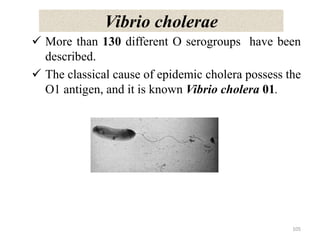
Vibrio cholerae
 More than 130 different O serogroups have been
described.
 The classical cause of epidemic cholera possess the
O1 antigen, and it is known Vibrio cholera 01.
105
Virulence factors
V. cholera requires two major pathogenic mechanisms
to cause disease.
1.The ability to produce cholera toxin.
2.Expression of toxin -co- regulated pili.
106
Pathogenesis & clinical
manifestations
 Route of infection is fecal-oral route.
 After ingestion of the V. cholerae 01, the bacteria
adheres to the intestinal wall with out invasion
 Then produces an exotoxin causing excessive fluid
secretion & diminished fluid absorption resulting
in diarrhea (rice water stool)
 which is characterized by passage of voluminous
watery diarrhea containing vibrio's, epithelial cells
and mucus and result in severe dehydration.
107
Non-01 V. cholerae
 Cause mild, some times bloody, diarrhoea often
accompanied by abdominal cramp.
 Also cause wound infection in patients exposed to
aquatic environments, and bacteraemia and
meningitis.
 May elaborate a wide range of virulence factors
including enterotoxin, cytotoxin, haemolysins and
colonizing factors.
 A few strains produce cholera toxin.
108
Laboratory diagnosis
 Specimen: Stool
 Smear: Gram-negative motile curved rods
 Motility of vibrio is best seen using dark-field microscopy.
 Presumptive diagnosis: Inactivation of vibrio in a wet
preparation after adding vibrio antiserum.
109
Culture
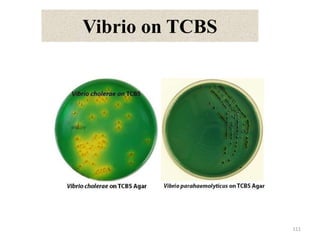
1. Thiosulphate citrate bile salt sucrose agar (TCBS)
• selective media for primary isolation of V. cholerae.
• Observe for large yellow sucrose fermenting colonies
after 18-24 hrs of incubation.
2. Alkaline peptone water:
• Enrichment media for V. cholerae 01 growth on and
just below the surface of peptone water with in 4-6
hours at room temperature as well as 37 oc.
110
Vibrio on TCBS
111
Biochemical Reaction
 Oxidase-positive
 Ferment sucrose and maltose (acid; no gas)
 Do not ferment L-arabinose
Treatment
 Fluid and electrolyte replacement.
 Occasionally short-course antibiotic therapy, e.g. with
tetracycline (but resistance is common) or
doxycycline.
112
Prevention & control
 Prevention mainly achieved by clean water & food
supply.
 Use of tetracycline for prevention is effective
during close contact with infected patients.
113

Enterobactaraecae.pptx

  • 1.
  • 2.
    Outlines Family Enterobacteriaceae • GenusEscherichia • Genus Salmonella • Genus Shigella • Genus Klebsiella • Genus Citrobacter • Genus Serratia • Genus Enterobacter • Genus Yersinia • Genus Proteus Family Vibrionaceae • Genus Vibrio 2
  • 3.
    Enterobacteriaceae General Characteristics • Gramnegative rods, found as normal flora in intestinal tract of human & animals. • It is named as well coliforms or enterobacilli • Non-spore forming, aerobic & facultative anaerobic bacteria • Most are motile 3
  • 4.
     All fermentglucose with acid production.  These bacteria grow well on most simple media such as nutrient agar.  Release endotoxin from their cell wall.  They are catalase positive (with one exception) (Shigella dysentery type 1),  Oxidase negative & reduce nitrates to nitrites. Cont’d… 4
  • 5.
    Cont’d…  Antigens: possessa wide variety of antigens which are used in serotyping, particularly Salmonellae, Shigellae & E. coli.  Cross-reactions however, can occur due to a sharing of antigens.  Most of them have possessed three type of antigens H-antigen - Flagellar protein Found in flagella Possessed by motile enterobacteriaceae Heat labile K-antigen - Capsular polysaccharides Surrounds the cell wall Heat labile O-antigen - Outer membrane lipopolysaccharide (Somatic Antigen) It is found in the cell wall of enterobacteriaceae  Heat stable 5
  • 6.
    Cont’d… Note • K-antigens caninterfere with the testing of underlying O-antigens • K- antigens can be heat-inactivated, enabling O- antigens to be detected. • The K-antigens of some Salmonellae, e.g. S. Typhi, are called Vi-antigens. 6
  • 7.
    Reading assignment • Aboutsource of naming for O - antigen, H – antigen, K- antigen, and Vi-antigen which language they were derived? 7
  • 8.
    1. Antiphagocytic surfaceproperties  Capsules  K-antigens &  LPS 2. Adhesins  Fimbriae / pili  Intimin (non-fimbrial adhesin)  Invasins: haemolysin, siderophores &  Shigella-like "invasins" for intracellular invasion & spread 3. Toxins  Heat labile(LT) toxin  Heat stable (ST) toxin  Shiga -like toxin  Cytotoxins &  Endotoxin (LPS) Virulence factors 8
  • 9.
    Members of Enterobacteriaceae 1.Lactose fermenting  Escherichia 1  Enterobacter1,2  Klebsiella1  Citrobacter1,2 2. Non-lactose fermenting  Salmonella  Providencia2  Shigella  Serratia2  Proteus  Yersinia  Morganella 2  Edwardsiella  Hafnia2 1 Often referred to as coliforms. 2 Less common human pathogen, often opportunistic or hospital-acquired. 9 MacConkey agar plate : lactose fermentation (A) vs non-fermentation of lactose (B)
  • 10.
  • 11.
    Genus Escherichia General characteristics Gram negative bacilli consisting of five species,  E. albetii, E. coli, E. fergusonii, E. hermanii & E. vulneris  E. coli is the most common & clinically important.  It is the most abundantly found bacteria in colon & faeces.  Found in soil, water & vegetation.  Most are motile; some are capsulated. Virulence factors: • Toxin, Pilli 11
  • 12.
    E.coli on Mac 12 Coloniesof Escherichia coli on MacConkey agar plate are pink to dark pink, dry and donut-shaped, surrounded by a dark pink area of precipitated bile salts
  • 13.
    E. coli causes: Urinary tract infections  It is the commonest pathogen isolated from patients with cystitis.  Recurring infections are common in women.  Infections of wounds, peritonitis, sepsis & endotoxin induced shock. Meningitis & bacteraemia in neonates. E. coli capsular type K1 is associated with neonatal meningitis. Pathogenesis & clinical manifestations 13
  • 14.
    Cont’d… Diarrhoeal disease: • Infantilegastroenteritis • Traveller’s diarrhoea • Dysentery, & • Haemorrhagic diarrhoea leads to haemolytic uraemic syndrome. 14
  • 15.
    E. coli strainsassociated with diarrhoeal disease 1. Enterotoxigenic E. coli (ETEC) • Causes watery (secretory) diarrhoea with vomiting, cramps, nausea, & low-grade fever • Due to the production of plasmid mediated toxins (LT, ST) in infants & adults. • The diarrhea is also called “Traveller's diarrhea”. • Pathogenic serogroups includes O6, O8, O15, O25, O27 15
  • 16.
    2. Enteropathogenic E.coli (EPEC) • Causes vomiting, fever & prolonged diarrhoea mainly in infants (less than 2 year). • Due to bacteria adhering to epithelial cells, multiplying & causing lesions. • Pathogenic serogroups includes O26, O55, O86, O111, O114, O125-O128 & O142. 16
  • 17.
    • Causes dysentery(similar to shigellosis), fever and colitis, with blood, mucus, and many pus cells in faecal specimens. • Due to bacteria invading and multiplying in epithelial cells. • Pathogenic serogroups includes O78, O115, O148, O153, O159 & O167. 3. Entero-invasive E. Coli (EIEC) 17
  • 18.
    4. Enterohaemorrhagic E.coli (EHEC) • Causes life-threatening haemorrhagic diarrhoea (colitis) in all ages, without pus cells, & often without fever. • It can progress to haemolytic uraemic syndrome with renal failure. • EHEC is due to cytotoxins damaging vascular endothelial cells, & is mainly associated with the serogroup 0157:H7. • It is sometimes referred to as VTEC (vero cytotoxin-producing E. coli, because it is toxic to vero monkey cells in culture). • Infection occurs by ingesting contaminated meat products, un pasteurized milk & dairy products. 18
  • 19.
    • Causes chronicwatery diarrhoea & vomiting, mainly in children. • There are more than 50 pathogenic serogroups responsible for the infection. 5. Enteroaggregative E. coli (Eagg EC) 19
  • 20.
    Laboratory diagnosis Specimen: Urine,pus, blood, stool, body fluid Smear: Gram-negative rods Culture: Lactose-fermenting mucoid colonies on macConkey agar & some strains are haemolytic on blood agar . Biochemical reaction 20 Biochemical Tests Reaction Lactose Fermenters Lysine decarboxylase (LDC) + Beta-glucuronidase (PGUA) +, O157 “_” Hydrogen sulphide _ IMViC ++_ _ Indole + Methyl Red + Voges-Proskauer _ Citrate Utilization Test _
  • 21.
    Treatment Trimethoprim-sulphamethoxazole, ampicillin, cephalosporins, aminoglycosides& cefotaxime. Prevention & control  Reducing rise of nosocomial infections such as restricting use of antibiotics &  avoiding use of urinary catheters Maintenance of hygienic standards to reduce gastroenteritis. Proper cooking of beef reduces risk of EHEC infections. Cont’d… 21
  • 22.
    Genus Klebsiella General Characteristics Gram-negative rods  Non-motile  Lactose-fermenting  Capsulated  Main species of medical importance: • K. pneumoniae • K. rhinoscleromatis • K. ozenae • K. oxytoca • Klebsiella aerogenes Virulence factors  Pili - adherence to respiratory & urinary epithelium.  Capsule - prevent phagocytosis.  About 80 capsular (K) antigens are presently recognized.  Type K1, K2, K3 & K21 are of particular significance in human disease.22
  • 23.
    Klebsiella Colony onMAC 23 MacConkey agar plate : Klebsiella colonies are often mucoid, large (4-6 mm) & dark to pale pink
  • 24.
    Pathogenesis & clinical manifestations Klebsiellapneumoniae • Causes chest infections & occasionally severe bronchopneumonia with lung abscesses. • Infections are often opportunistic, occurring in those with existing chest disease or D. mellitus, or in malnourished persons. • It also causes UTI, septicaemia, meningitis (especially in neonates), wound infection & peritonitis. 24
  • 25.
    Klebsiella aerogenes • Isassociated with HAI of wounds & UTI. • It is also found in the respiratory tract where it may cause infection, particularly in immunocompromised patients. Klebsiella rhinoscleromatis • Causes rhinoscleromatis (granulomatous disease) of the nose & pharynx. • Chronic inflammatory growths can lead to deformity of the nose or distortion of the respiratory passages. Klebsiella ozaenae • It causes ozenae manifesting with foul smelling nasal discharge leading to chronic atrophic rhinitis. Cont’d… 25
  • 26.
    Laboratory diagnosis  Specimen:Sputum, urine, pus, CSF, body fluid  Smear: Gram-negative rods  Culture:  Large mucoid  Lactose-fermenting colonies on macConkey agar  Shows stringy type growth when cultured in broth medium. Serology: • Capsular polysaccharide serotyping. • More than 80 serotypes of K. pneumoniae recognized 26
  • 27.
    Biochemical tests Key: VP= Voges-Proskauer, Lact = Lactose fermentation, Ure = Urease, Cit = Citrate, Mal = Malonate utilization, LDC = Lysine decarboxylase • Klebsiella are indole negative (K. oxytoca is indole positive), • Ornithine decarboxylase negative & • do not produce H2S Klebsiella Species Biochemicals Vp Lact Ure Cit Mal LDC K. pneumoniae - + + + + + K. aerogenes + + + + + + K. ozaenae - ± - ± - ± K. rhinoscleromatis - - - - + - 27
  • 28.
  • 29.
    Cont’d… Treatment • Since isolatesfrom HAI are frequently resistant to multiple antibiotics. • The choice of drugs depends on results of sensitivity testing. • However, gentamycin & cefotaxime can be used. Prevention & control • Removing of urinary catheters when they are no longer needed. • Taking proper care of respiratory therapy devices. 29
  • 30.
    Genus Enterobacter • Itis gram-negative • Lactose fermenting • Motile rods, & • Found as a commensal in the intestinal tract of humans & animals • Also found in moist environments.  Medical important species  Enterobacter aerogenes  Enterobacter agglomerrans  Enterobacter cloacae  It produces mucoid colony resembling Klebsiella on MacConkey agar. 30
  • 31.
    Enterobacter on MAC 31 Enterobacterspp., On the left, are often late lactose fermenters, & so colonies may appear colourless to light pink
  • 32.
    Enterobacter aerogenes Can cause •Urinary tract infection • Wound infection & • Septicaemia in immuno-compromised & chronically debilitated patients. 32
  • 33.
    Genus Citrobacter • Itis gram-negative • Lactose fermenting • Motile rods & • Opportunistic pathogen  Medical important species is  Citrobacter freundii  Citrobacter diversus  Citrobacter koseri 33
  • 34.
    Citrobacter freundii Is associatedwith • Urinary tract infections • Wound infection & • Septicaemia in immuno-compromised & chronically debilitated patients. • It is H2S positive while C. diversus is negative 34
  • 35.
  • 36.
  • 37.
    Genus Salmonellae General characteristics Gram-negative, facultative rod-shaped bacteria  Motile, non-spore forming  Live in the intestinal tracts of warm and cold blooded animals.  Some species are ubiquitous.  Other species are specifically adapted to a particular host. 37
  • 38.
     Classifies indifferent O groups, or O sero groups which contain a number of sero - types possessing a common O antigen.  The O groups first defined were designated by capital letters A to Z and those discovered later by the number.  Group A , for example, is characterized by O antigen 2, group B by O antigen 4 and group D by O antigen 9 (Refer Mackie and McCartney). Kauffmann- White Classification 38
  • 39.
    Group, Serogroup, SerotypeO Antigens H antigens: Phase 1 Phase 2 Group A, serogroup 2 S. Paratyphi A 1,2,12 a - Group B, serogroup 4 S. Paratyphi B S. Derby S. Typhimurium S. Heidelberg 1,4,5,12 1,4,5,12 1,4,5,12 (1)*,4,5,(12)* f,9 (1,2) * i 1,2 r 1,2 c 1,5 Group C, serogroup 7 S. Cholerae-suis S. Paratyphi C S. Oranienburg S. Garoli S. Thompson S. Bareilly 6,7 6,7,(Vi)* 6,7 6,7 6,7 6,7 c 1,5 m,t - i 1, 6 k 1, 5 y 1,5 d - Group D, serogroup 9 S. Typhi S. Enteritidis S. Pullorum Gallinarum 9,12,(Vi)* 1,9,12 1,9,12 g,m - (Non motile) - r z6 Group E1, serogroup 3,10 S. Weltevreden S. Anatum Group G, serogroup 13,22 S. Poona S. Worthington S. Cubana 3,10 3,10 13,22 1,13,23 1,13,23 e,h 1,6 z 1,6 z 1,w z29 - Table: Antigenic structure and grouping of some salmonellae according to the Kauffmann- White classification system. 39
  • 40.
    Antigenic Structure 1. Somatic(O) or cell wall antigens  are heat stable & alcohol resistant  Are lipopolysaccharide layer on surface of bacterial cell wall.  Used for serological tests  Not always antigenically identical & over 60 different O antigens are recognized 40
  • 41.
    2. Surface (Envelope)Antigens  Includes the capsular ( K) antigens including the Vi antigen ; the slime (mucus) or M antigen ; and the fimbrial, or F antigen.  Such antigens may mask O antigens, and the bacteria will not be agglutinated with O antisera.  One specific surface antigen is well known: the Vi antigen which occurs in only three Salmonella Serovars (out of about 2,200); S.Typhi, S. Paratyphi C, & S. Dublin. 41
  • 42.
    3. Flagellar (H)Antigens Are located on flagella & are denatured or removed by heat or alcohol. In many but not all salmonellae, the production of flagellar antigen is diphasic ( phase I and phase II). Anti flagellar antibodies can immobilize bacteria with corresponding H antigens. 42
  • 43.
    Medically important serovar Salmonella typhi  Salmonella paratyphi  Salmonella choleriasis  Salmonella typhimurium and  Salmonella enteritidis  Salmonella strain produce a thermo labile enterotoxin that bears a limited relatedness to cholera toxin both structurally & antigenically 43
  • 44.
  • 45.
    Virulence factors 1. Lipopolysaccharide(endotoxin) - released into the bloodstream resulting in septicemia. 2. Invasins - proteins that mediate adherence to & penetration of intestinal epithelial cells. 3. Factors involved in resistance to phagocytosis A. Catalase & super oxide dismutase - protect the bacteria from intracellular killing by neutralizing oxygen radicals. B. Defensins - small cationic proteins that facilitate killing of bacteria by phagolysosomes. 45
  • 46.
    Cont’d… 4. Factors involvedin resistance to acid pH Salmonellae are protected from stomach acid & acid pH Phagosome by acid tolerance response (ATR) genes of chromosome. 5. Vi (virulence ) antigen - this surface antigen of Salmonella typhi has anti-phagocytic properties. However, its exact role as a virulent factor is not clear. 46
  • 47.
    Pathogenesis & clinical manifestations The bacteria enter the human digestive tract, penetrate the intestinal mucosa (causing no lesion), and are stopped in the mesenteric lymph nodes.  Bacterial multiplication occurs and part of the bacterial population lyses.  From the mesenteric lymph nodes, viable bacteria and LPS (endotoxin) may be released into the bloodstream resulting in septicemia.  Release of endotoxin is responsible for cardiovascular problems. 47
  • 48.
    Diseases are causedby Salmonella 1. Salmonellosis (enteric fever) (typhoid) - resulting from bacterial invasion of the bloodstream. 2. Acute gastroenteritis  Resulting from a food borne infection/intoxication.  Produce a thermo labile enterotoxin that bears a limited relatedness to cholera toxin. 3. Septicemia -is feature of enteric fever caused by Salmonella typhi & Salmonella paratyphi 48
  • 49.
    Laboratory diagnosis Specimen: Blood,Bone marrow, stool, urine , serum, left over food , & duodenal aspirates.  Blood - 80% positive in the first week.  Stool (gastroenteritis) - 70-80% positive in the second & third week.  Urine - 20% positive in the third & fourth week.  Serum - for widal test- positive after the second week of illness.  Gram reaction - Gram-negative rods 49
  • 50.
    Culture 1. Differential medium-forrapid isolation of lactose fermenter from non-fermenter. • Eg: EMB agar, MacConkey agar & Deoxycholate Citrate agar. 2. Selective medium-favour growth of salmonella & shigella over other enterobacteriaceae. • Eg: Salmonella-Shigella (SS) agar, Hekton Enteric agar, XLD agar, Deoxycholate-Citrate agar. 3. Enrichment cultures: Inhibit replication of normal intestinal flora and permit replication of salmonella. • Eg: Selenite F broth and Tetrathionate broth Salmonellae are non-lactose fermenting & some produce H2S. 50
  • 51.
  • 52.
    Biochemical reaction Generally Salmonealeaeproduce gas & acid from carbohydrate; except Salmonella typhi which does not produce gas. 52
  • 53.
    Biochemical Test 53 LDC testresults – negative (left) & positive (right)
  • 54.
  • 55.
    Serotyping  Based ontheir O and H antigen composition, more than 2300 Salmonella serovars are described in the Kauffmann-White scheme.  Salmonellae are placed in groups by their O antigens (A, B, C, etc) and subdivided by their H (phase 1 and 2) antigens.  Polyclonal anti-sera containing antibodies to the major groups can be used to identify an isolate bio-chemically suspected of being Salmonella.  Full sero-typing (for epidemiological purposes) requires the use of polyvalent and monovalent O and H anti-sera and is usually carried out in a specialist Public Health Laboratory. 55
  • 56.
    Widal test The diagnosticvalue of the Widal test remains controversial.  Most agree that the test is not sufficiently sensitive or specific to be clinically useful when only a single acute-phase serum sample is tested (common practice). It measures agglutinating antibody levels against O(somatic) and H (flagellar) antibodies. In acute typhoid fever, O agglutinins can usually be detected 6-8 days after the onset of fever & H agglutinins after 10-12 days. 56
  • 57.
    Interpretation of results 1.Higher or rising titer of O ( > 1: 60) suggests active infection. 2. Higher titer of H ( > 1: 60) suggests past immunization or past infection. 3. Higher titer of antibody to Vi antigen occur in some carriers. Treatment  Ampicillin, Cephalosporin, Chloramphenicol  Plasmids mediated drug resistance is a problem of concern currently. 57
  • 58.
    RDT • The SalmonellaRapid Detection is a qualitative test for a broad spectrum of Salmonella serotypes. • Results can be recorded in 20-25 minutes 58
  • 59.
    Prevention & Control Personal hygiene  Proper storage of food  Use of pasteurized milk and milk products.  Proper cooking of Vegetables and fruits  Health education 59
  • 60.
    Genus Shigella General characteristics Shigellosis is an infectious disease caused by various species of Shigella.  Natural habitat: Intestinal tracts of humans & other primates.  are slender gram-negative rods; coco bacillary forms occur in young cultures.  Non-motile, non-spore forming • Based on antigenic structure and biochemical reactions, Shigella organisms are divided into four subgroups corresponding to the following species: 60
  • 61.
    Shigella on differentAgars 61 SS agar
  • 62.
    Cont’d… Subgroup A: Shigelladysenteriae • Contains 13 distinct serotypes • Serotype 1 was formerly called S. shiga • Serotype 2 was formerly called S. schmitzii Subgroup B: Shigella flexneri • Contains 6 related serotypes and 4 serotypes • Divided into subsero-types Subgroup C: Shigella boydii: • Contains 18 distinct serotypes Subgroup D: Shigella sonnei: • Contains one serotype 62
  • 63.
    Virulence factors 1. Endotoxin:irritate the bowel wall 2. Exotoxin: Enterotoxin and neurotoxin 3. S. dysenritiae type 1 (shiga bacillus) produce heat labile exotoxin mediated diarrhea. 4. Long chain LPS - preventing the effect of serum complement. 63
  • 64.
    Pathogenesis & clinical manifestations It is almost always limited to the gastrointestinal tract, bloodstream invasion is quite rare.  It is highly communicable.  It invade the mucosal epithelial cells (eg, M cells) by induced phagocytosis, escape from the phagocytic vacuole, multiplication and spread within the epithelial cell cytoplasm, and passage to adjacent cells. 64
  • 65.
    Cont’d…  Micro-abscesses inthe wall of the large intestine & terminal ileum lead to necrosis of the mucous membrane, superficial ulceration, bleeding, and formation of a "pseudo membrane" on the ulcerated area.  This consists of fibrin, leukocytes, cell debris, a necrotic mucous membrane, & bacteria.  As the process subsides, granulation tissue fills the ulcers and scar tissue forms. 65
  • 66.
    Contd’…  Plasmid encodedproteins are required for shigella to break free from cellular endo-somes and for the migration between epithelial cells.  Long chain LPS plays a role in virulence by preventing the effect of serum complement. 66
  • 67.
    Laboratory diagnosis  Specimen:Fresh stool or rectal swabs  Gram reaction: Gram-negative non-motile rods.  Culture The following media can be used:  MacConkey  Eosin - methylene Blue agar  Hekton enteric agar or Salmonella Shigella agar 67
  • 68.
    68 Species Man CatInd LDC ODC S.dysenteriae 1 (Sd 1) 2 3–12 - - - - + + - + d - - - - - - S. flexneri 1–5 d 6 + + + + d - - - - - S. sonnei + + - - + S. boydii 1–18 + + d - - Man = Mannitol, Cat = Catalase, Ind = Indole, LDC = Lysine decarboxylase, ODC = Ornithine decarboxylase. Notes *Most strains positive. d Different strains give different reactions. Biochemical reactions which help to differentiate shigellae
  • 69.
    Sero grouping  Aresero-grouped by their O-antigens using polyvalent group anti-sera & when indicated,  mono-specific (monovalent) antiserum.  e.g. monovalent S. dysenteriae 1 antiserum is required to identify S. dysenteriae 1. Non-agglutinating Shigella  Some Shigella strains (mostly S. dysenteriae & S. sonnei) possess surface (K) antigens that can ‘hide’ the O-antigens being tested & so prevent agglutination. 69
  • 70.
    Treatment • Ciprofloxacin • Ampicillin •Tetracycline • Trimethoprim – sulphamethoxazole & chloramphenicol Prevention & control  Sanitary control of water, food, & milk.  Proper sewage disposal.  Disinfection of excreta.  Early detection & treatment of carriers. e.g : Food handlers 70
  • 71.
    Genus Proteus General characteristics •Gram negative rods & it differ from other members of Enterobacteriaceae by : 1.Their ability to produce the enzyme urease & phenylalanine diaminase. 2. Certain species are very motile & produce a striking swarming colonies on blood agar plate 3. Cell wall (O antigens) of certain strains of Proteus (such as OX-2, OX-19 & OX-K) cross react with antigens of several species of rickettsia. 71
  • 72.
    Cont’d… 4. The Proteusantigens can be used in tests ( Weil Felix test) to detect the presence of antibodies against certain rickettsia in patient sera.  Proteus species are found in the intestinal tract of humans, animals, soil, sewage & water.  They are motile, non-capsulated & pleomorphic rods. Species of medical importance are:  P. mirabilis  P. Vulgaris Other species  P. penneri  P. myxofaciens &  P. hauseri 72
  • 73.
    Swarming on BAPbut not MAC 73
  • 74.
    Virulence factors 74 1. Thesebacteria are characteristically highly motile & chemotaxis may play a part in pathogenesis. 2. Strains of Proteus species may also express calcium - dependent & calcium- independent haemolysins in addition to a range of proteases such as an IgAase. 3. Proteus species & others urease producing organisms tested alkaline conditions in the urine & may provoke the formation of calculi (stones) in the urinary tract.
  • 75.
    Pathogenesis & clinical manifestations 75 Proteusmirabilis causes: 1. Urinary Tract infections • Proteus infected urine has an alkaline reaction. • It is a common cause of UTI in the elderly & young males often following catheterization or cystoscopy. • Infections are also associated with the presence of renal stones. 2. Abdominal & wound infections • It is often a secondary invader of ulcers, pressure sores, burns & damaged tissues. 3. Septicaemia, occasionally meningitis & chest infections. 4. Secondary invader of ulcer, burn, pressure sores & chronic discharging ear.
  • 76.
    Proteus vulgaris 76 • Importantnosocomial pathogen. • Isolated from wound infection & urinary tract infection. • Proteus mirabilis infections usually respond better to antimicrobial therapy than those caused by P. vulgaris & other related organisms.
  • 77.
    Laboratory diagnosis 77  Specimen:Urine, pus, blood, ear discharge  Smear: Gram-negative rods  Culture: Produce characteristic swarming colonies over the surface of blood agar.  Are non-lactose fermenting colonies on MacConkey agar.  Proteus species have a characteristic smell, rotten egg/pungent smell.
  • 78.
    Ether shaking techniqueto kill Proteus for isolation of other bacteria 78 • When a mixed culture (Proteus & other bacteria) observed on blood agar plate, take a loop-full of mixed culture & mix it in ether solution. • Ether specifically kills Proteus species which allows to isolate the other bacteria.
  • 79.
    Biochemical tests 79 Proteus species: Do not ferment lactose.  Rapidly hydrolyze urea within 4 hours  Phenylalanine deaminase (PDA), positive.  Beta - galactosidase (ortho-Nitrophenyl-β- galactoside)(ONPG) --------- negative.  Proteus species………….Urease positive  Proteus vulgaris………... Indole positive  Proteus mirabilis……….. Indole negative
  • 80.
    Proteus on Ureabroth & Agar 80
  • 81.
    Biochemical reactions thatdifferentiate Proteus species, M. morganii, & Providencia species 81
  • 82.
    Serology • Some ofthe antigens of Proteus strains OX19, OXK & OX2, agglutinate with sera from patients with rickettsial diseases. • These reactions form the basis of the Weil-Felix test. Treatment  Cephalosporins, aminoglycosides & ampicillin.  Some strains of Proteus mirabilis are beta-lactamase producing and therefore resistant to ampicillin.  Proteus species are resistant to polymyxin & nitrofurantoin. 82
  • 83.
    Prevention & control •No specific preventive measure is indicated, but many hospital acquired UTIs can be prevented by prompt removal of urinary catheters. 83
  • 84.
    Genus Yersinia General characteristics Animals are natural hosts of Yersinia & humans are accidental hosts.  They are short, pleomorphic, microaerophilic or facultative anaerobic  Gram negative rods  Oxidase negative  Exhibiting bipolar staining with special stains  The genus consist of 10 species . 84
  • 85.
    Medical important Species 1.Yersinia pestis, the cause of Bubonic plague 2. Yersinia pseudotuberculosis & 3. Yersinia enterocolitica, important causes of human diarrheal diseases; & others. 85
  • 86.
    Virulence factors 1. STlipopolysaccharide that have endotoxic activity and contribute to the toxaemia of plague. 2. LT Fraction 1 (F1) protein capsular antigen helps the organism to resist phagocytosis & is a protective immunogen. 3. The V-antigen, part of the type III secretion system, is an important protective antigen. 86
  • 87.
    Cont’d… 4. Yersinia pestisalso produces a plasminogen activator & fibrinolysin, which may play a critical stage of infection. 5. Other proteins associated with virulence includes adhesion & iron acquisition factors which are common to Yersinia enterocolitica & Yersinia pseudo tuberculosis. 87
  • 88.
    Pathogenesis & clinical manifestations Y. pestis causes plague, a zoonotic disease which is transmitted from rats & other rodents to humans by infected fleas (main vectors: Xenopsylla cheopis & X. brasiliensis).  Occasionally, infection occurs by inhaling the organisms in airborne droplets.  or by handling infected rodents or domestic animals (e.g. cats, dogs) that harbour infected fleas. 88
  • 89.
    Cont’d… • Rat flea(Xenopsylla cheopis) gets infected by biting an infected rodent • Infected rat flea bites human (accidental host) • Organism migrate to regional lymphnodes from the site of bite (bubonic plague) & • Gets into the blood via lymphatics (septicemic plague). • or Primary pneumonic plague results from inhalation of infective droplets, usually from an infected coughing person. 89
  • 90.
  • 91.
    There are threemain forms of the disease 1. Bubonic plague • Characterized by high fever & acute lymphadenitis with painful haemorrhagic swellings called buboes, usually in the groin area. • Occasionally lymph nodes in the neck or armpits are involved, depending on the site of the flea bite. • There is a markedly raised white cell count with neutrophilia. 91
  • 92.
    2. Pneumonic plague Inhalation of the organism or its spread to the lungs via the blood stream.  Pulmonary infection causes severe bronchopneumonia with haemorrhaging.  It is rapidly fatal unless treated at an early stage.  Highly infectious & can spread quickly in conditions of poverty & overcrowding.  The sputum contains large numbers of plague bacilli & is often blood stained. 92
  • 93.
    3. Septicaemic plague Serious haemorrhagic condition in large numbers of Y. pestis are present in the blood.  The organisms can often be seen in peripheral blood smears.  Buboes are usually absent.  There is a haemorrhagic rash.  Septicaemic plague is rapidly fatal. 93
  • 94.
    Plague 94 Plague patient withan axillary lymphadenopathy Plague that included gangrene of the hand causing necrosis of the fingers
  • 95.
    Laboratory diagnosis Specimen: Lymphnodeaspirate, CSF, & blood Smears: Wright’s stain, immuno-fluorescence stain, methylene blue stains, basic fuchsine stain , & Wayson’s stain to demonstrate bipolar granules. Culture: Grow on blood agar or MacConkey agar. NB: All cultures are highly infectious & must be handled with extreme caution Biochemical tests Y. pestis is catalase positive & oxidase negative. A microbiology specialist laboratory is required to identify Y. pestis. 95
  • 96.
    • Some ofthe Y. pestis organisms have bipolar staining, • Which gives them a hairpin- like appearance. 96 Dark stained bipolar ends of Yersinia pestis can clearly be seen in this Wright's stain of blood from a plague victim
  • 97.
    Y. pestis 97 Y. pestison sheep blood agar, 72 hours. grows well on most standard laboratory media. After 48 to 72 hours, it shows gray-white to slightly yellow opaque raised, irregular "fried egg" morphology; alternatively, colonies may have a "hammered copper" shiny surface
  • 98.
    Serology  Fluorescent antibodytechnique using Y. pestis antisera  Prognosis: Mortality rate is 50% (100%) for pneumonic plaque) Treatment  Streptomycin  Tetracycline  Streptomycin plus tetracycline or chloramphenicol 98
  • 99.
    Prevention & control Chemoprophylaxis for contacts of patients.  Formalin-killed vaccine for travellers to hyper endemic areas and high risk persons.  Plague is controlled by reduction of the rodent population.  Other Yersinia infections are controlled by proper preparation of food and food products. 99
  • 100.
    Other Gram NegativeEnteric Pathogens 100
  • 101.
    It includes • GenusVibrio • Genus Campylobacter • Genus Helicobacter 101
  • 102.
    Genus Vibrio General characteristics Gram-negative straight or curved rods  Motile by means of a single polar flagellum  Oxidase-positive  Species of medical importance Vibrio cholera 01  Found in fresh water, shell fish & other sea food  Man is the major reservoir of V. cholera 01, which causes epidemic cholera.  Readily may survive in clean stagnant water 102
  • 103.
    Medical Important species •V. cholerae • V. parahaemolyticus • V. vulnificus 103
  • 104.
    Cont’d…  Readily killedby heat and drying  dies in polluted water but may survive in clean stagnant water, esp. if alkaline, or sea water for 1-2 weeks. 104
  • 105.
    Vibrio cholerae  Morethan 130 different O serogroups have been described.  The classical cause of epidemic cholera possess the O1 antigen, and it is known Vibrio cholera 01. 105
  • 106.
    Virulence factors V. cholerarequires two major pathogenic mechanisms to cause disease. 1.The ability to produce cholera toxin. 2.Expression of toxin -co- regulated pili. 106
  • 107.
    Pathogenesis & clinical manifestations Route of infection is fecal-oral route.  After ingestion of the V. cholerae 01, the bacteria adheres to the intestinal wall with out invasion  Then produces an exotoxin causing excessive fluid secretion & diminished fluid absorption resulting in diarrhea (rice water stool)  which is characterized by passage of voluminous watery diarrhea containing vibrio's, epithelial cells and mucus and result in severe dehydration. 107
  • 108.
    Non-01 V. cholerae Cause mild, some times bloody, diarrhoea often accompanied by abdominal cramp.  Also cause wound infection in patients exposed to aquatic environments, and bacteraemia and meningitis.  May elaborate a wide range of virulence factors including enterotoxin, cytotoxin, haemolysins and colonizing factors.  A few strains produce cholera toxin. 108
  • 109.
    Laboratory diagnosis  Specimen:Stool  Smear: Gram-negative motile curved rods  Motility of vibrio is best seen using dark-field microscopy.  Presumptive diagnosis: Inactivation of vibrio in a wet preparation after adding vibrio antiserum. 109
  • 110.
    Culture 1. Thiosulphate citratebile salt sucrose agar (TCBS) • selective media for primary isolation of V. cholerae. • Observe for large yellow sucrose fermenting colonies after 18-24 hrs of incubation. 2. Alkaline peptone water: • Enrichment media for V. cholerae 01 growth on and just below the surface of peptone water with in 4-6 hours at room temperature as well as 37 oc. 110
  • 111.
  • 112.
    Biochemical Reaction  Oxidase-positive Ferment sucrose and maltose (acid; no gas)  Do not ferment L-arabinose Treatment  Fluid and electrolyte replacement.  Occasionally short-course antibiotic therapy, e.g. with tetracycline (but resistance is common) or doxycycline. 112
  • 113.
    Prevention & control Prevention mainly achieved by clean water & food supply.  Use of tetracycline for prevention is effective during close contact with infected patients. 113