www.oeclib.in
Submitted By:
Odisha Electronics Control Library
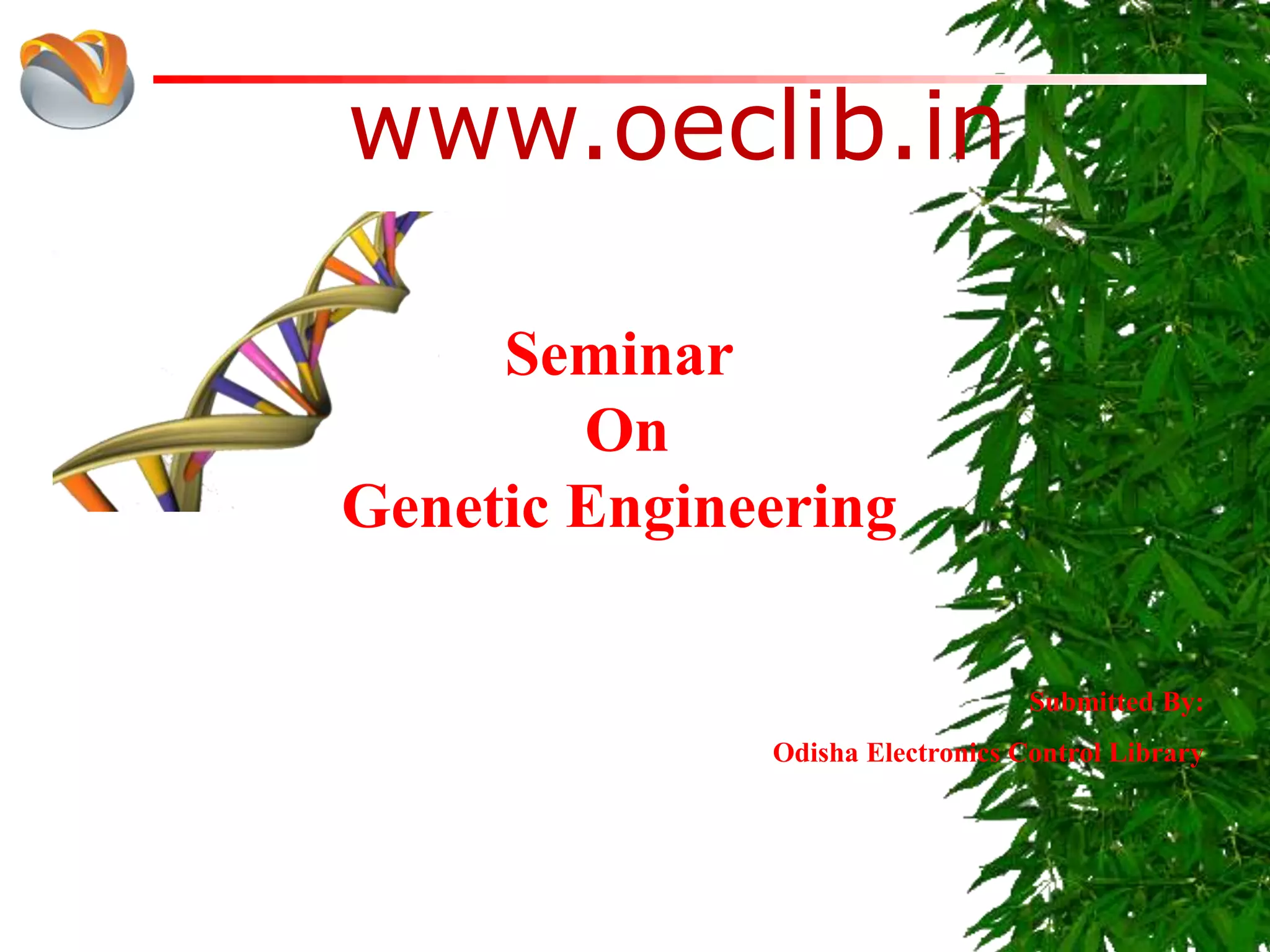
Seminar
On
Genetic Engineering
Contents
 Introduction
 What is Genetic Engineering
 History
 Techniques of Genetic Engineering
 Prospects for Genetic Engineering
Transgenic plants and animals
Cloning
 Dangers of Genetic Engineering
 Advantages
 Conclusion
 References
9/2/2017 2
What is Genetic
Engineering?
9/2/2017 3
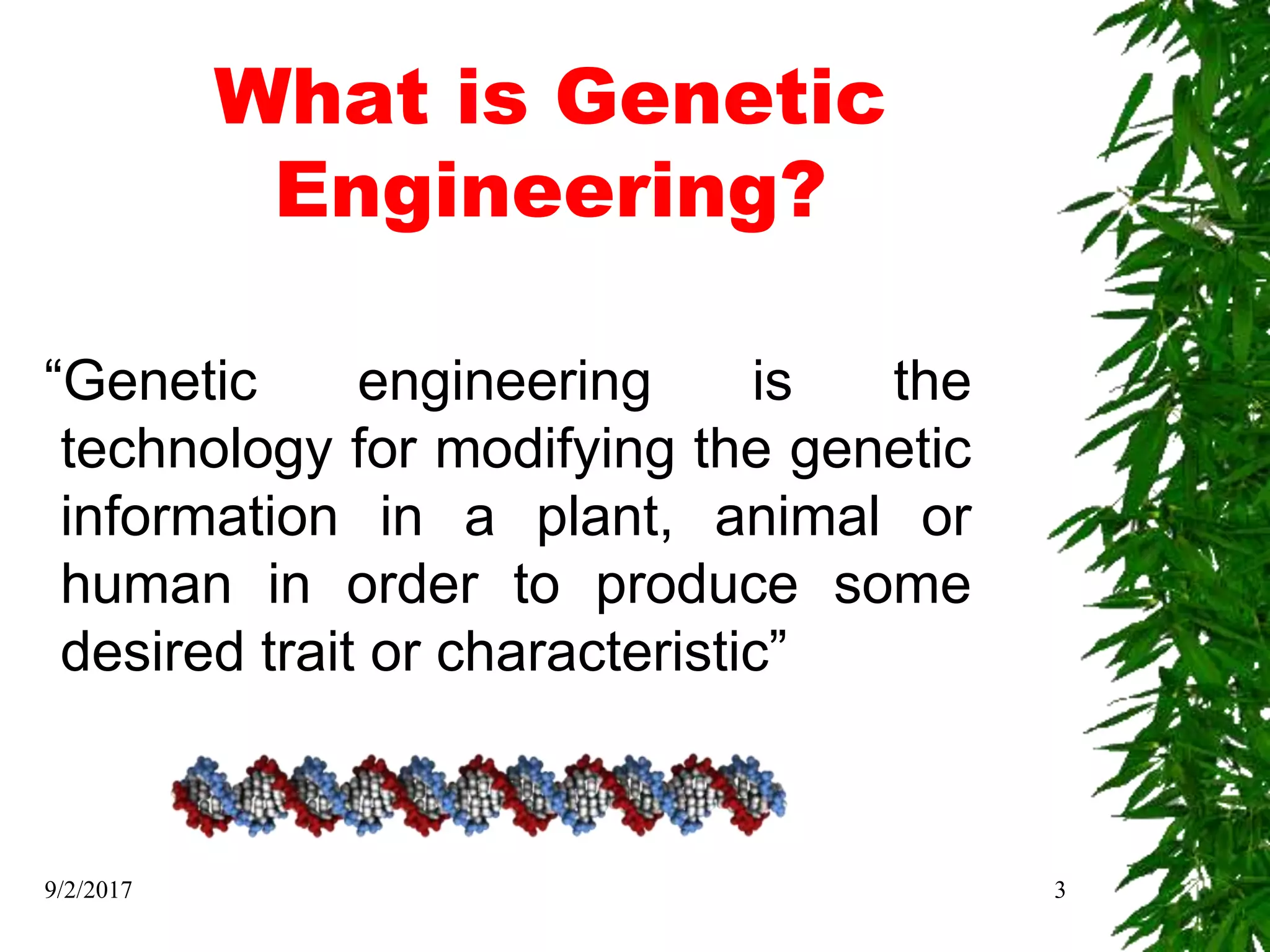
“Genetic engineering is the
technology for modifying the genetic
information in a plant, animal or
human in order to produce some
desired trait or characteristic”
A Brief History of
Genetic Engineering
 The name is new, the practice is not.
 Plants and animals have been bred for
thousands of years.
 Human breeding has also been done
now and then.
 All of this has worked by trying to
enhance desired characteristics, without
knowing how they are transmitted.
9/2/2017 4
Techniques of Gen. Engg.
 Old Technique
 New Technique
Recombinant DNA
Transformation
Transduction
9/2/2017 5
Prospects for
Genetic Engineering
 Transgenic Engineering
– Putting genetic information from one
type of plant or animal into another
 Cloning
– Making genetic copies of an existing
plant or animal
9/2/2017 6
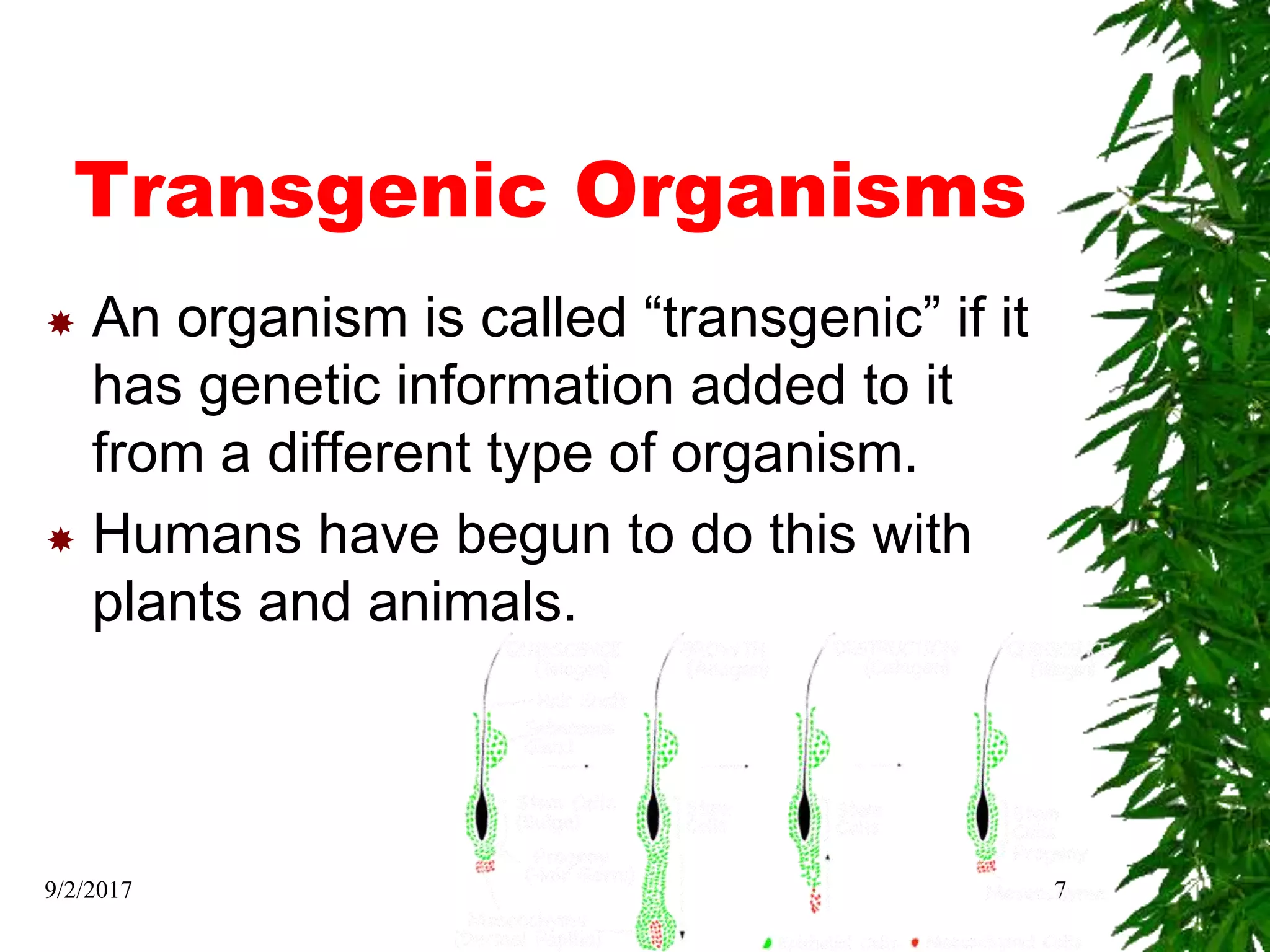
Transgenic Organisms
 An organism is called “transgenic” if it
has genetic information added to it
from a different type of organism.
 Humans have begun to do this with
plants and animals.
9/2/2017 7
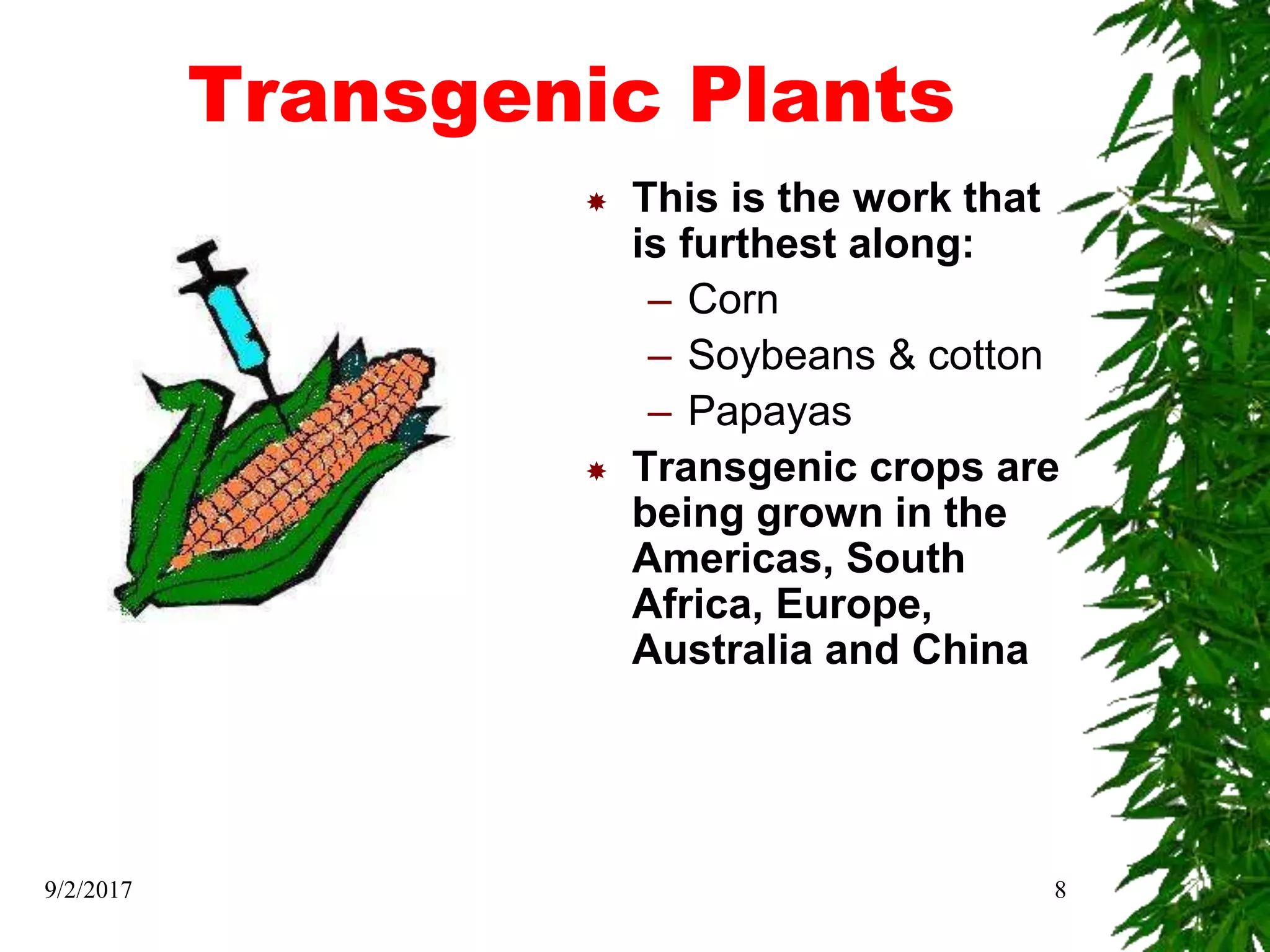
Transgenic Plants
 This is the work that
is furthest along:
– Corn
– Soybeans & cotton
– Papayas
 Transgenic crops are
being grown in the
Americas, South
Africa, Europe,
Australia and China
9/2/2017 8
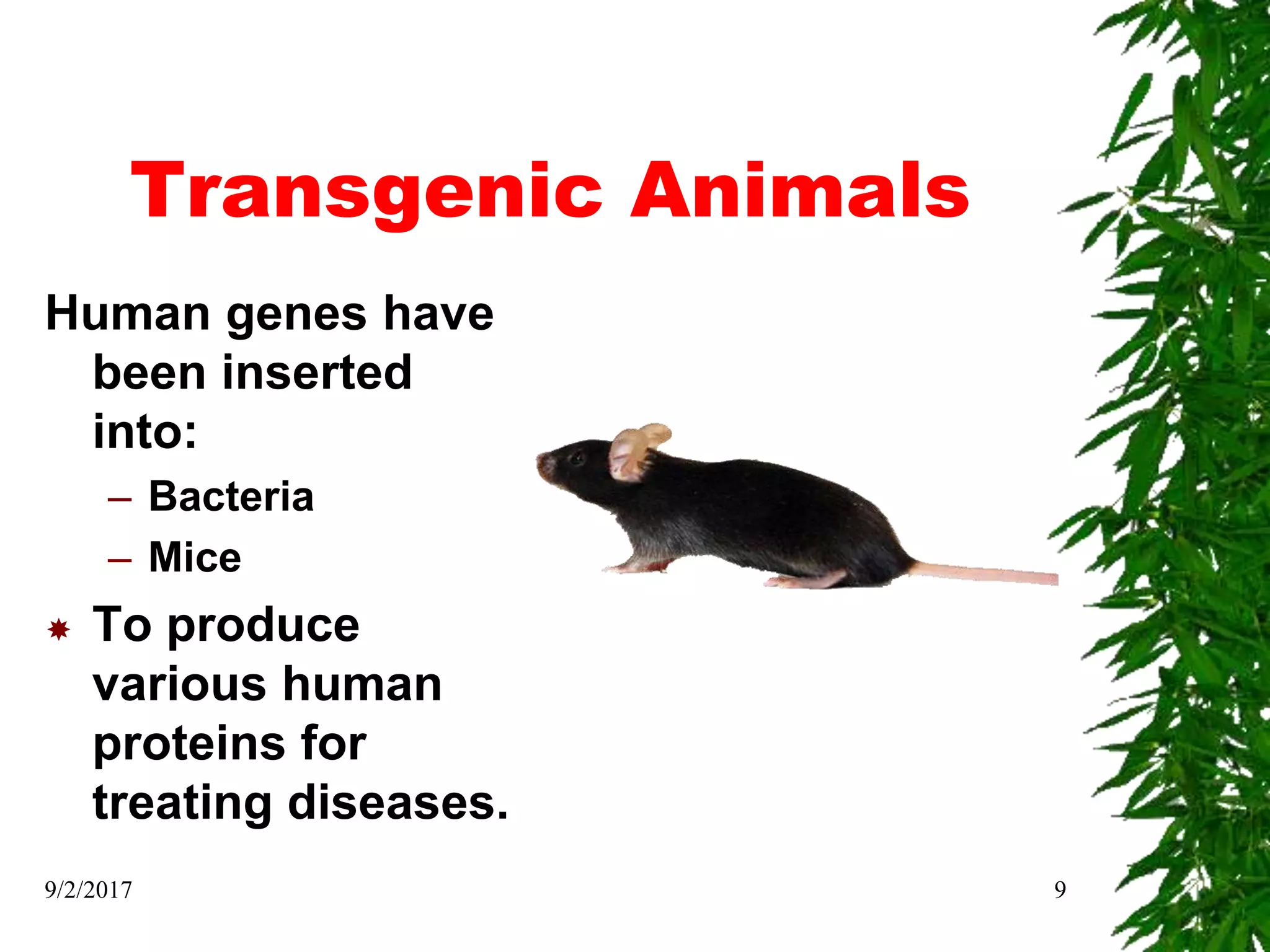
Transgenic Animals
Human genes have
been inserted
into:
– Bacteria
– Mice
 To produce
various human
proteins for
treating diseases.
9/2/2017 9
Cloning
 A “clone” is a copy of something.
 In genetics, a clone is a genetic copy
of another organism.
 Clones occur naturally:
– Asexual breeding in plants & lower
animals
9/2/2017 10
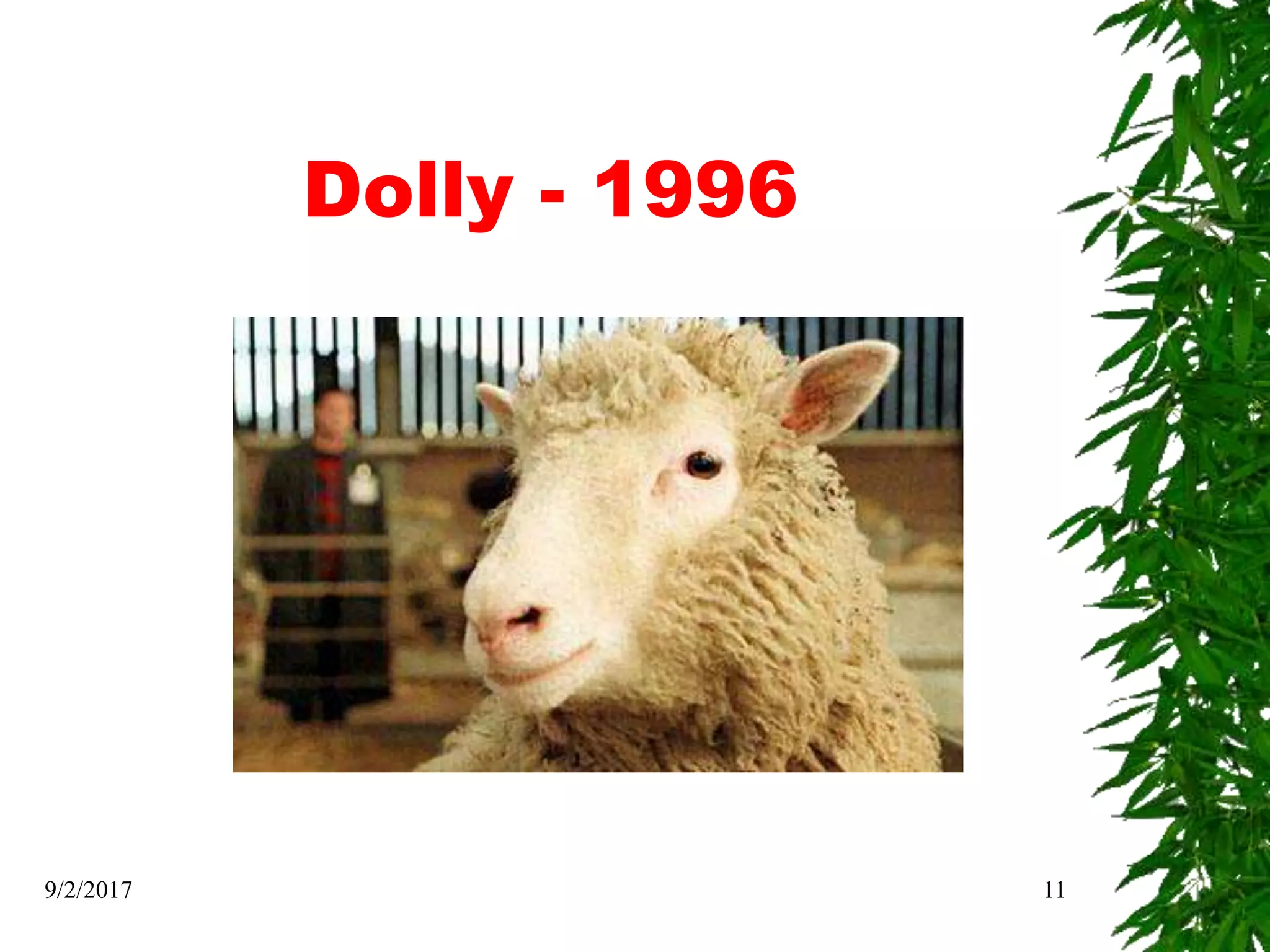
Dolly - 1996
9/2/2017 11
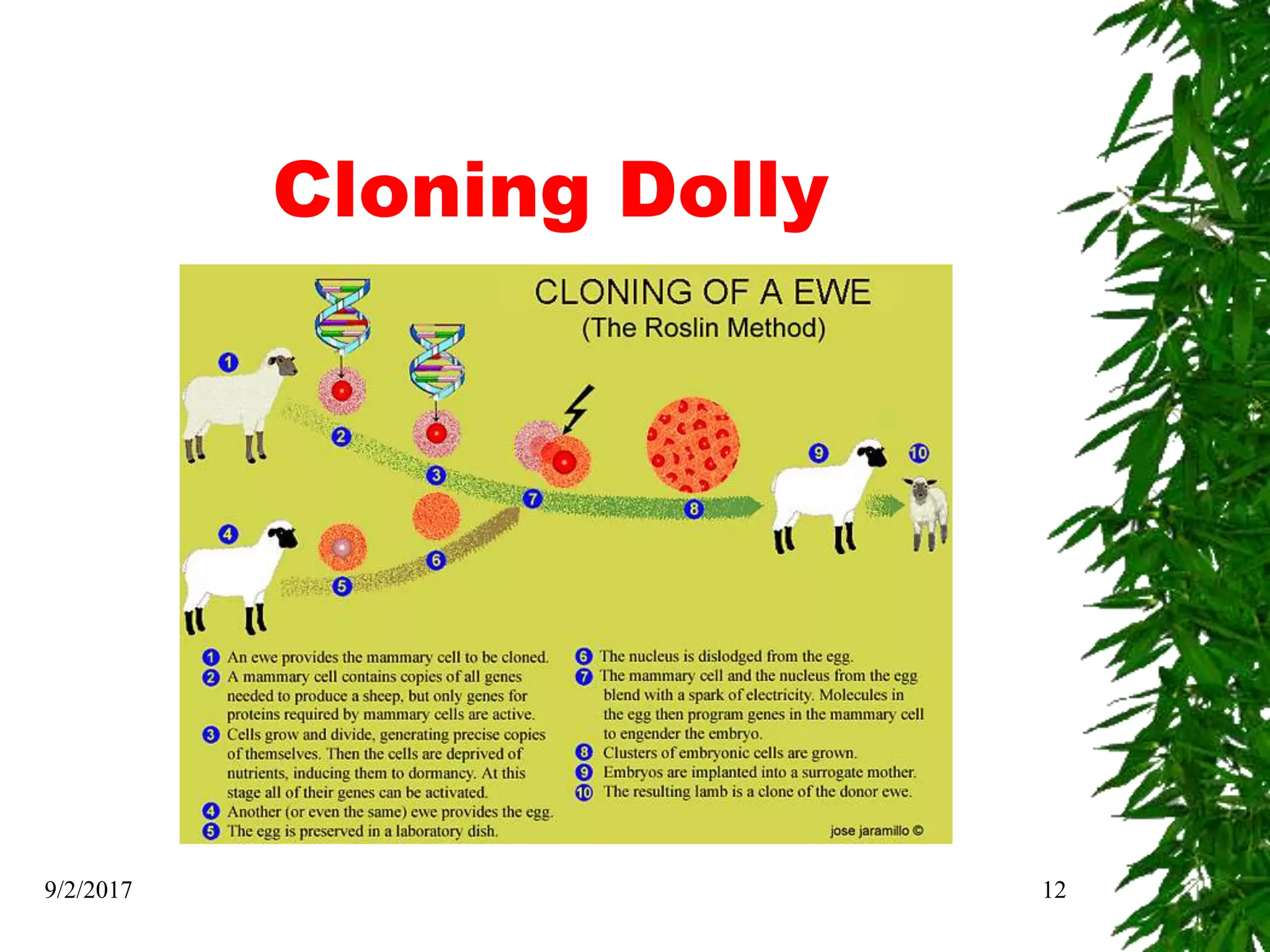
Cloning Dolly
9/2/2017 12
Cloning since Dolly
 Cloning of this sort has now been done
on cattle, pigs and mice also.
 The success rate has improved
considerably.
9/2/2017 13
Concerns re/ Cloning
 The success rate from adult animal cells is
still rather low.
 This would be unacceptable for cloning
humans in most societies.
 The evidence suggests that the clones
which survive are still not right.
 The genetic program has probably not been
completely reset.
 We still don’t understand what we are doing
in cloning from adult cells.
9/2/2017 14
Dangers
 Imprecise Technology
 Side Effects
 Widespread Crop Failure
 Threatens Our Entire Food Supply
 No Long-Term Safety Testing
 Allergic Reactions
9/2/2017 15
Advantages
 Creating new types of human beings
with advantageous traits.
 GM animals can generate
pharmaceutical proteins.
 Quicker, more predictable way to
generate new cultivars.
 Sustainable agriculture
9/2/2017 16
Conclusion
 The idea of transplant organs is a
really good idea but it also affects the
pig species and it decreases its
numbers in population
 The act of medical professionals or
scientists who attempt genetic
experiments can never be portrayed
as ‘playing God.’.
9/2/2017 17
References
www.ieeeexplore.ieee.org
www.geneticengineering.org
www.wikipedia.com/geneticen
gineering
9/2/2017 18
9/2/2017 19

Genetic Engineering ppt

  • 1.
    www.oeclib.in Submitted By: Odisha ElectronicsControl Library Seminar On Genetic Engineering
  • 2.
    Contents  Introduction  Whatis Genetic Engineering  History  Techniques of Genetic Engineering  Prospects for Genetic Engineering Transgenic plants and animals Cloning  Dangers of Genetic Engineering  Advantages  Conclusion  References 9/2/2017 2
  • 3.
    What is Genetic Engineering? 9/2/20173 “Genetic engineering is the technology for modifying the genetic information in a plant, animal or human in order to produce some desired trait or characteristic”
  • 4.
    A Brief Historyof Genetic Engineering  The name is new, the practice is not.  Plants and animals have been bred for thousands of years.  Human breeding has also been done now and then.  All of this has worked by trying to enhance desired characteristics, without knowing how they are transmitted. 9/2/2017 4
  • 5.
    Techniques of Gen.Engg.  Old Technique  New Technique Recombinant DNA Transformation Transduction 9/2/2017 5
  • 6.
    Prospects for Genetic Engineering Transgenic Engineering – Putting genetic information from one type of plant or animal into another  Cloning – Making genetic copies of an existing plant or animal 9/2/2017 6
  • 7.
    Transgenic Organisms  Anorganism is called “transgenic” if it has genetic information added to it from a different type of organism.  Humans have begun to do this with plants and animals. 9/2/2017 7
  • 8.
    Transgenic Plants  Thisis the work that is furthest along: – Corn – Soybeans & cotton – Papayas  Transgenic crops are being grown in the Americas, South Africa, Europe, Australia and China 9/2/2017 8
  • 9.
    Transgenic Animals Human geneshave been inserted into: – Bacteria – Mice  To produce various human proteins for treating diseases. 9/2/2017 9
  • 10.
    Cloning  A “clone”is a copy of something.  In genetics, a clone is a genetic copy of another organism.  Clones occur naturally: – Asexual breeding in plants & lower animals 9/2/2017 10
  • 11.
  • 12.
  • 13.
    Cloning since Dolly Cloning of this sort has now been done on cattle, pigs and mice also.  The success rate has improved considerably. 9/2/2017 13
  • 14.
    Concerns re/ Cloning The success rate from adult animal cells is still rather low.  This would be unacceptable for cloning humans in most societies.  The evidence suggests that the clones which survive are still not right.  The genetic program has probably not been completely reset.  We still don’t understand what we are doing in cloning from adult cells. 9/2/2017 14
  • 15.
    Dangers  Imprecise Technology Side Effects  Widespread Crop Failure  Threatens Our Entire Food Supply  No Long-Term Safety Testing  Allergic Reactions 9/2/2017 15
  • 16.
    Advantages  Creating newtypes of human beings with advantageous traits.  GM animals can generate pharmaceutical proteins.  Quicker, more predictable way to generate new cultivars.  Sustainable agriculture 9/2/2017 16
  • 17.
    Conclusion  The ideaof transplant organs is a really good idea but it also affects the pig species and it decreases its numbers in population  The act of medical professionals or scientists who attempt genetic experiments can never be portrayed as ‘playing God.’. 9/2/2017 17
  • 18.
  • 19.