By: Dr. MohammedAzim Bagban
For F. Y. Bsc. (Microbiology & Biotechnology)
 At the end of this lesson you should be able to
 Define Genetic Engineering
 Outline the process of genetic engineering
involving some or all of the following:
isolation, cutting, transformation, introduction
of base sequence changes and expression
 Know three applications: one plant, one
animal, one micro-organism
The simple addition, deletion, or
manipulation of a single trait or gene or DNA
in an organism to create a desired change.
 Manipulation and
alteration of genes
 Three applications:
one plant, one animal,
one micro-organism
 Process involving
isolation, transformation,
and expression
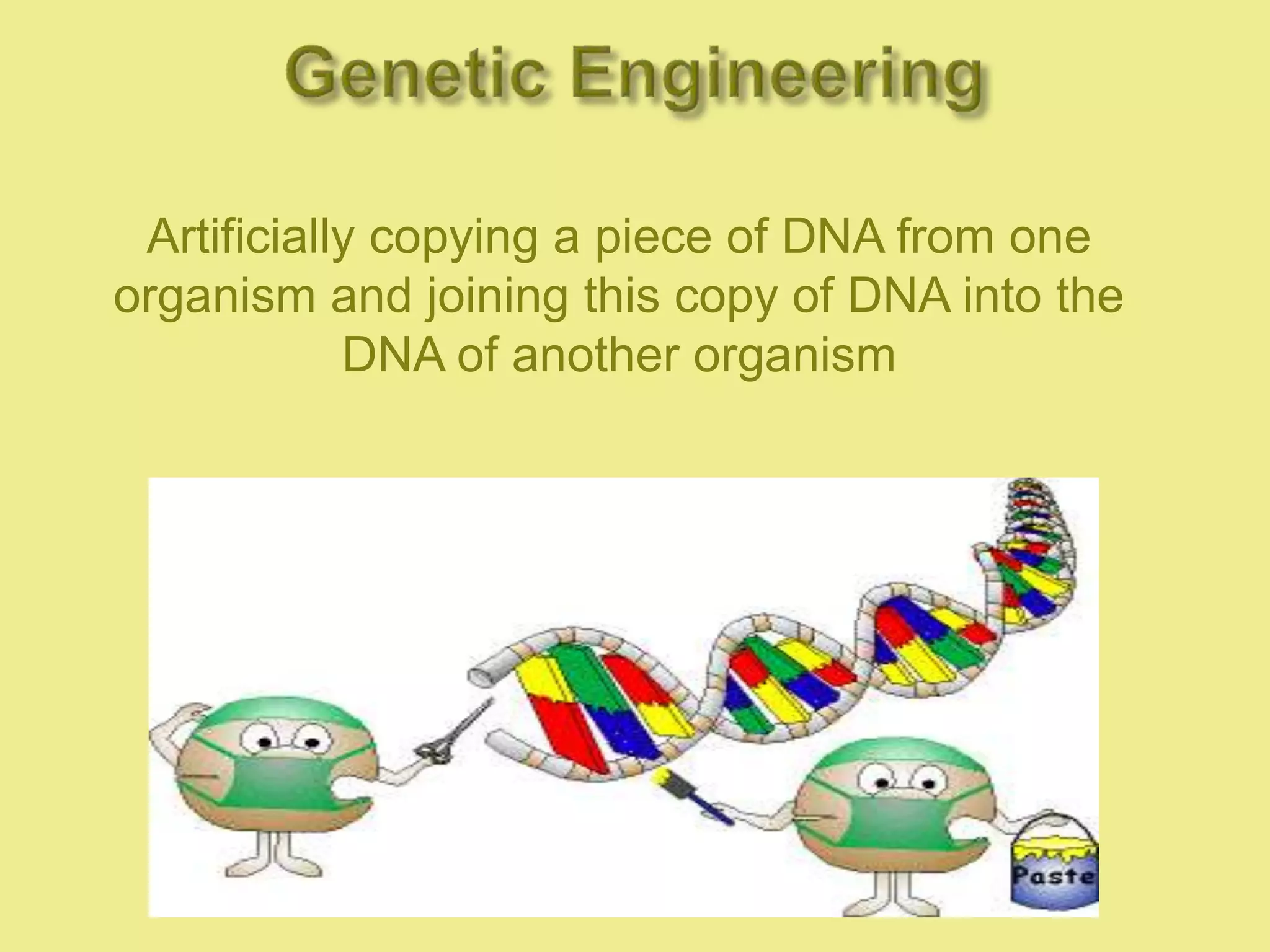
Artificially copying a piece of DNA from one
organism and joining this copy of DNA into the
DNA of another organism
www.clipartguide.com
It allows genes from one organism to be inserted
into a cell of a different organism of a different
species.
Examples:
– Human genes can be inserted into a
bacterium
– Human genes can be inserted into cells from
other animals
– Bacterium genes can be inserted into plant
cells
 Genetic engineering means that DNA from
different organisms can be combined
 Bacteria can be engineered to produce human
proteins
 Human genes can be inserted into other
animals
 The altered DNA is called recombinant DNA
 Recombinant DNA is joined to other
unrelated DNA in the organism
 This is called gene splicing.
- tiny segments of a gene are taken out and
replaced by different genes
 Organisms altered by genetic engineering.
 Genetic material changed by other than random
natural breeding
 Gene transfer
-moving a gene from one organism to another.
 'Trans-' means 'crossing from one place to
another‘
 The '-genic' bit means genes
 So it means that bits of genes from different
living things have been bolted together and
spliced into another organism to make a new
one which does something which the scientists
want it to do.
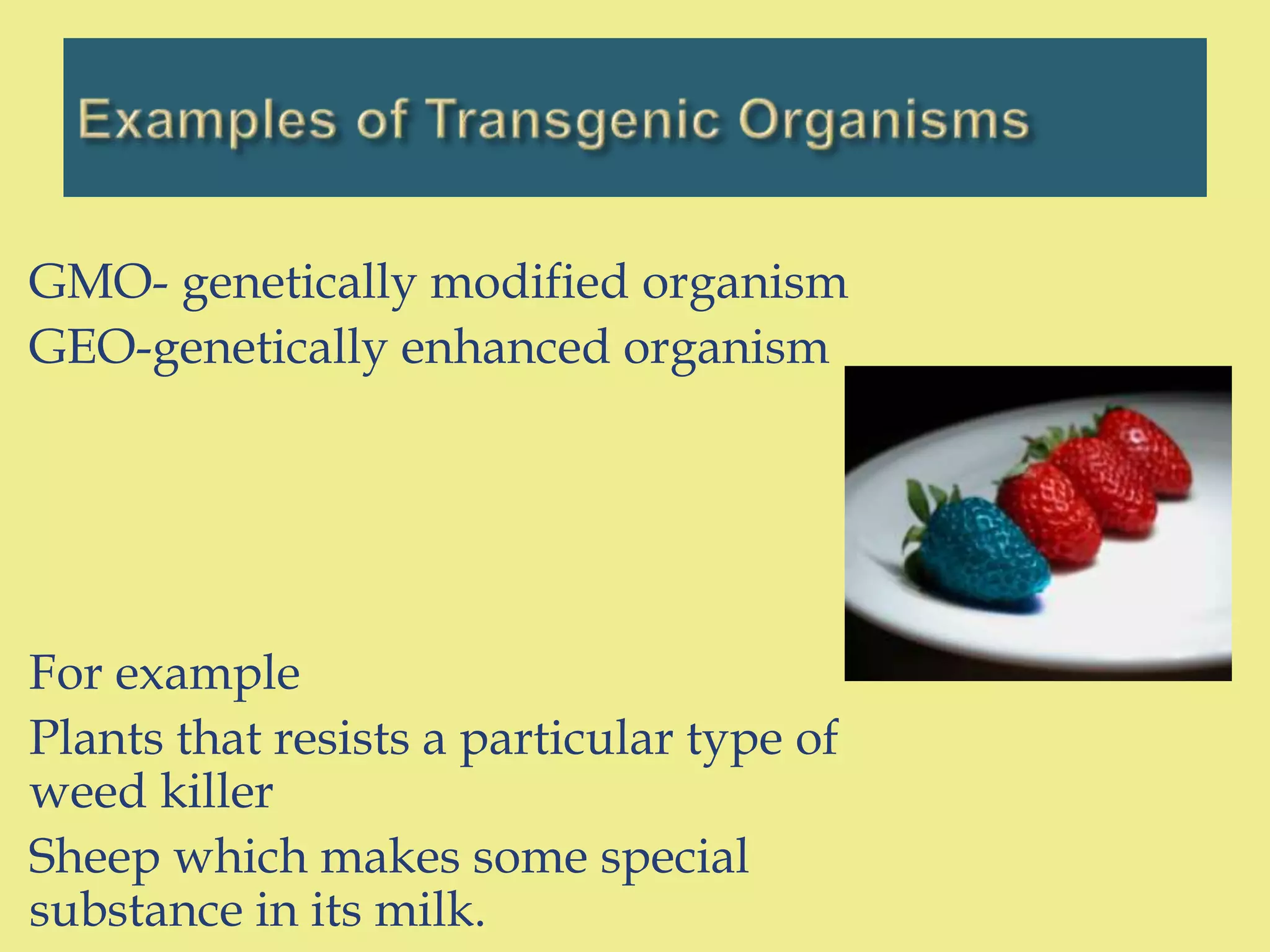
GMO- genetically modified organism
GEO-genetically enhanced organism
For example
Plants that resists a particular type of
weed killer
Sheep which makes some special
substance in its milk.
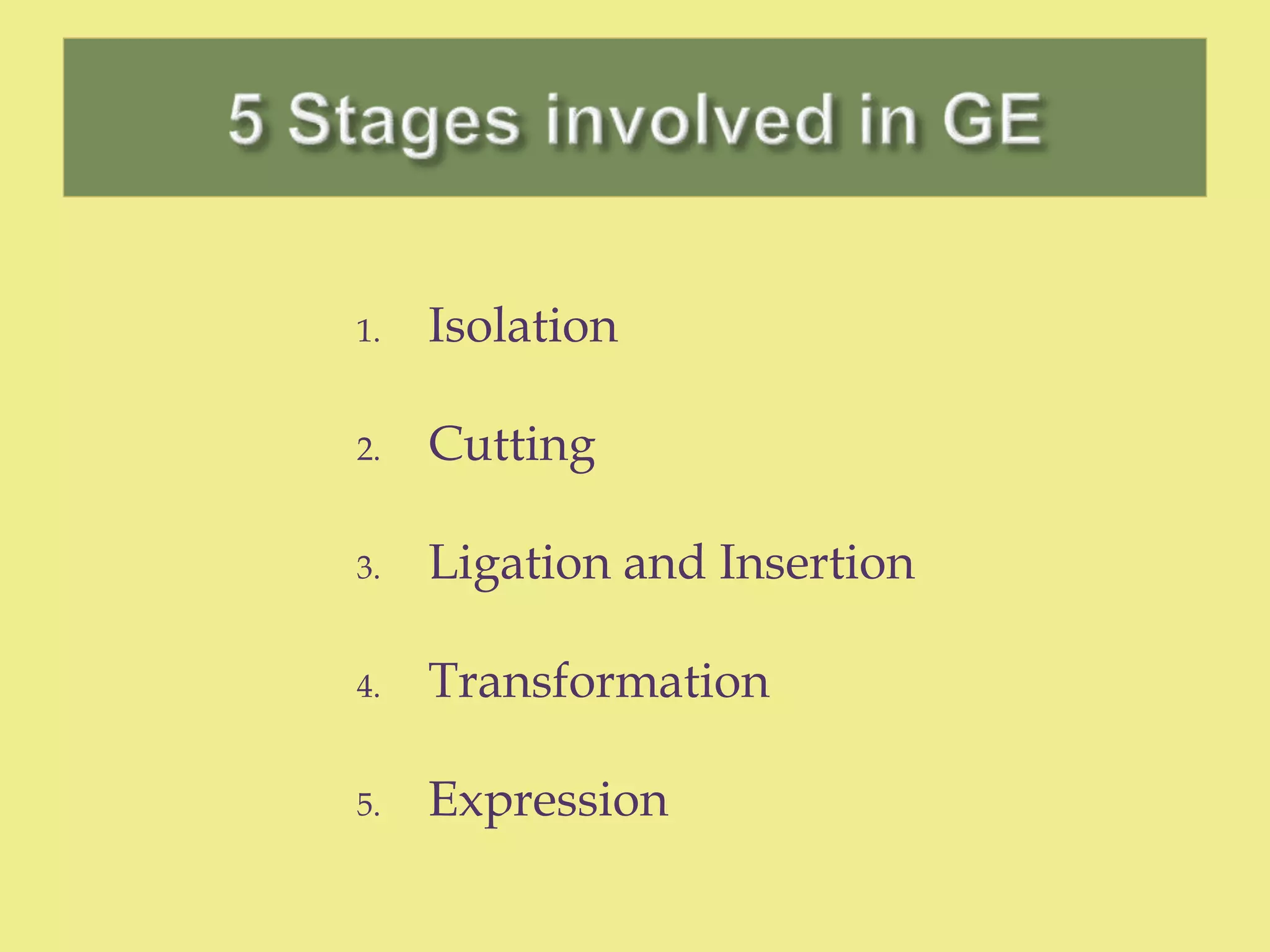
1. Isolation
2. Cutting
3. Ligation and Insertion
4. Transformation
5. Expression
Donor DNA
Genetic probe
(a) Isolation of a specific gene from donor e.g. human
• Cells broken open
• Genetic probe added
• Reveals position of the gene of interest
Position of
gene of
interest
Bacterial cell
Plasmid
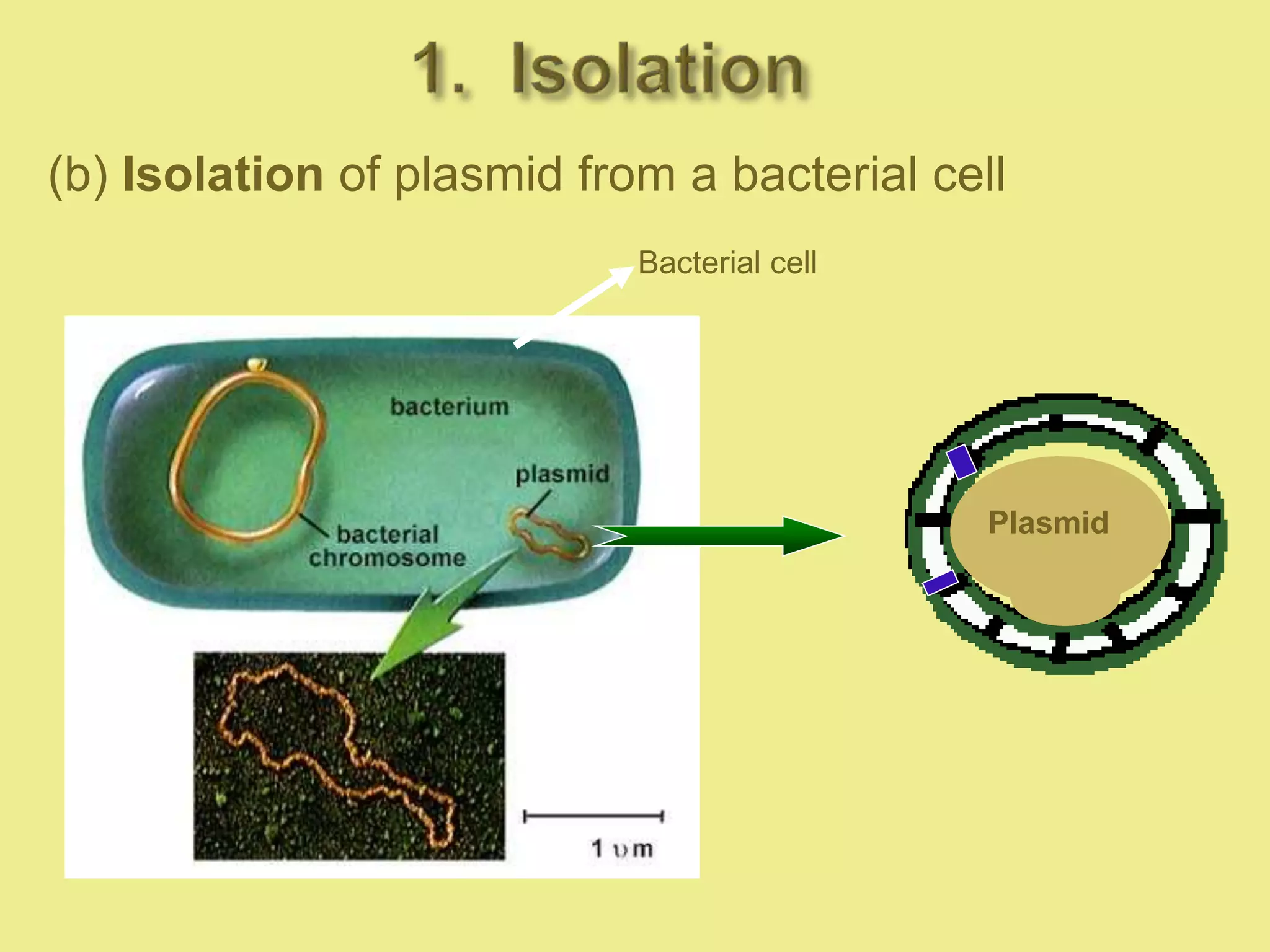
(b) Isolation of plasmid from a bacterial cell
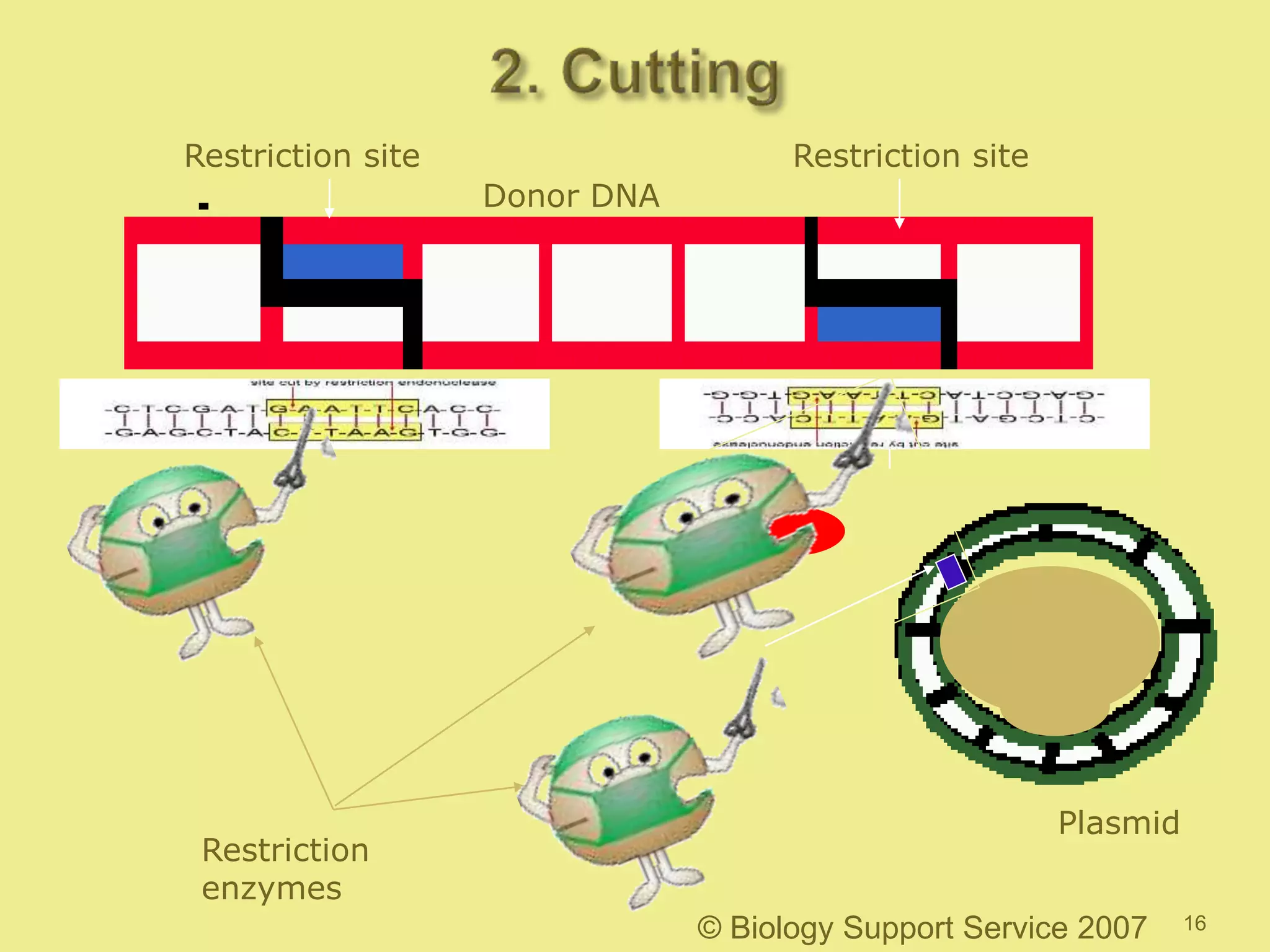
 Restriction enzymes act as molecular scissors and cut
DNA at specific sites called restriction sites
Restriction site
Restriction
site Restriction
ezymes
16
Plasmid
Restriction site Restriction site
Donor DNA
© Biology Support Service 2007
Restriction
enzymes
Donor DNA
Sticky EndsPlasmid
http://www.slic2.wsu.edu:82/hurlbert/micro101/pages/Chap10.html#Sticky_ended_cut
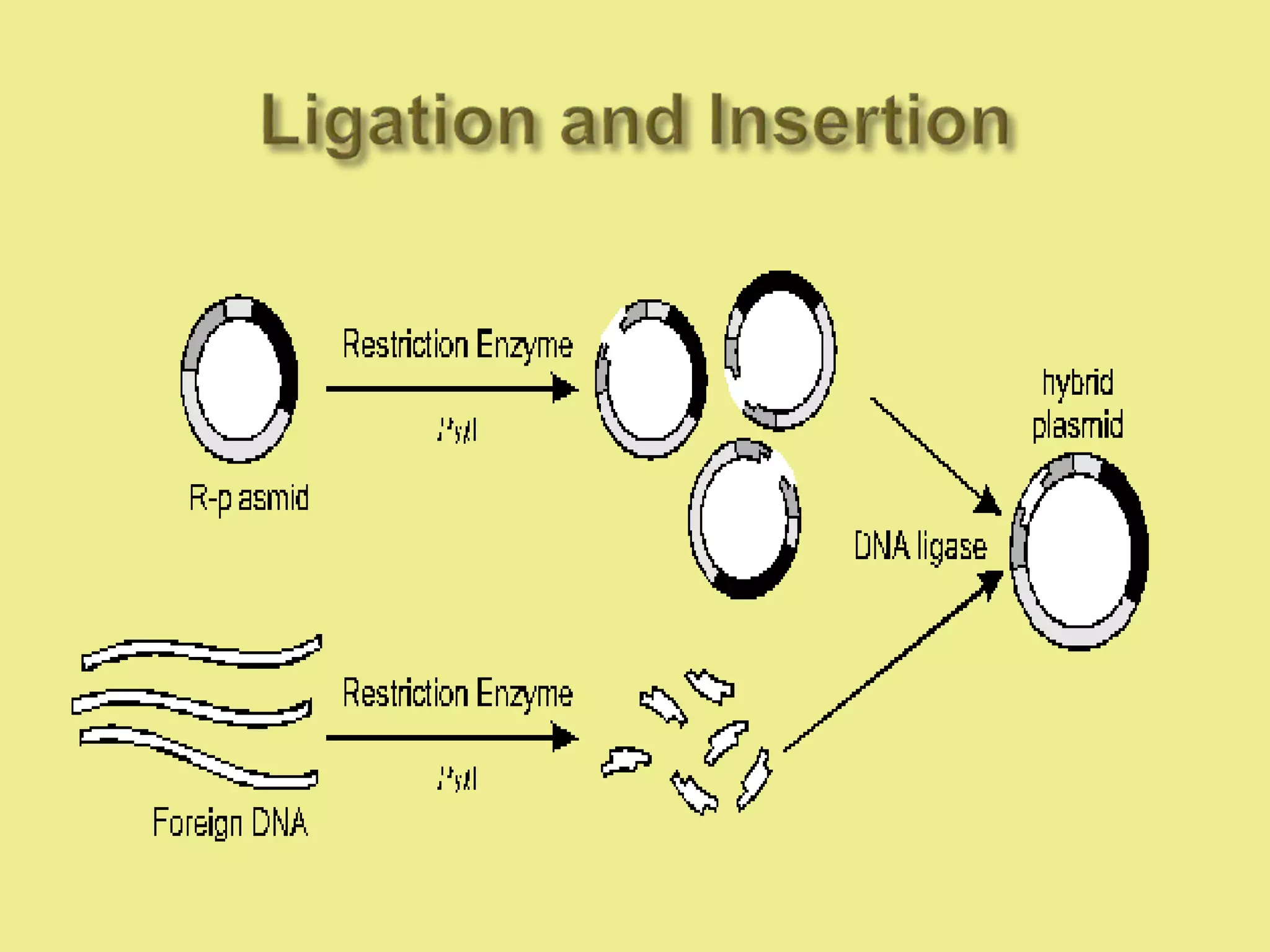
Ligation –rejoining cut fragments of DNA and
forming artificial recombinant molecules
Recombinant DNA introduced into
bacterial cell
Bacterial
chromosome
Bacterial
cell
Recombinant DNA
Bacterial cell reproduces by Binary Fisson
Bacterial cell produces the polypeptide
Coded for by the donor DNA
Donor DNA
Plasmid
1. Cut with restriction
enzymes
Donor DNA
Sticky
Ends
2. Ligase bonds
sticky ends
together
Recombinant DNA
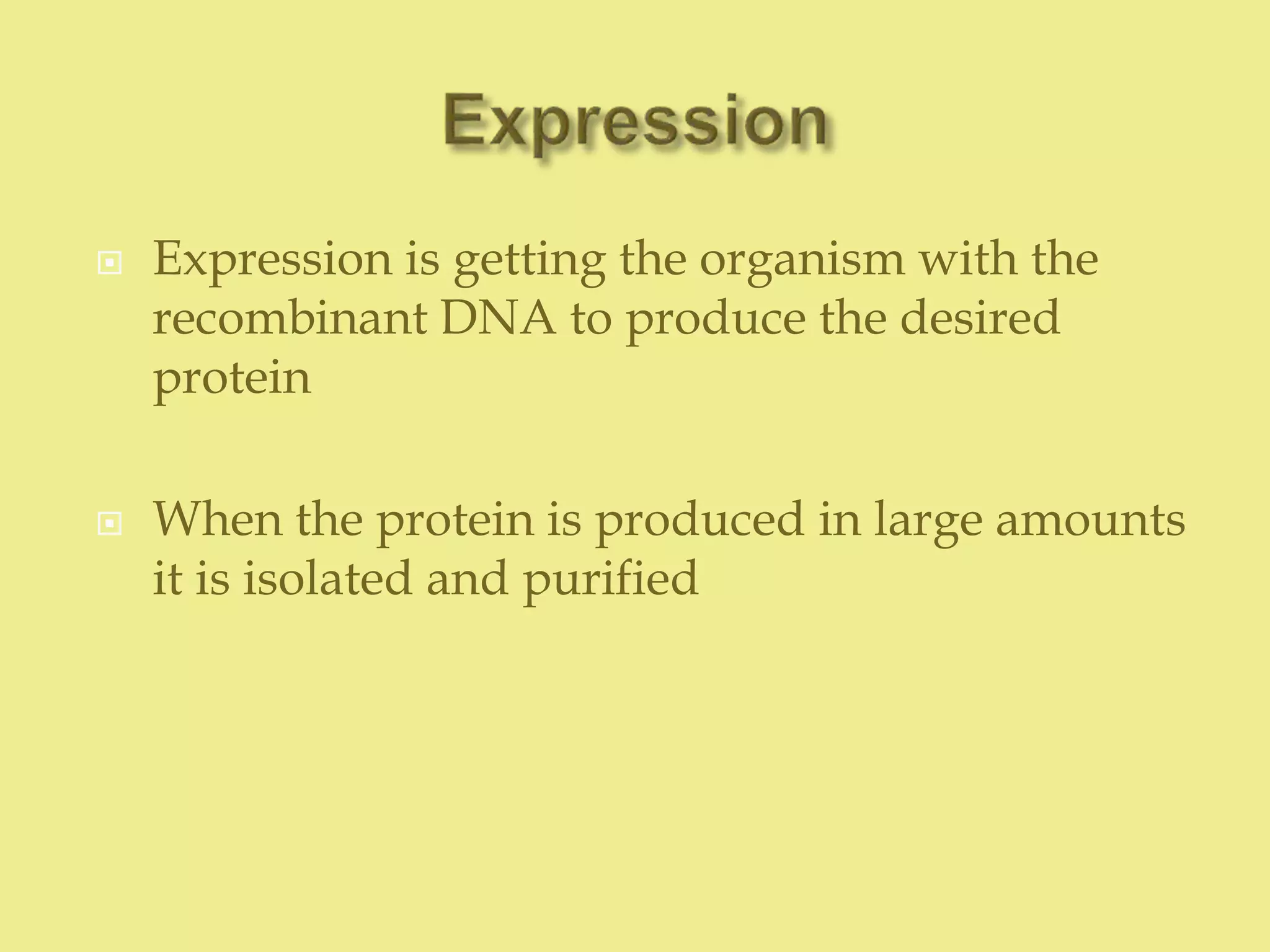
 Expression is getting the organism with the
recombinant DNA to produce the desired
protein
 When the protein is produced in large amounts
it is isolated and purified
 The human gene to clot blood has been
inserted into the DNA of sheep
 Sheep produce human clotting factor needed
for Haemophiliacs in their milk
 Goats produce a protein to treat emphysema
(COPD).
26
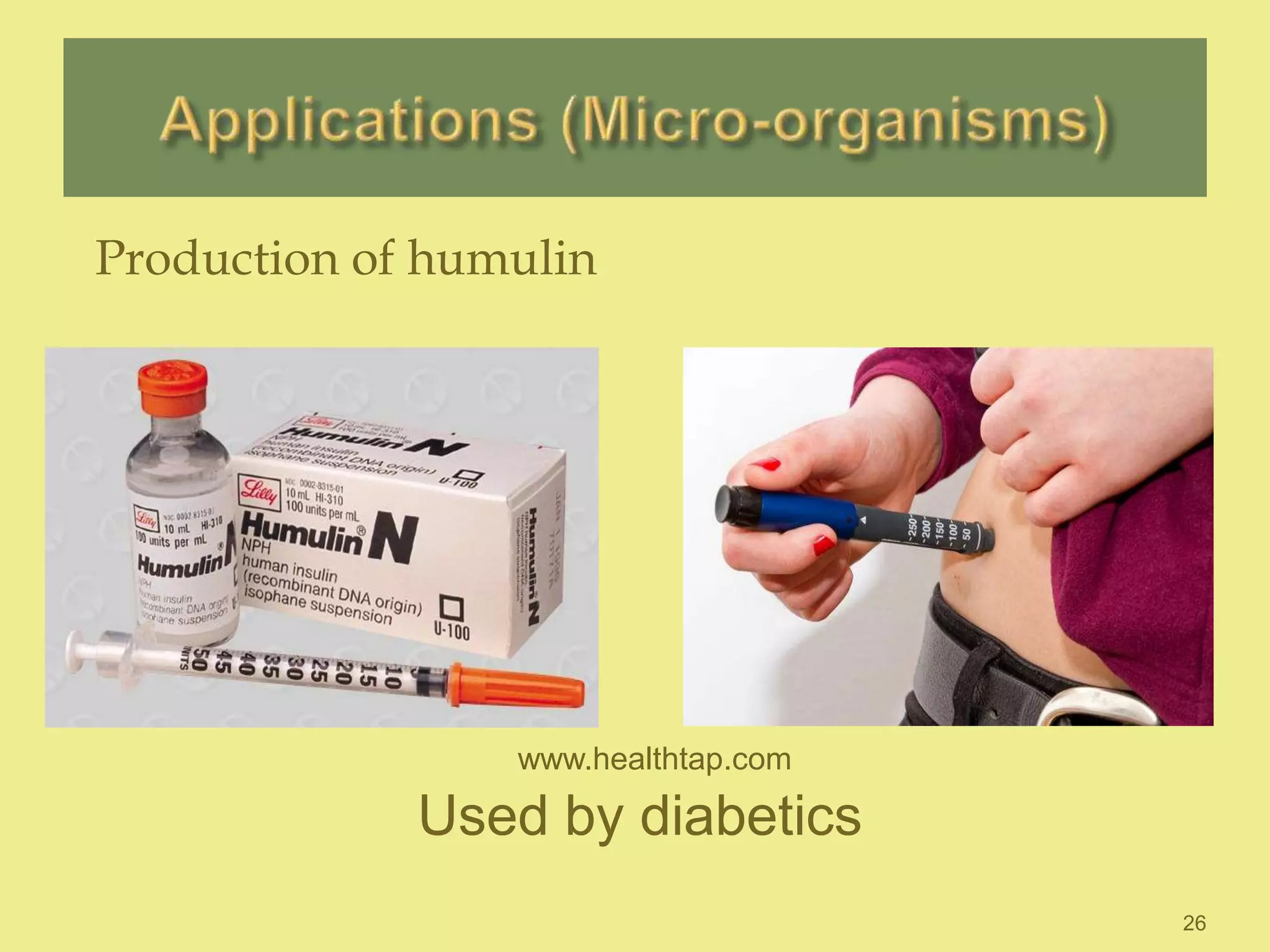
Production of humulin
Used by diabetics
www.healthtap.com
27
Golden Rice – a
possible solution to
Vitamin A
deficiency.
 Pharming
 Gene pharming is a technology that scientists use
to alter an animal's own DNA, or to splice in new
DNA, called a transgene, from another species.
 In pharming, these genetically modified
(transgenic) animals are mostly used to make
human proteins that have medicinal value. The
protein encoded by the transgene is secreted into
the animal's milk, eggs or blood, and then
collected and purified.
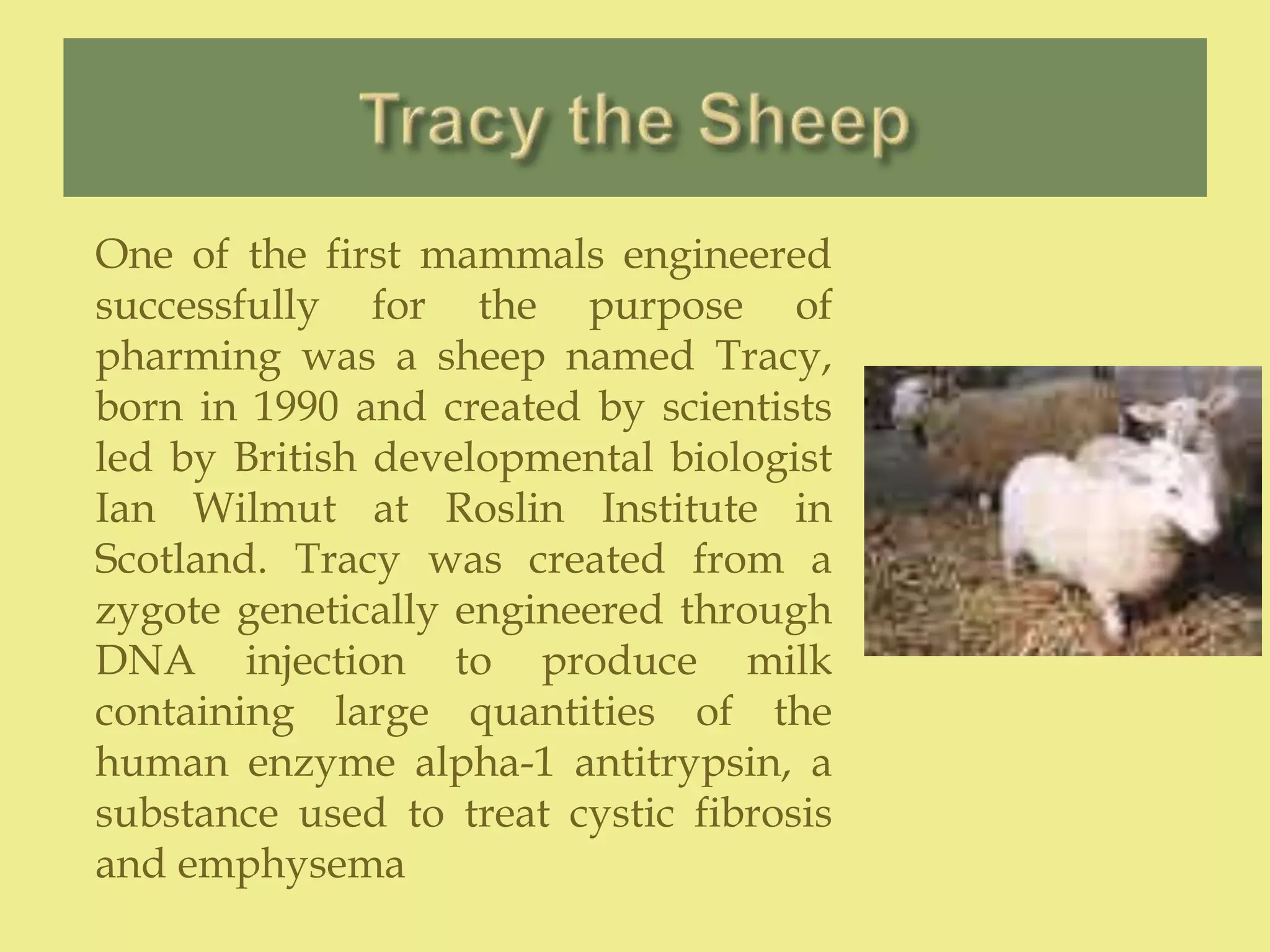
One of the first mammals engineered
successfully for the purpose of
pharming was a sheep named Tracy,
born in 1990 and created by scientists
led by British developmental biologist
Ian Wilmut at Roslin Institute in
Scotland. Tracy was created from a
zygote genetically engineered through
DNA injection to produce milk
containing large quantities of the
human enzyme alpha-1 antitrypsin, a
substance used to treat cystic fibrosis
and emphysema
 Xenotransplantation is the transplantation of
living cells, tissues or organs from one species
to another.
 However there are ethical issues and issues
with rejection
 There are also issues with virus transmission
from one species to another
 Porcine islet transplants are being investigated
for use in type 1 diabetes due to the shortage of
human islet cells
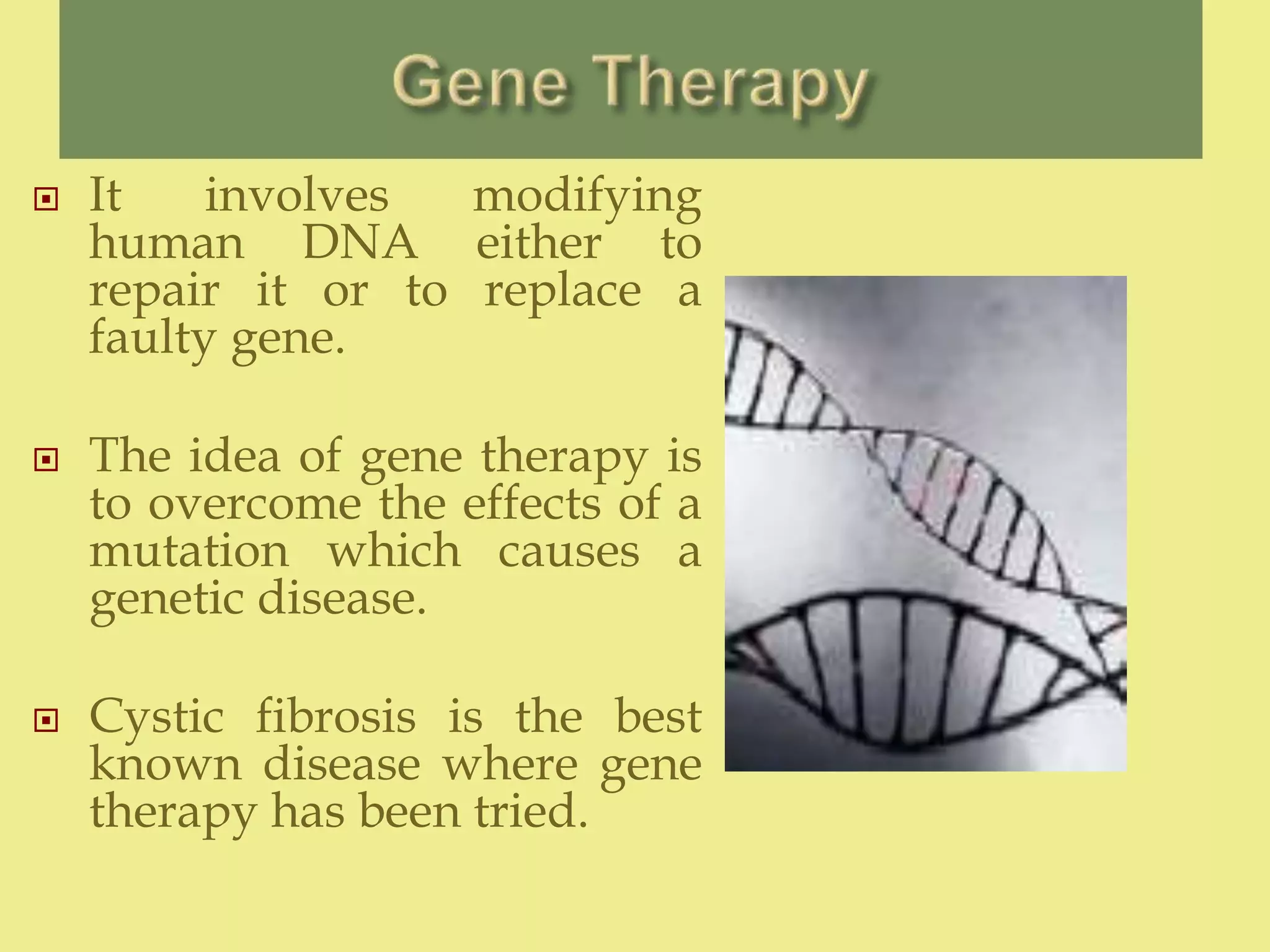
 It involves modifying
human DNA either to
repair it or to replace a
faulty gene.
 The idea of gene therapy is
to overcome the effects of a
mutation which causes a
genetic disease.
 Cystic fibrosis is the best
known disease where gene
therapy has been tried.
 Genetic engineering can produce very
specific and sensitive diagnostic tests for
many diseases, using engineered proteins.
 This new technology is also opening up
novel ways of delivering medicines to
specific targets.
 Genetically engineered
microbes can be used to
produce the antigens
needed in a safe and
controllable way.
 The use of genetically
modified yeast cells to
produce a vaccine
against the hepatitis B
virus has been a major
success story.
 Weed-killer resistant crops
- Weeds die but the crops survive
 Vitamin A in Rice
- The gene which produces vitamin A
was taken from daffodils and put into rice
to help prevent blindness
 Bacteria can make human insulin
 This prevented many diabetics from
getting an allergic reaction to animal
insulin
 Bacteria make interferon which can fight
virus infections and some cancers
Genetic engineering overview

Genetic engineering overview

  • 1.
    By: Dr. MohammedAzimBagban For F. Y. Bsc. (Microbiology & Biotechnology)
  • 2.
     At theend of this lesson you should be able to  Define Genetic Engineering  Outline the process of genetic engineering involving some or all of the following: isolation, cutting, transformation, introduction of base sequence changes and expression  Know three applications: one plant, one animal, one micro-organism
  • 3.
    The simple addition,deletion, or manipulation of a single trait or gene or DNA in an organism to create a desired change.
  • 4.
     Manipulation and alterationof genes  Three applications: one plant, one animal, one micro-organism  Process involving isolation, transformation, and expression
  • 5.
    Artificially copying apiece of DNA from one organism and joining this copy of DNA into the DNA of another organism www.clipartguide.com
  • 6.
    It allows genesfrom one organism to be inserted into a cell of a different organism of a different species. Examples: – Human genes can be inserted into a bacterium – Human genes can be inserted into cells from other animals – Bacterium genes can be inserted into plant cells
  • 7.
     Genetic engineeringmeans that DNA from different organisms can be combined  Bacteria can be engineered to produce human proteins  Human genes can be inserted into other animals
  • 8.
     The alteredDNA is called recombinant DNA  Recombinant DNA is joined to other unrelated DNA in the organism  This is called gene splicing. - tiny segments of a gene are taken out and replaced by different genes
  • 9.
     Organisms alteredby genetic engineering.  Genetic material changed by other than random natural breeding  Gene transfer -moving a gene from one organism to another.
  • 10.
     'Trans-' means'crossing from one place to another‘  The '-genic' bit means genes  So it means that bits of genes from different living things have been bolted together and spliced into another organism to make a new one which does something which the scientists want it to do.
  • 11.
    GMO- genetically modifiedorganism GEO-genetically enhanced organism For example Plants that resists a particular type of weed killer Sheep which makes some special substance in its milk.
  • 12.
    1. Isolation 2. Cutting 3.Ligation and Insertion 4. Transformation 5. Expression
  • 13.
    Donor DNA Genetic probe (a)Isolation of a specific gene from donor e.g. human • Cells broken open • Genetic probe added • Reveals position of the gene of interest Position of gene of interest
  • 14.
    Bacterial cell Plasmid (b) Isolationof plasmid from a bacterial cell
  • 15.
     Restriction enzymesact as molecular scissors and cut DNA at specific sites called restriction sites Restriction site Restriction site Restriction ezymes
  • 16.
    16 Plasmid Restriction site Restrictionsite Donor DNA © Biology Support Service 2007 Restriction enzymes
  • 17.
  • 18.
  • 20.
    Recombinant DNA introducedinto bacterial cell Bacterial chromosome Bacterial cell Recombinant DNA
  • 22.
    Bacterial cell reproducesby Binary Fisson Bacterial cell produces the polypeptide Coded for by the donor DNA
  • 23.
    Donor DNA Plasmid 1. Cutwith restriction enzymes Donor DNA Sticky Ends 2. Ligase bonds sticky ends together Recombinant DNA
  • 24.
     Expression isgetting the organism with the recombinant DNA to produce the desired protein  When the protein is produced in large amounts it is isolated and purified
  • 25.
     The humangene to clot blood has been inserted into the DNA of sheep  Sheep produce human clotting factor needed for Haemophiliacs in their milk  Goats produce a protein to treat emphysema (COPD).
  • 26.
    26 Production of humulin Usedby diabetics www.healthtap.com
  • 27.
    27 Golden Rice –a possible solution to Vitamin A deficiency.
  • 28.
     Pharming  Genepharming is a technology that scientists use to alter an animal's own DNA, or to splice in new DNA, called a transgene, from another species.  In pharming, these genetically modified (transgenic) animals are mostly used to make human proteins that have medicinal value. The protein encoded by the transgene is secreted into the animal's milk, eggs or blood, and then collected and purified.
  • 29.
    One of thefirst mammals engineered successfully for the purpose of pharming was a sheep named Tracy, born in 1990 and created by scientists led by British developmental biologist Ian Wilmut at Roslin Institute in Scotland. Tracy was created from a zygote genetically engineered through DNA injection to produce milk containing large quantities of the human enzyme alpha-1 antitrypsin, a substance used to treat cystic fibrosis and emphysema
  • 30.
     Xenotransplantation isthe transplantation of living cells, tissues or organs from one species to another.  However there are ethical issues and issues with rejection  There are also issues with virus transmission from one species to another  Porcine islet transplants are being investigated for use in type 1 diabetes due to the shortage of human islet cells
  • 31.
     It involvesmodifying human DNA either to repair it or to replace a faulty gene.  The idea of gene therapy is to overcome the effects of a mutation which causes a genetic disease.  Cystic fibrosis is the best known disease where gene therapy has been tried.
  • 32.
     Genetic engineeringcan produce very specific and sensitive diagnostic tests for many diseases, using engineered proteins.  This new technology is also opening up novel ways of delivering medicines to specific targets.
  • 33.
     Genetically engineered microbescan be used to produce the antigens needed in a safe and controllable way.  The use of genetically modified yeast cells to produce a vaccine against the hepatitis B virus has been a major success story.
  • 34.
     Weed-killer resistantcrops - Weeds die but the crops survive  Vitamin A in Rice - The gene which produces vitamin A was taken from daffodils and put into rice to help prevent blindness
  • 35.
     Bacteria canmake human insulin  This prevented many diabetics from getting an allergic reaction to animal insulin  Bacteria make interferon which can fight virus infections and some cancers