
TRANSGENIC SHEEP
By Sathya thirupathi
MSC MICROBIOLOGY,
TIRUPUR KUMARAN COLLEGE
FOR WOMEN,TIRUPUR
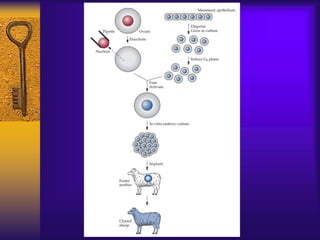
Sheep named Dolly was cloned by transfer of a
nucleus from a mammary (Udder) cell of an
adult sheep into an egg cell.
mammary cell
Nucleus
insert into
a egg cell
• First demonstration of pluripotency
(totipotency) of a nucleus of a differentiated
adult cell.
• Cloning of dolly somatic cell nuclei
clone cattle, sheep, goats, pigs.
• nuclear transfer procedures are similar.
• Adult donor cells from a variety of cell
types(mammary epithelial and ovarian cells,
fibroblasts, lymphocytes) are isolated
• Cultured and genetically modified methods.
• adult cells prolonged culture
experimenters have a additional time
successive genetic alterations
Eg: inactivating both alleles of a locus or
creating multiple gene changes.
1. individual donor cells are fused to an
enucleated oocyte with short-duration
electric pulse.
2. eg: two 2.5 kilovolt /cm pulses for
10microseconds
3. Used to fuse adult cattle fibroblasts with
enucleated oocytes.
4. The pulses simultaneously induce cell
fusion and oocyte activation.
5. Blastocyst stage before transferred into the
uterus of a pseudopregant female.
6. Confirmed transgene at the time of birth
• Surviving animals produced by nuclear
transfer are healthy.
• There, is a substantial loss of individual
before and after birth some of the cloned
animals display abnormalities.
• Abnormlities such as increased birth
weight.
• Dna methylation and histone modification
of the original donor cell is inappropriate
maintained in the cells of the recipient
animals.
• advantages: site-specific genetic changes
are possibe
• All offspring are transgenic
In DNA microinjection,
1. transgene integration occurs at random
sites
2. Unstable things are formed
3. Expression is always constrained(limit)
4. No. of generations required
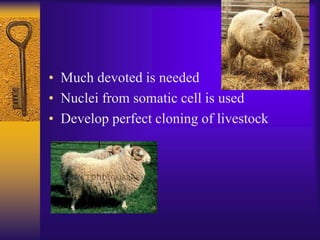
• Much devoted is needed
• Nuclei from somatic cell is used
• Develop perfect cloning of livestock
Transgenic sheep ppt for staff &  students

Transgenic sheep ppt for staff & students

  • 1.
    TRANSGENIC SHEEP By Sathyathirupathi MSC MICROBIOLOGY, TIRUPUR KUMARAN COLLEGE FOR WOMEN,TIRUPUR
  • 2.
    Sheep named Dollywas cloned by transfer of a nucleus from a mammary (Udder) cell of an adult sheep into an egg cell. mammary cell Nucleus insert into a egg cell
  • 3.
    • First demonstrationof pluripotency (totipotency) of a nucleus of a differentiated adult cell. • Cloning of dolly somatic cell nuclei clone cattle, sheep, goats, pigs. • nuclear transfer procedures are similar. • Adult donor cells from a variety of cell types(mammary epithelial and ovarian cells, fibroblasts, lymphocytes) are isolated • Cultured and genetically modified methods.
  • 4.
    • adult cellsprolonged culture experimenters have a additional time successive genetic alterations Eg: inactivating both alleles of a locus or creating multiple gene changes.
  • 5.
    1. individual donorcells are fused to an enucleated oocyte with short-duration electric pulse. 2. eg: two 2.5 kilovolt /cm pulses for 10microseconds 3. Used to fuse adult cattle fibroblasts with enucleated oocytes. 4. The pulses simultaneously induce cell fusion and oocyte activation. 5. Blastocyst stage before transferred into the uterus of a pseudopregant female. 6. Confirmed transgene at the time of birth
  • 7.
    • Surviving animalsproduced by nuclear transfer are healthy. • There, is a substantial loss of individual before and after birth some of the cloned animals display abnormalities. • Abnormlities such as increased birth weight. • Dna methylation and histone modification of the original donor cell is inappropriate maintained in the cells of the recipient animals.
  • 8.
    • advantages: site-specificgenetic changes are possibe • All offspring are transgenic In DNA microinjection, 1. transgene integration occurs at random sites 2. Unstable things are formed 3. Expression is always constrained(limit) 4. No. of generations required
  • 9.
    • Much devotedis needed • Nuclei from somatic cell is used • Develop perfect cloning of livestock