This document provides an overview of Voice over Internet Protocol (VoIP) through a seminar presentation covering what VoIP is, why and when to use it, how it works, its architecture and components, advantages, disadvantages, alternatives, and the future of VoIP. Key points include that VoIP allows routing of voice conversations over the internet or IP networks, it can provide cheaper telecommunications through reduced phone and wiring costs, and integrates features like video conferencing. Quality concerns and dependency on network hardware are disadvantages.
Overview of VoIP and its significance in telecommunications.
Explanation of VoIP concepts, advantages over PSTN, and ideal scenarios for its usage.
Details on VoIP protocols, gateways, codecs, and considerations like call quality. Overview of VoIP services including features and integration with existing systems.
References for further information and closing remarks on the topic.
What isVOIP?
Why use VOIP?
When can I consider VOIP?
PSTN vs. INTERNET
How VoIP works
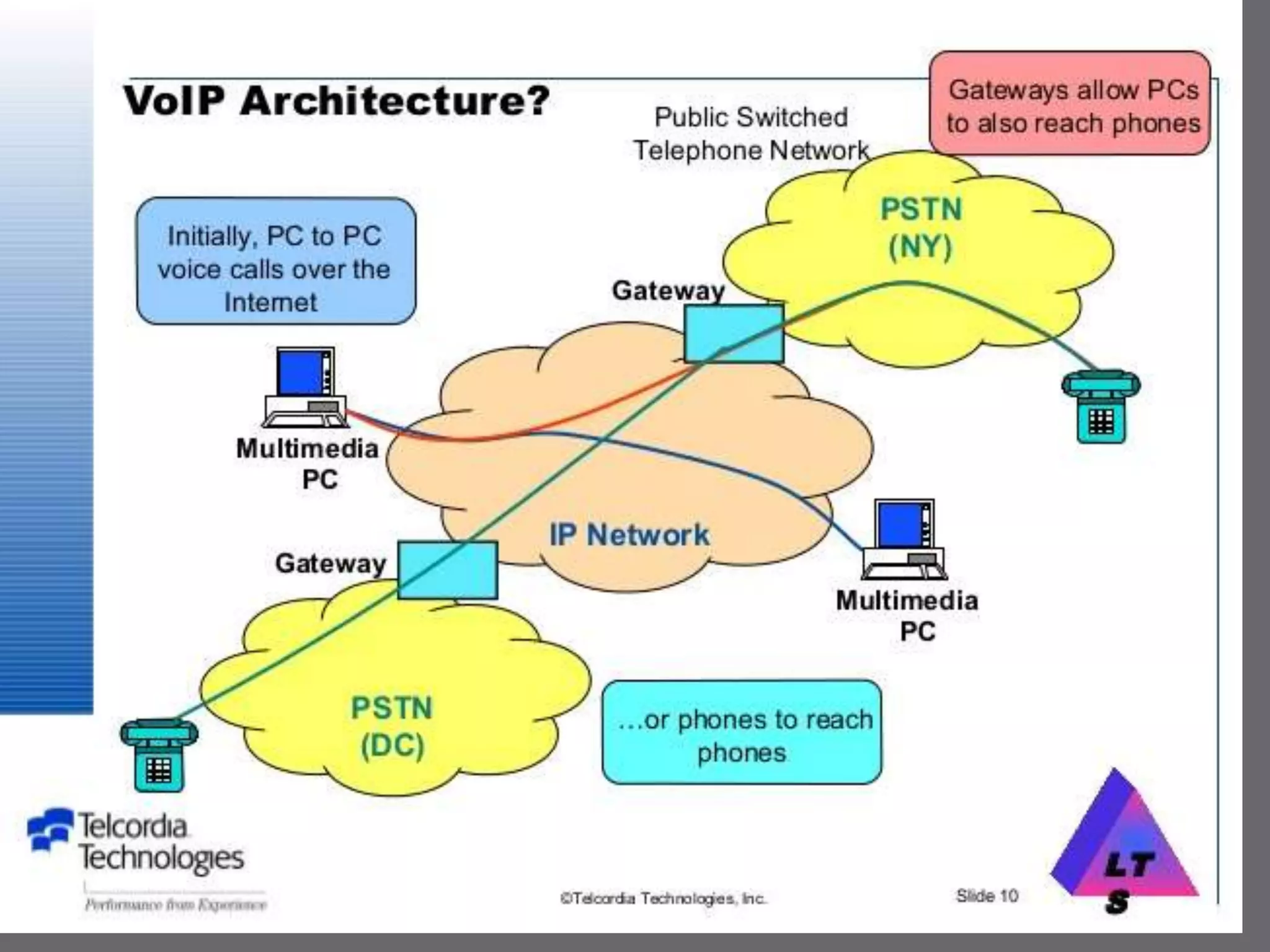
VOIP Architecture
Components
Advantages
Disadvantages
VOIP Alternatives
Future
Reference
3.
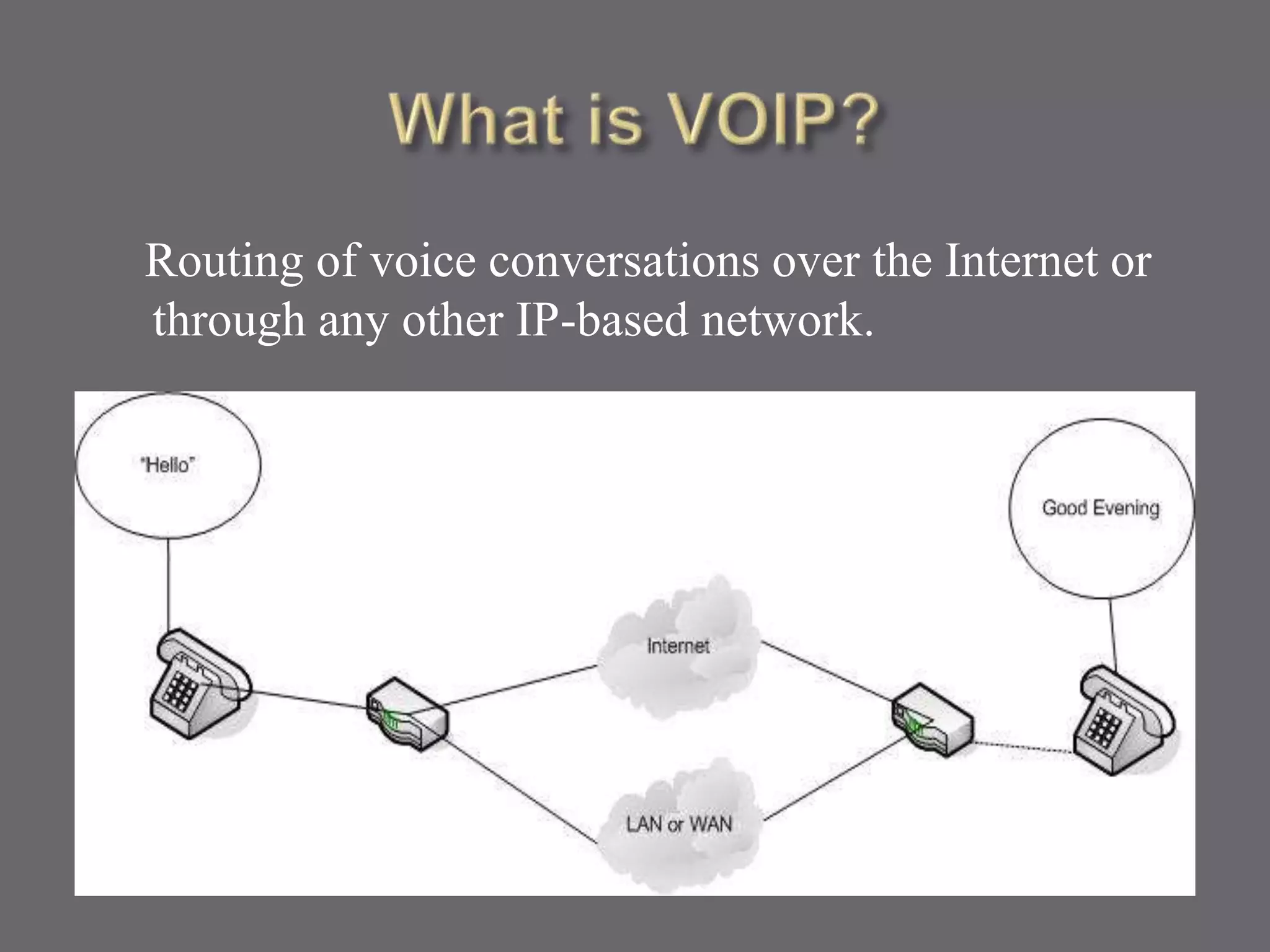
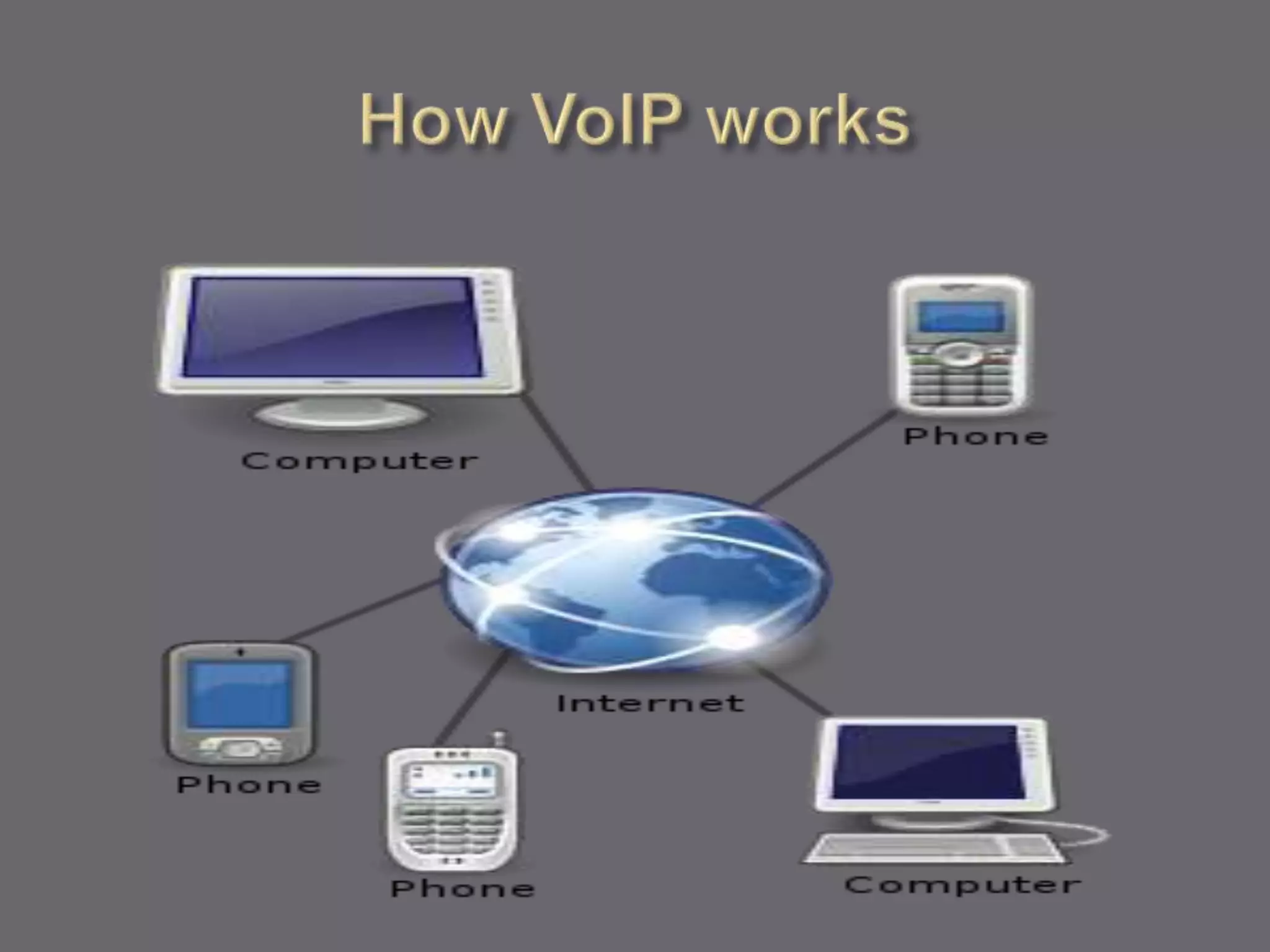
Routing of voiceconversations over the Internet or
through any other IP-based network.
4.
Cheaper telecommunications
Less phone line rental
Less wiring required
“Free” phone calls in some situations
Video conferencing possibilities
Branch offices may not need a PABX
Use Wifi bridges to connect phone system
5.
When movingto a new building
When STD calls and International calls costs need
to be reduced
When line rental fees need review
When new EFTPOS, fax, modems need to be added
If call count per month is high
6.
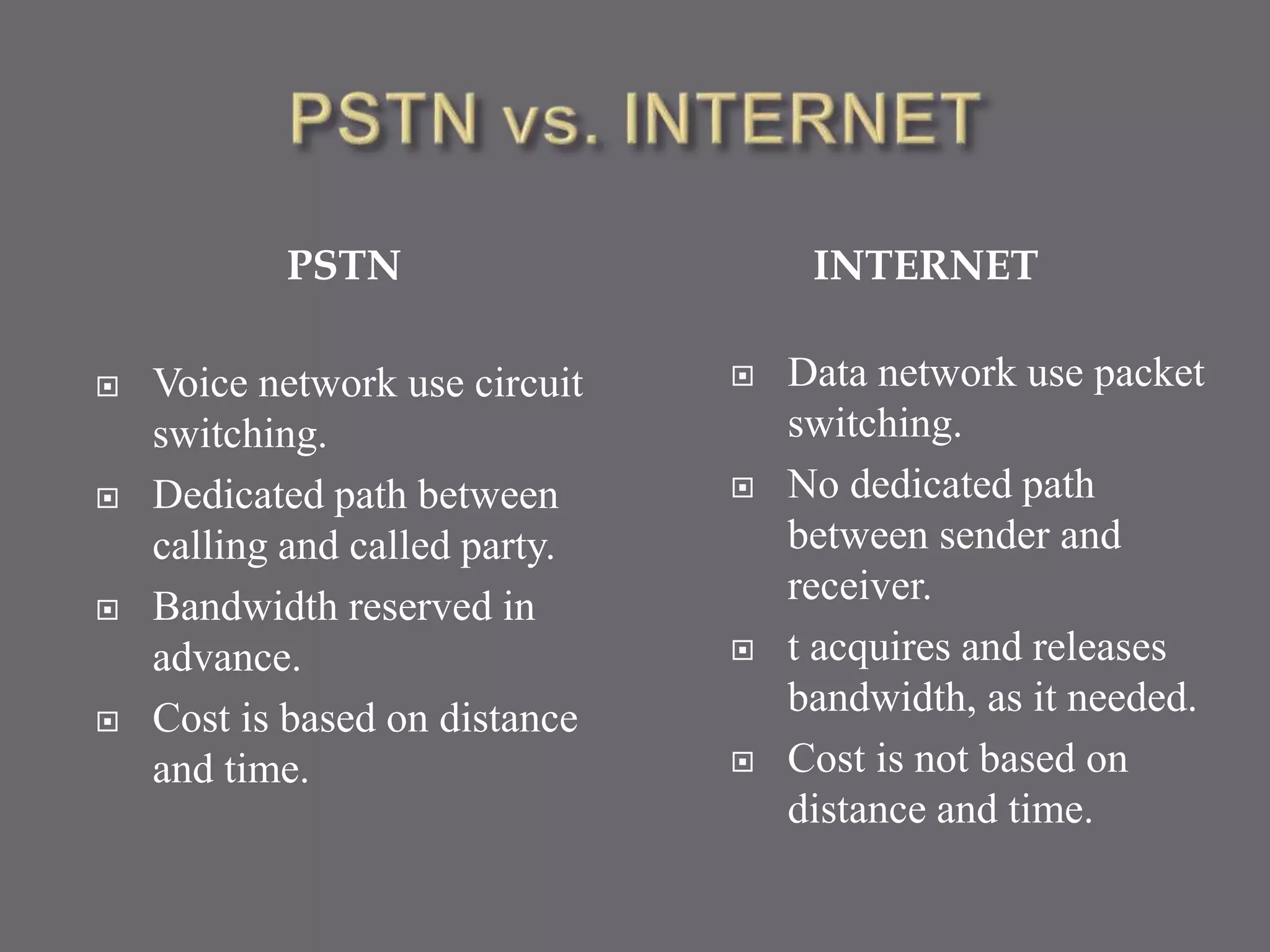
PSTN INTERNET
Voicenetwork use circuit
switching.
Dedicated path between
calling and called party.
Bandwidth reserved in
advance.
Cost is based on distance
and time.
Data network use packet
switching.
No dedicated path
between sender and
receiver.
t acquires and releases
bandwidth, as it needed.
Cost is not based on
distance and time.
Most goodquality VOIP software is either cheap or free.
Free or cheap local/international call rates compared to
traditional phone calls.
VOIP is integrated with features such as chat, whiteboard,
audio and video-conferencing.
Can be used with VOIP adapters, allowing your normal
home phone to be turned into a VOIP phone.
VOIP phone adapters can be carried around with you
wherever you travel.
Computers do not have to be turned on, you can receive
VOIP calls on your existing phone.
11.
Quality ofcalls across Internet is not assured
Broadband equivalent connection needed for
connecting offsite
Network switches may need replacement
Power on Ethernet may need to be established over
the LAN
Phone availability is dependant on network
hardware and power
Some VOIP providers have fees
Emergency calls 000 do not issue an origin
12.
Call capplans with Telecommunications provider
Virtual fax lines that get sent to email
ISDN D channel for EFTPOS
Advanced forms of Instant messaging
Use mobile phones and reduce land lines
Least cost routing with various carrier prefixes
13.
Mobile phonethat can do Wifi VOIP if in range
VOIP using Wimax (no phone lines required)
Internet / VOIP / Video on demand broadband
ISP’s working like carriers with Quality of Service
for VOIP on their network
Wireless phones with Skype built in (2006 Q3)