
Genetic Engineering
Anup Muni Bajracharya
 DNA - is the blueprint for the individuality of an organism.
 The life, growth and unique features of the organism depend on
its DNA.
 Genes - The segments of DNA which have been associated with
specific features or functions of an organism.
 Restriction endonucleases/ligases - Molecular biologists have
discovered many enzymes that can cut and join strands of DNA.
 Using such enzymes, scientists learned to cut specific genes from
DNA and to build customized DNA using these genes.
 Vectors - strands of DNA such as viruses, which can infect a cell
and insert themselves into its DNA.
 It can act as a carrier molecule for the transfer of genes into the
host.
Terms in Genetic engineering
What’s Genetic engineering???
a = bacterial cell.
b = cell’s main chromosome
c= plasmid
d= cut form of plasmid
e= restriction endonucleases
f= gene of interest like human
insulin gene
g=recombinant DNA
h= through a technique called
transformation, the genetically
engineered plasmid is re-inserted
into a bacterial cell.
i= mass cloning
j= Plasmid’s DNA will also be
transcribed and translated,
producing human insulin.
It involves direct manipulation of DNA, usually by introducing genes from one species
into another.
Some examples of Genetic
engineering- Glowing mice
Golden rice
Featherless chicken+ colourful cauliflower
Reduced fat in pork
 The process occurs in 5 steps as
 Isolation of desired gene or gene of interest
 Selection of vector and insertion of a gene of
interest into vector
 Introducing the r-DNA vector into host cells.
 Selection of appropriate host cell
 Mass culture of cloned genes
Steps in genetic engineering
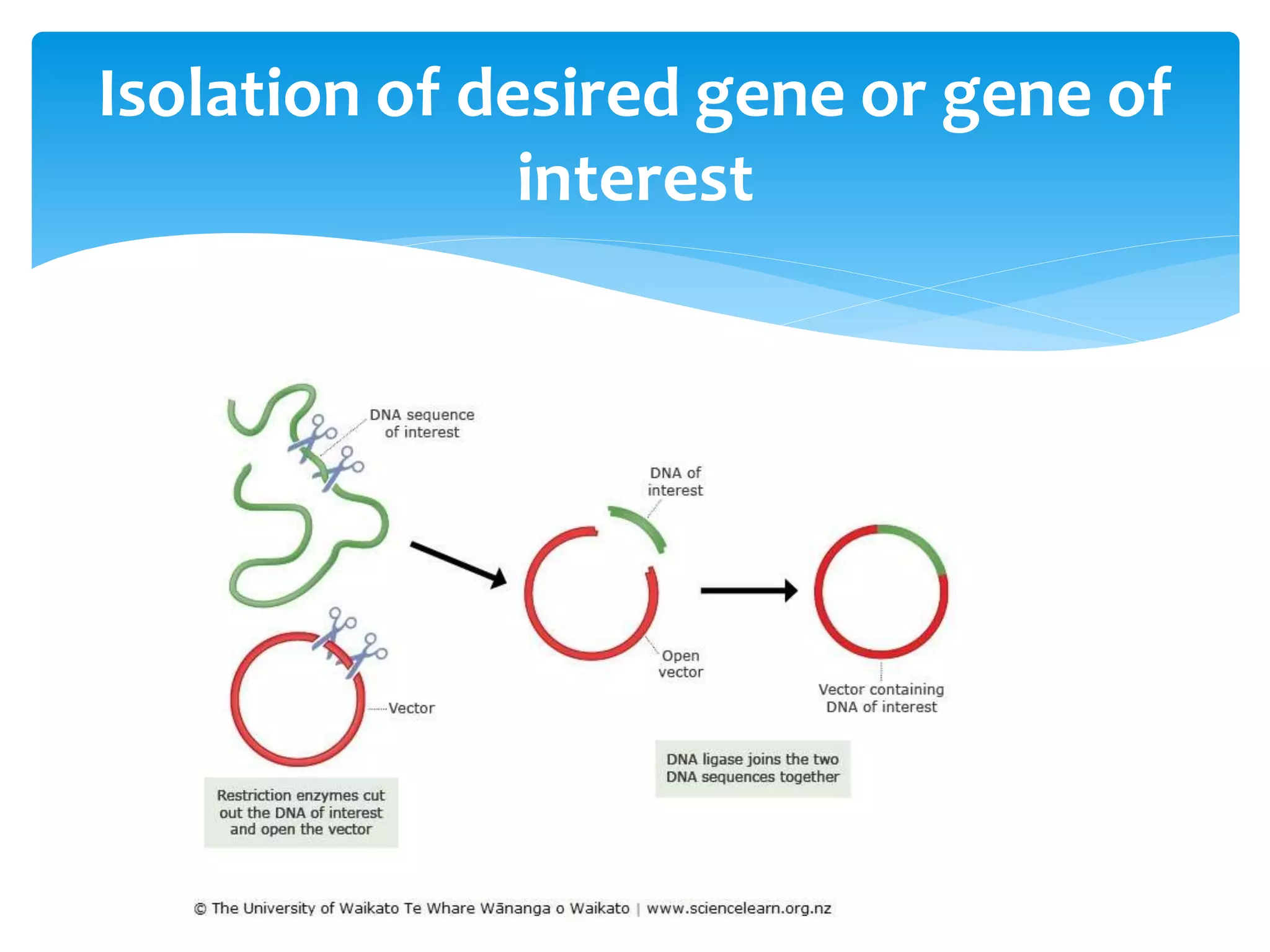
Isolation of desired gene or gene of
interest
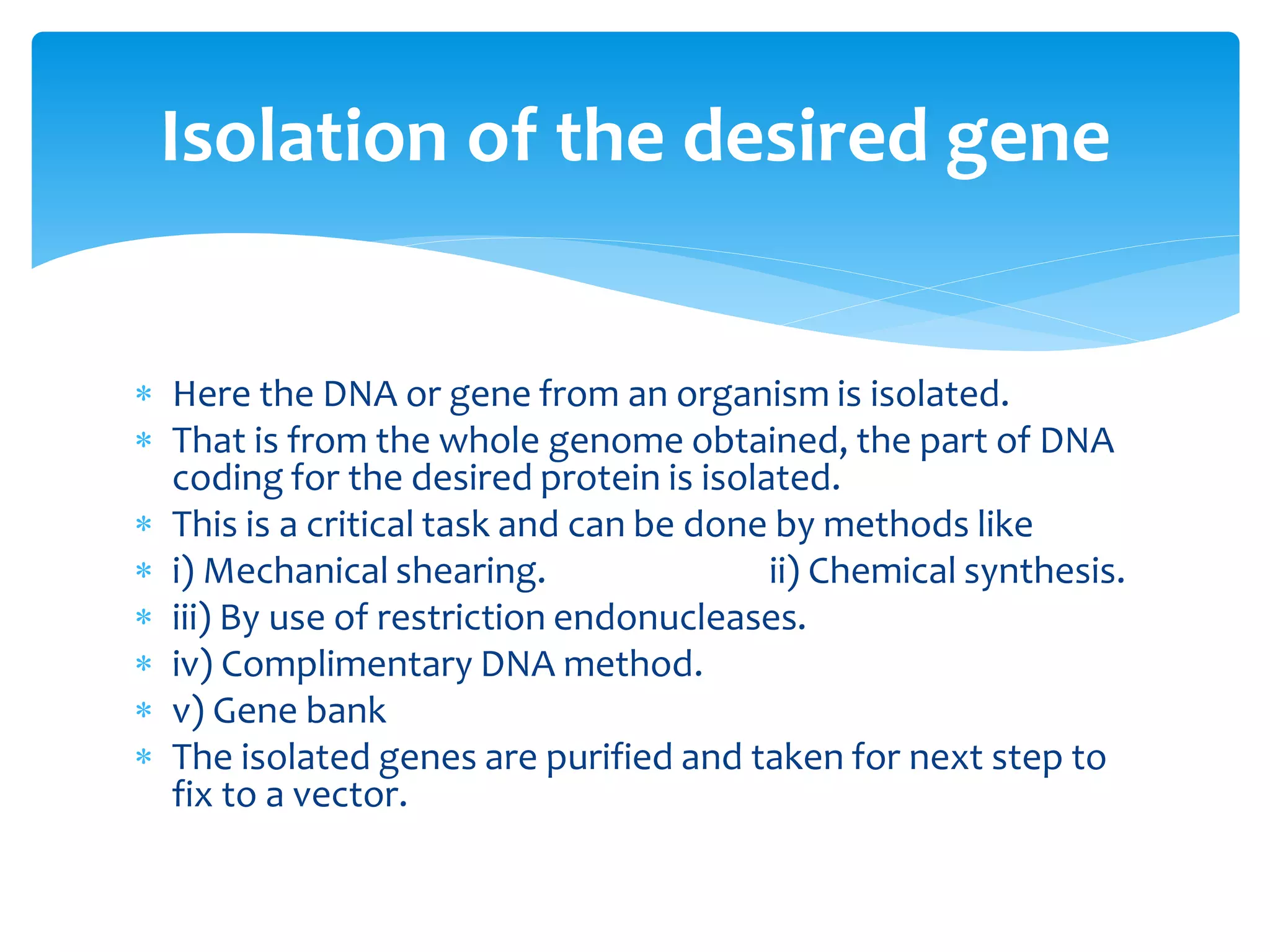
 Here the DNA or gene from an organism is isolated.
 That is from the whole genome obtained, the part of DNA
coding for the desired protein is isolated.
 This is a critical task and can be done by methods like
 i) Mechanical shearing. ii) Chemical synthesis.
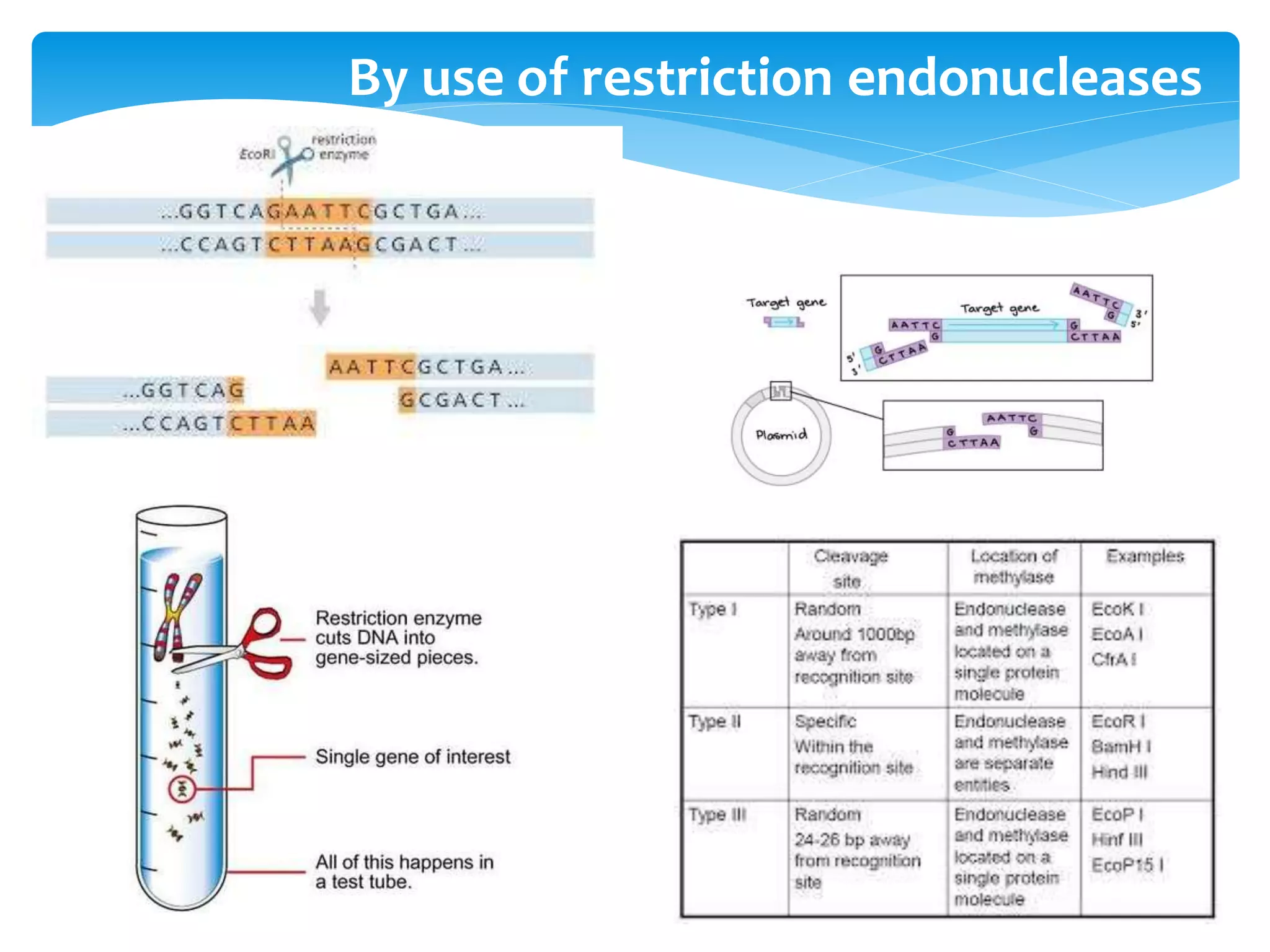
 iii) By use of restriction endonucleases.
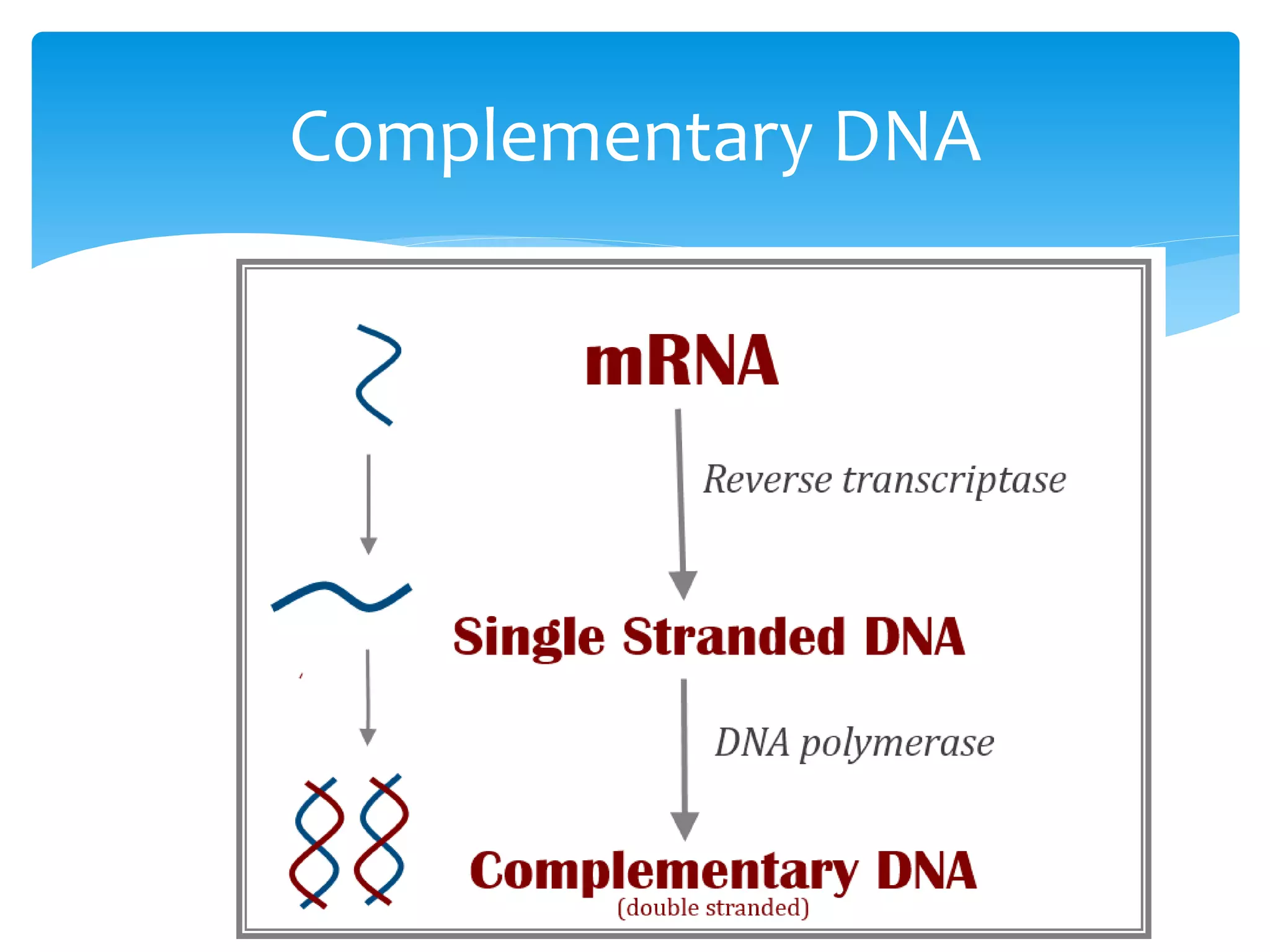
 iv) Complimentary DNA method.
 v) Gene bank
 The isolated genes are purified and taken for next step to
fix to a vector.
Isolation of the desired gene
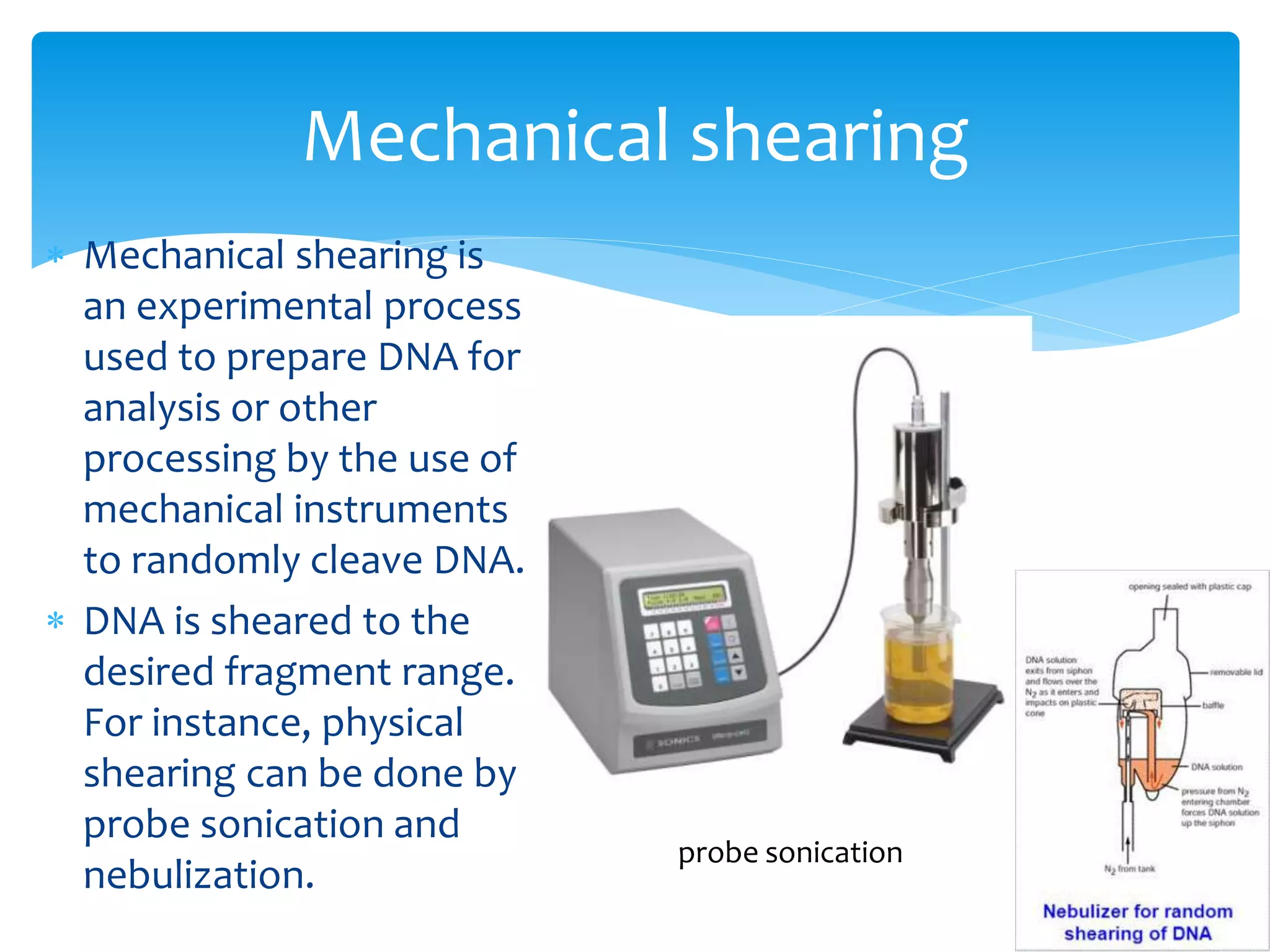
 Mechanical shearing is
an experimental process
used to prepare DNA for
analysis or other
processing by the use of
mechanical instruments
to randomly cleave DNA.
 DNA is sheared to the
desired fragment range.
For instance, physical
shearing can be done by
probe sonication and
nebulization.
Mechanical shearing
probe sonication
Chemical synthesis
By use of restriction endonucleases
Complementary DNA
Gene bank
 Vector is a vehicle to carry the desired gene into the
genome of another organism.
Selection of vector
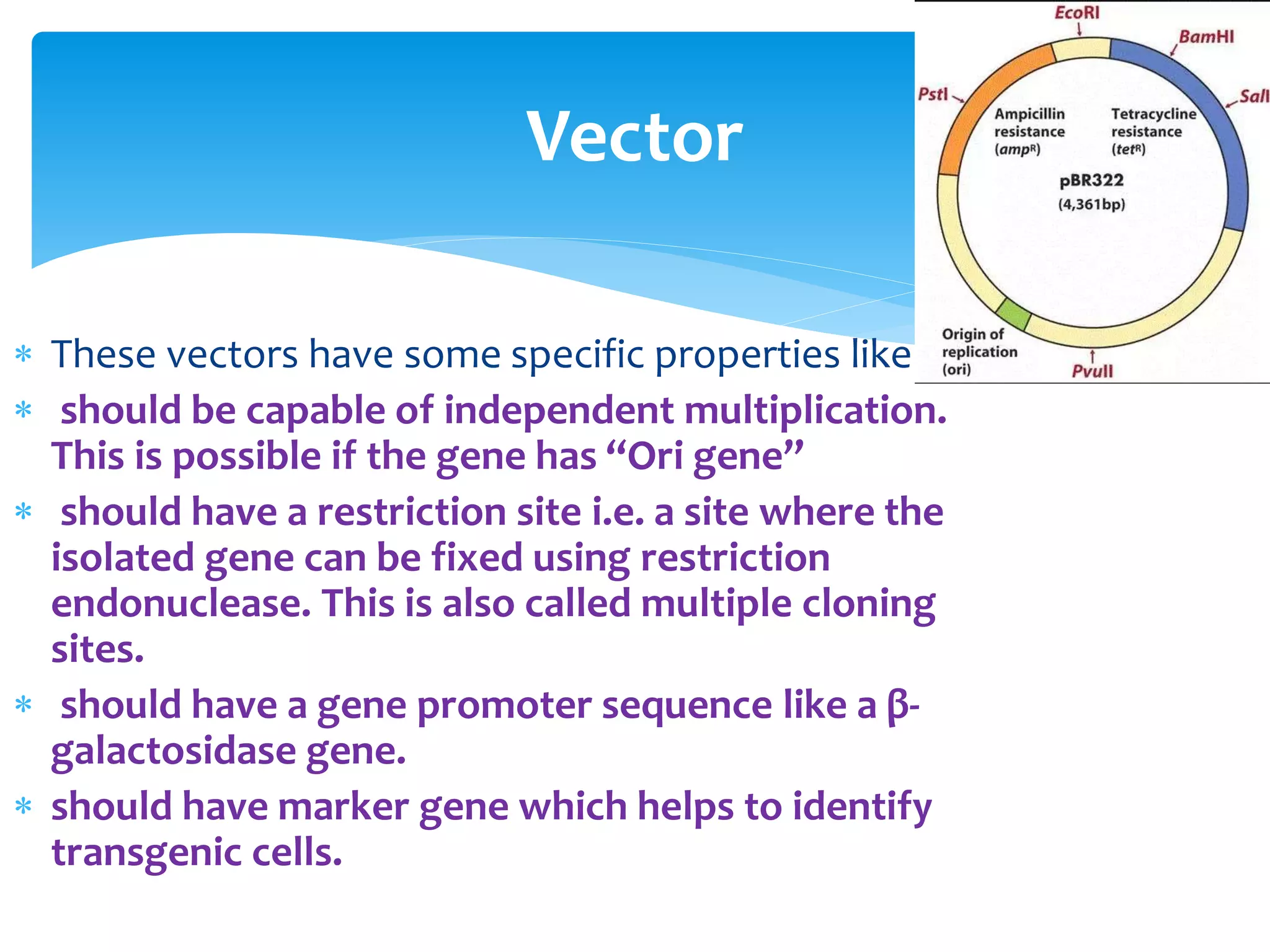
 These vectors have some specific properties like
 should be capable of independent multiplication.
This is possible if the gene has “Ori gene”
 should have a restriction site i.e. a site where the
isolated gene can be fixed using restriction
endonuclease. This is also called multiple cloning
sites.
 should have a gene promoter sequence like a β-
galactosidase gene.
 should have marker gene which helps to identify
transgenic cells.
Vector
 There are many types of vectors like
 a) Plasmids b) Cosmids
 c) Phasmid d) Transposons
 e) Bacteriophage (virus) f) Yeast
 g) Shuttle vectors
Types of vectors
 The isolated gene is now transferred into the vector.
 Restriction endonuclease enzyme is used to cut the
desired gene or gene of interest and same enzyme is
also used to cut the vector or plasmid.
 The cohesive or blunt ends are formed in vector to
which the gene of interest is attached or ligated using
DNA ligase enzyme.
Transfer of r-DNA:
 The vector with the tagged desired gene is
transferred into the organism of interest, i.e., bacteria
or fungi in most cases.
 This is done by creating holes in the bacterial cell wall.
 For this, we use different methods like
 By use of CaCl2
 By electroporation
 By Transduction
Introducing the r-DNA into the host
cell.
By use of CaCl2
By Electroporation
 Once the transformation is done, now we need to
identify and isolate those bacteria from culture media
which have the vector within.
 So selection of those host cell consisting of our
desired gene should be selected.
 For this few methods are followed like
 Using of marker of gene technique
Selection of appropriate host cell:
 The marker gene is those which helps one to
know the bacteria which consists of desired
gene. For example, antibiotic resistance gene
(Tetracycline and Ampilcillin gene).
 The marker gene is present in the vector, one
of the marker gene let’s say tetracycline is cut
off by restriction endonuclease and gene of
interest is inserted there, the next one
ampicillin is free.
 Here the bacteria with the desired gene are
isolated on to media containing ampicillin.
 The bacteria with vector or rDNA has ampicillin
resistance gene so they multiply in the media
and form colonies. While all those without
vector do not grow and are inhibited.
Using of marker of gene technique
 The bacteria carrying the gene of interest is grown
massively with an aim to have the desired product in
huge quantity.
 For example, if insulin producing gene is incorporated
in bacteria then bacterial culture is done massively to
have desired product i.e insulin.
Mass culture of cloned genes
Thank you

Genetic engineering

  • 1.
  • 2.
     DNA -is the blueprint for the individuality of an organism.  The life, growth and unique features of the organism depend on its DNA.  Genes - The segments of DNA which have been associated with specific features or functions of an organism.  Restriction endonucleases/ligases - Molecular biologists have discovered many enzymes that can cut and join strands of DNA.  Using such enzymes, scientists learned to cut specific genes from DNA and to build customized DNA using these genes.  Vectors - strands of DNA such as viruses, which can infect a cell and insert themselves into its DNA.  It can act as a carrier molecule for the transfer of genes into the host. Terms in Genetic engineering
  • 3.
    What’s Genetic engineering??? a= bacterial cell. b = cell’s main chromosome c= plasmid d= cut form of plasmid e= restriction endonucleases f= gene of interest like human insulin gene g=recombinant DNA h= through a technique called transformation, the genetically engineered plasmid is re-inserted into a bacterial cell. i= mass cloning j= Plasmid’s DNA will also be transcribed and translated, producing human insulin. It involves direct manipulation of DNA, usually by introducing genes from one species into another.
  • 4.
    Some examples ofGenetic engineering- Glowing mice
  • 5.
  • 6.
  • 7.
  • 8.
     The processoccurs in 5 steps as  Isolation of desired gene or gene of interest  Selection of vector and insertion of a gene of interest into vector  Introducing the r-DNA vector into host cells.  Selection of appropriate host cell  Mass culture of cloned genes Steps in genetic engineering
  • 9.
    Isolation of desiredgene or gene of interest
  • 10.
     Here theDNA or gene from an organism is isolated.  That is from the whole genome obtained, the part of DNA coding for the desired protein is isolated.  This is a critical task and can be done by methods like  i) Mechanical shearing. ii) Chemical synthesis.  iii) By use of restriction endonucleases.  iv) Complimentary DNA method.  v) Gene bank  The isolated genes are purified and taken for next step to fix to a vector. Isolation of the desired gene
  • 11.
     Mechanical shearingis an experimental process used to prepare DNA for analysis or other processing by the use of mechanical instruments to randomly cleave DNA.  DNA is sheared to the desired fragment range. For instance, physical shearing can be done by probe sonication and nebulization. Mechanical shearing probe sonication
  • 12.
  • 13.
    By use ofrestriction endonucleases
  • 14.
  • 15.
  • 16.
     Vector isa vehicle to carry the desired gene into the genome of another organism. Selection of vector
  • 17.
     These vectorshave some specific properties like  should be capable of independent multiplication. This is possible if the gene has “Ori gene”  should have a restriction site i.e. a site where the isolated gene can be fixed using restriction endonuclease. This is also called multiple cloning sites.  should have a gene promoter sequence like a β- galactosidase gene.  should have marker gene which helps to identify transgenic cells. Vector
  • 18.
     There aremany types of vectors like  a) Plasmids b) Cosmids  c) Phasmid d) Transposons  e) Bacteriophage (virus) f) Yeast  g) Shuttle vectors Types of vectors
  • 19.
     The isolatedgene is now transferred into the vector.  Restriction endonuclease enzyme is used to cut the desired gene or gene of interest and same enzyme is also used to cut the vector or plasmid.  The cohesive or blunt ends are formed in vector to which the gene of interest is attached or ligated using DNA ligase enzyme. Transfer of r-DNA:
  • 21.
     The vectorwith the tagged desired gene is transferred into the organism of interest, i.e., bacteria or fungi in most cases.  This is done by creating holes in the bacterial cell wall.  For this, we use different methods like  By use of CaCl2  By electroporation  By Transduction Introducing the r-DNA into the host cell.
  • 22.
    By use ofCaCl2
  • 23.
  • 26.
     Once thetransformation is done, now we need to identify and isolate those bacteria from culture media which have the vector within.  So selection of those host cell consisting of our desired gene should be selected.  For this few methods are followed like  Using of marker of gene technique Selection of appropriate host cell:
  • 27.
     The markergene is those which helps one to know the bacteria which consists of desired gene. For example, antibiotic resistance gene (Tetracycline and Ampilcillin gene).  The marker gene is present in the vector, one of the marker gene let’s say tetracycline is cut off by restriction endonuclease and gene of interest is inserted there, the next one ampicillin is free.  Here the bacteria with the desired gene are isolated on to media containing ampicillin.  The bacteria with vector or rDNA has ampicillin resistance gene so they multiply in the media and form colonies. While all those without vector do not grow and are inhibited. Using of marker of gene technique
  • 29.
     The bacteriacarrying the gene of interest is grown massively with an aim to have the desired product in huge quantity.  For example, if insulin producing gene is incorporated in bacteria then bacterial culture is done massively to have desired product i.e insulin. Mass culture of cloned genes
  • 30.