The Anatomy of the Ear
• provides the senses of equilibrium and
  hearing

equilibrium- informs us of the position of the
  body in space by monitoring gravity, linear
  acceleration, and rotation.

hearing- enables us to detect and interpret
  soundwaves.
3 Anatomical Regions of the Ear

1. External Ear

2. Middle Ear

3. Inner Ear
The External Ear
-   visible portion of the ear
-   collects and directs
    soundwaves to the
       eardrum

Composed of:
1. the auricle, or pinna, and
2. the external acoustic
   meatus.
The Pinna
- surrounds the entrance to
the external auditory canal

- supported by elastic
cartilage

- protects the opening of
the canal

- collects and convey
soundwaves to the
tympanic membrane
The Pinna
Features:
  1. Concha
  2. Helix
  3. Crus of Helix
  4. Lobule
  5. Antihelix
  6. Scapha
  7. Tragus
  8. Antitragus
  9. Intertragic notch
The External Auditory Meatus
- Extends from the concha to
    the tympanic membrane.
- Its length, from the floor of
    the concha, is
    approximately 2.5 cm and
    from the tragus about 4
    cm.
- It has two structurally
    different parts, the lateral
    third being cartilaginous
    and the medial two-thirds
    osseous.
The External Auditory Meatus
• Features:
1. skin
2. Hair
3. Sweat Glands
4. Sebaceous Glands
  /Ceruminous Glands
  -slows down the growth
  of bacteria and reduces
  the chances of infection
Tympanic Membrane
- separates the external
  and middle ear

- transmits soundwaves
  along the auditory
  ossicles to the inner ear.

- the deepest part of which
   is the umbo where the
   tip of the handle of the
   malleus is attached.
The Middle Ear
Middle Ear
- also known as the
  tympanic cavity
- space in the petrous
  temporal bone lined by
  mucous membrane

The cavity has two parts:
1. the tympanic cavity
   proper, opposite the
   membrane, and
2. an epitympanic recess,
   contains the malleus and
   incus.
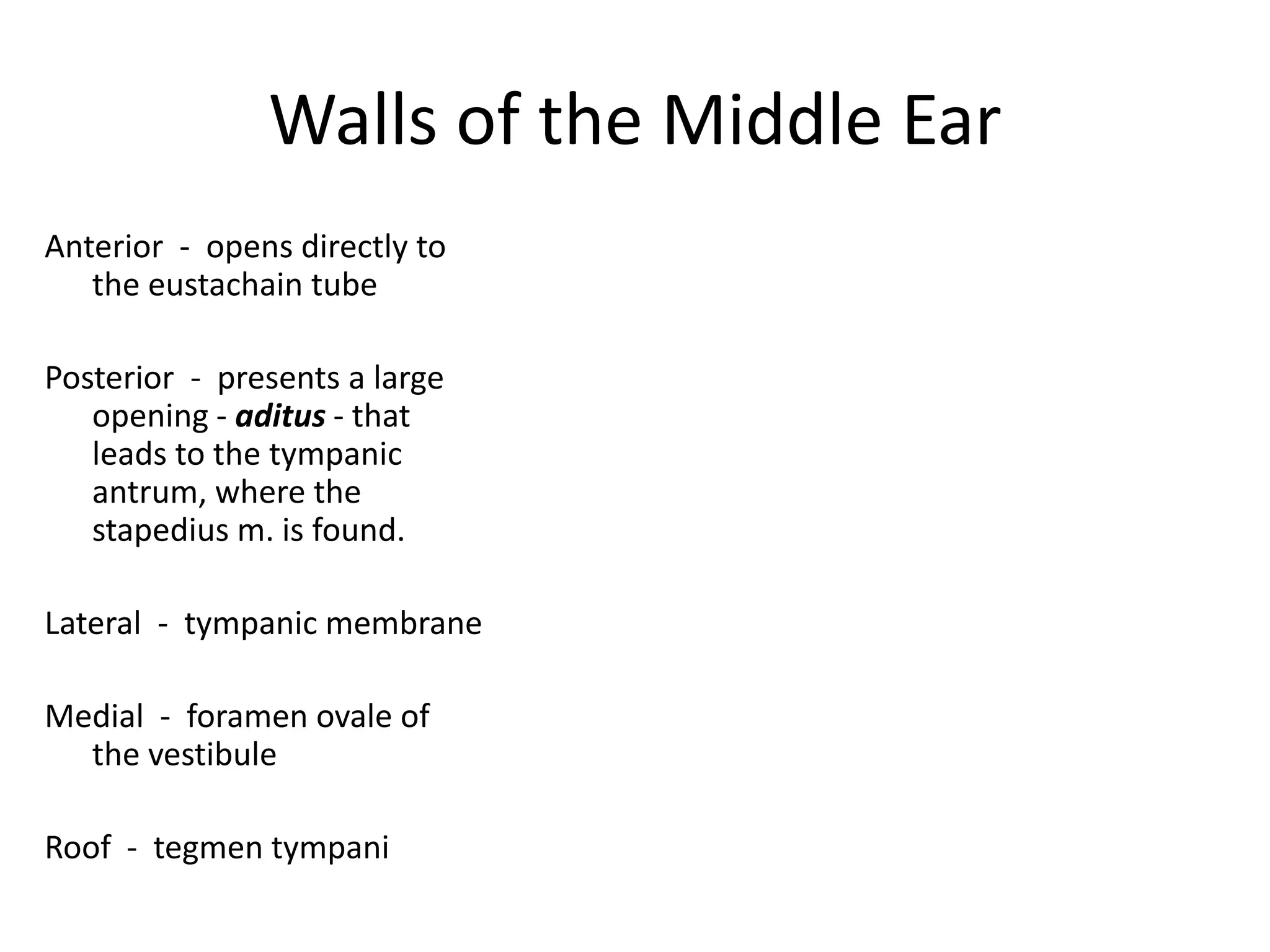
Walls of the Middle Ear
Anterior - opens directly to
   the eustachain tube

Posterior - presents a large
   opening - aditus - that
   leads to the tympanic
   antrum, where the
   stapedius m. is found.

Lateral - tympanic membrane

Medial - foramen ovale of
  the vestibule

Roof - tegmen tympani
Middle Ear

Muscles:
1. Tensor Tympani M.
2. Stapedius M.

Bones:
1. Malleus (hammer)
2. Incus (anvil)
3. Stapes (stirrup)
The Inner Ear
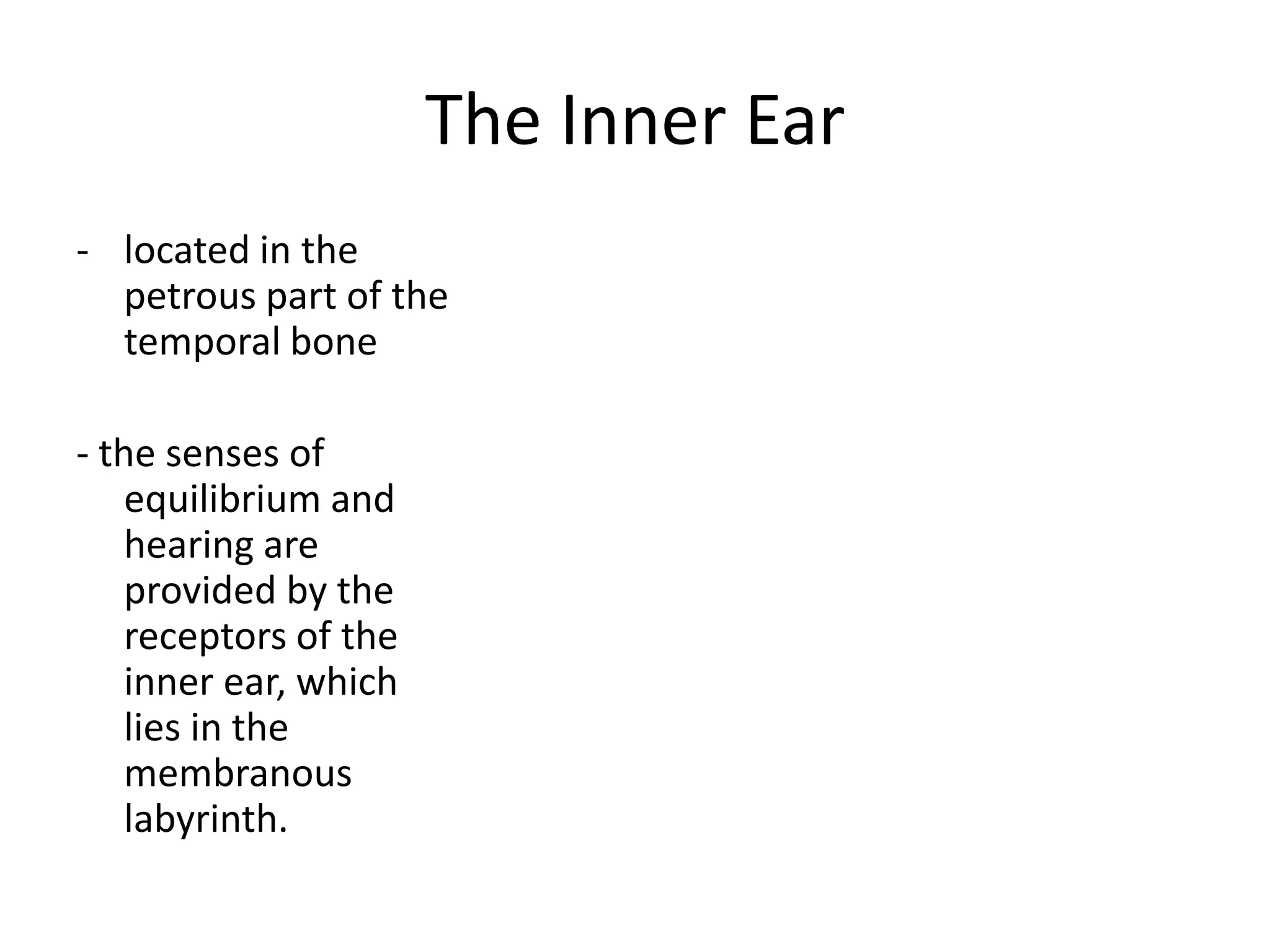
The Inner Ear
- located in the
  petrous part of the
  temporal bone

- the senses of
    equilibrium and
    hearing are
    provided by the
    receptors of the
    inner ear, which
    lies in the
    membranous
    labyrinth.
The Inner Ear


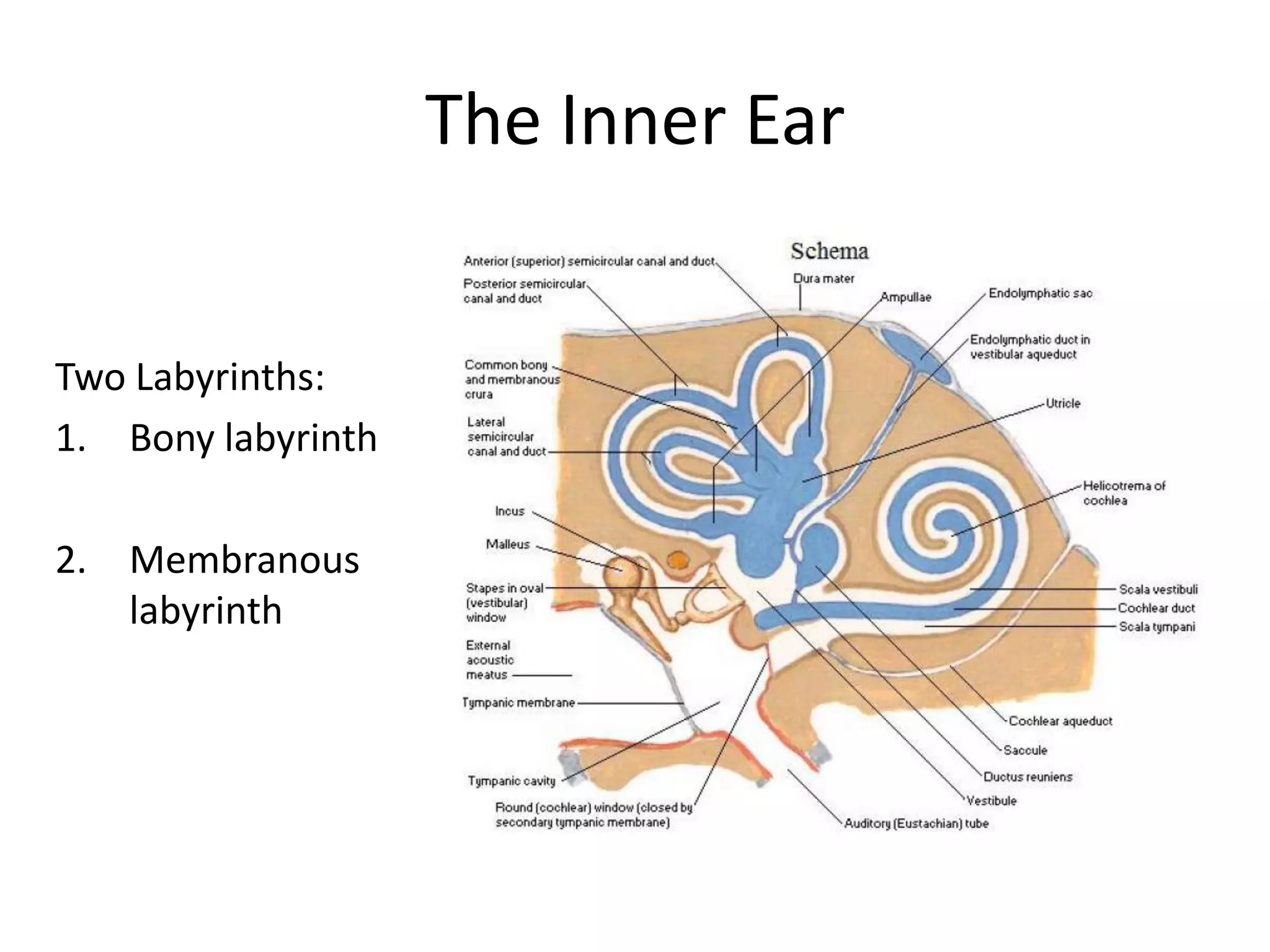
Two Labyrinths:
1. Bony labyrinth

2. Membranous
   labyrinth
The Bony Labyrinth
The Bony Labyrinth
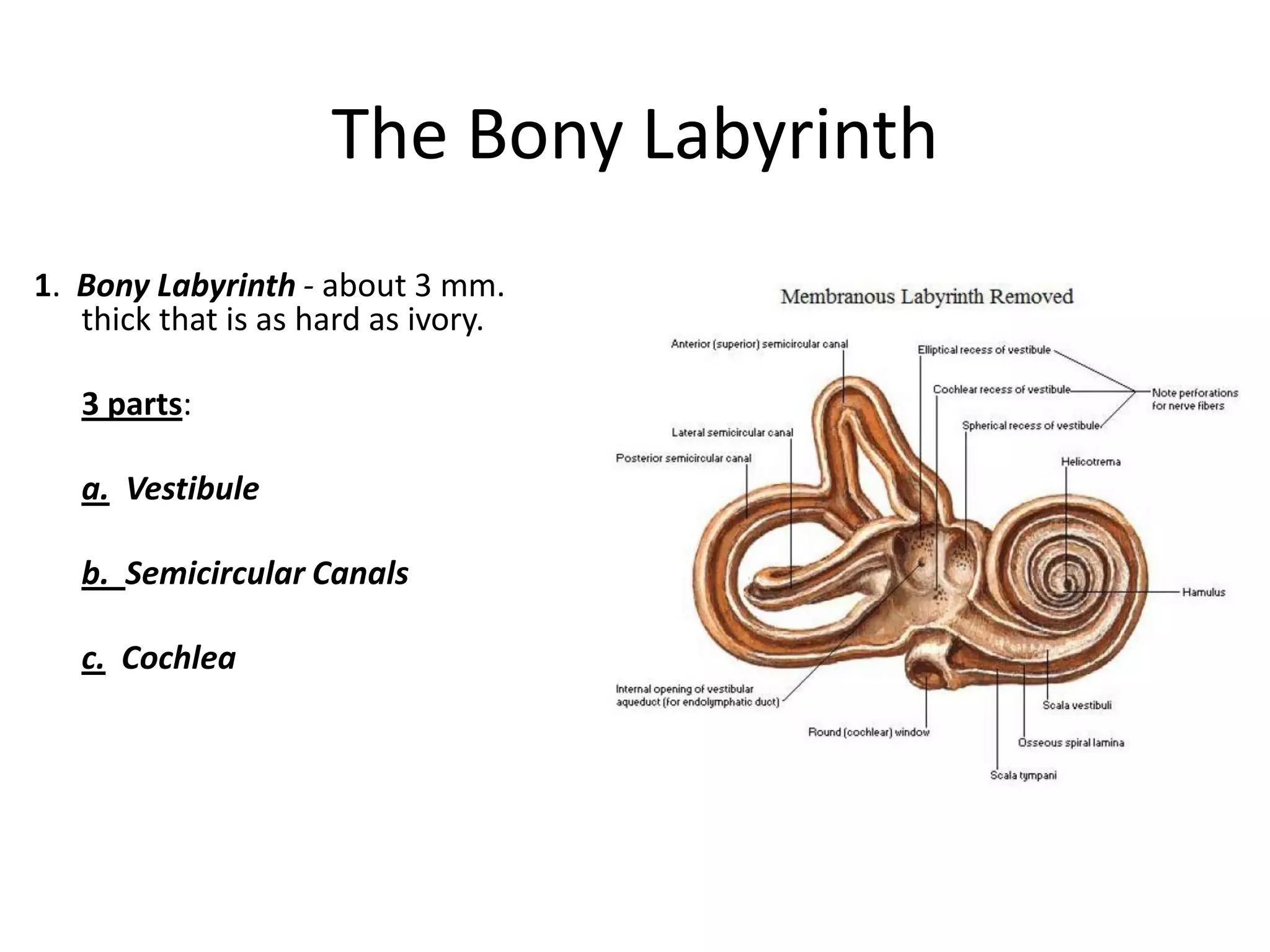
1. Bony Labyrinth - about 3 mm.
   thick that is as hard as ivory.

   3 parts:

   a. Vestibule

   b. Semicircular Canals

   c. Cochlea
The Vestibule of the Bony Labyrinth
- the central part of
  the bony labyrinth
  behind the cochlea
  containing the
  fenestra vestibuli
  enclosed by the
  stapes.

- contains the utricle
  and saccule which
  contain receptors for
  the sensation of
  gravity and linear
  accelaration.
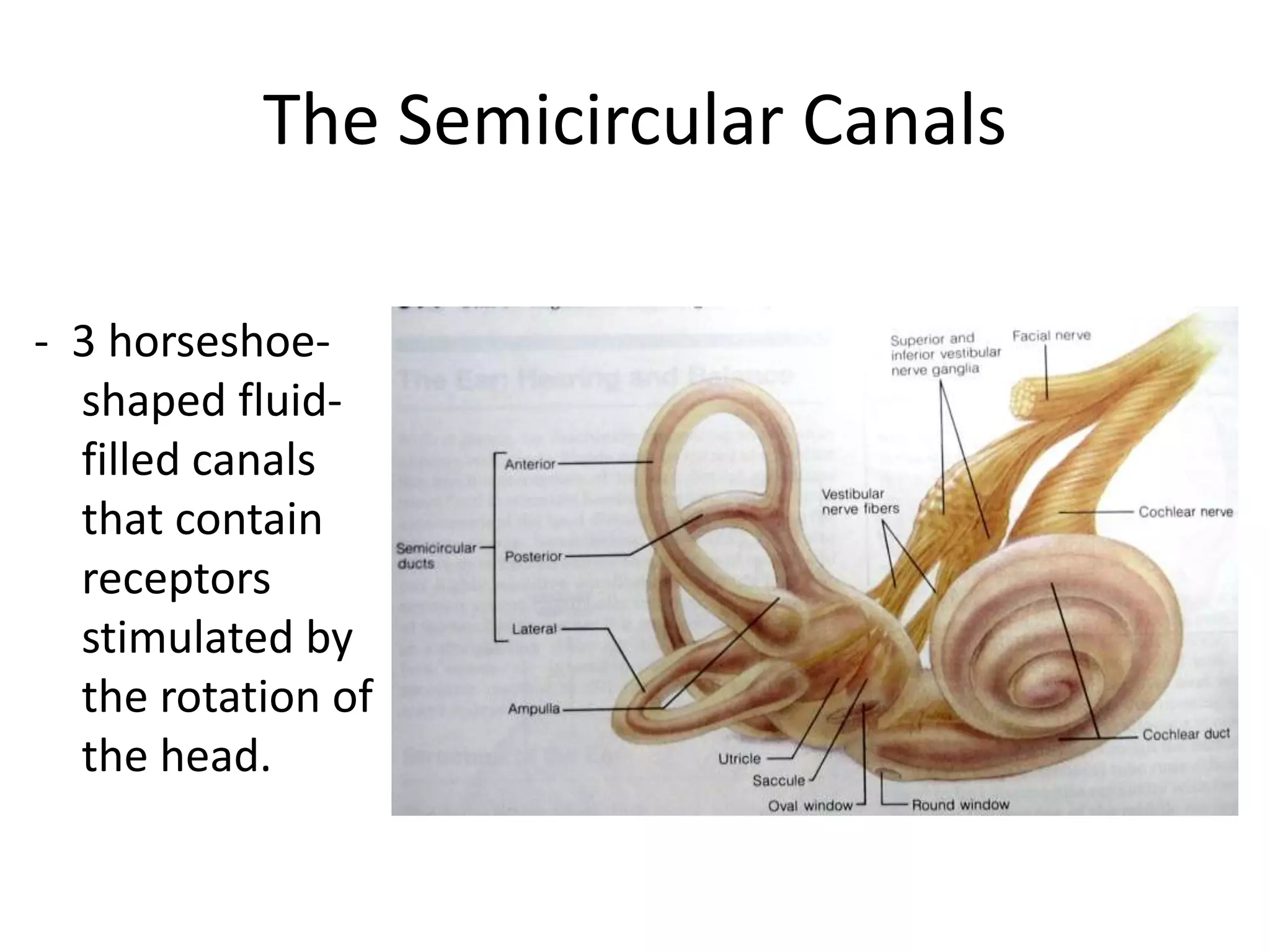
The Semicircular Canals

- 3 horseshoe-
  shaped fluid-
  filled canals
  that contain
  receptors
  stimulated by
  the rotation of
  the head.
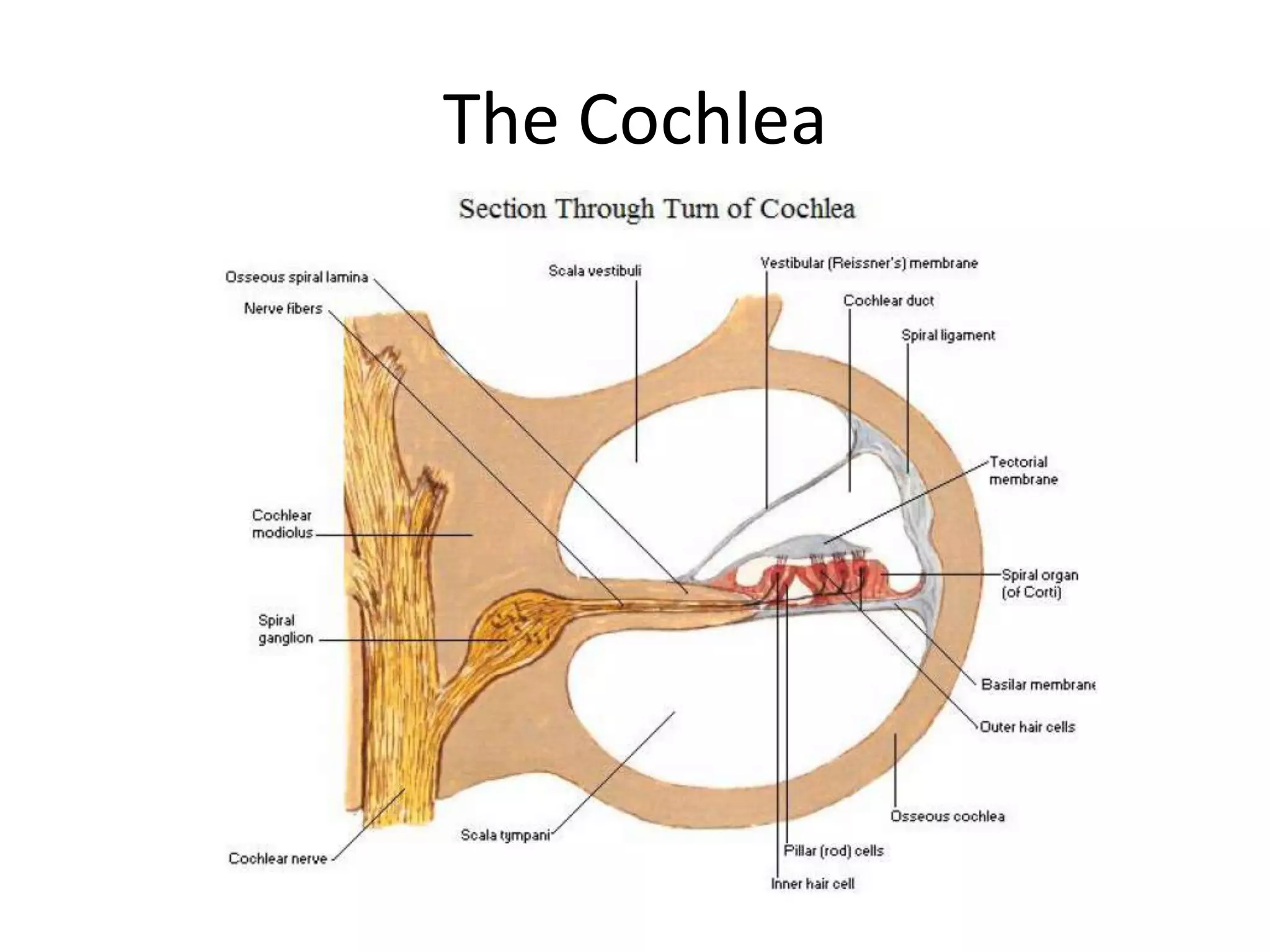
The Cochlea

  - the bony cochlea
  contains the
  cochlear duct of
  the membranous
  labyrinth.
- contains receptors
  in the cochlear
  ducts that provide
  the sense of
  hearing.
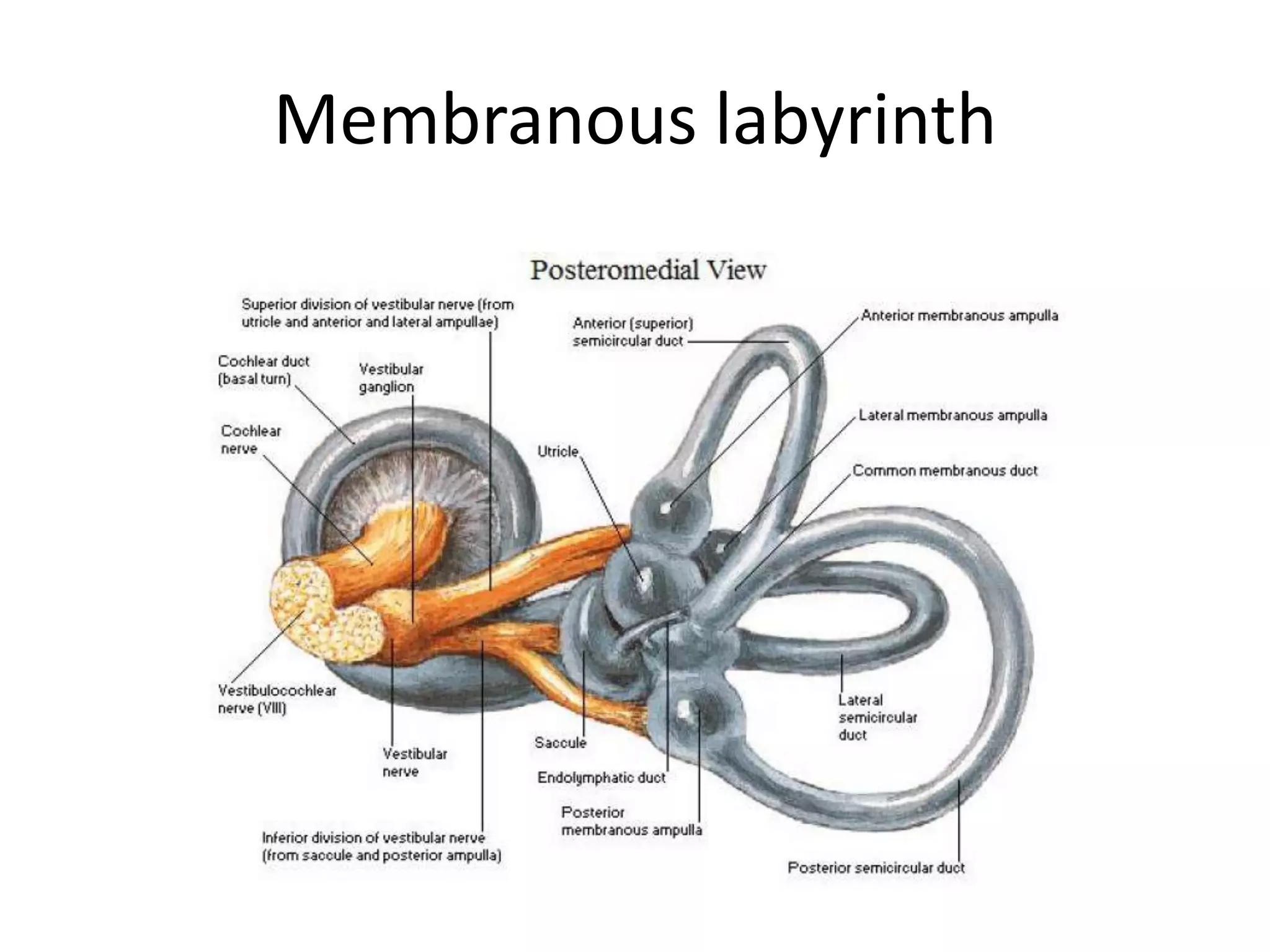
The Membranous Labyrinth
Membranous labyrinth
- lies within the bony labyrinth and consisting of sacs
  that contain fluid known as endolymph.
- The fluid that separates the bony and membranous
  labyrinth is known as perilymph.

  This is made up of:
      a. Scala Tympani
      b. Scala Vestibuli
      c. Cochlear duct - organ of corti
Membranous labyrinth
The Cochlea

Ears

  • 1.
  • 2.
    • provides thesenses of equilibrium and hearing equilibrium- informs us of the position of the body in space by monitoring gravity, linear acceleration, and rotation. hearing- enables us to detect and interpret soundwaves.
  • 3.
    3 Anatomical Regionsof the Ear 1. External Ear 2. Middle Ear 3. Inner Ear
  • 4.
  • 5.
    - visible portion of the ear - collects and directs soundwaves to the eardrum Composed of: 1. the auricle, or pinna, and 2. the external acoustic meatus.
  • 6.
    The Pinna - surroundsthe entrance to the external auditory canal - supported by elastic cartilage - protects the opening of the canal - collects and convey soundwaves to the tympanic membrane
  • 7.
    The Pinna Features: 1. Concha 2. Helix 3. Crus of Helix 4. Lobule 5. Antihelix 6. Scapha 7. Tragus 8. Antitragus 9. Intertragic notch
  • 8.
    The External AuditoryMeatus - Extends from the concha to the tympanic membrane. - Its length, from the floor of the concha, is approximately 2.5 cm and from the tragus about 4 cm. - It has two structurally different parts, the lateral third being cartilaginous and the medial two-thirds osseous.
  • 9.
    The External AuditoryMeatus • Features: 1. skin 2. Hair 3. Sweat Glands 4. Sebaceous Glands /Ceruminous Glands -slows down the growth of bacteria and reduces the chances of infection
  • 10.
    Tympanic Membrane - separatesthe external and middle ear - transmits soundwaves along the auditory ossicles to the inner ear. - the deepest part of which is the umbo where the tip of the handle of the malleus is attached.
  • 11.
  • 12.
    Middle Ear - alsoknown as the tympanic cavity - space in the petrous temporal bone lined by mucous membrane The cavity has two parts: 1. the tympanic cavity proper, opposite the membrane, and 2. an epitympanic recess, contains the malleus and incus.
  • 13.
    Walls of theMiddle Ear Anterior - opens directly to the eustachain tube Posterior - presents a large opening - aditus - that leads to the tympanic antrum, where the stapedius m. is found. Lateral - tympanic membrane Medial - foramen ovale of the vestibule Roof - tegmen tympani
  • 14.
    Middle Ear Muscles: 1. TensorTympani M. 2. Stapedius M. Bones: 1. Malleus (hammer) 2. Incus (anvil) 3. Stapes (stirrup)
  • 15.
  • 16.
    The Inner Ear -located in the petrous part of the temporal bone - the senses of equilibrium and hearing are provided by the receptors of the inner ear, which lies in the membranous labyrinth.
  • 17.
    The Inner Ear TwoLabyrinths: 1. Bony labyrinth 2. Membranous labyrinth
  • 18.
  • 19.
    The Bony Labyrinth 1.Bony Labyrinth - about 3 mm. thick that is as hard as ivory. 3 parts: a. Vestibule b. Semicircular Canals c. Cochlea
  • 20.
    The Vestibule ofthe Bony Labyrinth - the central part of the bony labyrinth behind the cochlea containing the fenestra vestibuli enclosed by the stapes. - contains the utricle and saccule which contain receptors for the sensation of gravity and linear accelaration.
  • 21.
    The Semicircular Canals -3 horseshoe- shaped fluid- filled canals that contain receptors stimulated by the rotation of the head.
  • 22.
    The Cochlea - the bony cochlea contains the cochlear duct of the membranous labyrinth. - contains receptors in the cochlear ducts that provide the sense of hearing.
  • 23.
  • 24.
    Membranous labyrinth - lieswithin the bony labyrinth and consisting of sacs that contain fluid known as endolymph. - The fluid that separates the bony and membranous labyrinth is known as perilymph. This is made up of: a. Scala Tympani b. Scala Vestibuli c. Cochlear duct - organ of corti
  • 25.
  • 26.