Layers of the Neck


                     1
Layers of the Neck
• Skin

• Superficial fascia

• Deep cervical fascia


                                  2
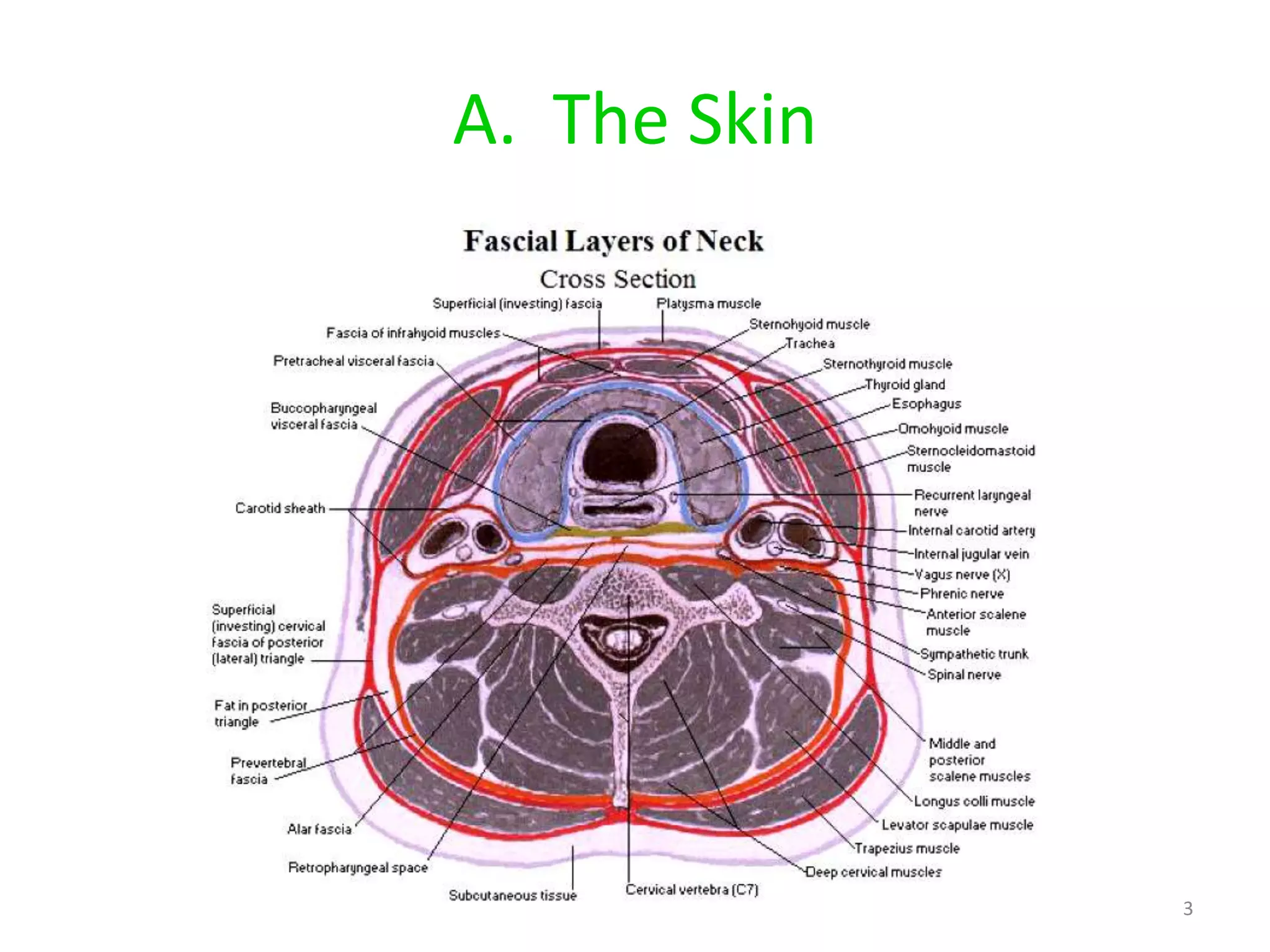
A. The Skin


              3
• Loosely attached anteriorly.

• Posteriorly, the skin is very thick and
  adherent to the underlying structures
  with numerous sebaceous glands.

• Well supplied with blood vessels, and has
  transverse lines.

                                              4
B. SUPERFICIAL FASCIA


                        5
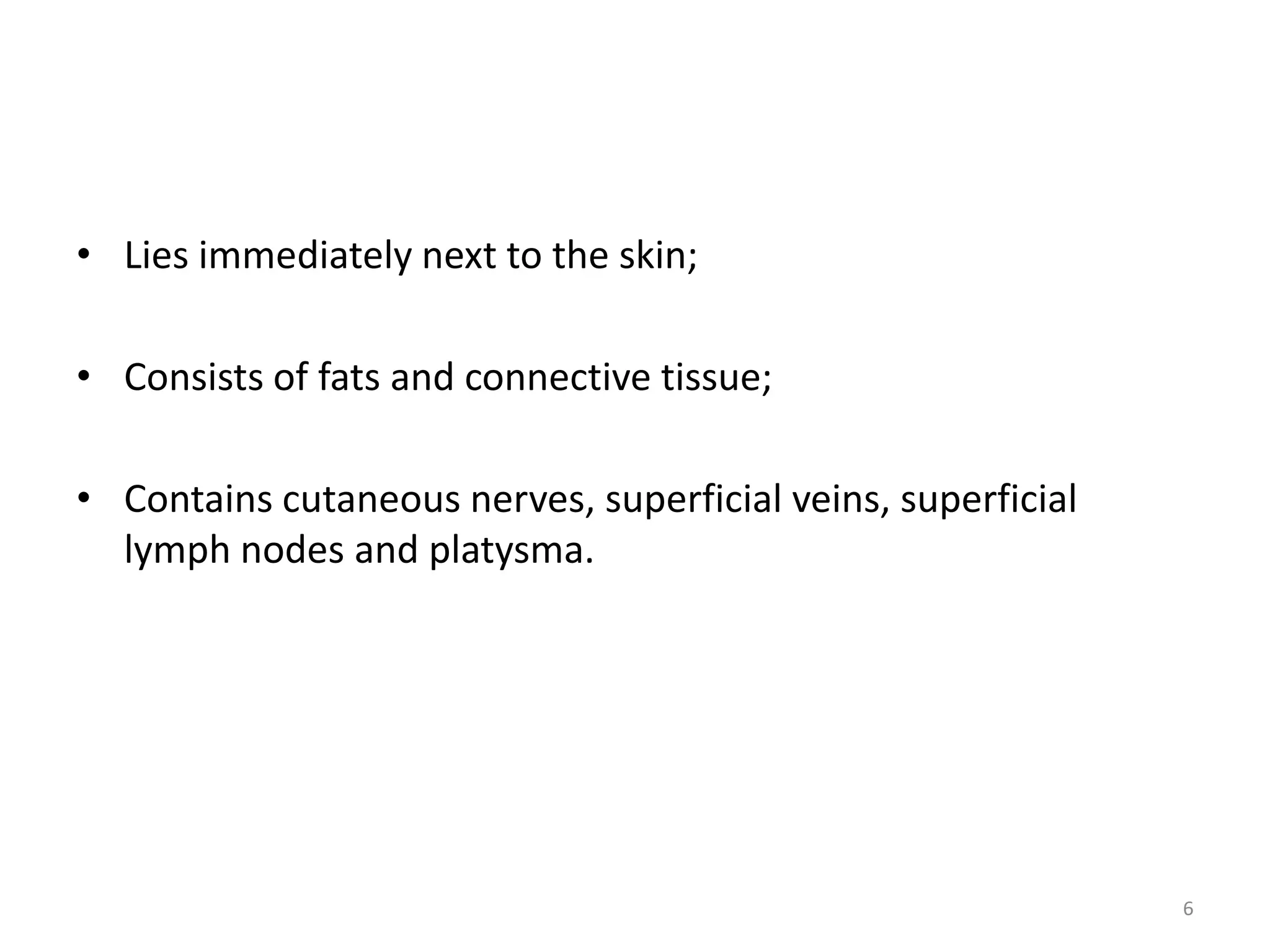
• Lies immediately next to the skin;

• Consists of fats and connective tissue;

• Contains cutaneous nerves, superficial veins, superficial
  lymph nodes and platysma.


                                                              6
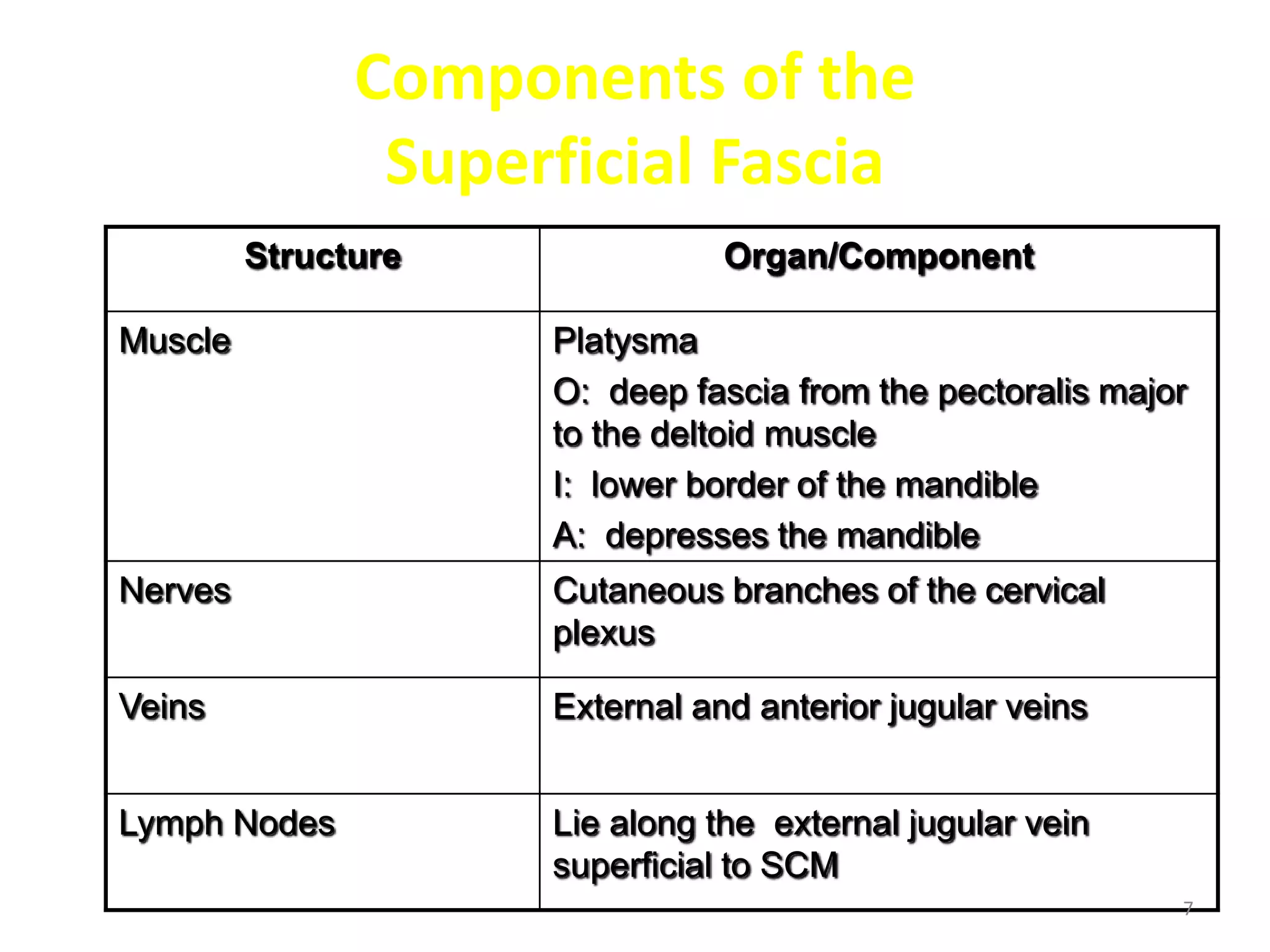
Components of the
                Superficial Fascia
         Structure              Organ/Component

Muscle               Platysma
                     O: deep fascia from the pectoralis major
                     to the deltoid muscle
                     I: lower border of the mandible
                     A: depresses the mandible
Nerves               Cutaneous branches of the cervical
                     plexus

Veins                External and anterior jugular veins


Lymph Nodes          Lie along the external jugular vein
                     superficial to SCM
                                                            7
C. DEEP CERVICAL FASCIA


                          8
THREE LAYERS OF THE DEEP
CERVICAL FASCIA

                           9
1.   External or
     Investing or
     Enveloping
     Layer

2.   Middle or
     Pretracheal
     Layer

3.   Internal or
     Prevertebral
     Layer


                    10
I. External or Investing or
           Enveloping Layer
    completely encircles and encloses the neck, including the
sternocleido-mastoid and trapezius muscles.


                                                                11
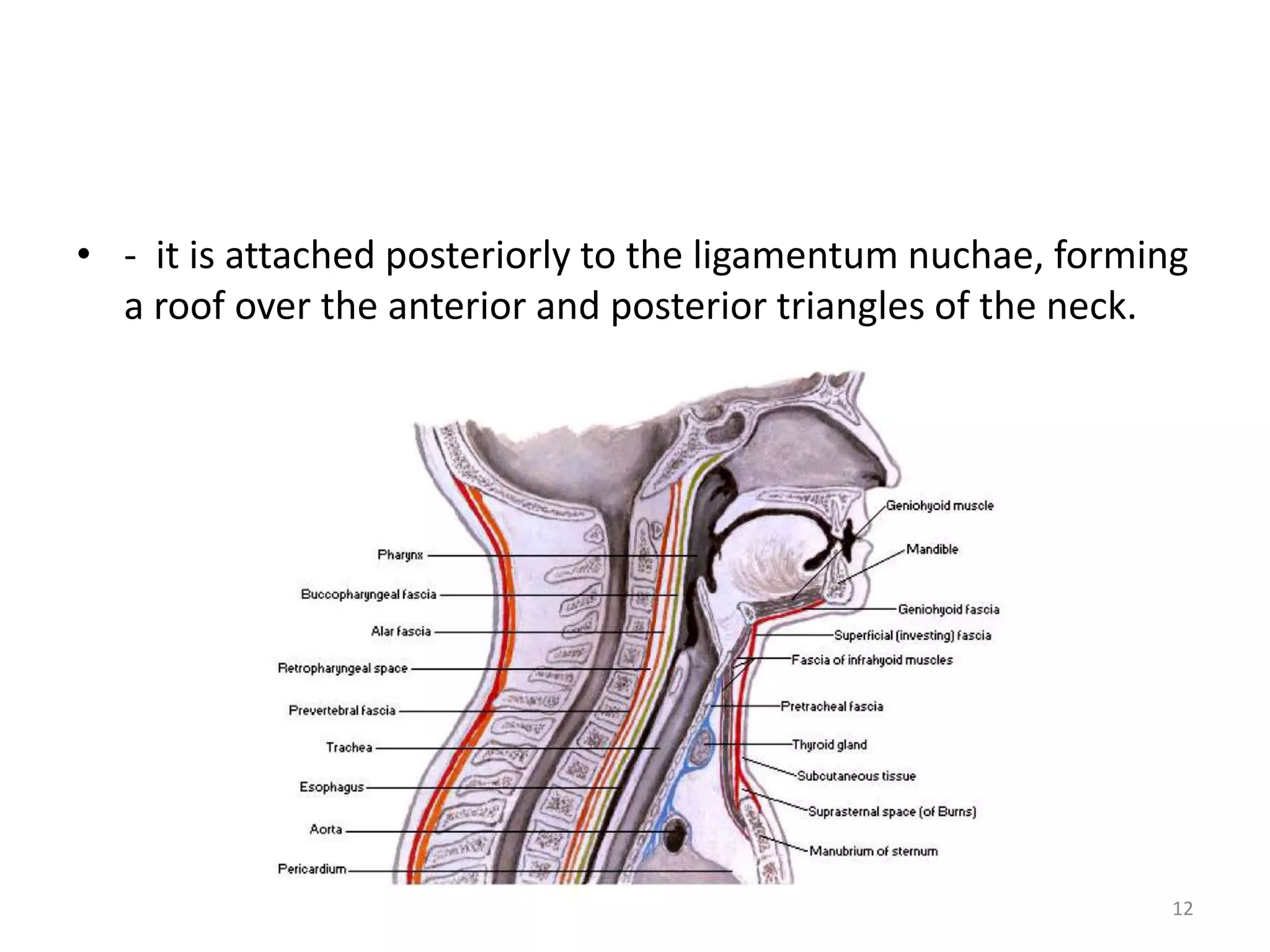
• - it is attached posteriorly to the ligamentum nuchae, forming
  a roof over the anterior and posterior triangles of the neck.


                                                               12
• Components of the
  External or
  Investing layer:

  1. 2 muscles
  – SCM and trapezius

  2. 2 salivary glands
  - parotid and
  submandibular glands

  3. 2 spaces
  - suprasternal space of
  burns and the space above
  the clavicle in the posterior
  triangle.


                                  13
 Attachments of the External Layer
1.   Superior
     - inion, superior nuchal line, mastoid process, zygomatic arch and lower border of the
     mandible.

2.   Inferior
     - acromion process and spine of the scapula, clavicle and manubrium sterni.

3.   Anterior
     - it meets the corresponding opposite side at the midline

4. Posterior
    -     Ligamentum nuchae


                                                                                              14
2. Middle or Pre-tracheal layer
- lies deep to the deep investing fascia and
- forms a sheath around the viscera and
muscles of the neck.


                                               15
Attachments of the Middle or Pretracheal layer:

1.   Superior
     - thyrocricoid cartilage, arising from the inner surface of the deep fascia
     and encloses the SCM.

2.   Inferior
     - extends into the thorax and blends with the pericardium in the middle
     mediatinum.


                                                                               16
•    Two Divisions of the Middle or Pre-tracheal Layer

1.   Muscular Portion
     - located in front of the thyroid gland
     - encloses the infrahyoid muscles

2.   Visceral Portion
     - encloses the thyroid and parathyroid glands.


                                                         17
3. Internal or Prevetebral Layer
- arises from the investing layer opposite the trapezius. It is
much thicker than the pre-tracheal layer.
- covers the prevertebral muscles – longus colli, longus
capitis, scalenius anterior, scalenius medius, and scalenius
posterior.


                                                             18
Attachments of the Internal or
                Prevertebral Layer:
1.   Superior
     - base of the skull

2.   Inferior
     - anterior longitudinal ligament of the vertebral column.

3.   Posterior
     - ligamentum nuchae


                                                                 19
Other Components of the Deep
        Cervical Fascia


                               20
1. Carotid Sheath
- a condensation of the deep cervical fascia which encloses the following
structures:

a.   Common and internal carotid artery,
b.   Internal jugular vein
c.   Vagus nerve
d.   Deep cervical lymph nodes


                                                                            21
2. Visceral Fascia
- encloses the pharynx and esophagus, larynx and trachea


                                                           22
Potential Fascial Spaces


                           23
• Loose areolar tissue, and connective tissue fills
  the spaces between the various layers of the
  deep cervical fascia.
• There are two important fascial spaces to
  consider:


                                                  24
Retropharyngeal Space
  - a potential space between the visceral unit anteriorly and
  the vertebral unit posteriorly.

- It extends from the base of the skull down to the superior
   mediastinum.


                                                                 25
Alar Space
- a subdivision of the retropharyngeal space created by the
alar fascia. It extends from the base of the skull above to the
superior mediastinum below, and has been dubbed by some
as danger space.


                                                                  26
Clinical Significance
Since these fascial spaces are filled with loose
connective tissue, it readily breaks down
when invaded by infection, blood, air or
tumor, making possible to spread the from
one region to the next.


                                                   27

Layers of the neck

  • 1.
  • 2.
    Layers of theNeck • Skin • Superficial fascia • Deep cervical fascia 2
  • 3.
  • 4.
    • Loosely attachedanteriorly. • Posteriorly, the skin is very thick and adherent to the underlying structures with numerous sebaceous glands. • Well supplied with blood vessels, and has transverse lines. 4
  • 5.
  • 6.
    • Lies immediatelynext to the skin; • Consists of fats and connective tissue; • Contains cutaneous nerves, superficial veins, superficial lymph nodes and platysma. 6
  • 7.
    Components of the Superficial Fascia Structure Organ/Component Muscle Platysma O: deep fascia from the pectoralis major to the deltoid muscle I: lower border of the mandible A: depresses the mandible Nerves Cutaneous branches of the cervical plexus Veins External and anterior jugular veins Lymph Nodes Lie along the external jugular vein superficial to SCM 7
  • 8.
  • 9.
    THREE LAYERS OFTHE DEEP CERVICAL FASCIA 9
  • 10.
    1. External or Investing or Enveloping Layer 2. Middle or Pretracheal Layer 3. Internal or Prevertebral Layer 10
  • 11.
    I. External orInvesting or Enveloping Layer completely encircles and encloses the neck, including the sternocleido-mastoid and trapezius muscles. 11
  • 12.
    • - itis attached posteriorly to the ligamentum nuchae, forming a roof over the anterior and posterior triangles of the neck. 12
  • 13.
    • Components ofthe External or Investing layer: 1. 2 muscles – SCM and trapezius 2. 2 salivary glands - parotid and submandibular glands 3. 2 spaces - suprasternal space of burns and the space above the clavicle in the posterior triangle. 13
  • 14.
     Attachments ofthe External Layer 1. Superior - inion, superior nuchal line, mastoid process, zygomatic arch and lower border of the mandible. 2. Inferior - acromion process and spine of the scapula, clavicle and manubrium sterni. 3. Anterior - it meets the corresponding opposite side at the midline 4. Posterior - Ligamentum nuchae 14
  • 15.
    2. Middle orPre-tracheal layer - lies deep to the deep investing fascia and - forms a sheath around the viscera and muscles of the neck. 15
  • 16.
    Attachments of theMiddle or Pretracheal layer: 1. Superior - thyrocricoid cartilage, arising from the inner surface of the deep fascia and encloses the SCM. 2. Inferior - extends into the thorax and blends with the pericardium in the middle mediatinum. 16
  • 17.
    Two Divisions of the Middle or Pre-tracheal Layer 1. Muscular Portion - located in front of the thyroid gland - encloses the infrahyoid muscles 2. Visceral Portion - encloses the thyroid and parathyroid glands. 17
  • 18.
    3. Internal orPrevetebral Layer - arises from the investing layer opposite the trapezius. It is much thicker than the pre-tracheal layer. - covers the prevertebral muscles – longus colli, longus capitis, scalenius anterior, scalenius medius, and scalenius posterior. 18
  • 19.
    Attachments of theInternal or Prevertebral Layer: 1. Superior - base of the skull 2. Inferior - anterior longitudinal ligament of the vertebral column. 3. Posterior - ligamentum nuchae 19
  • 20.
    Other Components ofthe Deep Cervical Fascia 20
  • 21.
    1. Carotid Sheath -a condensation of the deep cervical fascia which encloses the following structures: a. Common and internal carotid artery, b. Internal jugular vein c. Vagus nerve d. Deep cervical lymph nodes 21
  • 22.
    2. Visceral Fascia -encloses the pharynx and esophagus, larynx and trachea 22
  • 23.
  • 24.
    • Loose areolartissue, and connective tissue fills the spaces between the various layers of the deep cervical fascia. • There are two important fascial spaces to consider: 24
  • 25.
    Retropharyngeal Space - a potential space between the visceral unit anteriorly and the vertebral unit posteriorly. - It extends from the base of the skull down to the superior mediastinum. 25
  • 26.
    Alar Space - asubdivision of the retropharyngeal space created by the alar fascia. It extends from the base of the skull above to the superior mediastinum below, and has been dubbed by some as danger space. 26
  • 27.
    Clinical Significance Since thesefascial spaces are filled with loose connective tissue, it readily breaks down when invaded by infection, blood, air or tumor, making possible to spread the from one region to the next. 27