PATHOLOGIC CALCIFICATION
Pathologic Calcification


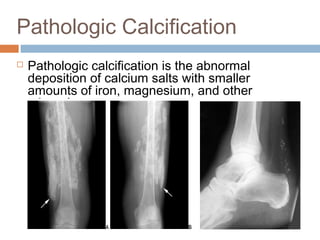
Pathologic calcification is the abnormal
deposition of calcium salts with smaller
amounts of iron, magnesium, and other
minerals.
Mechanism of Calcification


1)

2)

Calcium deposits in the form of hydroxyapatite
and involves two phases:
Initiation: Initiation of calcium takes place in
the matrix vesicles where calcium and
phosphate accumulate. Matrix vesicles are
extracellular membrane bound vesicles that
bud off from other cells
Propagation: The second phase involves
further growth of hydrpxyapatite
Types of Pathologic
Calcification


Dystrophic Calcification:





When the deposition occurs in dead or
dying tissues
it occurs with normal serum levels of
calcium and normal calcium metabolism

Metastatic Calcification:



The deposition of calcium salts in
normal tissues
It almost always reflects some
derangement in calcium metabolism
and increased levels of calcium
(hypercalcemia)
Dystrophic Calcification








Dystrophic calcification is encountered in areas of
necrosis of any type.
It is certain in the atheromas of advanced
atherosclerosis, associated with intimal injury in
the aorta and large arteries
Although dystrophic calcification may be an
incidental finding indicating insignificant past cell
injury, it may also be a cause of organ dysfunction.
For example,


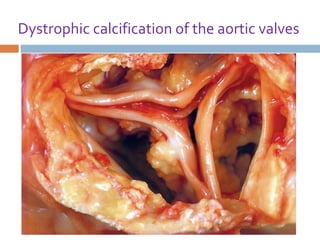
Dystrophic calcification of the aortic valves is an important
cause of aortic stenosis in the elderly
Dystrophic calcification of the aortic valves
Morphology of Dystrophic calcification
Calcium salts are grossly seen as fine
white granules or clumps, often felt as
gritty deposits.
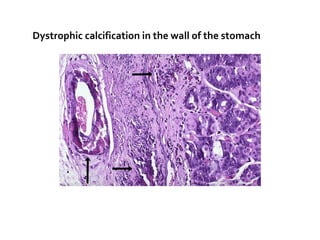
 Histologically, calcification appears as
intracellular and/or extracellular basophilic
deposits.
 In time, heterotopic bone may be formed
in the focus of calcification.

Dystrophic calcification in the wall of the stomach
Sites of Dystrophic Calcification

a)
b)
c)






Necrotic tissue
Caseous necrosis of tubercle
Fat necrosis
Liquefactive necrosis
Advanced atheromatous lesion
Haematoma
Thrombus
Infarcts
Heart valves e.g. sub-acute infective
endocarditis
Metastatic Calcification


Metastatic calcification can occur in normal
tissues whenever there is hypercalcemia .
Main Causes:
1.

Increased secretion of parathyroid
hormone

2.

Destruction of bone due to the effects of
accelerated turnover (e.g., Paget disease),
immobilization, or tumors (multiple
myeloma, leukemia, or diffuse skeletal
metastases)

3.

Vitamin D-related disorders including
vitamin D intoxication and sarcoidosis

4.

Renal failure, in which phosphate retention
leads to secondary hyperparathyroidism .
Morphology of Metastatic
calcification




Metastatic calcification can occur widely
throughout the body but principally affects the
interstitial tissues of the vasculature, kidneys,
lungs, and gastric mucosa.
The calcium deposits morphologically resemble
those described in dystrophic calcification.
Effect of Metastatic calcification




Extensive calcifications in the lungs may
produce remarkable radiographs and
respiratory deficits
Massive deposits in the kidney
(nephrocalcinosis) can cause stones & renal
damage.
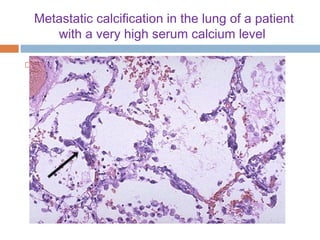
Metastatic calcification in the lung of a patient
with a very high serum calcium level


Pathologic calcification

  • 1.
  • 2.
    Pathologic Calcification  Pathologic calcificationis the abnormal deposition of calcium salts with smaller amounts of iron, magnesium, and other minerals.
  • 3.
    Mechanism of Calcification  1) 2) Calciumdeposits in the form of hydroxyapatite and involves two phases: Initiation: Initiation of calcium takes place in the matrix vesicles where calcium and phosphate accumulate. Matrix vesicles are extracellular membrane bound vesicles that bud off from other cells Propagation: The second phase involves further growth of hydrpxyapatite
  • 4.
    Types of Pathologic Calcification  DystrophicCalcification:    When the deposition occurs in dead or dying tissues it occurs with normal serum levels of calcium and normal calcium metabolism Metastatic Calcification:   The deposition of calcium salts in normal tissues It almost always reflects some derangement in calcium metabolism and increased levels of calcium (hypercalcemia)
  • 5.
    Dystrophic Calcification     Dystrophic calcificationis encountered in areas of necrosis of any type. It is certain in the atheromas of advanced atherosclerosis, associated with intimal injury in the aorta and large arteries Although dystrophic calcification may be an incidental finding indicating insignificant past cell injury, it may also be a cause of organ dysfunction. For example,  Dystrophic calcification of the aortic valves is an important cause of aortic stenosis in the elderly
  • 6.
    Dystrophic calcification ofthe aortic valves
  • 7.
    Morphology of Dystrophiccalcification Calcium salts are grossly seen as fine white granules or clumps, often felt as gritty deposits.  Histologically, calcification appears as intracellular and/or extracellular basophilic deposits.  In time, heterotopic bone may be formed in the focus of calcification. 
  • 8.
    Dystrophic calcification inthe wall of the stomach
  • 9.
    Sites of DystrophicCalcification  a) b) c)      Necrotic tissue Caseous necrosis of tubercle Fat necrosis Liquefactive necrosis Advanced atheromatous lesion Haematoma Thrombus Infarcts Heart valves e.g. sub-acute infective endocarditis
  • 10.
    Metastatic Calcification  Metastatic calcificationcan occur in normal tissues whenever there is hypercalcemia .
  • 11.
    Main Causes: 1. Increased secretionof parathyroid hormone 2. Destruction of bone due to the effects of accelerated turnover (e.g., Paget disease), immobilization, or tumors (multiple myeloma, leukemia, or diffuse skeletal metastases) 3. Vitamin D-related disorders including vitamin D intoxication and sarcoidosis 4. Renal failure, in which phosphate retention leads to secondary hyperparathyroidism .
  • 12.
    Morphology of Metastatic calcification   Metastaticcalcification can occur widely throughout the body but principally affects the interstitial tissues of the vasculature, kidneys, lungs, and gastric mucosa. The calcium deposits morphologically resemble those described in dystrophic calcification.
  • 13.
    Effect of Metastaticcalcification   Extensive calcifications in the lungs may produce remarkable radiographs and respiratory deficits Massive deposits in the kidney (nephrocalcinosis) can cause stones & renal damage.
  • 14.
    Metastatic calcification inthe lung of a patient with a very high serum calcium level 