GENE
MUTATION
By: SHAIKH AFRAN
Guided by: TSISANA GIORGADZE
What is gene mutation ?
• A gene mutation is defined as an alternation in
the sequence of nucleotides in DNA.
• Altering of nucleotide sequences most often
results in non-functioning proteins.
• Mutation cause changes in the genetic code
that lead to genetic variation and potential to
develop diseases.
Classification
• Hereditary mutations are inherited from
parents, are present through out person life.
• Mutation in every cell in the body.
• Mutation in egg and sperm cell.
• Acquire mutation occurs at some time during a
person life.
• Present only in a certain cells.
• Can cause by: UV rays or If mistake is made as
DNA copies itself during cell division.
MUTATGENS
• Substances or factors that causes mutations in
DNA are known as mutagens.
• Mutagens may be:
Ionizing radiation: X rays,
Gama rays, and alpha particles and UV radiation.
metabolite of
benzo[a]pyrene from tobacco smoke.
Virus; Rous sarcomas virus
Bacteria; Helicobacter pylori
Types of the mutations
• Missense mutation
• Nonsense mutation
• Insertion mutation
• Deletion mutation
• Frame mutation
• Duplication mutation
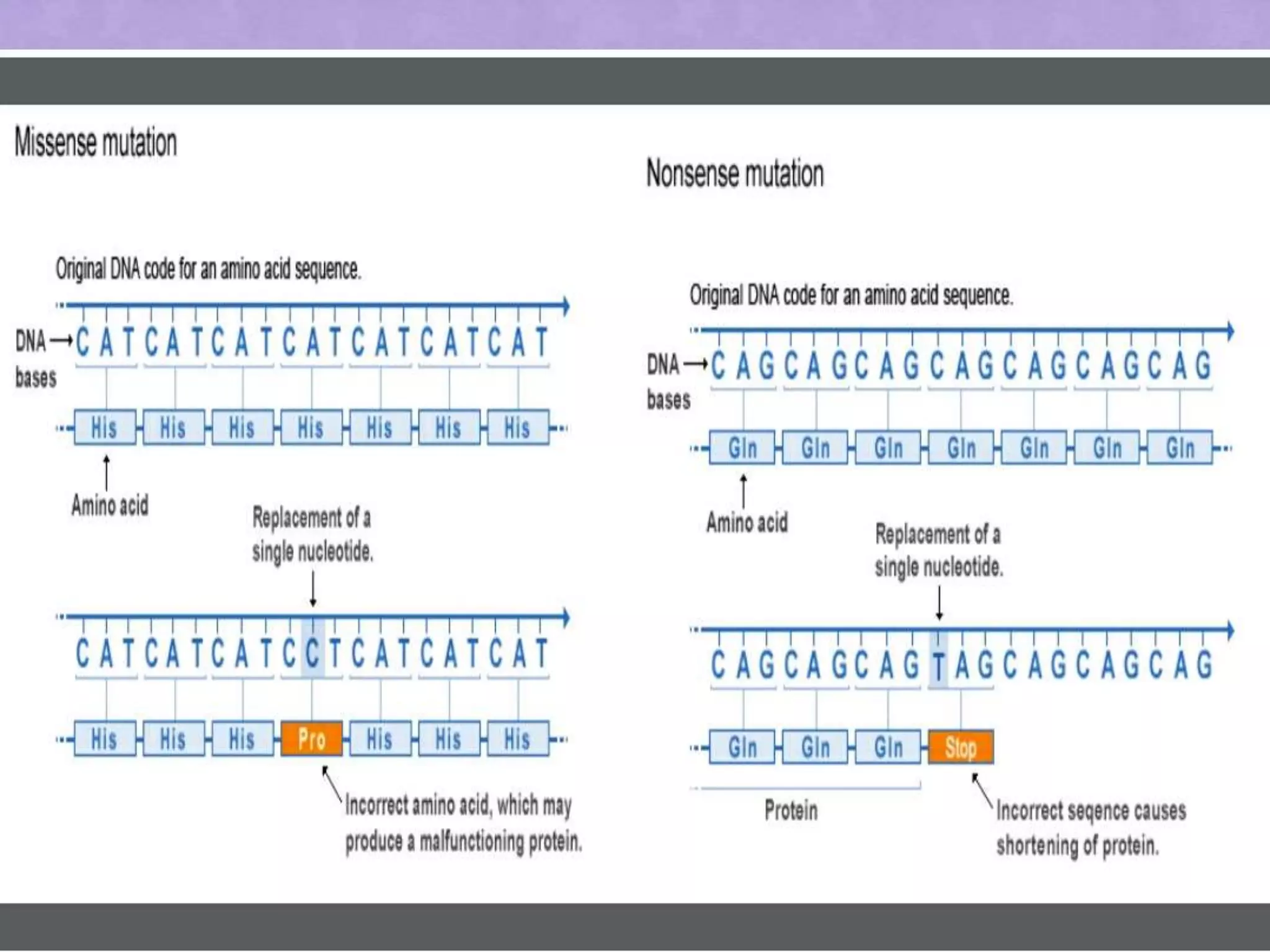
Missense mutation
• This type of mutation is a change in one DNA
base pairs, that result in the substitution of
one amino acid for another in the protein
made by gene.
• Incorrect amino acid sequence, which may
produce a malfunction of protein
Nonsense mutation
• A nonsense mutation is also a change in one
DNA base pair.
• Instead of substituting one amino acid,
however the altered DNA sequences
prematurely signals the cell to stop building a
protein.
• Incorrect sequence cause shortening of
protein.
Insertion, Deletion and
Duplication mutation
• Insertion mutation: An insertion changes the
number of DNA base pairs by adding piece of
DNA.
• Deletion mutation: A deletion changes the
number of DNA base pairs by removing piece of
DNA.
• Duplication mutation: A duplication consist of a
piece of DNA that is abnormally copied one or
more time.
• This all type of mutations can alter the function of
How can gene mutation affect health
and development
• A condition caused by mutation in one or more
genes is called genetic disorder.
• Results in diseases.
CYSTIC FIBROSIS
• CF is autosomal recessive disease.
• Mutation on chromosome 7, most common type.
• CF is a genetic disorder, mutation in CFTR (Cystic Fibrosis
Transmembrane conductance Regulator) gene.
• CFTR is found on 7q31.2.
• Delta F508, is a deletion of three nucleotides, that result
in the loss of the amino acid phenylalanine(F).
• CF disease affects mostly the lungs, but also pancreas,
liver, kidney and intestines.
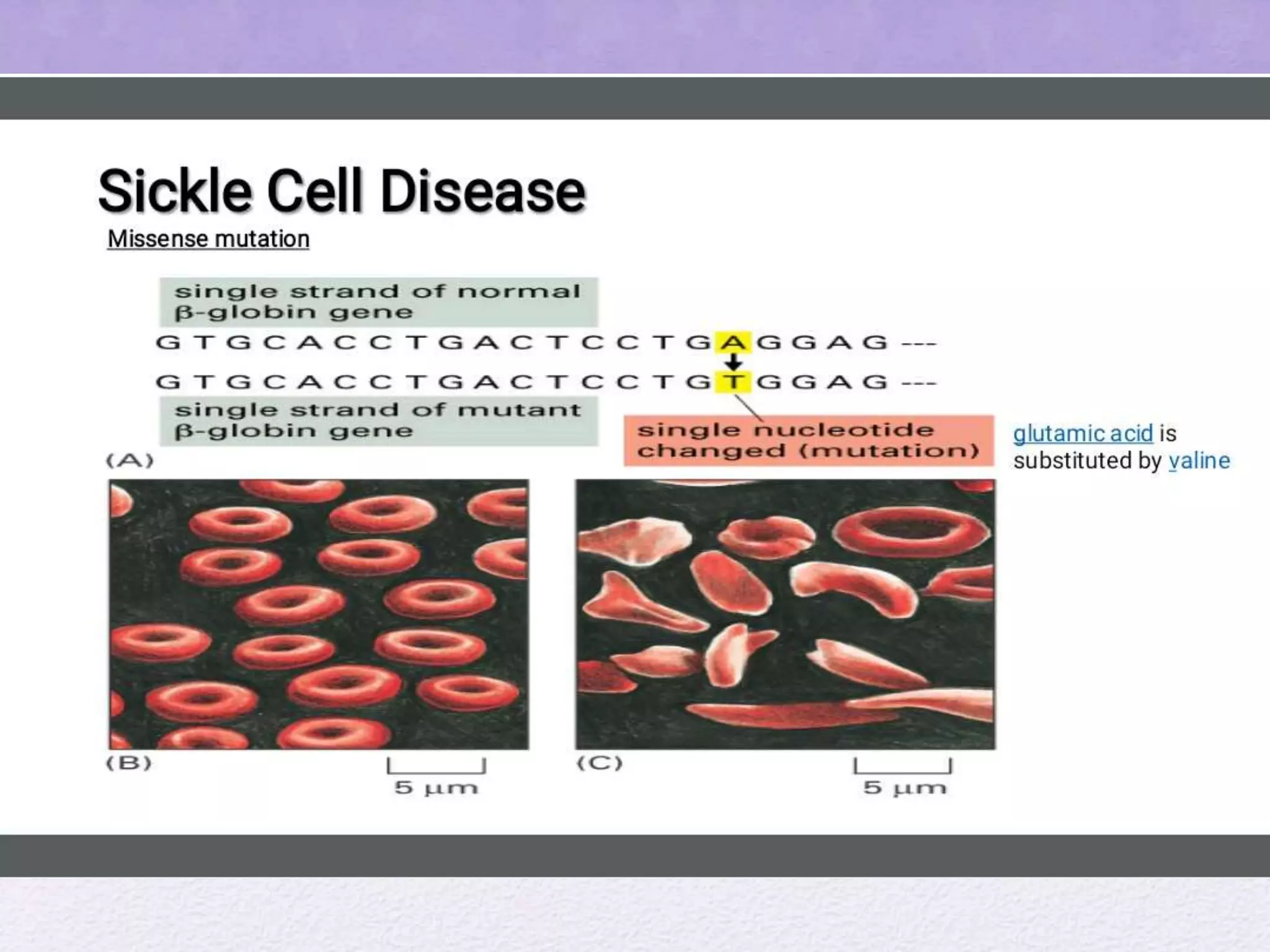
SICKLE CELL ANEMIA
• Genetic disorder, causes by glutamic acid
substituted by valine.
• Affected on Chromosome 11.
• Altered codon: GAT to GTG
How common mutations
are:
• Mutations occurs at a frequently of about 1 in
every 1 billion base pairs.
• Everybody has about 6 mutations in each cell
in their body.
What you think about
mutation ?
• Mutations are not always seen, the affected
gene may still function.
• Mutations may be harmful.
• Mutation may be beneficial.
• Mutation may have no effect on the organism.
THANK YOU

Gene mutation IN Detail And structure Symptoms Cause

  • 1.
  • 2.
    What is genemutation ? • A gene mutation is defined as an alternation in the sequence of nucleotides in DNA. • Altering of nucleotide sequences most often results in non-functioning proteins. • Mutation cause changes in the genetic code that lead to genetic variation and potential to develop diseases.
  • 3.
    Classification • Hereditary mutationsare inherited from parents, are present through out person life. • Mutation in every cell in the body. • Mutation in egg and sperm cell.
  • 4.
    • Acquire mutationoccurs at some time during a person life. • Present only in a certain cells. • Can cause by: UV rays or If mistake is made as DNA copies itself during cell division.
  • 5.
    MUTATGENS • Substances orfactors that causes mutations in DNA are known as mutagens. • Mutagens may be: Ionizing radiation: X rays, Gama rays, and alpha particles and UV radiation. metabolite of benzo[a]pyrene from tobacco smoke. Virus; Rous sarcomas virus Bacteria; Helicobacter pylori
  • 6.
    Types of themutations • Missense mutation • Nonsense mutation • Insertion mutation • Deletion mutation • Frame mutation • Duplication mutation
  • 7.
    Missense mutation • Thistype of mutation is a change in one DNA base pairs, that result in the substitution of one amino acid for another in the protein made by gene. • Incorrect amino acid sequence, which may produce a malfunction of protein
  • 8.
    Nonsense mutation • Anonsense mutation is also a change in one DNA base pair. • Instead of substituting one amino acid, however the altered DNA sequences prematurely signals the cell to stop building a protein. • Incorrect sequence cause shortening of protein.
  • 10.
    Insertion, Deletion and Duplicationmutation • Insertion mutation: An insertion changes the number of DNA base pairs by adding piece of DNA. • Deletion mutation: A deletion changes the number of DNA base pairs by removing piece of DNA. • Duplication mutation: A duplication consist of a piece of DNA that is abnormally copied one or more time. • This all type of mutations can alter the function of
  • 11.
    How can genemutation affect health and development • A condition caused by mutation in one or more genes is called genetic disorder. • Results in diseases.
  • 12.
    CYSTIC FIBROSIS • CFis autosomal recessive disease. • Mutation on chromosome 7, most common type. • CF is a genetic disorder, mutation in CFTR (Cystic Fibrosis Transmembrane conductance Regulator) gene. • CFTR is found on 7q31.2. • Delta F508, is a deletion of three nucleotides, that result in the loss of the amino acid phenylalanine(F). • CF disease affects mostly the lungs, but also pancreas, liver, kidney and intestines.
  • 14.
    SICKLE CELL ANEMIA •Genetic disorder, causes by glutamic acid substituted by valine. • Affected on Chromosome 11. • Altered codon: GAT to GTG
  • 16.
    How common mutations are: •Mutations occurs at a frequently of about 1 in every 1 billion base pairs. • Everybody has about 6 mutations in each cell in their body.
  • 17.
    What you thinkabout mutation ? • Mutations are not always seen, the affected gene may still function. • Mutations may be harmful. • Mutation may be beneficial. • Mutation may have no effect on the organism.
  • 18.