CRANIAL NERVES VII - XII
 Made By: (Group-12) Mirza Naadirhasan
 Guided by : Dr Siavash Hosseinpour
1. Olfactory nerve
2. Optic nerve
3. Oculomotor nerve
4. Trochlear nerve
5. Trigeminal nerve
6. Abducent nerve
7. Facial nerve
8. Vestibulocochlear nerve
9. Glossopharyngeal nerve
10. Vagus nerve
11. Accessory nerve
12. Hypoglossal nerve
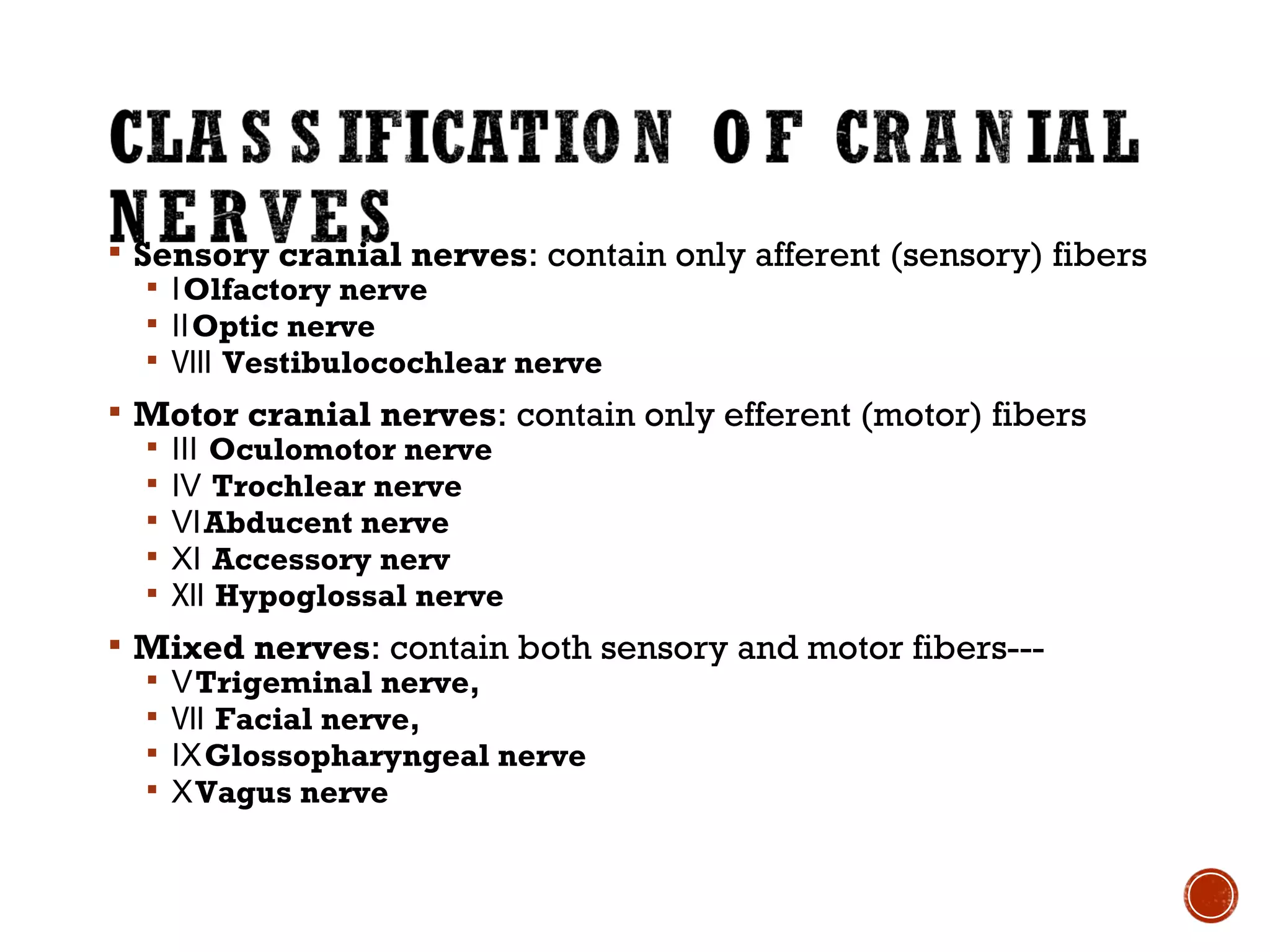
 Sensory cranial nerves: contain only afferent (sensory) fibers
 ⅠOlfactory nerve
 ⅡOptic nerve
 Ⅷ Vestibulocochlear nerve
 Motor cranial nerves: contain only efferent (motor) fibers
 Ⅲ Oculomotor nerve
 Ⅳ Trochlear nerve
 ⅥAbducent nerve
 Ⅺ Accessory nerv
 Ⅻ Hypoglossal nerve
 Mixed nerves: contain both sensory and motor fibers---
 ⅤTrigeminal nerve,
 Ⅶ Facial nerve,
 ⅨGlossopharyngeal nerve
 ⅩVagus nerve
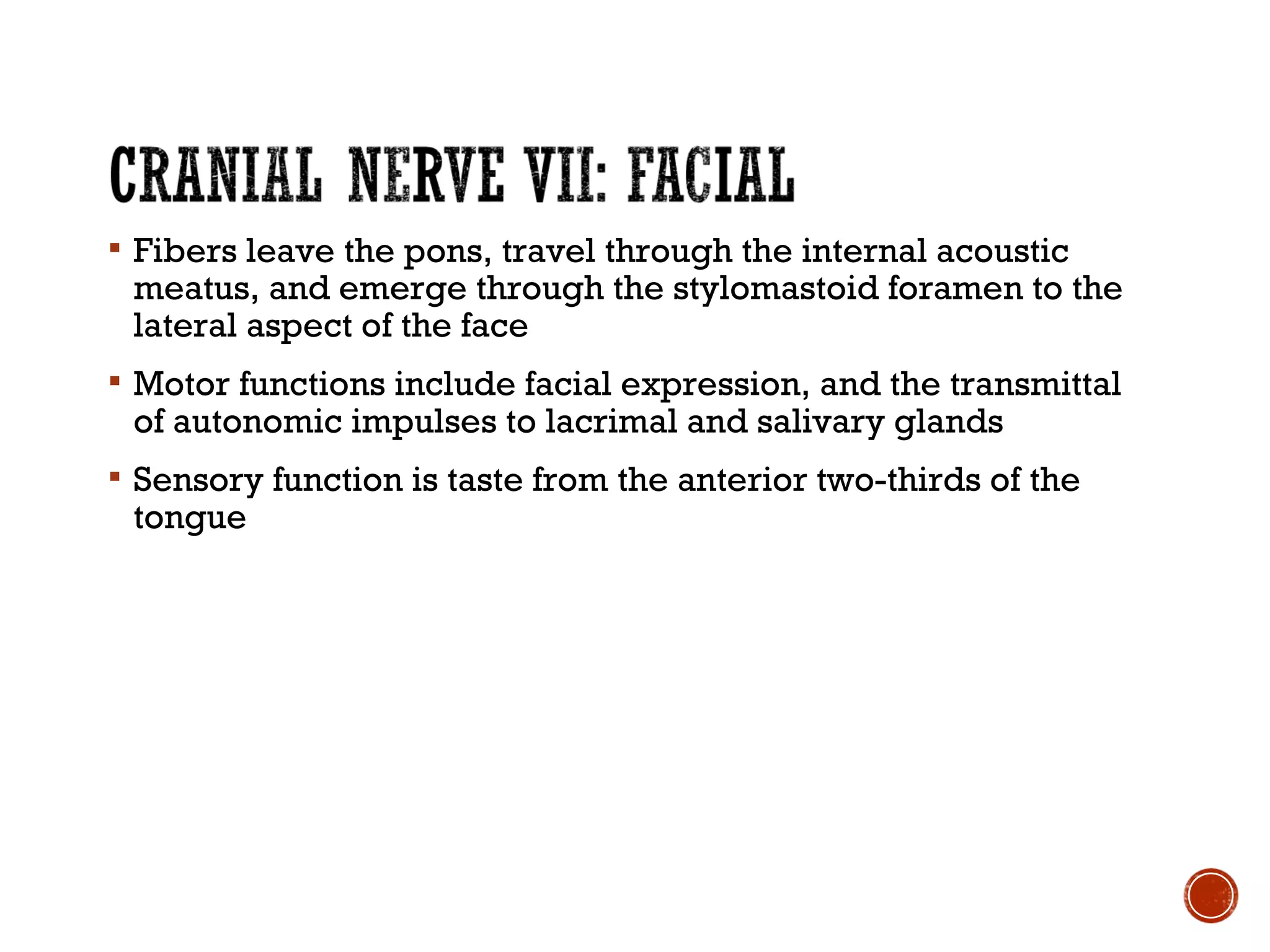
 Fibers leave the pons, travel through the internal acoustic
meatus, and emerge through the stylomastoid foramen to the
lateral aspect of the face
 Motor functions include facial expression, and the transmittal
of autonomic impulses to lacrimal and salivary glands
 Sensory function is taste from the anterior two-thirds of the
tongue
Figure VII from Table 13.2
Fibers arise from the hearing and
equilibrium apparatus of the inner ear, pass
through the internal acoustic meatus, and
enter the brainstem at the pons-medulla
border
Two divisions – cochlear (hearing) and
vestibular (balance)
Functions are solely sensory – equilibrium
and hearing
Figure VIII from Table 13.2
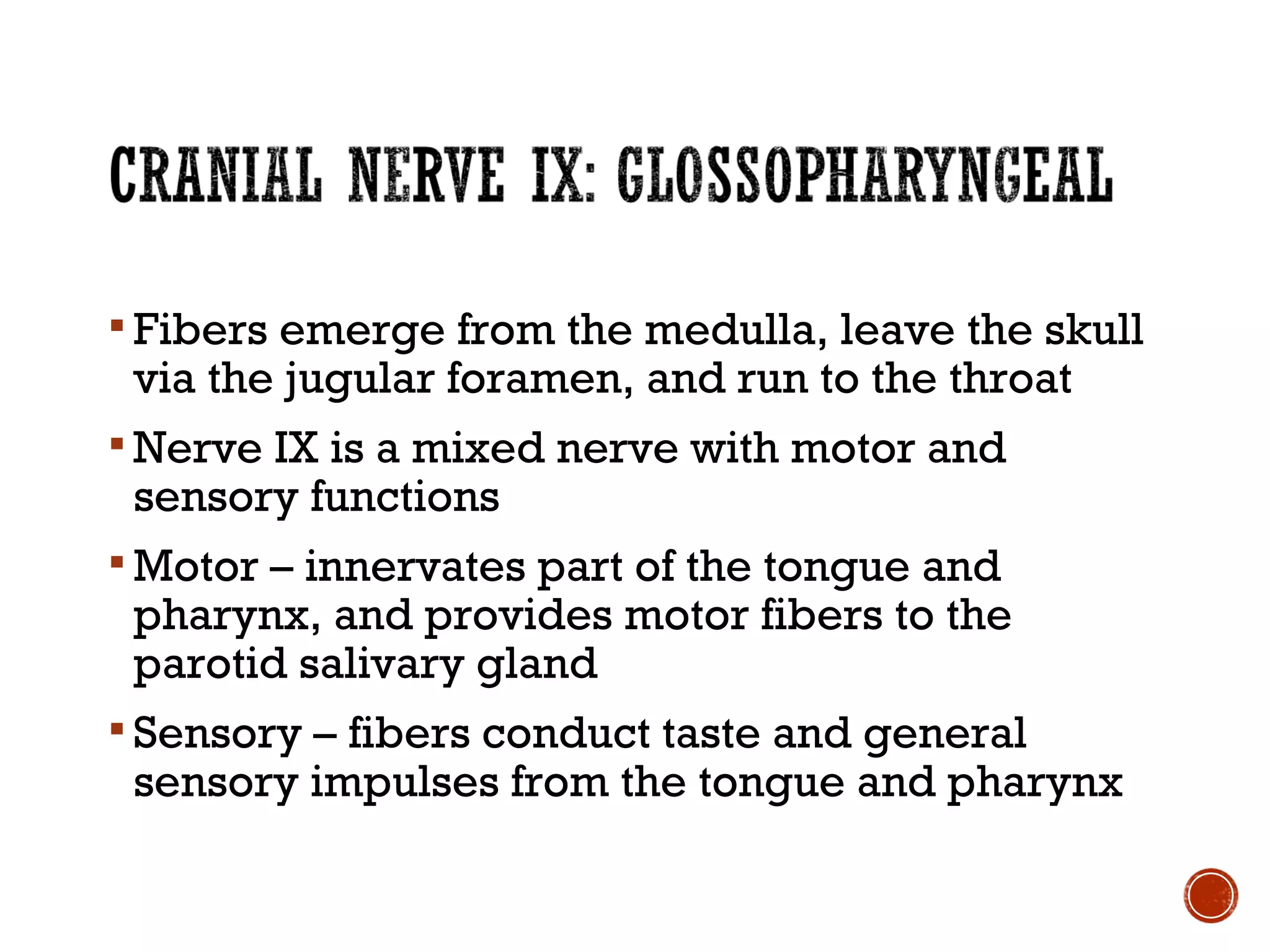
 Fibers emerge from the medulla, leave the skull
via the jugular foramen, and run to the throat
 Nerve IX is a mixed nerve with motor and
sensory functions
 Motor – innervates part of the tongue and
pharynx, and provides motor fibers to the
parotid salivary gland
 Sensory – fibers conduct taste and general
sensory impulses from the tongue and pharynx
Figure IX from Table 13.2
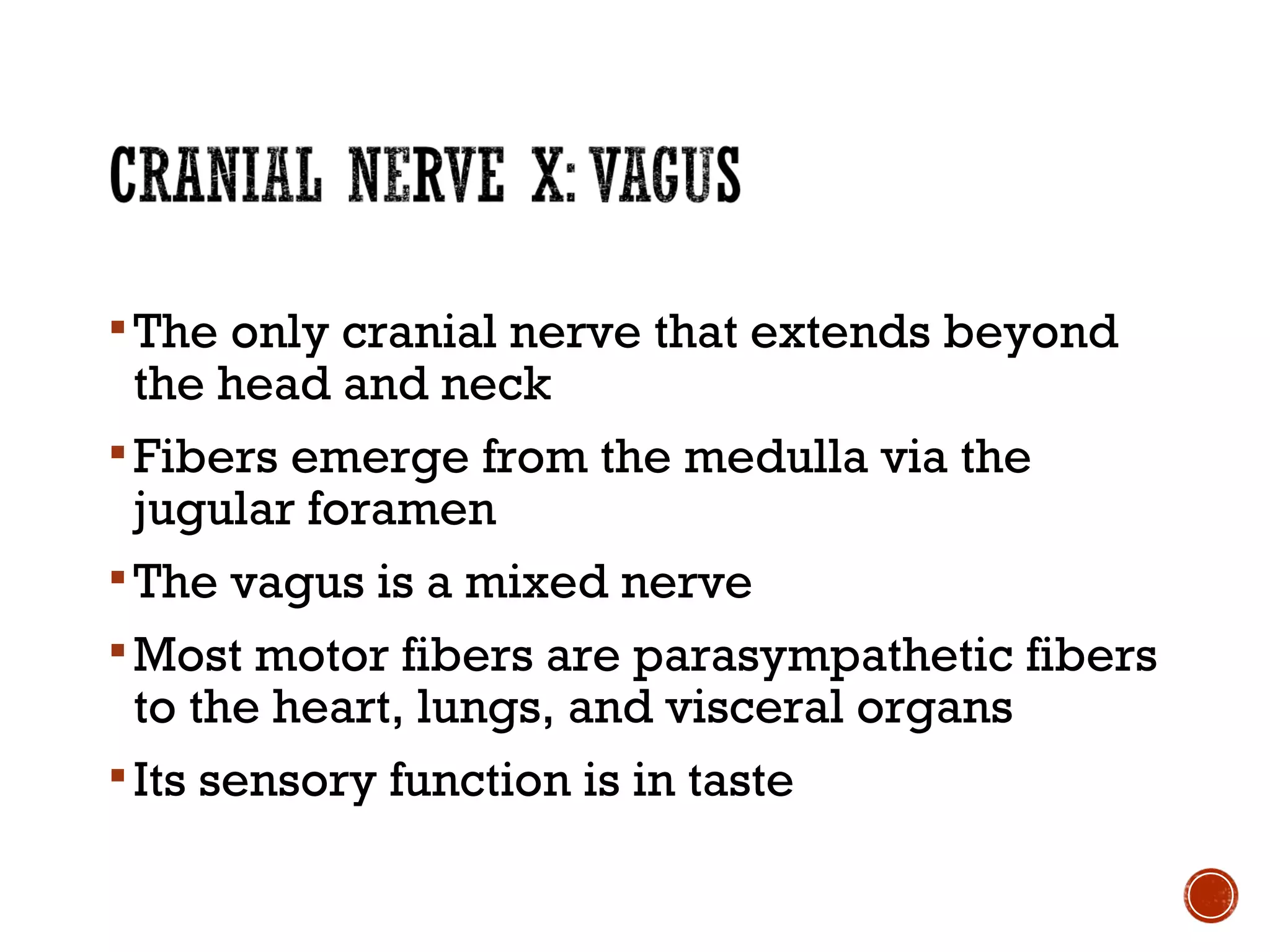
The only cranial nerve that extends beyond
the head and neck
Fibers emerge from the medulla via the
jugular foramen
The vagus is a mixed nerve
Most motor fibers are parasympathetic fibers
to the heart, lungs, and visceral organs
Its sensory function is in taste
Figure X from Table 13.2
 Formed from a cranial root emerging from the medulla and a
spinal root arising from the superior region of the spinal cord
 The spinal root passes upward into the cranium via the
foramen magnum
 The accessory nerve leaves the cranium via the jugular
foramen
 Primarily a motor nerve
 Supplies fibers to the larynx, pharynx, and soft palate
 Innervates the trapezius and sternocleidomastoid, which move the
head and neck
Figure XI from Table 13.2
 Fibers arise from the medulla and exit the skull via the
hypoglossal canal
 Innervates both extrinsic and intrinsic muscles of the tongue,
which contribute to swallowing and speech
Figure XII from Table 13.2
Thank You
for
You Attension

cranial nerves 7 to 12

  • 1.
    CRANIAL NERVES VII- XII  Made By: (Group-12) Mirza Naadirhasan  Guided by : Dr Siavash Hosseinpour
  • 2.
    1. Olfactory nerve 2.Optic nerve 3. Oculomotor nerve 4. Trochlear nerve 5. Trigeminal nerve 6. Abducent nerve 7. Facial nerve 8. Vestibulocochlear nerve 9. Glossopharyngeal nerve 10. Vagus nerve 11. Accessory nerve 12. Hypoglossal nerve
  • 3.
     Sensory cranialnerves: contain only afferent (sensory) fibers  ⅠOlfactory nerve  ⅡOptic nerve  Ⅷ Vestibulocochlear nerve  Motor cranial nerves: contain only efferent (motor) fibers  Ⅲ Oculomotor nerve  Ⅳ Trochlear nerve  ⅥAbducent nerve  Ⅺ Accessory nerv  Ⅻ Hypoglossal nerve  Mixed nerves: contain both sensory and motor fibers---  ⅤTrigeminal nerve,  Ⅶ Facial nerve,  ⅨGlossopharyngeal nerve  ⅩVagus nerve
  • 4.
     Fibers leavethe pons, travel through the internal acoustic meatus, and emerge through the stylomastoid foramen to the lateral aspect of the face  Motor functions include facial expression, and the transmittal of autonomic impulses to lacrimal and salivary glands  Sensory function is taste from the anterior two-thirds of the tongue
  • 5.
    Figure VII fromTable 13.2
  • 7.
    Fibers arise fromthe hearing and equilibrium apparatus of the inner ear, pass through the internal acoustic meatus, and enter the brainstem at the pons-medulla border Two divisions – cochlear (hearing) and vestibular (balance) Functions are solely sensory – equilibrium and hearing
  • 8.
    Figure VIII fromTable 13.2
  • 9.
     Fibers emergefrom the medulla, leave the skull via the jugular foramen, and run to the throat  Nerve IX is a mixed nerve with motor and sensory functions  Motor – innervates part of the tongue and pharynx, and provides motor fibers to the parotid salivary gland  Sensory – fibers conduct taste and general sensory impulses from the tongue and pharynx
  • 10.
    Figure IX fromTable 13.2
  • 11.
    The only cranialnerve that extends beyond the head and neck Fibers emerge from the medulla via the jugular foramen The vagus is a mixed nerve Most motor fibers are parasympathetic fibers to the heart, lungs, and visceral organs Its sensory function is in taste
  • 12.
    Figure X fromTable 13.2
  • 13.
     Formed froma cranial root emerging from the medulla and a spinal root arising from the superior region of the spinal cord  The spinal root passes upward into the cranium via the foramen magnum  The accessory nerve leaves the cranium via the jugular foramen
  • 14.
     Primarily amotor nerve  Supplies fibers to the larynx, pharynx, and soft palate  Innervates the trapezius and sternocleidomastoid, which move the head and neck
  • 15.
    Figure XI fromTable 13.2
  • 16.
     Fibers arisefrom the medulla and exit the skull via the hypoglossal canal  Innervates both extrinsic and intrinsic muscles of the tongue, which contribute to swallowing and speech
  • 17.
    Figure XII fromTable 13.2
  • 18.