Downloaded 179 times
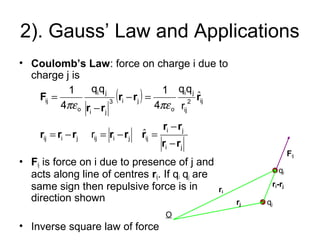
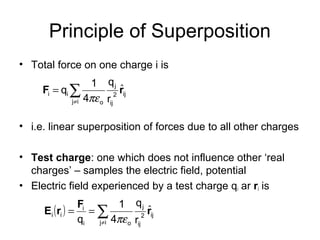
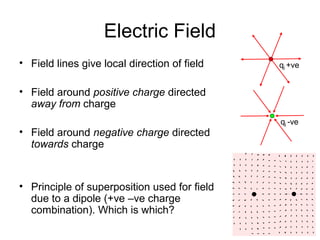
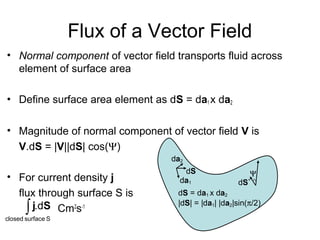
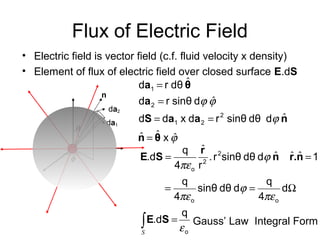
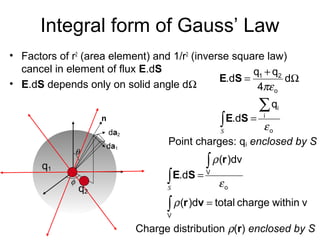
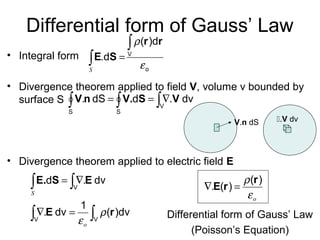
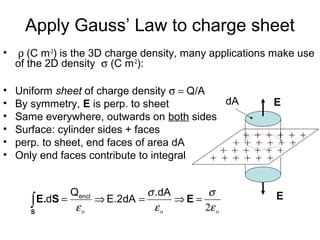
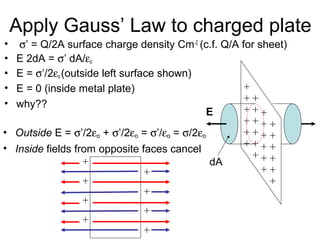
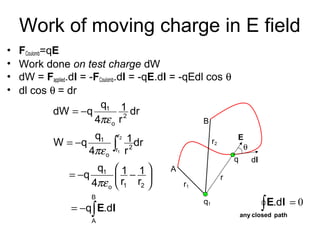
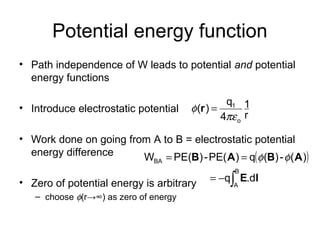
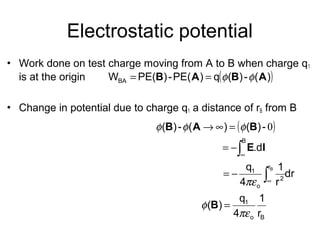
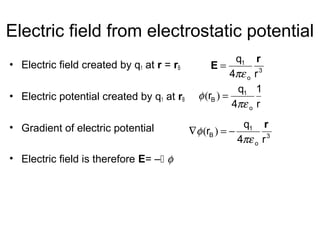
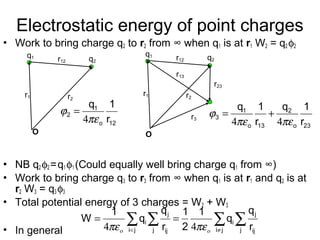
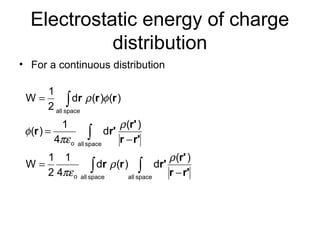
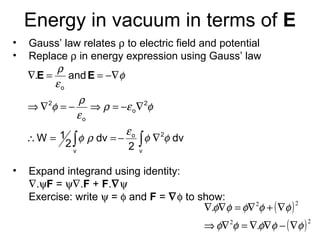
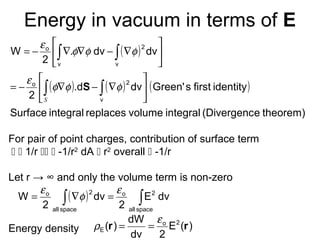

Gauss' law relates the electric flux through a closed surface to the enclosed charge. It can be written in both integral and differential forms. The integral form states that the total flux is equal to the enclosed charge divided by the permittivity of free space. The differential form is Poisson's equation, which relates the divergence of the electric field to the charge density. Gauss' law can be applied to problems involving point charges, charge sheets, and continuous charge distributions. The electrostatic potential and electric field can be derived from each other using calculus operations. The potential energy of a system of charges can be expressed in terms of either the potentials or the electric fields.


