Presented By-
Sudipta Nandi
M. Pharm 1st Sem
Department of Pharmaceutical Sciences
Dr. Harisingh Gour Vishwavidyalaya Sagar, M.P.
(A Central University)
Content
 INTRODUCTION
 HISTORICAL BACKGROUND OF GC-MS
 PRINCIPLE
 INSTRUMENTATION
• GAS CHROMATOGRAPHY
• INTERFACE
• MASS SPECTROMETER
 WORKING
 LIMITATIONS
 APPLICATION
 CONCLUSION
 REFERENCES
INTRODUCTION
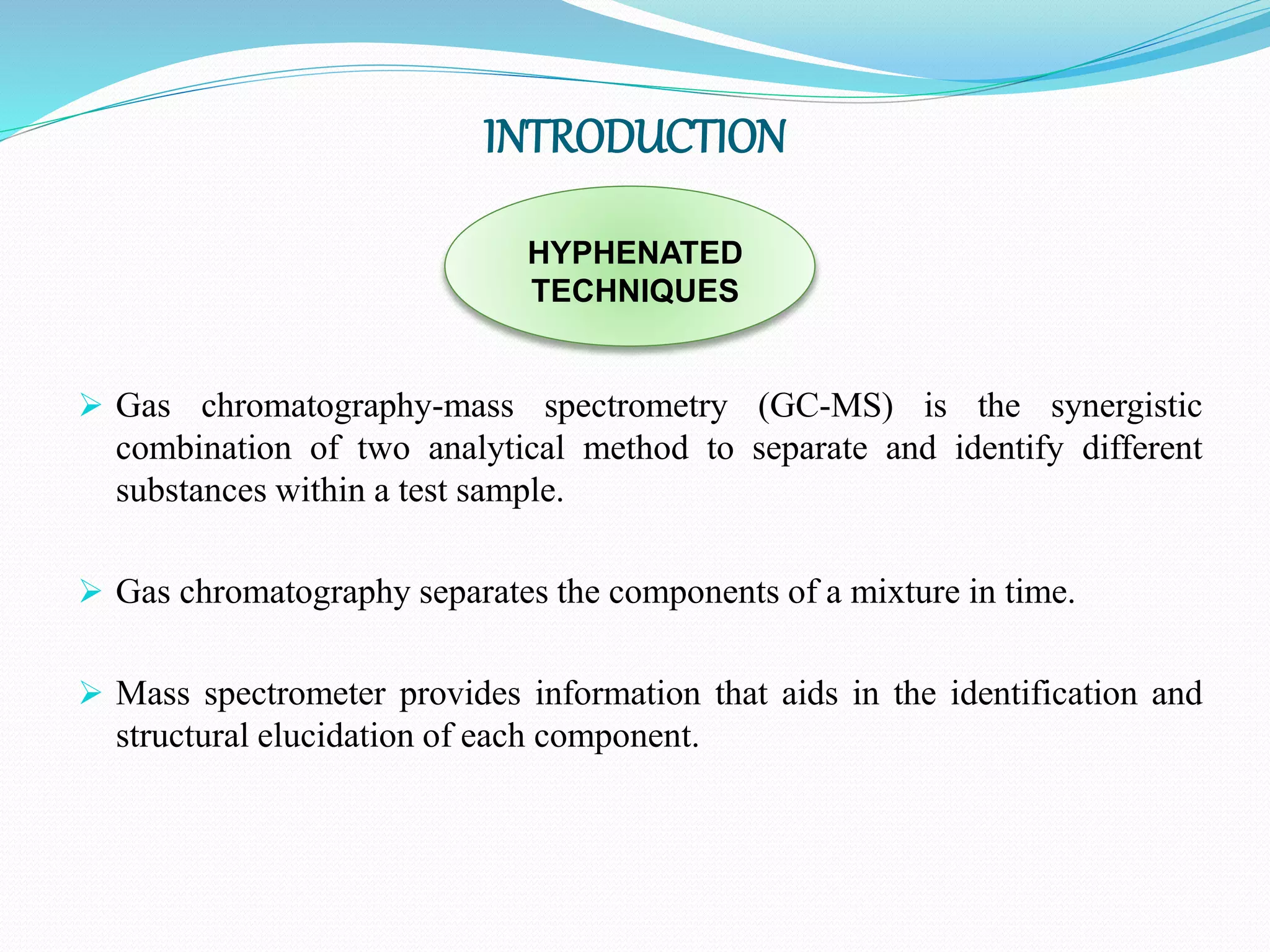
 Gas chromatography-mass spectrometry (GC-MS) is the synergistic
combination of two analytical method to separate and identify different
substances within a test sample.
 Gas chromatography separates the components of a mixture in time.
 Mass spectrometer provides information that aids in the identification and
structural elucidation of each component.
HYPHENATED
TECHNIQUES
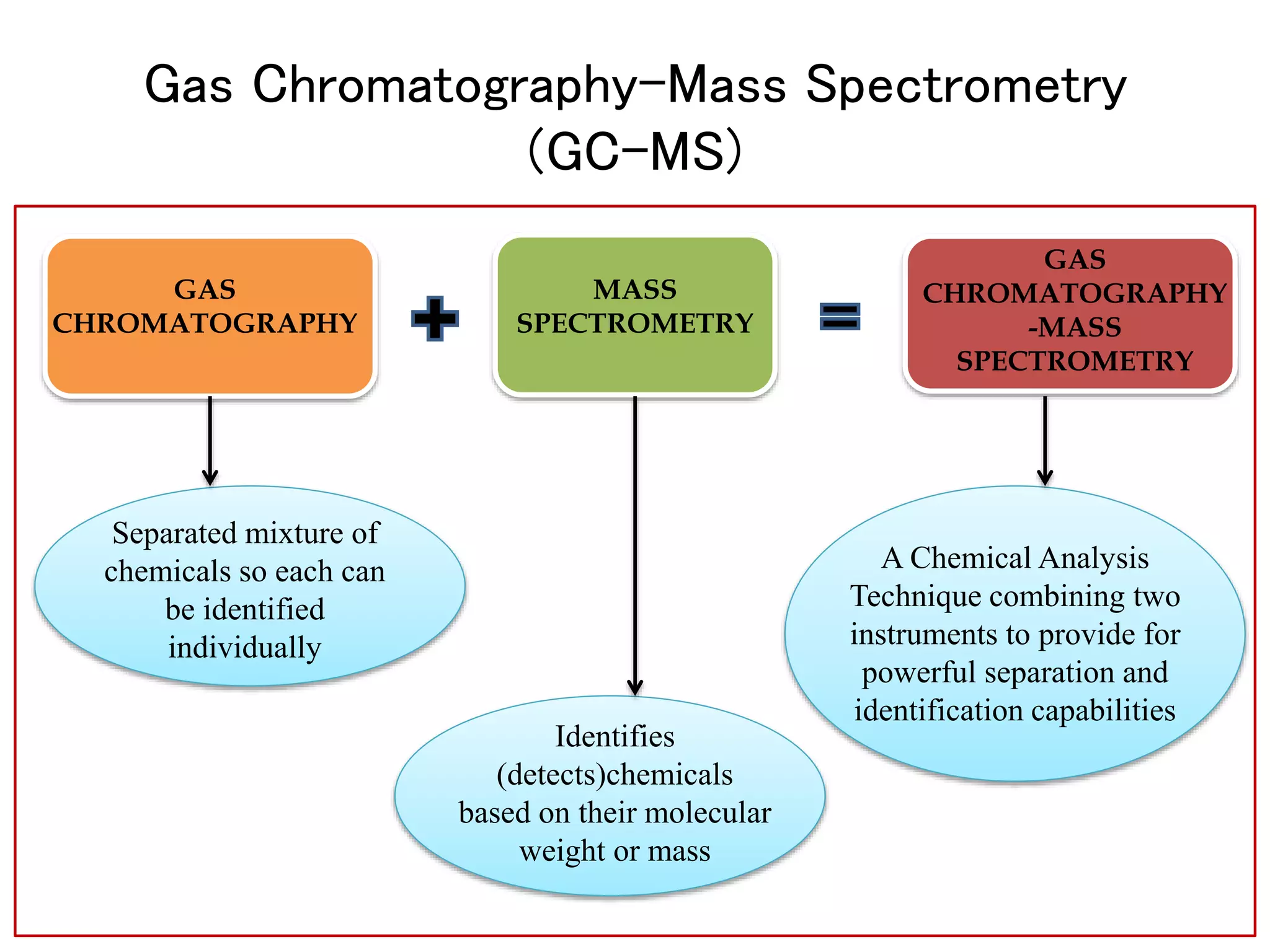
Gas Chromatography-Mass Spectrometry
(GC-MS)
GAS
CHROMATOGRAPHY
MASS
SPECTROMETRY
GAS
CHROMATOGRAPHY
-MASS
SPECTROMETRY
Separated mixture of
chemicals so each can
be identified
individually
Identifies
(detects)chemicals
based on their molecular
weight or mass
A Chemical Analysis
Technique combining two
instruments to provide for
powerful separation and
identification capabilities
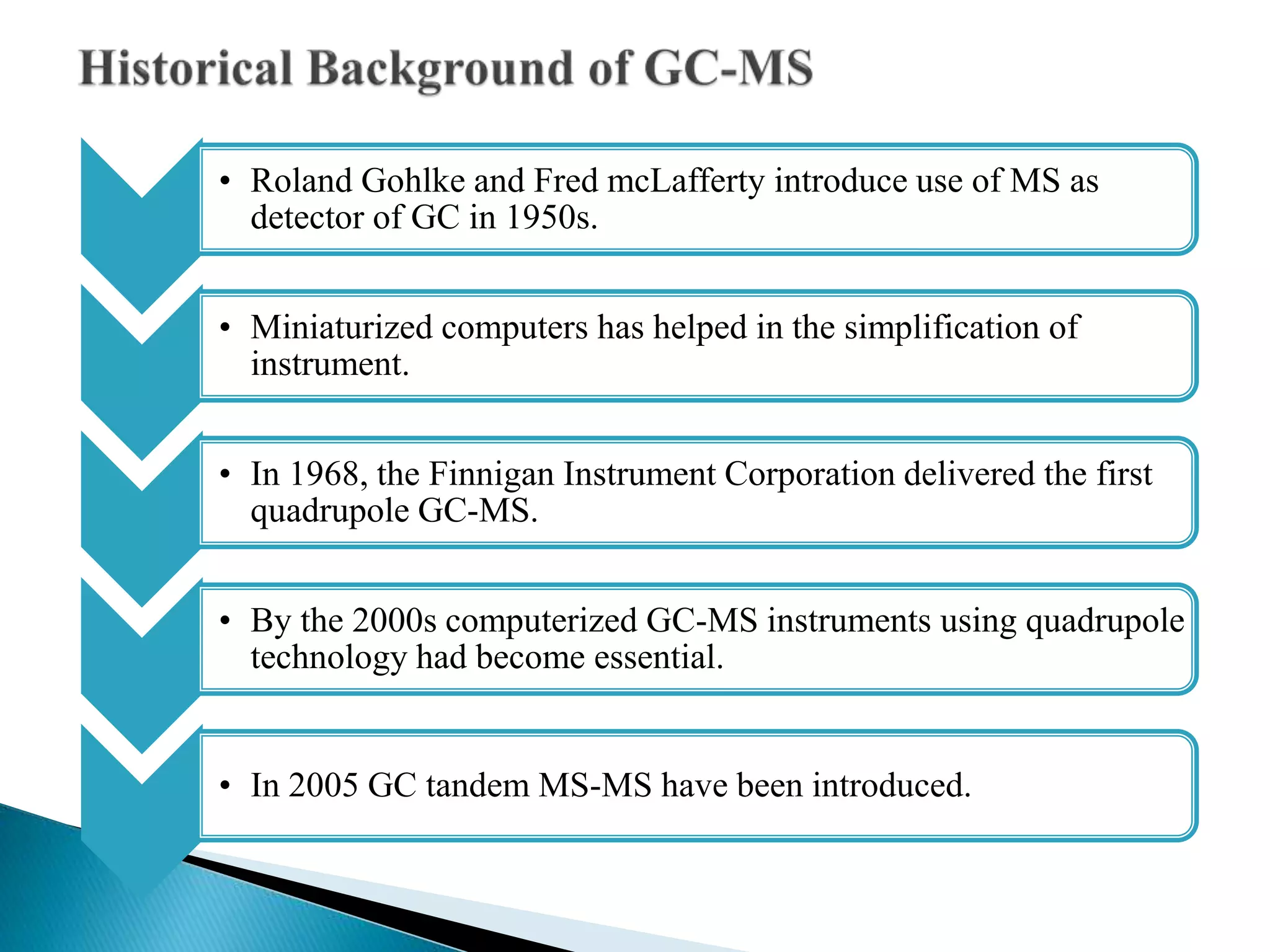
• Roland Gohlke and Fred mcLafferty introduce use of MS as
detector of GC in 1950s.
• Miniaturized computers has helped in the simplification of
instrument.
• In 1968, the Finnigan Instrument Corporation delivered the first
quadrupole GC-MS.
• By the 2000s computerized GC-MS instruments using quadrupole
technology had become essential.
• In 2005 GC tandem MS-MS have been introduced.
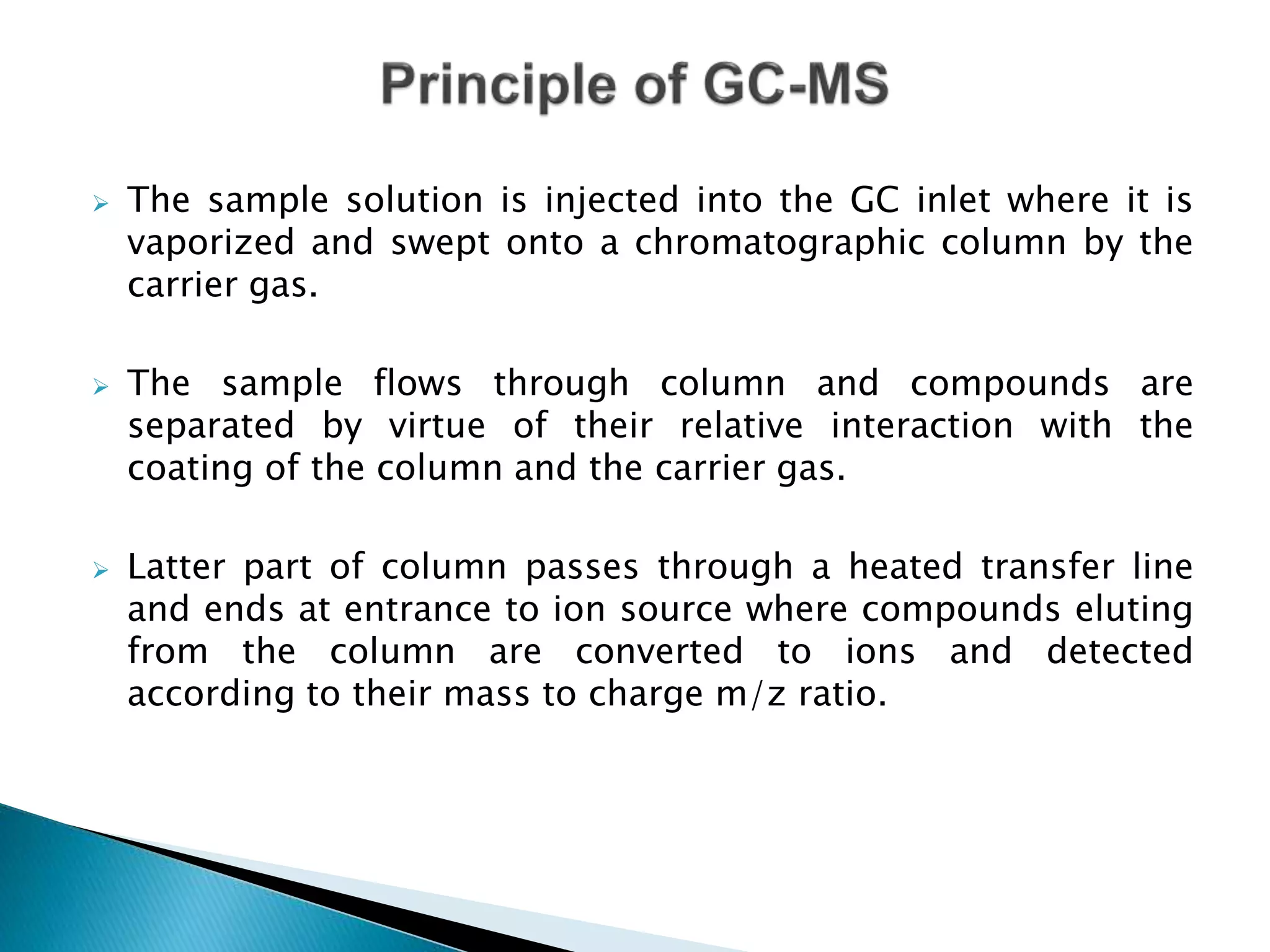
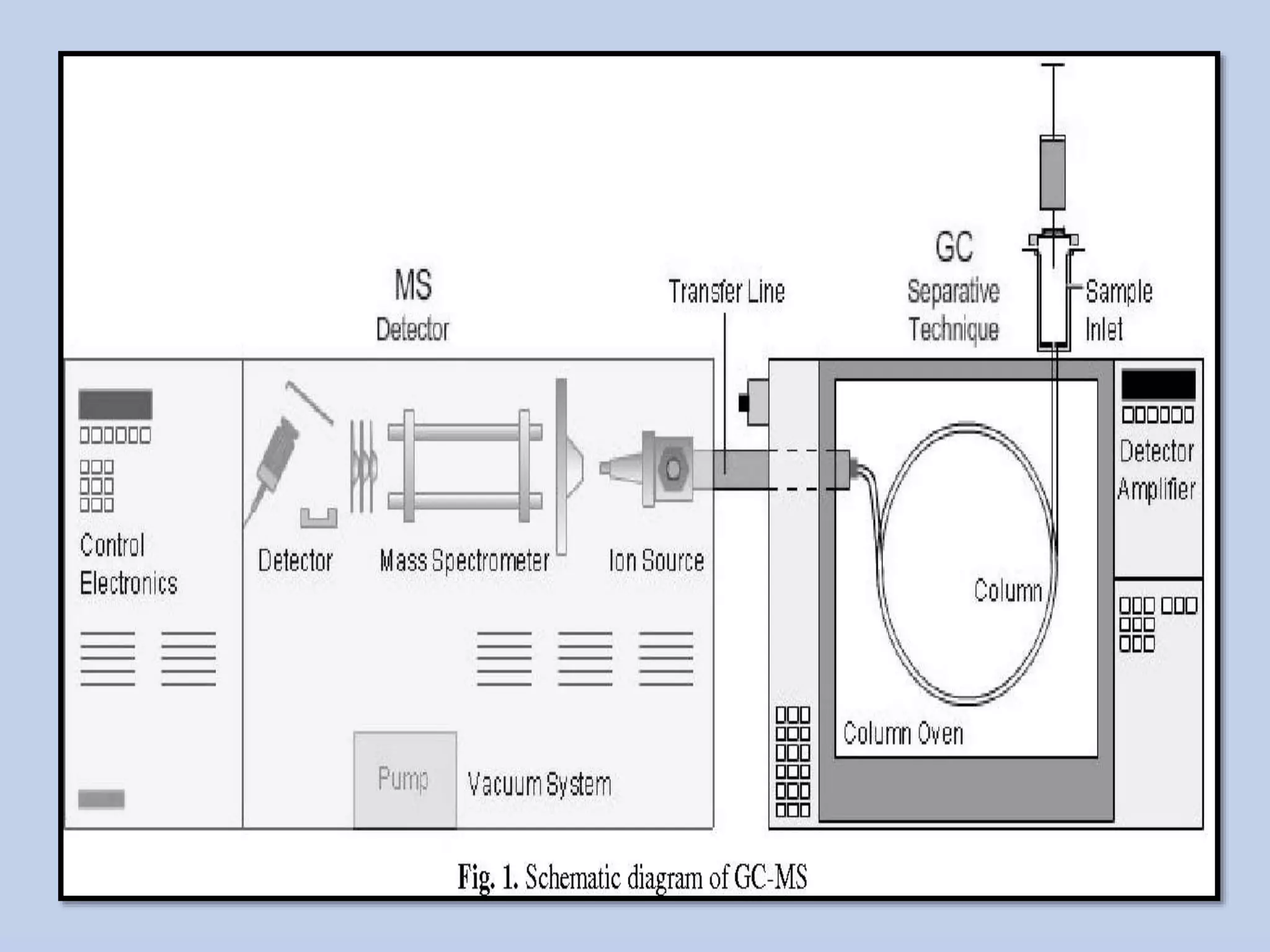
 The sample solution is injected into the GC inlet where it is
vaporized and swept onto a chromatographic column by the
carrier gas.
 The sample flows through column and compounds are
separated by virtue of their relative interaction with the
coating of the column and the carrier gas.
 Latter part of column passes through a heated transfer line
and ends at entrance to ion source where compounds eluting
from the column are converted to ions and detected
according to their mass to charge m/z ratio.
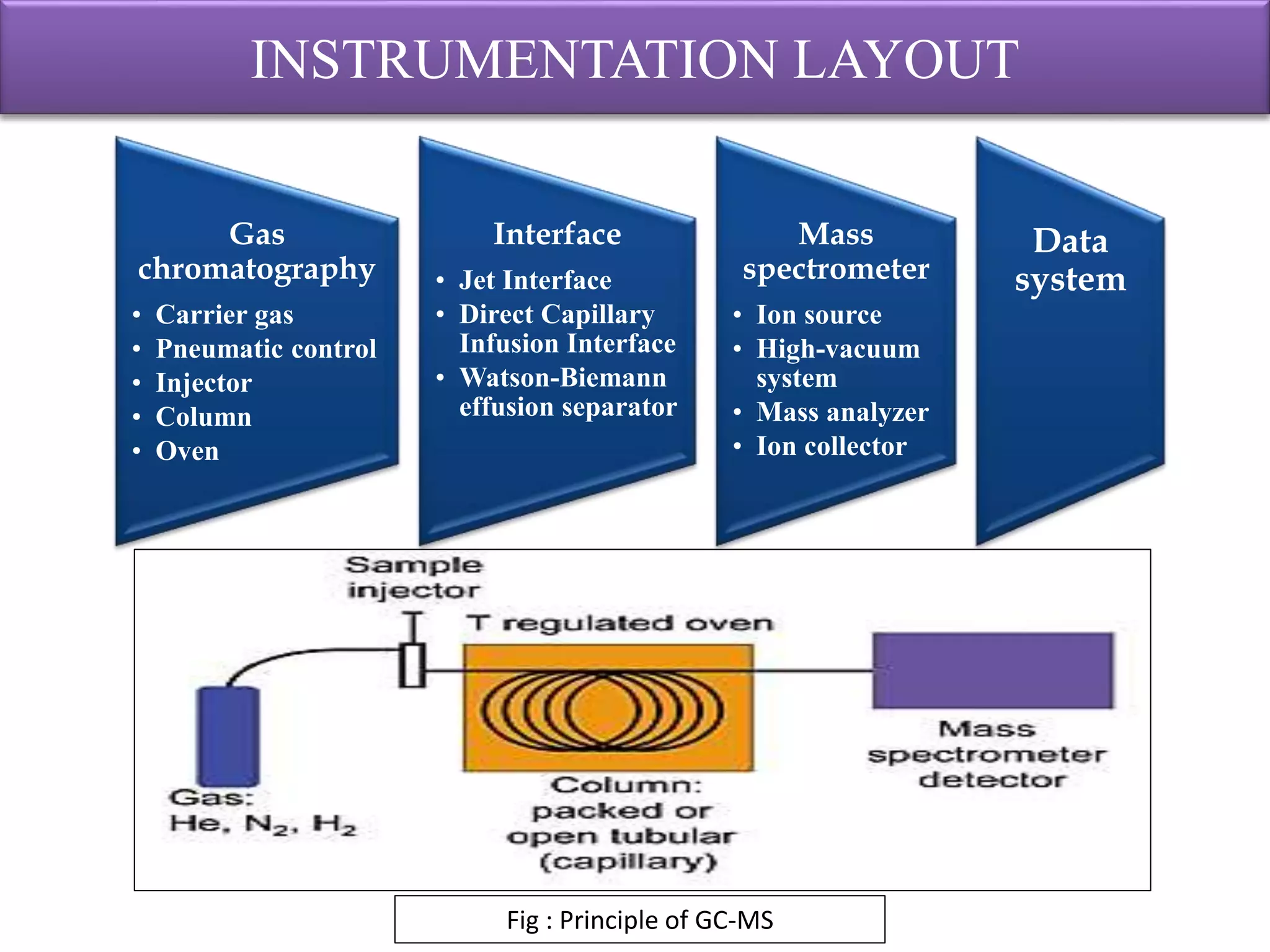
INSTRUMENTATION LAYOUT
Gas
chromatography
• Carrier gas
• Pneumatic control
• Injector
• Column
• Oven
Interface
• Jet Interface
• Direct Capillary
Infusion Interface
• Watson-Biemann
effusion separator
Mass
spectrometer
• Ion source
• High-vacuum
system
• Mass analyzer
• Ion collector
Data
system
Fig : Principle of GC-MS
1. Carrier Gas :
 Served as mobile phase supplied in the steel tank under high pressure.
 At pressure of 40-80 psi this passes into flow controllers.
 Example- nitrogen, helium; hydrogen and argon can also be used.
 Requirements –
 Inert
 Column requirements
 Detectors
 Purity- better than 99.995%
 Cost effective & available
2. Pneumatic Control :
 Gas supply is regulated to the correct pressure and then fed to the required
part of instrument.
 Older instruments – manual pressure control via regulators.
 Modern GC instruments – Electronic Pneumatic pressure controller.
3. Oven :
 Temperature programmable, typically range from 5°C - 400°C but can go as
low as -25°C with cryogenic cooling.
4. Sample Injection Port :
 Sample is made to vaporized rapidly before entering to column.
 Various kind of injectors :
 Packed column injectors
 Split injection
 Splitless injection
 Programmed Split/Splitless injection
 Programmed On-Column injector
5. Column :
 Two kinds of column used :
 Packed column
 Capillary column
 Gas chromatograph GC-MS utilizes capillary column.
 Here, stationary phase has been chemically bonded to the fused silica, e.g.,
DB-5.
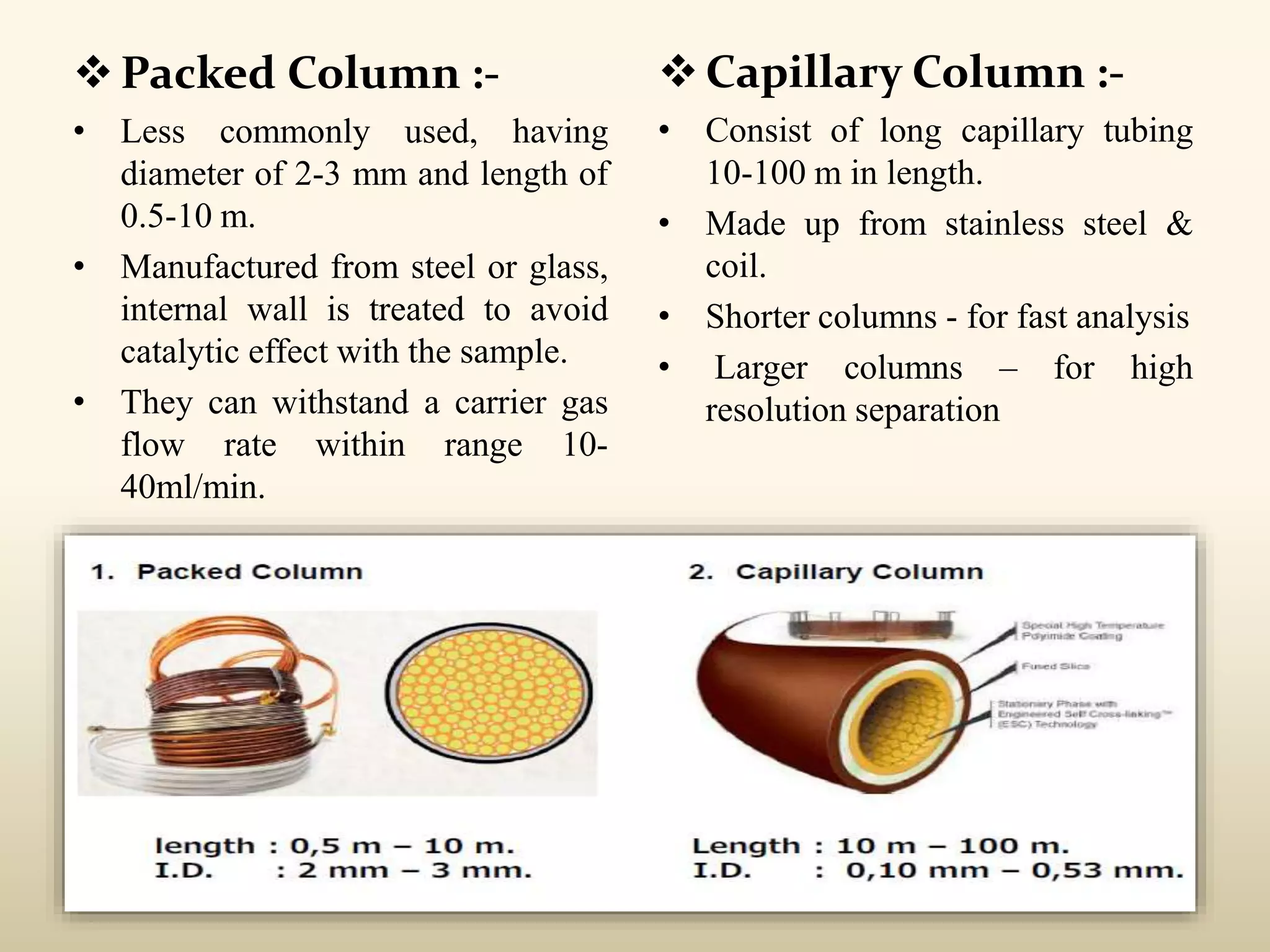
Packed Column :-
• Less commonly used, having
diameter of 2-3 mm and length of
0.5-10 m.
• Manufactured from steel or glass,
internal wall is treated to avoid
catalytic effect with the sample.
• They can withstand a carrier gas
flow rate within range 10-
40ml/min.
Capillary Column :-
• Consist of long capillary tubing
10-100 m in length.
• Made up from stainless steel &
coil.
• Shorter columns - for fast analysis
• Larger columns – for high
resolution separation
6. Detectors :
 Simple and reliable
 Sensitive to electronegative groups (halogens)
 Largely non-destructive
 Limited dynamic range (10²)
 Mass sensitive detectors
-Thermal Conductivity Detector (TCD)
-Flame Ionization Detector (FID)
-Electron Capture Detector (ECD)
INTERFACE
 Pressure incompatibility problem between GC and MS was solved by
inserting an interface.
 Mainly three types of interfaces are there commercially available :
 Jet/Orifice separator
 Direct capillary infusion interface
 Watson-Biemann effusion separator
Fig : Direct capillary infusion
Fig : Jet separator Fig : Watson-Biemann effusion
MASS SPECTROMETER
 “ Mass spectrometry is a technique used for measuring the molecular weight
and determining the molecular formula of an organic compound.”
 In general a mass spectrometer consists of
 An ion source
 High-vacuum system
 A mass-selective analyzer
 An ion collector
 Data system
Ionization Method Typical Analytes Sample
Introduction
Mass
Range
Method
Highlights
Chemical Ionization (CI) Relatively small,
volatile
GC or
liquid/solid
probe
Upto
1000
Daltons
Soft method,
molecular ion peak
[M+H] +
Electron Impact
Ionization (EI)
Relatively small,
volatile
GC or
liquid/solid
probe
Upto
1000
Daltons
Hard method,
versatile, provides
structure info
Electrospray Ionization
(ESI)
Peptides, proteins,
nonvolatile
Liquid
chromatography
Upto
200000
Daltons
Soft method, ions
often multiply
charged
Fast Atom Bombardment
(FAB)
Carbohydrates,
organometallics,
peptides,
nonvolatile
Sample mixed in
viscous matrix
Upto
6000
Daltons
Harder than ESI or
MALDI
Matrix Assisted Laser
Desorption Ionization
(MALDI)
Peptides, proteins,
nucleotides
Sample mixed in
solid matrix
Upto
500000
Daltons
Soft method, very
high mass
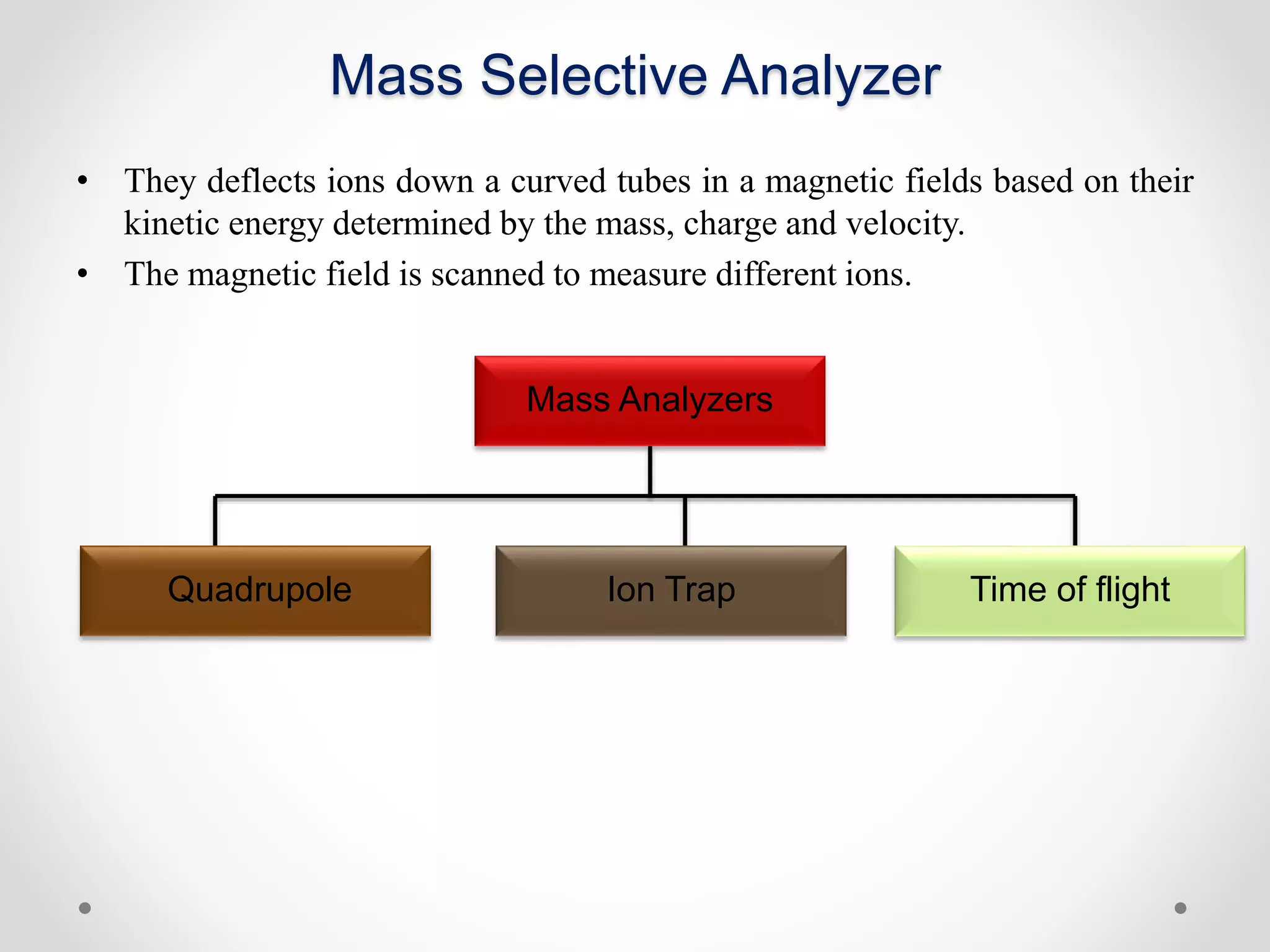
Mass Selective Analyzer
• They deflects ions down a curved tubes in a magnetic fields based on their
kinetic energy determined by the mass, charge and velocity.
• The magnetic field is scanned to measure different ions.
Mass Analyzers
Quadrupole Ion Trap Time of flight
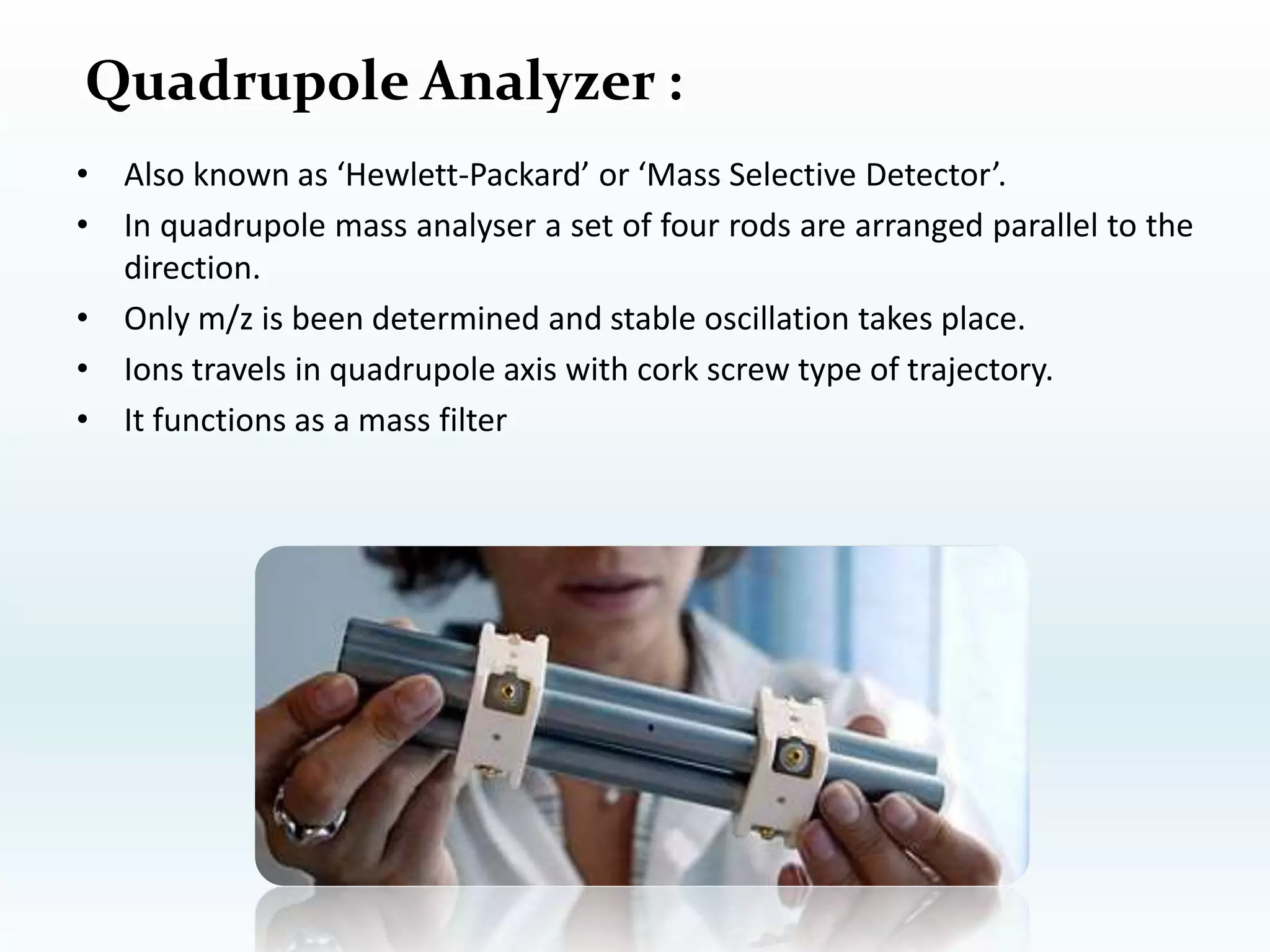
Quadrupole Analyzer :
• Also known as ‘Hewlett-Packard’ or ‘Mass Selective Detector’.
• In quadrupole mass analyser a set of four rods are arranged parallel to the
direction.
• Only m/z is been determined and stable oscillation takes place.
• Ions travels in quadrupole axis with cork screw type of trajectory.
• It functions as a mass filter
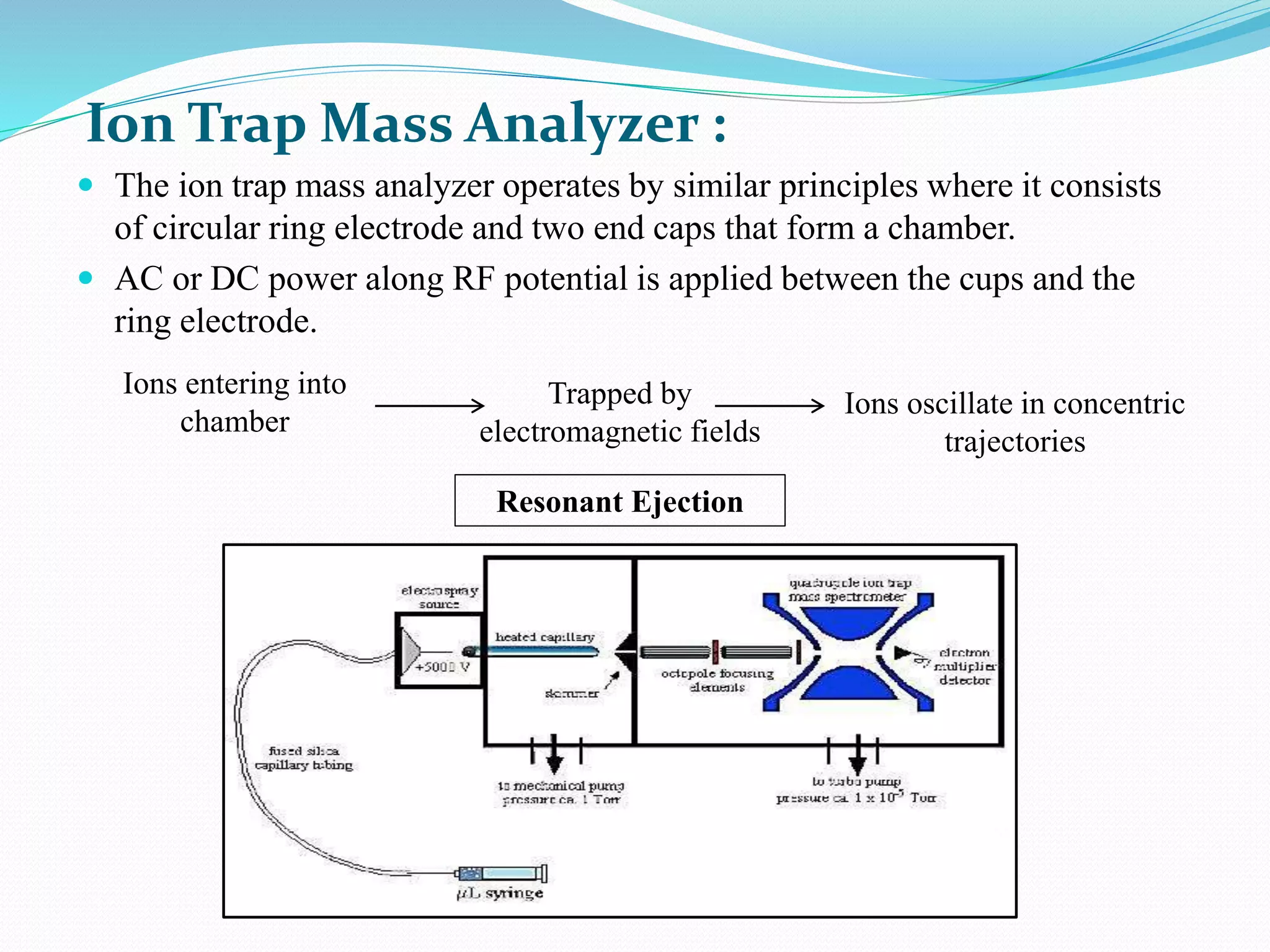
Ion Trap Mass Analyzer :
 The ion trap mass analyzer operates by similar principles where it consists
of circular ring electrode and two end caps that form a chamber.
 AC or DC power along RF potential is applied between the cups and the
ring electrode.
Ions entering into
chamber
Trapped by
electromagnetic fields
Ions oscillate in concentric
trajectories
Resonant Ejection
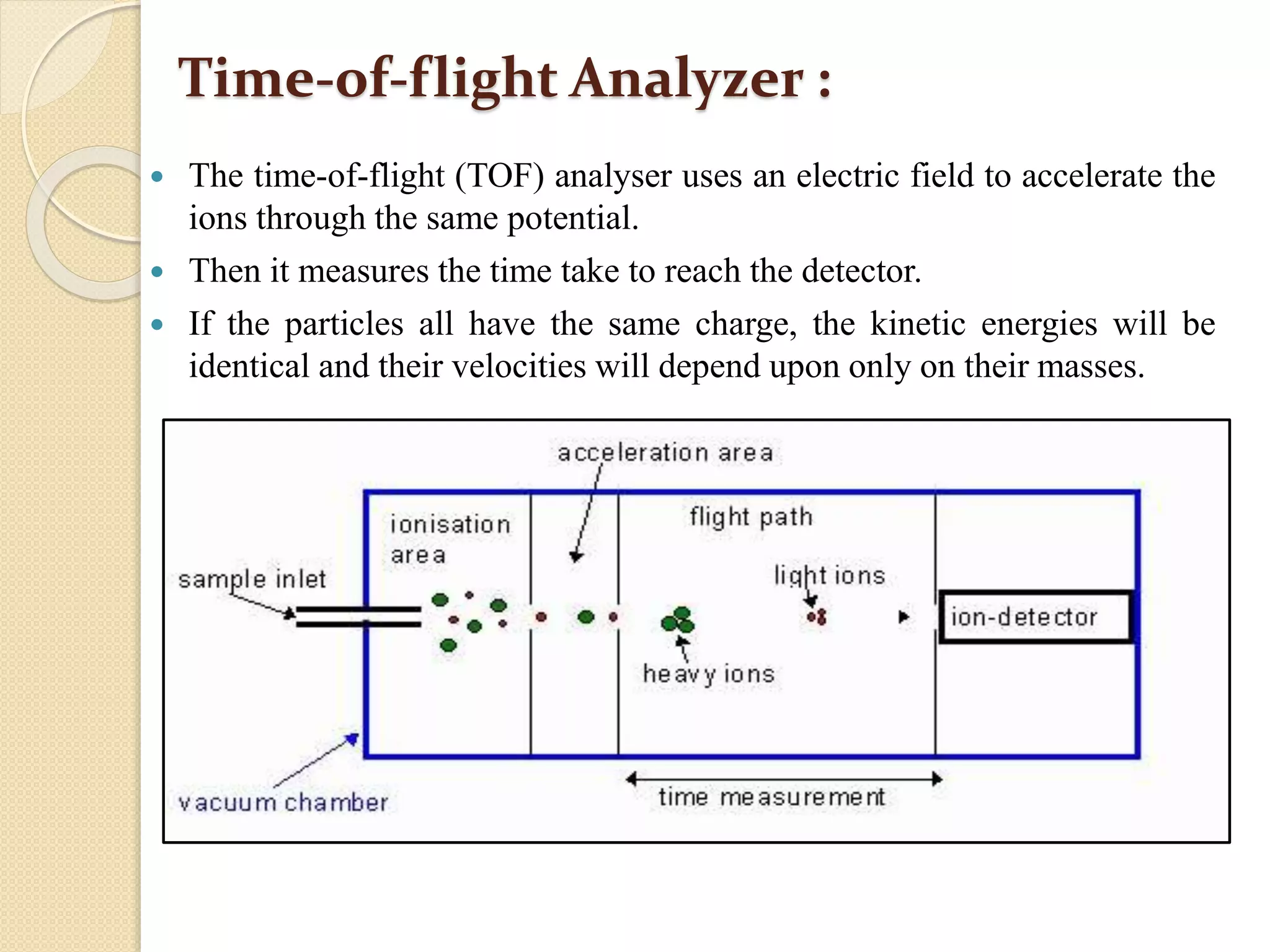
Time-of-flight Analyzer :
 The time-of-flight (TOF) analyser uses an electric field to accelerate the
ions through the same potential.
 Then it measures the time take to reach the detector.
 If the particles all have the same charge, the kinetic energies will be
identical and their velocities will depend upon only on their masses.
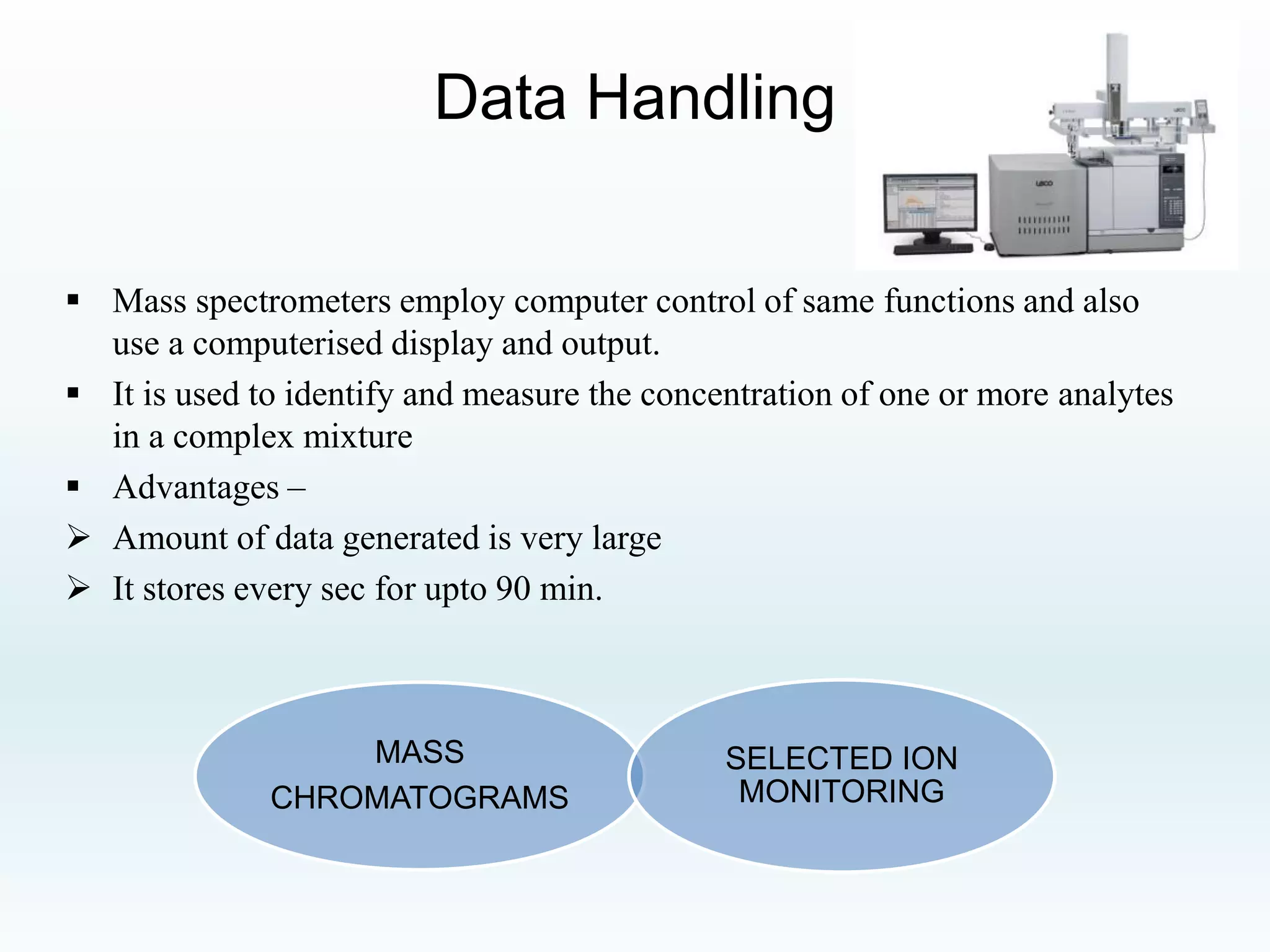
 Mass spectrometers employ computer control of same functions and also
use a computerised display and output.
 It is used to identify and measure the concentration of one or more analytes
in a complex mixture
 Advantages –
 Amount of data generated is very large
 It stores every sec for upto 90 min.
Data Handling
MASS
CHROMATOGRAMS
SELECTED ION
MONITORING
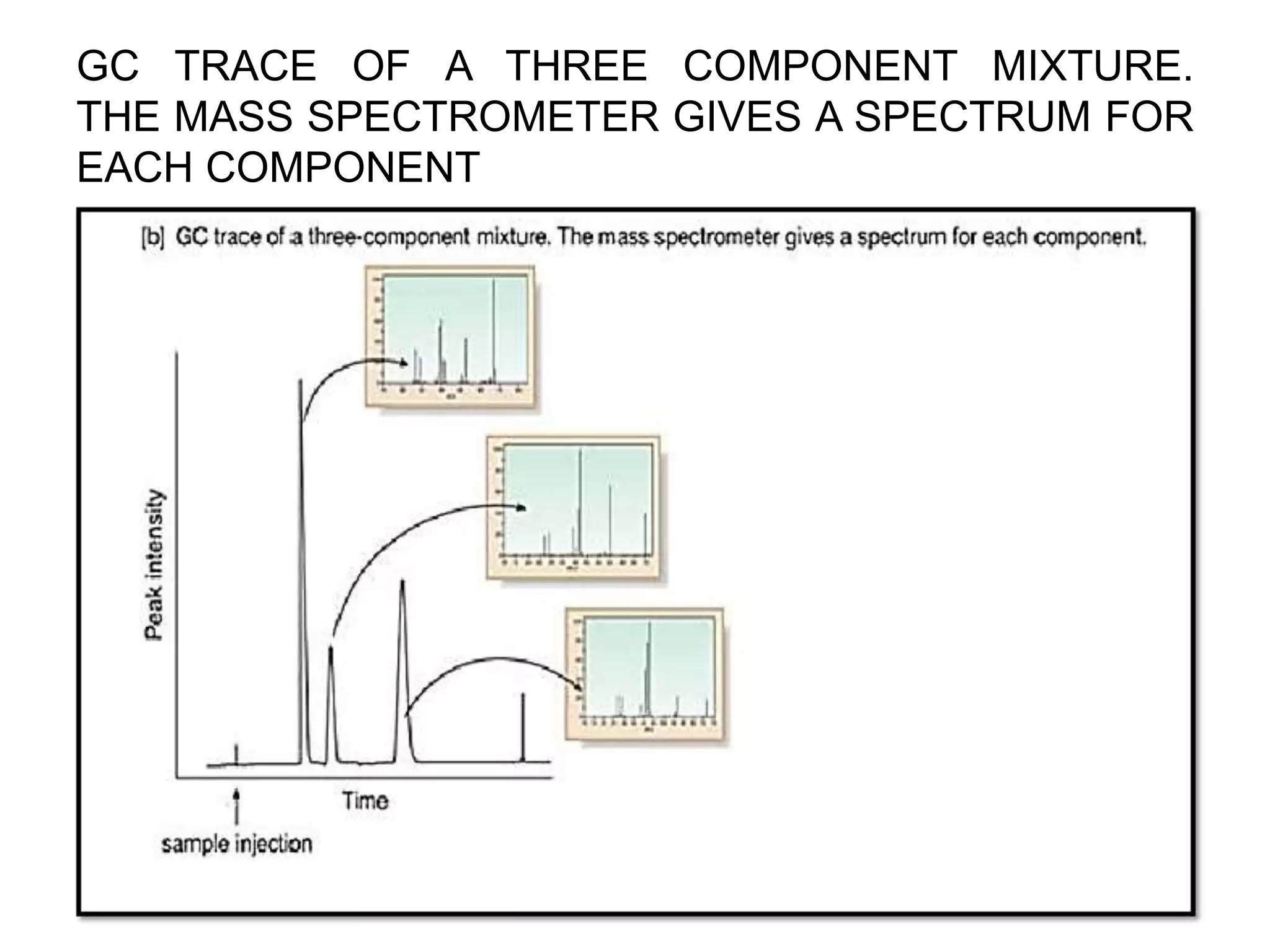
GC TRACE OF A THREE COMPONENT MIXTURE.
THE MASS SPECTROMETER GIVES A SPECTRUM FOR
EACH COMPONENT
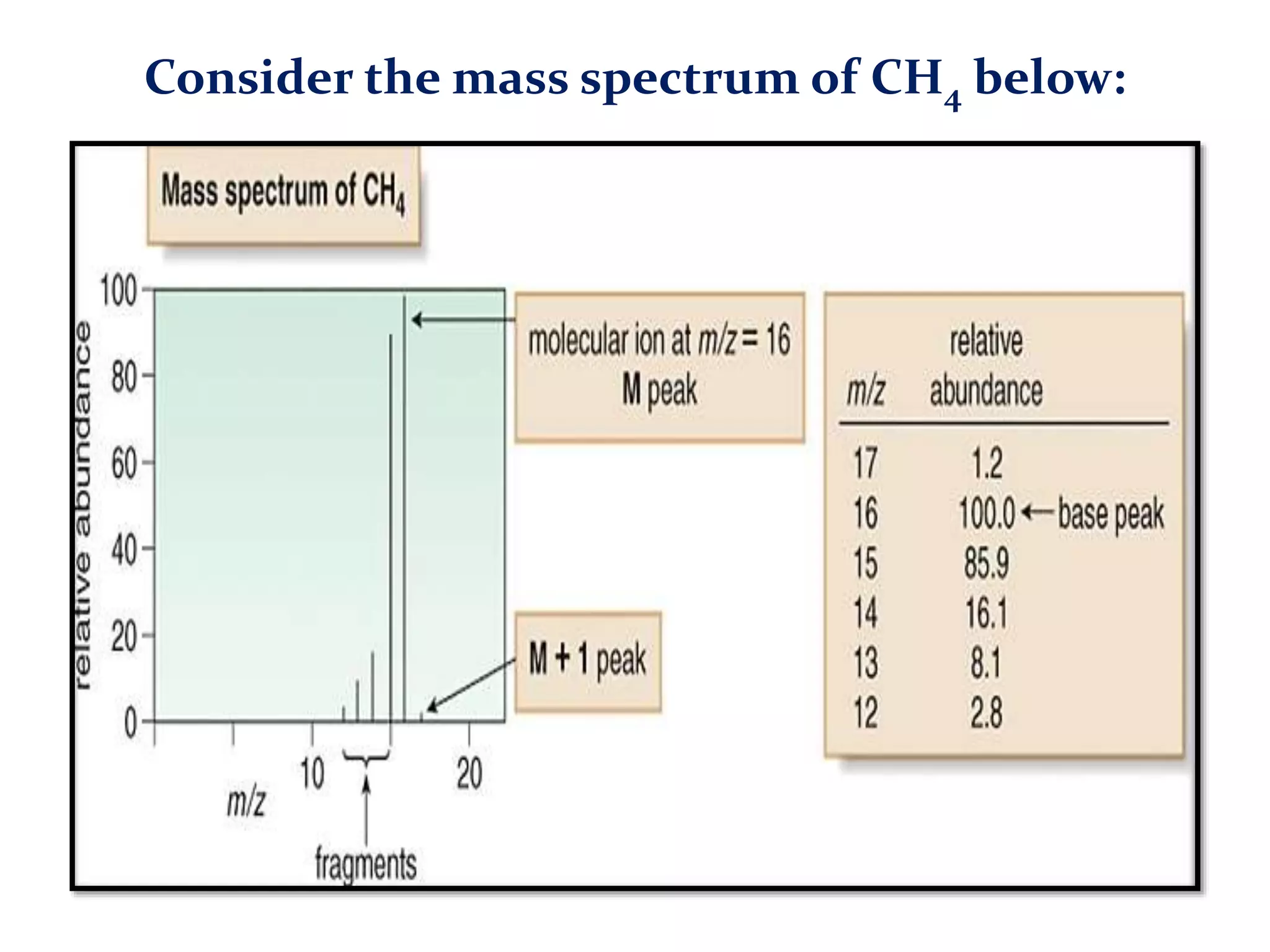
Consider the mass spectrum of CH4 below:
LIMITATIONS
• Only compounds with vapour pressure exceeding about 10-10 torr can be
analysed by gas chromatography-mass spectrometry (GC-MS).
• Determining positional substitution on aromatic ring is often difficult.
• Certain isomeric compounds cannot be distinguished by mass spectrometry.
• Non-volatile matrices require additional preparation (extraction,
outgassing, etc.)
• Atmospheric gases are challenging (CO2, N2, O2, Ar, CO, H2O).
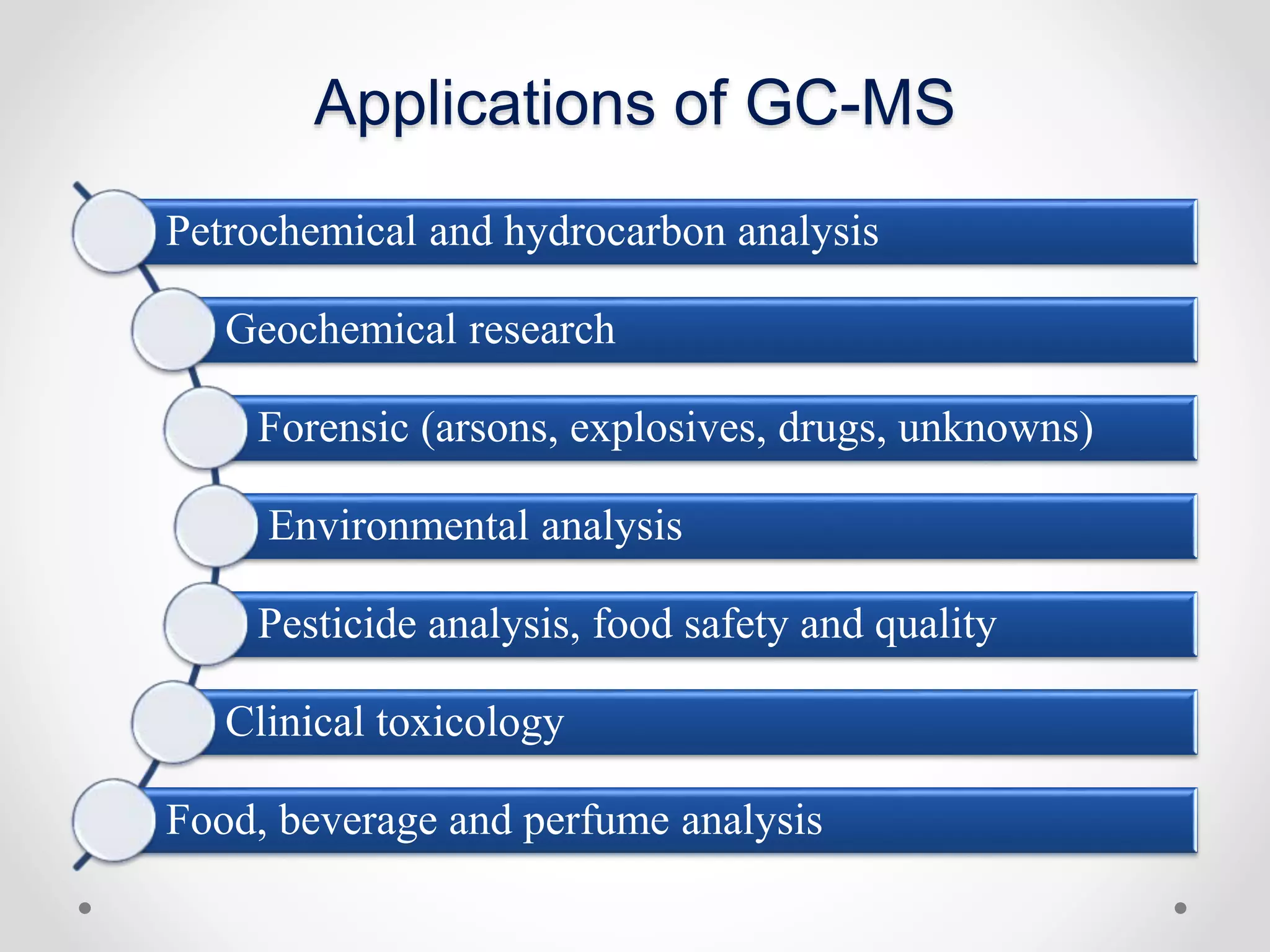
Applications of GC-MS
Petrochemical and hydrocarbon analysis
Geochemical research
Forensic (arsons, explosives, drugs, unknowns)
Environmental analysis
Pesticide analysis, food safety and quality
Clinical toxicology
Food, beverage and perfume analysis
CONCLUSION
 As we can see, GC-MS is used both in qualitative and quantitative
measurement.
 Being hyphenated technique, the cost of GC-MS becomes very high.
 Nowadays, cost is also cheaper than before as quadrupole and ion trap
instruments are used, which does not only save space but also save
manufacturing cost.
 GC-MS is an analytical method of increased sensitivity and reliability even
in very small quantities (ng).
 Braun R., Introduction To Instrumental Analysis, Second
Edition, PharmaMed Press, Hyderabad, Page no. 251-270.
 Chatwal G.R., Anand S.K., Instrumental method of Chemical
Analysis, Himalaya Publishing House, Fifth Edition-2012,
New Delhi, Page no. 420-449.
 Gohlke R.S.(1959), Analytical Chemistry, 36, Page no. 759-
764.
THANK YOU

Gas chromatography mass spectrometry (GC-MS)

  • 1.
    Presented By- Sudipta Nandi M.Pharm 1st Sem Department of Pharmaceutical Sciences Dr. Harisingh Gour Vishwavidyalaya Sagar, M.P. (A Central University)
  • 2.
    Content  INTRODUCTION  HISTORICALBACKGROUND OF GC-MS  PRINCIPLE  INSTRUMENTATION • GAS CHROMATOGRAPHY • INTERFACE • MASS SPECTROMETER  WORKING  LIMITATIONS  APPLICATION  CONCLUSION  REFERENCES
  • 3.
    INTRODUCTION  Gas chromatography-massspectrometry (GC-MS) is the synergistic combination of two analytical method to separate and identify different substances within a test sample.  Gas chromatography separates the components of a mixture in time.  Mass spectrometer provides information that aids in the identification and structural elucidation of each component. HYPHENATED TECHNIQUES
  • 4.
    Gas Chromatography-Mass Spectrometry (GC-MS) GAS CHROMATOGRAPHY MASS SPECTROMETRY GAS CHROMATOGRAPHY -MASS SPECTROMETRY Separatedmixture of chemicals so each can be identified individually Identifies (detects)chemicals based on their molecular weight or mass A Chemical Analysis Technique combining two instruments to provide for powerful separation and identification capabilities
  • 5.
    • Roland Gohlkeand Fred mcLafferty introduce use of MS as detector of GC in 1950s. • Miniaturized computers has helped in the simplification of instrument. • In 1968, the Finnigan Instrument Corporation delivered the first quadrupole GC-MS. • By the 2000s computerized GC-MS instruments using quadrupole technology had become essential. • In 2005 GC tandem MS-MS have been introduced.
  • 6.
     The samplesolution is injected into the GC inlet where it is vaporized and swept onto a chromatographic column by the carrier gas.  The sample flows through column and compounds are separated by virtue of their relative interaction with the coating of the column and the carrier gas.  Latter part of column passes through a heated transfer line and ends at entrance to ion source where compounds eluting from the column are converted to ions and detected according to their mass to charge m/z ratio.
  • 7.
    INSTRUMENTATION LAYOUT Gas chromatography • Carriergas • Pneumatic control • Injector • Column • Oven Interface • Jet Interface • Direct Capillary Infusion Interface • Watson-Biemann effusion separator Mass spectrometer • Ion source • High-vacuum system • Mass analyzer • Ion collector Data system Fig : Principle of GC-MS
  • 9.
    1. Carrier Gas:  Served as mobile phase supplied in the steel tank under high pressure.  At pressure of 40-80 psi this passes into flow controllers.  Example- nitrogen, helium; hydrogen and argon can also be used.  Requirements –  Inert  Column requirements  Detectors  Purity- better than 99.995%  Cost effective & available
  • 10.
    2. Pneumatic Control:  Gas supply is regulated to the correct pressure and then fed to the required part of instrument.  Older instruments – manual pressure control via regulators.  Modern GC instruments – Electronic Pneumatic pressure controller. 3. Oven :  Temperature programmable, typically range from 5°C - 400°C but can go as low as -25°C with cryogenic cooling.
  • 11.
    4. Sample InjectionPort :  Sample is made to vaporized rapidly before entering to column.  Various kind of injectors :  Packed column injectors  Split injection  Splitless injection  Programmed Split/Splitless injection  Programmed On-Column injector 5. Column :  Two kinds of column used :  Packed column  Capillary column  Gas chromatograph GC-MS utilizes capillary column.  Here, stationary phase has been chemically bonded to the fused silica, e.g., DB-5.
  • 12.
    Packed Column :- •Less commonly used, having diameter of 2-3 mm and length of 0.5-10 m. • Manufactured from steel or glass, internal wall is treated to avoid catalytic effect with the sample. • They can withstand a carrier gas flow rate within range 10- 40ml/min. Capillary Column :- • Consist of long capillary tubing 10-100 m in length. • Made up from stainless steel & coil. • Shorter columns - for fast analysis • Larger columns – for high resolution separation
  • 13.
    6. Detectors : Simple and reliable  Sensitive to electronegative groups (halogens)  Largely non-destructive  Limited dynamic range (10²)  Mass sensitive detectors -Thermal Conductivity Detector (TCD) -Flame Ionization Detector (FID) -Electron Capture Detector (ECD)
  • 14.
    INTERFACE  Pressure incompatibilityproblem between GC and MS was solved by inserting an interface.  Mainly three types of interfaces are there commercially available :  Jet/Orifice separator  Direct capillary infusion interface  Watson-Biemann effusion separator Fig : Direct capillary infusion Fig : Jet separator Fig : Watson-Biemann effusion
  • 15.
    MASS SPECTROMETER  “Mass spectrometry is a technique used for measuring the molecular weight and determining the molecular formula of an organic compound.”  In general a mass spectrometer consists of  An ion source  High-vacuum system  A mass-selective analyzer  An ion collector  Data system
  • 16.
    Ionization Method TypicalAnalytes Sample Introduction Mass Range Method Highlights Chemical Ionization (CI) Relatively small, volatile GC or liquid/solid probe Upto 1000 Daltons Soft method, molecular ion peak [M+H] + Electron Impact Ionization (EI) Relatively small, volatile GC or liquid/solid probe Upto 1000 Daltons Hard method, versatile, provides structure info Electrospray Ionization (ESI) Peptides, proteins, nonvolatile Liquid chromatography Upto 200000 Daltons Soft method, ions often multiply charged Fast Atom Bombardment (FAB) Carbohydrates, organometallics, peptides, nonvolatile Sample mixed in viscous matrix Upto 6000 Daltons Harder than ESI or MALDI Matrix Assisted Laser Desorption Ionization (MALDI) Peptides, proteins, nucleotides Sample mixed in solid matrix Upto 500000 Daltons Soft method, very high mass
  • 17.
    Mass Selective Analyzer •They deflects ions down a curved tubes in a magnetic fields based on their kinetic energy determined by the mass, charge and velocity. • The magnetic field is scanned to measure different ions. Mass Analyzers Quadrupole Ion Trap Time of flight
  • 18.
    Quadrupole Analyzer : •Also known as ‘Hewlett-Packard’ or ‘Mass Selective Detector’. • In quadrupole mass analyser a set of four rods are arranged parallel to the direction. • Only m/z is been determined and stable oscillation takes place. • Ions travels in quadrupole axis with cork screw type of trajectory. • It functions as a mass filter
  • 19.
    Ion Trap MassAnalyzer :  The ion trap mass analyzer operates by similar principles where it consists of circular ring electrode and two end caps that form a chamber.  AC or DC power along RF potential is applied between the cups and the ring electrode. Ions entering into chamber Trapped by electromagnetic fields Ions oscillate in concentric trajectories Resonant Ejection
  • 20.
    Time-of-flight Analyzer : The time-of-flight (TOF) analyser uses an electric field to accelerate the ions through the same potential.  Then it measures the time take to reach the detector.  If the particles all have the same charge, the kinetic energies will be identical and their velocities will depend upon only on their masses.
  • 21.
     Mass spectrometersemploy computer control of same functions and also use a computerised display and output.  It is used to identify and measure the concentration of one or more analytes in a complex mixture  Advantages –  Amount of data generated is very large  It stores every sec for upto 90 min. Data Handling MASS CHROMATOGRAMS SELECTED ION MONITORING
  • 22.
    GC TRACE OFA THREE COMPONENT MIXTURE. THE MASS SPECTROMETER GIVES A SPECTRUM FOR EACH COMPONENT
  • 23.
    Consider the massspectrum of CH4 below:
  • 24.
    LIMITATIONS • Only compoundswith vapour pressure exceeding about 10-10 torr can be analysed by gas chromatography-mass spectrometry (GC-MS). • Determining positional substitution on aromatic ring is often difficult. • Certain isomeric compounds cannot be distinguished by mass spectrometry. • Non-volatile matrices require additional preparation (extraction, outgassing, etc.) • Atmospheric gases are challenging (CO2, N2, O2, Ar, CO, H2O).
  • 25.
    Applications of GC-MS Petrochemicaland hydrocarbon analysis Geochemical research Forensic (arsons, explosives, drugs, unknowns) Environmental analysis Pesticide analysis, food safety and quality Clinical toxicology Food, beverage and perfume analysis
  • 26.
    CONCLUSION  As wecan see, GC-MS is used both in qualitative and quantitative measurement.  Being hyphenated technique, the cost of GC-MS becomes very high.  Nowadays, cost is also cheaper than before as quadrupole and ion trap instruments are used, which does not only save space but also save manufacturing cost.  GC-MS is an analytical method of increased sensitivity and reliability even in very small quantities (ng).
  • 27.
     Braun R.,Introduction To Instrumental Analysis, Second Edition, PharmaMed Press, Hyderabad, Page no. 251-270.  Chatwal G.R., Anand S.K., Instrumental method of Chemical Analysis, Himalaya Publishing House, Fifth Edition-2012, New Delhi, Page no. 420-449.  Gohlke R.S.(1959), Analytical Chemistry, 36, Page no. 759- 764.
  • 28.