
Presented By –
Roll no : Y19254016
M.Pharma 1st sem
Department of Pharmaceutical Sciences
Dr. Harisingh Gour University Sagar (M.P.)
(A Central University)
SYNTHETIC PEPTIDE VACCINES AND
RECOMBINANT ANTIGEN VACCINE
CONTENTS
 Definition of vaccines
 Introduction to vaccine
 How vaccines work against viruses
 Types of vaccines
 Synthetic peptide vaccines
 Recombinant antigen vaccines
 References
INTRODUCTION TO VACCINE
 What is a Vaccine?
A vaccine is a substance that is introduced into the body to
prevent infection or to control disease due to a certain
pathogen (a disease-causing organism, such as a virus,
bacteria or parasite). The vaccine “teaches” the body how to
defend itself against the pathogen by creating an immune
response.
1 Unlike traditional pharmaceuticals, vaccines are biologics
since they are made from living organisms (biological
sources).
2 Specifically, vaccines are preparations of components derived
from (or related to) a pathogen; they can typically induce a
protective effect through one to three very small doses, in the
range of micrograms to milligrams.
3 Immunity lasts for an extended period, from one year up to
lifetime protection, including prevention of disease and/or
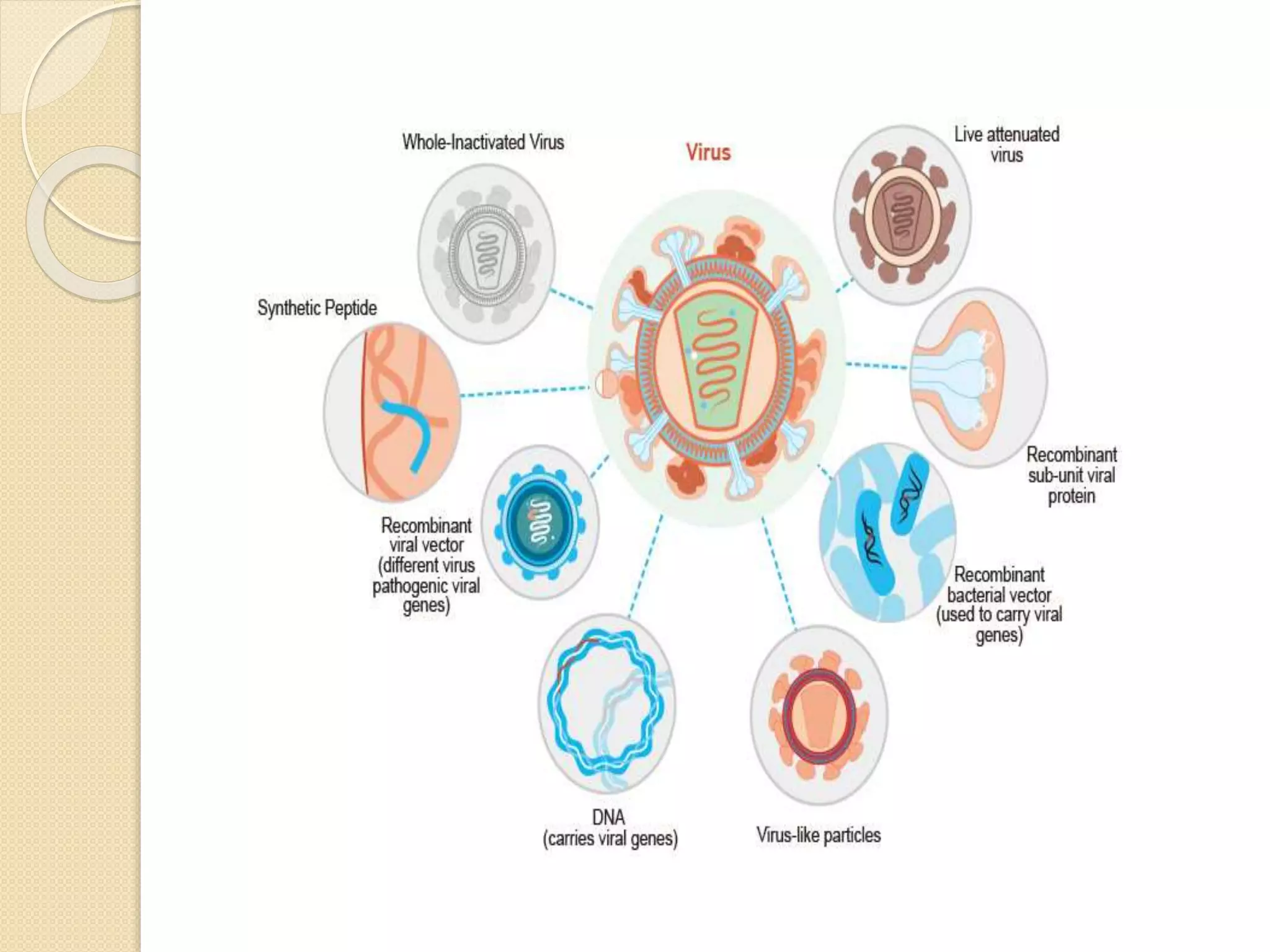
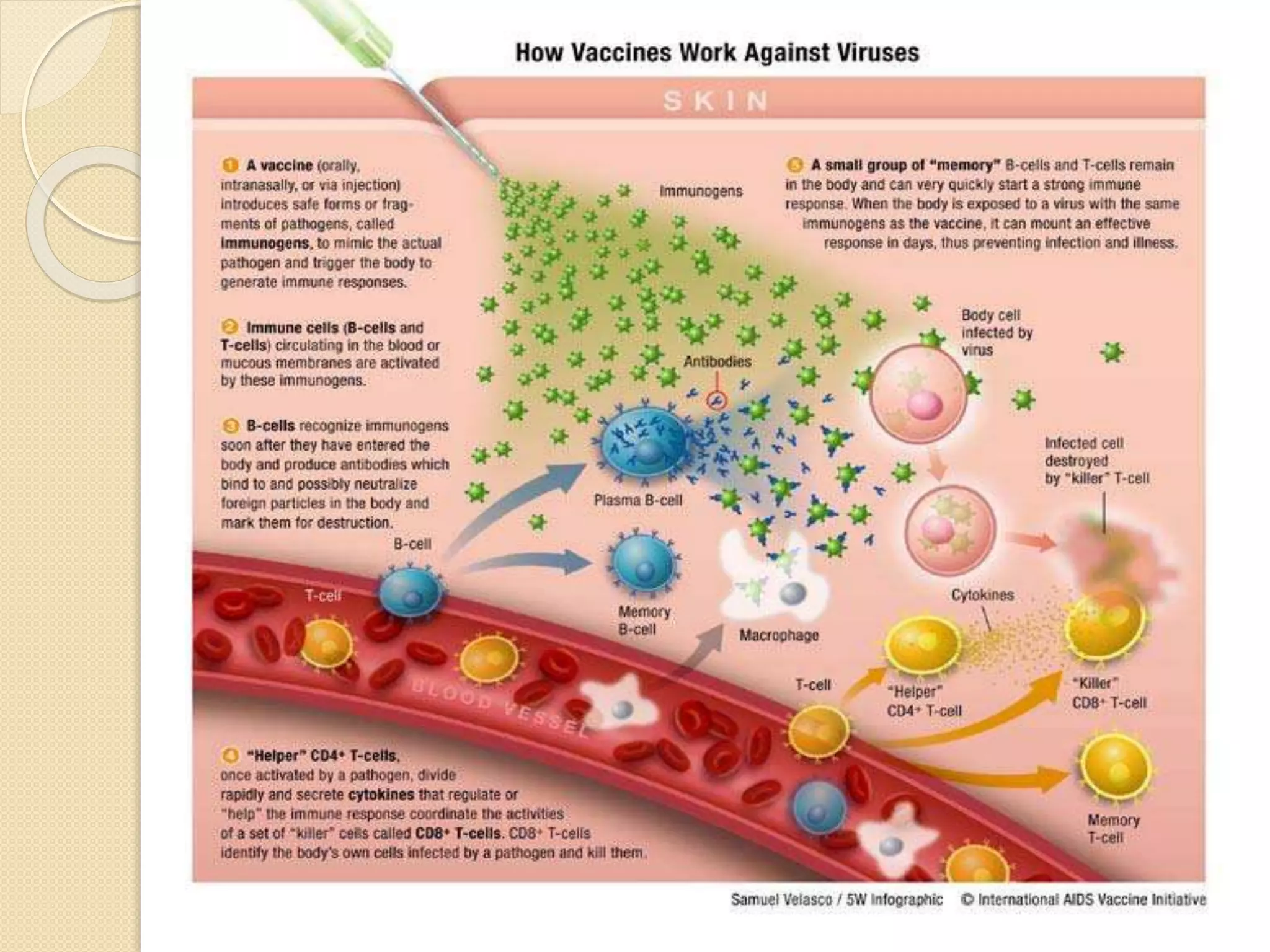
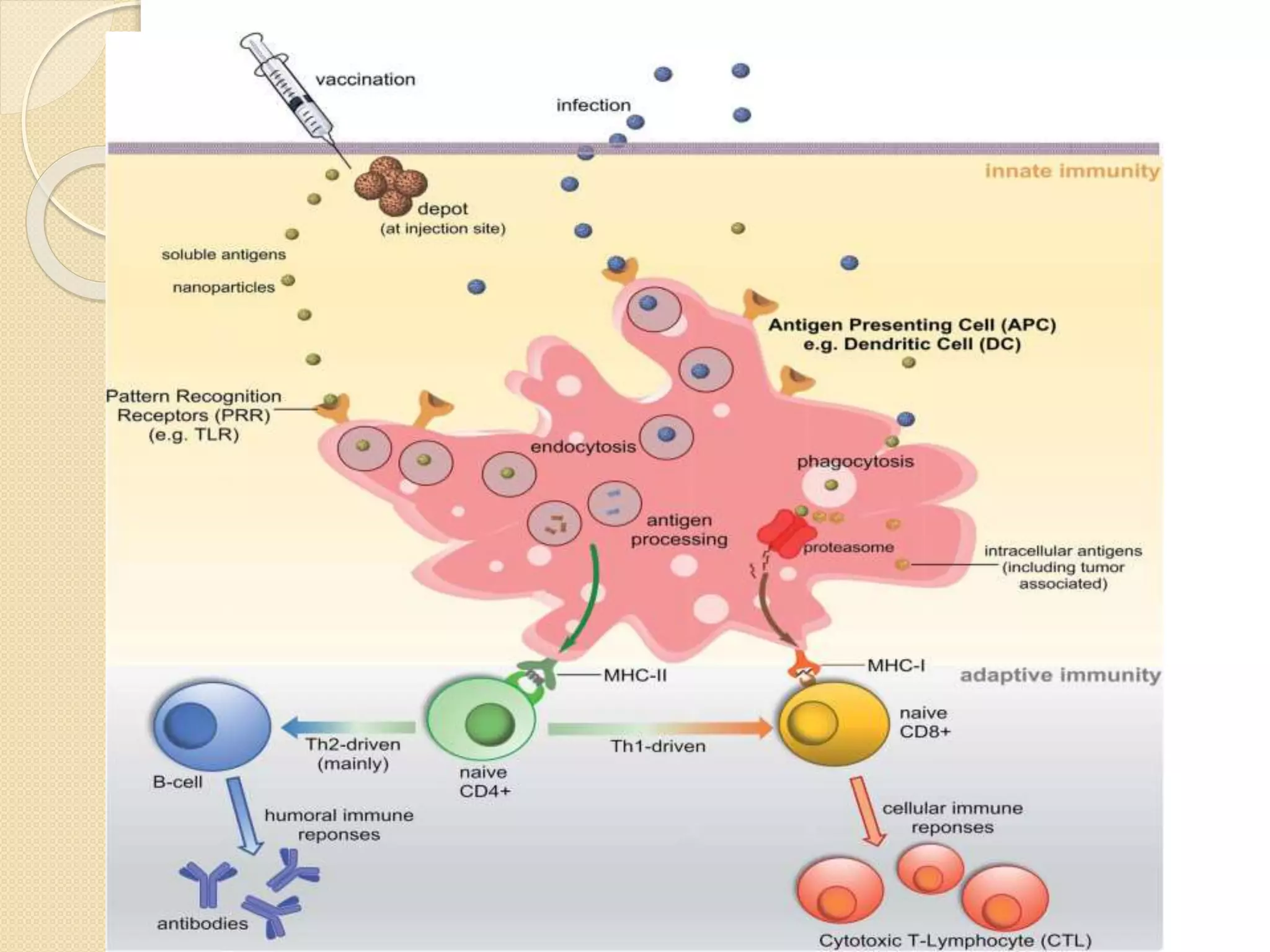
How vaccines work against
viruses
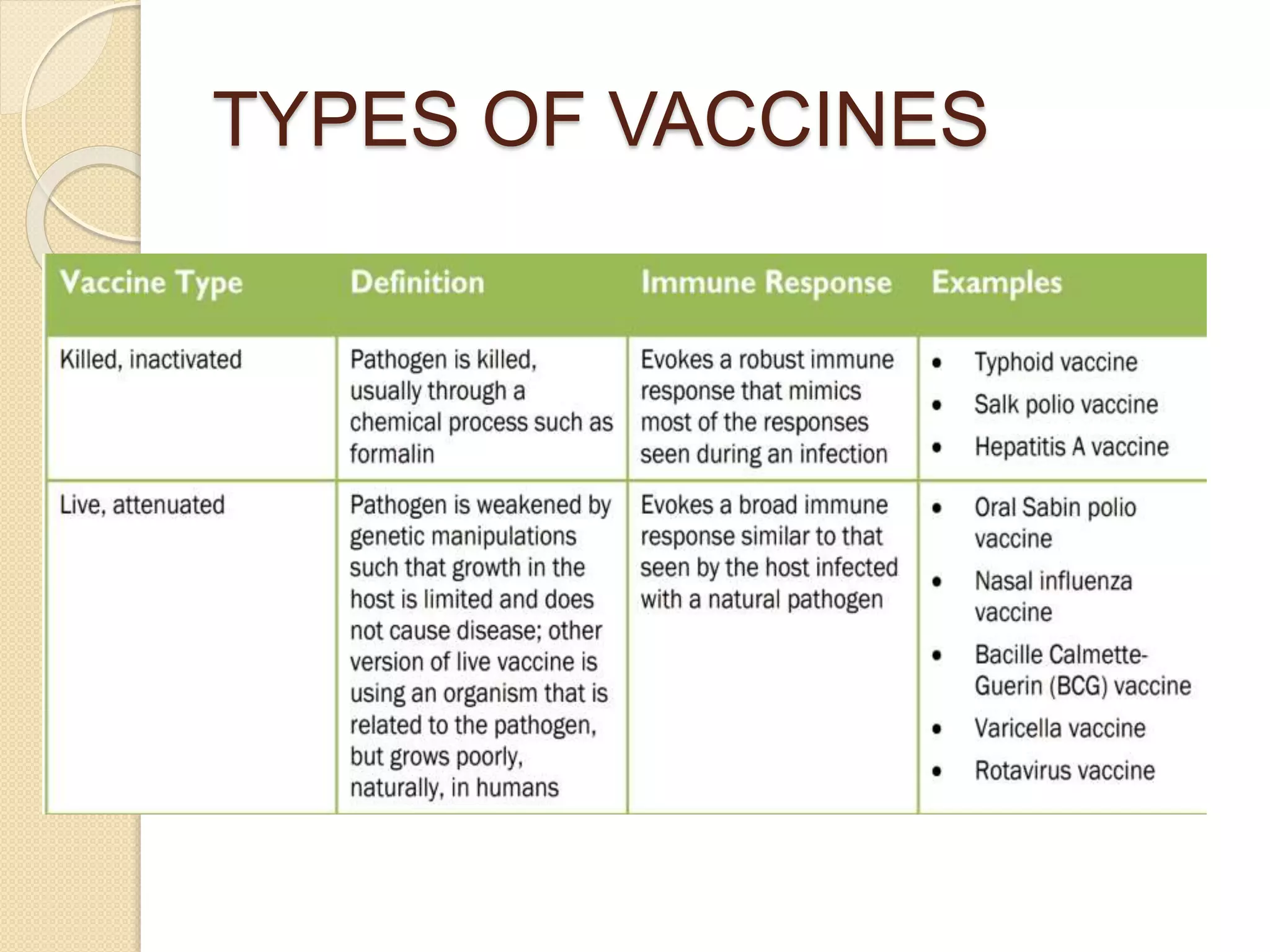
TYPES OF VACCINES
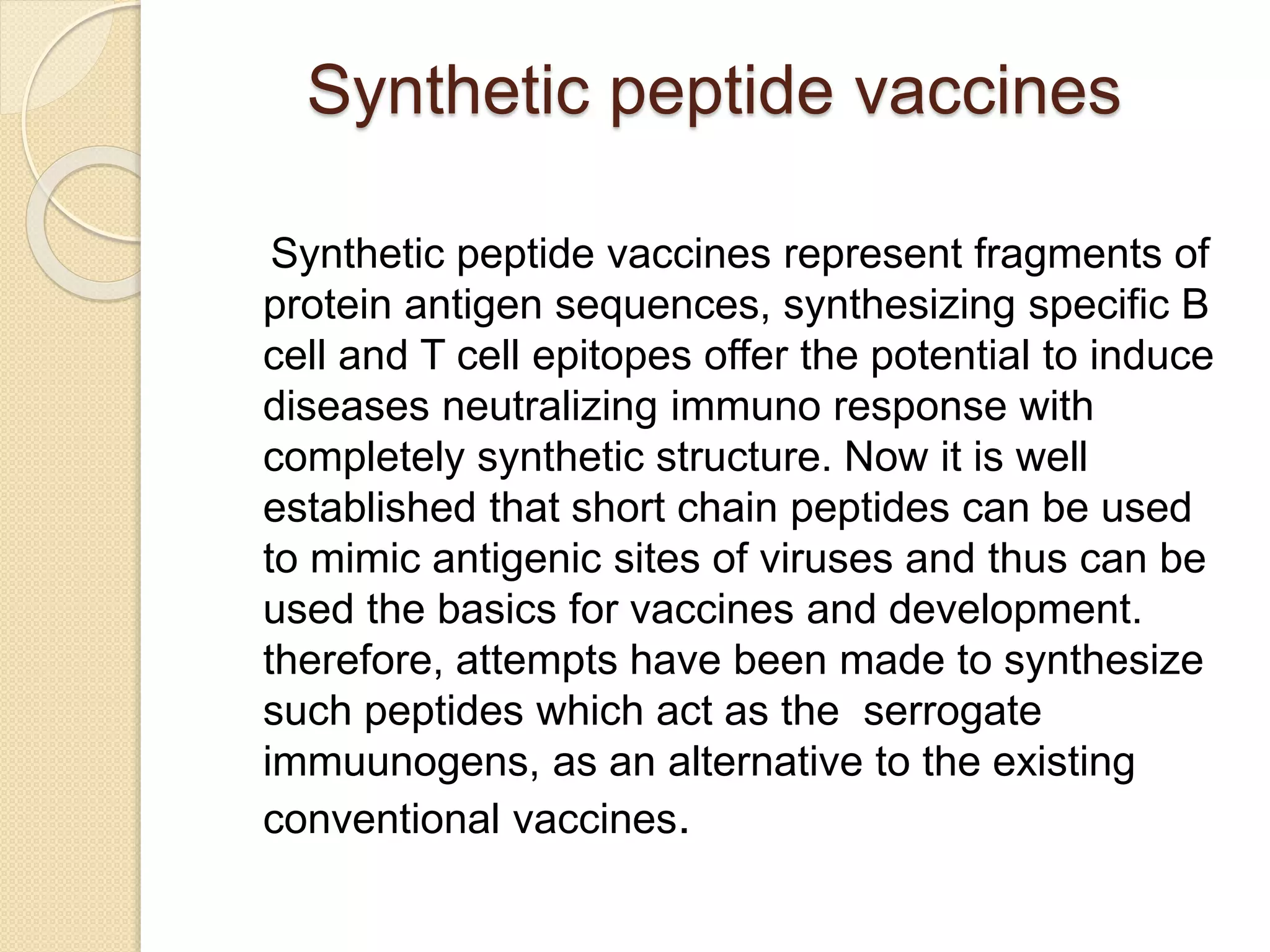
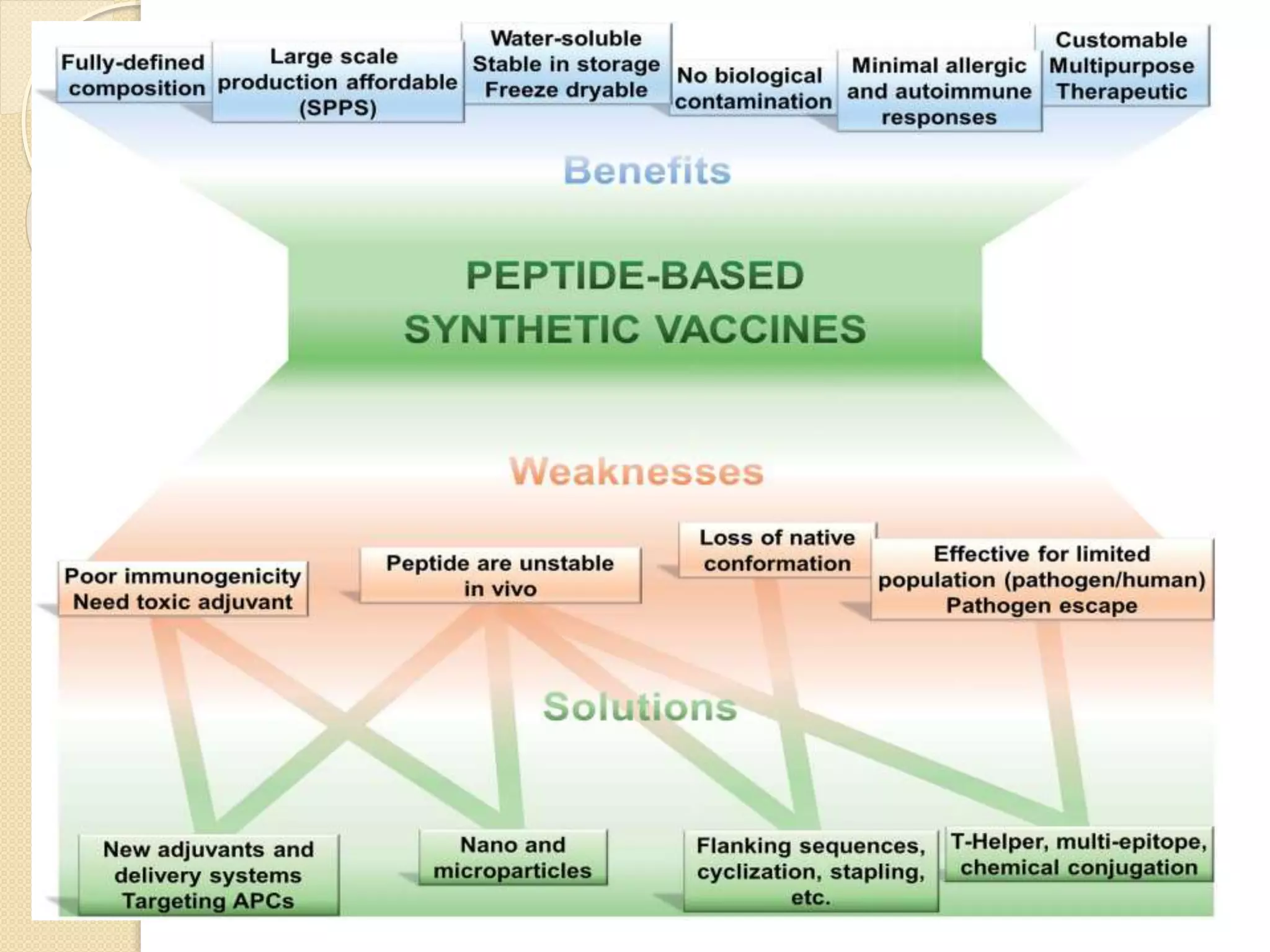
Synthetic peptide vaccines
Synthetic peptide vaccines represent fragments of
protein antigen sequences, synthesizing specific B
cell and T cell epitopes offer the potential to induce
diseases neutralizing immuno response with
completely synthetic structure. Now it is well
established that short chain peptides can be used
to mimic antigenic sites of viruses and thus can be
used the basics for vaccines and development.
therefore, attempts have been made to synthesize
such peptides which act as the serrogate
immuunogens, as an alternative to the existing
conventional vaccines.
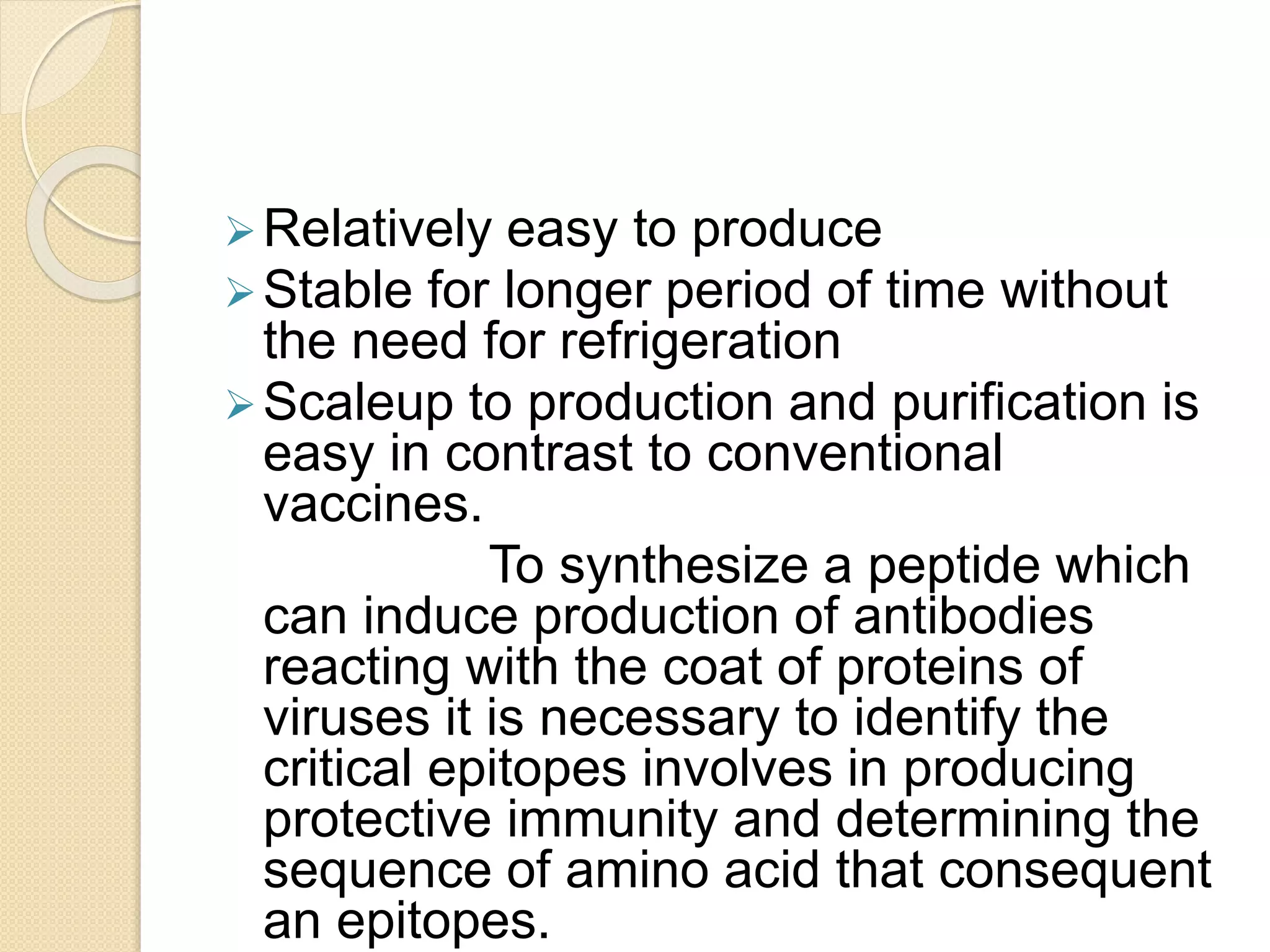
Relatively easy to produce
Stable for longer period of time without
the need for refrigeration
Scaleup to production and purification is
easy in contrast to conventional
vaccines.
To synthesize a peptide which
can induce production of antibodies
reacting with the coat of proteins of
viruses it is necessary to identify the
critical epitopes involves in producing
protective immunity and determining the
sequence of amino acid that consequent
an epitopes.
RECOMBINANT ANTIGEN
VACCINE
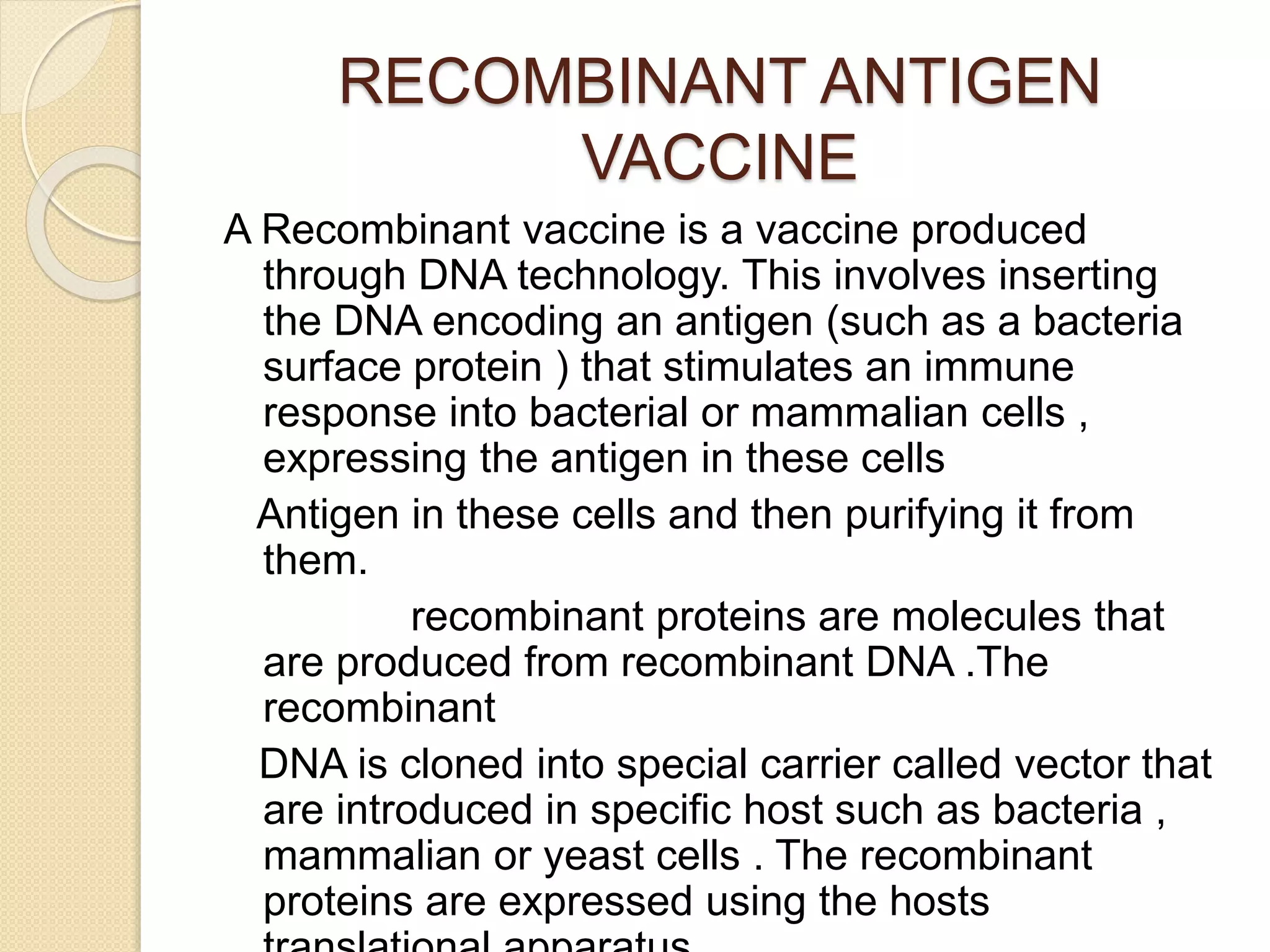
A Recombinant vaccine is a vaccine produced
through DNA technology. This involves inserting
the DNA encoding an antigen (such as a bacteria
surface protein ) that stimulates an immune
response into bacterial or mammalian cells ,
expressing the antigen in these cells
Antigen in these cells and then purifying it from
them.
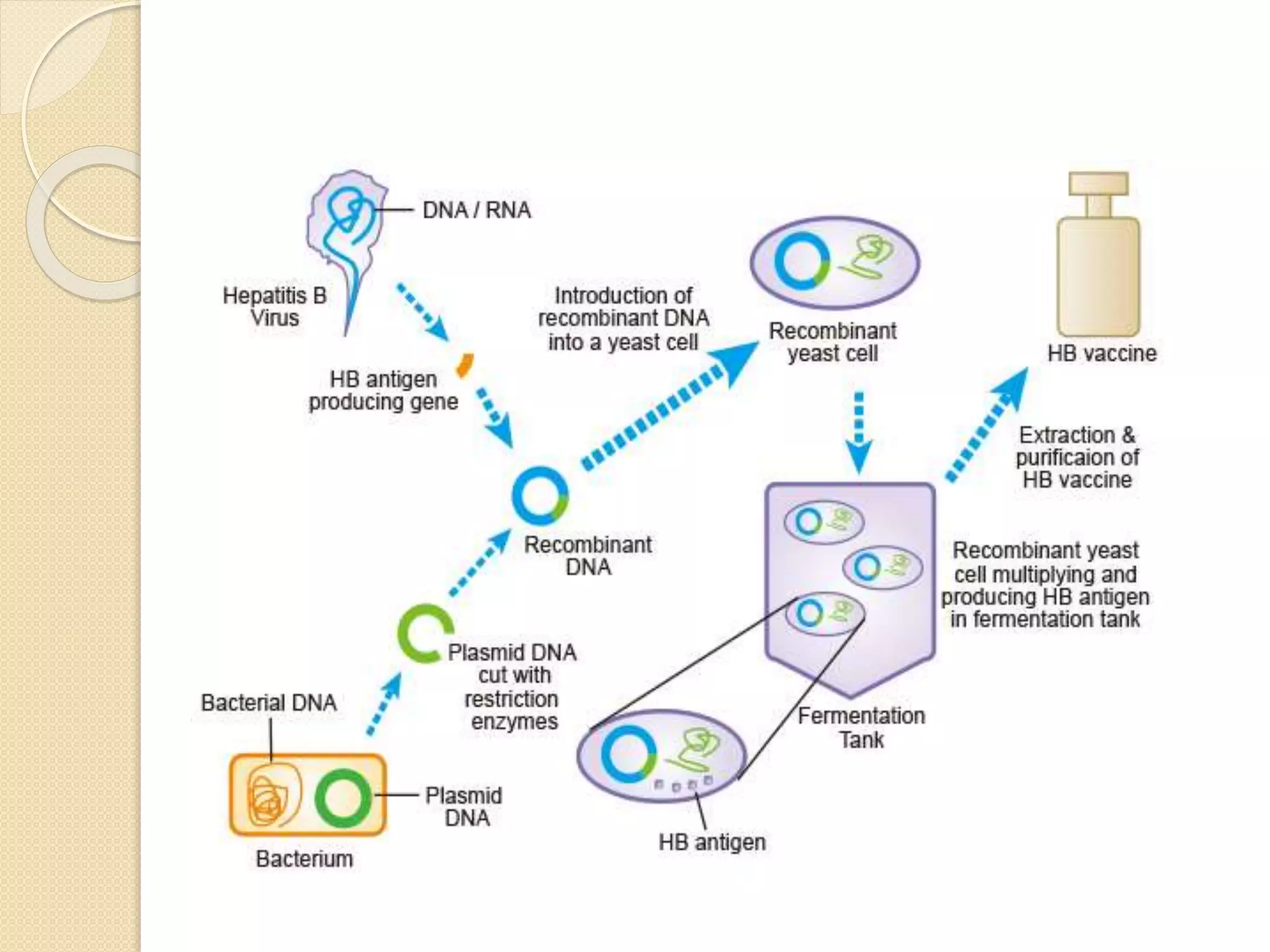
recombinant proteins are molecules that
are produced from recombinant DNA .The
recombinant
DNA is cloned into special carrier called vector that
are introduced in specific host such as bacteria ,
mammalian or yeast cells . The recombinant
proteins are expressed using the hosts
REFERENCES
 De Macro, Recombinant antibody production
evolves into multiple option aimed at yielding
reagents sutiable for appplication-specific
needs.
Micobe cell fact 14,125 (2015)
• Baneyx, F. Recombinant protein expresion in
Esherichia coli.curr.opin.biotecnol.10411-
21(1999)
• Vyas .s.p , Dixit v.k “pharmaceutical
biotecnology , 1st edition,1998 cbs
publisherand distributors ,new delhi india
330-338
• Kohli d.v ,Vyas s.p “metods in biotecnology
and bio engerring ,first edition cbs publisher
and distributors , new delhi
THANKS

SYNTHETIC PEPTIDE VACCINES AND RECOMBINANT ANTIGEN VACCINE

  • 1.
    Presented By – Rollno : Y19254016 M.Pharma 1st sem Department of Pharmaceutical Sciences Dr. Harisingh Gour University Sagar (M.P.) (A Central University) SYNTHETIC PEPTIDE VACCINES AND RECOMBINANT ANTIGEN VACCINE
  • 2.
    CONTENTS  Definition ofvaccines  Introduction to vaccine  How vaccines work against viruses  Types of vaccines  Synthetic peptide vaccines  Recombinant antigen vaccines  References
  • 3.
    INTRODUCTION TO VACCINE What is a Vaccine? A vaccine is a substance that is introduced into the body to prevent infection or to control disease due to a certain pathogen (a disease-causing organism, such as a virus, bacteria or parasite). The vaccine “teaches” the body how to defend itself against the pathogen by creating an immune response. 1 Unlike traditional pharmaceuticals, vaccines are biologics since they are made from living organisms (biological sources). 2 Specifically, vaccines are preparations of components derived from (or related to) a pathogen; they can typically induce a protective effect through one to three very small doses, in the range of micrograms to milligrams. 3 Immunity lasts for an extended period, from one year up to lifetime protection, including prevention of disease and/or
  • 5.
    How vaccines workagainst viruses
  • 6.
  • 8.
    Synthetic peptide vaccines Syntheticpeptide vaccines represent fragments of protein antigen sequences, synthesizing specific B cell and T cell epitopes offer the potential to induce diseases neutralizing immuno response with completely synthetic structure. Now it is well established that short chain peptides can be used to mimic antigenic sites of viruses and thus can be used the basics for vaccines and development. therefore, attempts have been made to synthesize such peptides which act as the serrogate immuunogens, as an alternative to the existing conventional vaccines.
  • 9.
    Relatively easy toproduce Stable for longer period of time without the need for refrigeration Scaleup to production and purification is easy in contrast to conventional vaccines. To synthesize a peptide which can induce production of antibodies reacting with the coat of proteins of viruses it is necessary to identify the critical epitopes involves in producing protective immunity and determining the sequence of amino acid that consequent an epitopes.
  • 12.
    RECOMBINANT ANTIGEN VACCINE A Recombinantvaccine is a vaccine produced through DNA technology. This involves inserting the DNA encoding an antigen (such as a bacteria surface protein ) that stimulates an immune response into bacterial or mammalian cells , expressing the antigen in these cells Antigen in these cells and then purifying it from them. recombinant proteins are molecules that are produced from recombinant DNA .The recombinant DNA is cloned into special carrier called vector that are introduced in specific host such as bacteria , mammalian or yeast cells . The recombinant proteins are expressed using the hosts
  • 14.
    REFERENCES  De Macro,Recombinant antibody production evolves into multiple option aimed at yielding reagents sutiable for appplication-specific needs. Micobe cell fact 14,125 (2015) • Baneyx, F. Recombinant protein expresion in Esherichia coli.curr.opin.biotecnol.10411- 21(1999) • Vyas .s.p , Dixit v.k “pharmaceutical biotecnology , 1st edition,1998 cbs publisherand distributors ,new delhi india 330-338 • Kohli d.v ,Vyas s.p “metods in biotecnology and bio engerring ,first edition cbs publisher and distributors , new delhi
  • 15.