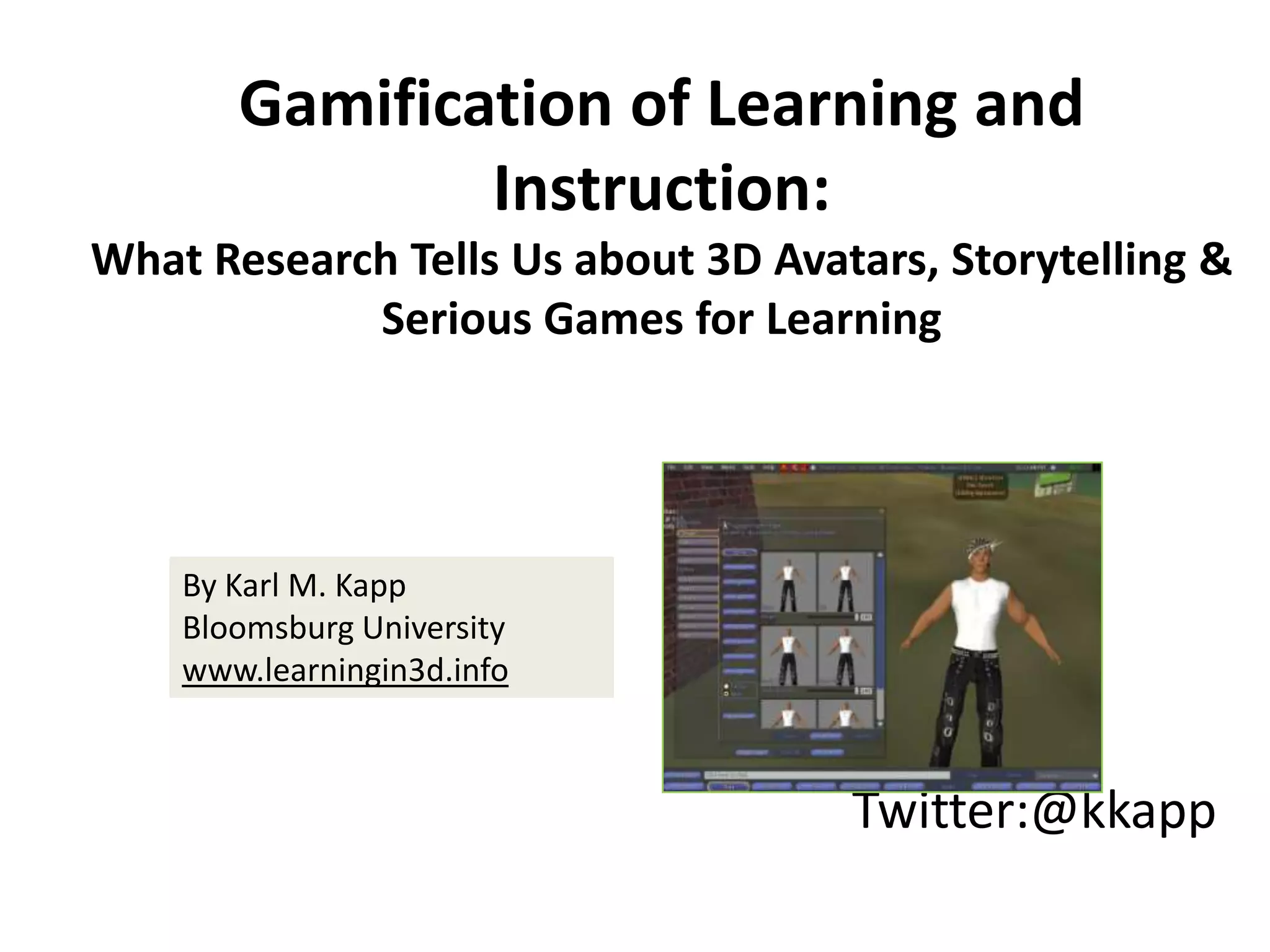













Gamification of Learning and Instruction: What Research Tells Us about 3D Avatars, Storytelling & Serious Games for LearningBy Karl M. KappBloomsburg University www.learningin3d.infoTwitter:@kkapp
Google “Kapp Notes”2012 New Book:“The Gamification of Learning and Instruction”July 2011 T&D ArticleMatching the Right Instruction to the Right Content
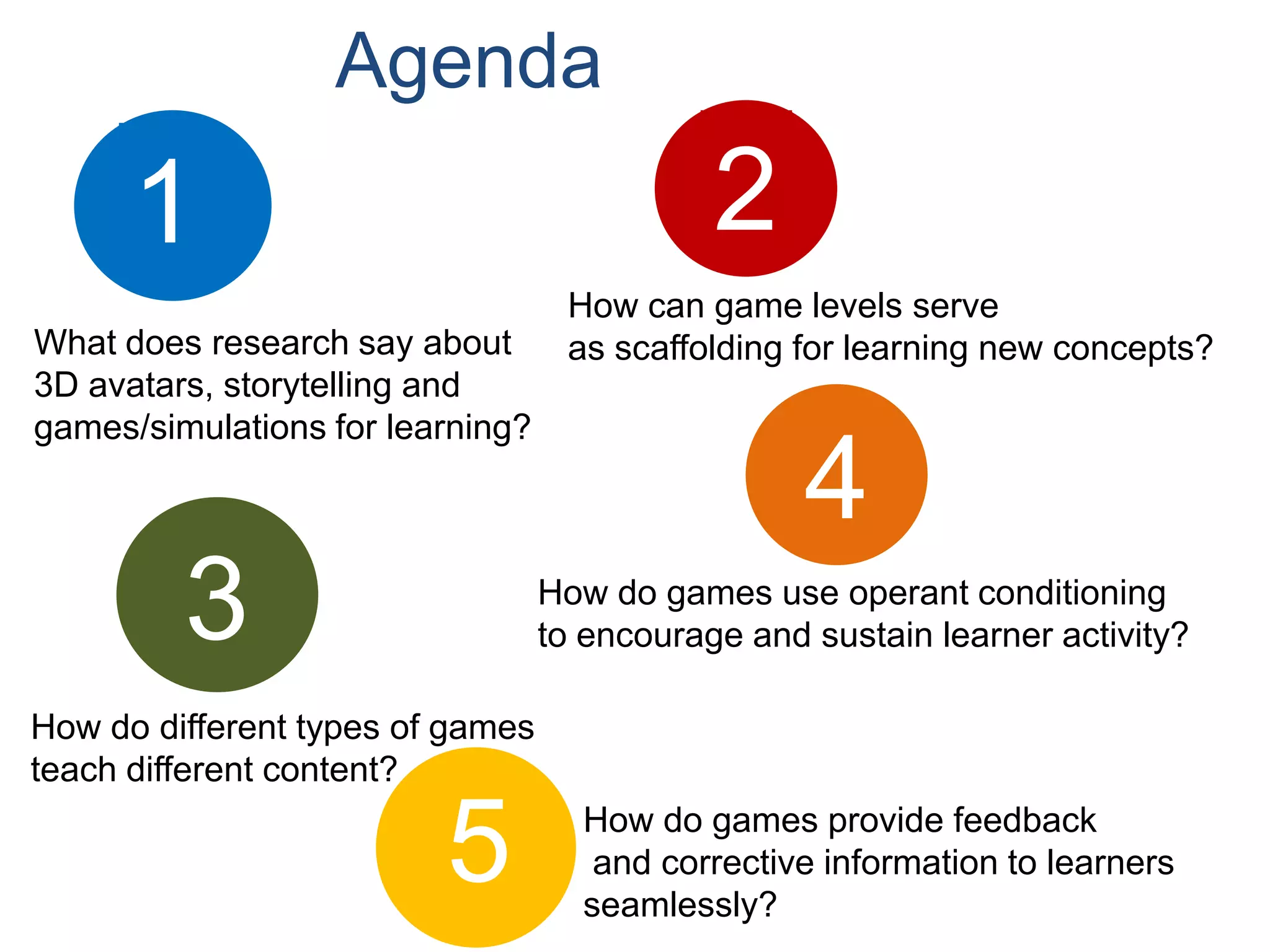
Agenda21How can game levels serve as scaffolding for learning new concepts?What does research say about 3D avatars, storytelling and games/simulations for learning?43How do games use operant conditioningto encourage and sustain learner activity?How do different types of gamesteach different content?5How do games provide feedbackand corrective information to learners seamlessly?
3D Avatars, StorytellingGames
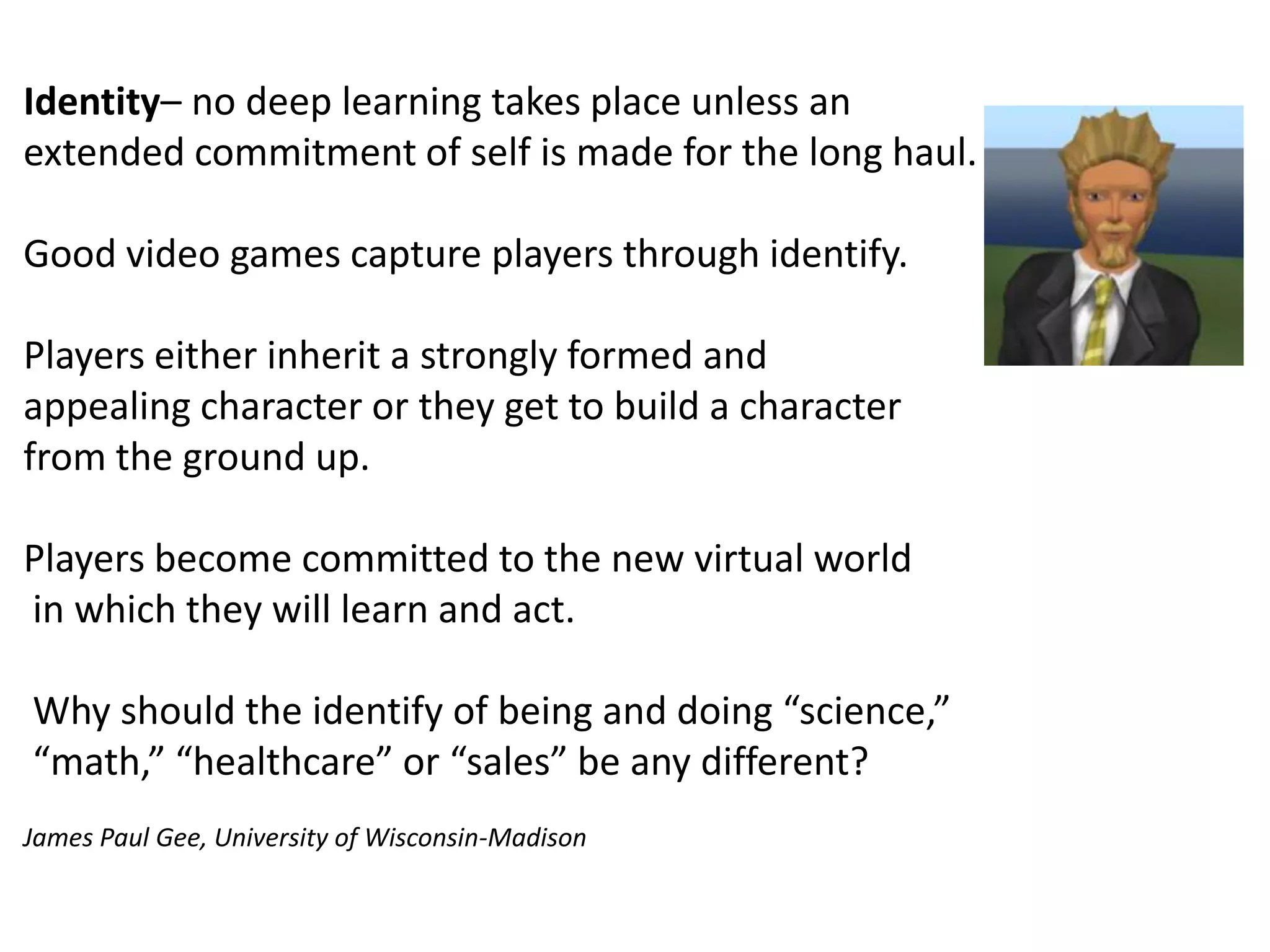
Identity– no deep learning takes place unless an extended commitment of self is made for the long haul.Good video games capture players through identify.Players either inherit a strongly formed and appealing character or they get to build a characterfrom the ground up.Players become committed to the new virtual world in which they will learn and act. Why should the identify of being and doing “science,” “math,” “healthcare” or “sales” be any different?James Paul Gee, University of Wisconsin-Madison
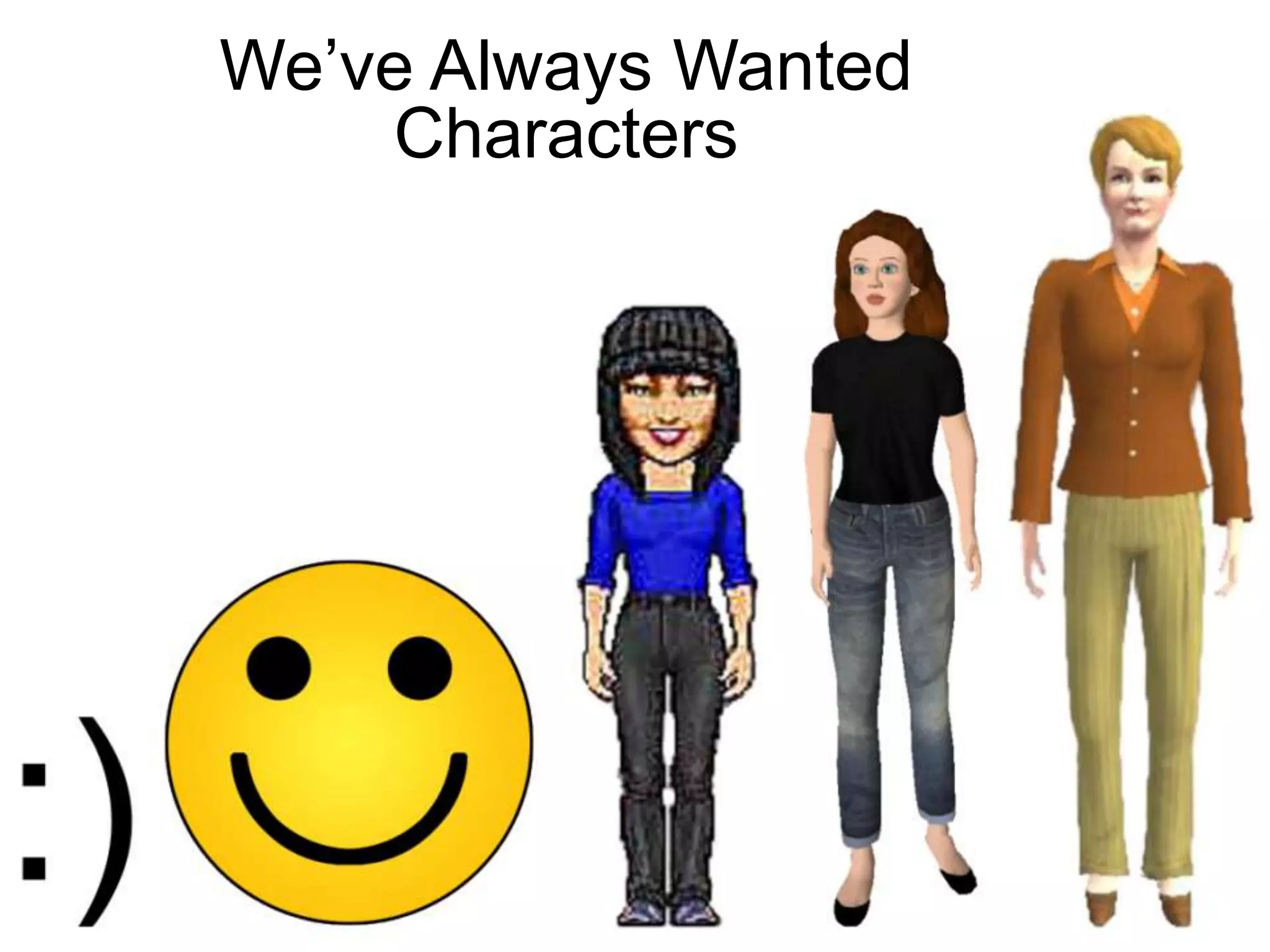
We’ve Always Wanted Characters
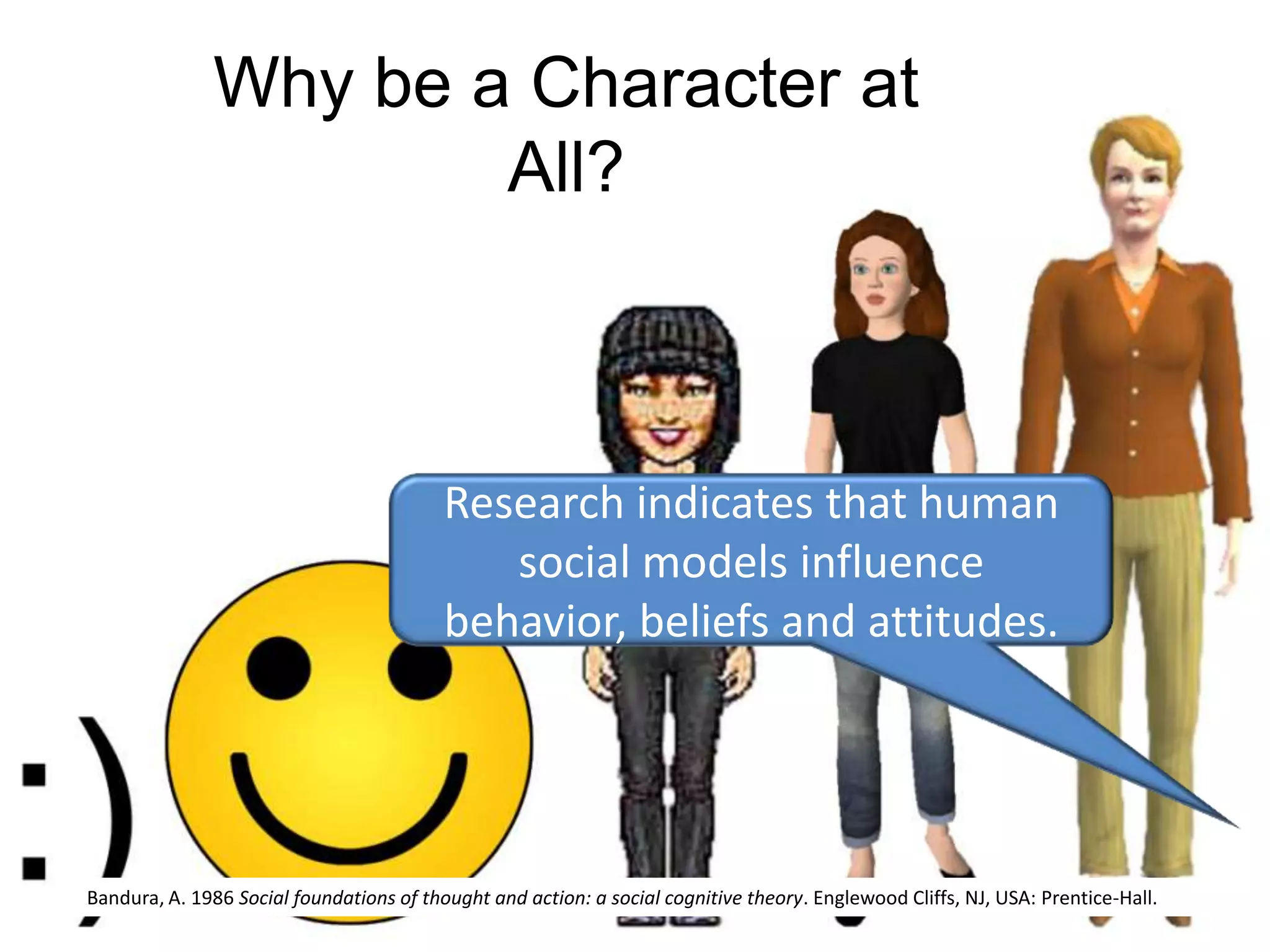
Why be a Character at All?Research indicates that human social models influence behavior, beliefs and attitudes. Bandura, A. 1986 Social foundations of thought and action: a social cognitive theory. Englewood Cliffs, NJ, USA: Prentice-Hall.
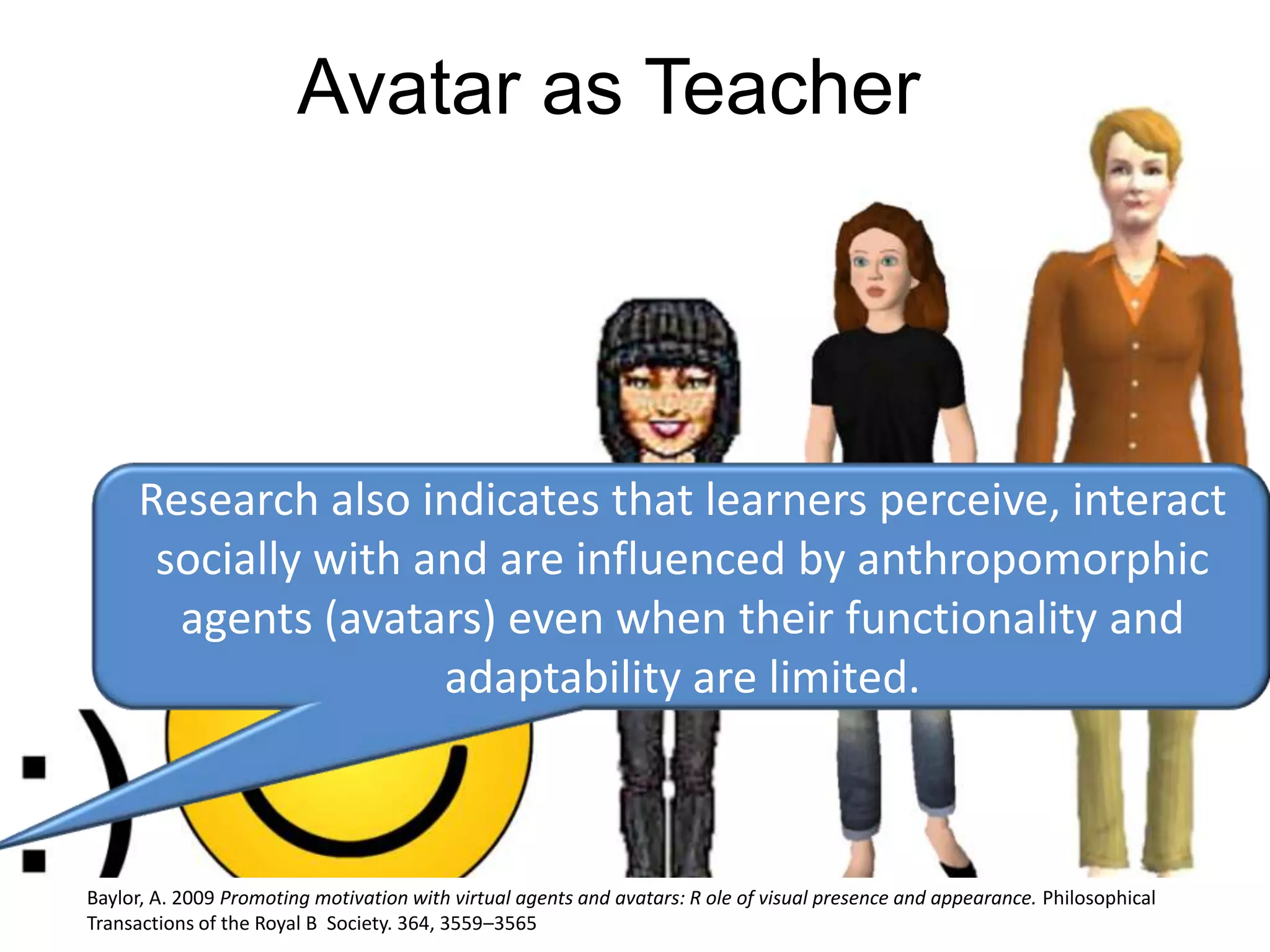
Avatar as TeacherResearch also indicates that learners perceive, interact socially with and are influenced by anthropomorphic agents (avatars) even when their functionality and adaptability are limited.Baylor, A. 2009 Promoting motivation with virtual agents and avatars: R ole of visual presence and appearance. Philosophical Transactions of the Royal B  Society. 364, 3559–3565
Can an experience as an avatar change a person's real life perceptions?YesNoNot Sure?
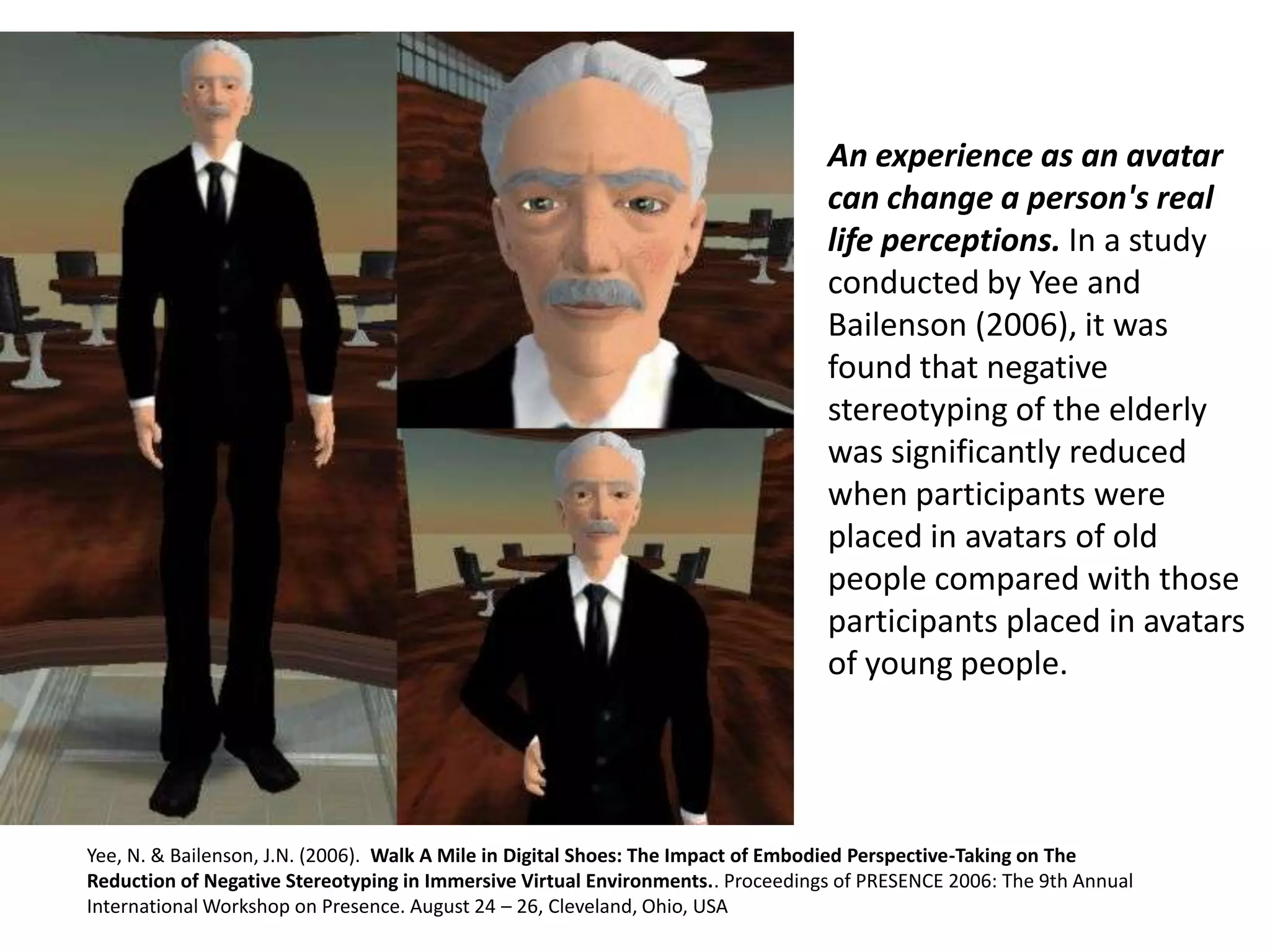
An experience as an avatar can change a person's real life perceptions. In a study conducted by Yee and Bailenson (2006), it was found that negative stereotyping of the elderly was significantly reduced when participants were placed in avatars of old people compared with those participants placed in avatars of young people.Yee, N. & Bailenson, J.N. (2006).  Walk A Mile in Digital Shoes: The Impact of Embodied Perspective-Taking on TheReduction of Negative Stereotyping in Immersive Virtual Environments..Proceedings of PRESENCE 2006: The 9th Annual International Workshop on Presence. August 24 – 26, Cleveland, Ohio, USA
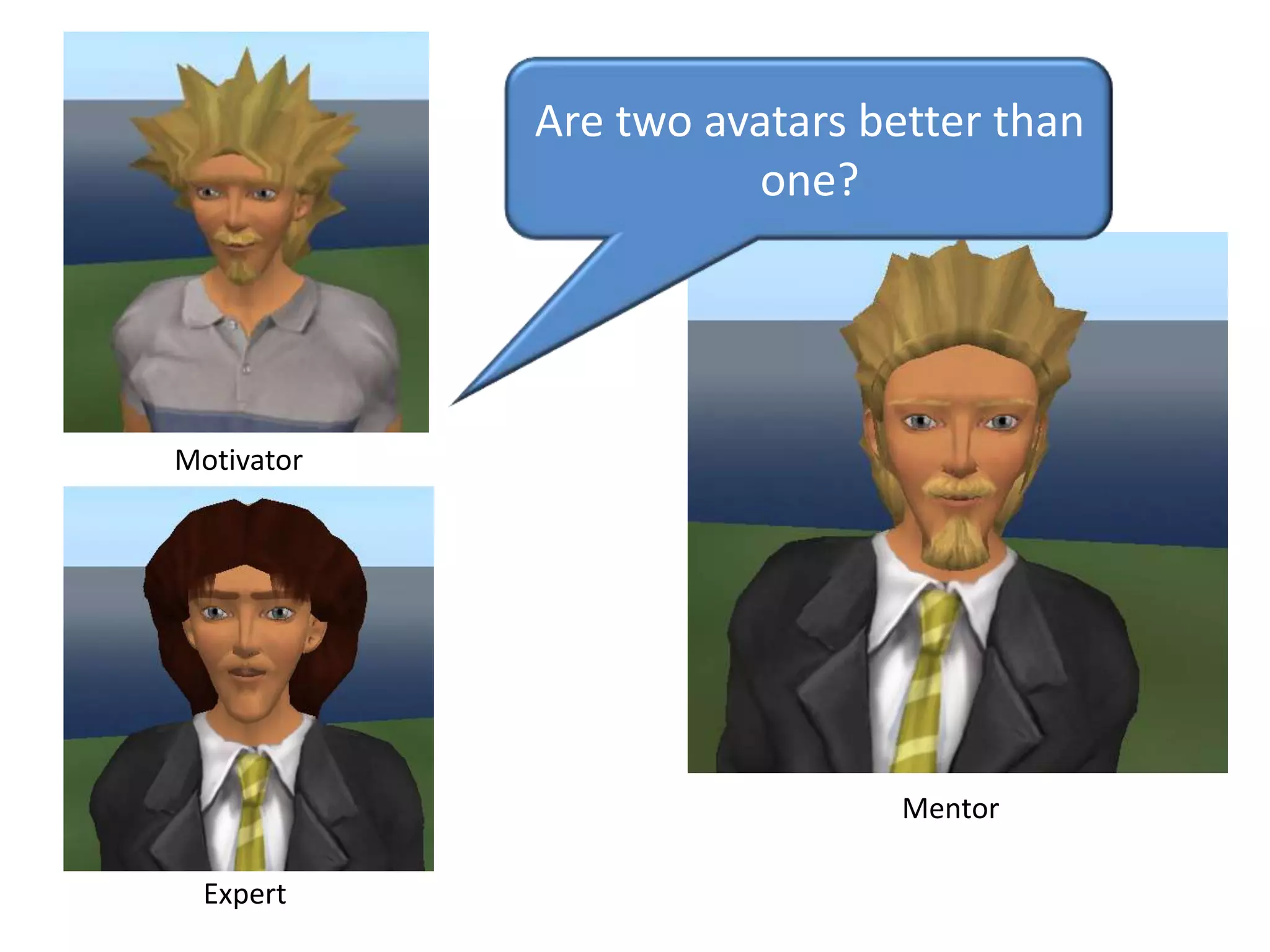
Are two avatars better than one?MotivatorMentorExpert
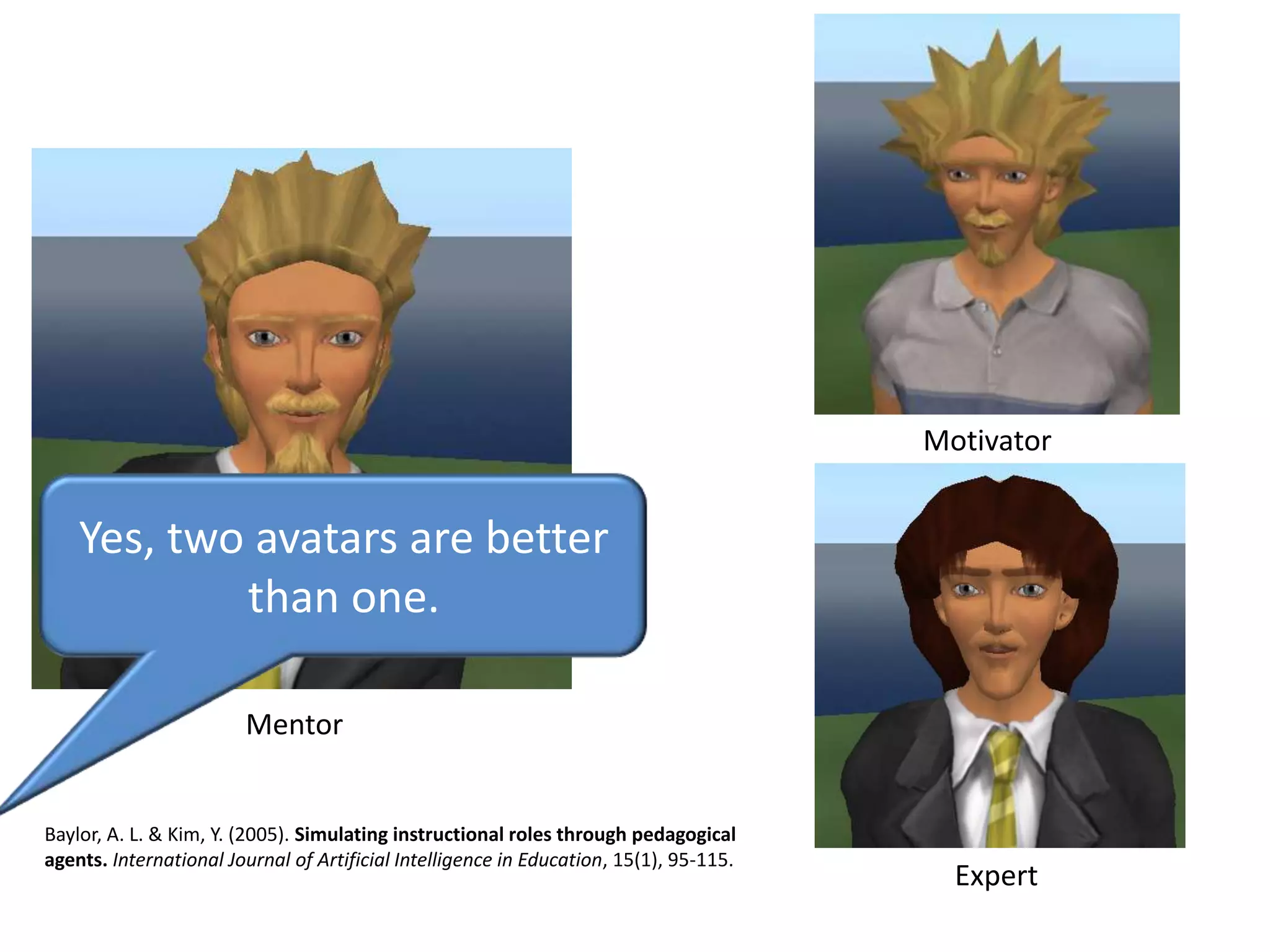
MotivatorYes, two avatars are better than one.MentorBaylor, A. L. & Kim, Y. (2005). Simulating instructional roles through pedagogical agents. International Journal of Artificial Intelligence in Education, 15(1), 95-115.Expert
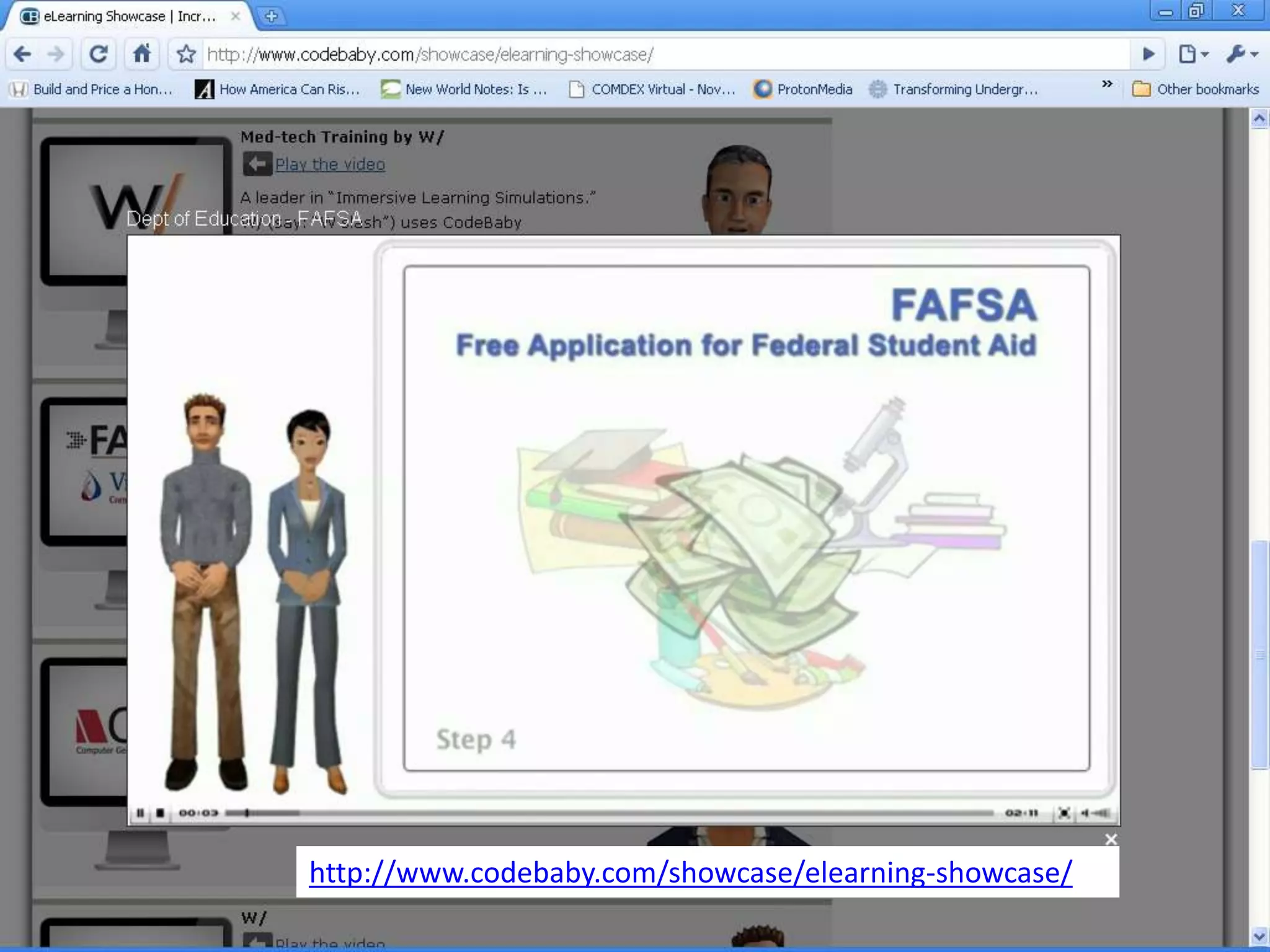
http://www.codebaby.com/showcase/elearning-showcase/
Three groups: Which is more likely to exercise within the next 24 hours?Group 1 watches an avatar that looks like them loiteringGroup 2 watches an avatar that does not look like themselves exercising.Group 3 watches an avatar that looks like themselves exercising.
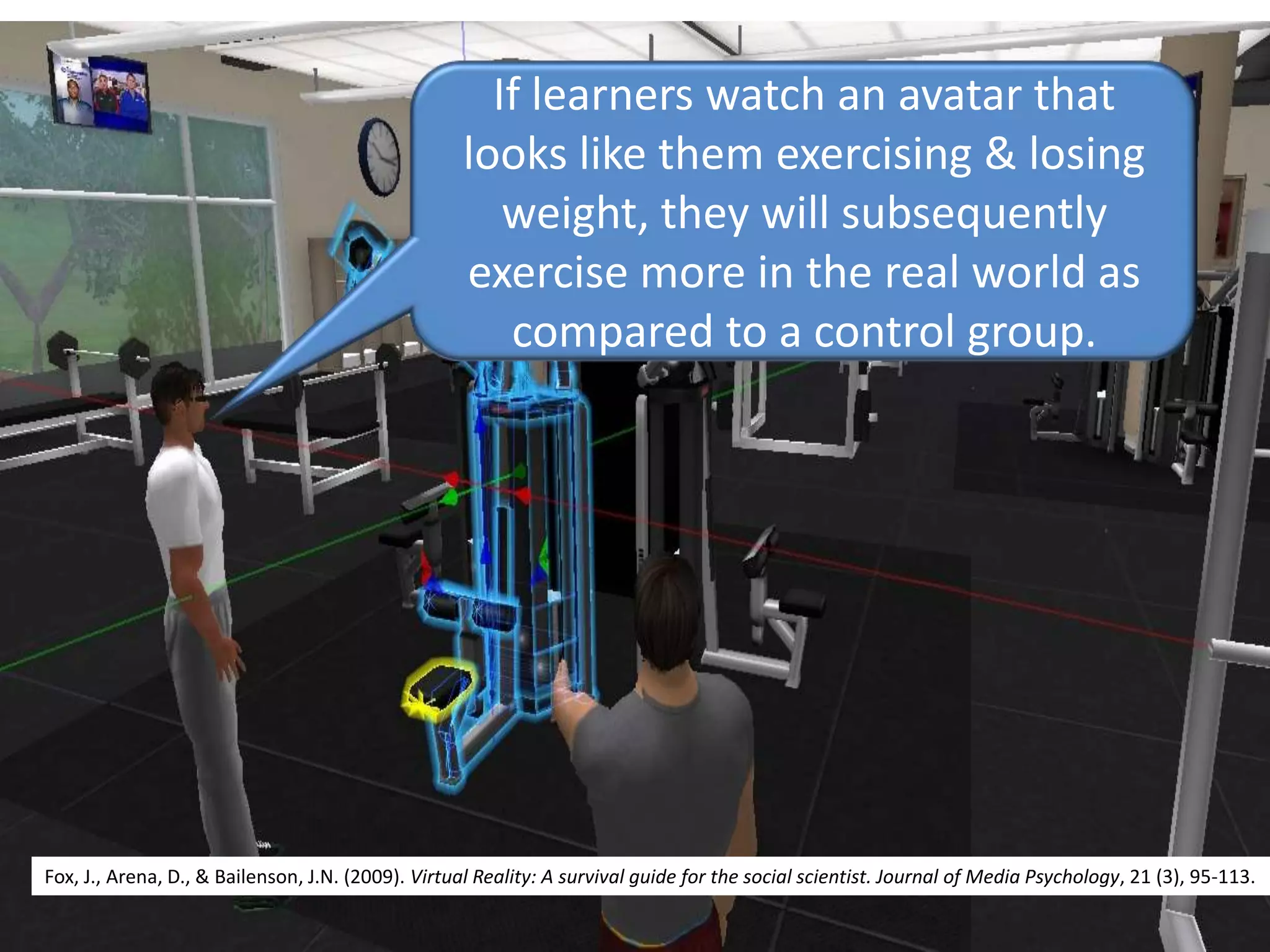
If learners watch an avatar that looks like them exercising & losing weight, they will subsequently exercise more in the real world as compared to a control group.Fox, J., Arena, D., & Bailenson, J.N. (2009). Virtual Reality: A survival guide for the social scientist. Journal of Media Psychology, 21 (3), 95-113.
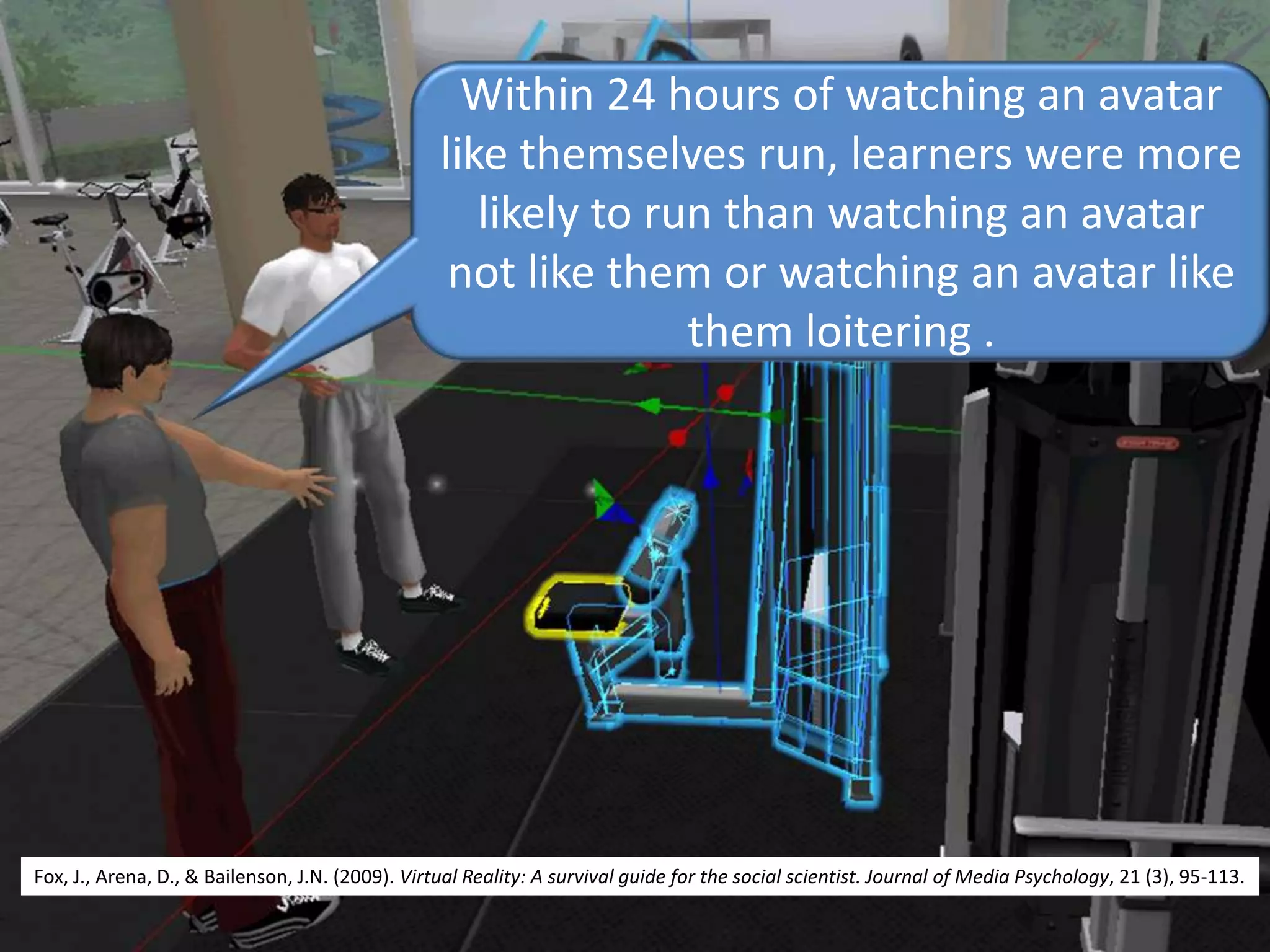
Within 24 hours of watching an avatar like themselves run, learners were more likely to run than watching an avatar not like them or watching an avatar like them loitering .Fox, J., Arena, D., & Bailenson, J.N. (2009). Virtual Reality: A survival guide for the social scientist. Journal of Media Psychology, 21 (3), 95-113.
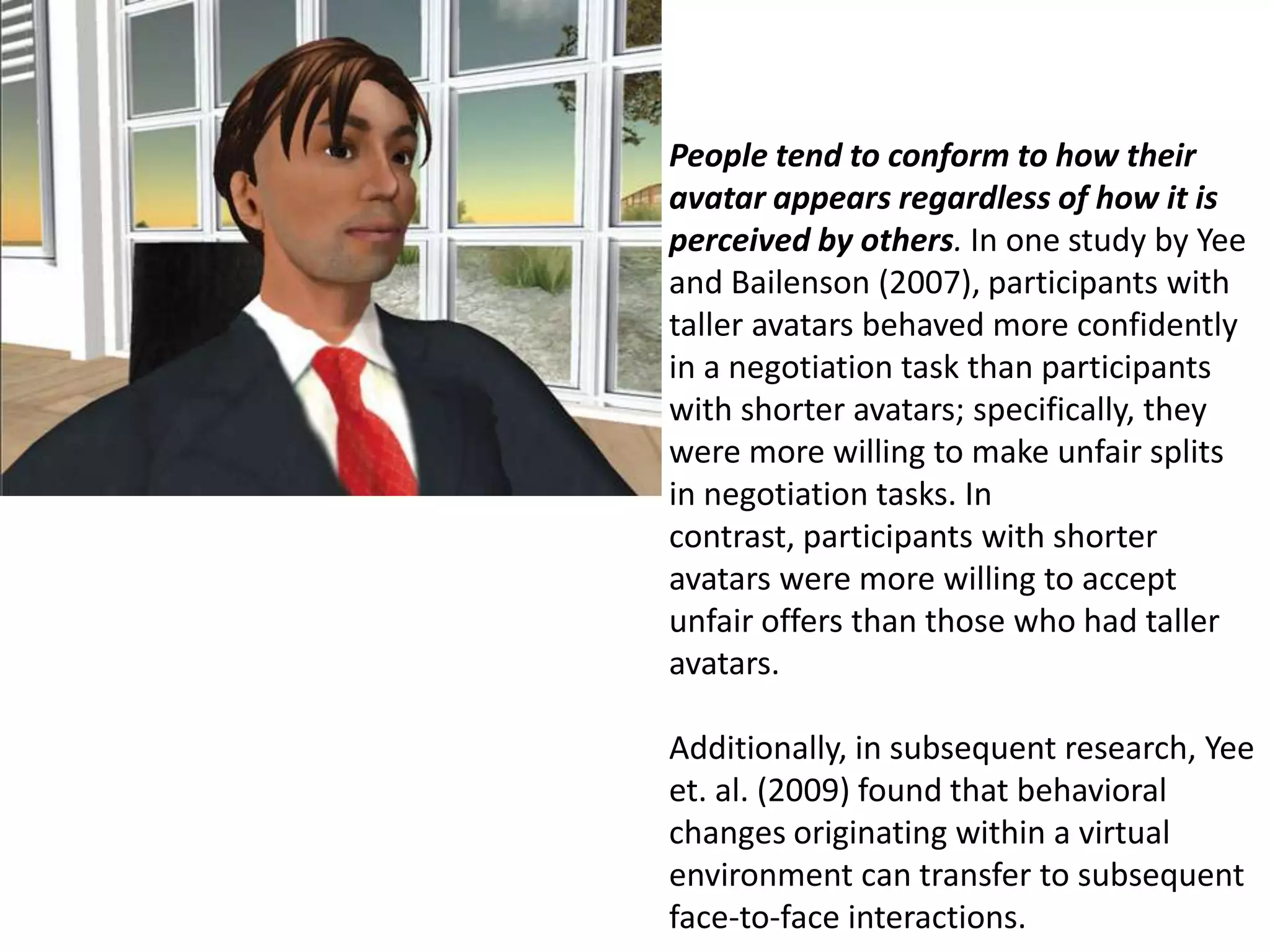
People tend to conform to how their avatar appears regardless of how it is perceived by others. In one study by Yee and Bailenson (2007), participants with taller avatars behaved more confidently in a negotiation task than participants with shorter avatars; specifically, they were more willing to make unfair splits in negotiation tasks. In contrast, participants with shorter avatars were more willing to accept unfair offers than those who had taller avatars.   Additionally, in subsequent research, Yee et. al. (2009) found that behavioral changes originating within a virtual environment can transfer to subsequent face-to-face interactions.
Which builds more confidence for on the job application of learned knowledge?Class room instruction.Simulation Game.
Simulation Game.20% higher.Sitzmann, T. (in press) A meta-analytic examination of the instructional effectiveness of computer-based simulation games. Personnel Psychology.
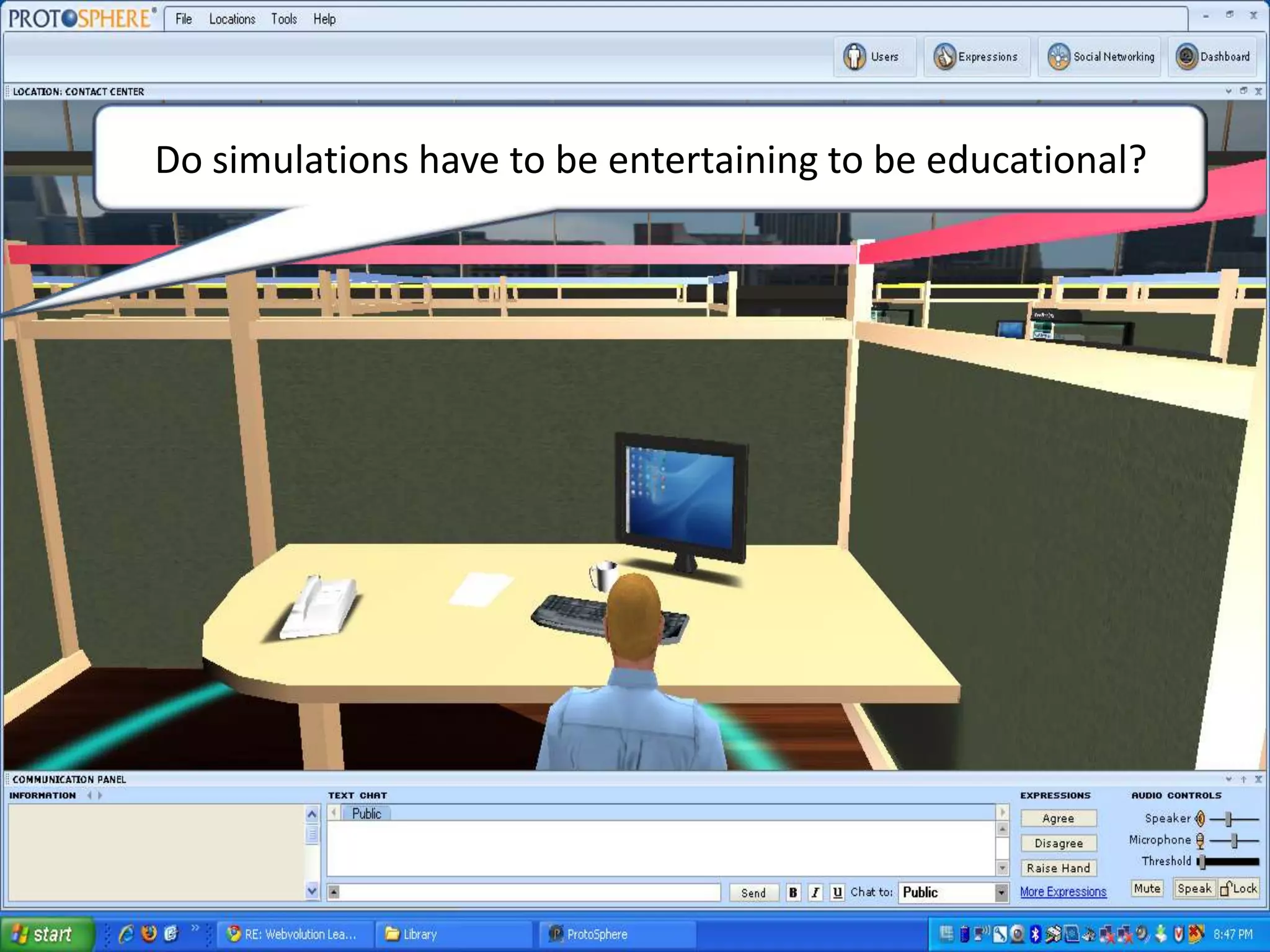
Do simulations have to be entertaining to be educational?
NOSitzmann, T. (in press) A meta-analytic examination of the instructional effectiveness of computer-based simulation games. Personnel Psychology .
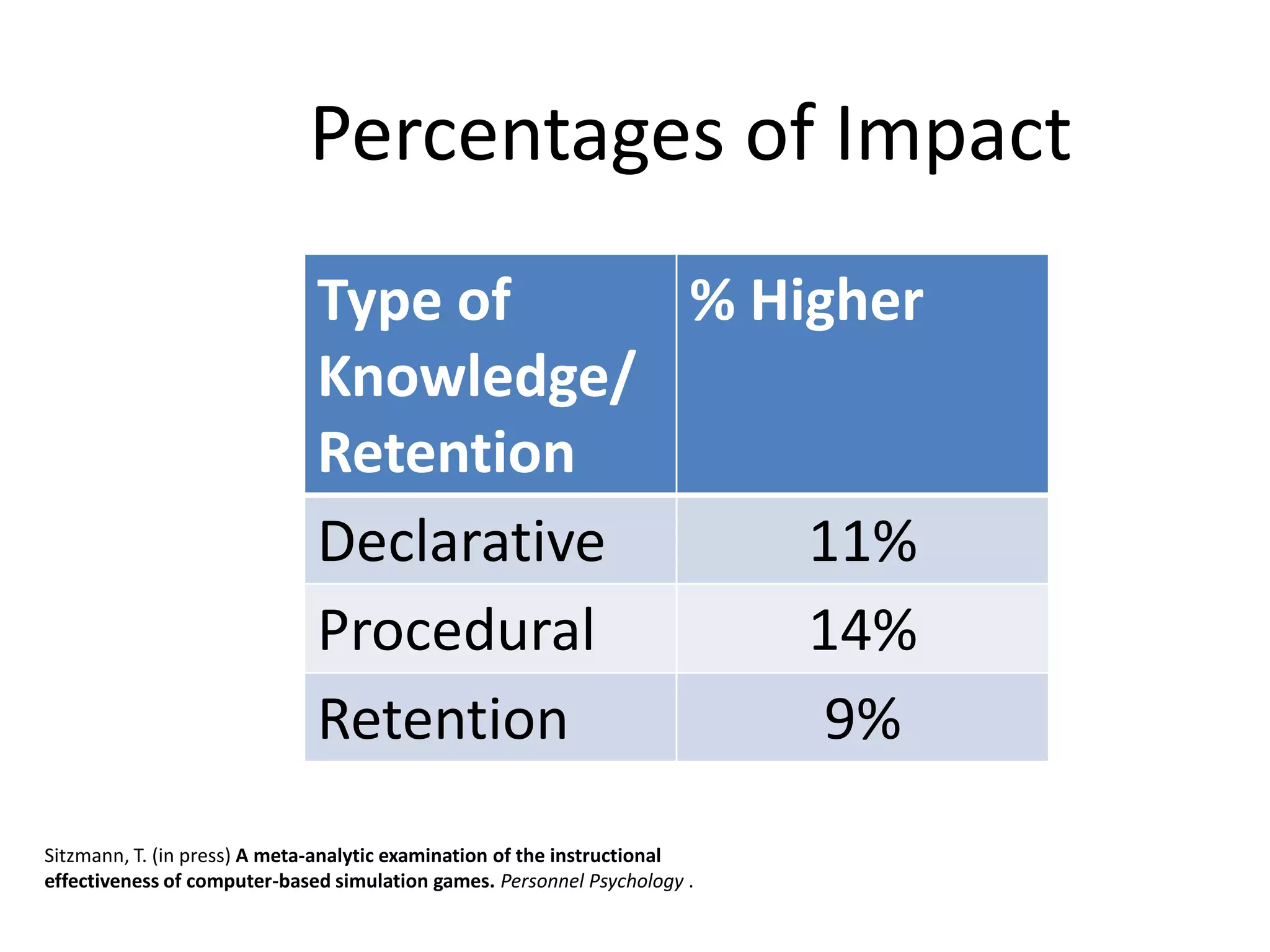
Percentages of ImpactSitzmann, T. (in press) A meta-analytic examination of the instructional effectiveness of computer-based simulation games. Personnel Psychology .
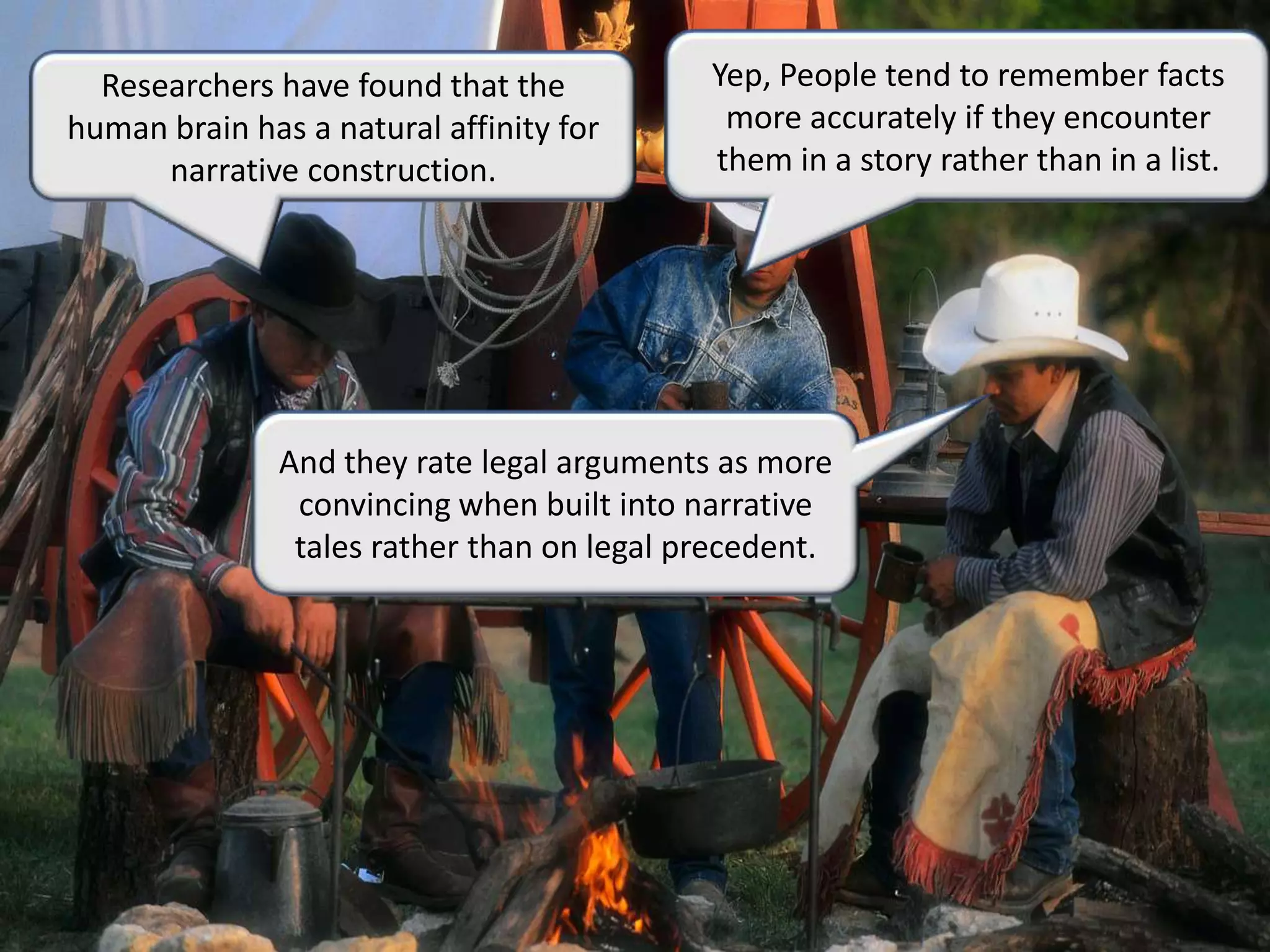
Yep, People tend to remember facts more accurately if they encounter them in a story rather than in a list.Researchers have found that the human brain has a natural affinity for narrative construction.And they rate legal arguments as more convincing when built into narrative tales rather than on legal precedent.
Game Levels asScaffolding
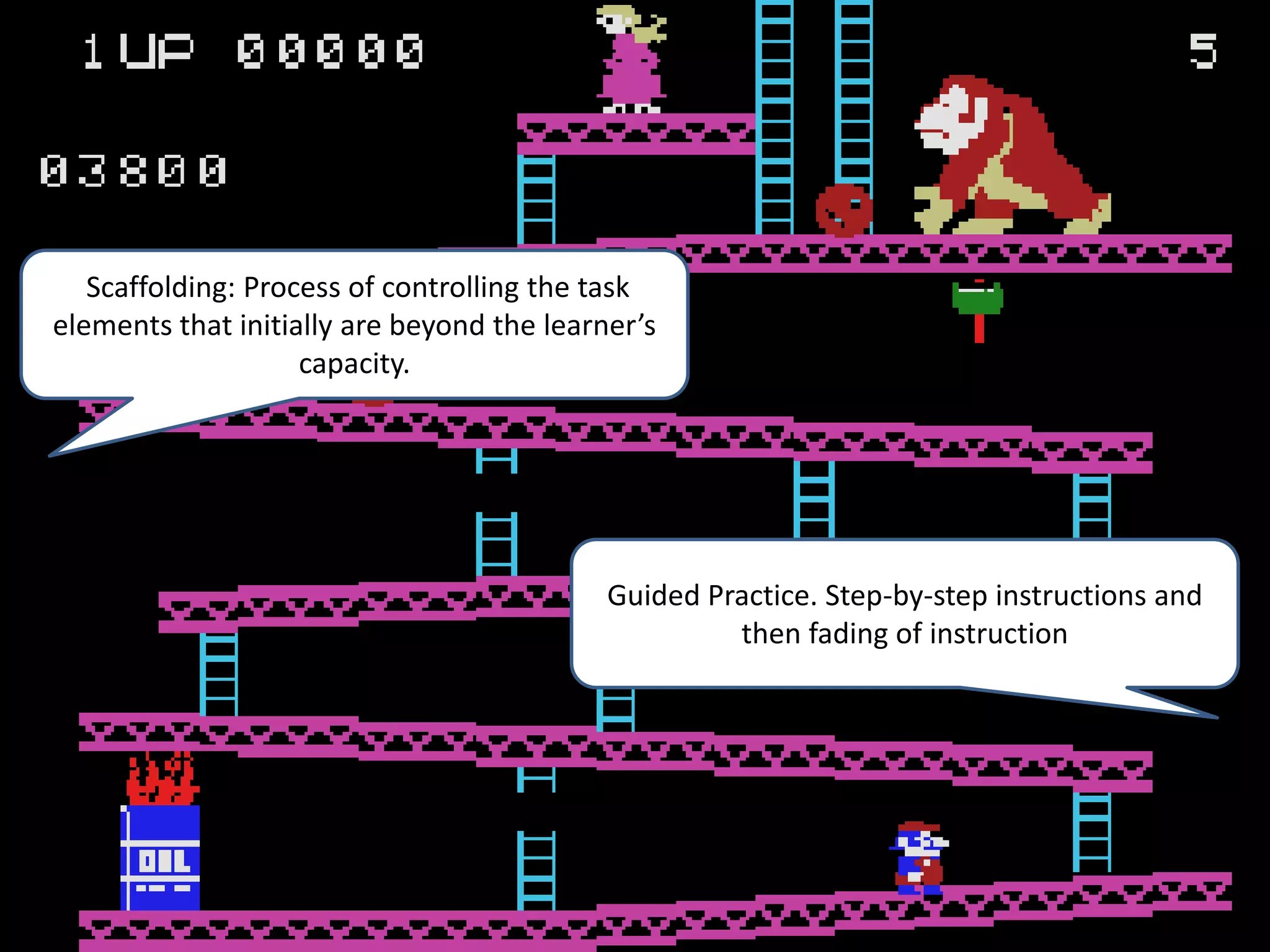
 Scaffolding: Process of controlling the task elements that initially are beyond the learner’s capacity. Guided Practice. Step-by-step instructions and then fading of instruction
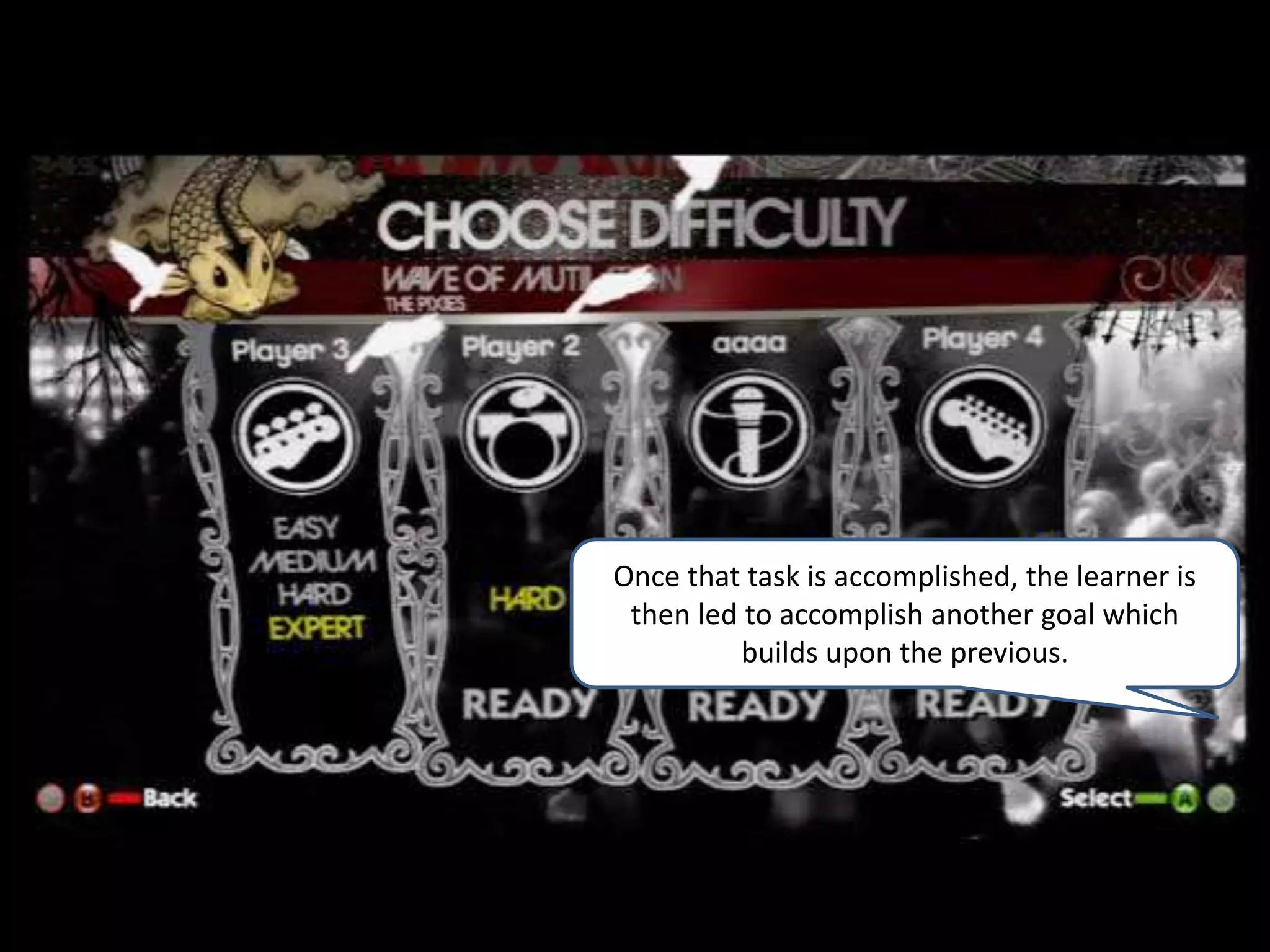
Once that task is accomplished, the learner is then led to accomplish another goal which builds upon the previous.
www.gadgetsgamesandgizmos.com© Karl M. Kapp 2007Feel free to use but please site source and book
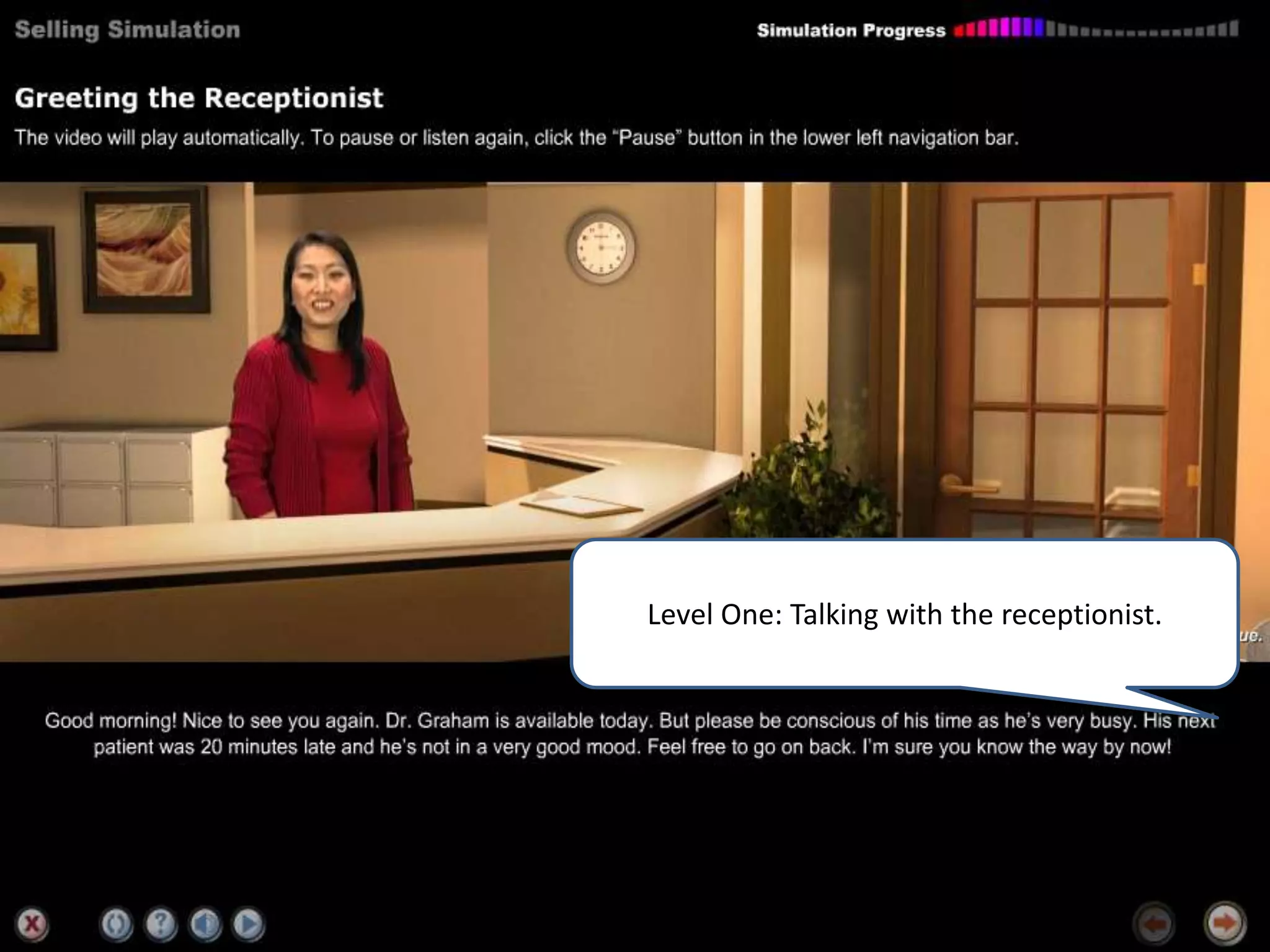
Level One: Talking with the receptionist.
Level Two: Talking with the nurse gatekeeper.
Level Three: Talking with the physician.
How Do DifferentTypes of Games Teach Different Concepts?
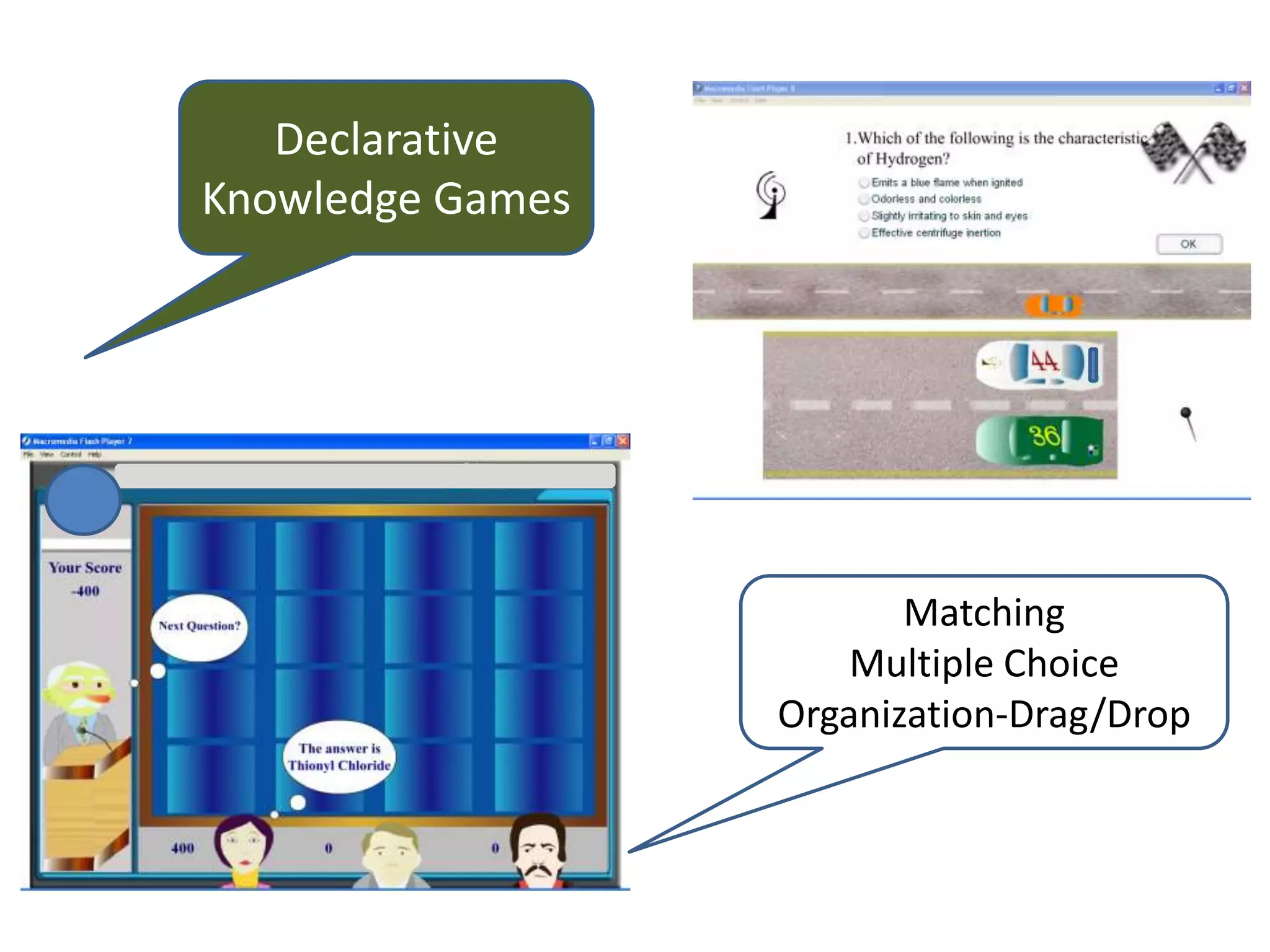
Declarative Knowledge GamesMatchingMultiple ChoiceOrganization-Drag/Drop
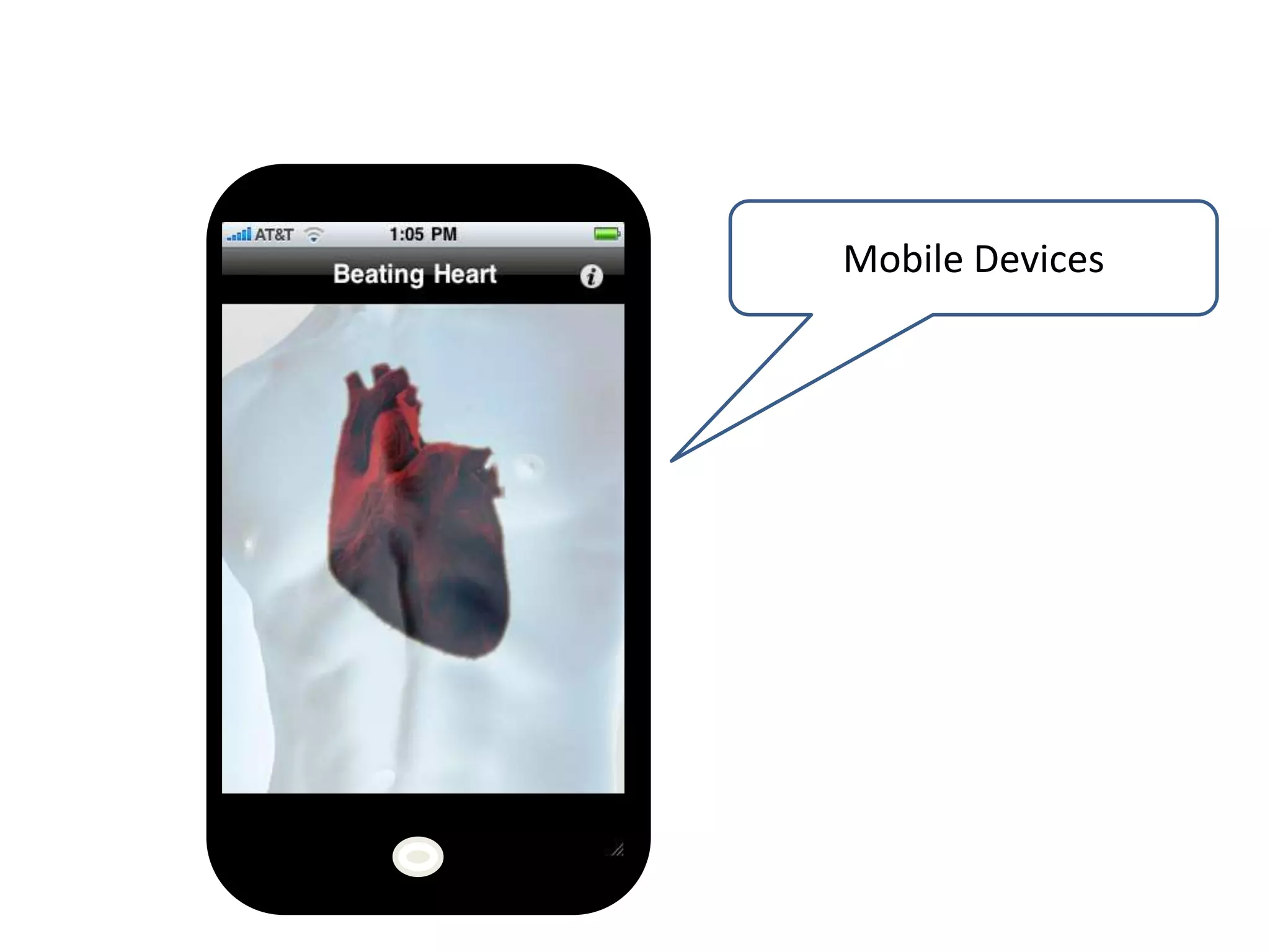
Mobile Devices
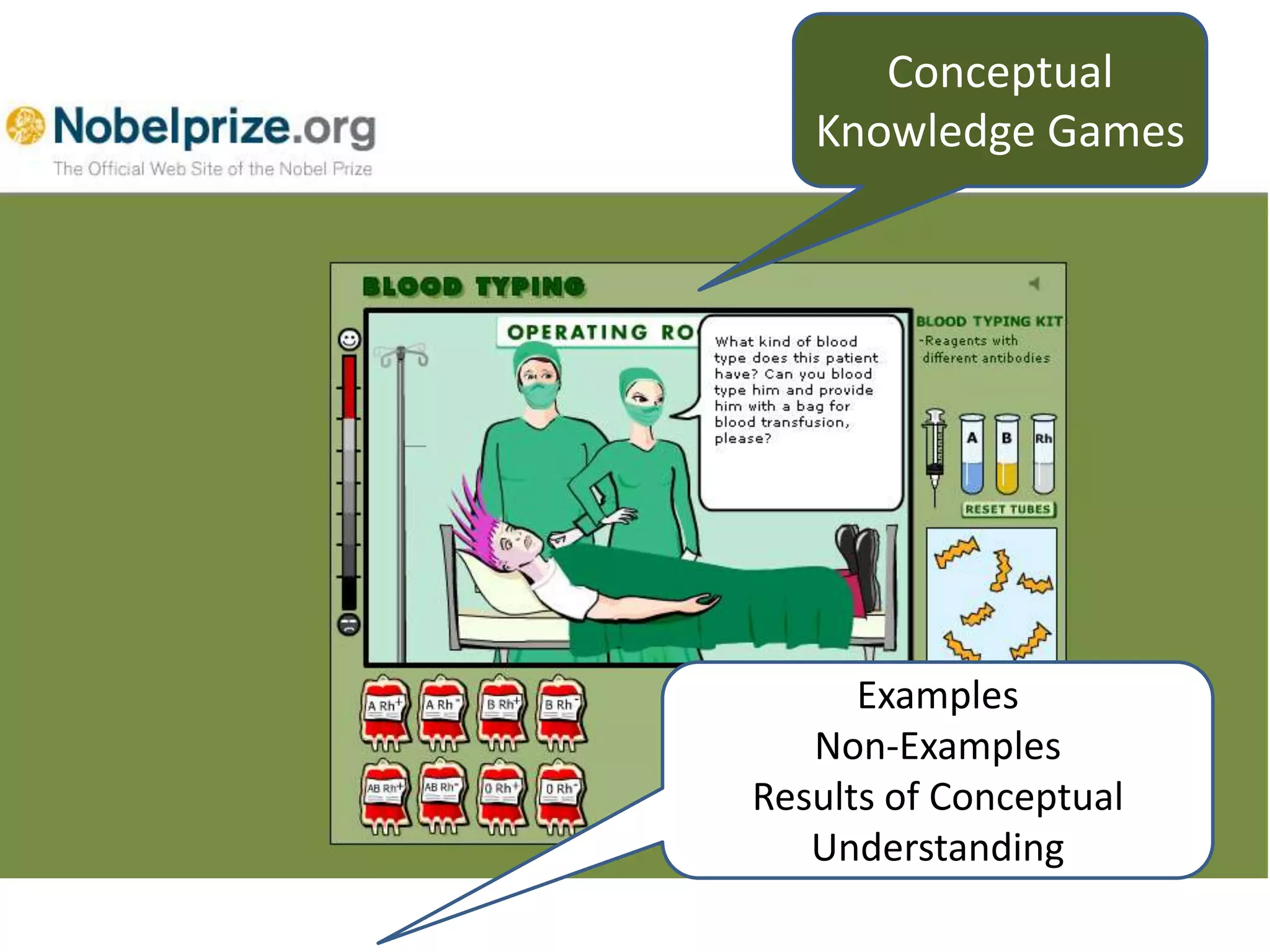
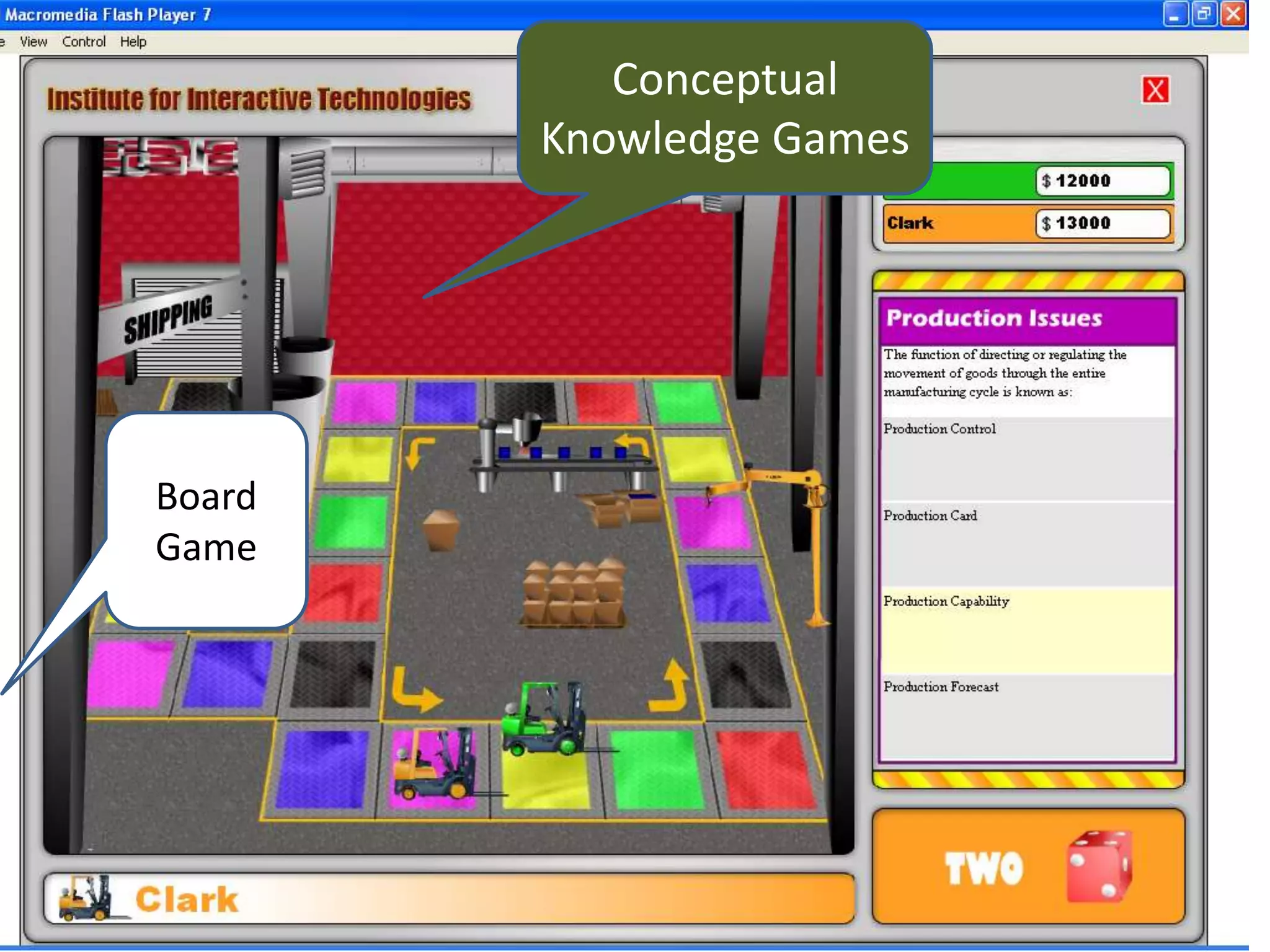
ConceptualKnowledge GamesExamplesNon-ExamplesResults of Conceptual Understanding
ConceptualKnowledge GamesBoard Game
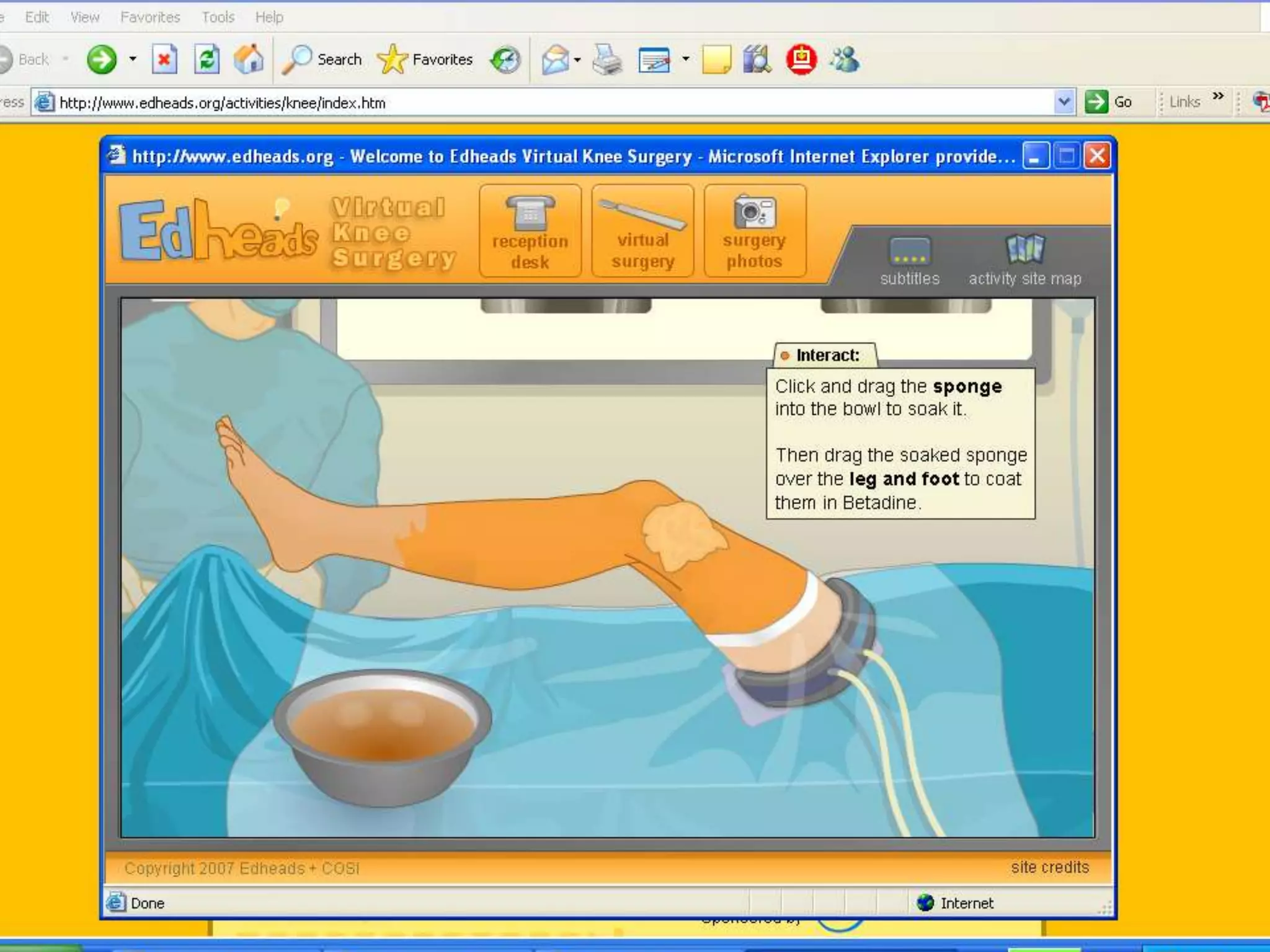
Problem SolvingKnowledge GamesBranching Simulation
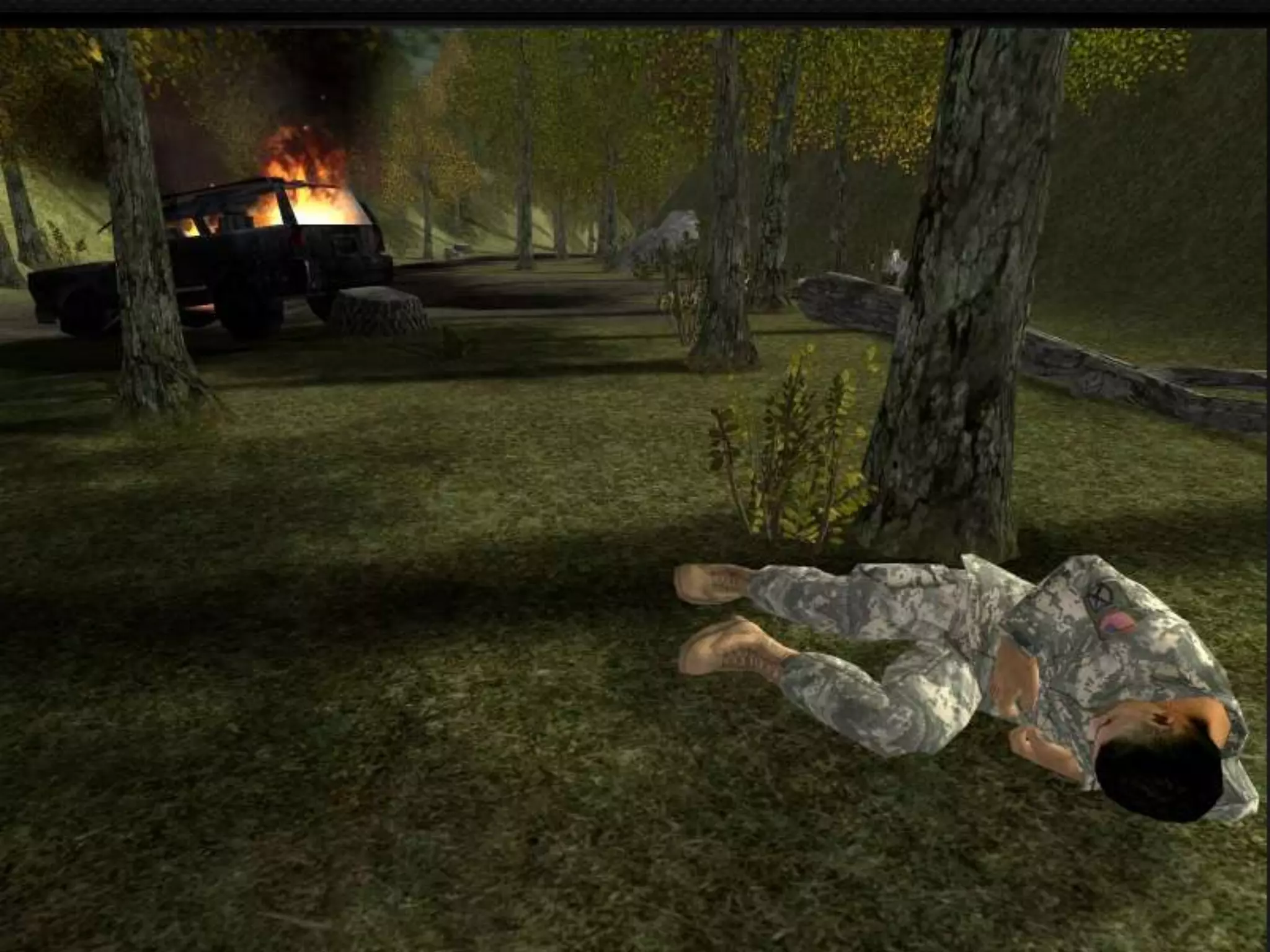
Problem SolvingKnowledge GamesVirtual 3D Environments
How do games use operant conditioningto encourage and sustain learner activity?
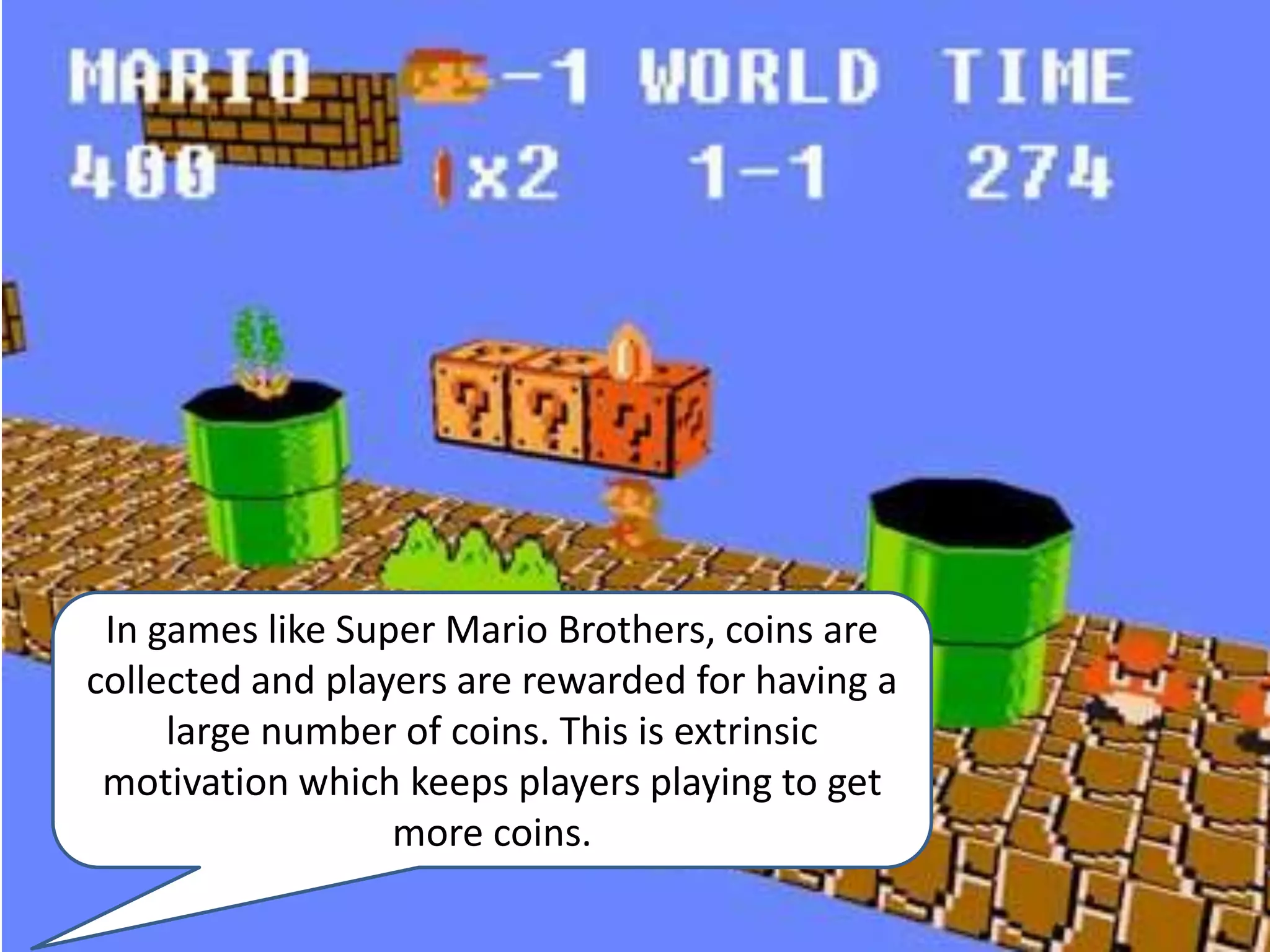
In games like Super Mario Brothers, coins are collected and players are rewarded for having a large number of coins. This is extrinsic motivation which keeps players playing to get more coins.
Games like The Sims tap into the intrinsic motivation. Most people have  desired  career paths, a certain type of home and luxuries they’d like to acquire.
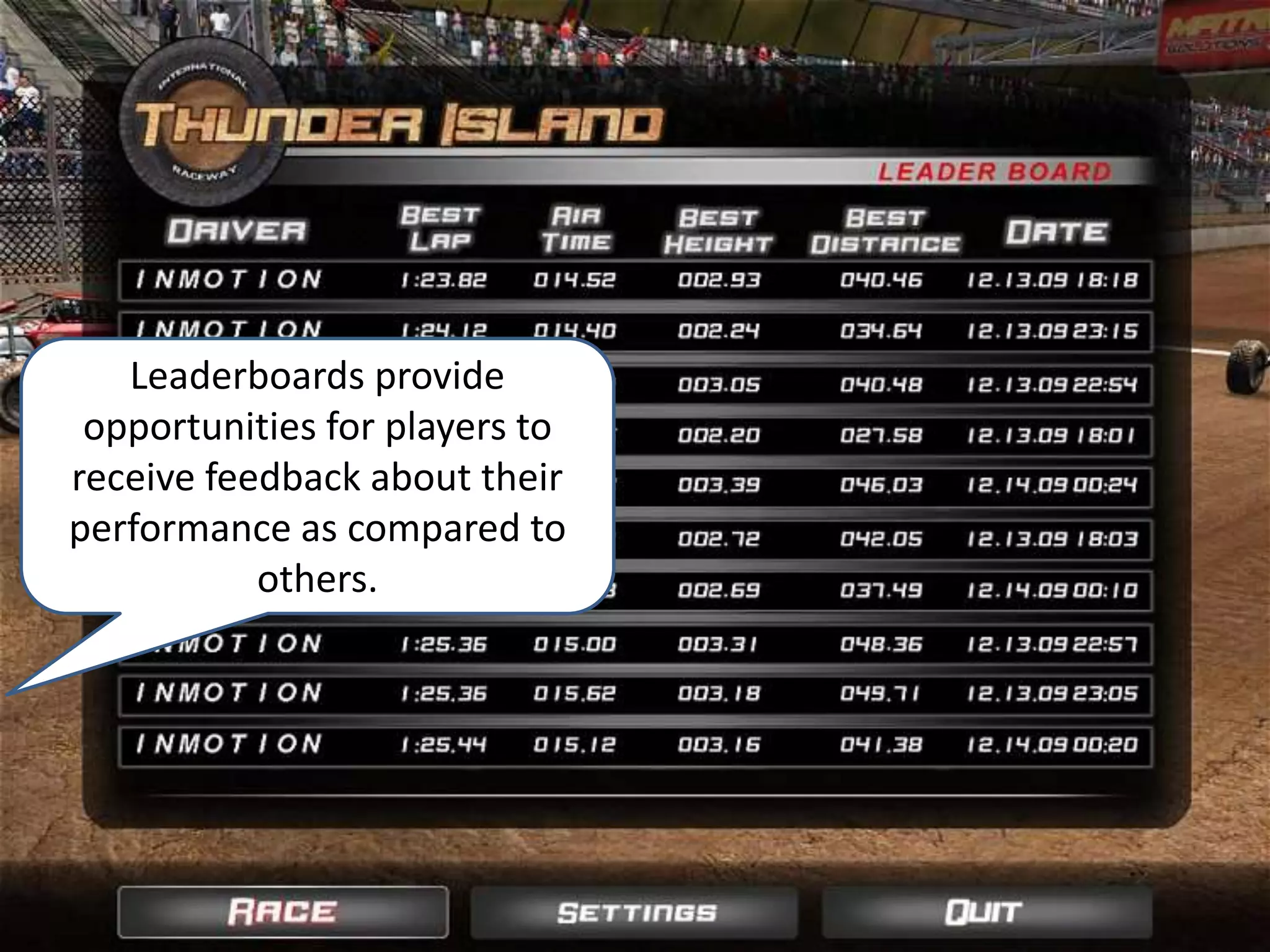
Leaderboards provide opportunities for players to receive feedback about their performance as compared to others.
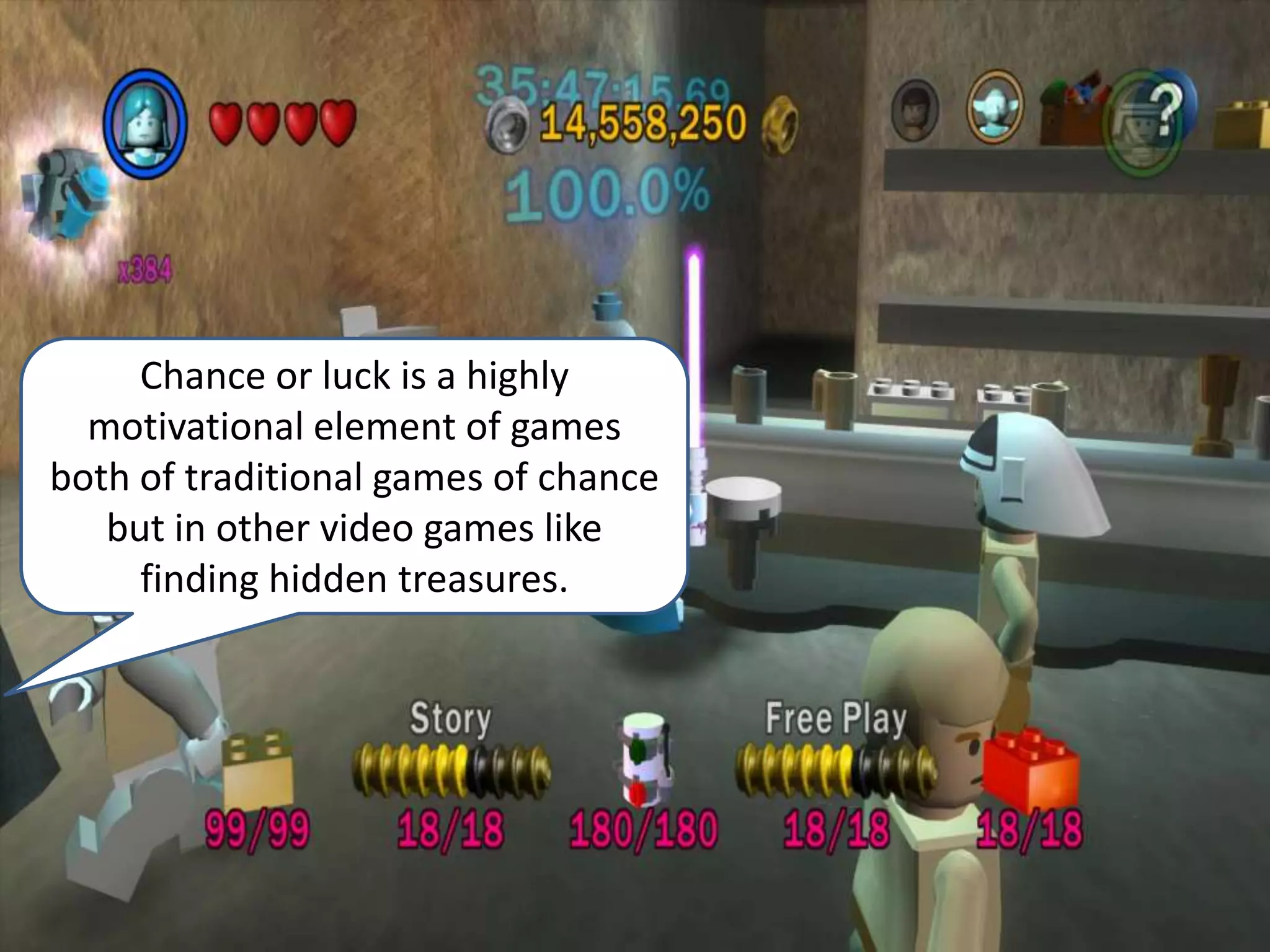
Chance or luck is a highly motivational element of games both of traditional games of chance but in other video games like finding hidden treasures.
How do games provide feedback and correctiveinformation to learners seamlessly?
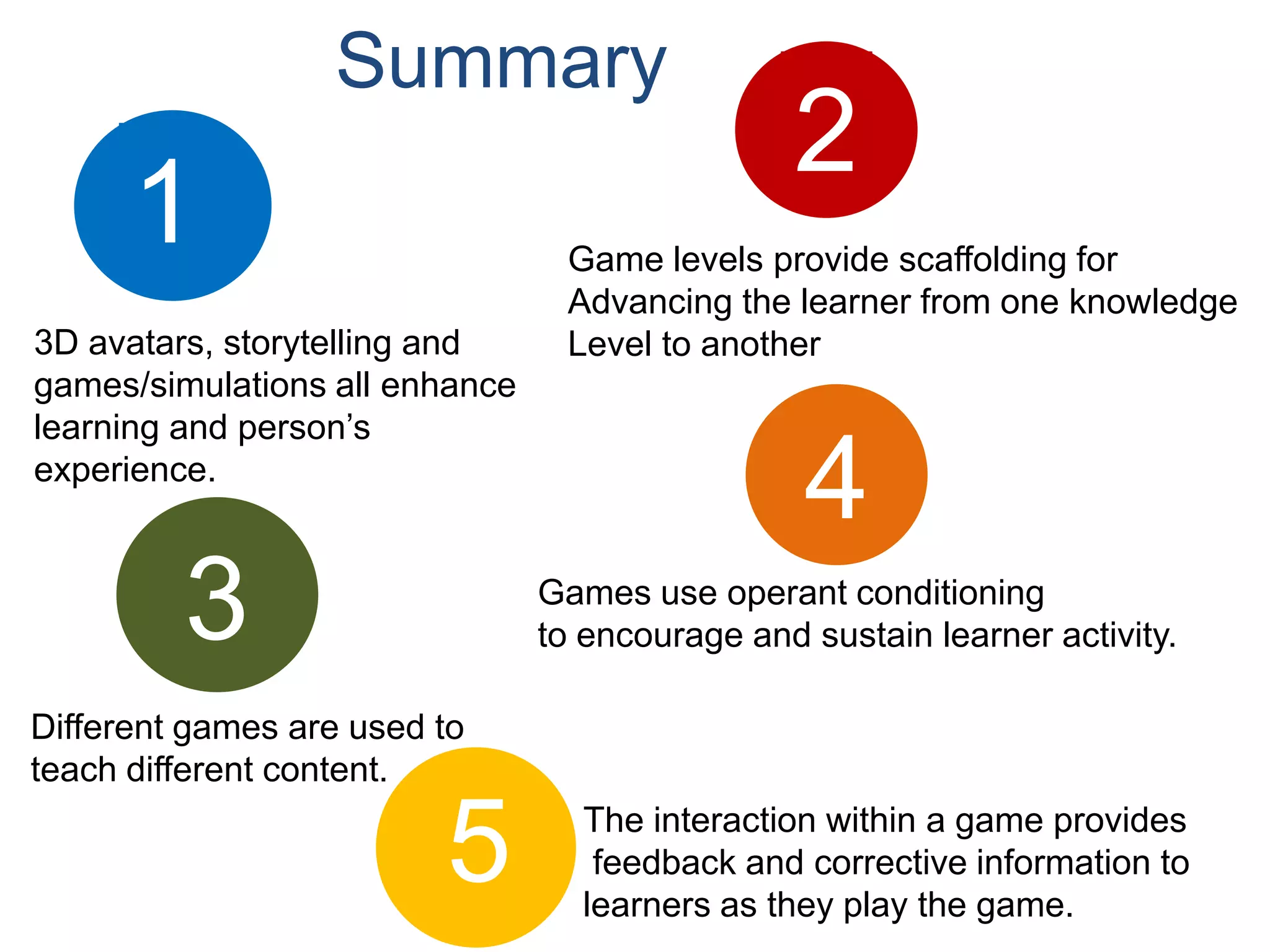
Summary21Game levels provide scaffolding for Advancing the learner from one knowledgeLevel to another3D avatars, storytelling and games/simulations all enhancelearning and person’s experience.43Games use operant conditioningto encourage and sustain learner activity.Different games are used toteach different content.5The interaction within a game provides feedback and corrective information to learners as they play the game.
Questions/More Informationhttp://www.kaplaneduneering.com/kappnotes/Recommended booksSamples and ExamplesLearning in 3Dwww.learningin3d.infoGadgets, Games and Gizmos for Learningwww.gadgetsgamesandgizmos.comEmail: kkapp@bloomu.eduEmail: karlkapp@gmail.comLook for “The Gamificaiton of Learning and Instruction” in Spring 2011 published by Pfeiffer.

Gamification of Learning and Instruction: What Research tells Us About 3D Avatars, Storytelling & Serious Games for Learning"

  • 1.
    Gamification of Learningand Instruction: What Research Tells Us about 3D Avatars, Storytelling & Serious Games for LearningBy Karl M. KappBloomsburg University www.learningin3d.infoTwitter:@kkapp
  • 2.
    Google “Kapp Notes”2012New Book:“The Gamification of Learning and Instruction”July 2011 T&D ArticleMatching the Right Instruction to the Right Content
  • 3.
    Agenda21How can gamelevels serve as scaffolding for learning new concepts?What does research say about 3D avatars, storytelling and games/simulations for learning?43How do games use operant conditioningto encourage and sustain learner activity?How do different types of gamesteach different content?5How do games provide feedbackand corrective information to learners seamlessly?
  • 4.
  • 5.
    Identity– no deeplearning takes place unless an extended commitment of self is made for the long haul.Good video games capture players through identify.Players either inherit a strongly formed and appealing character or they get to build a characterfrom the ground up.Players become committed to the new virtual world in which they will learn and act. Why should the identify of being and doing “science,” “math,” “healthcare” or “sales” be any different?James Paul Gee, University of Wisconsin-Madison
  • 6.
  • 7.
    Why be aCharacter at All?Research indicates that human social models influence behavior, beliefs and attitudes. Bandura, A. 1986 Social foundations of thought and action: a social cognitive theory. Englewood Cliffs, NJ, USA: Prentice-Hall.
  • 8.
    Avatar as TeacherResearchalso indicates that learners perceive, interact socially with and are influenced by anthropomorphic agents (avatars) even when their functionality and adaptability are limited.Baylor, A. 2009 Promoting motivation with virtual agents and avatars: R ole of visual presence and appearance. Philosophical Transactions of the Royal B Society. 364, 3559–3565
  • 9.
    Can an experienceas an avatar change a person's real life perceptions?YesNoNot Sure?
  • 10.
    An experience asan avatar can change a person's real life perceptions. In a study conducted by Yee and Bailenson (2006), it was found that negative stereotyping of the elderly was significantly reduced when participants were placed in avatars of old people compared with those participants placed in avatars of young people.Yee, N. & Bailenson, J.N. (2006).  Walk A Mile in Digital Shoes: The Impact of Embodied Perspective-Taking on TheReduction of Negative Stereotyping in Immersive Virtual Environments..Proceedings of PRESENCE 2006: The 9th Annual International Workshop on Presence. August 24 – 26, Cleveland, Ohio, USA
  • 11.
    Are two avatarsbetter than one?MotivatorMentorExpert
  • 12.
    MotivatorYes, two avatarsare better than one.MentorBaylor, A. L. & Kim, Y. (2005). Simulating instructional roles through pedagogical agents. International Journal of Artificial Intelligence in Education, 15(1), 95-115.Expert
  • 13.
  • 14.
    Three groups: Whichis more likely to exercise within the next 24 hours?Group 1 watches an avatar that looks like them loiteringGroup 2 watches an avatar that does not look like themselves exercising.Group 3 watches an avatar that looks like themselves exercising.
  • 15.
    If learners watchan avatar that looks like them exercising & losing weight, they will subsequently exercise more in the real world as compared to a control group.Fox, J., Arena, D., & Bailenson, J.N. (2009). Virtual Reality: A survival guide for the social scientist. Journal of Media Psychology, 21 (3), 95-113.
  • 16.
    Within 24 hoursof watching an avatar like themselves run, learners were more likely to run than watching an avatar not like them or watching an avatar like them loitering .Fox, J., Arena, D., & Bailenson, J.N. (2009). Virtual Reality: A survival guide for the social scientist. Journal of Media Psychology, 21 (3), 95-113.
  • 17.
    People tend toconform to how their avatar appears regardless of how it is perceived by others. In one study by Yee and Bailenson (2007), participants with taller avatars behaved more confidently in a negotiation task than participants with shorter avatars; specifically, they were more willing to make unfair splits in negotiation tasks. In contrast, participants with shorter avatars were more willing to accept unfair offers than those who had taller avatars.   Additionally, in subsequent research, Yee et. al. (2009) found that behavioral changes originating within a virtual environment can transfer to subsequent face-to-face interactions.
  • 18.
    Which builds moreconfidence for on the job application of learned knowledge?Class room instruction.Simulation Game.
  • 19.
    Simulation Game.20% higher.Sitzmann,T. (in press) A meta-analytic examination of the instructional effectiveness of computer-based simulation games. Personnel Psychology.
  • 20.
    Do simulations haveto be entertaining to be educational?
  • 21.
    NOSitzmann, T. (inpress) A meta-analytic examination of the instructional effectiveness of computer-based simulation games. Personnel Psychology .
  • 22.
    Percentages of ImpactSitzmann,T. (in press) A meta-analytic examination of the instructional effectiveness of computer-based simulation games. Personnel Psychology .
  • 23.
    Yep, People tendto remember facts more accurately if they encounter them in a story rather than in a list.Researchers have found that the human brain has a natural affinity for narrative construction.And they rate legal arguments as more convincing when built into narrative tales rather than on legal precedent.
  • 24.
  • 25.
    Scaffolding: Processof controlling the task elements that initially are beyond the learner’s capacity. Guided Practice. Step-by-step instructions and then fading of instruction
  • 26.
    Once that taskis accomplished, the learner is then led to accomplish another goal which builds upon the previous.
  • 27.
    www.gadgetsgamesandgizmos.com© Karl M.Kapp 2007Feel free to use but please site source and book
  • 28.
    www.gadgetsgamesandgizmos.com© Karl M.Kapp 2007Feel free to use but please site source and book
  • 29.
    Level One: Talkingwith the receptionist.
  • 30.
    Level Two: Talkingwith the nurse gatekeeper.
  • 31.
    Level Three: Talkingwith the physician.
  • 32.
    How Do DifferentTypesof Games Teach Different Concepts?
  • 33.
  • 34.
  • 35.
  • 36.
  • 37.
  • 38.
  • 39.
    How do gamesuse operant conditioningto encourage and sustain learner activity?
  • 40.
    In games likeSuper Mario Brothers, coins are collected and players are rewarded for having a large number of coins. This is extrinsic motivation which keeps players playing to get more coins.
  • 41.
    Games like TheSims tap into the intrinsic motivation. Most people have desired career paths, a certain type of home and luxuries they’d like to acquire.
  • 43.
    Leaderboards provide opportunitiesfor players to receive feedback about their performance as compared to others.
  • 44.
    Chance or luckis a highly motivational element of games both of traditional games of chance but in other video games like finding hidden treasures.
  • 45.
    How do gamesprovide feedback and correctiveinformation to learners seamlessly?
  • 52.
    Summary21Game levels providescaffolding for Advancing the learner from one knowledgeLevel to another3D avatars, storytelling and games/simulations all enhancelearning and person’s experience.43Games use operant conditioningto encourage and sustain learner activity.Different games are used toteach different content.5The interaction within a game provides feedback and corrective information to learners as they play the game.
  • 53.
    Questions/More Informationhttp://www.kaplaneduneering.com/kappnotes/Recommended booksSamplesand ExamplesLearning in 3Dwww.learningin3d.infoGadgets, Games and Gizmos for Learningwww.gadgetsgamesandgizmos.comEmail: kkapp@bloomu.eduEmail: karlkapp@gmail.comLook for “The Gamificaiton of Learning and Instruction” in Spring 2011 published by Pfeiffer.