Start Thinking Like a Game Designer
2
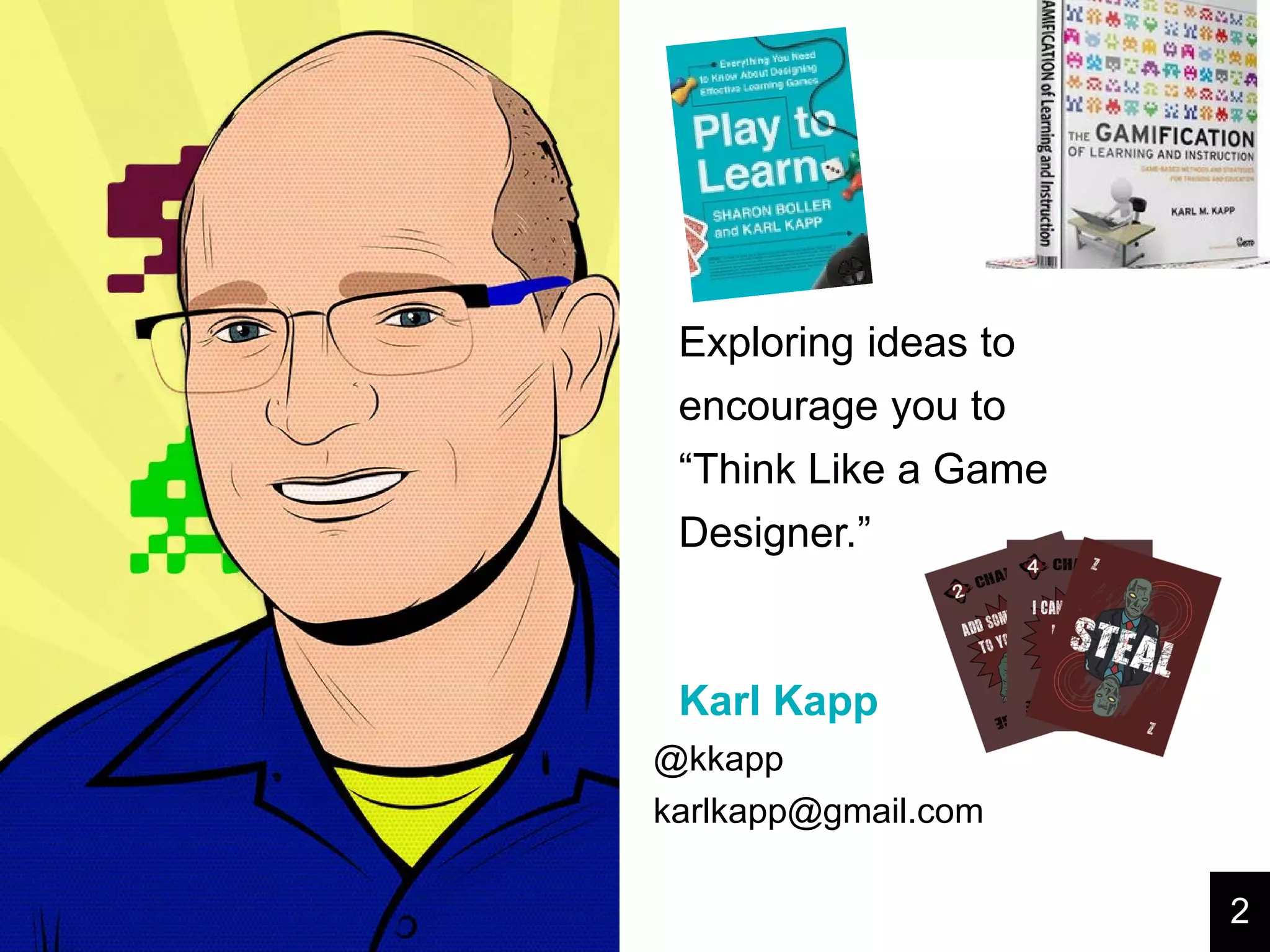
Exploring ideas to
encourage you to
“Think Like a Game
Designer.”
Karl Kapp
@kkapp
karlkapp@gmail.com
Karl Kapp
Presents:
Design takeaway
challenge.
You are a game designer at
SuperGame Corporation which has hit
some hard times lately.
It’s Friday 4:59 PM you and your
colleague have only one thing
on your mind.
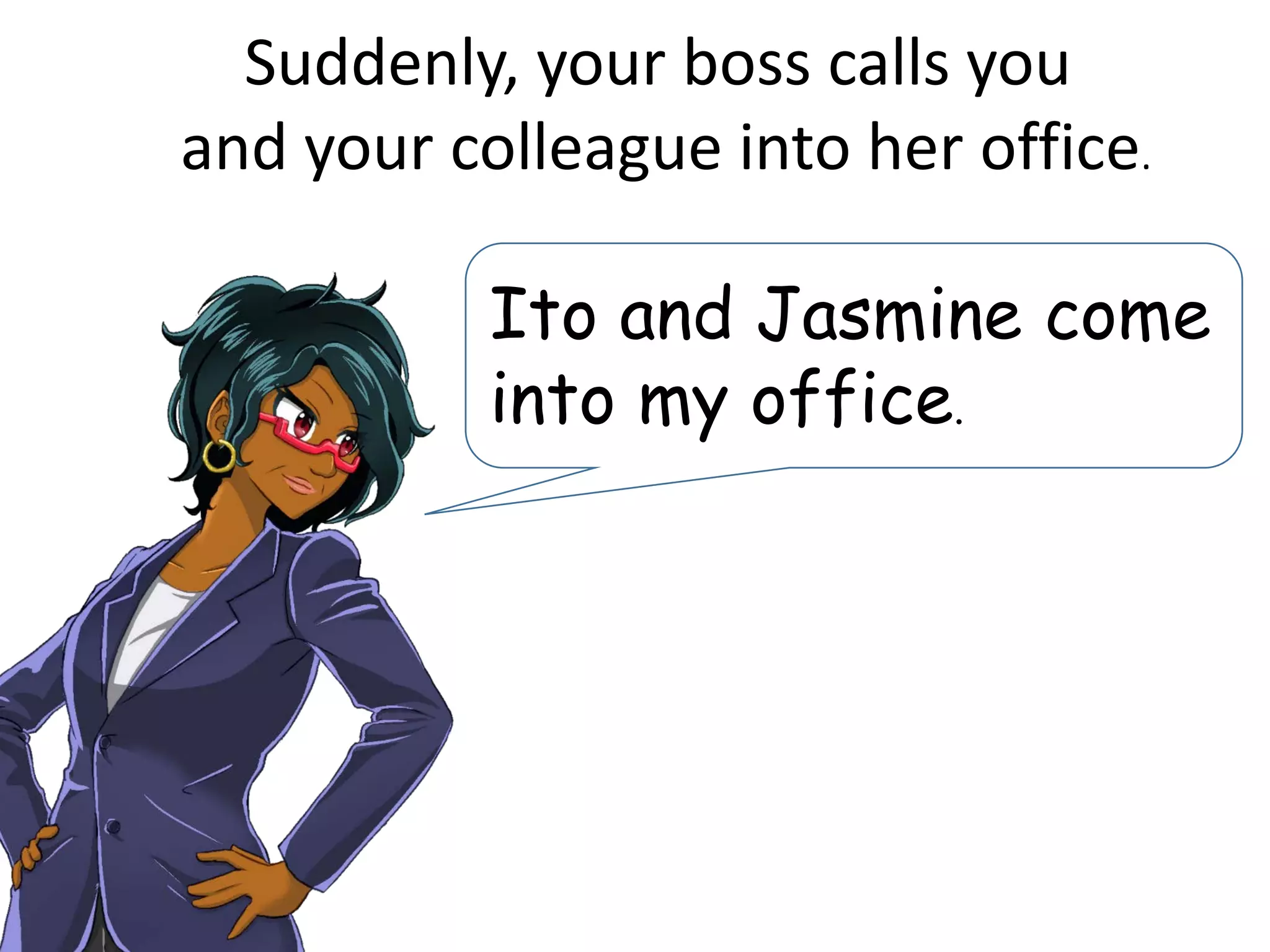
Suddenly, your boss calls you
and your colleague into her office.
Ito and Jasmine come
into my office.
Yes?
Yes?
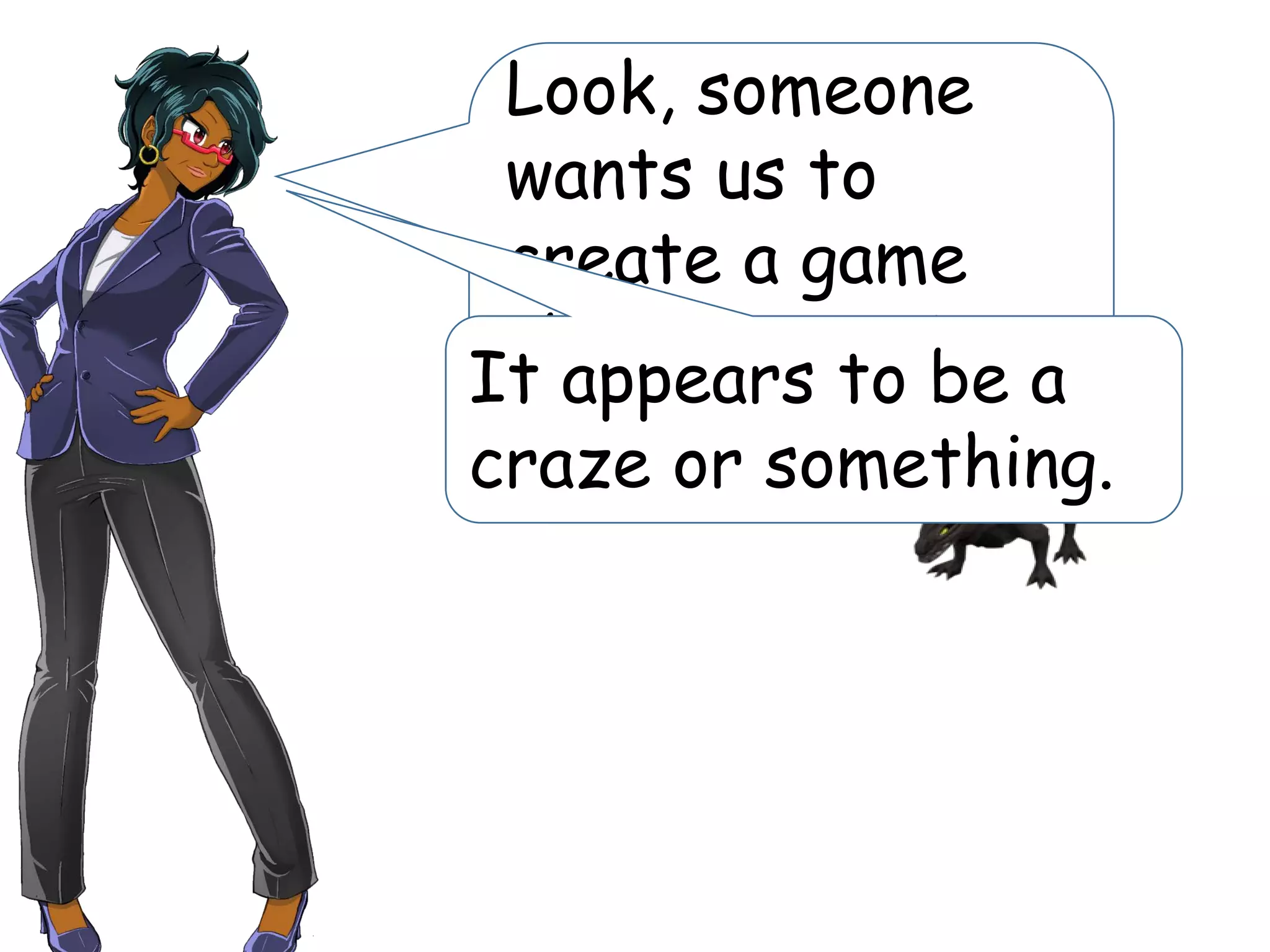
Look, someone
wants us to
create a game
about capturing
dragons.
It appears to be a
craze or something.
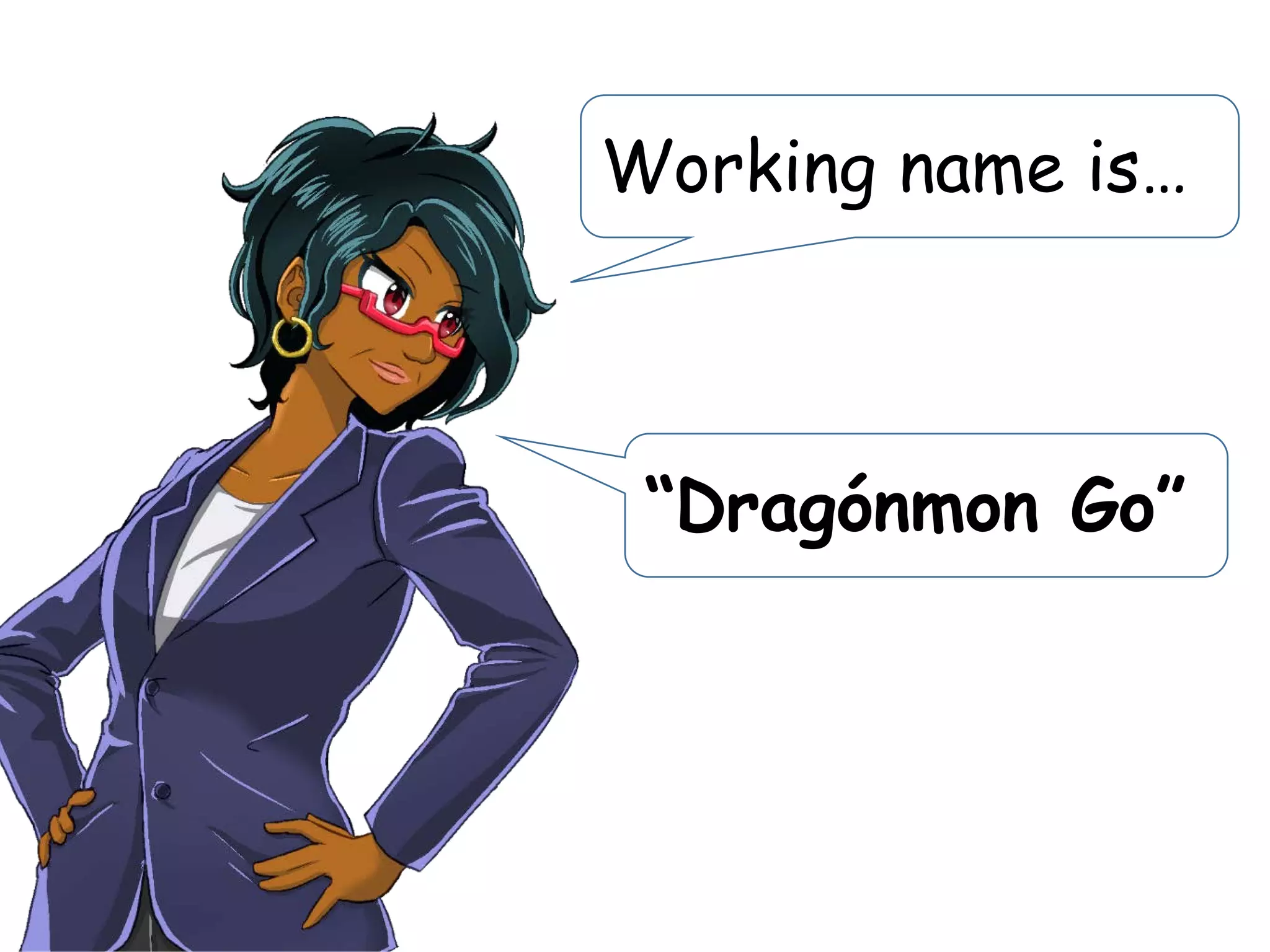
Working name is…
“Dragónmon Go”
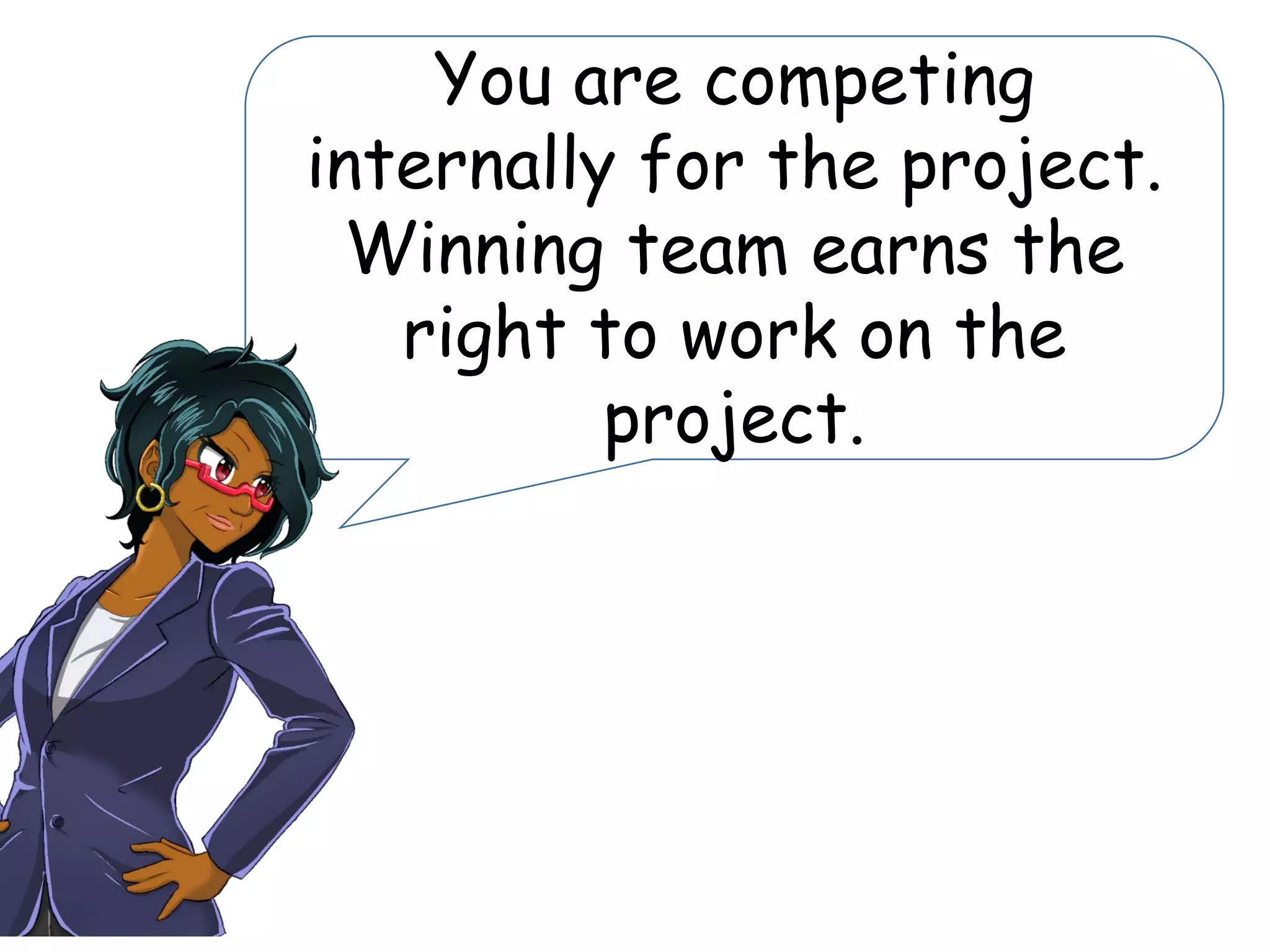
You are competing
internally for the project.
Winning team earns the
right to work on the
project.
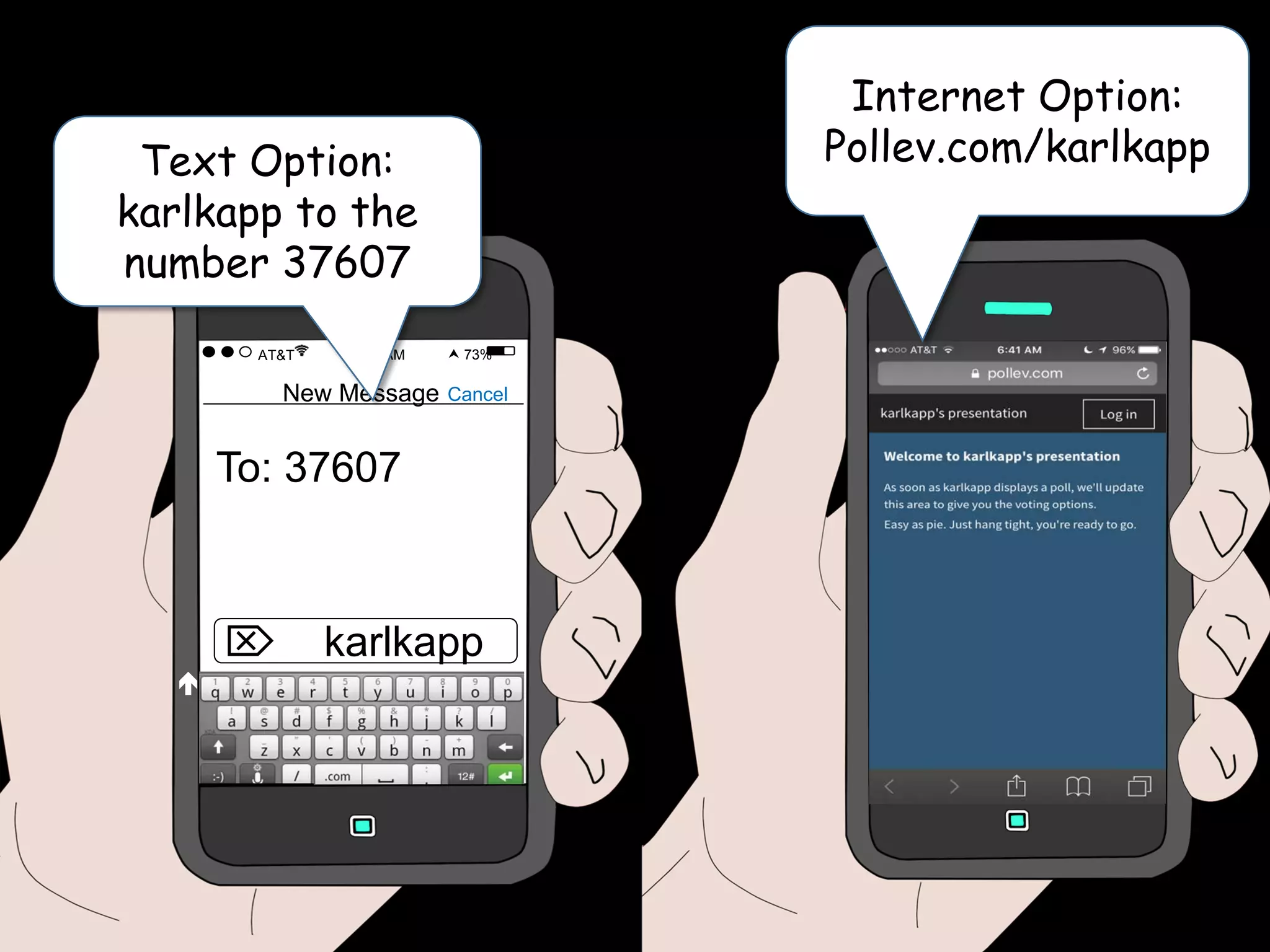
New Message
To: 37607
 karlkapp

Cancel
AT&T 9:37 AM  73%
Text Option:
karlkapp to the
number 37607
Internet Option:
Pollev.com/karlkapp
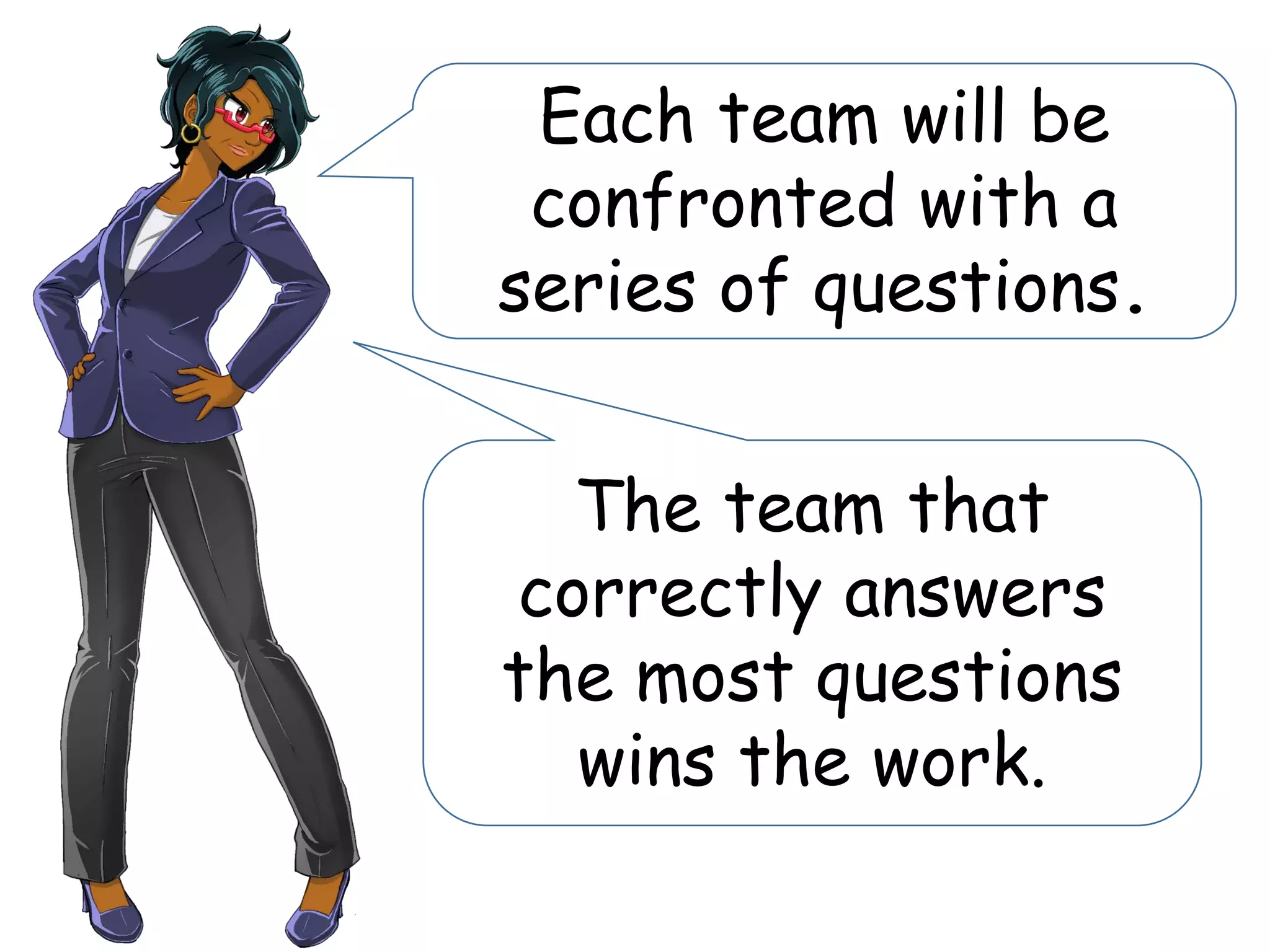
Each team will be
confronted with a
series of questions.
The team that
correctly answers
the most questions
wins the work.
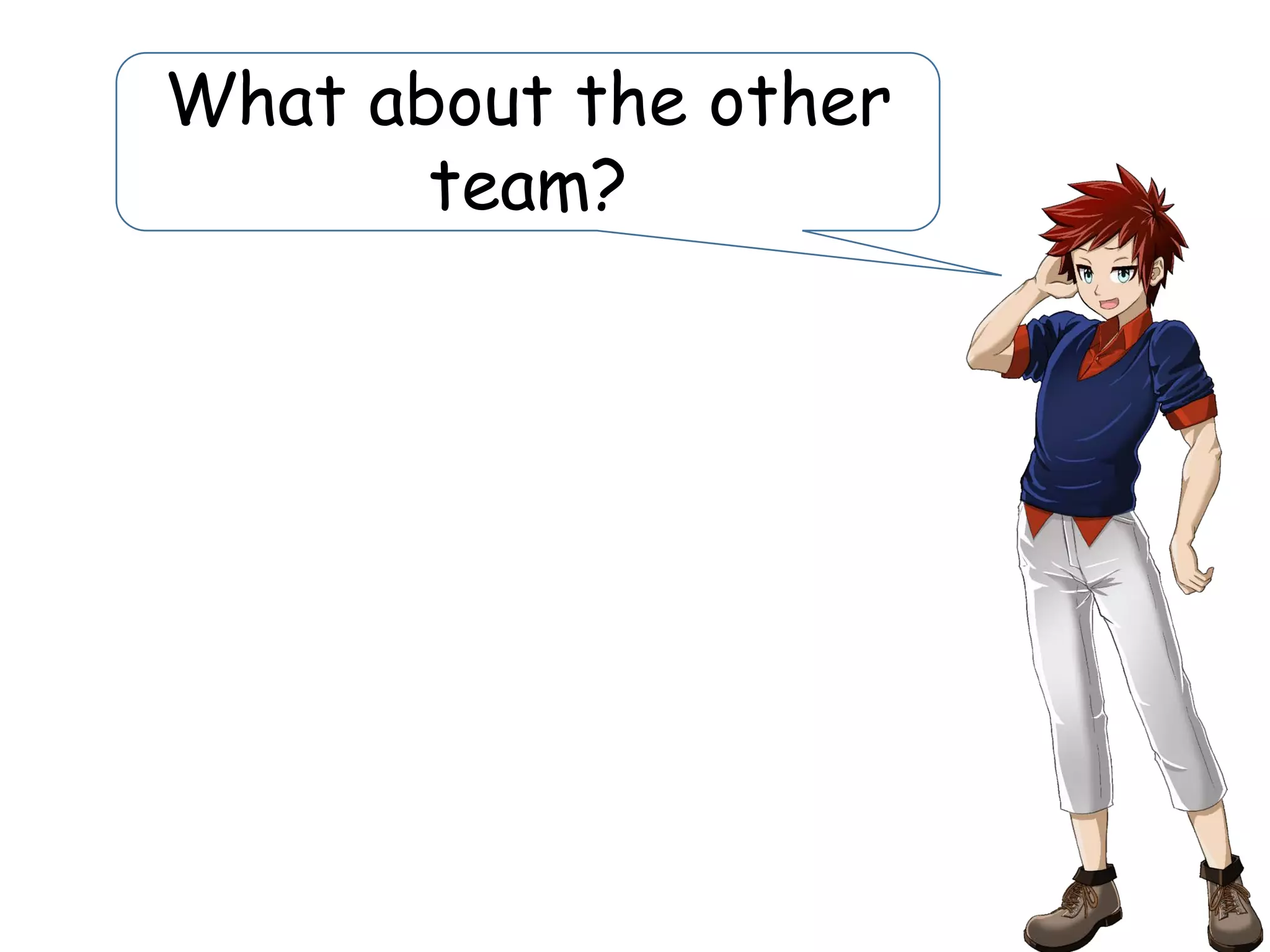
What about the other
team?
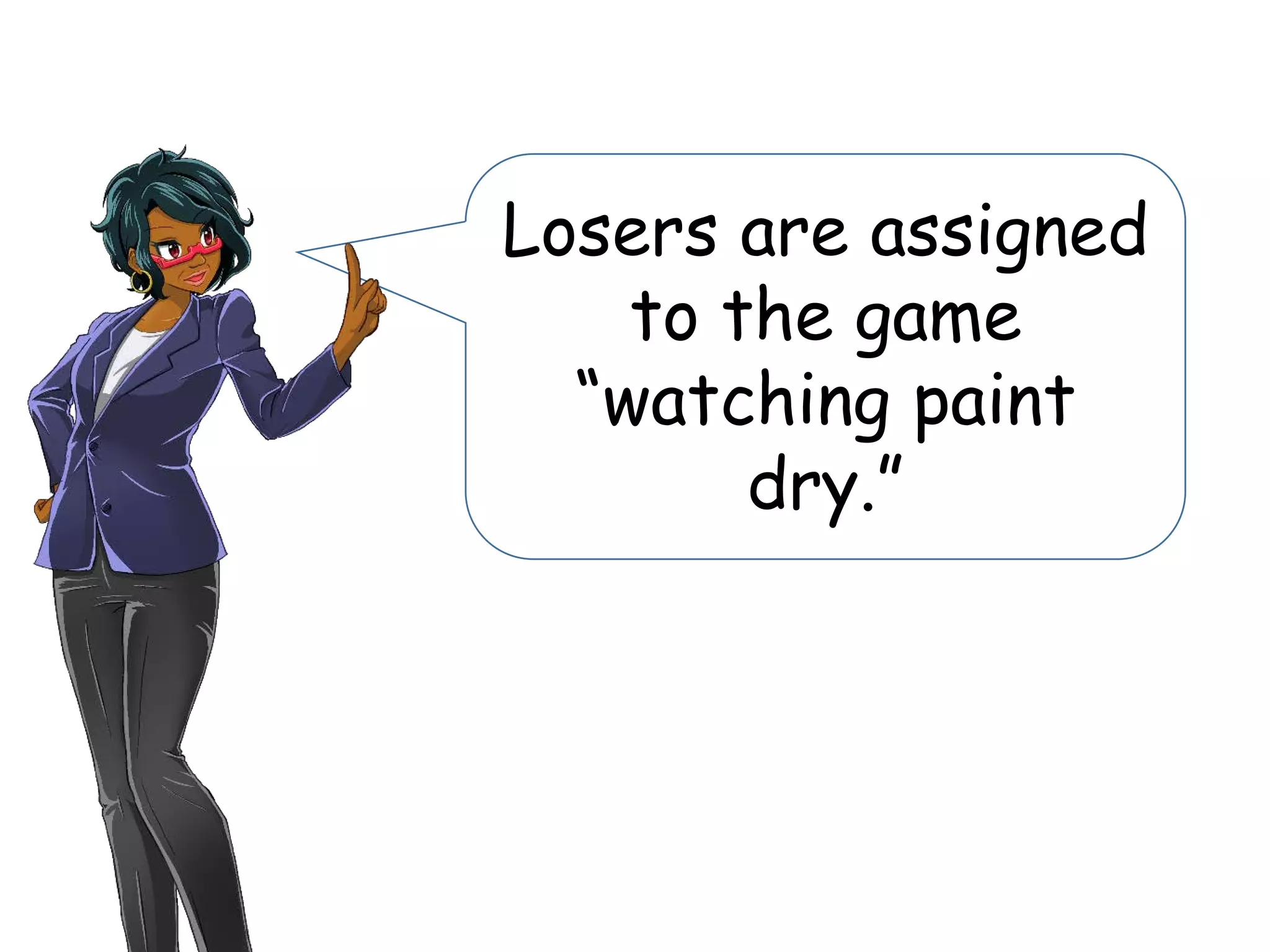
Losers are assigned
to the game
“watching paint
dry.”
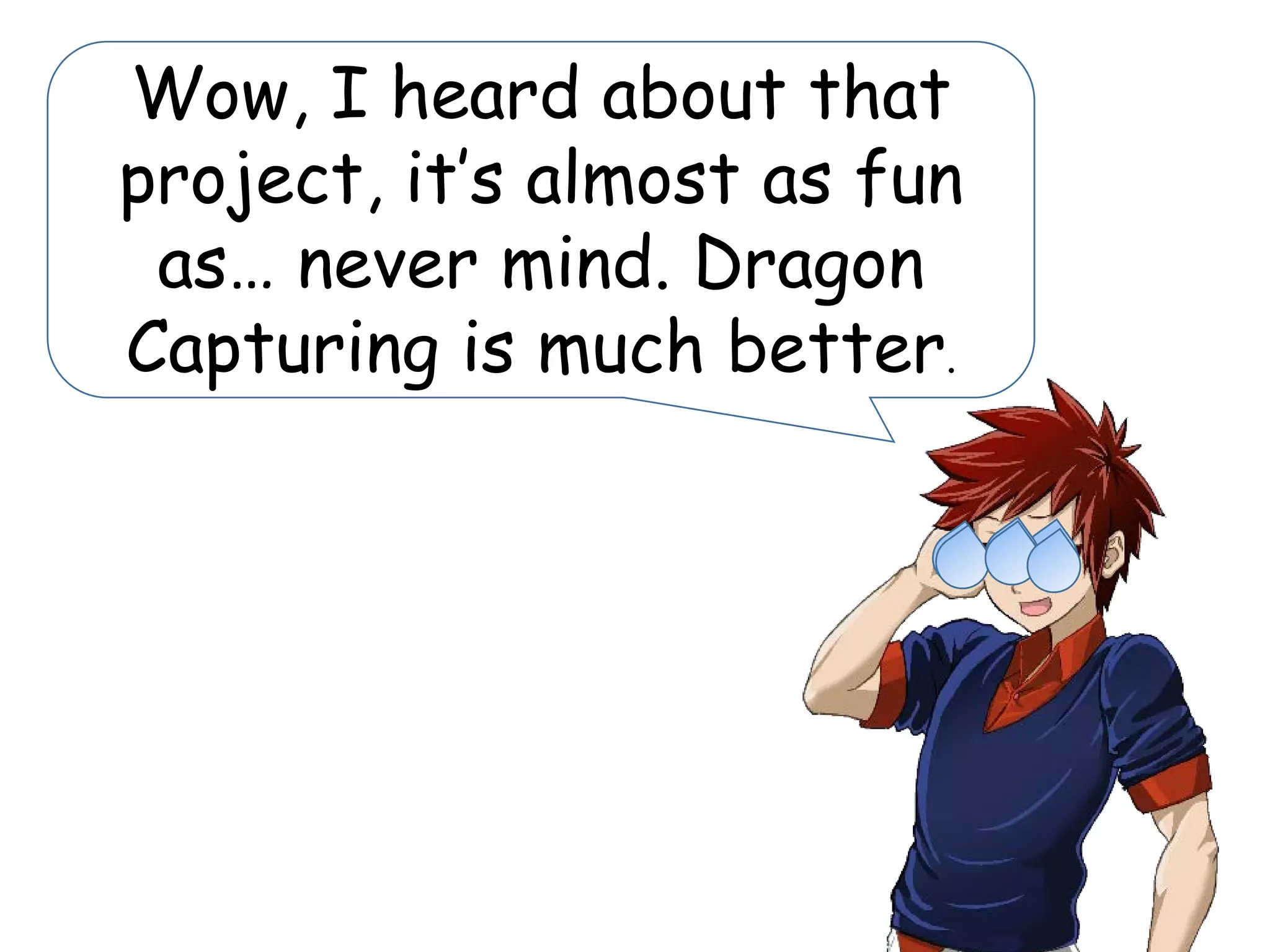
Wow, I heard about that
project, it’s almost as fun
as… never mind. Dragon
Capturing is much better.
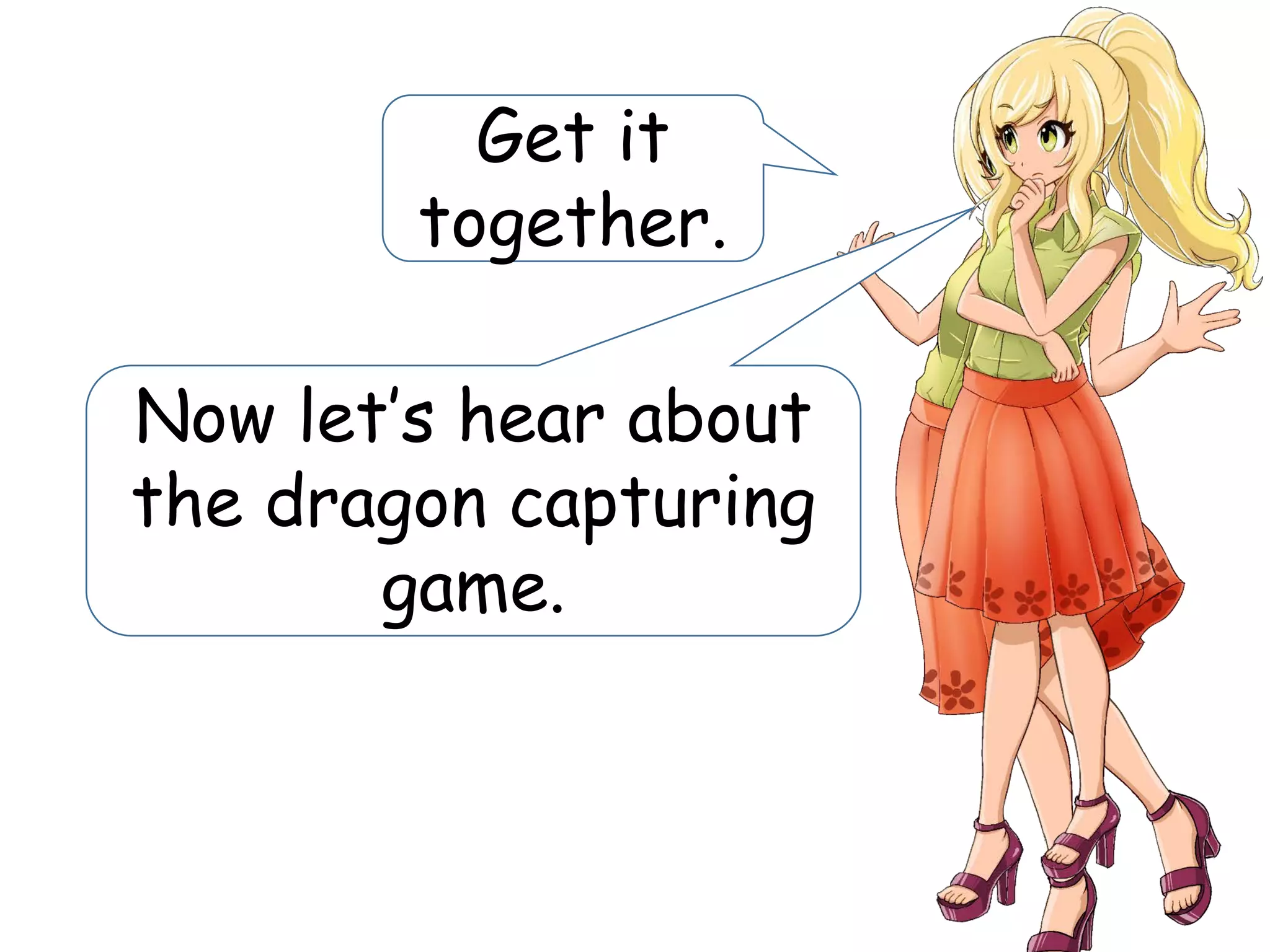
Get it
together.
Now let’s hear about
the dragon capturing
game.
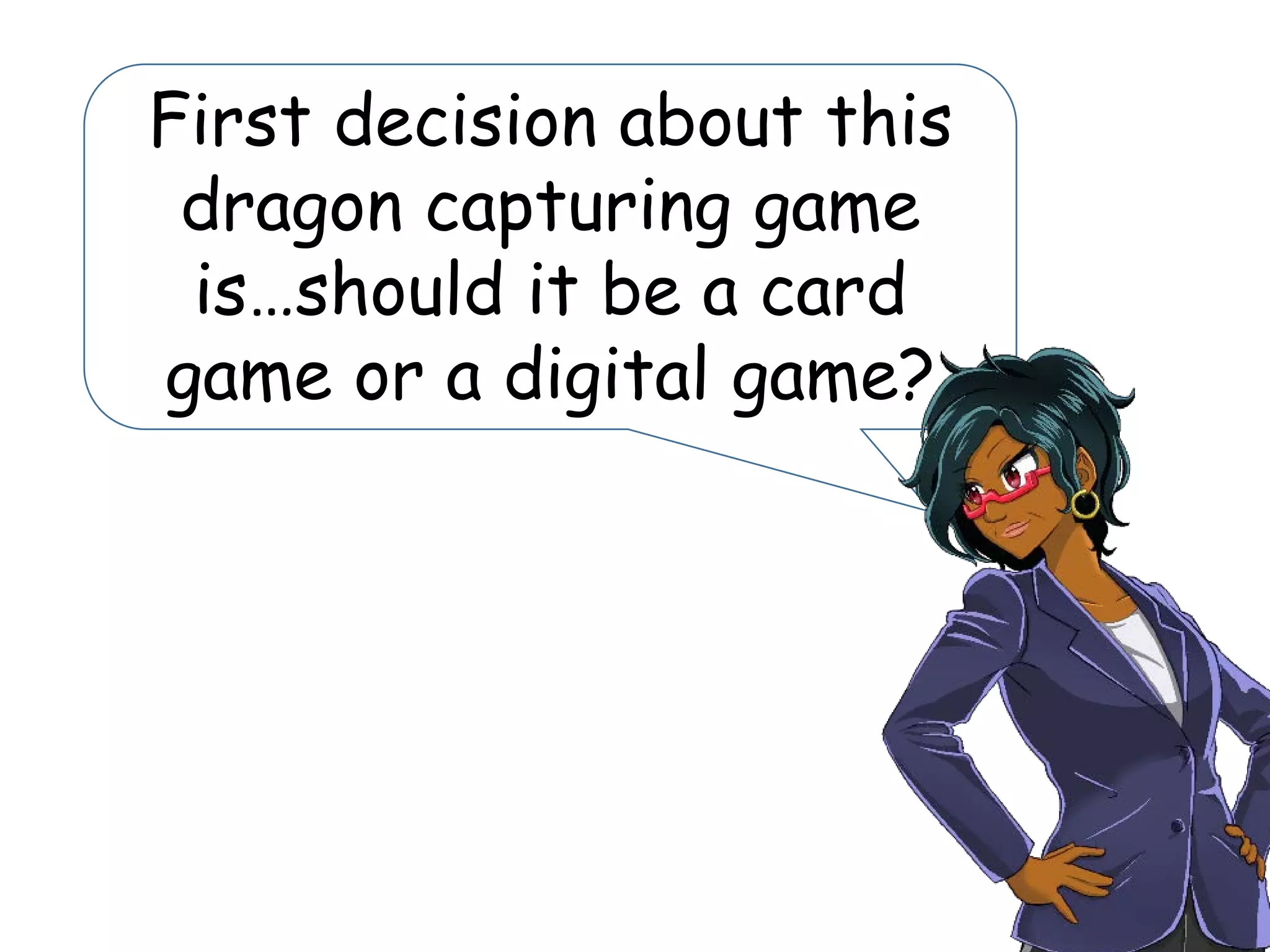
First decision about this
dragon capturing game
is…should it be a card
game or a digital game?
Card Game? It’s
2019!
Shheez!
Actually, there are a
number of benefits to
card games.
They build learner
engagement, are a social
accelerant and provide a
tangible take-away from
a learning experience.
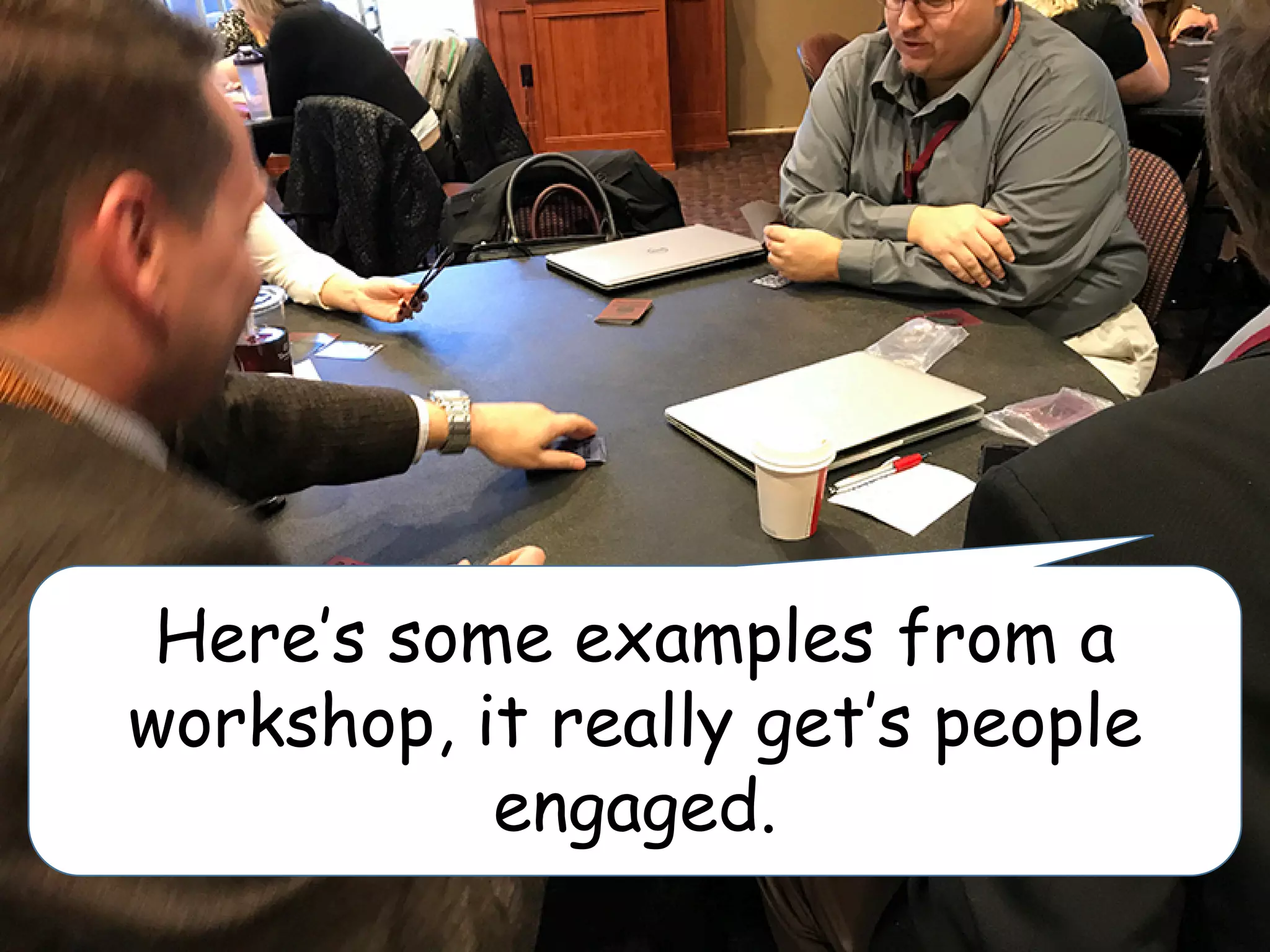
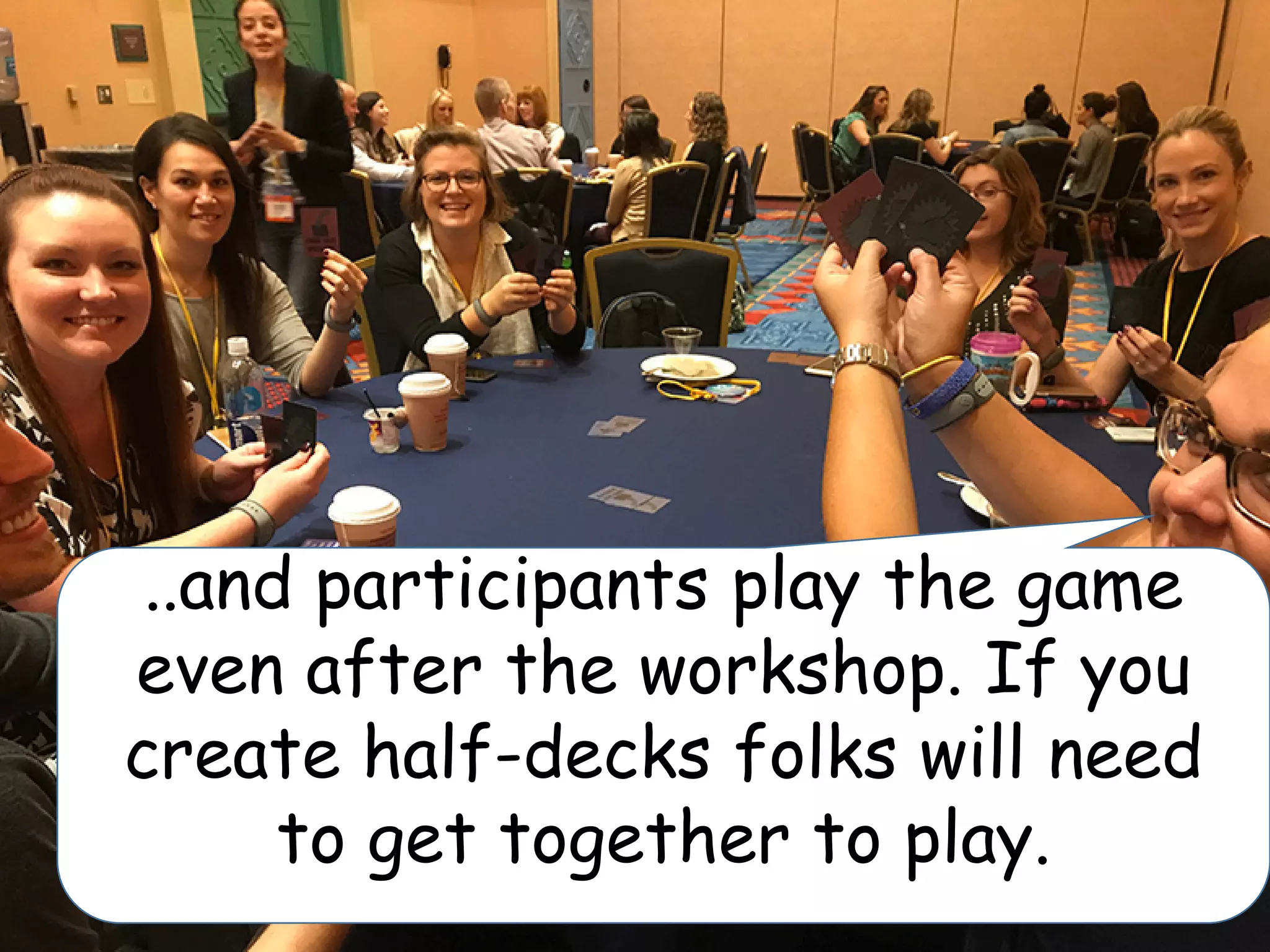
Here’s some examples from a
workshop, it really get’s people
engaged.
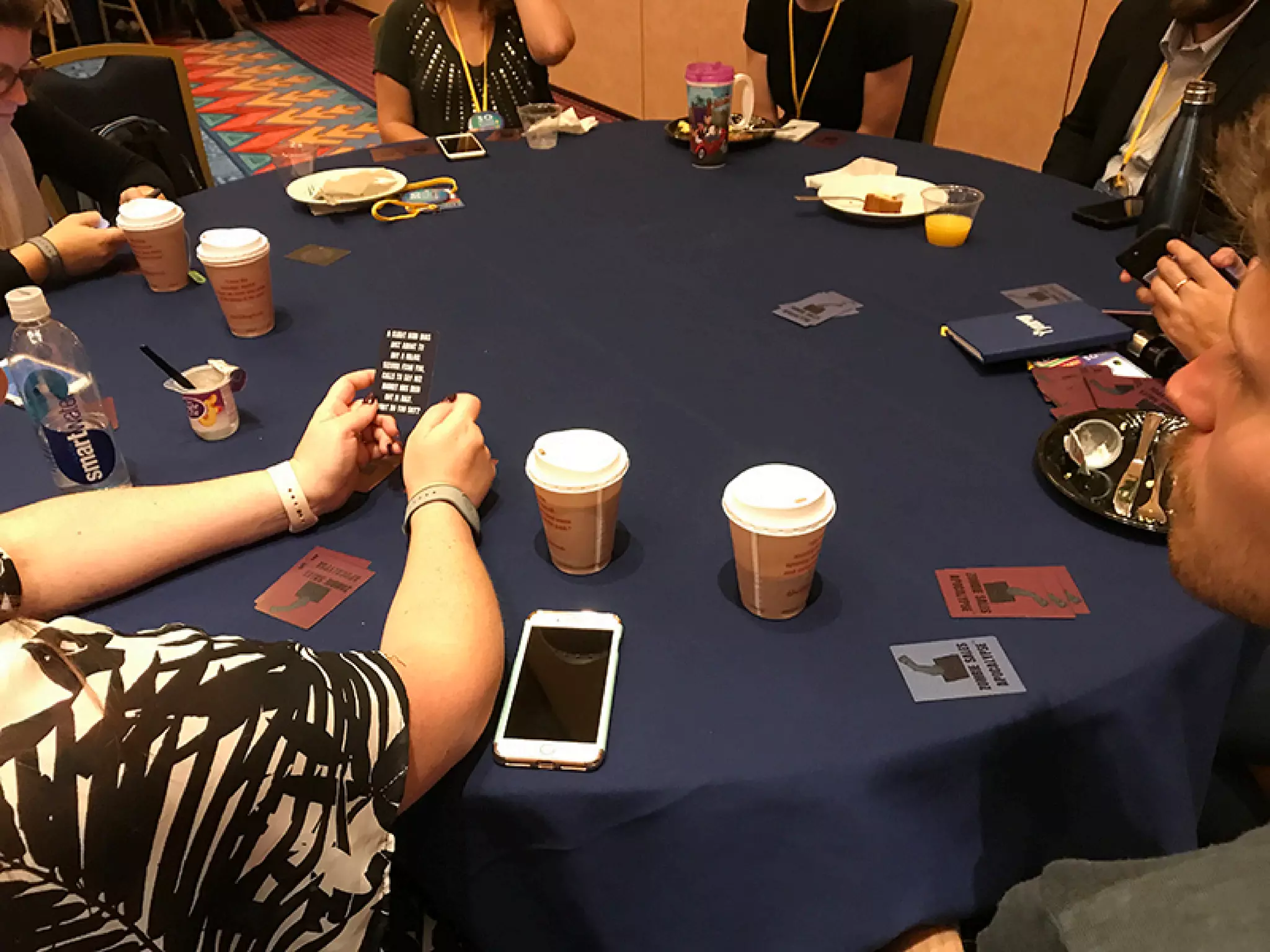
..and participants play the game
even after the workshop. If you
create half-decks folks will need
to get together to play.
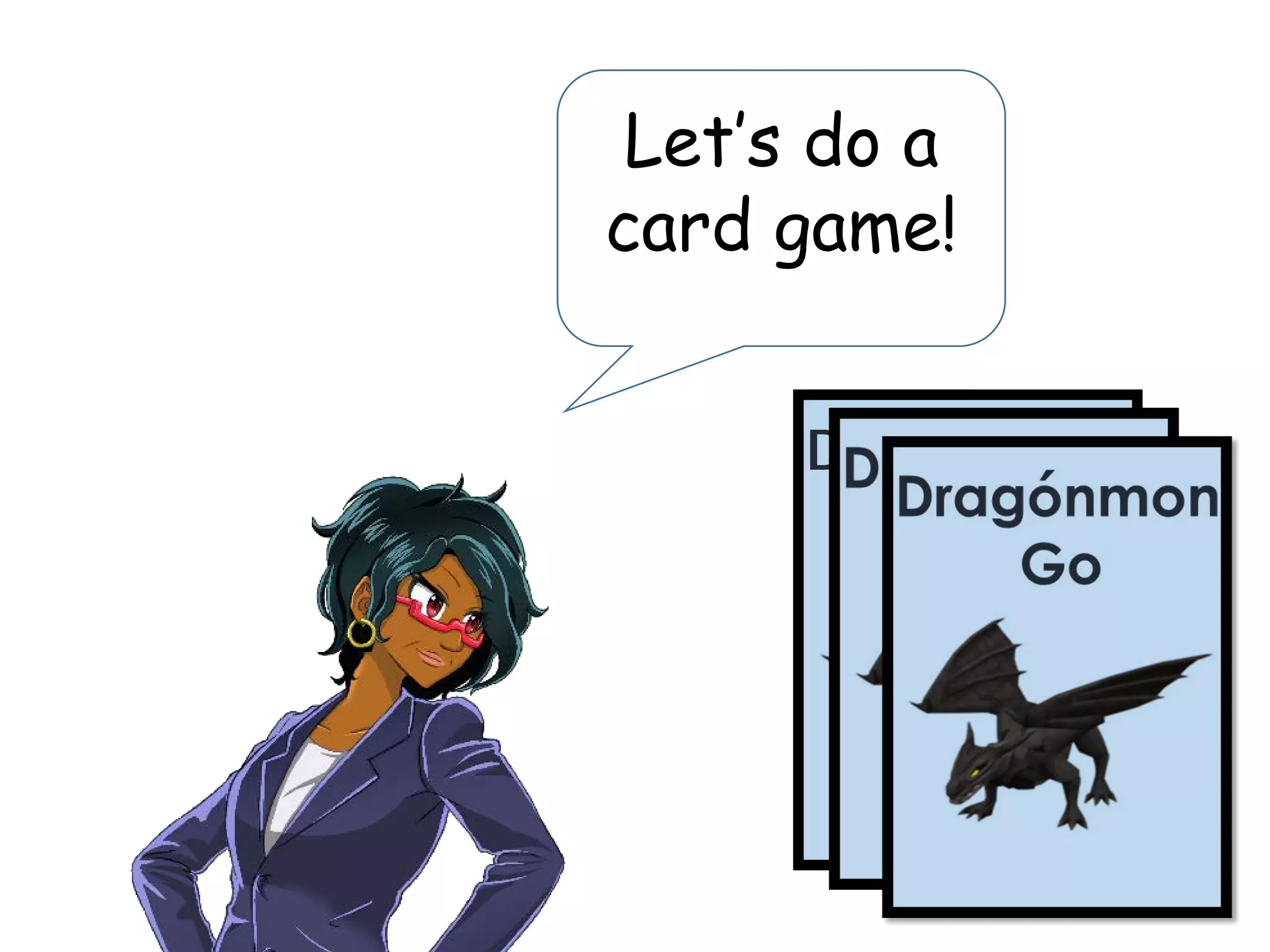
Let’s do a
card game!
Dragónmon
Go
Next decision…..
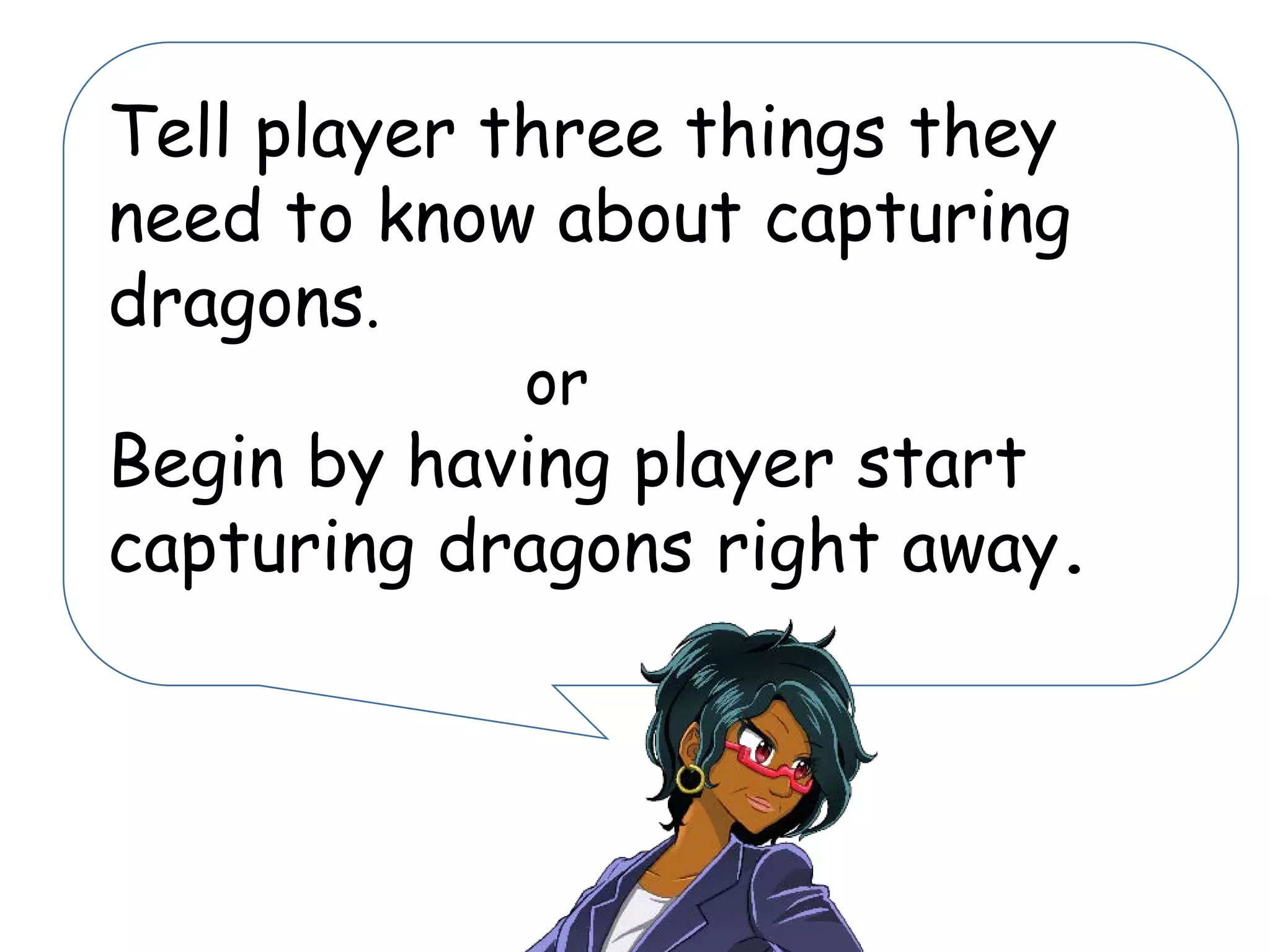
Tell player three things they
need to know about capturing
dragons.
or
Begin by having player start
capturing dragons right away.
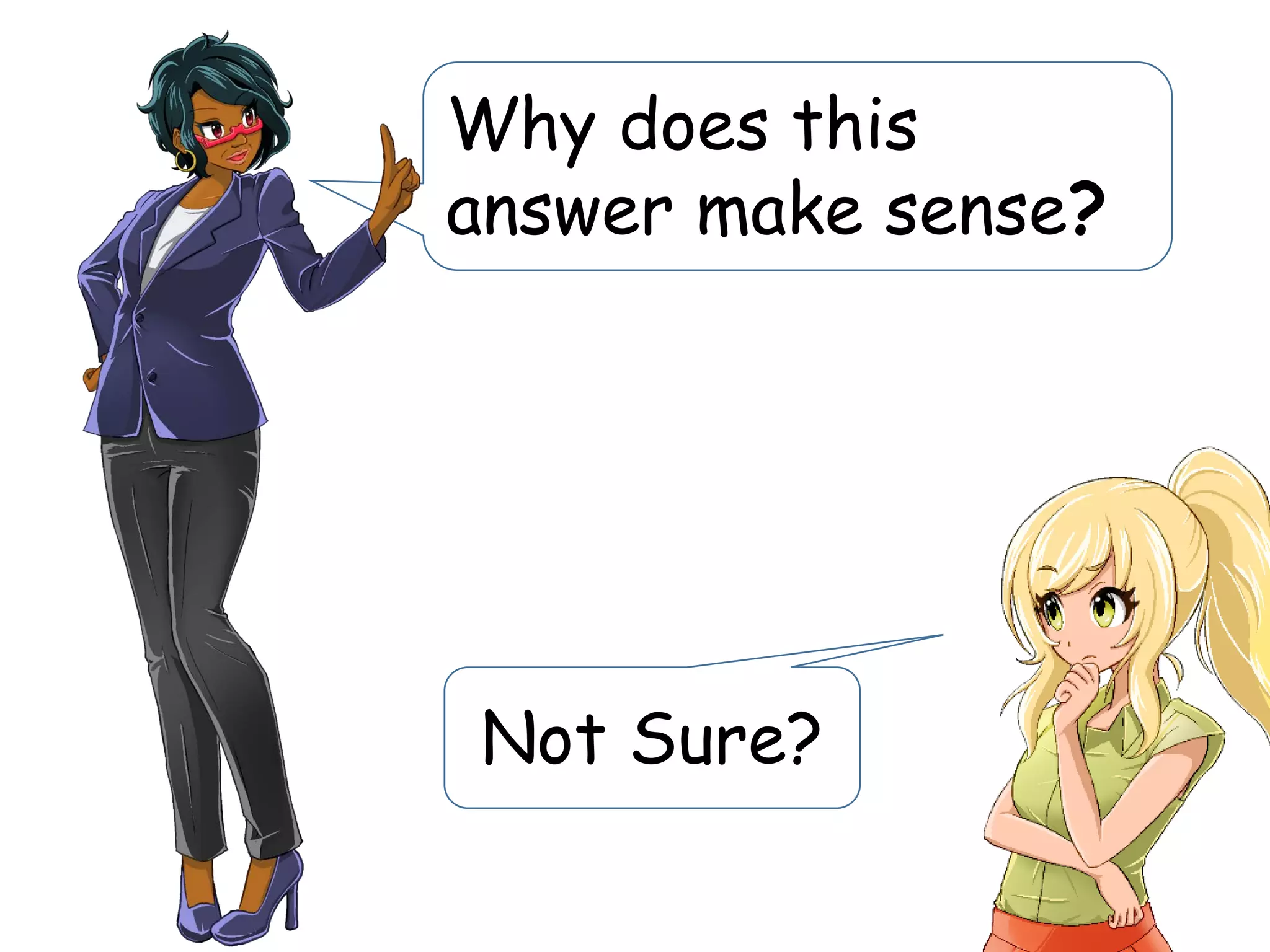
Why does this
answer make sense?
Not Sure?
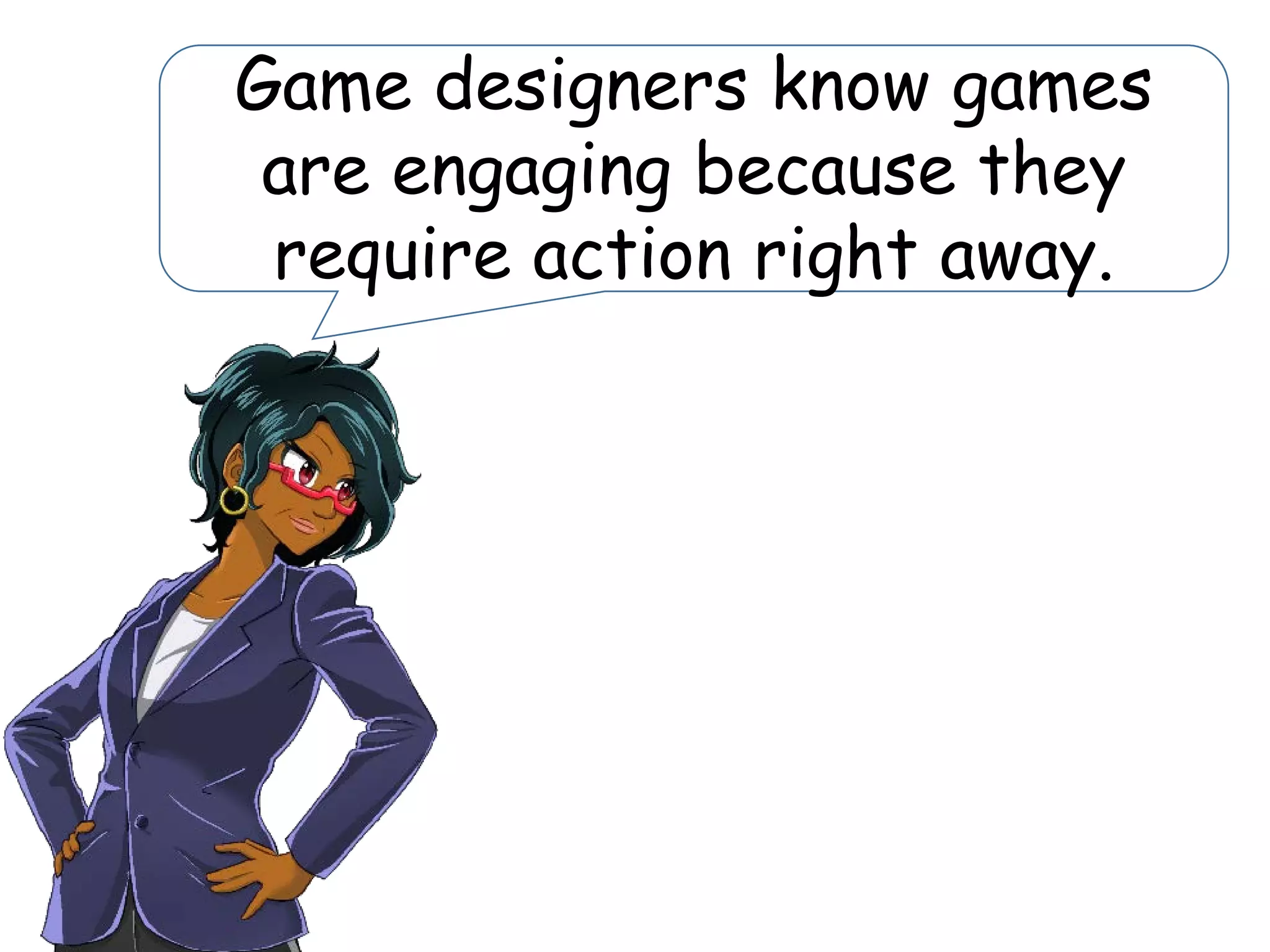
Game designers know games
are engaging because they
require action right away.
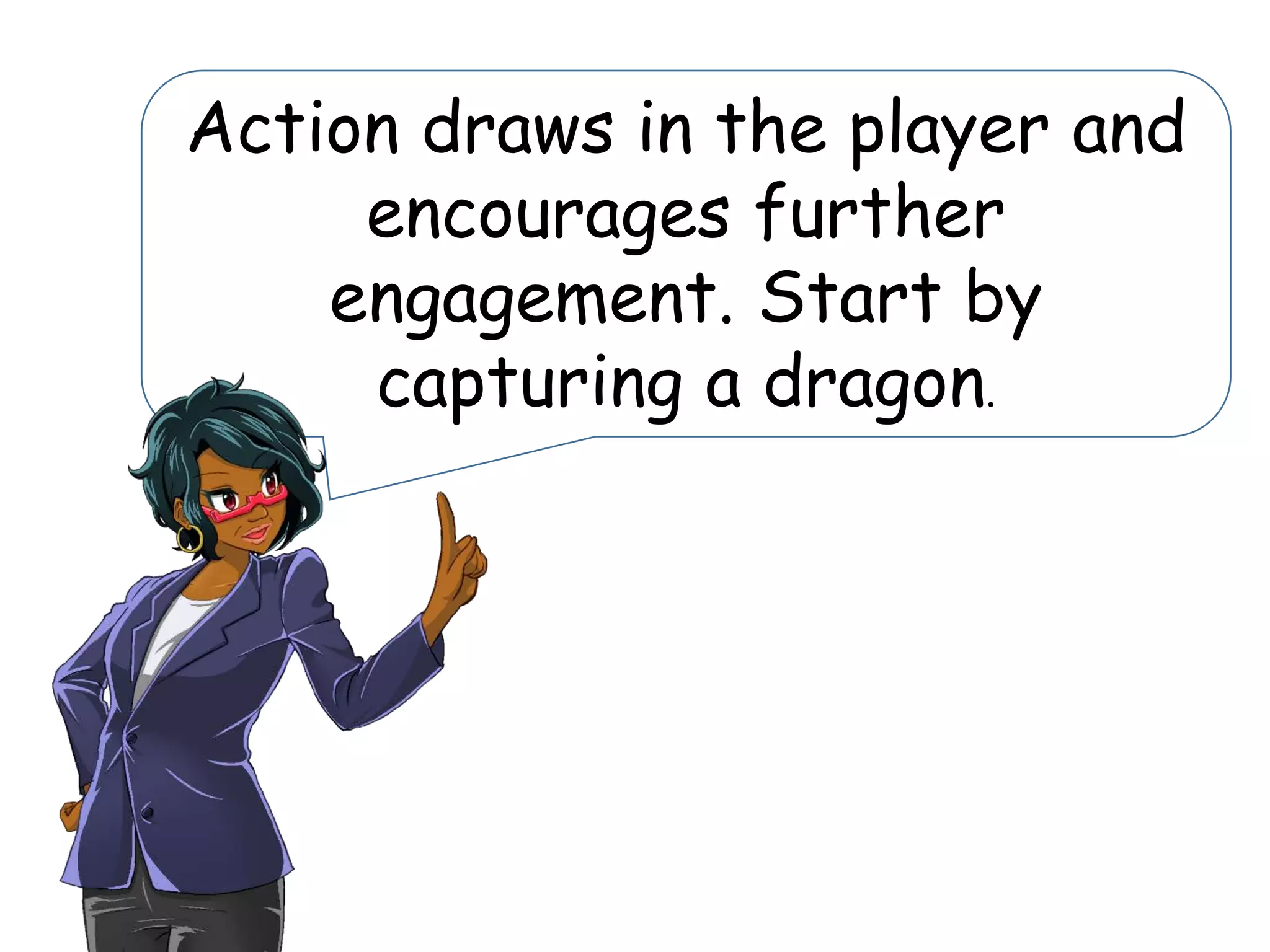
Action draws in the player and
encourages further
engagement. Start by
capturing a dragon.
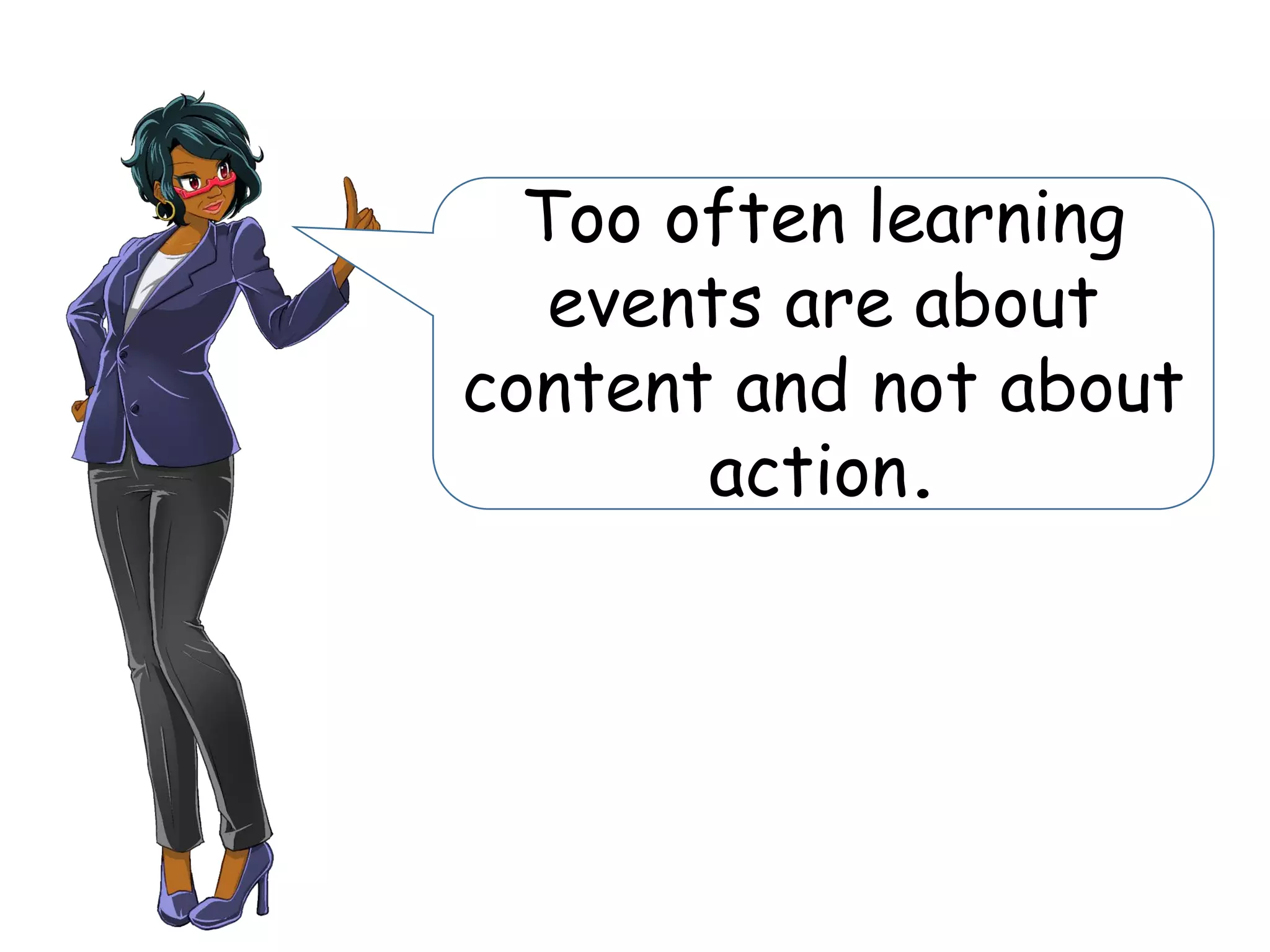
Too often learning
events are about
content and not about
action.
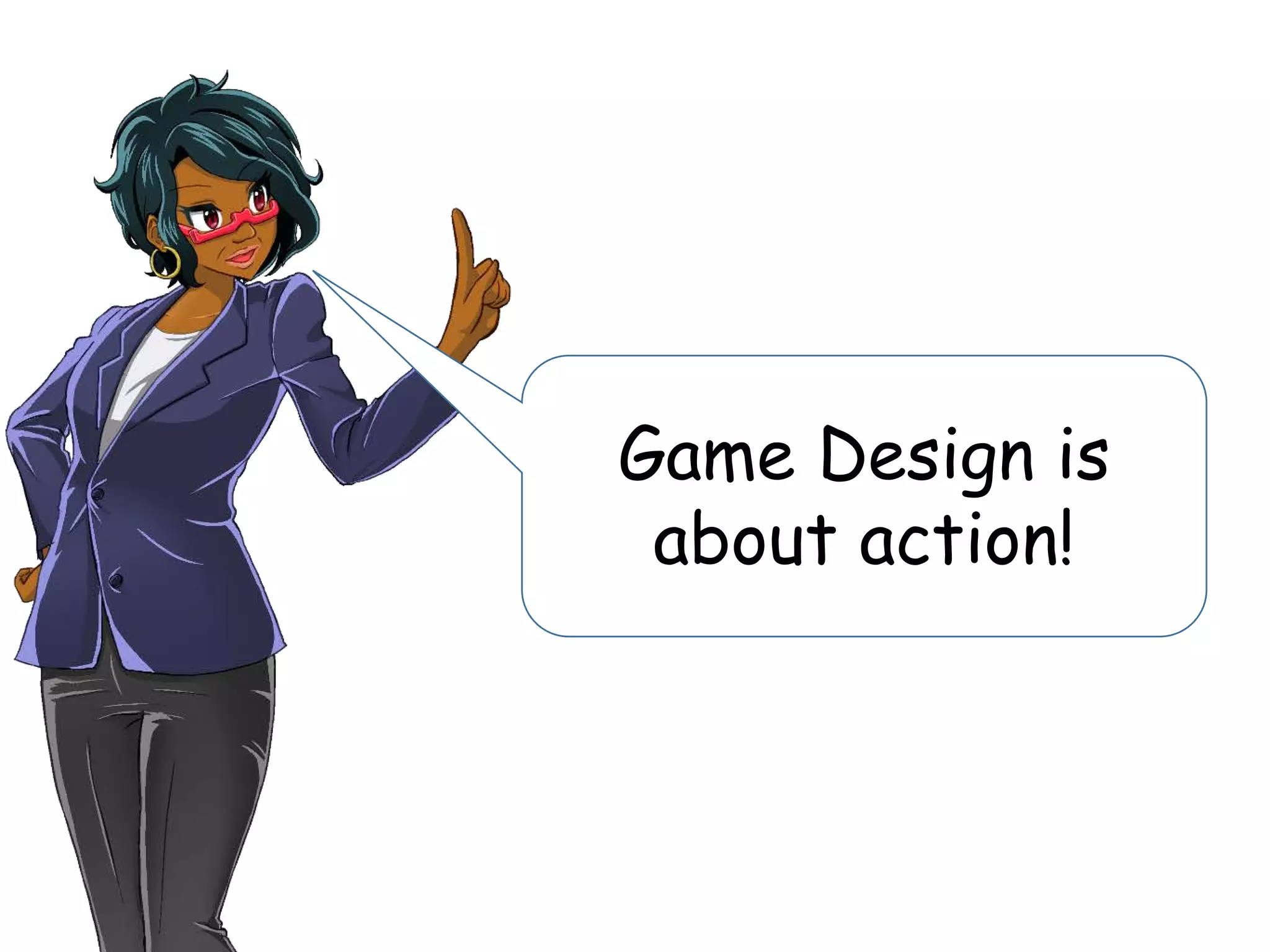
Game Design is
about action!
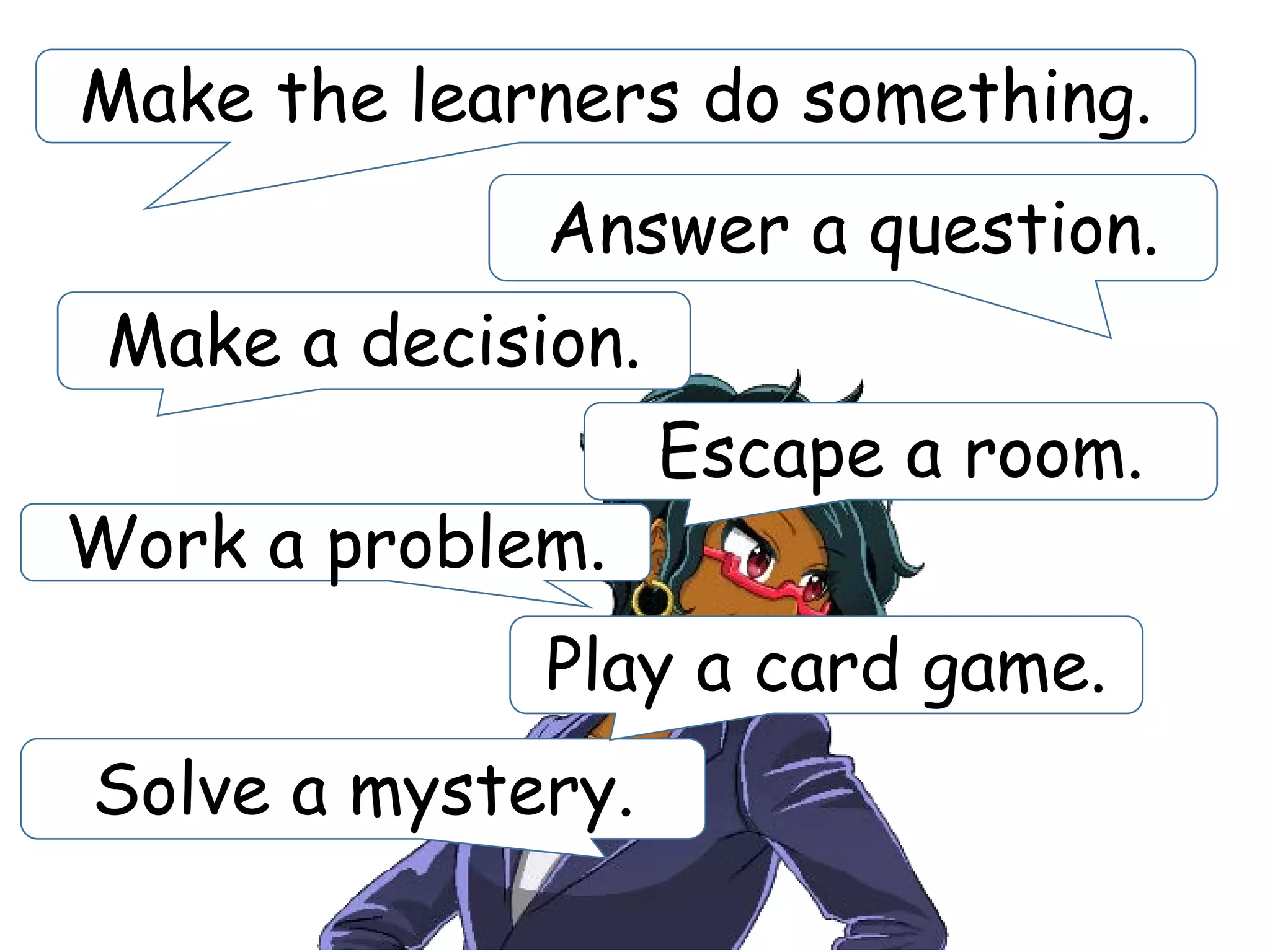
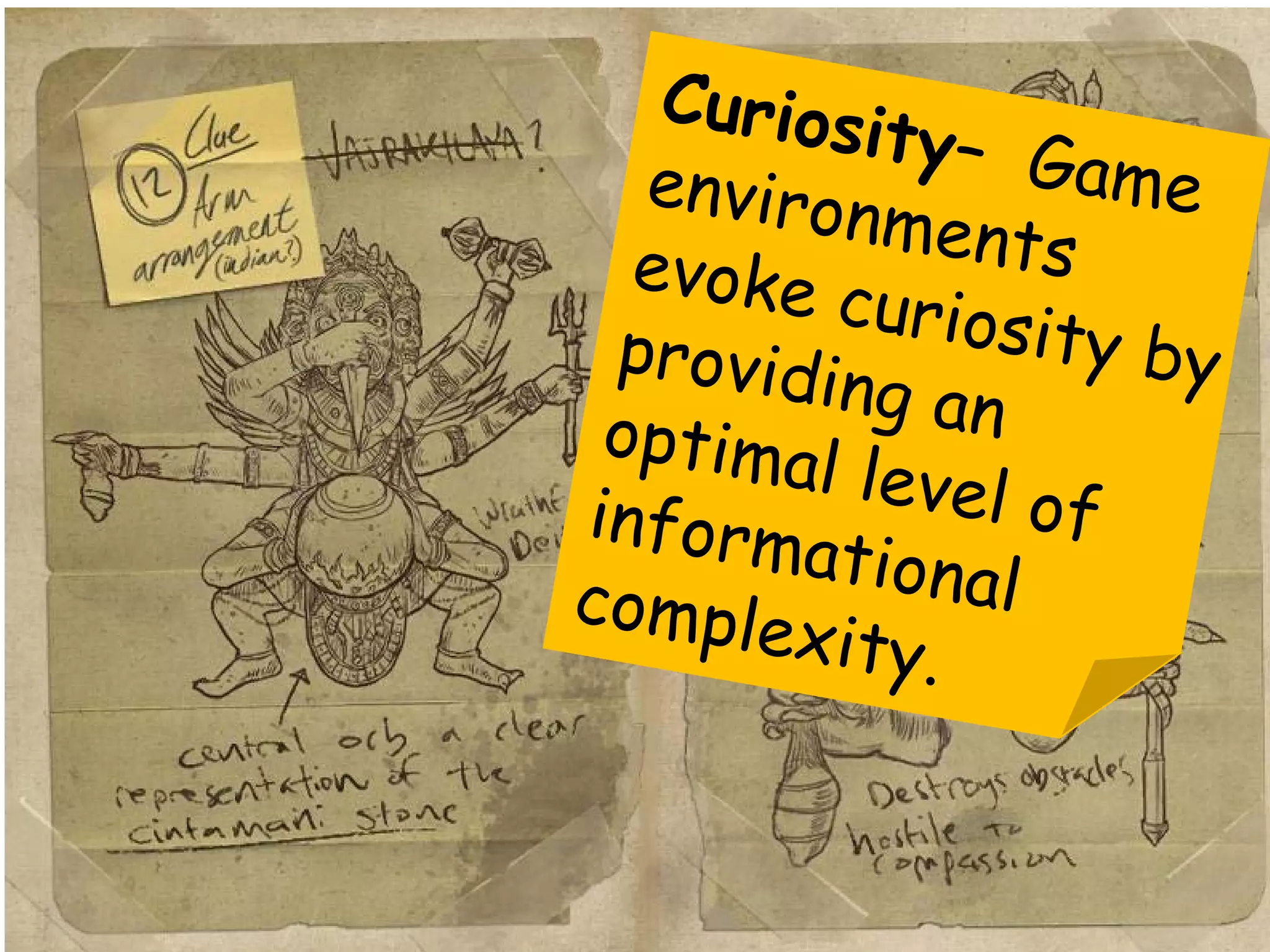
Solve a mystery.
Make the learners do something.
Answer a question.
Work a problem.
Make a decision.
Escape a room.
Play a card game.
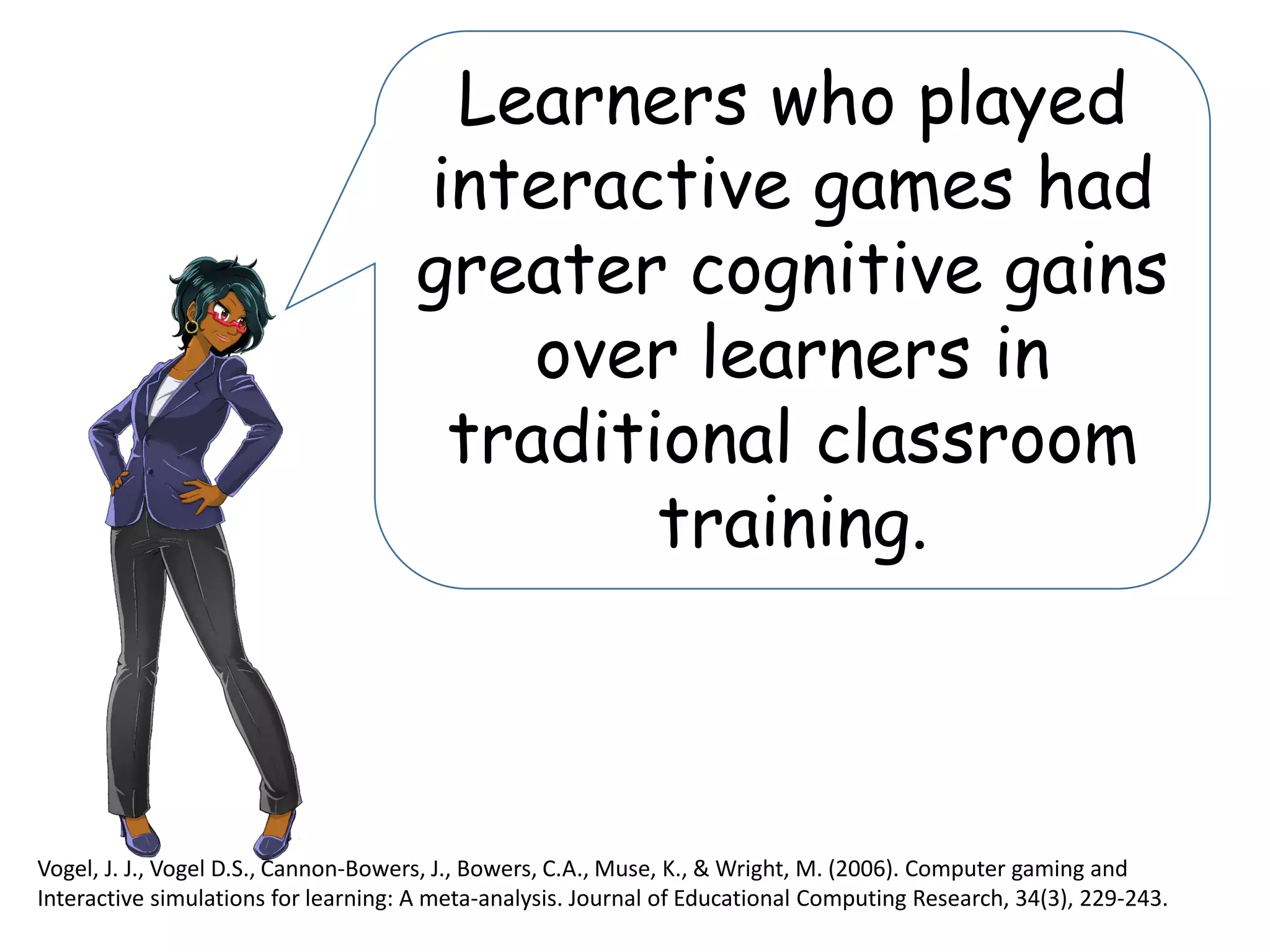
Learners who played
interactive games had
greater cognitive gains
over learners in
traditional classroom
training.
Vogel, J. J., Vogel D.S., Cannon-Bowers, J., Bowers, C.A., Muse, K., & Wright, M. (2006). Computer gaming and
Interactive simulations for learning: A meta-analysis. Journal of Educational Computing Research, 34(3), 229-243.
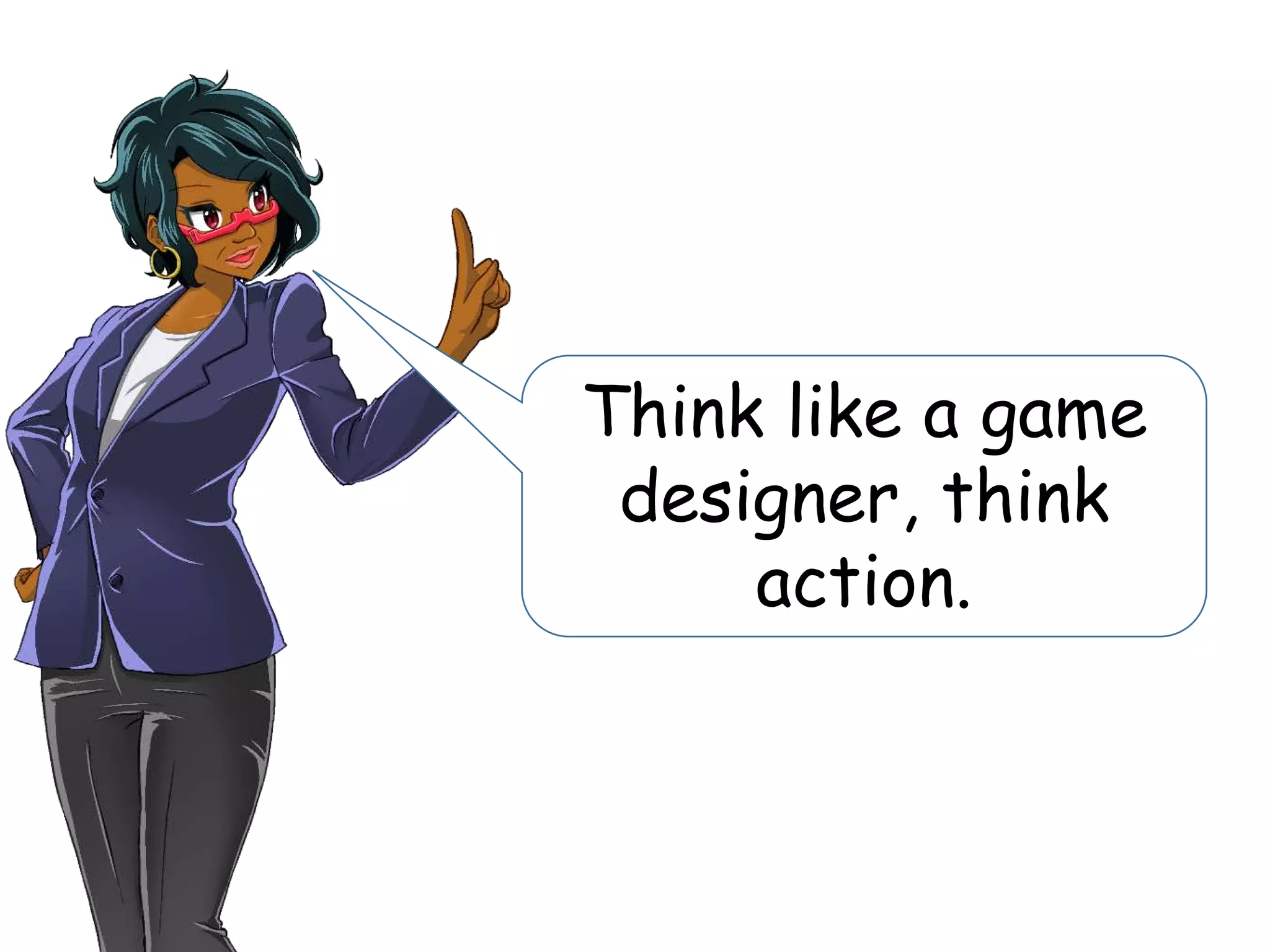
Think like a game
designer, think
action.
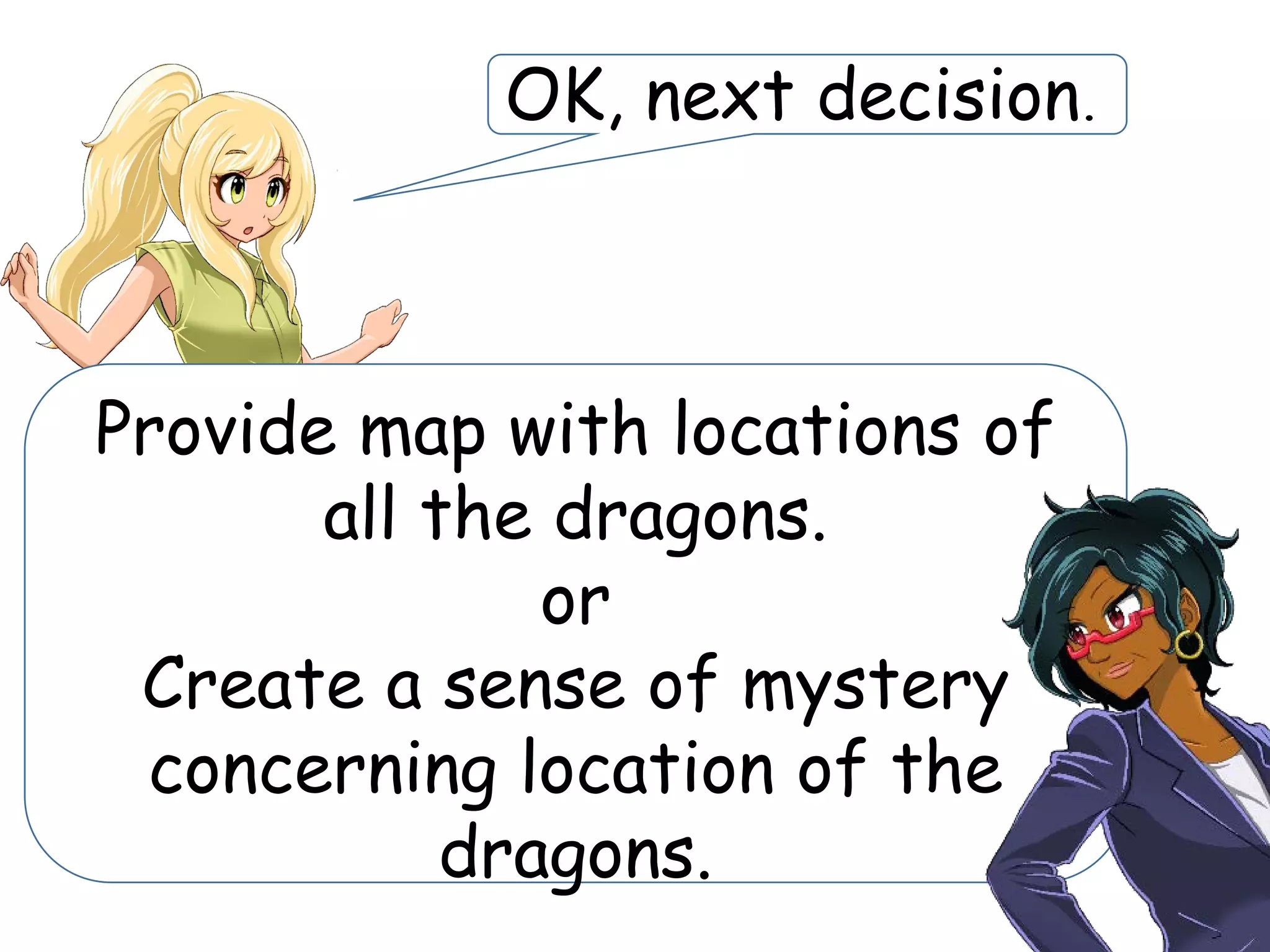
OK, next decision.
Provide map with locations of
all the dragons.
or
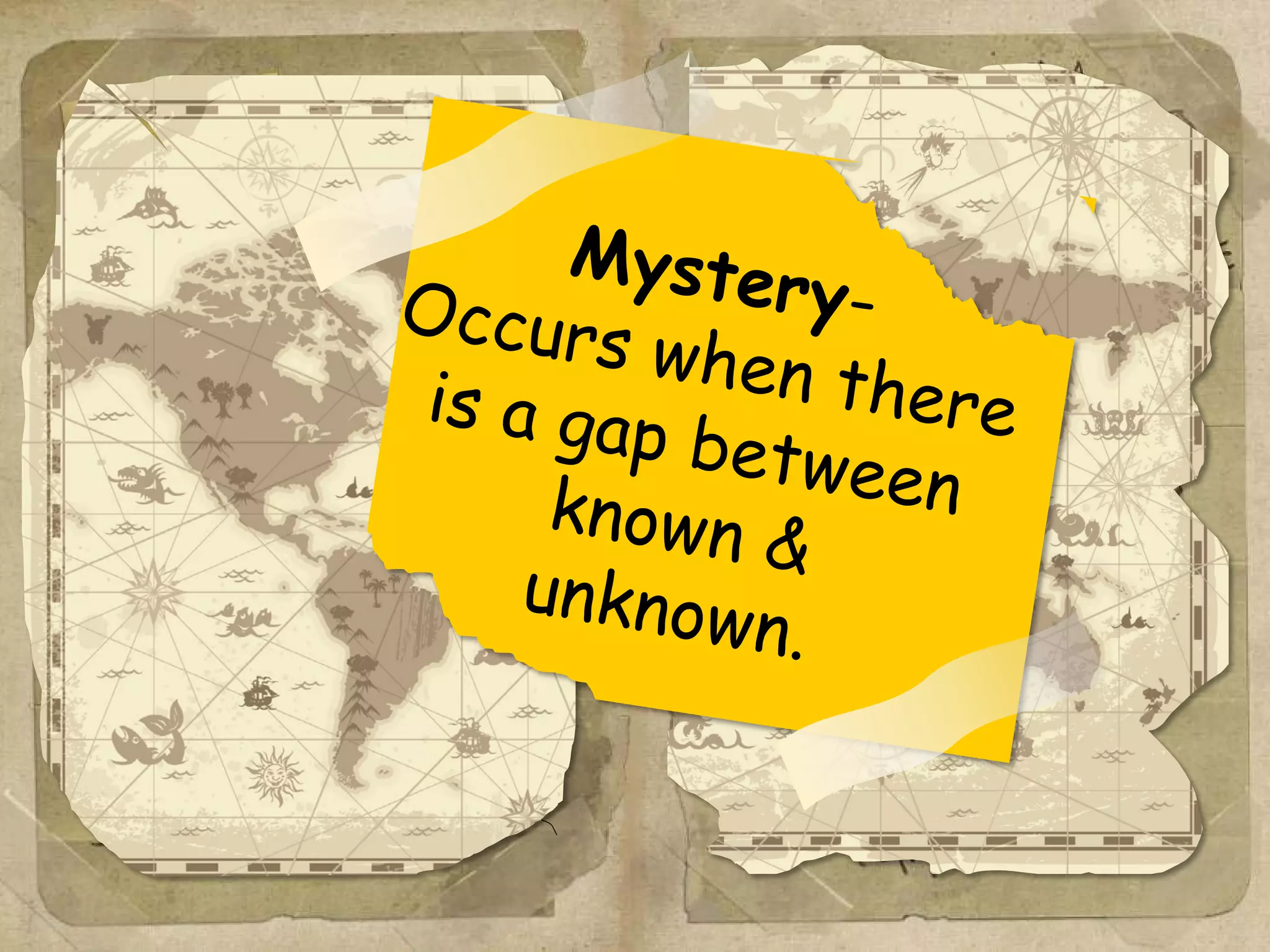
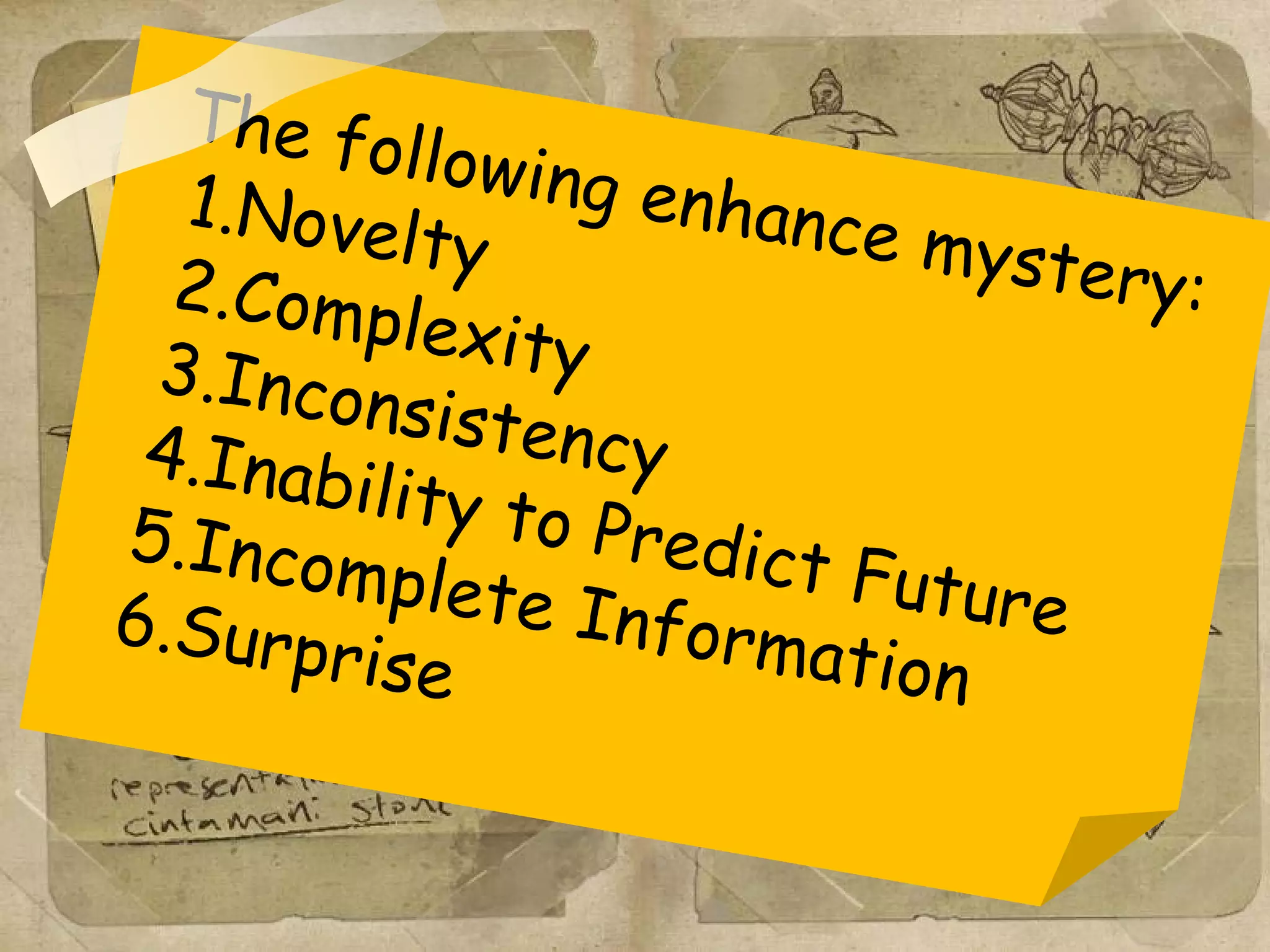
Create a sense of mystery
concerning location of the
dragons.
It is a good idea to build
curiosity and mystery into a
game.
Reveal locations of dragons
throughout the course of the
player’s journey.
Check out my notebook on
this subject.
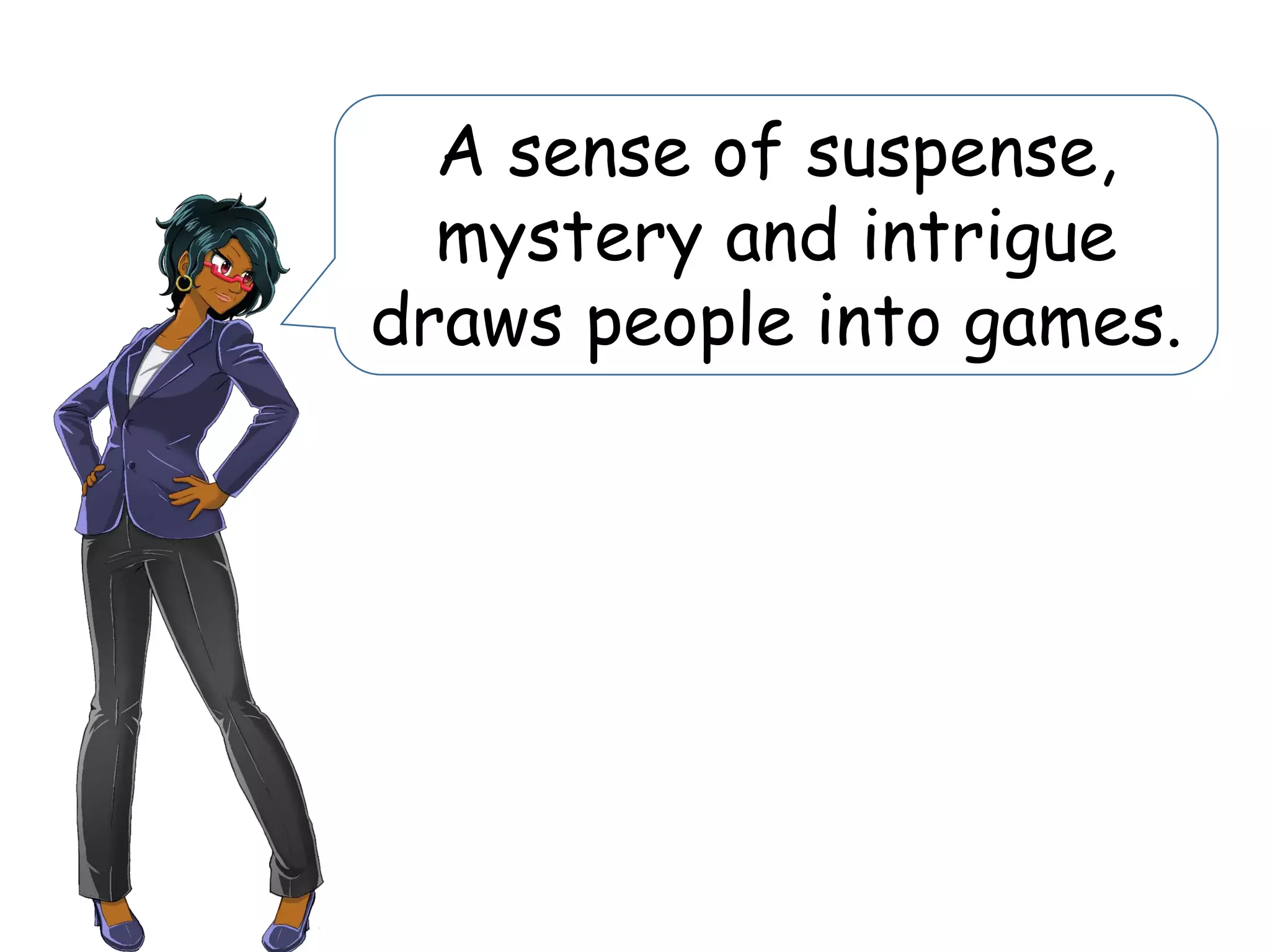
A sense of suspense,
mystery and intrigue
draws people into games.
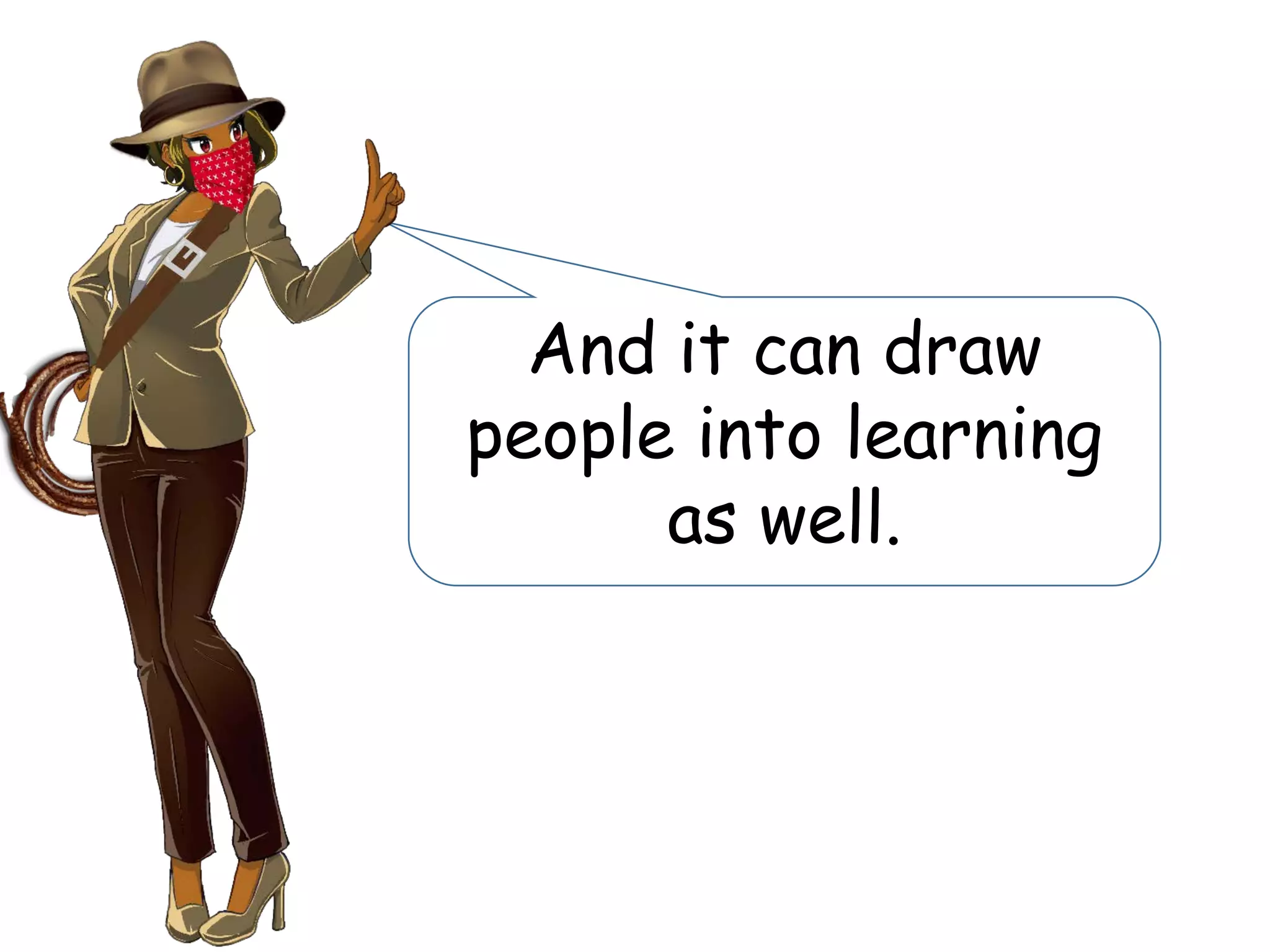
And it can draw
people into learning
as well.
Wait a minute, did
you just change
outfits?
Hey, next question over
here!
Should we make the game..
Easy
or
Challenging.
Jones, B., Valdez, G., Norakowski, J., & Rasmussen, C. (1994). Designing learning and technology
for educational reform. North Central Regional Educational Laboratory. [Online]. Available:
http://www.ncrtec.org/capacity/profile/profwww.htm and Schlechty, P. C. (1997). Inventing
better schools: An action plan for educational reform. San Francisco, CA: Jossey-Bass. Chapter 2
“The Gamification of Learning and Instruction.”
It needs to be challenging.
Jones, B., Valdez, G., Norakowski, J., & Rasmussen, C. (1994). Designing learning and technology
for educational reform. North Central Regional Educational Laboratory. [Online]. Available:
http://www.ncrtec.org/capacity/profile/profwww.htm and Schlechty, P. C. (1997). Inventing
better schools: An action plan for educational reform. San Francisco, CA: Jossey-Bass. Chapter 2
“The Gamification of Learning and Instruction.”
Humans respond to challenges
because they are engaging.
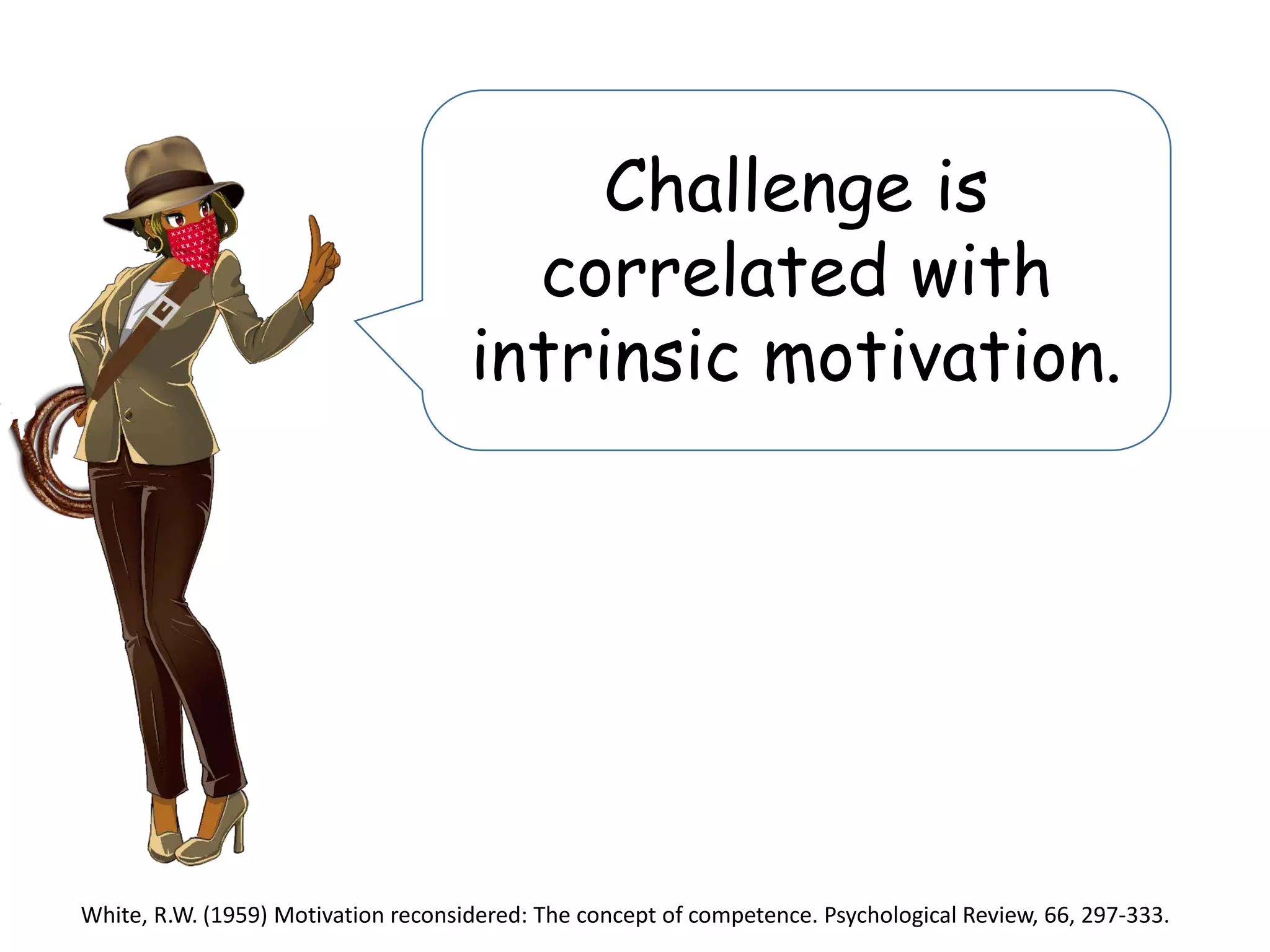
Challenge is
correlated with
intrinsic motivation.
White, R.W. (1959) Motivation reconsidered: The concept of competence. Psychological Review, 66, 297-333.
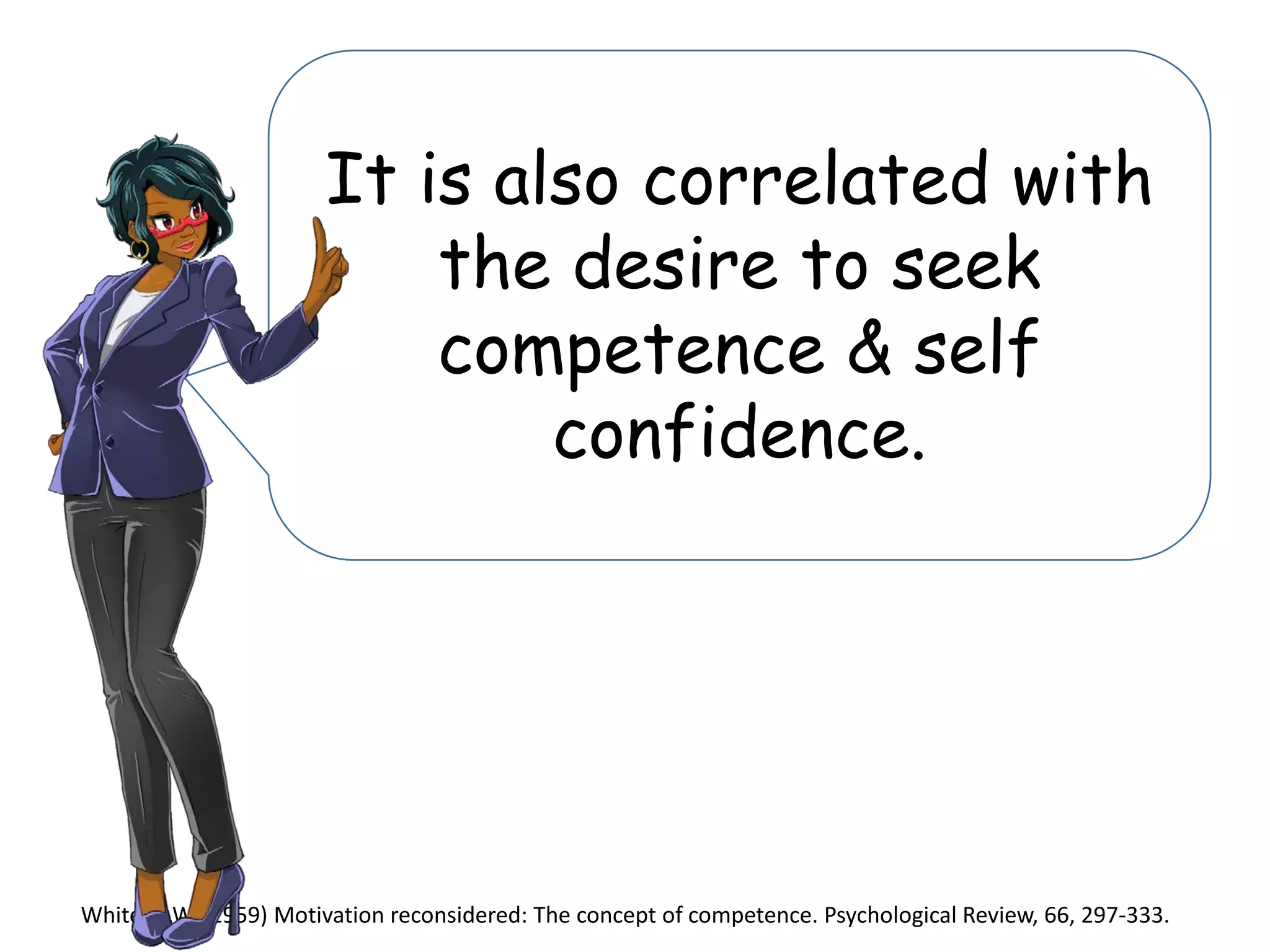
It is also correlated with
the desire to seek
competence & self
confidence.
White, R.W. (1959) Motivation reconsidered: The concept of competence. Psychological Review, 66, 297-333.
Wait a minute, did
you just change
outfits again?
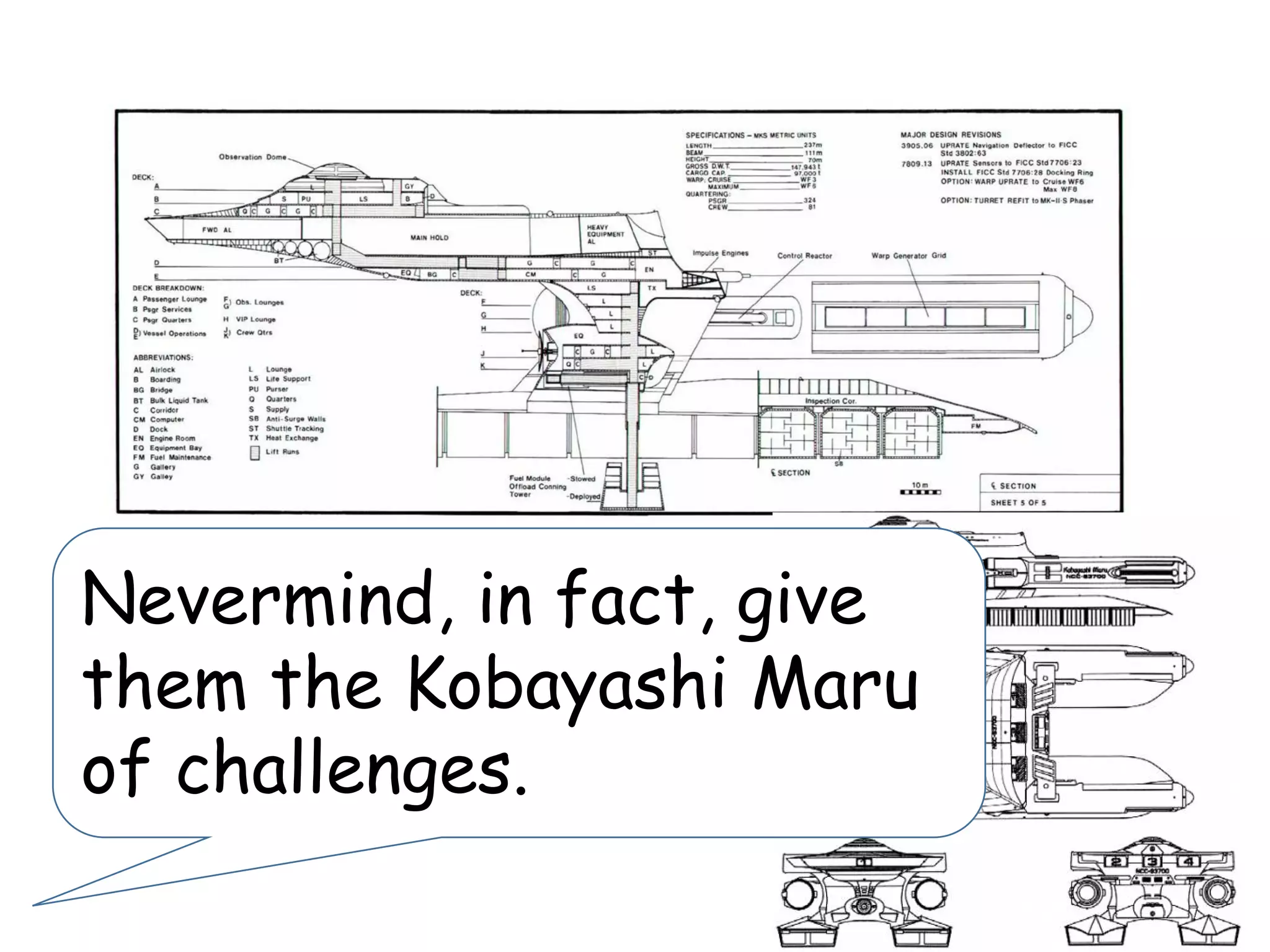
Nevermind, in fact, give
them the Kobayashi Maru
of challenges.
Harsh!
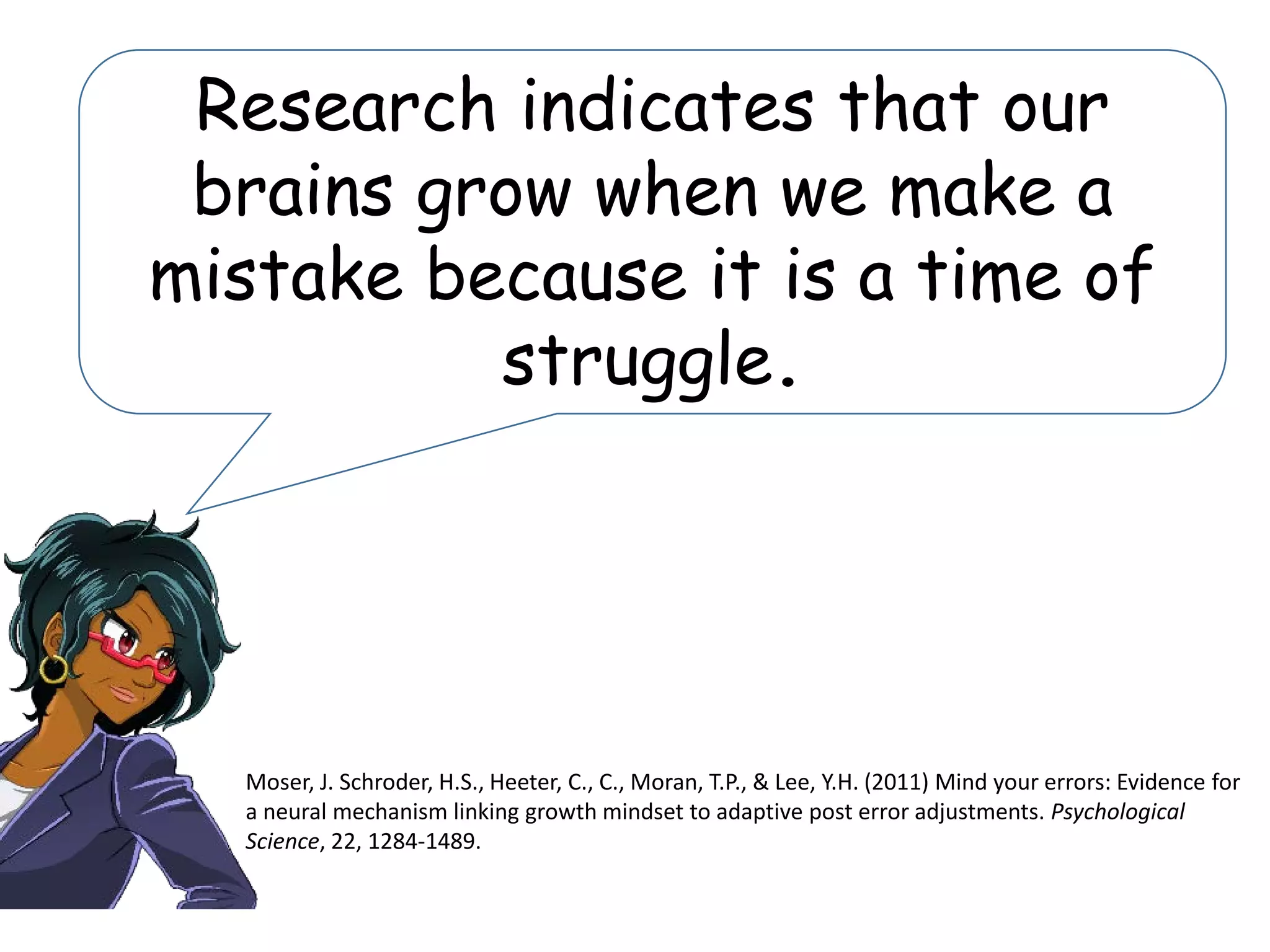
Research indicates that our
brains grow when we make a
mistake because it is a time of
struggle.
Moser, J. Schroder, H.S., Heeter, C., C., Moran, T.P., & Lee, Y.H. (2011) Mind your errors: Evidence for
a neural mechanism linking growth mindset to adaptive post error adjustments. Psychological
Science, 22, 1284-1489.
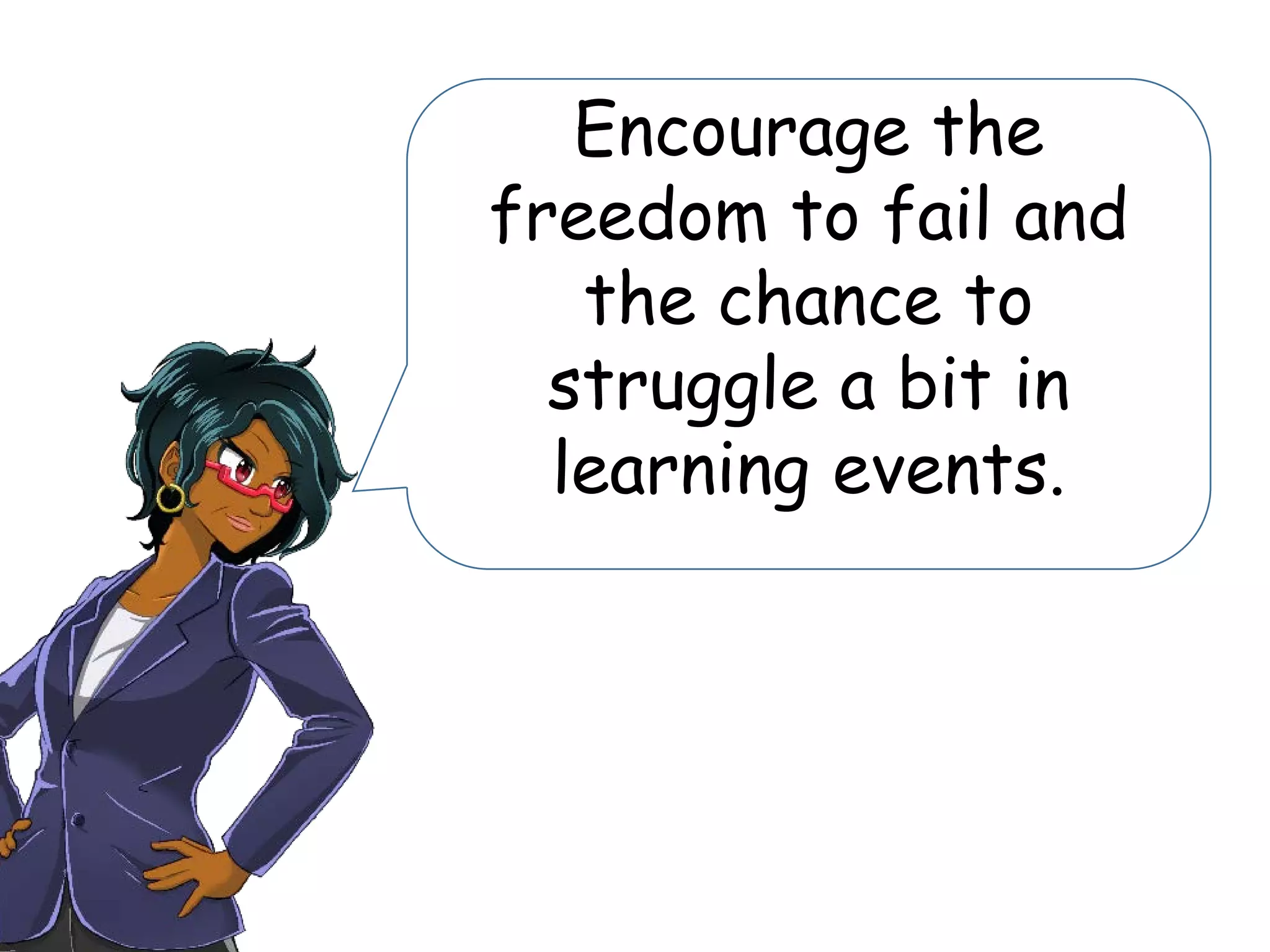
Encourage the
freedom to fail and
the chance to
struggle a bit in
learning events.
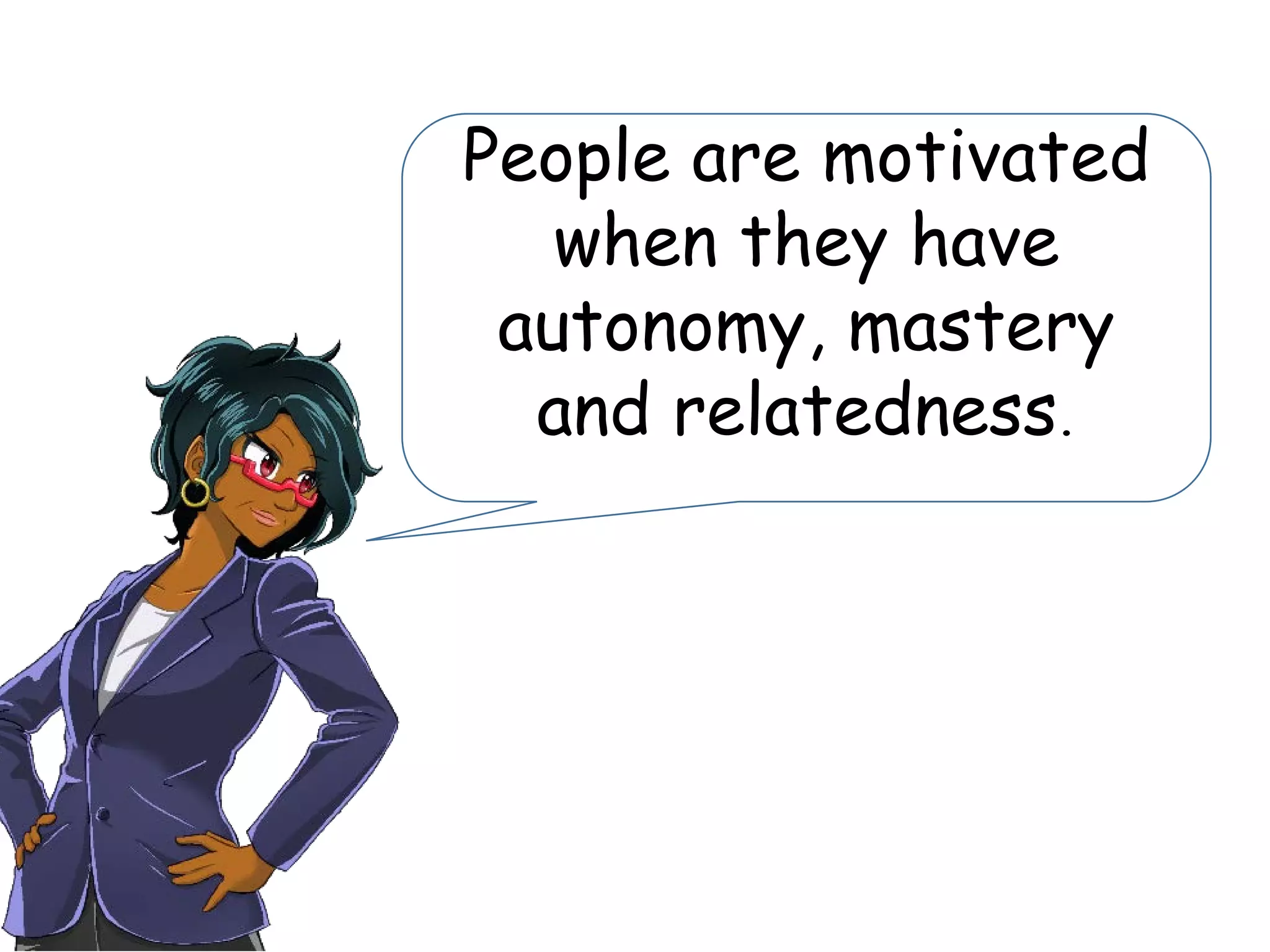
People are motivated
when they have
autonomy, mastery
and relatedness.
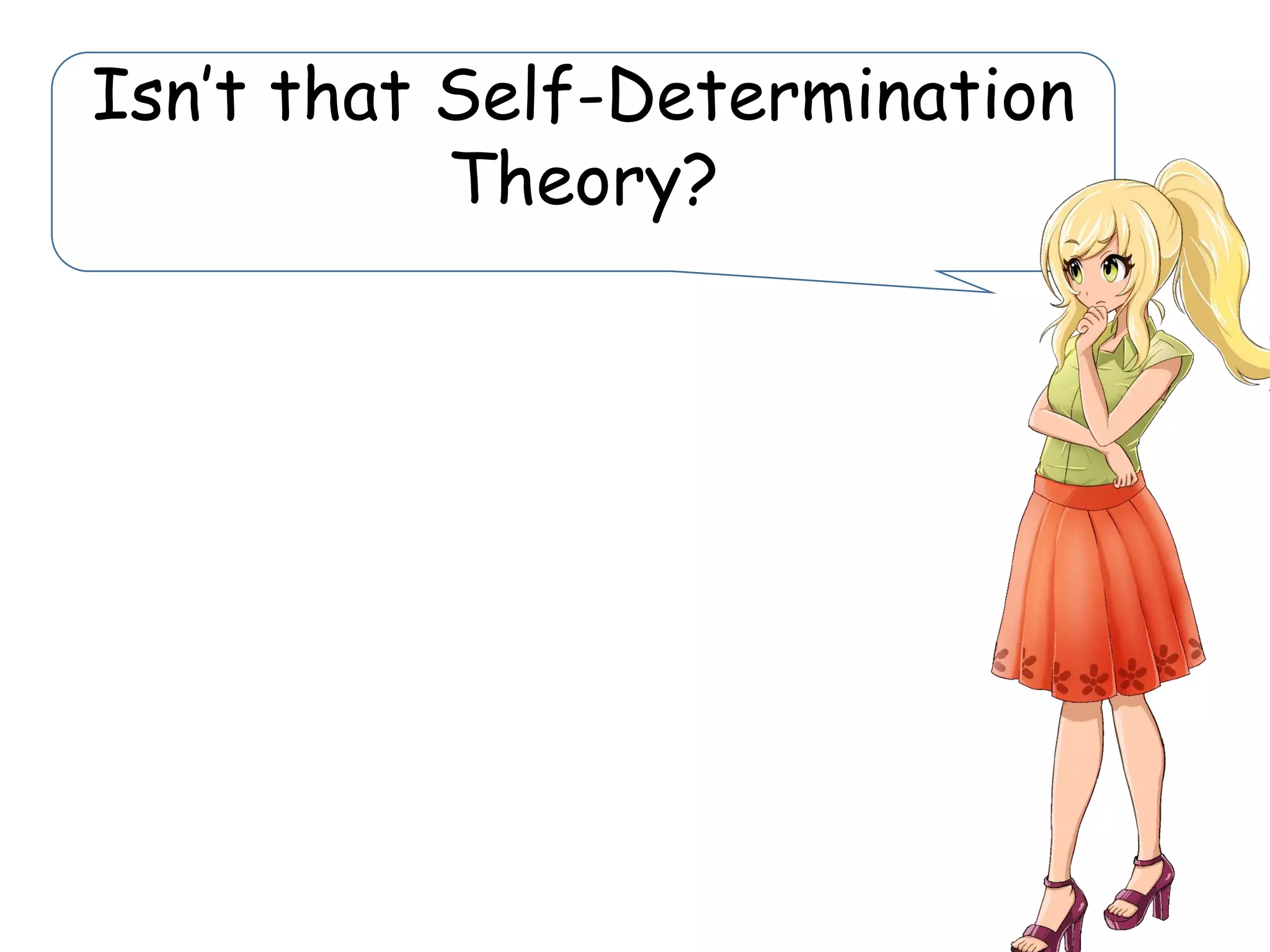
Isn’t that Self-Determination
Theory?
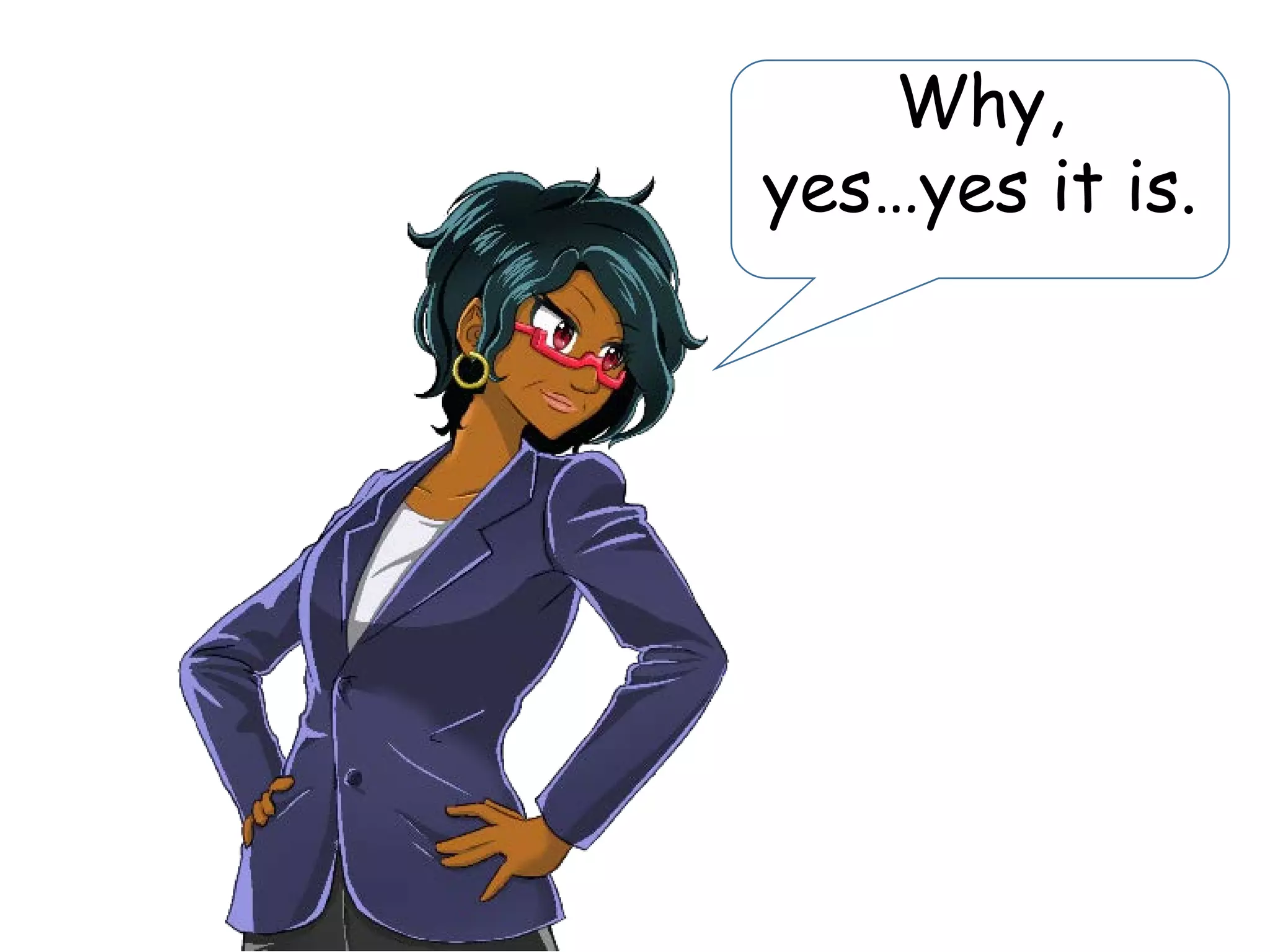
Why,
yes…yes it is.
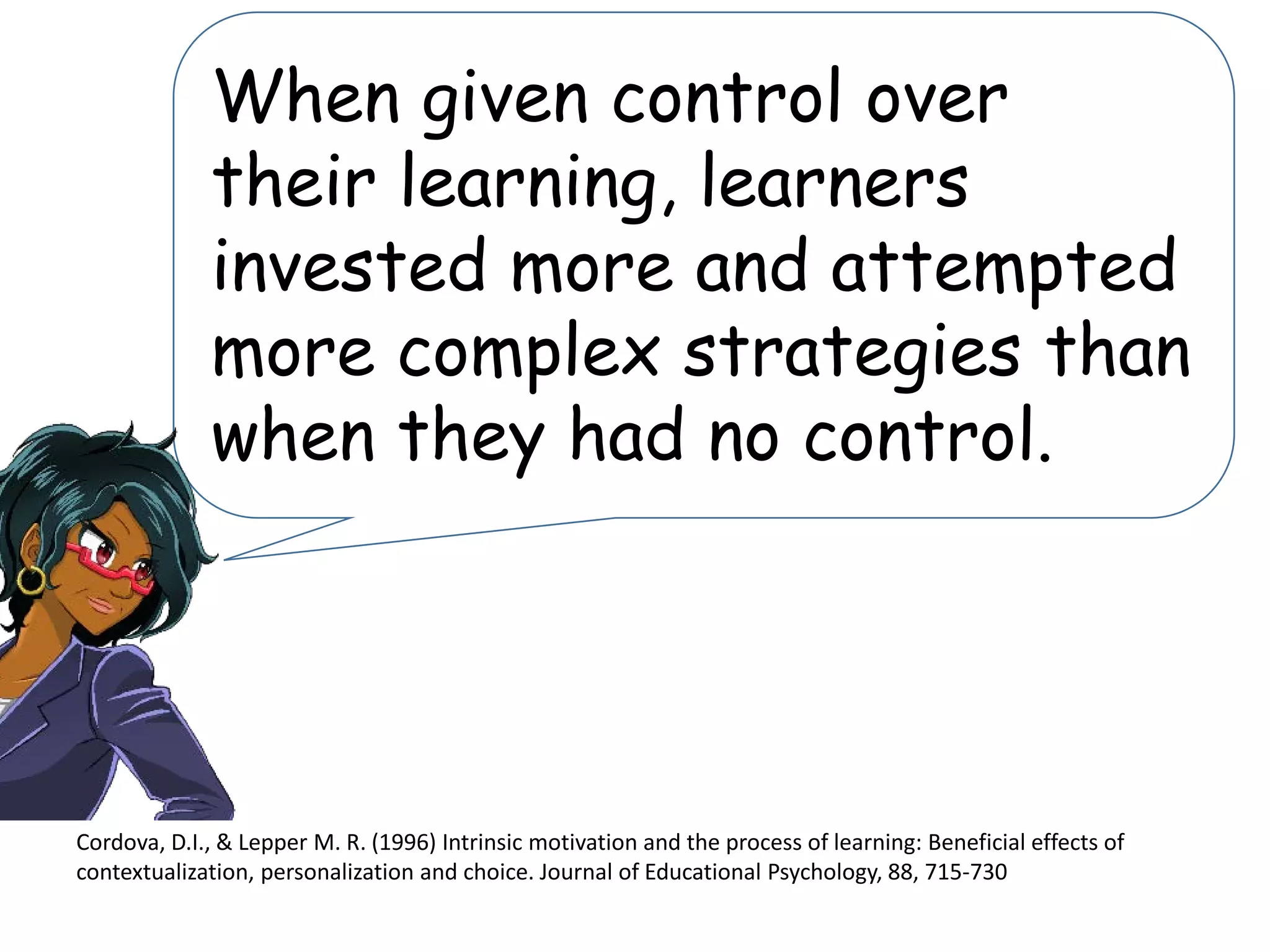
Cordova, D.I., & Lepper M. R. (1996) Intrinsic motivation and the process of learning: Beneficial effects of
contextualization, personalization and choice. Journal of Educational Psychology, 88, 715-730
When given control over
their learning, learners
invested more and attempted
more complex strategies than
when they had no control.
Lot of information,
thanks. So let me
ask one more
question.
Which team gets to
design “Dragónmon Go”?
Which team won?
Well, they are all
winners to me.
Ugh….
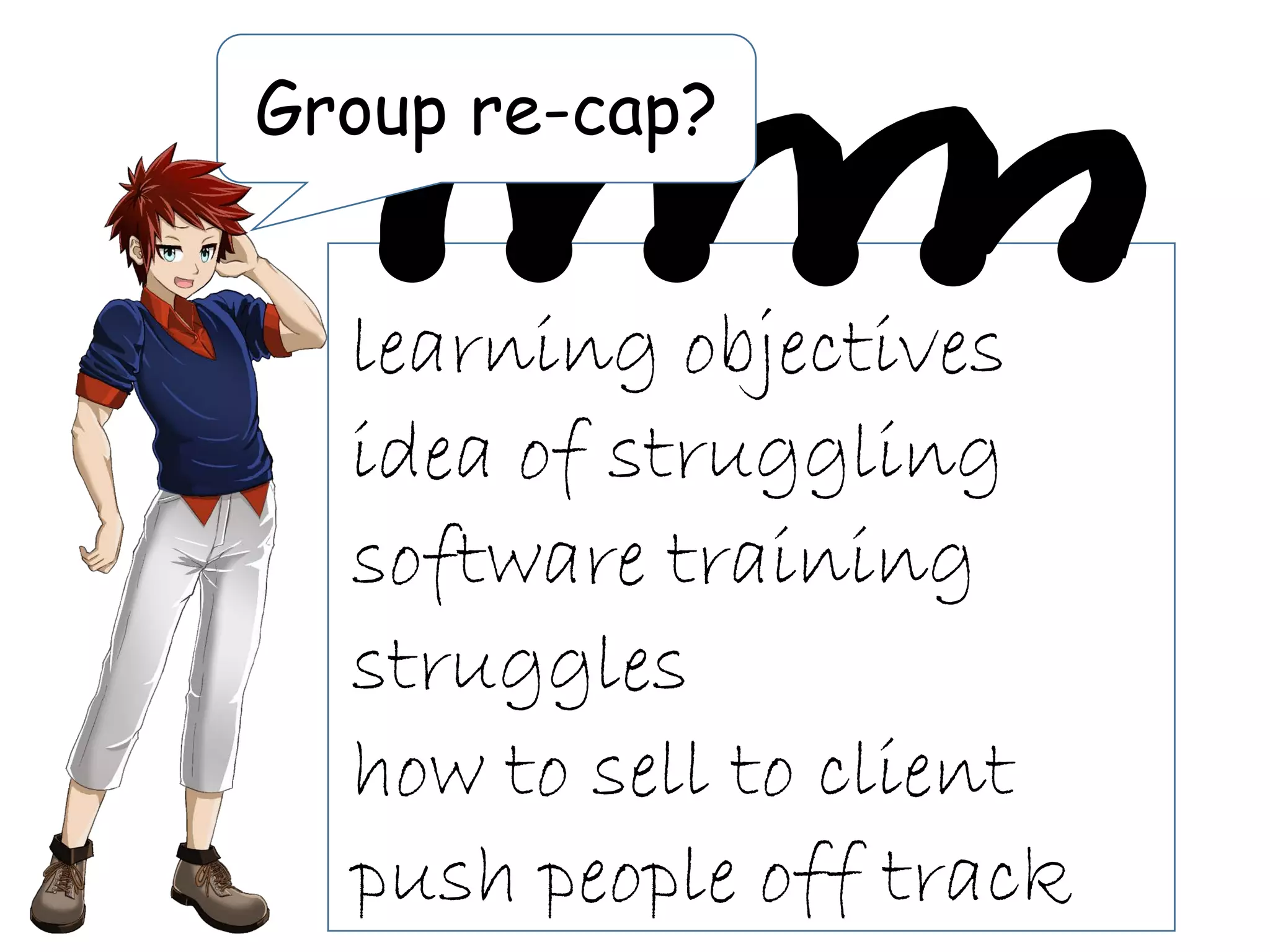
Group re-cap?
learning objectives
idea of struggling
software training
struggles
how to sell to client
push people off track
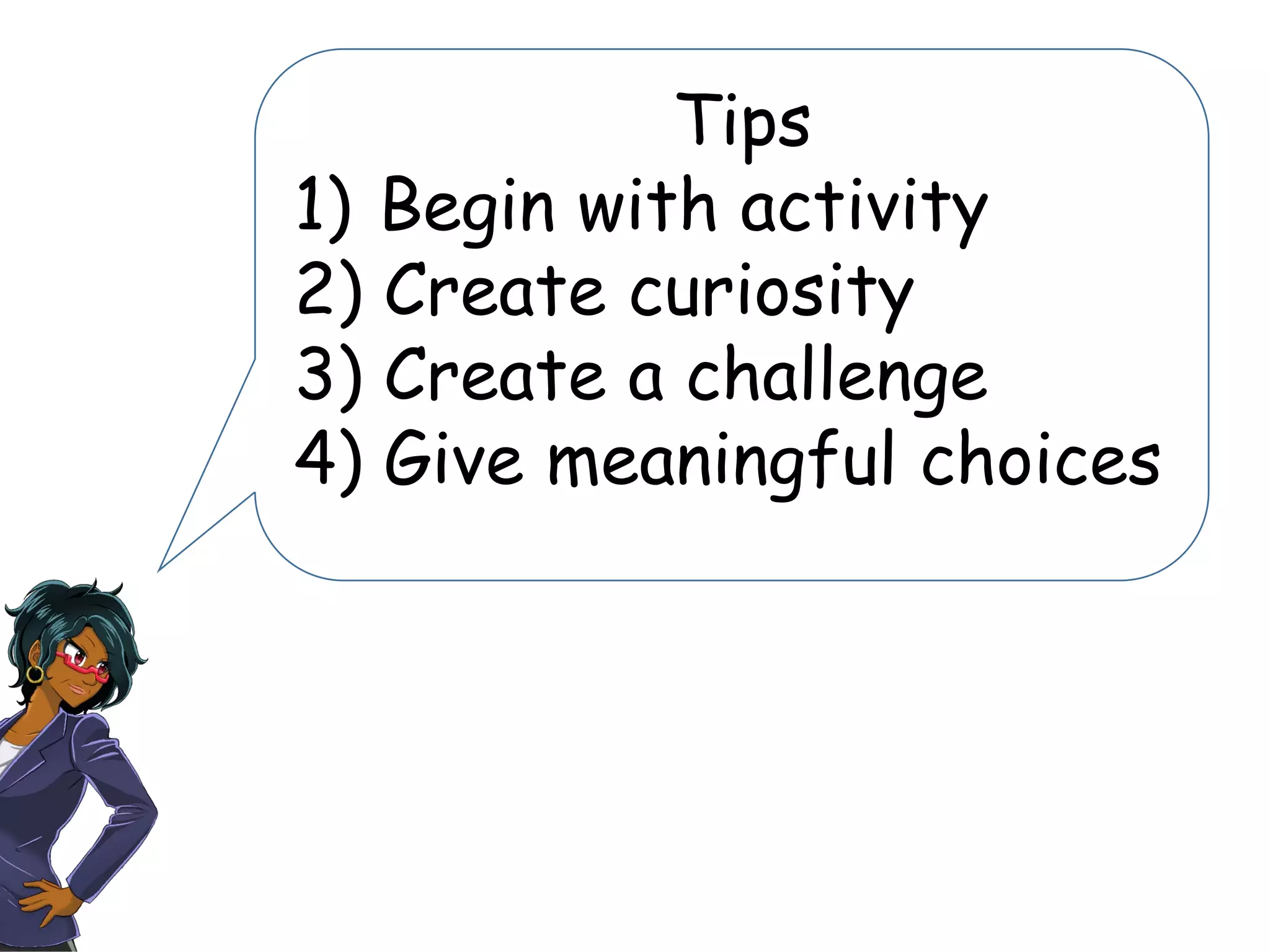
Tips
1) Begin with activity
2) Create curiosity
3) Create a challenge
4) Give meaningful choices
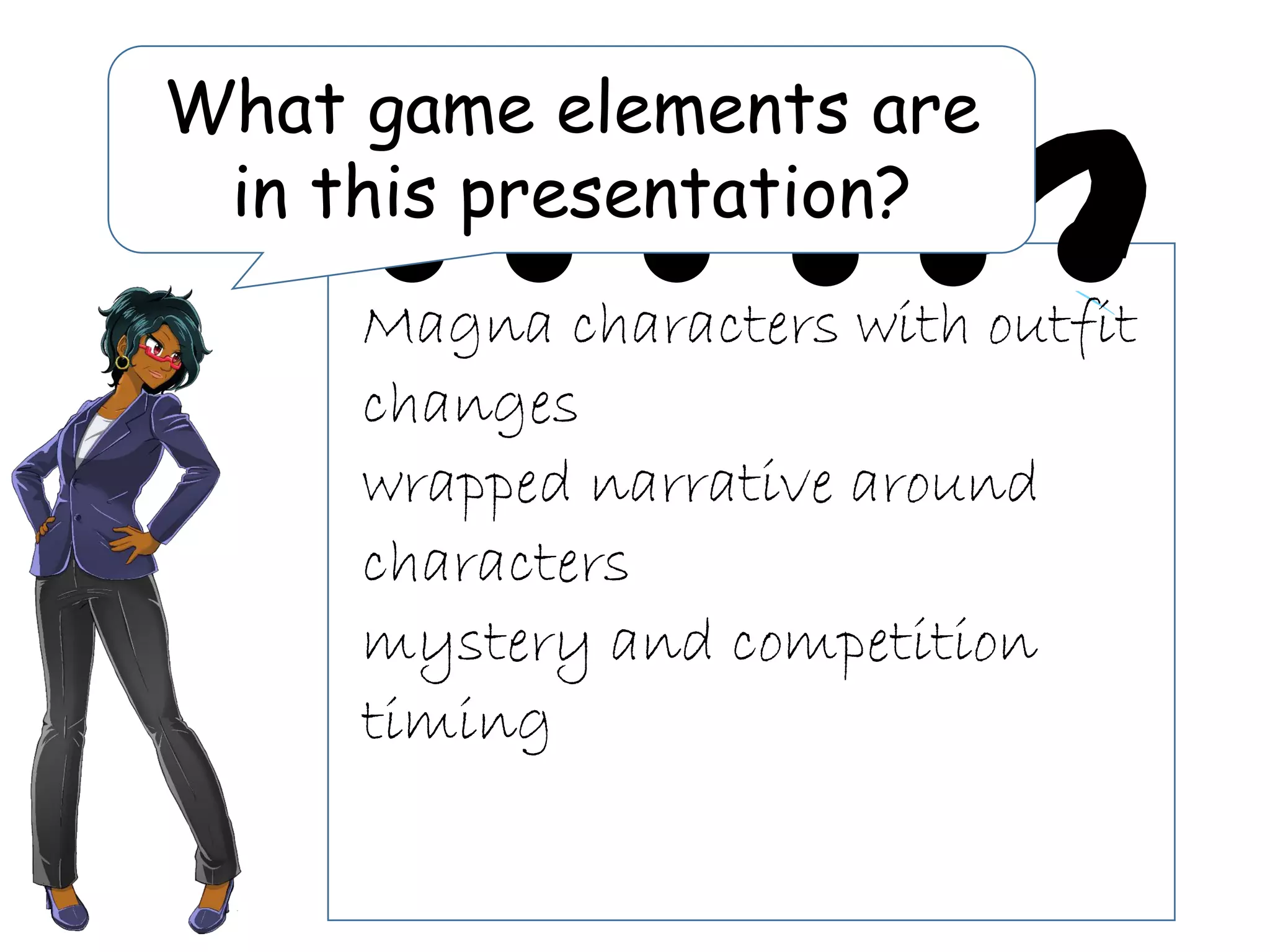
What game elements are
in this presentation?
Magna characters with outfit
changes
wrapped narrative around
characters
mystery and competition
timing
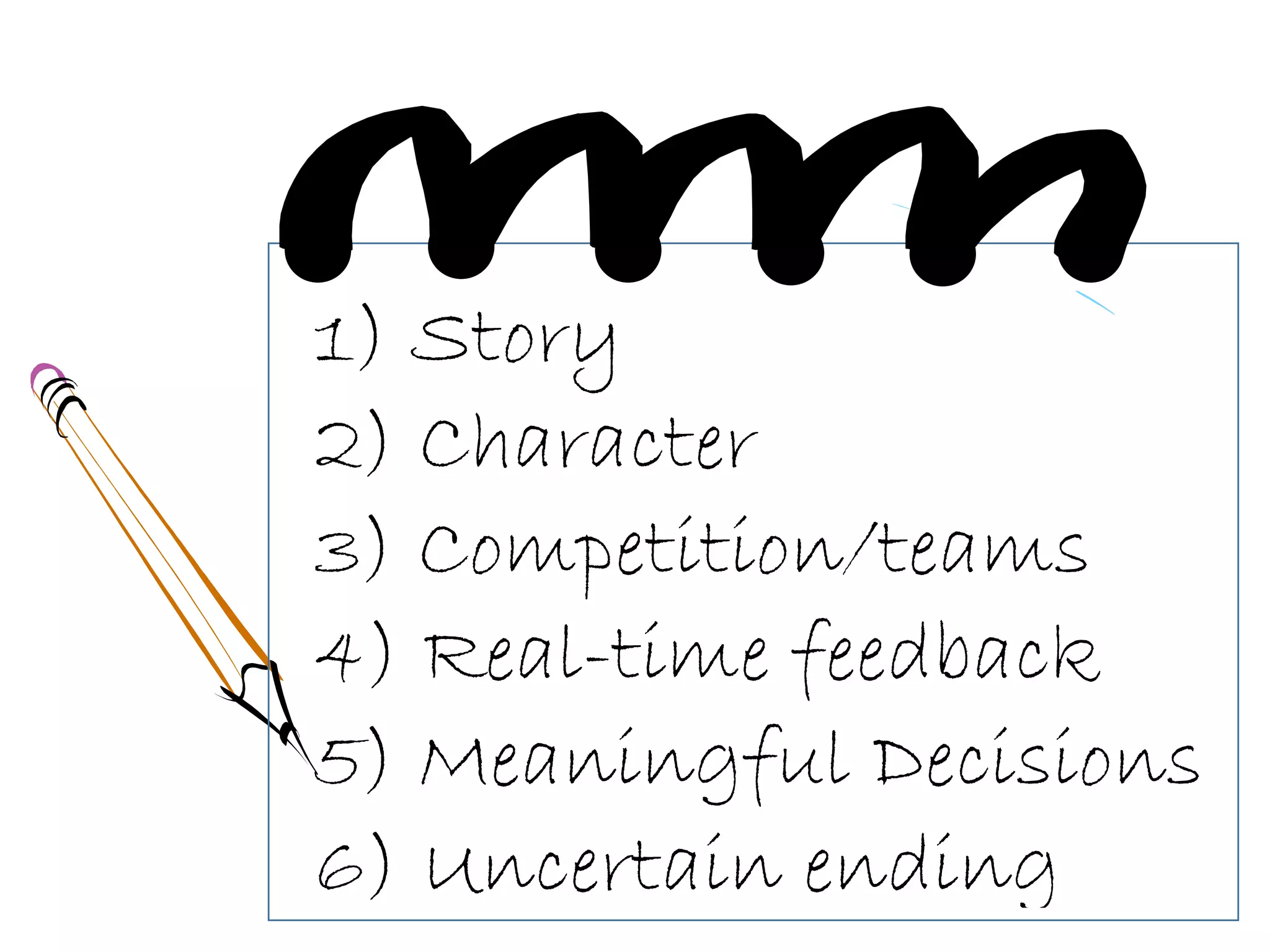
1) Story
2) Character
3) Competition/teams
4) Real-time feedback
5) Meaningful Decisions
6) Uncertain ending
Questions?

W308 - Start Thinking Like a Game Designer and Create Engaging, Immersive Instruction

  • 1.
    Start Thinking Likea Game Designer
  • 2.
    2 Exploring ideas to encourageyou to “Think Like a Game Designer.” Karl Kapp @kkapp karlkapp@gmail.com
  • 3.
  • 5.
  • 6.
    You are agame designer at SuperGame Corporation which has hit some hard times lately.
  • 7.
    It’s Friday 4:59PM you and your colleague have only one thing on your mind.
  • 8.
    Suddenly, your bosscalls you and your colleague into her office. Ito and Jasmine come into my office.
  • 9.
  • 10.
    Look, someone wants usto create a game about capturing dragons. It appears to be a craze or something.
  • 11.
  • 12.
    You are competing internallyfor the project. Winning team earns the right to work on the project.
  • 13.
    New Message To: 37607 karlkapp  Cancel AT&T 9:37 AM  73% Text Option: karlkapp to the number 37607 Internet Option: Pollev.com/karlkapp
  • 14.
    Each team willbe confronted with a series of questions. The team that correctly answers the most questions wins the work.
  • 15.
    What about theother team?
  • 16.
    Losers are assigned tothe game “watching paint dry.”
  • 17.
    Wow, I heardabout that project, it’s almost as fun as… never mind. Dragon Capturing is much better.
  • 18.
    Get it together. Now let’shear about the dragon capturing game.
  • 19.
    First decision aboutthis dragon capturing game is…should it be a card game or a digital game?
  • 20.
  • 21.
    Actually, there area number of benefits to card games. They build learner engagement, are a social accelerant and provide a tangible take-away from a learning experience.
  • 22.
    Here’s some examplesfrom a workshop, it really get’s people engaged.
  • 24.
    ..and participants playthe game even after the workshop. If you create half-decks folks will need to get together to play.
  • 25.
    Let’s do a cardgame! Dragónmon Go
  • 26.
  • 27.
    Tell player threethings they need to know about capturing dragons. or Begin by having player start capturing dragons right away.
  • 28.
    Why does this answermake sense? Not Sure?
  • 29.
    Game designers knowgames are engaging because they require action right away.
  • 30.
    Action draws inthe player and encourages further engagement. Start by capturing a dragon.
  • 31.
    Too often learning eventsare about content and not about action.
  • 32.
  • 33.
    Solve a mystery. Makethe learners do something. Answer a question. Work a problem. Make a decision. Escape a room. Play a card game.
  • 34.
    Learners who played interactivegames had greater cognitive gains over learners in traditional classroom training. Vogel, J. J., Vogel D.S., Cannon-Bowers, J., Bowers, C.A., Muse, K., & Wright, M. (2006). Computer gaming and Interactive simulations for learning: A meta-analysis. Journal of Educational Computing Research, 34(3), 229-243.
  • 35.
    Think like agame designer, think action.
  • 36.
    OK, next decision. Providemap with locations of all the dragons. or Create a sense of mystery concerning location of the dragons.
  • 38.
    It is agood idea to build curiosity and mystery into a game.
  • 39.
    Reveal locations ofdragons throughout the course of the player’s journey.
  • 40.
    Check out mynotebook on this subject.
  • 44.
    A sense ofsuspense, mystery and intrigue draws people into games.
  • 45.
    And it candraw people into learning as well.
  • 46.
    Wait a minute,did you just change outfits?
  • 47.
  • 48.
    Should we makethe game.. Easy or Challenging.
  • 49.
    Jones, B., Valdez,G., Norakowski, J., & Rasmussen, C. (1994). Designing learning and technology for educational reform. North Central Regional Educational Laboratory. [Online]. Available: http://www.ncrtec.org/capacity/profile/profwww.htm and Schlechty, P. C. (1997). Inventing better schools: An action plan for educational reform. San Francisco, CA: Jossey-Bass. Chapter 2 “The Gamification of Learning and Instruction.” It needs to be challenging.
  • 50.
    Jones, B., Valdez,G., Norakowski, J., & Rasmussen, C. (1994). Designing learning and technology for educational reform. North Central Regional Educational Laboratory. [Online]. Available: http://www.ncrtec.org/capacity/profile/profwww.htm and Schlechty, P. C. (1997). Inventing better schools: An action plan for educational reform. San Francisco, CA: Jossey-Bass. Chapter 2 “The Gamification of Learning and Instruction.” Humans respond to challenges because they are engaging.
  • 51.
    Challenge is correlated with intrinsicmotivation. White, R.W. (1959) Motivation reconsidered: The concept of competence. Psychological Review, 66, 297-333.
  • 52.
    It is alsocorrelated with the desire to seek competence & self confidence. White, R.W. (1959) Motivation reconsidered: The concept of competence. Psychological Review, 66, 297-333.
  • 53.
    Wait a minute,did you just change outfits again?
  • 54.
    Nevermind, in fact,give them the Kobayashi Maru of challenges.
  • 55.
  • 56.
    Research indicates thatour brains grow when we make a mistake because it is a time of struggle. Moser, J. Schroder, H.S., Heeter, C., C., Moran, T.P., & Lee, Y.H. (2011) Mind your errors: Evidence for a neural mechanism linking growth mindset to adaptive post error adjustments. Psychological Science, 22, 1284-1489.
  • 57.
    Encourage the freedom tofail and the chance to struggle a bit in learning events.
  • 58.
    People are motivated whenthey have autonomy, mastery and relatedness.
  • 59.
  • 60.
  • 61.
    Cordova, D.I., &Lepper M. R. (1996) Intrinsic motivation and the process of learning: Beneficial effects of contextualization, personalization and choice. Journal of Educational Psychology, 88, 715-730 When given control over their learning, learners invested more and attempted more complex strategies than when they had no control.
  • 62.
    Lot of information, thanks.So let me ask one more question.
  • 63.
    Which team getsto design “Dragónmon Go”? Which team won?
  • 64.
    Well, they areall winners to me.
  • 65.
  • 66.
    Group re-cap? learning objectives ideaof struggling software training struggles how to sell to client push people off track
  • 67.
    Tips 1) Begin withactivity 2) Create curiosity 3) Create a challenge 4) Give meaningful choices
  • 68.
    What game elementsare in this presentation? Magna characters with outfit changes wrapped narrative around characters mystery and competition timing
  • 69.
    1) Story 2) Character 3)Competition/teams 4) Real-time feedback 5) Meaningful Decisions 6) Uncertain ending
  • 70.